Five hundred years ago, Maya traders watched for canoes from this cliff. Today the same view comes with a swimsuit, a fresh coconut and a jungle full of hidden pools.
Tulum sits on the Caribbean coast of Mexico’s Yucatan Peninsula, about two hours south of Cancún. It packs a walled Maya city above a white sand beach, dozens of cenotes in the jungle and one of the largest nature reserves in the country into a small corner of the Riviera Maya. In this article you’ll find the best things to do in Tulum, from the ruins and the beach clubs to lagoon swims and day trips, plus practical tips for getting there from the UK.
💰 Collection O Latino Boutique Tulum - A budget boutique hotel in the town centre with a rooftop pool.
🏨 Aldea Xaan Ha Tulum - Apartment-style rooms with kitchenettes around a garden pool.
💎 Secrets Tulum Resort & Beach Club - Adults Only - All Inclusive - An adults-only, all-inclusive beach resort with sea-view balconies.
Things to do in Tulum - where to start
Tulum is really three places in one. There’s the archaeological site on the cliff, Tulum town (locals call it Tulum Centro or el pueblo) along the main road, and the hotel zone, a narrow strip of boutique hotels and beach clubs along the beach road heading south. Most visitors split their days between the three, with a cenote swim or a nature trip in between.
If you only have a couple of days, start with the Tulum ruins in the early morning, then cool off in a cenote and finish at the beach. With four or five days you can add Sian Ka’an, the Kaan Luum lagoon and a day trip to Chichén Itzá or Cobá. A week gives you time to slow down, which is exactly what most people come here for.
Explore the Tulum ruins above the Caribbean Sea
The Tulum ruins are the town’s signature sight and one of the most photographed Mayan ruins in Mexico. This ancient Mayan city stands on a 12-metre cliff overlooking the Caribbean Sea, with turquoise water on one side and a stone wall on the other three. It was one of the few walled Maya cities and a busy trading port, linking sea routes along the coast with towns inland.
Tulum reached its peak between roughly the 13th and 15th centuries, late in Maya history. Its old name was Zamá, often translated as “dawn”, because it faces the sunrise. The city was still inhabited when the first Spanish ships sailed past in 1518, and it was abandoned within a few decades of the conquest.
Highlights inside the walls
The largest building is El Castillo, a temple-pyramid on the edge of the cliff that also worked as a lighthouse for canoes coming through a gap in the reef. Nearby, the Temple of the Frescoes still shows traces of painted murals, and the Temple of the Descending God has a carved figure diving head-first above its doorway. You can’t climb the structures, but the paths take you close enough to see the details.
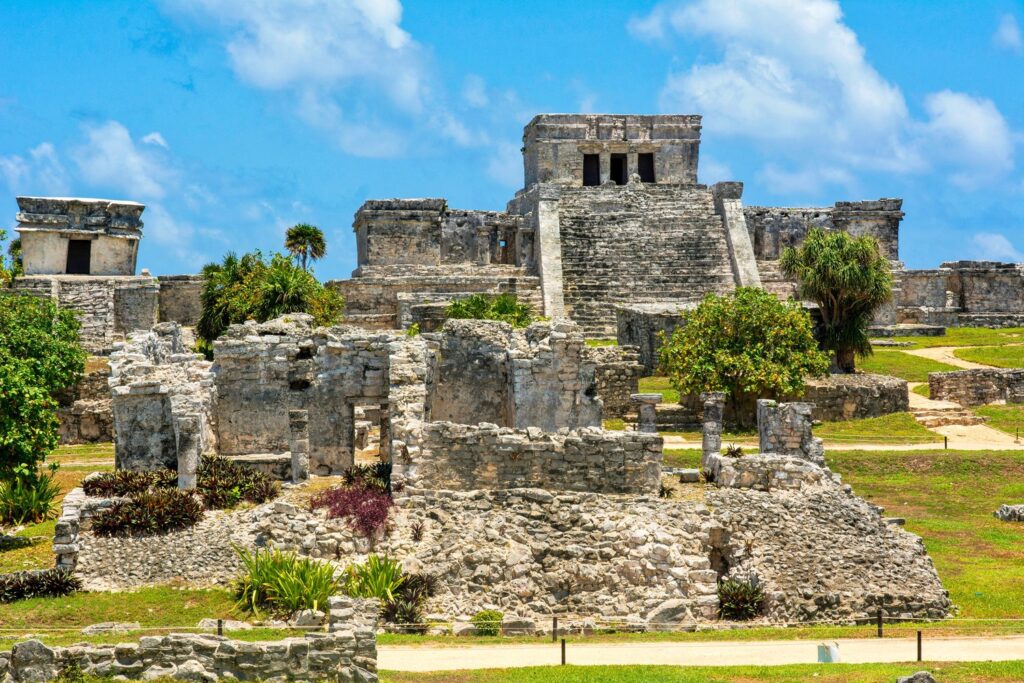
Below El Castillo lies Playa Ruinas beach, a small cove that appears on almost every postcard of the site. Access to the sand depends on conditions and site rules, so treat it as a bonus rather than the main event. Iguanas sunbathe on every wall, and they’re surprisingly relaxed about having their picture taken.
Tips for visiting the ruins
Get there as soon as the site opens. By late morning tour buses roll in from Cancún and Playa del Carmen, and there’s almost no shade inside the site. The ruins are now part of the Parque del Jaguar, so you pay a park fee as well as the archaeological site ticket. Bring cash in Mexican pesos, water, a hat and reef-safe sun cream.
A local guide makes a real difference here, because the buildings are small and the stories behind them aren’t obvious. The site is easy to reach by bike or taxi from Tulum town, and there’s a car park near the entrance if you’re driving.
Swim in the cenotes around Tulum
Cenotes are natural sinkholes filled with fresh water, formed when the limestone roof of an underground cave collapsed. The Maya saw them as sacred entrances to the underworld. Today, visiting cenotes is one of the best things to do in Tulum, and the water is so clear that you can see fish and stalactites several metres down.
Most cenotes charge a small entrance fee, many accept cash only, and almost all ask you to shower before swimming and skip sun cream. A life jacket is often included or available to hire, which helps if you’re not a strong swimmer.
Gran Cenote
Gran Cenote is a few minutes from Tulum town on the road to Cobá, so it’s the easiest cenote to fit into a busy day. Wooden steps lead down to a sunlit pool with caves on both sides, turtles in the shallows and bats under the rock ceiling. Snorkelling here feels like floating through a cathedral. Arrive early, because it’s one of the most popular cenotes in the Tulum area.
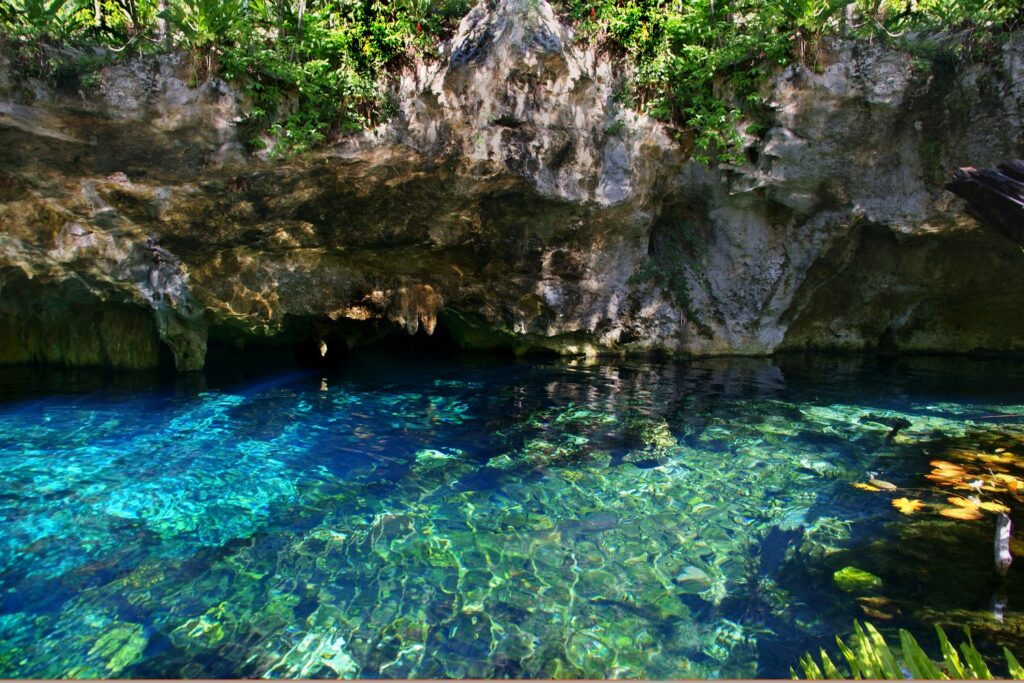
Cenote Calavera
Cenote Calavera, also called the Temple of Doom, is a small pool hidden in the jungle just outside town. From above you see three holes in the rock that look like the eyes and mouth of a skull, which is where the name comes from. Brave visitors jump in through the biggest hole, and there’s a ladder for everyone else. A rope swing over the water completes the picture.
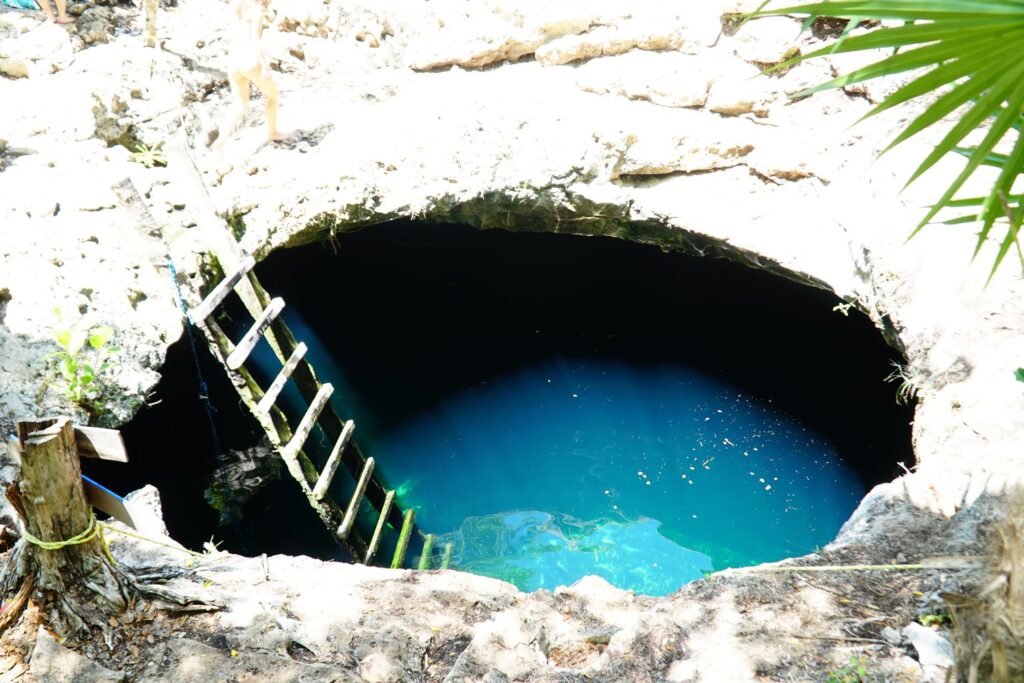
Dos Ojos and the Sac Actun cave system
Cenotes Dos Ojos, around 20 minutes north of Tulum, are two linked pools that look like a pair of eyes from above. They belong to Sac Actun, a massive underwater cave system and one of the longest known in the world. Snorkellers stay in the light zone, while certified cave divers follow guidelines into the tunnels. If you’ve ever wanted to try cenote diving, Dos Ojos is the classic place to start.
Casa Tortuga and other nearby cenotes
If you’d like several nearby cenotes in one go, Casa Tortuga between Tulum and Akumal combines open pools with semi-open caves on a single ticket. There are thousands of cenotes on the Yucatan Peninsula, and Cenote Zacil-Ha, Carwash (Aktun Ha) and Cristalino are other easy picks near town. Each one has its own character, so it’s worth finding your favourite cenote rather than ticking off the famous names.
Pick your Tulum beach
Tulum beach isn’t one stretch of sand but a whole coastline of coves and long white sand beaches, backed by palm trees and low jungle. The water is warm all year, and the colour shifts from pale aqua to deep blue as the reef drops away. The beach area closest to the ruins is the most public. Further south, most of the coast sits in front of hotels and beach clubs.
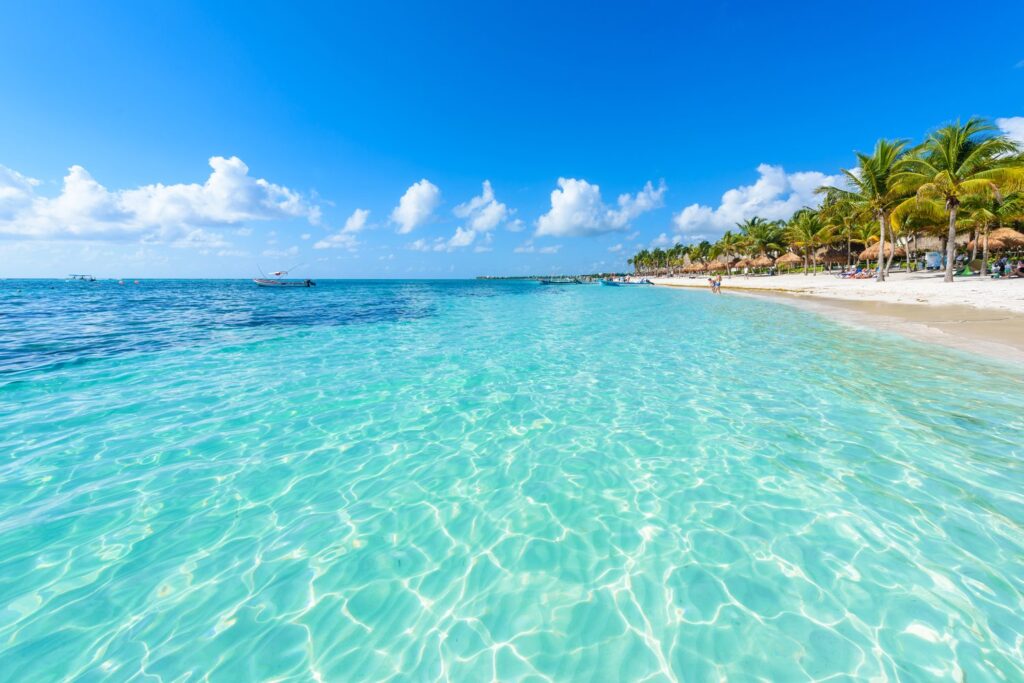
Playa Pescadores and Playa Santa Fe
Playa Pescadores and Playa Santa Fe sit just south of the ruins, where local fishermen still pull their boats onto the sand. These public beaches are free, relaxed and have a few simple restaurants serving grilled fish and traditional food. They’re also good bases for snorkelling trips to the reef offshore.
Playa Paraíso and North Playa
Playa Paraíso often appears in lists of Mexico’s best beaches, with leaning palm trees and wide sandy beaches. North Playa (Playa Las Palmas) is quieter and loved by people who just want a towel, a book and calm waters. Both are close to the ruins, so you can combine them with a morning at the archaeological site.
Beach clubs along the beach road
Beach clubs are a big part of Tulum’s appeal. Along the beach road you’ll find everything from simple sunbed spots to the kind of stylish beach club with day beds, DJs and sunset cocktails. Papaya Playa Project is the best known, with bohemian chic cabanas and full-moon parties. Many Tulum beach clubs let you use their loungers if you spend a minimum on food and drinks, so check the rules before you settle in.
From roughly April to September, sargassum seaweed can wash up on the Caribbean coast. Some weeks the beach is spotless, others it’s covered in brown weed. If the beach is the main reason for your trip, check recent sargassum reports before you book, or plan more cenote and lagoon time as a backup.
Float through Sian Ka’an Biosphere Reserve
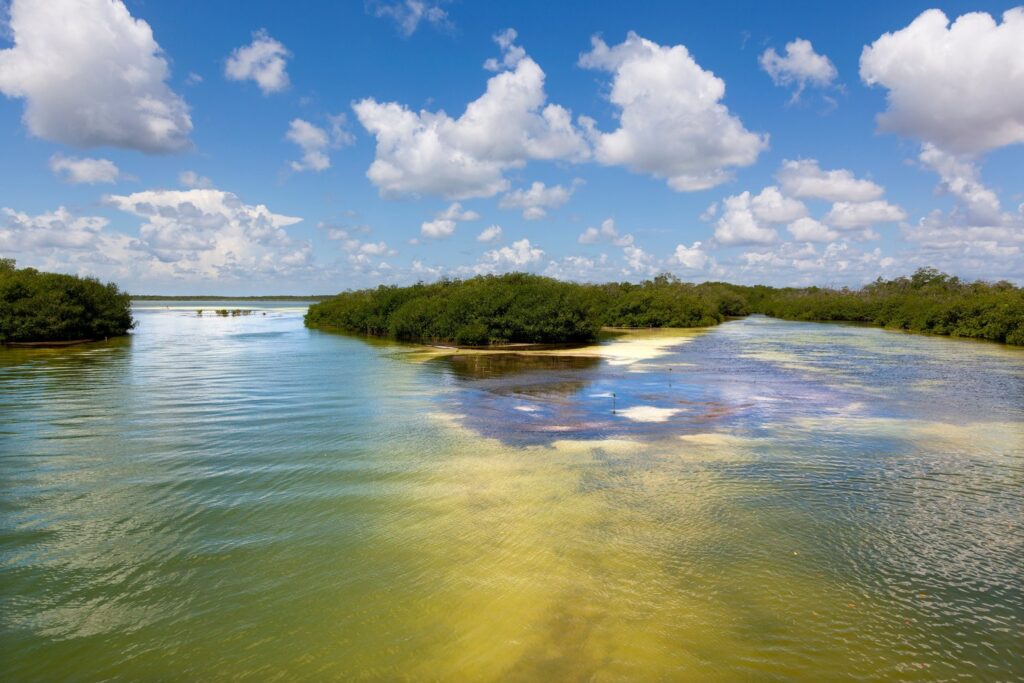
Sian Ka’an starts just south of the hotel zone and runs for more than 100 kilometres down the coast. It’s on the UNESCO World Heritage List and protects jungle, mangroves, lagoons and part of the coral reefs of the Caribbean coast. The name is usually translated from Mayan as “where the sky is born”, and on a clear day it’s easy to see why.
Muyil ruins and the Maya canals
The most popular tour starts at Muyil, a small Maya site in the jungle about 25 minutes south of Tulum. From there you take a boat across two lagoons into a narrow canal that the Maya are believed to have dug for trade. Then comes the best bit. You put on a life jacket, step into the water and let the gentle current carry you through the mangroves.
Punta Allen, dolphins and sea turtles
Further south, the bumpy dirt road ends at Punta Allen, a fishing village at the tip of the reserve. Boat trips from here look for dolphins, sea turtles and sometimes manatees, with marine life snorkelling stops on the reef. The road is slow and rough, so a guided tour is far easier than driving yourself.
Swim in the Kaan Luum lagoon
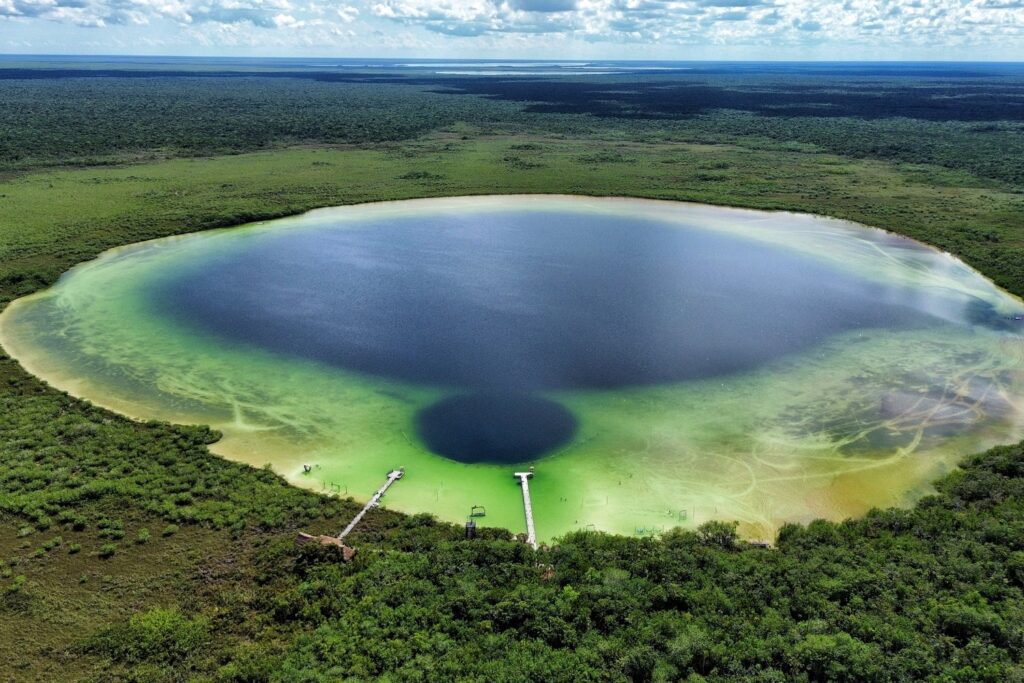
Kaan Luum lagoon is about 15 minutes south of Tulum town. It’s shallow and turquoise around the edges, but in the centre there’s a deep sinkhole that turns the water dark blue. Wooden piers, swings and hammocks over the water make it one of the most photogenic spots in the area. Go early or late in the day, when tour groups have left and the light is softer.
Wander Tulum town
Tulum town feels very different from the beach. Avenida Tulum, the main road, is lined with taquerías, juice bars, shops and tour agencies, while the side streets are full of colourful street art. Every few blocks there’s a new mural, from jaguars to Maya gods, so it’s worth exploring on foot.
The town centre is also the best place to eat well without beach club prices. Try cochinita pibil (slow-cooked pork from the Yucatan), fish tacos and marquesitas, rolled crêpes with cheese. You’ll also see stalls selling hammocks, embroidered dresses and dream catchers, which have become an unofficial symbol of Tulum, even though they come from North American traditions rather than Mexican culture.
Cycle the beach road
Cycling is the easiest way to get around. Tulum has a long cycle path linking the town, the ruins and the hotel zone, and most hotels rent bikes or include them. A ride along the beach road takes you past jungle hotels, yoga shalas and open air restaurants, with plenty of stops for a swim. Bring lights if you’ll ride back after dark, as the road is busy and poorly lit in places.
Snorkel with sea turtles in Akumal
Akumal, about 25 minutes north of Tulum, has a sheltered bay where green sea turtles graze on seagrass. The bay is a protected area, so you can only swim in marked zones and usually with a licensed guide. Keep your distance, don’t touch the turtles and leave the flippers at the entrance. It’s a short trip and one of the best experiences in the Riviera Maya for families.
Day trips from Tulum
Tulum makes a good base for exploring the Yucatan Peninsula. Most day trip destinations are within two or three hours by road, and organised tours include transport, guides and lunch.
Chichén Itzá, Valladolid and Cenote Suytun
Chichén Itzá (often spelt Chichen Itza in English) is the most famous Maya site in Mexico and one of the New Seven Wonders of the World. It’s about two hours from Tulum, so a full day trip usually combines it with the colonial town of Valladolid and a cenote swim. Cenote Suytun near Valladolid is the one with a stone platform in the middle and a beam of light falling through the roof, a scene you’ve probably already seen online.
Cobá
Cobá is an ancient Maya city in the jungle, around 45 minutes inland. Its ruins are spread over a large area connected by old raised roads called sacbés, and the best way to get around is by renting a bike or a bicitaxi. The main pyramid, Nohoch Mul, rises about 42 metres above the jungle, although climbing it is no longer allowed. Lagoons and cenotes in the surrounding area make it easy to fill a whole day.
Xcaret and Playa del Carmen
About an hour north, Xcaret Park combines underground rivers, wildlife and a huge evening show about Mexican history. Nearby Playa del Carmen is livelier than Tulum, with a long pedestrian street and ferries to the island of Cozumel.
Bacalar
Laguna Bacalar, known as the lagoon of seven colours, lies about two and a half hours south. It’s a long day trip, so many people prefer to spend a night or two there. Sailing, kayaking and swimming in the lagoon’s freshwater shades of blue are the main reasons to go.
Getting to Tulum from the UK
Most UK travellers fly into Cancún International Airport, which has direct flights from London and Manchester and plenty of connections through Europe and the US. There are no direct flights from the UK to Tulum itself. Tulum is around 120 km south, so allow about two hours by road. The newer Tulum airport, south-west of town, handles mainly domestic flights and seasonal routes from Canada and the US, so it can work if you connect there.
From Cancún airport you can take an ADO bus straight to Tulum town, book a shared shuttle or a private transfer, or hire a car. ADO bus services are comfortable, air-conditioned and leave several times a day. If you want to explore cenotes and ruins at your own pace, a rental car gives you the most freedom. You can compare offers for car hire at Cancún airport before you travel. Keep in mind that parking in the hotel zone is limited and police checkpoints are common on the main highway.
British passport holders don’t need a visa for a holiday in Mexico. Before you go, check the latest FCDO travel advice for Quintana Roo, the state where Tulum lies, as conditions can change.
When is the best time to visit Tulum?
The dry season from December to April brings sunny days, lower humidity and temperatures around 28°C, which makes it the most popular time for visiting Tulum. It’s also when prices peak, especially over Christmas, February half-term and Easter. Book your hotel and tours well in advance if you’re travelling in these weeks.
See available places to stay in Tulum
May and June are hot and quieter, while the rainy season from June to October brings short, heavy showers in the afternoon. Hurricane season runs from June to November, with the highest risk in September and October. November is a good compromise, with fewer crowds, green jungle and the sea still warm enough for swimming.
Hotels in Tulum
Tulum hotels range from simple guesthouses in town to beachfront hotels and jungle villas in the hotel zone. Staying in town is cheaper and closer to restaurants, while the beach road is all about sea views and barefoot evenings. Here are three good options for different budgets.
💰 Collection O Latino Boutique Tulum
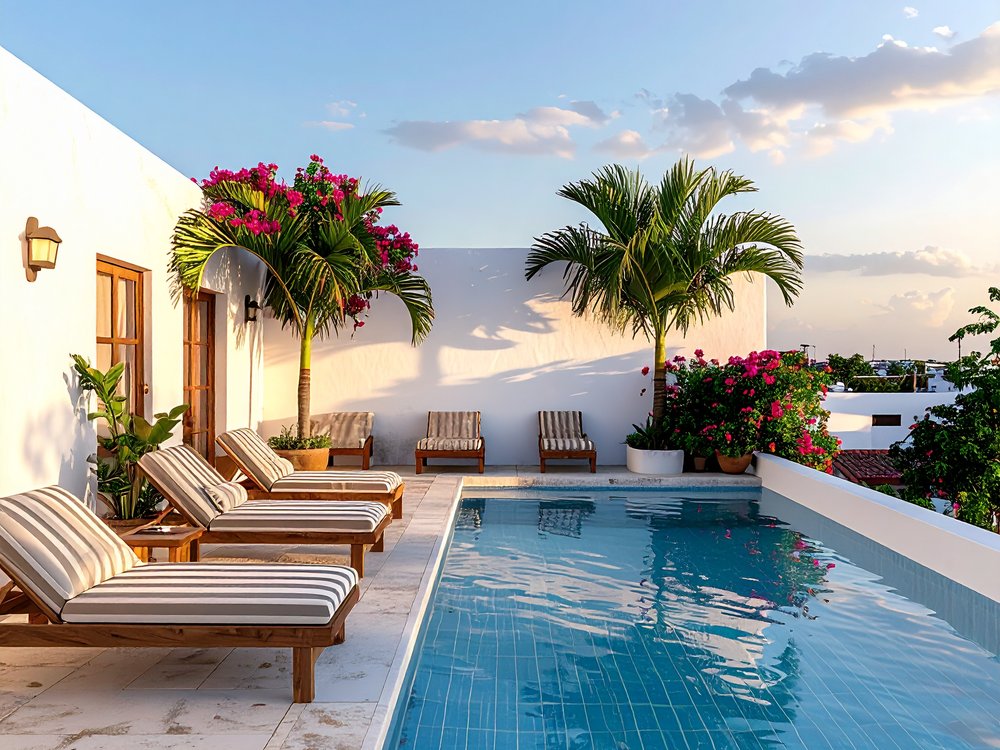
A small boutique hotel right in Tulum town, a few steps from taquerías, cafés and shops and about three minutes from the ADO bus station. It has a rooftop pool and a second pool on the ground floor, both good spots to cool off after a day in the cenotes. Rooms are simple and bright, with a laid-back Mexican Caribbean style. It suits couples, solo travellers and anyone who wants a central base for exploring on a budget.
🏨 Aldea Xaan Ha Tulum
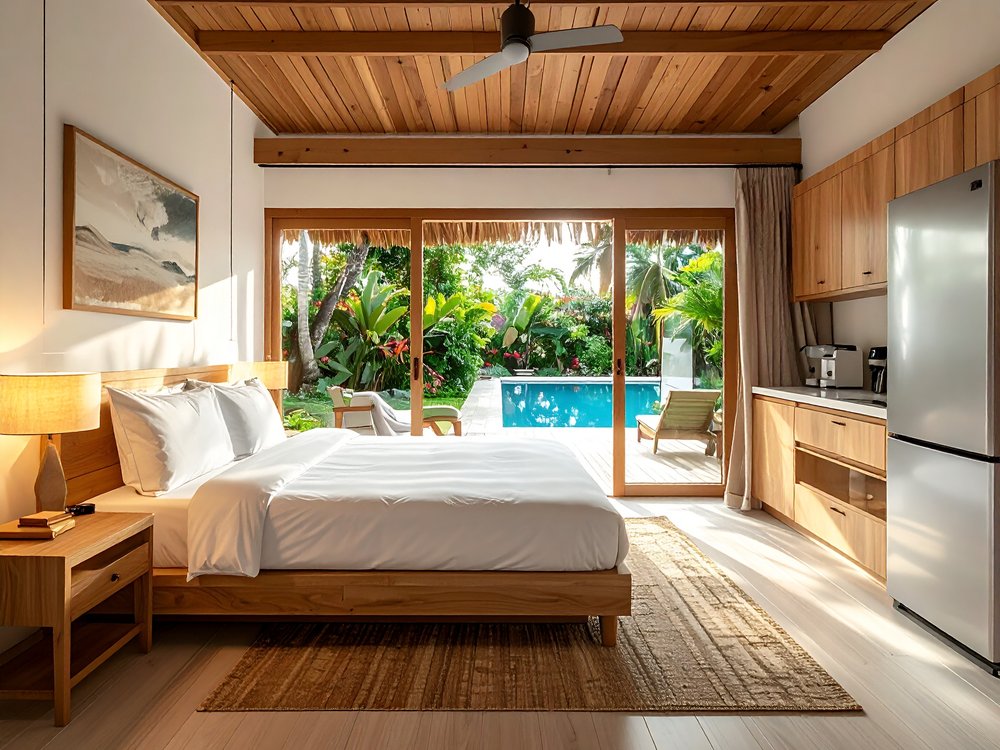
An apartment-style hotel set around a lush garden and an outdoor pool. Rooms come with air conditioning, a patio and a small kitchen corner with a fridge, microwave and coffee maker, which helps if you prefer to make your own breakfast. There is also a restaurant, a snack bar and free private parking. It works well for families and for anyone hiring a car to explore the cenotes and ruins.
💎 Secrets Tulum Resort & Beach Club - Adults Only - All Inclusive
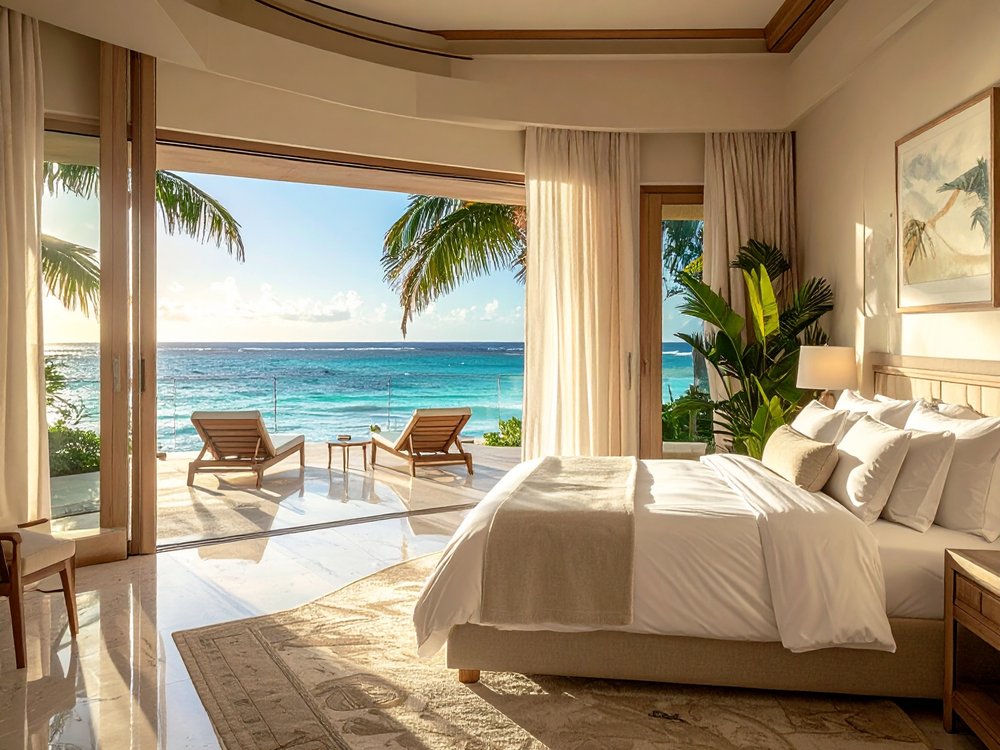
An adults-only, all-inclusive resort on a private stretch of beach a short drive north of Tulum. Every room has a balcony, and some look straight out to the Caribbean Sea. You can spend the day between the pool, the beach club, the hammam and the restaurants, with food and drinks included. It is the place to choose for a romantic break or a honeymoon with sea views and no need to plan meals.
Tulum FAQ
Is Tulum, Mexico worth visiting?
Yes, especially if you like a mix of history, nature and beach time. Few places combine ancient ruins on a cliff, swimmable cenotes and a UNESCO-listed nature reserve within half an hour of each other. It’s more expensive than many Mexican towns, but staying in town and eating at local taquerías keeps costs down.
Is Tulum better than Cancún?
They suit different trips. Cancún is a big resort city with large all-inclusive hotels, nightlife and easy flights, while Tulum is smaller and more laid-back, with boutique hotels and ruins on the doorstep. Many UK visitors fly into Cancún and spend most of their holiday in Tulum or split the time between the two.
Is Tulum beach swimmable?
Yes. The sea is usually calm and warm thanks to the reef offshore, and most beaches shelve gently. Watch for red flags on windy days, and remember that sargassum can make swimming unpleasant in some weeks between April and September.
How many days do you need in Tulum?
Three days is enough for the ruins, a couple of cenotes and some beach time. With five days to a week you can add Sian Ka’an, Kaan Luum lagoon and a day trip to Chichén Itzá or Cobá without rushing.
Do you need cash in Tulum?
Yes. Hotels, restaurants and beach clubs take cards, but many cenotes, small food stalls and park entrances accept only cash in Mexican pesos. Withdraw pesos from bank ATMs in town rather than paying in pounds or dollars at poor exchange rates.

