Five centuries ago this harbour was one of the busiest in the Spanish Empire. Today you can walk its main street in twenty minutes and hear the sea from almost every corner.
Santa Cruz de la Palma is the capital of La Palma, the green north-western island of the Canary Islands, and not to be confused with Santa Cruz de Tenerife on the neighbouring island. It’s a small, colourful port town squeezed between steep volcanic slopes and the Atlantic. Its old quarter is full of Renaissance squares, cobbled lanes and manor houses, and its seafront is lined with the famous wooden balconies painted in bright colours. Many visitors arrive by ferry or on a cruise ship and only spend a few hours here, but the town deserves at least a full day.
In this article you’ll find the best things to do in Santa Cruz de la Palma, how much time to plan, how to get there and where to stay. You’ll also get ideas for trips across La Palma, from the forests of Caldera de Taburiente to some of the darkest night skies in Europe.
💰 El Hotelito 27 - A small, friendly guesthouse in the old town.
🏨 Hotel Castillete - A practical hotel on the seafront promenade, close to the port.
💎 H10 Taburiente Playa - A resort hotel with pools near Los Cancajos beach.
Why visit Santa Cruz de la Palma, Spain?
Santa Cruz de la Palma was founded on 3 May 1493 by the Spanish conqueror Alonso Fernández de Lugo. In the 16th century its harbour became one of the most important in the Spanish Empire, a stop for ships sailing between Europe and the Americas. Sugar, wine and trade made local merchants rich, and they spent their money on churches, palaces and elegant townhouses. Much of that architecture still stands, which is why the old town is considered one of the most beautiful in the Canary Islands.
Unlike the big resorts on other islands, Santa Cruz de la Palma feels like a real working town. Shops close for lunch, locals meet in the squares in the evening and the pace is slow. If you’re looking for authentic island life rather than nightlife and theme parks, it’s a great choice.
Things to do in Santa Cruz de la Palma
The historic centre is compact and easy to explore on foot. Most sights lie along two parallel streets: the seafront Avenida Marítima and the old main street, Calle O’Daly, also known as Calle Real.
Walk Calle O’Daly and Plaza de España
Calle O’Daly is the main street of the old town, lined with noble houses, cafés and small shops. It’s named after an Irish merchant who settled here in the 18th century, a reminder of how international the port once was. Halfway along, the street opens onto Plaza de España, a triangular square that is the heart of town life.
On one side stands the town hall, a Renaissance building from the 16th century with an arcaded facade facing the square. Opposite rises the Iglesia de El Salvador, the main church, with a stone portal and a wonderful carved wooden ceiling in the Mudéjar style inside. Sit on a bench by the fountain, watch everyday life go by and take in one of the finest Renaissance squares in the Canary Islands.
Nearby, look out for the Placeta de Borrero, a tiny square with a fountain and wooden balconies, and the steep Calle de San Sebastián, where some of the oldest houses in town still stand. The whole historic centre is protected as a Property of Cultural Interest (Bien de Interés Cultural), so new buildings have to respect the colonial style.
Admire the balconies on Avenida Marítima
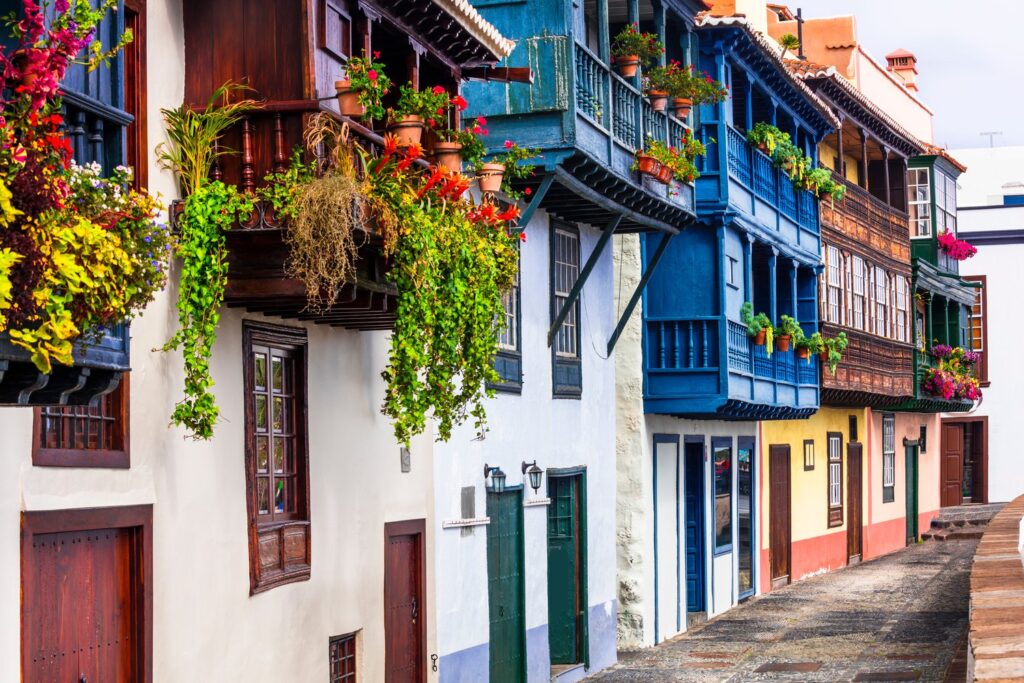
The postcard image of Santa Cruz de la Palma is a row of old houses on Avenida Marítima, each with a wooden balcony painted in a different colour. Their fronts face the ocean, and the balconies, often decorated with flowers, were once used to air laundry and keep the houses cool. Walk along the seafront promenade in the late afternoon, when the low sun brings out the colours. It’s one of the most photographed streets in the Canary Islands.
Climb aboard the Barco de la Virgen
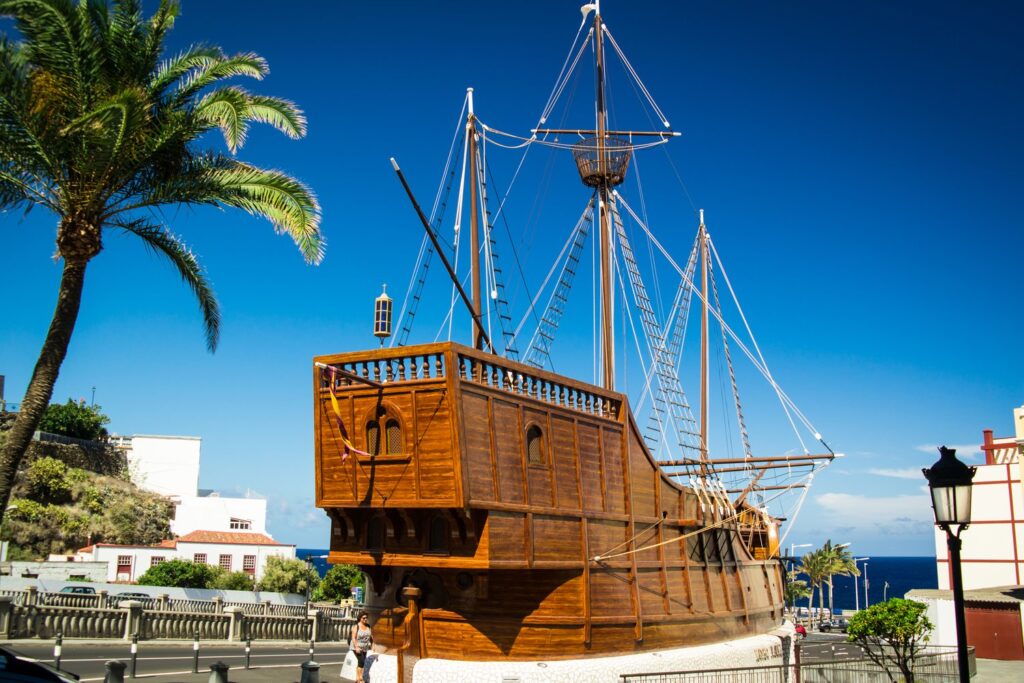
At the northern end of the old town you’ll spot a ship that seems to have run aground in the middle of a square. The Barco de la Virgen is a concrete replica of the Santa María, the flagship of Christopher Columbus. Inside is a small naval museum with maps, ship models and navigation instruments that tell the story of the island’s maritime past. Children love it, and it only takes about half an hour. On the hill just above it stands the small Castillo de la Virgen, one of the forts that once protected the harbour from pirate attacks.
Visit the Museo Insular and the Castillo de Santa Catalina
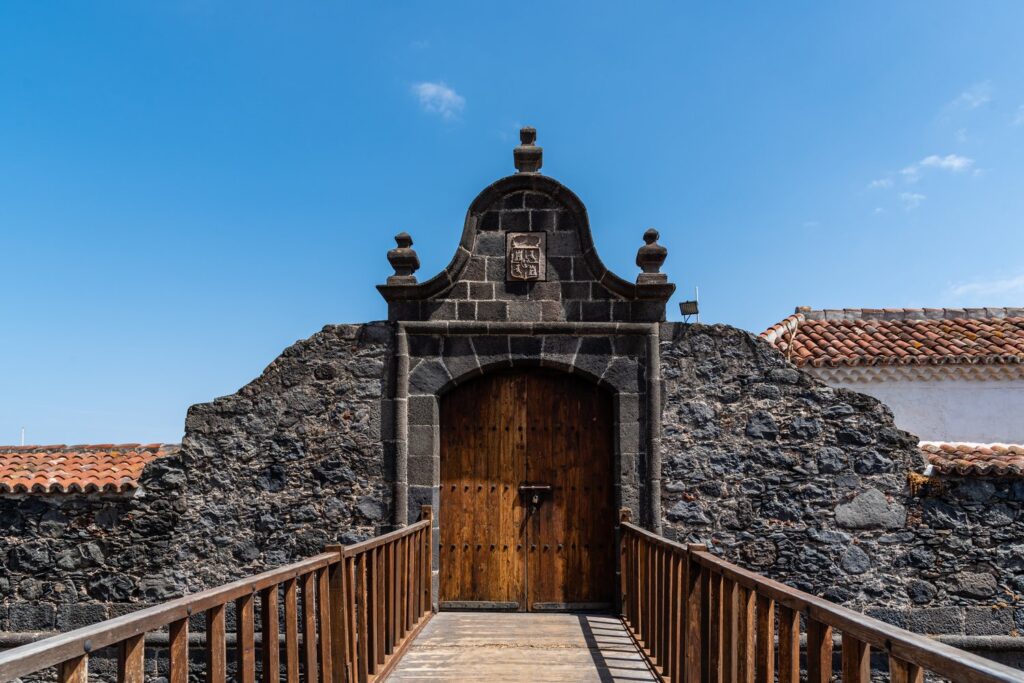
The Museo Insular occupies the former convent of San Francisco, a 16th-century building with a lovely cloister. Its collections cover La Palma’s history, ethnography, natural history and fine art, so it’s a good place to understand the island. Down by the sea, the Castillo de Santa Catalina is a 17th-century fortress built to protect the town from pirates. You can usually admire it only from the outside, but its walls and the ocean behind them make a great photo.
Walk up to the Real Santuario de Nuestra Señora de las Nieves
About 3 km above the town, the sanctuary of Our Lady of the Snows is home to La Palma’s patron saint. The small church has a beautiful wooden ceiling and a richly decorated altar. Every five years the statue of the Virgin is carried down to Santa Cruz in the Bajada de la Virgen, one of the most spectacular festivals in the Canary Islands, with dances, parades and a theatrical dialogue between a castle and a ship. You can walk up along an old path in about an hour or take a taxi.
Eat and drink like a local
Start the day with a barraquito, a layered coffee with condensed milk, a dash of liqueur and cinnamon, in one of the cafés around Plaza de España. The Mercado Municipal sells local bananas, avocados, goat’s cheese and almond sweets, and it’s a good place for a cheap lunch at the counter. In the evening, small bars in the old town serve papas arrugadas with mojo sauce, fresh fish and wine from the island’s volcanic vineyards.
Relax on the beach
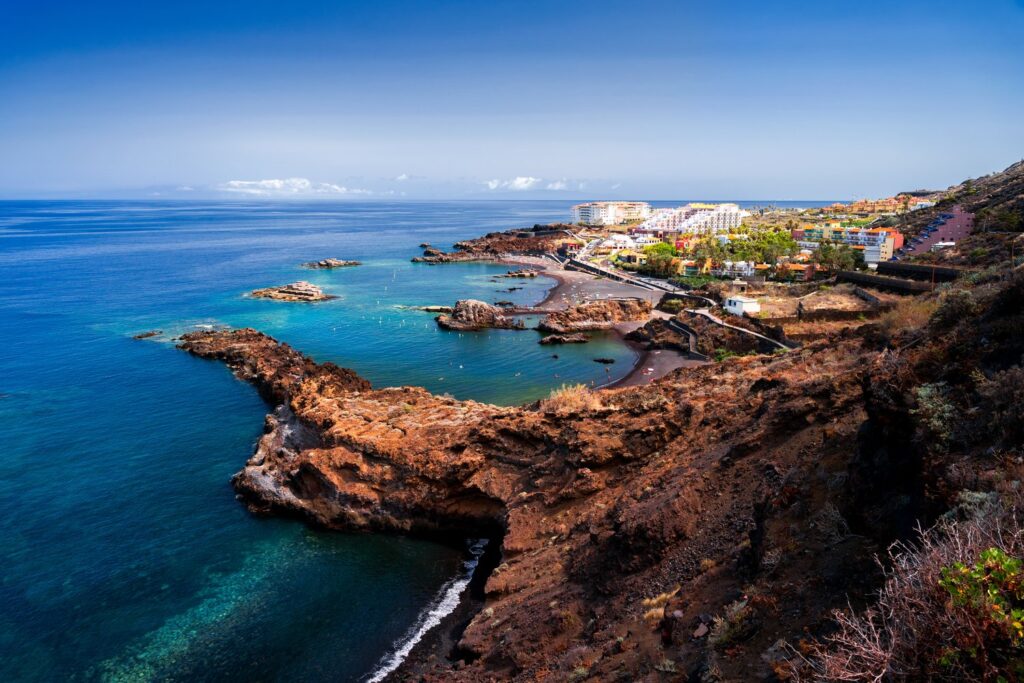
Santa Cruz de la Palma has its own town beach of dark volcanic sand, right next to the seafront promenade and protected by a breakwater. For a longer beach day, head to Los Cancajos, about 5 km south in Breña Baja. Its small bays of black sand are sheltered by volcanic rocks, and the water is great for snorkelling.
Trips from Santa Cruz de la Palma
La Palma is nicknamed La Isla Bonita, the beautiful island, and its capital is a convenient base for exploring it. In under an hour you can reach most of the island’s highlights by car.
The Caldera de Taburiente National Park is a huge volcanic crater filled with pine forests, streams and waterfalls, with hiking trails for all levels. The Roque de los Muchachos, the highest point of the island at over 2,400 metres, is home to one of the world’s most important astronomical observatories. La Palma was the first Starlight Reserve in the world, and stargazing tours are among the most popular things to do here. In the south, the Tajogaite volcano, the island’s newest volcano, formed on the Cumbre Vieja ridge during an eruption that lasted 85 days in 2021, and you can visit it on guided walks. Closer to town, the laurel forest of Cubo de la Galga offers an easy and magical hike.
How long should you spend in Santa Cruz de la Palma?
One day is enough to see the main sights of the old town at a relaxed pace. If you’re staying on La Palma for a week, spend one or two nights in the capital and the rest of the time exploring the island. Cruise passengers usually have around six to eight hours, which is enough for a walk through the old town and a short trip into the hills.
How to get to Santa Cruz de la Palma
La Palma airport lies about 8 km south of the capital, around 15 minutes by car or taxi. There are frequent inter-island flights from Tenerife North and Gran Canaria, as well as seasonal direct flights from the UK and other European countries. Ferries from Los Cristianos in the south of Tenerife arrive at the port right next to the old town.
Buses connect the capital with the rest of the island, but a rental car is the best way to reach viewpoints, trailheads and the observatory. Roads are winding and mountainous, so drive slowly and allow extra time.
When is the best time to visit Santa Cruz de la Palma?
The climate is mild all year, with temperatures usually between 18°C and 26°C on the coast. Spring and autumn are ideal for hiking, while summer is best for the beach. The east side of the island, where the capital lies, can be cloudier than the west. If you can, plan your trip around the Bajada de la Virgen, held every five years in summer, or the colourful carnival with its famous Los Indianos day, when the streets fill with people dressed in white and covered in talcum powder.
Hotels in Santa Cruz de la Palma
The capital has a small selection of hotels, from guesthouses in the old town to resort hotels on the nearby beach of Los Cancajos. Book early for carnival and the Bajada de la Virgen, when the town fills up quickly.
💰 El Hotelito 27
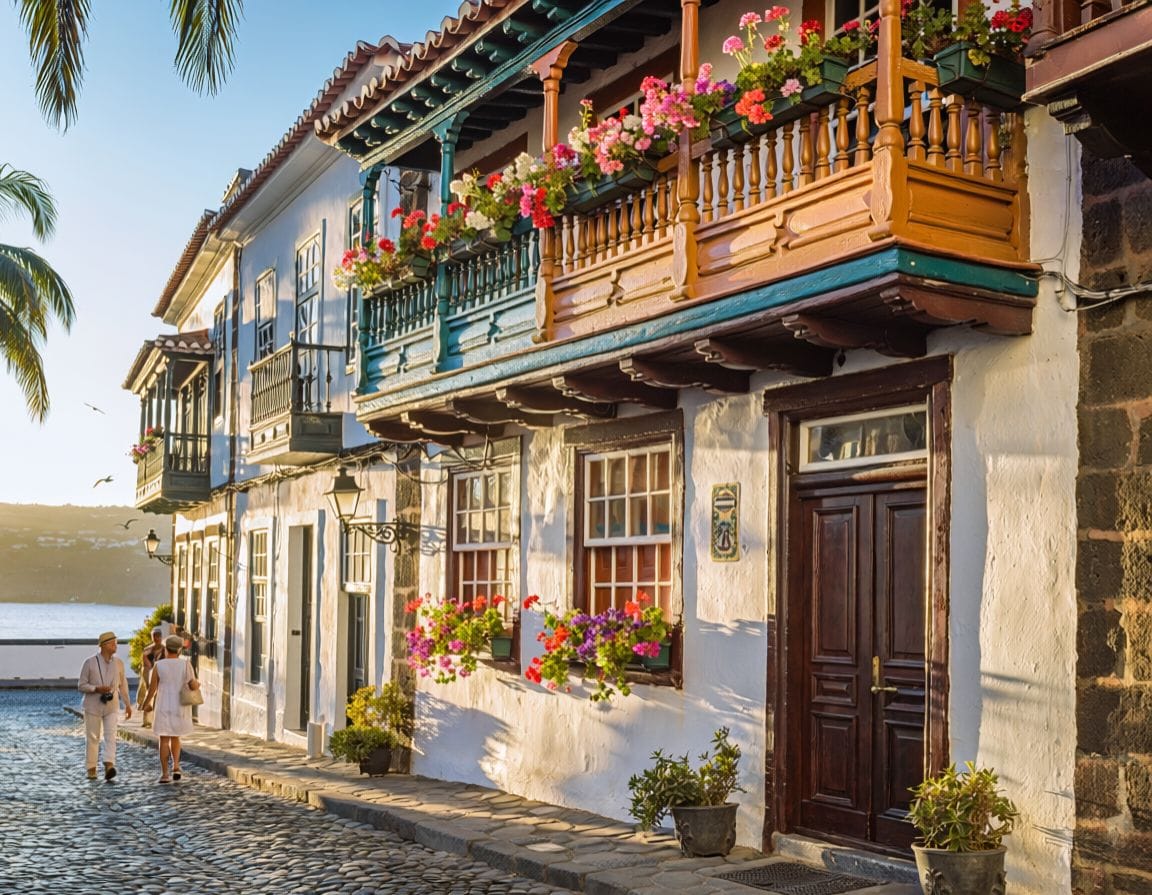
A small, friendly guesthouse in the centre of Santa Cruz de la Palma, within walking distance of Plaza de España and the seafront. Rooms are simple but comfortable, and there’s a shared lounge where you can relax after a day of sightseeing. Free Wi-Fi runs through the whole building. It’s a good-value choice for independent travellers who want to explore the old town on foot.
🏨 Hotel Castillete
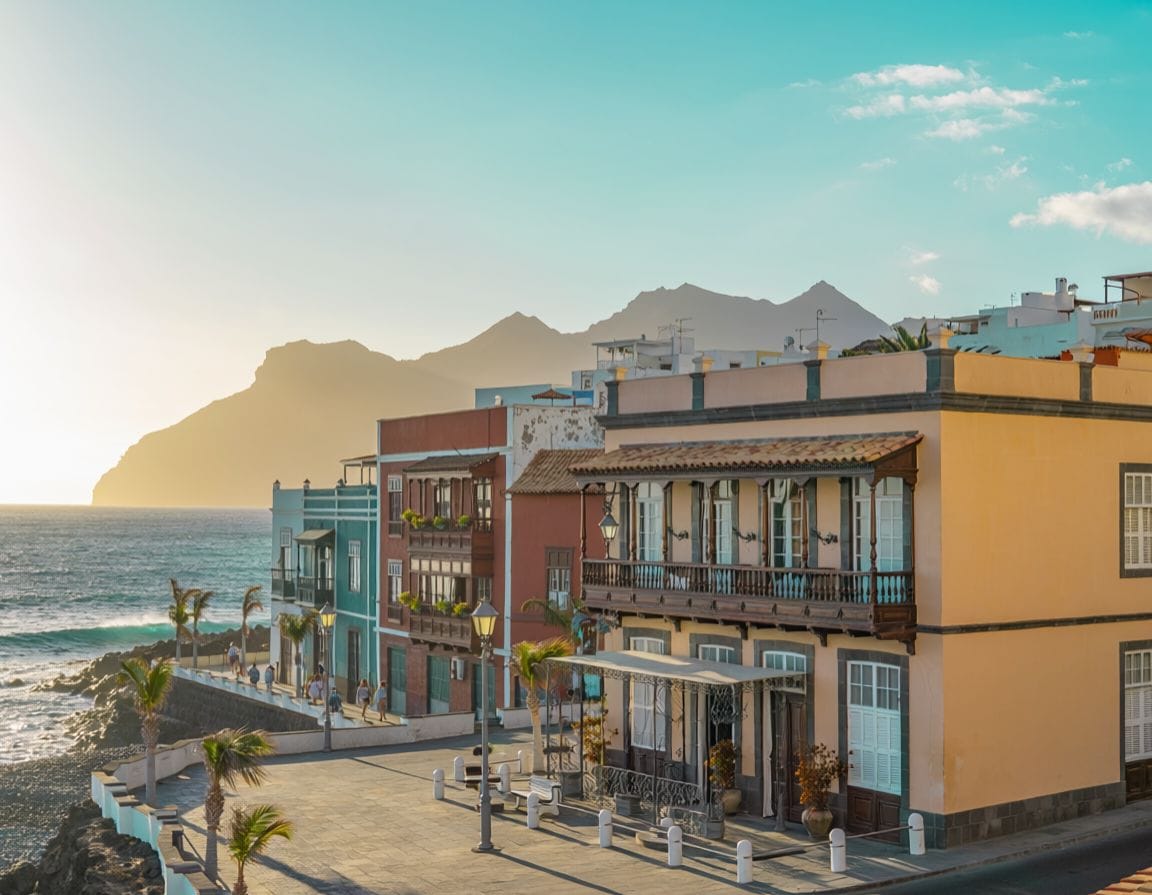
A practical hotel set on the seafront promenade of Santa Cruz de la Palma, a short walk from the colourful balconies of Avenida Marítima. Many rooms look out to the ocean, and the old town’s restaurants and museums are right on your doorstep. It’s convenient for ferry passengers, as the port is just a few minutes away. A solid mid-range base for a city break or the first nights of a longer trip.
💎 H10 Taburiente Playa
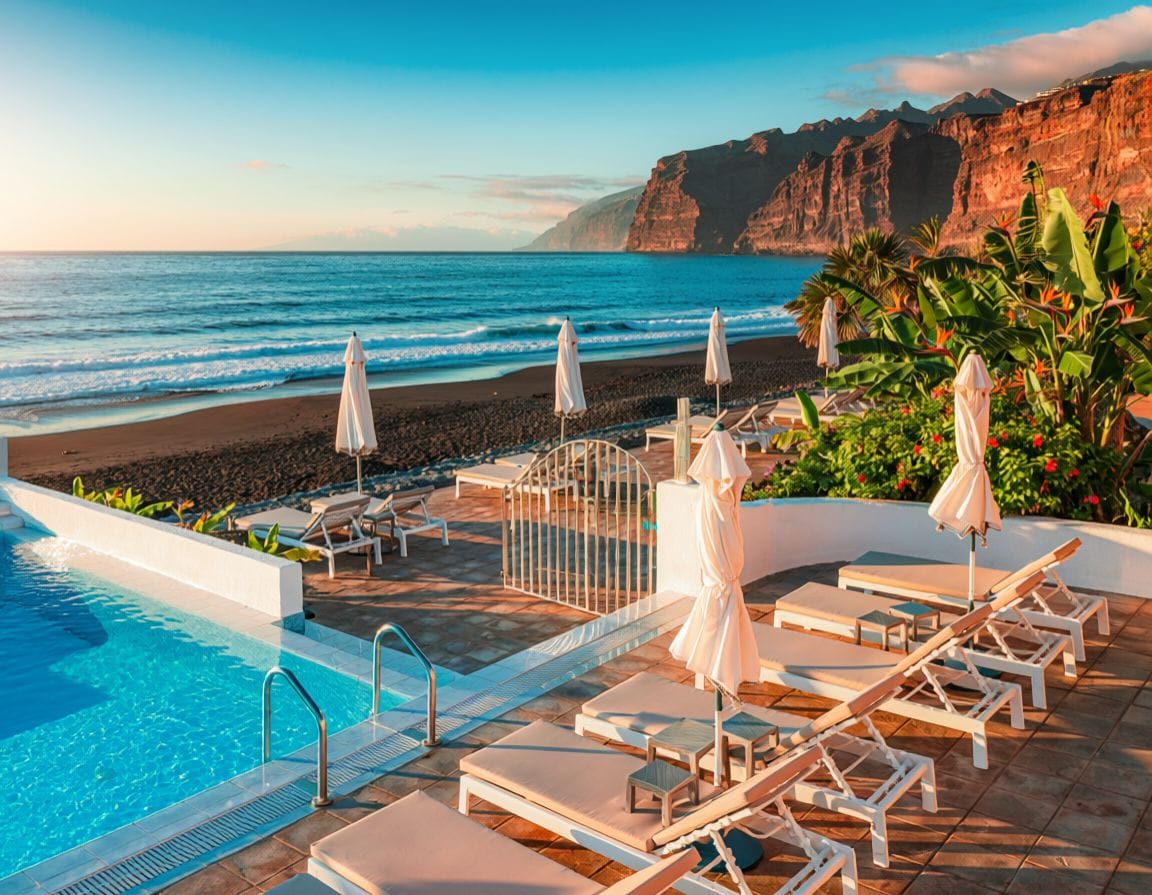
A resort hotel in Breña Baja, about 300 metres from the beach of Los Cancajos on the east coast of La Palma. It has pools, gardens and plenty of facilities for a relaxing holiday, with the airport and the capital only around 10 minutes away. It’s a great option for families and couples who want to mix beach days with sightseeing. You’ll have easy access to both the old town and the island’s main roads.
Santa Cruz de la Palma FAQ
Is Santa Cruz de la Palma the same as Santa Cruz de Tenerife?
No. Santa Cruz de la Palma is the capital of La Palma, while Santa Cruz de Tenerife is the capital of Tenerife and of the whole province. Both islands belong to the province of Santa Cruz de Tenerife, which is why the names are often confused.
What is Santa Cruz de la Palma known for?
It’s known for its colourful wooden balconies on Avenida Marítima, its Renaissance old town and the replica of Columbus’s ship, the Barco de la Virgen. It’s also famous for the Bajada de la Virgen festival and the Los Indianos carnival party.
Is Santa Cruz de la Palma worth visiting on a cruise?
Yes. The port is right next to the old town, so you can walk to the main sights in a few minutes. In a few hours you can see Plaza de España, the balconies and the Barco de la Virgen, and still have time for a coffee in the square.
Is there a beach in Santa Cruz de la Palma?
Yes, the town has a dark-sand beach right by the seafront promenade. For a more relaxing beach day, Los Cancajos is about 5 km to the south and has sheltered bays that are good for swimming and snorkelling.
How do you get from Tenerife to La Palma?
You can take a short flight from Tenerife North airport or a ferry from Los Cristianos in the south of Tenerife. Ferries arrive in the port of Santa Cruz de la Palma, right next to the old town.

