A tiny white crab, smaller than your fingernail, shines against black rock in a lagoon that has never seen direct sunlight.
Jameos del Agua is a volcanic cave on the northeast coast of Lanzarote that the artist and architect César Manrique turned into one of the most unusual spaces in Spain. Inside a collapsed lava tube you walk past a dark underground lake, a bright white pool framed by palms and a concert hall carved into the rock. It was the first of the island’s Centres of Art, Culture and Tourism, and it still shows Manrique’s idea that nature and art can live in harmony. In this article you will discover what to see inside, how to get there, how long to stay, tips for families and what to combine it with in the north of the island.
💰 Hostal Residencia Cardona - A simple guesthouse by the sea in Arrieta, a few minutes from the caves.
🏨 Hotel Emblemático La Casa de los Naranjos - A boutique stay in a traditional house in the village of Haría.
💎 Arrecife Gran Hotel & Spa - A five-star seafront tower in Arrecife with a spa and rooftop bar.
What is Jameos del Agua?
A jameo is the local word for a hole that opens when the roof of a lava tube collapses. Thousands of years ago, the La Corona volcano in the north of the island poured lava towards the sea. The outer crust cooled and hardened while the molten rock kept flowing inside, leaving a volcanic tube with a length of more than 7 km. Its last stretch, the Atlantis Tunnel, continues for over a kilometre under the sea floor.
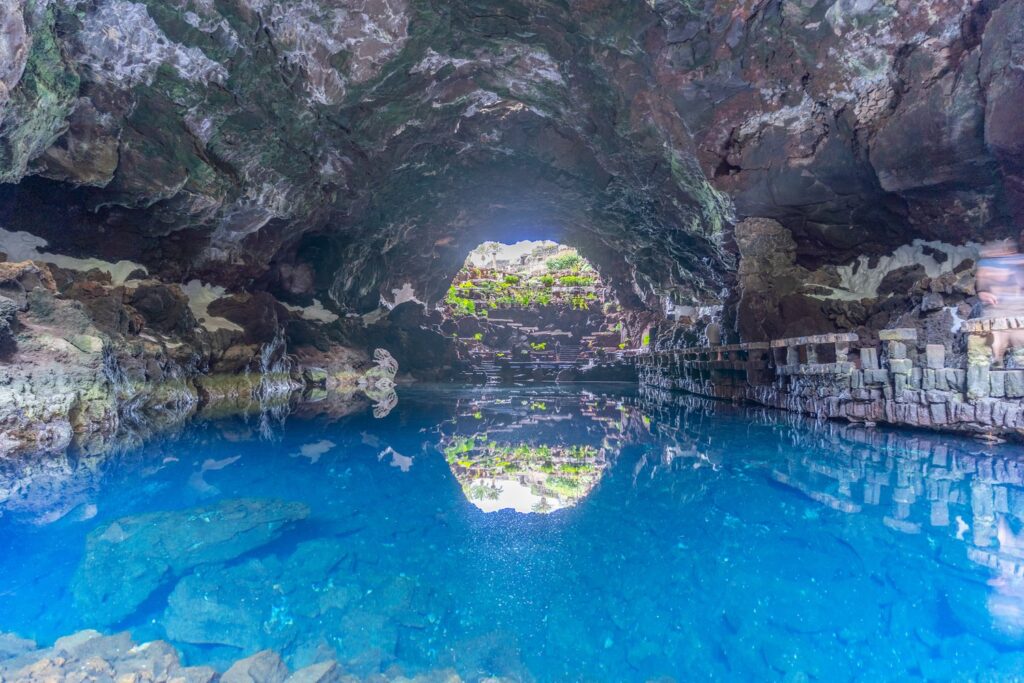
Los Jameos del Agua is located in the section of that tube closest to the coast, between the villages of Arrieta and Punta Mujeres in the municipality of Haría. Three openings give the site its shape: the Jameo de la Cazuela at the entrance, the Jameo Chico with its lagoon and the Jameo Grande with the pool and gardens. Seawater seeps in through the rock, so the interior lake rises and falls with the tide. You may also see the name written as Jameos de Agua or simply Los Jameos.
César Manrique and the idea behind the site
In the 1960s, the island government asked César Manrique to find new creative alternatives for tourism on Lanzarote. Jameos del Agua was his first project, and its mix of nature and artistic creation became the model for every centre he built later. Instead of covering the cave with concrete, he worked with the volcanic rock, added stairs, terraces and gardens, and left the natural shape untouched. The lighting was designed by the Venezuelan artist Jesús Soto, who made the darkness of the cave part of the experience.
Manrique, who lived from 1919 to 1992, believed that tourism should protect the island rather than spoil it. You can see his influence everywhere on Lanzarote, from the white houses with green shutters to the absence of billboards along the roads. If you enjoy his work, you will also recognise his touch at the El Diablo restaurant in Timanfaya National Park.
What to see inside Jameos del Agua
The visit follows a natural route through the lava tube, from the entrance stairs down into the cave and out again into the light. The whole site is compact, and you can explore it at your own pace.
Jameo Chico and the underground lagoon
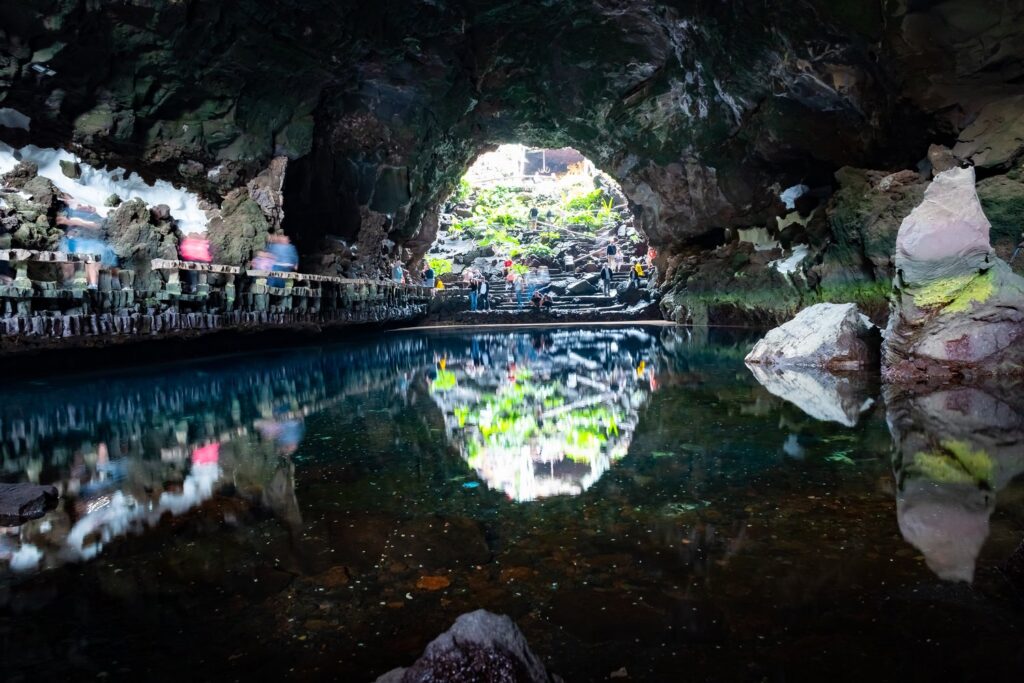
A spiral stone staircase leads down through the Jameo de la Cazuela to the Jameo Chico. Here you find a small bar and restaurant set among plants and volcanic rock. Just beyond it lies the interior lake, a pool of clear, still seawater under the cave roof. The light from above falls on the water and turns it emerald green, and a narrow path runs along its edge.
The blind albino crabs
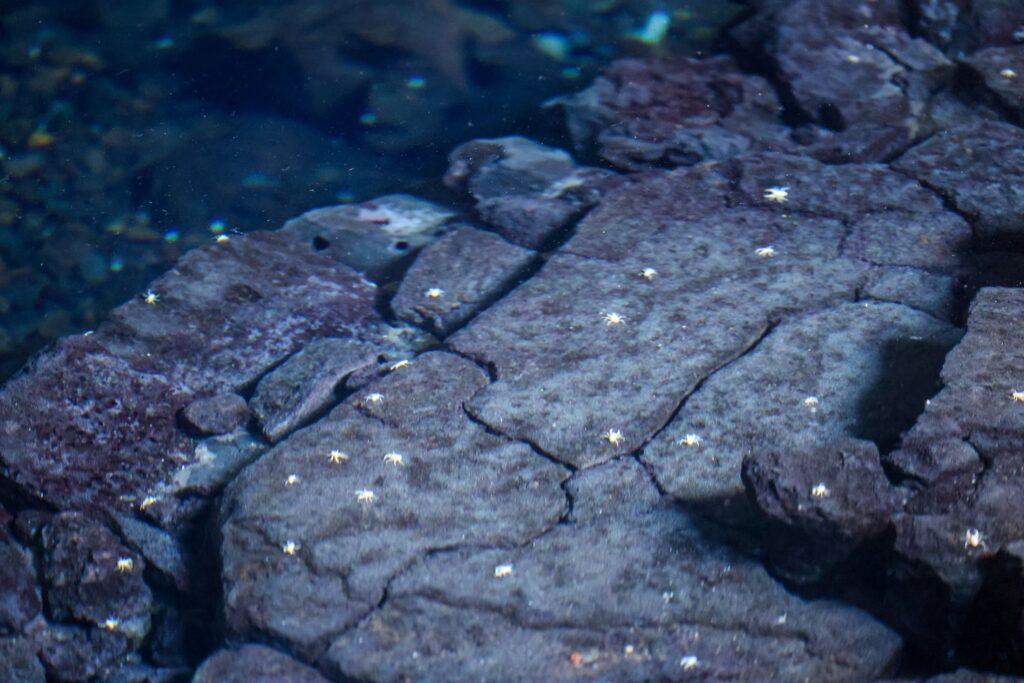
Look closely at the dark rocks under the water and you will see hundreds of tiny white dots. These are blind albino crabs, an endemic species found nowhere else in the world and the symbol of Jameos del Agua. They are only about 1 cm long and have adapted to life in total darkness. The crabs are so fragile that throwing coins into the lake is strictly forbidden, because the metal can kill them. Please keep your coins in your pocket and enjoy the sight quietly.
Jameo Grande and the white pool
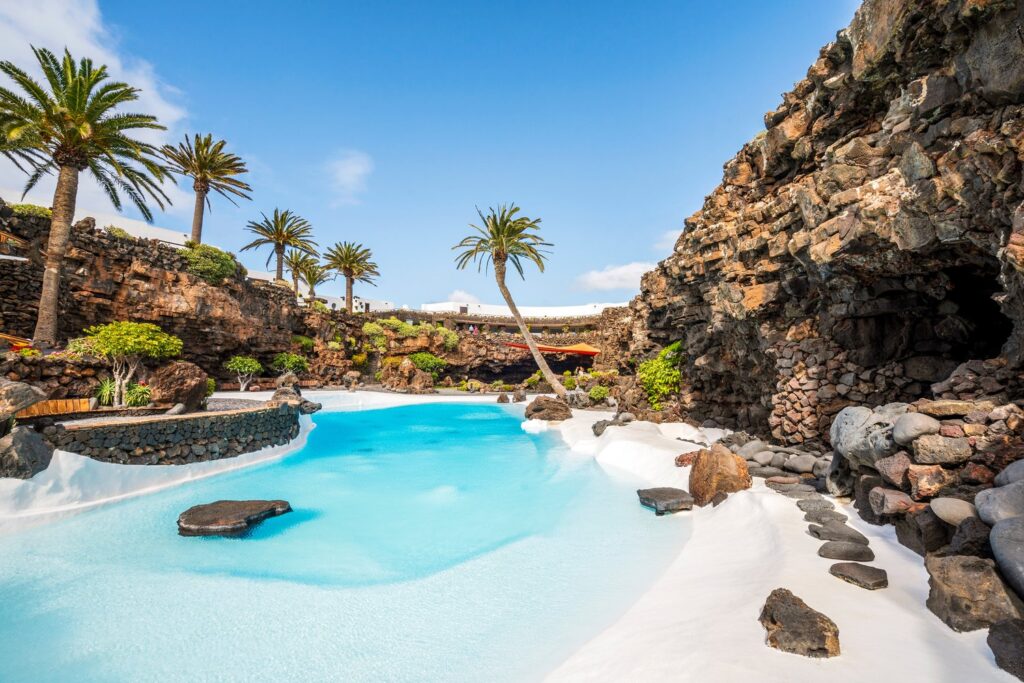
Climb out of the tunnel and you reach the Jameo Grande, the largest opening. This is where the famous turquoise pool lies, surrounded by white walls, palm trees and tropical gardens. It is one of the most photographed spots on the island, but nobody is allowed to swim in it. Benches around the pool make it a lovely place to sit for a while and enjoy the contrast between black rock and bright water.
The auditorium
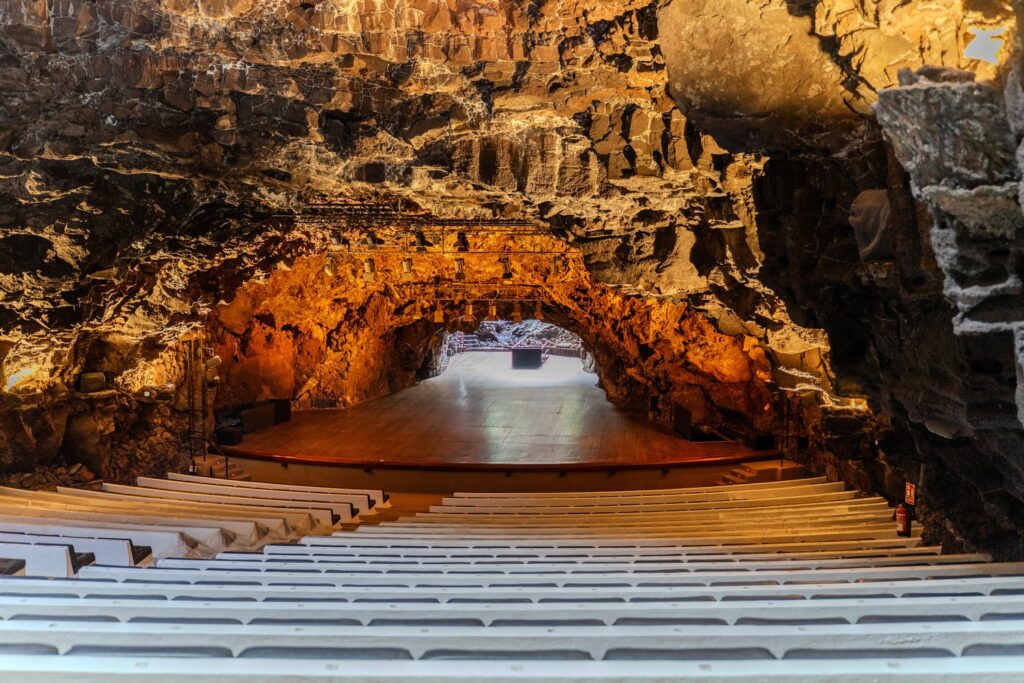
Further into the lava tube, Manrique created an auditorium for around 550 people inside the cave itself. The rock walls give it remarkable acoustics, and it hosts concerts and other events throughout the year. When there is no performance, you can usually look inside and see how the space was shaped around the natural vault.
Casa de los Volcanes
Above the cave stands the Casa de los Volcanes, a visitor centre about the volcanoes of the Canary Islands. Its displays explain how lava tubes are formed and why Lanzarote looks the way it does. It is a good stop for anyone curious about the science behind the site.
How to get to Jameos del Agua
The site is on the coast road between Arrieta and Órzola, in the north of the island. The easiest way to reach it is by car: it takes about 25 minutes from Arrecife, 20 minutes from Costa Teguise and around 35 minutes from Puerto del Carmen. With a rental car you can also stop at the viewpoints and villages of the north on the same day. There is a car park at the entrance.
If you don’t want to drive, join a guided tour from the resorts. Many tours combine Jameos del Agua with the nearby Cueva de los Verdes, the Mirador del Río or Timanfaya National Park, which saves you planning the logistics and includes the admission tickets.
How long to spend and when to go
Allow about an hour to an hour and a half to see everything without rushing. If you want to eat at the restaurant or visit the Casa de los Volcanes, plan a little longer. The site is busiest in the late morning, when coach tours arrive, so go early or in the afternoon for a calmer visit. Check the opening hours before you set off, as they can change for concerts and special events.
Visiting Jameos del Agua with kids
Children usually love spotting the tiny crabs in the lagoon, and the cave feels like a real adventure. Keep in mind that the route includes several flights of stone steps, so a baby carrier works much better than a pushchair. Paths near the water can be damp, so hold small children’s hands. After the visit, the natural rock pools in Punta Mujeres and Arrieta are a great place to cool off, and on another day the water parks in Lanzarote are always a hit.
Cueva de los Verdes and other sights nearby
Jameos del Agua is part of the same lava tube as the Cueva de los Verdes, which lies about 1 km inland. Here you walk through a longer section of the tunnel with a guide, on a tour of about 45 minutes, and the cave hides a surprise near the end that we won’t spoil. Visiting both on the same morning is easy and gives you a full picture of the La Corona volcano.
The north of the island has more Manrique sights within a short drive. The Mirador del Río is a viewpoint built into a cliff, looking across to the island of La Graciosa. The Jardín de Cactus near Guatiza is a garden with thousands of cacti in an old quarry. The village of Haría, known as the valley of a thousand palms, is perfect for lunch.
Practical information
- Tickets to Jameos del Agua are best booked in advance. You will skip the queue at the entrance and avoid the risk of finding tours sold out on busy days.
- Address: Carretera Arrieta-Órzola, 35542 Punta Mujeres, Haría, Lanzarote
- Book tickets on GetYourGuide
Hotels near Jameos del Agua
The north of the island is quieter than the southern resorts, which makes it a good base for exploring caves, viewpoints and villages. You can choose between simple guesthouses by the sea and comfortable hotels in the capital. For more options, browse places to stay on Lanzarote.
💰 Hostal Residencia Cardona
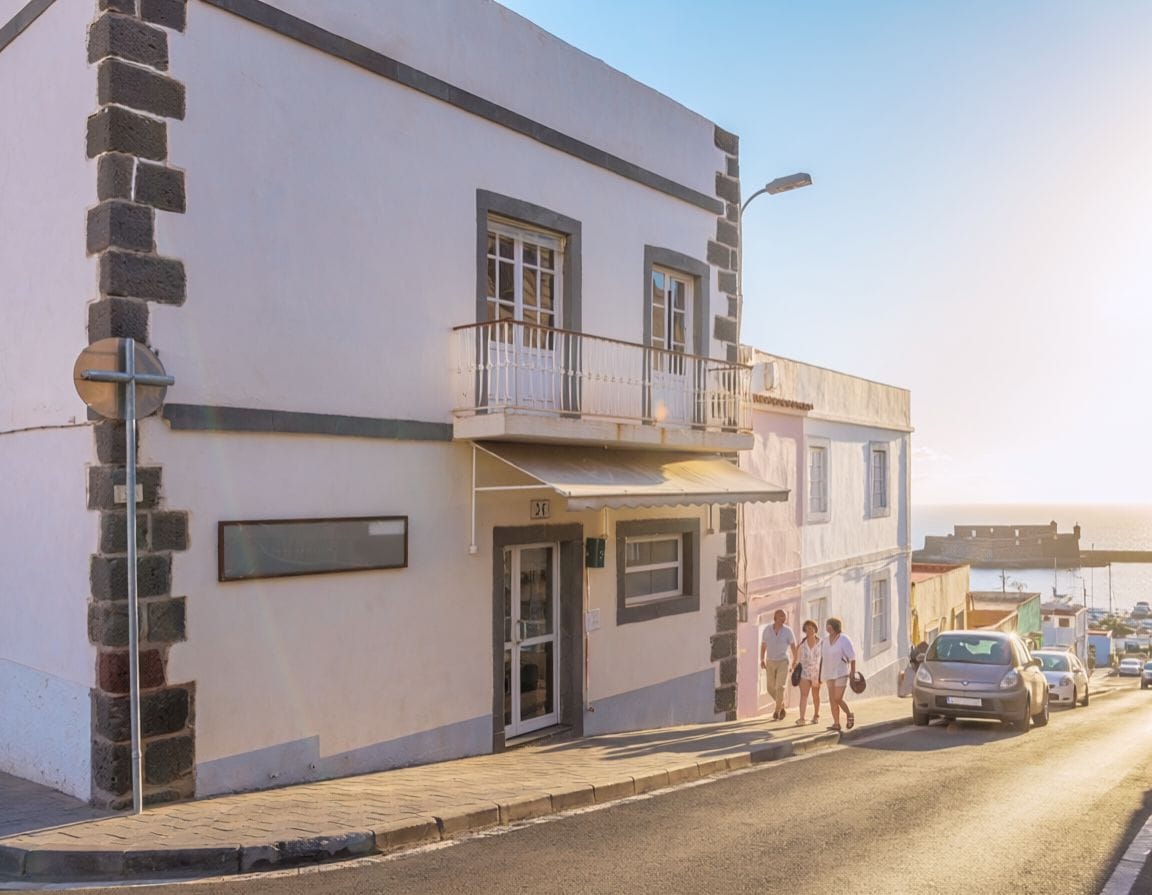
This simple, good-value guesthouse stands in the fishing village of Arrieta, only a few minutes’ drive from Jameos del Agua. The rooms are basic but clean, and the seafront with its fish restaurants is right on the doorstep. It is a great choice if you want to explore the north on a budget. Families and couples will appreciate the calm atmosphere and the natural swimming spots nearby.
🏨 Hotel Emblemático La Casa de los Naranjos
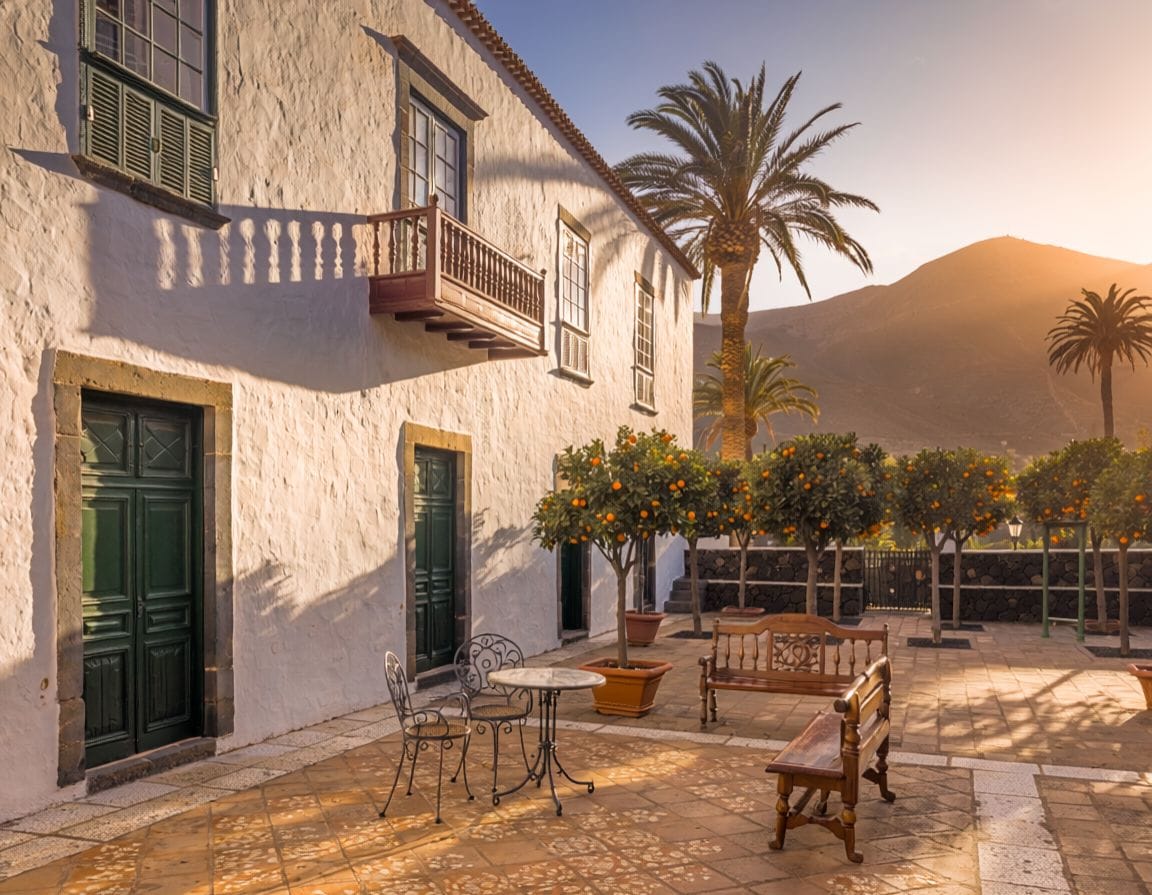
This boutique hotel sits in a traditional house in the village of Haría, in the green valley of palms about 15 minutes from the caves. It has a peaceful garden and rooms decorated in local style. Haría’s cafés, Saturday market and Manrique’s former home are all close by. It suits couples looking for character and quiet evenings in the countryside.
💎 Arrecife Gran Hotel & Spa
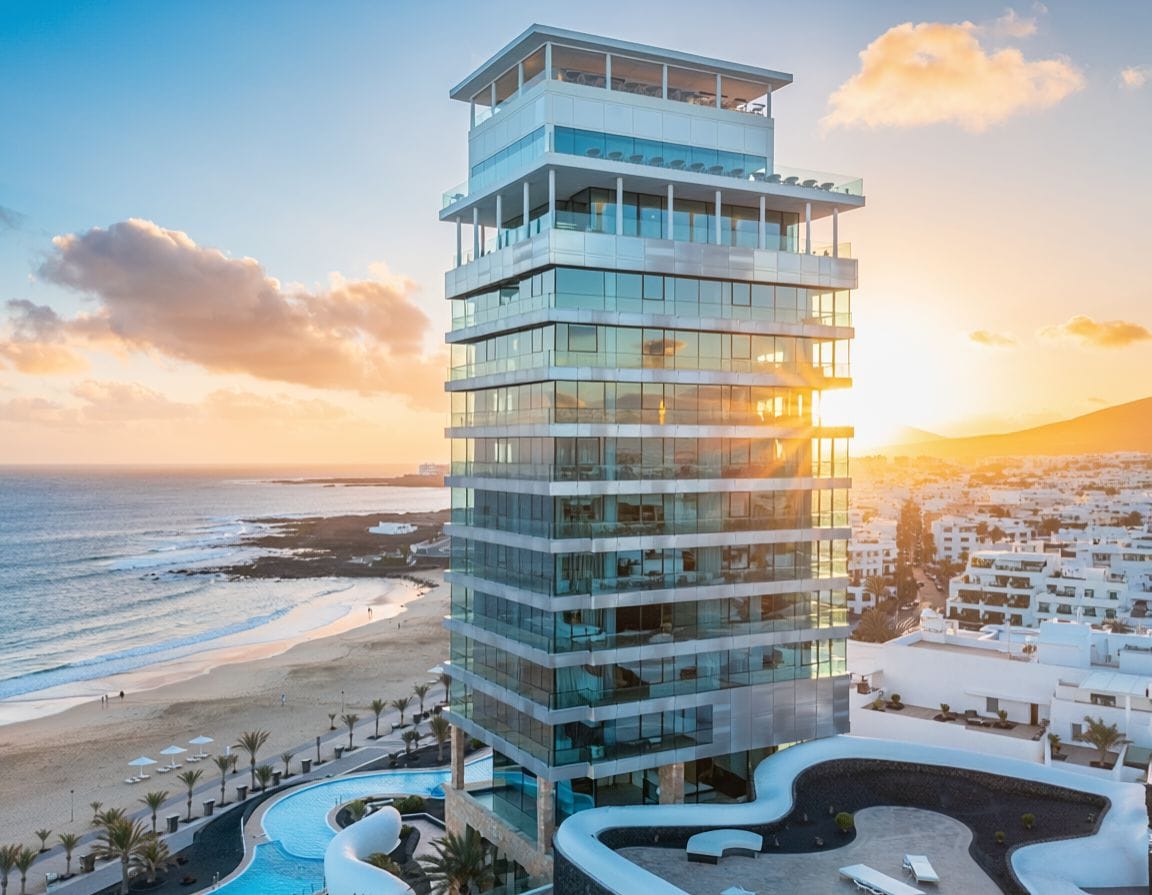
This five-star tower rises over the seafront of Arrecife, about a 25-minute drive from Jameos del Agua. Its rooms offer views over the Atlantic, and the spa, pool and rooftop bar make it a comfortable place to relax after sightseeing. The capital’s shops, restaurants and the Charco de San Ginés lagoon are within walking distance. It is ideal if you want a central base with easy access to the whole island.
Jameos del Agua FAQ
Is Jameos del Agua worth visiting?
Yes, it is one of the highlights of Lanzarote and quite unlike any other cave. In about an hour you see a volcanic lagoon with rare blind crabs, a white pool in a tropical garden and a concert hall inside a lava tube.
How long do you need at Jameos del Agua?
Most visitors spend between one hour and an hour and a half there. Add extra time if you want to have a drink at the bar, eat at the restaurant or visit the Casa de los Volcanes.
Can you swim in the pool at Jameos del Agua?
No, swimming in the white pool is not allowed. It is a decorative part of Manrique’s design, so you can only admire it from the terraces and benches around it.
What does jameo mean?
A jameo is a local Canarian word for the opening that forms when part of the roof of a lava tube collapses. Jameos del Agua has three such openings, and one of them holds a lagoon of seawater.
Can you visit Jameos del Agua and Cueva de los Verdes on the same day?
Yes, the two sites are only about 1 km apart and belong to the same lava tube. Many visitors see both in one morning, and several tours from the resorts combine them with other sights in the north.

