Ancient travellers are said to have named this island after the big dogs they found here, not after the little yellow birds. The canaries came later, and so did the sun-seekers.
Gran Canaria is the third-largest island in the Canary Islands and the one with the most surprising variety packed into a small space. In a single day you can walk across golden sand dunes, drive up through pine forest to volcanic peaks almost 2,000 metres above sea level, and finish with tapas in a colonial old town. No wonder locals like to call it a miniature continent. Most visitors stay on the sunny south coast, but some of the best things to do in Gran Canaria lie inland and in the green north, in villages with wooden balconies, cave houses and coffee plantations. This Spanish island suits first-timers, families, hikers and city-breakers alike. In this article you’ll find the island’s top attractions, region by region, plus tips on beaches, food, getting around, the best time to go and where to stay.
💰 Sercotel Playa Canteras - A three-star hotel 150 m from Las Canteras beach, on a quiet street with easy promenade access.
🏨 Hotel LIVVO Lumm - A four-star hotel in central Las Palmas, 10 minutes’ walk from Las Canteras and 15 from historic Vegueta.
💎 Santa Catalina, a Royal Hideaway Hotel - The oldest five-star hotel in the Canaries, opened in 1890 for wealthy travellers en route from Europe to Africa.
Top things to do in Gran Canaria, region by region
The island is almost round and only about 50 kilometres across, so you can reach most places to visit in Gran Canaria in under an hour and a half from any resort. Exploring Gran Canaria by car is the best way to see this beautiful island. To make sense of all the things to see in Gran Canaria, it helps to think of the island in four parts. The south coast is the land of beaches, resorts and boat trips, with Maspalomas, Playa del Inglés and Puerto de Mogán. The capital, Las Palmas de Gran Canaria, sits in the north-east and mixes city life with a superb urban beach.
The mountainous centre is where you’ll find Roque Nublo, Pico de las Nieves and the village of Tejeda. The green north and the wild west coast hide the most beautiful towns, from Teror and Arucas to Agaete. If you’re asking yourself what to do in Gran Canaria beyond the sun lounger, the answer is a road trip, and many of the best things to do in Gran Canaria are a short drive from the coast. Almost half of the island is a UNESCO Biosphere Reserve, and its sacred mountains around Risco Caído joined the UNESCO World Heritage List in 2019.
Walk the Maspalomas Dunes on the south coast
The Dunas de Maspalomas are the most famous sight in Gran Canaria, Spain, and the Maspalomas sand dunes really do look like a slice of the Sahara dropped next to the Atlantic. They cover about 400 hectares between Playa del Inglés and Maspalomas and have been a protected nature reserve since 1987. Stick to the marked paths, because the plants that hold the dunes together are fragile. Go early in the morning or in the late afternoon, when the sand is cooler and the light turns everything gold.
At the western end of the reserve you’ll find the Charca de Maspalomas, a small lagoon where migrating birds stop to rest, and the Faro de Maspalomas, a lighthouse first lit in 1890. From here, the long, wide Maspalomas beach runs all the way to Playa del Inglés, the island’s busiest resort. Children love a short camel ride across the Maspalomas sand dunes, and you can read more about the area in our guide to Maspalomas.
Puerto de Mogán and the beaches of the south-west
Puerto de Mogán is the prettiest of the coastal towns on the south coast. Its little canals, low white houses with colourful trim and bougainvillea over every doorway earned it the nickname Little Venice. Come on a Friday morning for the weekly market, then have lunch at the harbour and watch the fishing boats come in. The beach here is small, sheltered and good for a swim.
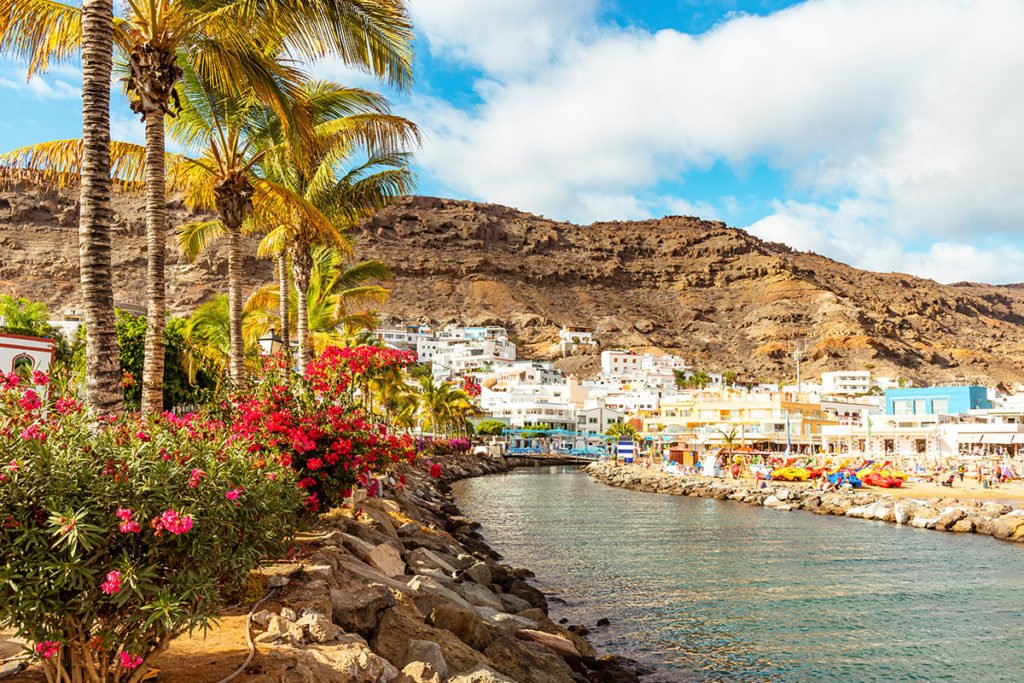
Between Puerto de Mogán and Maspalomas, the coast is lined with sheltered bays such as Playa de Amadores, with its golden sand, and Puerto Rico, the main base for boat trips. If you want a wild beach with hardly anyone around, head north to Playa de Güigüi on the west side of the island. You can only reach it by boat or on a demanding hike of about two to three hours each way, so it never gets crowded.
Further north, the GC-200 road from Mogán to La Aldea de San Nicolás is one of the most spectacular drives on the island, although it’s narrow and full of bends. Stop at the Mirador del Balcón, where the cliffs drop hundreds of metres into the ocean, and at Playa de la Aldea, a pebble beach that faces west towards the sunset. Near La Aldea, the CactuAldea park is one of the largest cactus gardens in Europe, with hundreds of species of cactus and succulents.
Boat trips, dolphins and water sports
The calm waters off the south coast are home to dolphins and several species of whale all year round, so a dolphin and whale-watching cruise is one of the most popular Gran Canaria attractions. Most trips leave from Puerto Rico, Arguineguín or Puerto de Mogán and last a few hours, often with a swim or snorkelling stop. On a catamaran you can also sail along the cliffs and hidden coves you’d never reach by road.
If you’d rather stay dry, Puerto de Mogán has a yellow submarine that takes you down to the seabed. The south coast is also great for jet skis, parasailing, paddle boarding and diving, while the windy east coast around Pozo Izquierdo hosts international windsurfing competitions. Book popular boat trips a few days ahead in high season.
Las Palmas de Gran Canaria - The capital city by the sea
Many people never leave the resorts, but Las Palmas deserves at least a full day. It’s the largest city in the Canary Islands, founded in 1478, and a lively place where locals far outnumber tourists. Fast buses link it with the south coast in under an hour, so it’s an easy day trip.

Vegueta, Santa Ana Cathedral and Casa de Colón
The historic district of Vegueta is where the city began, and its cobbled streets are full of colonial architecture, carved wooden balconies and quiet squares. The Santa Ana Cathedral took several centuries to complete, so its Gothic interior and neoclassical façade belong to different eras. Take the lift to the top of the bell tower for the best view over the old town and the port.

A few streets away, the Casa de Colón is a beautiful mansion with wooden ceilings and courtyards, now a museum about Christopher Columbus. He stopped in Gran Canaria in 1492 on the way to the Americas, and the museum tells the story of his voyages and the island’s role in them. Nearby, the Museo Canario shows how the island’s first inhabitants lived before the Spanish conquest. Just across the main road, Triana is the place for shopping, with a long pedestrian street lined with modernist buildings.
Las Canteras beach and Poema del Mar
On the other side of the city centre, the Las Canteras beach curves for about three kilometres along the Atlantic. A natural reef called La Barra protects it from the waves, so the water is calm enough for swimming and snorkelling. It’s often listed among the best city beaches in Europe, and the promenade is lined with great restaurants and bars. At the northern end, the La Isleta peninsula is a rugged volcanic headland with good viewpoints.
By the port, the Poema del Mar aquarium, opened in 2017, is one of the most modern in Europe. Its huge curved window shows a deep-sea tank with sharks and rays, and there are separate zones for a jungle river and a coral reef. It’s a good plan for a rainy afternoon or a day out with children. For more ideas, see our full guide to Las Palmas.
Roque Nublo, Pico de las Nieves and the mountain interior
The centre of the island is a different world of pine forest, deep ravines and volcanic rock. The roads up are steep and full of bends, but the views are worth every turn. The drive up to Tejeda takes about an hour from the south coast, and on the way the villages of Fataga and Tunte in San Bartolomé de Tirajana are worth a stop for their palm-filled valleys. Plan a whole day, and bring a jacket, because it can be cold and windy at the top even when the south coast is hot.
Roque Nublo
Roque Nublo is the symbol of Gran Canaria. This basalt monolith stands about 80 metres tall, with its top at 1,813 metres above sea level. On a clear day you can see Mount Teide on Tenerife from its base. The easy trail from the La Goleta car park takes around half an hour each way. Get there early, as the small car park fills up quickly at weekends.

Pico de las Nieves and Cruz de Tejeda
Pico de las Nieves is the highest point of the island at 1,949 metres, and you can drive almost to the top. Its name means ‘peak of the snows’, and you can still see the old pits where locals stored snow in winter to sell in the towns below. Nearby, the Llanos de la Pez picnic area in the pine forest is a peaceful place for a break, and the island’s clear skies make the summit a superb spot for stargazing.
Cruz de Tejeda is the crossroads at the heart of the island, with a stone cross, a mountain hotel and views of Roque Nublo and Roque Bentayga. Just below it, the charming village of Tejeda belongs to the association of the most beautiful villages in Spain. It’s famous for its almond sweets, especially bienmesabe, and in January and February the almond trees around it turn pink and white. Several hiking trails start in the village, including routes to Roque Nublo and Roque Bentayga.
Agaete, Gáldar and the wild north-west
The north-west of the island is green, quiet and far less visited than the south. Agaete is a whitewashed town on the Atlantic, with a small fishing harbour at Puerto de las Nieves and fish restaurants along the seafront. The rock pools of the Agaete piscina natural, carved into the lava next to the sea, are perfect for a swim when the ocean is too rough.

Inland, the Agaete Valley is full of mango, avocado and orange trees, and it’s known for something unusual. Small farms here grow coffee, and several of them offer coffee and wine tastings.
FUN FACT: The Agaete Valley is often described as the only place in Europe where coffee is grown commercially.
From Agaete, a winding road climbs to Tamadaba Natural Park, a forest of tall Canary pines on cliffs high above the west coast. The park has some of the best hiking trails on the island and wonderful views towards Tenerife. On the way back east, stop in Gáldar to see the Cueva Pintada, an archaeological site with a cave painted with geometric patterns by the island’s first inhabitants. Close by, the Cenobio de Valerón is a cliffside complex of caves where those same people once stored their grain.
Teror, Arucas and Firgas - Charming towns of the north
Teror is the island’s religious heart and one of its prettiest towns, with balconies of carved Canarian pine along the main street. The Basilica of Nuestra Señora del Pino is dedicated to the Virgen del Pino, the patron saint of Gran Canaria, whose festival every September draws pilgrims from across the island. Teror is also famous for its spring water, and its small guesthouses make a quiet base away from the crowds. On Sunday mornings, a market fills the square around the beautiful church with stalls selling local cheese, sweets and the spicy chorizo de Teror.
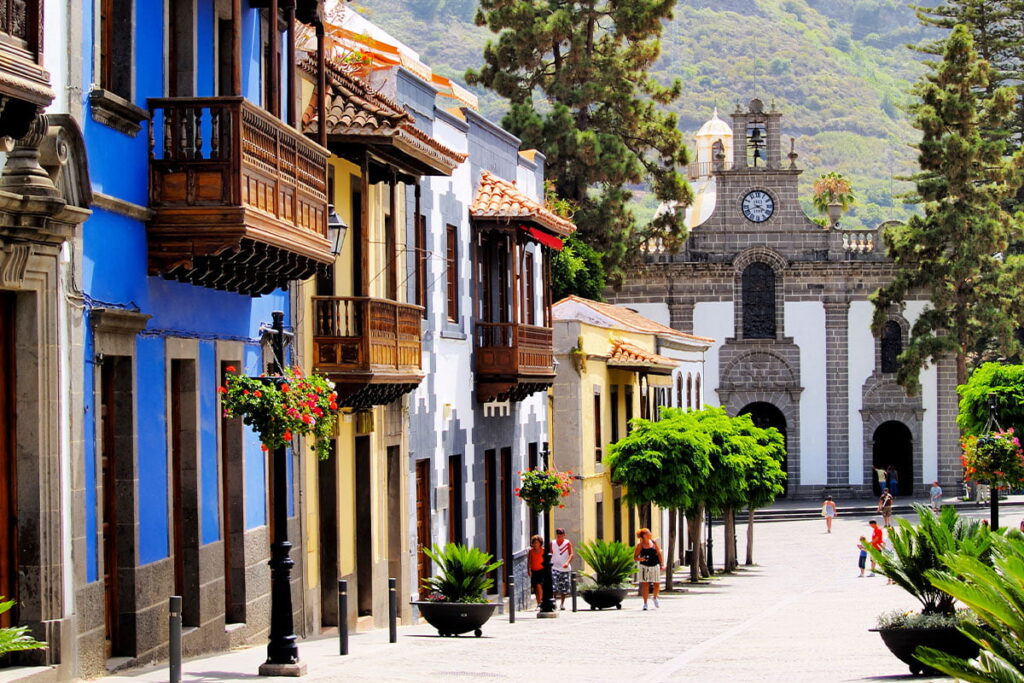
Arucas is dominated by the huge neo-Gothic Church of San Juan Bautista, built from dark volcanic rock and often mistaken for a cathedral. The town is also home to the Arehucas rum distillery, founded in 1884, where you can learn how the island’s famous honey rum is made. A short drive away, tiny Firgas is known for its mineral water and for the Paseo de Canarias, a street with a cascade of water running down its middle and tiled benches showing every municipality.
Caldera de Bandama and the Botanical Garden
Just half an hour from Las Palmas, the Caldera de Bandama is a volcanic crater around one kilometre wide and 200 metres deep. You can walk a trail around the rim or hike down to the bottom, where there’s an old farmhouse and a few fig trees. For the easiest view, drive up to the Pico de Bandama viewpoint, which looks over the crater, the capital and the coast. The surrounding slopes are covered in vineyards, and next door is the golf course of Spain’s oldest golf club.
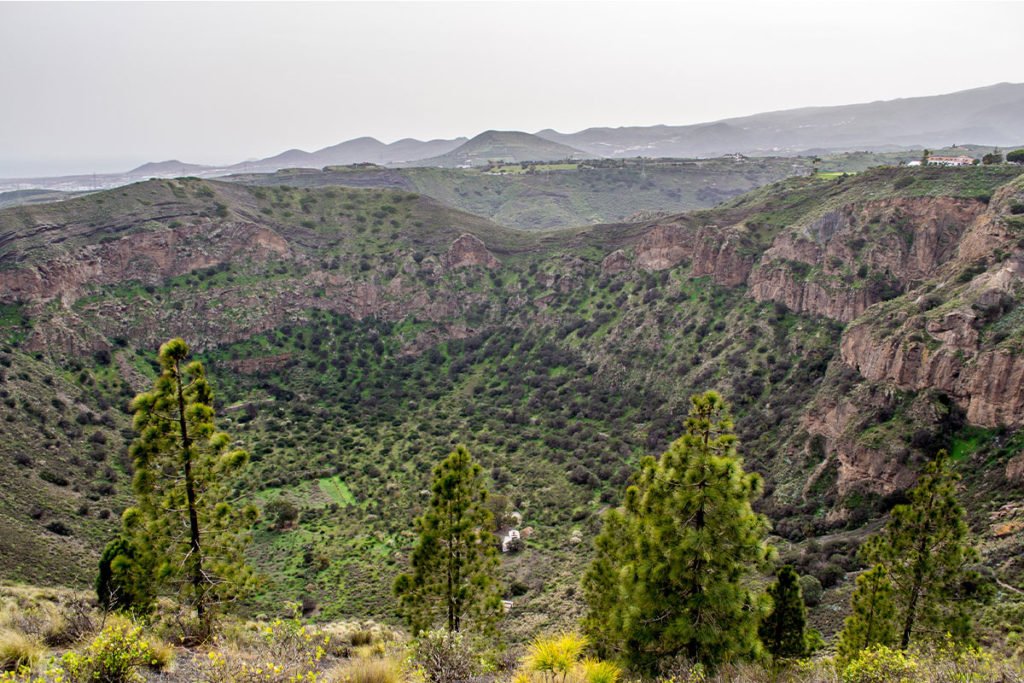
Nearby in Tafira, the Jardín Botánico Canario Viera y Clavijo is the largest botanical garden in Spain. It’s dedicated to the plants of the Canary Islands, from dragon trees and palms to cactuses and laurel forest. Entry is free, and the paths running down into the ravine make it a lovely place for a morning walk.
Barranco de Guayadeque and Agüimes
The Barranco de Guayadeque is a deep ravine in the east of the island between Agüimes and Ingenio. The early islanders lived in caves here, and some families still do: you’ll see cave houses with front doors cut straight into the rock and even a cave church. At the end of the road, cave restaurants serve grilled meat and local wine in dining rooms carved into the mountain.
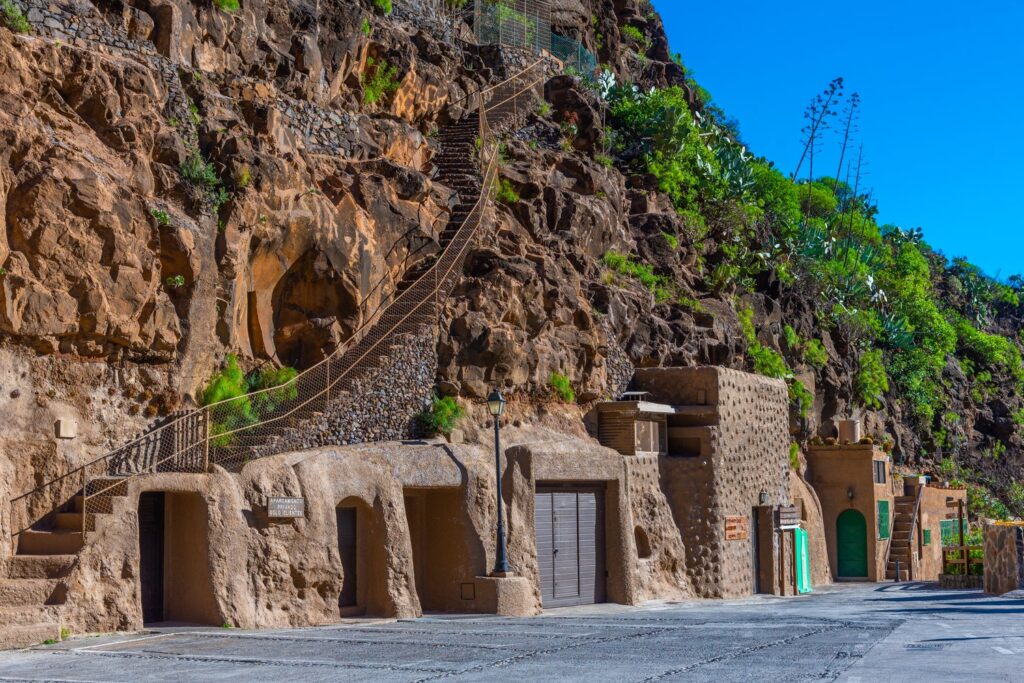
Afterwards, spend an hour in the old town of Agüimes, with its ochre houses, quiet squares and the large Church of San Sebastián. It’s one of the best places to see authentic Canarian life, and it’s only a short drive from the airport, so it makes a good first or last stop on your trip.
Gran Canaria with kids
Families will find plenty to do in Gran Canaria, especially in the south. Palmitos Park, in a ravine above Maspalomas, combines a zoo, a botanical garden and shows with birds of prey and parrots. Aqualand Maspalomas is the largest water park on the island and one of the best water parks in Spain. Sioux City Park, a Wild West film set near San Agustín, stages cowboy shows and shoot-outs.
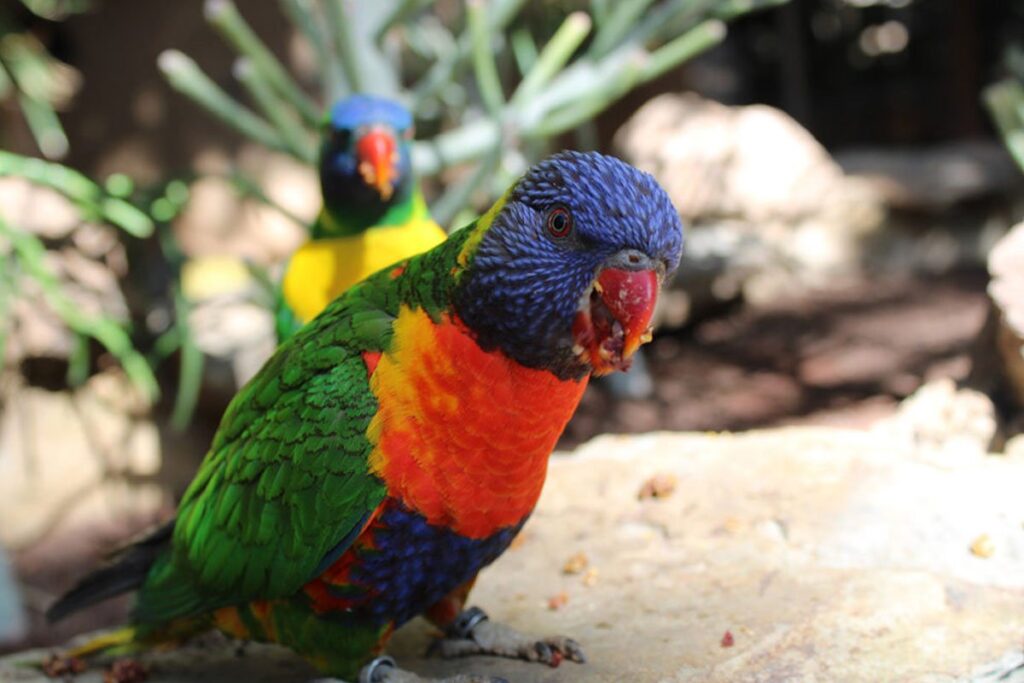
Older children will love a buggy tour through the canyons or a ride on the submarine in Puerto de Mogán. Calm beaches such as Amadores, Anfi del Mar and Las Canteras are best for little ones. Pack plenty of sun cream, because the sun is strong here even in winter.
What to eat in Gran Canaria?
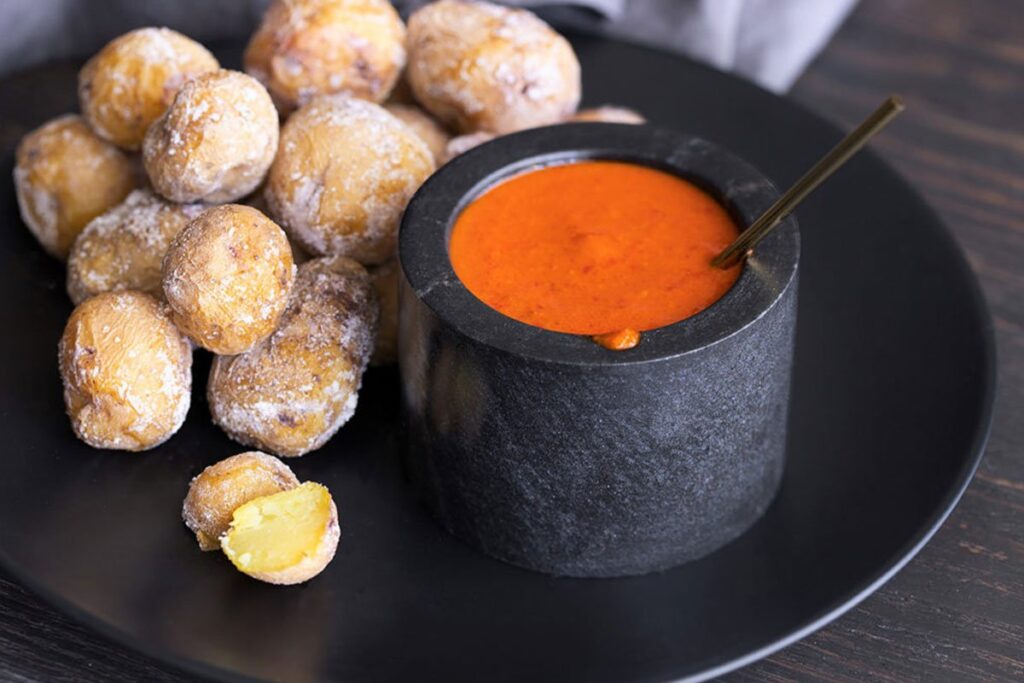
Canarian food is simple, hearty and full of flavour, and eating well is a big part of any visit. Start with papas arrugadas, small potatoes boiled in very salty water and served with mojo, a garlicky sauce that comes red with peppers or green with coriander. Try gofio, a flour made from toasted grain that locals add to soups and desserts, and ropa vieja, a stew of chickpeas and meat.
Cheese lovers shouldn’t miss queso de flor from Guía, made with milk curdled with thistle flowers. Fresh fish such as vieja (parrotfish) is grilled in every harbour, and for dessert there’s bienmesabe, an almond cream from Tejeda. Wash it all down with a glass of local wine or a shot of ron miel, the sweet honey rum from Arucas. The markets of Vegueta and Teror are good places to taste local produce.
Getting around Gran Canaria
The airport is on the east coast, about 25 minutes from Las Palmas and 30 minutes from Playa del Inglés along the GC-1 motorway. Public transport is good on the coast: blue Global buses link the airport, the capital and the southern resorts, and yellow city buses cover Las Palmas. Buses also reach Teror, Arucas and Agaete, but services to mountain villages are infrequent.
To explore the interior properly, a hire car gives you the most freedom. Car hire is easy to arrange at the airport, and many people pick up a car for just two or three days of their holiday. Mountain roads are narrow and twisty, so allow more time than the map suggests. Ferries to the other Canary Islands sail from Agaete and Las Palmas to Tenerife, and from Las Palmas to Fuerteventura and Lanzarote, so you can easily add another island. You can compare ferry and bus connections online before you travel.
How many days do you need and when to visit Gran Canaria?
A week is ideal: three or four days for the beaches and boat trips, one day for Las Palmas and two or three days for road trips into the mountains and the north. With only a long weekend, choose one base and add a single day trip to Roque Nublo and Tejeda. If you want to visit Gran Canaria at a slower pace, ten days gives you time for hikes and a trip to another island.
Thanks to its mild climate, the island has good weather all year, which is why it’s so popular for winter sun. The south coast often stays around 22-24°C even in January, while the north is greener and cloudier because of the trade winds. Spring and autumn are perfect for hiking, July and August are the hottest and busiest months, and February brings the colourful Carnival of Las Palmas. Book your accommodation well ahead for Christmas, Easter and Carnival.
See available accommodation in Gran Canaria
Hotels in Gran Canaria
For beaches and sunshine, most visitors stay in the south, around Maspalomas, Playa del Inglés or Puerto de Mogán. If you prefer city life, culture and easy bus links to every corner of the island, Las Palmas is an excellent base, and the three best hotels below are all there, close to Las Canteras beach or the old town.
💰 Sercotel Playa Canteras
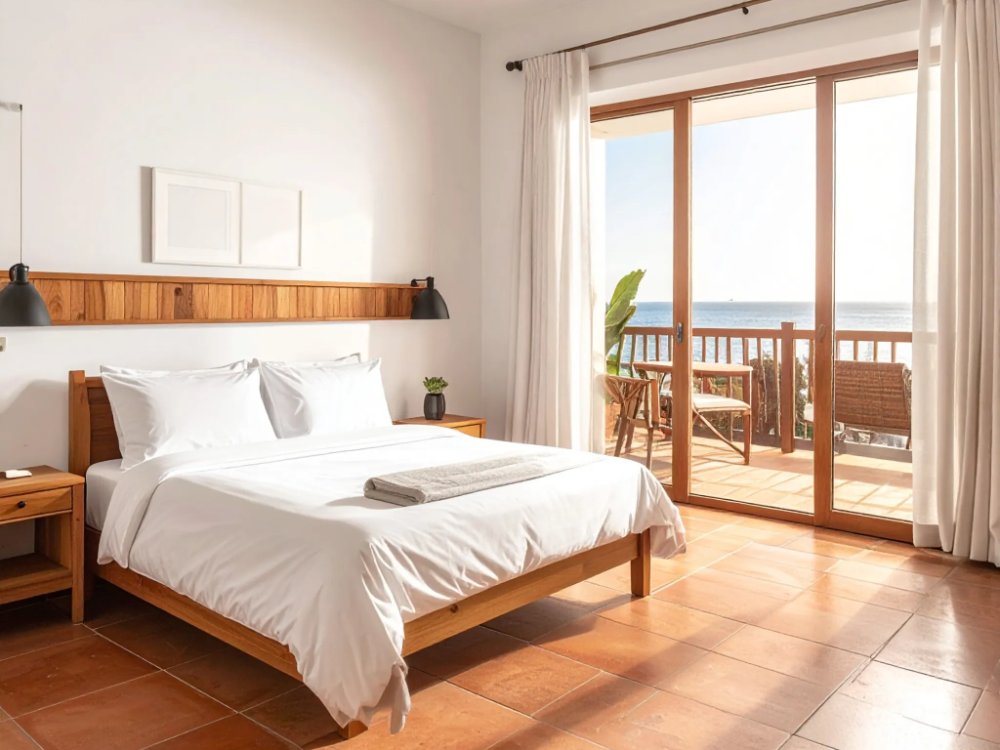
A three-star hotel on a quiet street just 150 metres from Las Canteras beach, with easy access to the promenade. Rooms are simple and comfortable, many with balconies, and some have sea views. You’ll have restaurants, cafés and a supermarket on your doorstep, and the bus to the old town stops nearby. It’s a good-value choice if you plan to spend your days on the beach and your evenings on the promenade.
🏨 Hotel LIVVO Lumm
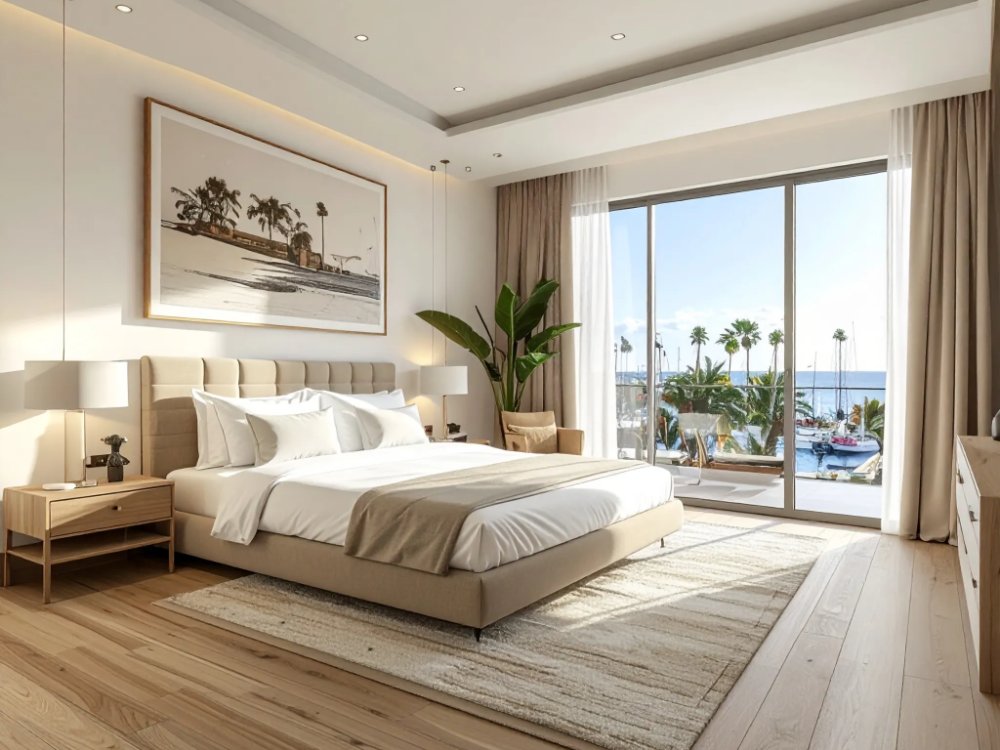
A modern four-star hotel in central Las Palmas, at the foot of Santa Catalina Park and about ten minutes’ walk from Las Canteras. The bright, air-conditioned rooms overlook the bay and the port. On the roof there’s a pool with views over the city, plus a gym and a Mediterranean restaurant. It suits couples and city-breakers who want comfort, style and an easy walk to both the beach and the shops.
💎 Santa Catalina, a Royal Hideaway Hotel
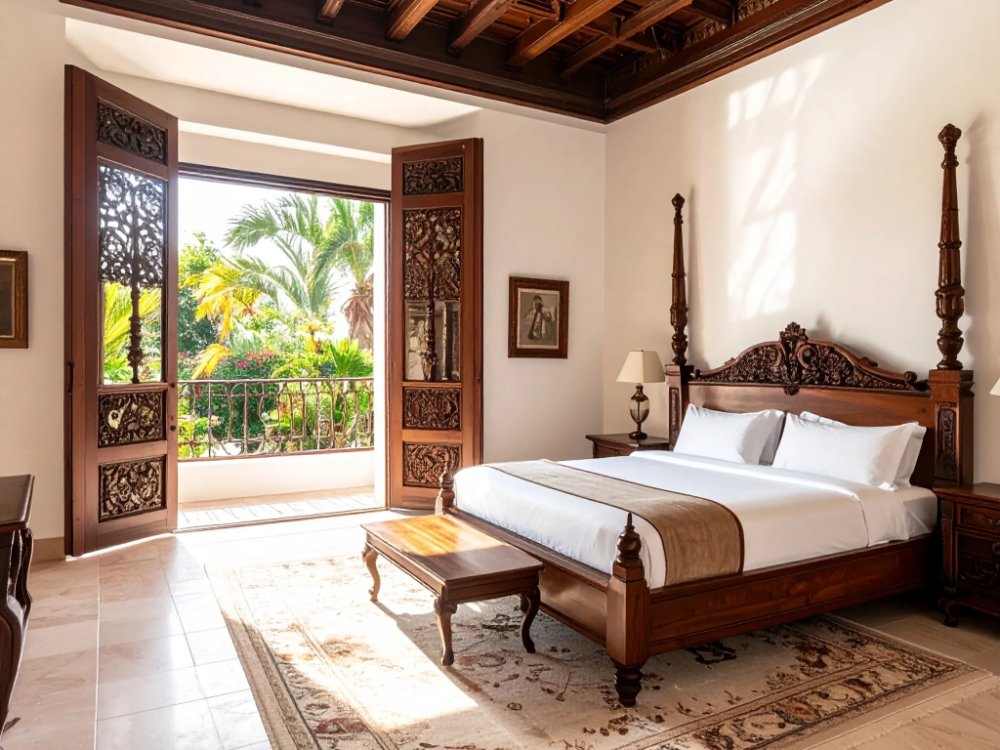
The grande dame of the Canary Islands, opened in 1890 in the leafy Ciudad Jardín district next to Doramas Park. Winston Churchill, Agatha Christie and Maria Callas are among its famous guests. Today you’ll find elegant rooms, an infinity pool, a spa and a rooftop bar with views of the ocean. It’s the place to stay for a special occasion or a touch of old-world luxury in the capital.
Gran Canaria FAQ
Is Gran Canaria worth visiting?
Yes, especially if you want more than a beach holiday. Gran Canaria combines reliable sunshine and golden beaches with mountains, pine forests, colonial towns and a real city. You can see dunes, volcanic peaks and green valleys within an hour’s drive of each other, so it’s ideal for a varied week in the Canary Islands. For many travellers, a road trip around Gran Canaria island is one of the best things to do in Gran Canaria.
Is Tenerife or Gran Canaria better?
Both are great, but they feel different. Tenerife is bigger and has Mount Teide, Spain’s highest peak, plus big theme parks such as Siam Park and Loro Park. Gran Canaria is more compact, has the larger capital and the Maspalomas Dunes, and many people find its interior villages less touristy. Read our Tenerife guide to compare.
Which part of Gran Canaria is best to stay in?
The south is best for beaches and sunshine: Maspalomas and Playa del Inglés for lively resorts, Puerto de Mogán and Amadores for a quieter stay. Las Palmas suits travellers who want city life, culture and good public transport. Rural villages such as Teror or Tejeda are perfect for walkers who prefer peace and mountain views.
What is Gran Canaria best known for?
Gran Canaria is best known for the Maspalomas Dunes, year-round sunshine and its varied landscapes, which earned it the nickname miniature continent. It’s also famous for Roque Nublo, the colonial Vegueta district in Las Palmas and the lively Carnival every February.
What is the best month to go to Gran Canaria?
April, May, October and November are the best months for most travellers. It’s warm enough for the beach, comfortable for hiking and quieter than the summer holidays. December to February is perfect for winter sun on the south coast, although evenings and the mountains can be cool.
Do you need a car in Gran Canaria?
Not if you plan to stay on the coast, because buses link the airport, Las Palmas and the southern resorts well. To explore the mountains, Roque Nublo and the villages of the north, though, a car is much more practical. Many visitors hire one for just a few days.

