Its name translates as “the joyful town”, and one look at the painted seafront tells you nobody was exaggerating.
Villajoyosa, known as La Vila Joiosa in Valencian or simply La Vila to locals, is a fishing town on the Costa Blanca, about 30 km north of Alicante and only ten minutes down the coast from Benidorm. It’s famous for its coloured houses, a chocolate industry that has shaped local life for centuries and a coastline of sandy beaches and quiet coves. Yet it still feels like a working town rather than a resort built for mass tourism.
In this article you’ll find the best things to do in Villajoyosa, from the old town and the hanging houses to the chocolate museum, Roman remains and Blue Flag beaches. You’ll also get practical tips on getting there, how long to stay and where to sleep.
💰 Hotel Censal - A simple, affordable hotel in the town centre, a short walk from the beach.
🏨 Blue Line Apartment Hotel - Modern apartments with a kitchen and a heated pool, ideal for families.
💎 Hotel Servigroup Montíboli - A five-star clifftop hotel with a spa and direct access to two coves.
Is Villajoyosa worth visiting?
Yes, especially if you want the Mediterranean without the high-rise skyline. Villajoyosa has the same sunshine and warm sea as Benidorm next door, but its streets belong to fishermen, families and market traders rather than stag parties. Plenty of people who first visited Villajoyosa on a day trip end up returning for a whole holiday.
The town is compact and easy to explore on foot. In one day you can walk the old town, tour a chocolate factory and still have time for a swim. Stay longer and you’ll discover Roman ruins, wild coves and some of the best seafood in the Marina Baixa region.
Explore the old town of Villajoyosa
The old town sits on a low hill above the mouth of the River Amadorio, and it has been declared an Asset of Cultural Interest, one of the highest levels of heritage protection in Spain. Start at Plaza de la Generalitat and follow Carrer Major uphill. Within a few minutes you’ll be lost in winding streets lined with balconies, flowerpots and tiny squares.
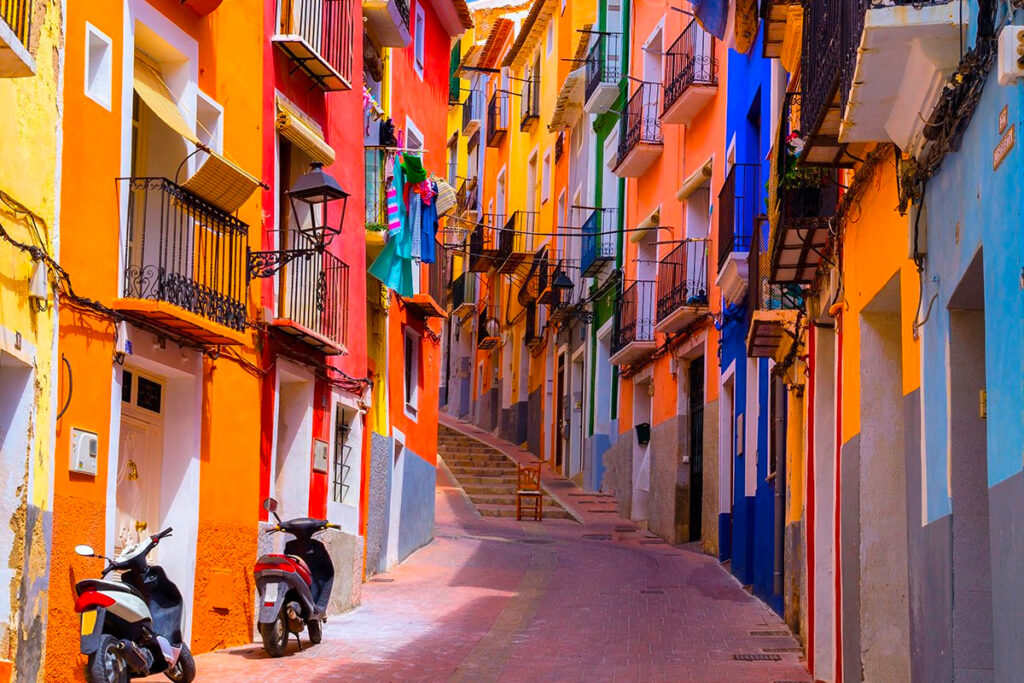
Take your time here. The picturesque streets are at their best in the morning, before the heat, or in the golden hour before sunset. Locals still hang their washing between the houses, and the smell of cocoa from the factories sometimes drifts across the rooftops.
The coloured houses on the seafront
The most famous view in town is the row of colourful houses along Passeig Sant Pere and Carrer Arsenal, facing Playa Centro. Yellow, red, blue and green façades stand shoulder to shoulder, with palm trees in front and the sea just beyond. According to local tradition, fishermen painted their homes in bright colours so they could recognise them from their boats.

For the classic photo, walk out onto the sand at the southern end of the beach and look back towards the old town. It’s no surprise Villajoyosa has a reputation as the most colourful town on the Costa Blanca. In the evening the promenade fills with families and street vendors, the café terraces get busy and it’s the perfect place for a drink with a view.
The hanging houses over the river Amadorio
On the other side of the old town, the houses were built directly on top of the former city wall. They seem to hang over the riverbed, a cliff of colour rising above the water. The best view of the hanging houses is from the bridge over the River Amadorio, so cross it and turn back to take it all in.
Church-fortress of Nuestra Señora de la Asunción
At the highest point of the old town stands the Gothic church of Nuestra Señora de la Asunción (Our Lady of the Assumption). It was built in the 16th century as both a church and a fortress, with thick walls and very few windows, because Berber pirates regularly attacked this coast. Next to it, the chapel of Santa Marta, the patron saint of La Vila, has a surprisingly rich interior and a dome covered in blue tiles.
Look out for guided visits to the Paseo de la Ronda, a walkway around the church roof. From up there you get incredible views over the rooftops, the port and the Mediterranean.
The city wall
Parts of the Renaissance city wall still enclose the old town. The best-preserved stretch runs along Calle Costera de la Mar, which leads down towards the Arsenal district and the beach. It’s a short walk, but it helps you imagine how this small town once defended itself against raids from the sea.
Visit the chocolate museum and chocolate factories
Villajoyosa is often called the chocolate capital of Spain. The chocolate industry has been part of local life since the 17th century, and on some days you can smell cocoa in the air. Three factories still operate here, and each welcomes visitors in its own way.
Valor Chocolate Museum
The Valor Chocolate Museum is the town’s most popular attraction. Valor began as a small family-run business in 1881 and is now one of the best-known chocolate brands in Spain. The museum is located inside the working factory on Avinguda Pianista Gonzalo Soriano, a short walk from the centre.

The guided tour is free and lasts about 45 minutes. You’ll watch a short film, see vintage machines for roasting and grinding cocoa beans and look down on the modern production line from a viewing gallery. The visit ends with a tasting and a shop, so it’s a great choice for families. Tours in English run at set times and places are limited, so book a time slot online before you go.
If you’d like to see artisanal chocolate made on a smaller scale, head to Chocolates Pérez, which also runs free tours, or to Clavileño’s shop on Carrer Colón.
Discover Roman Villajoyosa
Long before it became a fishing town, La Vila Joiosa was the Roman city of Allon. Iberians, Phoenicians and Greeks had already traded here, and the Romans turned it into the most important town in the area. Archaeologists are still uncovering its secrets.
Vilamuseu
Vilamuseu, the town museum, opened its new building in 2016 and is regarded as one of the most accessible museums in Europe. Its collection covers thousands of years of Villajoyosa’s history, from Iberian jewellery to Roman inscriptions and the town’s seafaring past.
The highlight is the cargo of the Bou Ferrer, a Roman shipwreck found off the coast in 1999. This merchant ship, about 30 metres long, sank in the mid-1st century AD with thousands of amphorae of fish sauce on board. Lead ingots stamped with the emperor’s name suggest part of the cargo belonged to Rome itself. In summer, during the excavation season, certified divers can even visit the wreck with the archaeologists.
Torre de Sant Josep and other ancient sites
Near Playa del Torres, on the northern edge of town, stands Torre de Sant Josep. This Roman funerary monument from the 2nd century AD is often described as the largest of its kind on the Iberian Peninsula. It’s free to see from the outside and makes a good stop on a walk along the coast.
On a headland to the south, the sanctuary of La Malladeta was used by Iberians and Romans from the 4th century BC. In the town centre, the Roman baths of Allon on Carrer Canalejas are being restored and covered with a new roof, so check with the tourist office whether they’re open during your visit.
Relax on the best beaches in Villajoyosa
The municipality of Villajoyosa has around 15 km of coastline with more than a dozen beaches and coves. Several of them hold the Blue Flag, so you can expect clean water and good facilities. Bring water shoes, as many beaches outside the centre are pebbly.
Playa Centro
Playa Centro, the central beach, stretches for more than a kilometre below the coloured houses. It has golden sand, lifeguards in summer and gently shelving water, which makes it ideal for families. The promenade behind it is lined with palm trees, cafés and ice cream shops, and you can rent sunbeds and parasols in season. This is the Villajoyosa beach most people picture, and it flies the Blue Flag.

Coves to the south
As you head south towards Alicante, the coast becomes wilder. Bol Nou is a small cove with turquoise water and a beach bar, perfect for snorkelling. La Caleta is quieter and backed by cliffs, while L’Esparrelló, near the Hotel Montíboli, is a pebble beach popular with naturists.

Beaches to the north
To the north, Playa del Torres is a long pebble beach next to the Roman tower. Beyond it you’ll find small coves such as El Xarco, which has a section for dogs, and Racó del Conill, a secluded naturist cove close to Cala de Finestrat. The coastal path between them offers great views and some excellent swimming spots.
See the fishing boats come in at the port
Villajoyosa still has an active fishing fleet, and the port is one of the best places to see everyday life in the town. On weekday afternoons the fishing boats return and the catch goes to the fish auction (lonja), one of the most traditional in the province. Even if you can’t bid, it’s fascinating to watch.
For fresh fish to cook yourself, try the Mercado Central on Carrer Canalejas. On Thursday mornings a big weekly market also sets up near the Creueta tram stop, with around a hundred stalls selling everything from fruit to clothes.
What to eat in Villajoyosa
In a town built on fishing, seafood is the star of the local food scene. Order a rice dish such as arroz a banda, cooked in fish stock, or a slow-cooked fish stew. Many restaurants on the seafront and in the old town serve the catch of the day, grilled. Finish with a drink of thick hot chocolate, because in La Vila it would be rude not to.

Try water sports and outdoor activities
The coast around Villajoyosa is made for active days, and the views from the water are amazing. You can rent kayaks or paddleboards, join a snorkelling trip or take a guided kayak tour to coves you’d never reach on foot. Parasailing and boat trips also leave from the beach in summer.
Inland, the hills behind town offer horse riding with sea views and mountain bike routes. Walkers can follow the coastal path north to the Aguiló Tower (Torre d’Aguiló), a 16th-century watchtower built to warn of pirate raids. The trail climbs gently and rewards you with sweeping views along the coast.
Join the Moors and Christians festival
Villajoyosa’s biggest party is the Moors and Christians festival, held every year from 24 to 31 July in honour of Santa Marta, the patron saint. It has been declared a festival of International Tourist Interest. The festival recalls a Berber pirate attack in 1538, when, according to legend, Santa Marta sent a flood that swept the enemy fleet away.

The highlight is the desembarco (landing), which takes place at dawn on 28 July. Dozens of boats full of costumed Moors land on Playa Centro and battle the Christians in front of a castle built on the sand. Crowds gather on the beach from around 5am, so plan to stay up or set an early alarm. Hotels fill up fast for festival week, so book your accommodation well in advance.
See available accommodation in Villajoyosa
Day trips from Villajoyosa
La Vila makes a relaxed base for exploring the surrounding area. Benidorm is about 10 km away and easy to reach by tram, with long beaches, theme parks and lively nightlife. Terra Mítica theme park is even closer, just a few stops away.
Further north, the whitewashed old town of Altea sits on a hill above the sea, and Calpe is known for the huge Peñón de Ifach rock. Inland, the hilltop village of Guadalest and the Algar waterfalls make one of the most popular day trips on the coast.
To the south, Alicante offers a castle, a lively harbour and plenty of shopping. From Santa Pola you can also take a boat to the tiny island of Tabarca.
How do you get to Villajoyosa?
The nearest airport is Alicante-Elche, about 45 minutes away by car. The easiest way to explore the Costa Blanca at your own pace is with a hire car, as the AP-7 and N-332 roads run right past the town.
Without a car, take the TRAM d’Alacant. Line L1 runs from Luceros in central Alicante to Benidorm, and the journey from Alicante to Villajoyosa takes just under an hour along the coast. Get off at La Vila Joiosa or Creueta for the old town. You can also compare train and bus connections from other cities in Spain.
How long should you spend in Villajoyosa?
Half a day is enough to walk the old town, see the coloured houses and tour the Valor Chocolate Museum. If you want to add Vilamuseu, the port and some time on the beach, plan a full day.

For a relaxed holiday, two or three nights are ideal. You’ll have time for the coves, a kayak trip and day trips along the coast. The best months are May, June and September, when the sea is warm and the town is quieter. July and August are hot and busy, but that’s when the festival takes place.
Hotels in Villajoyosa
Villajoyosa has fewer big hotels than its neighbours, which is part of its charm. You can choose between a simple stay in the centre, a modern aparthotel close to the beach or a five-star hideaway above the sea.
💰 Hotel Censal
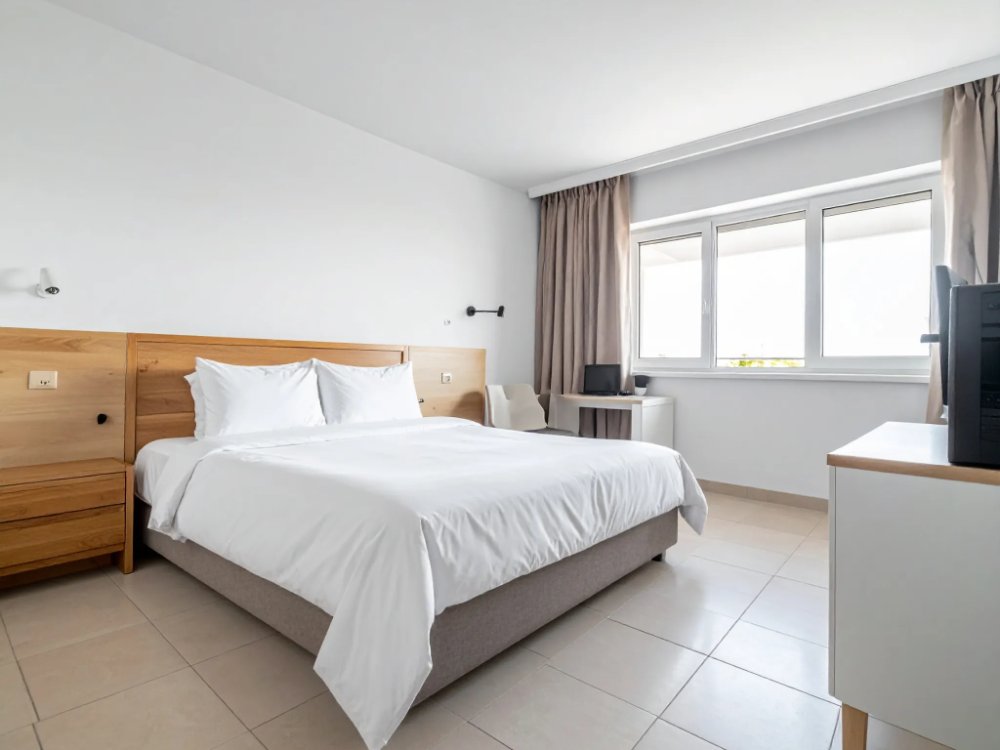
A small, simple hotel right in the centre of Villajoyosa, just a few minutes’ walk from Playa Centro and the coloured houses. The air-conditioned rooms come with a TV and free Wi-Fi, and there’s a terrace for a coffee in the sun. It’s a practical, affordable base if you plan to spend your days out exploring. Ideal for couples and solo travellers who want to be close to the old town without spending a lot.
🏨 Blue Line Apartment Hotel

A modern aparthotel about a kilometre from the centre, with a heated outdoor pool, a garden and a terrace. The spacious apartments have air conditioning and a kitchen, so you can cook fish from the local market. Guests often praise the views and the size of the apartments. A great choice for families and anyone who wants more independence than a hotel room.
💎 Hotel Servigroup Montíboli
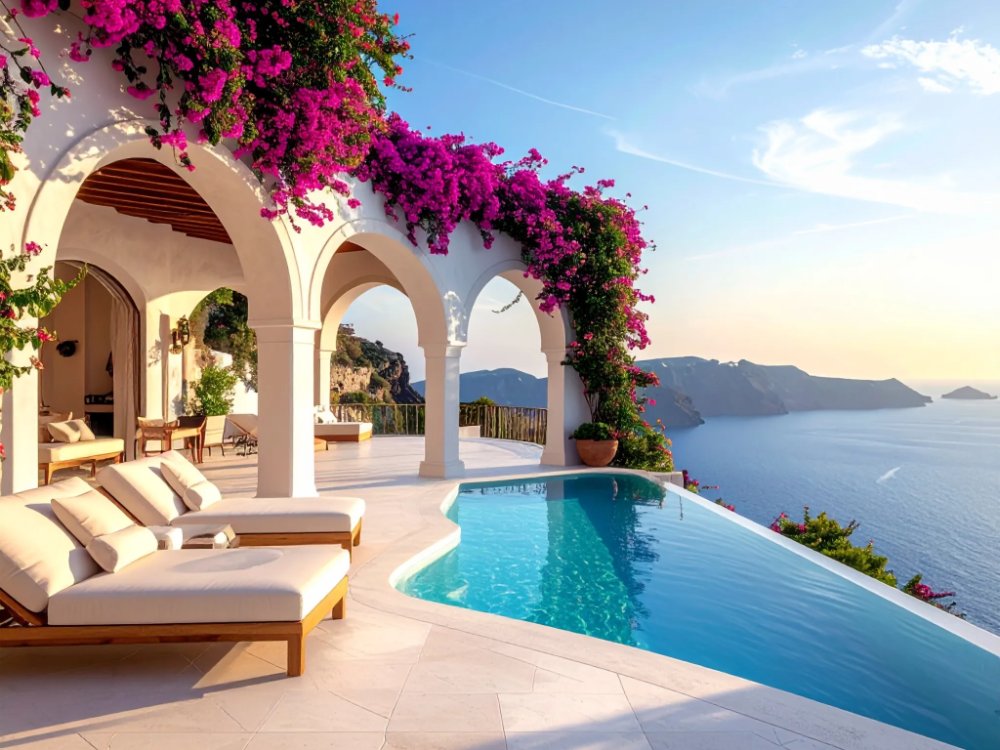
A five-star, Moorish-style hotel perched on a clifftop between two coves, about 4 km south of the town centre. It has two pools with panoramic Mediterranean views, a spa, gardens full of flowers and direct access to the beaches below. The restaurants and generous breakfast are a highlight of any stay. Perfect for a romantic break or a special occasion by the sea.

