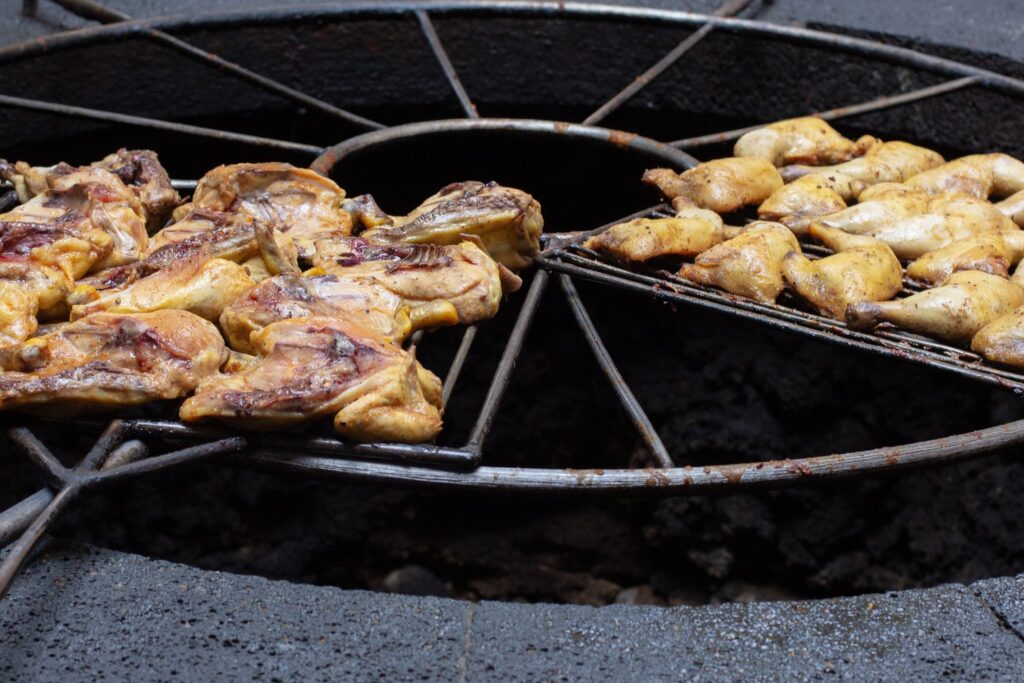
On 1 September 1730 the earth split open beside a quiet farming village. Almost three hundred years later, chicken is still being grilled over the same underground heat.
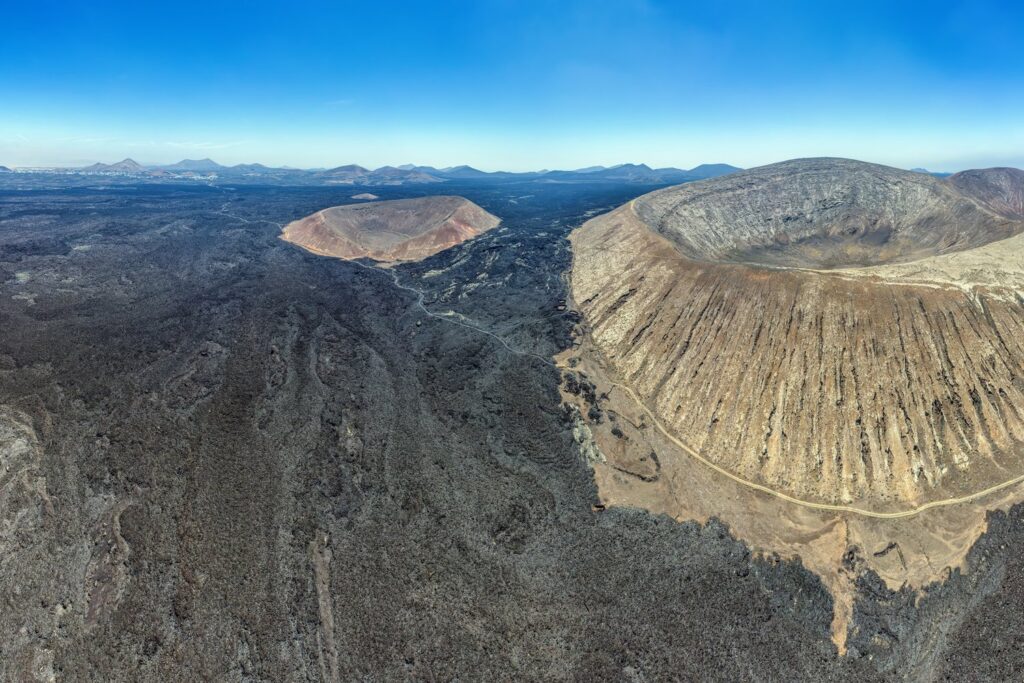
Timanfaya National Park protects the most dramatic corner of Lanzarote: a sea of black and rust-red lava, dozens of volcanic cones and ground that is still hot just below your feet. The eruptions that shaped it lasted six years and buried farms and villages under ash. Today the park covers about 51 square kilometres in the southwestern part of the island and is one of the most visited natural sites in the Canary Islands. In this article you will find the story behind the landscape, how a visit to the Fire Mountains works, the walking routes, the camel rides and practical tips for planning your day.
💰 Hotelito La Era B&B - A small rural guesthouse in Yaiza, about 10 minutes from the Fire Mountains.
🏨 Hotel Rural Finca de la Florida - A country hotel with a pool and spa among the vineyards near La Geria.
💎 Princesa Yaiza Suite Hotel Resort - A luxury beachfront resort in Playa Blanca, about 25 minutes from the park.
Timanfaya National Park at a glance
The park lies between the towns of Yaiza and Tinajo, reaching from the inland lava fields to the wild Atlantic coast. It became a national park in 1974, and it is the only national park in Spain created mainly to protect geological features rather than plants or animals. The whole of Lanzarote has been a UNESCO Biosphere Reserve since 1993, and Timanfaya is the core of that protection.
Locals and visitors often call the area the Fire Mountains, or Montañas del Fuego in Spanish. The name comes from the heat that still rises from the ground. Signs and maps also use Parque Nacional de Timanfaya or simply Timanfaya Park, so don’t be confused if you see different names on the road.
The eruptions that created the Fire Mountains
On the night of 1 September 1730, the ground opened near the village of Timanfaya. The parish priest of Yaiza, Andrés Lorenzo Curbelo, described how a huge mountain rose from the earth and fire poured out for days. What followed was one of the longest volcanic eruptions in recorded history. New vents kept opening until April 1736, almost six years later.
Lava flows and volcanic ash covered around a quarter of the island. At least nine villages disappeared, together with the most fertile farmland on Lanzarote. Many families left for other islands or for the Americas. A shorter eruption followed in 1824, when three new volcanoes, Tao, Nuevo del Fuego and Tinguatón, opened nearby. That was the last eruption on the island so far.
Farmers who stayed learned to live with the ash. In the La Geria valley, just east of the park, they dug pits in the black gravel and built low stone walls around each vine. The volcanic ash traps the night dew, and that clever system still produces the famous Malvasía wine of Lanzarote.
How to visit Timanfaya National Park
The most important thing to know before you go is that you cannot explore the park freely. To protect the fragile ecosystem, there are no open hiking trails across the lava, and you can’t stop your car on the side of the park road. The main way to see the volcanoes is through the Montañas del Fuego visitor area, run by the island’s Centres of Art, Culture and Tourism. The entrance fee covers parking, the geothermal demonstrations and the coach tour.
The visitor area is open every day from 9am, with the last entries around 3.45pm. Tickets come with a set time slot, so arrive about 15 minutes early. If you miss your slot, the ticket may no longer be valid. Expect to spend 75 to 90 minutes there in total. After the entrance at El Taro, you drive up to the car park at Islote de Hilario, where everything starts.
The Ruta de los Volcanes coach tour
The Ruta de los Volcanes, or Volcano Route, is a 14 km loop through the heart of the park. You stay on the coach for the whole route, which takes about 35 to 40 minutes, and an audio guide in several languages tells the story of the eruptions. Coaches leave roughly every 20 minutes, and the coach slows down at the best viewpoints so you can take photos through the windows.
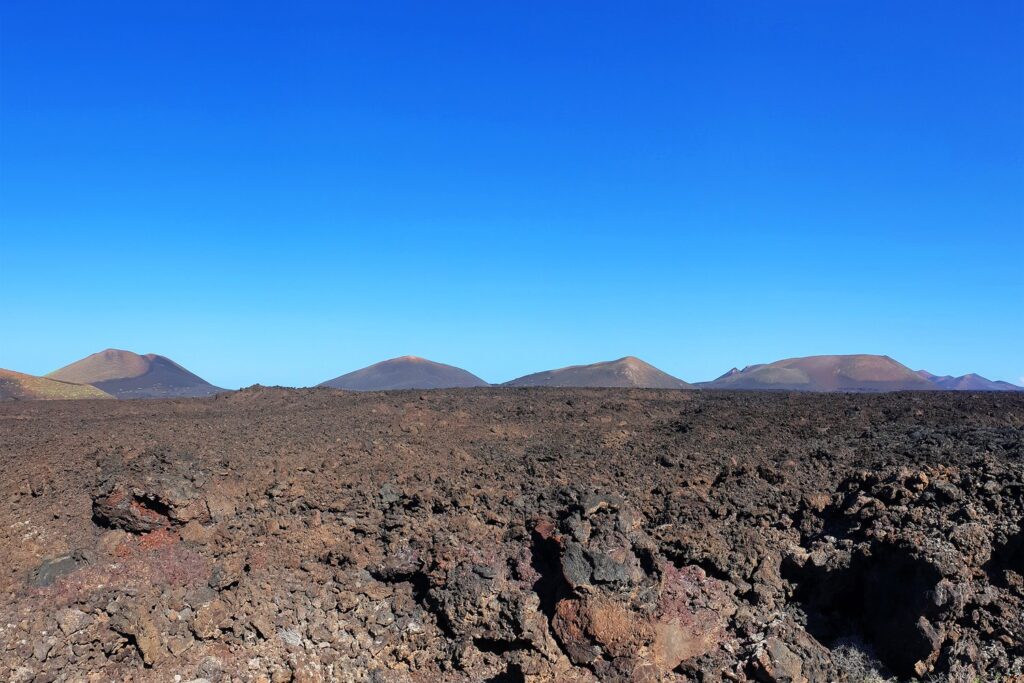
Along the way you pass craters, lava tunnels and frozen rivers of rock. The Valle de la Tranquilidad was named after the Moon’s Sea of Tranquillity, and the unique landscape really does look like another world. From the route you can see more than 25 craters, including the deep, split cone of Montaña Rajada.
Geothermal demonstrations at Islote de Hilario
Back at Islote de Hilario, park staff show how hot the ground still is. They push dry brush into a shallow hole, and within seconds it bursts into flames. Then they pour a bucket of water into a pipe in the ground, and a few seconds later a geyser of steam shoots into the air. These geothermal demonstrations are the highlight for most children.
Just below the surface, the temperature reaches 100 to 120°C, and at a depth of 13 metres it is about 600°C. You can pick up a handful of gravel near the demonstration area and feel the warmth yourself, but please put it back afterwards.
El Diablo restaurant
The El Diablo restaurant was designed by César Manrique, the artist who shaped so much of modern Lanzarote. Its round glass dining room offers spectacular views over the volcanic cones. The kitchen uses the geothermal heat of the volcano itself: meat and fish are cooked on a large grill placed over a natural well, where the temperature is around 250°C. You can’t book a table, so if you want lunch, go early and ask for a window seat.
How to get to Timanfaya National Park
The easiest way to reach the park is by car. The Montañas del Fuego entrance is on the LZ-67 road between Yaiza and Mancha Blanca. From Yaiza it takes about 10 minutes, from Playa Blanca about 25 minutes, and from Puerto del Carmen or Arrecife about 30 minutes. Most visitors arrive with a rental car, which also lets you combine the park with the west coast on the same day.
There is no public bus to the Fire Mountains, so without a car the best option is a guided bus tour from your resort. Many island tours include the park, La Geria and El Golfo, and some combine Timanfaya with Jameos del Agua in the north. Express tours from Yaiza travel in a small group with reserved access, which helps you skip the queue at the gate in high season.
Hiking in Timanfaya on guided walking routes
Walking inside the park is only possible on a few official routes. The Tremesana route is about 3.5 km long and takes around three hours, always with a park guide. The coastal route, or Ruta del Litoral, follows the black lava shore near the sea and comes in a short guided version and a longer route of almost 10 km that you can walk on your own. All of them are free, but places are limited, so book well ahead through the national park reservation system.
If the official routes are full, guided hiking tours run on trails just outside the protected zone. They cross the same volcanic landscape, with craters, lava tubes and views over the Fire Mountains, and a guide explains how the eruptions changed the island. Wear sturdy shoes, because the lava is sharp, and bring a hat, plenty of water and sun cream, as there is no shade.
Camel rides at Echadero de los Camellos
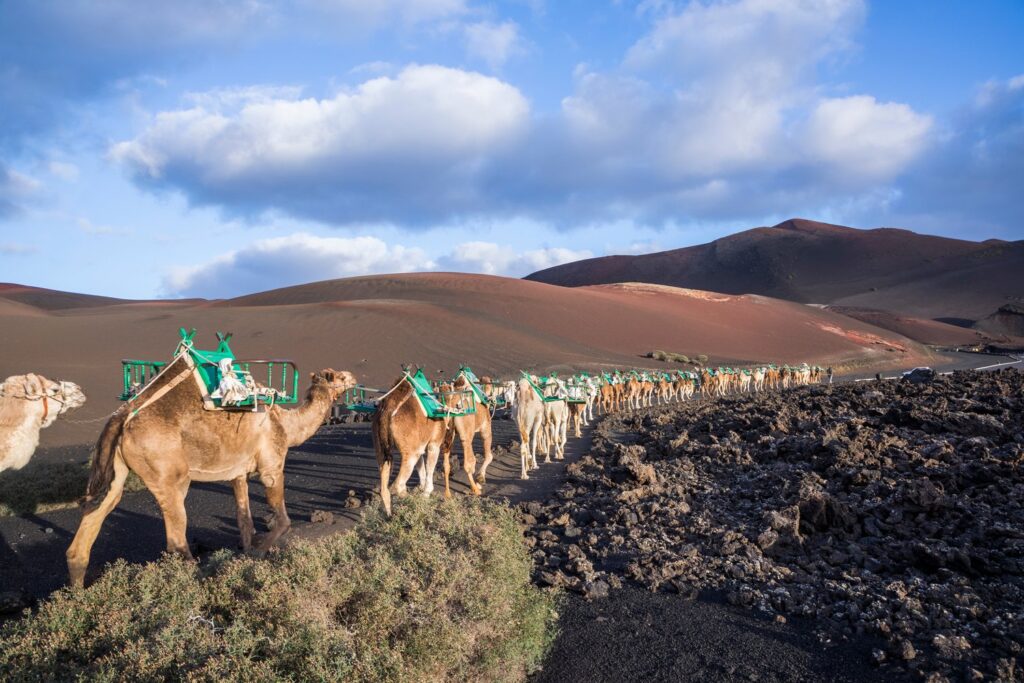
Just south of the park entrance, on the LZ-67 towards Yaiza, the Echadero de los Camellos offers short camel rides across the slopes of the volcanoes. Two people sit on each dromedary, one on each side, and the caravan climbs slowly up the ash for wide views across the park. Camels were the farm animals of Lanzarote for centuries, and a small museum and information point on site tell their story. A camel ride is a fun extra for families, but come early, before the tour buses arrive.
Mancha Blanca Visitor Centre
Many visitors miss the Mancha Blanca Visitor Centre, which is a shame, because it explains the volcanoes better than anywhere else. It stands on the road to Tinajo, about 10 minutes north of the Fire Mountains, and entry is free. Inside you will find an eruption simulator, films about the 1730 eruptions, a walkway over a real lava field and displays about the plants and lichens that slowly return to the rock. It is open daily from 9am to 4pm and makes a perfect first stop before the coach tour.
Top attractions near the park
The coast west of the park is just as spectacular as the park itself. At El Golfo, half of an old volcanic crater has collapsed into the sea, and the Charco de los Clicos lagoon inside it is a startling shade of green. A few minutes south, the waves crash into lava caves at Los Hervideros, and the Salinas de Janubio salt pans form a chequerboard of white and pink by the sea.
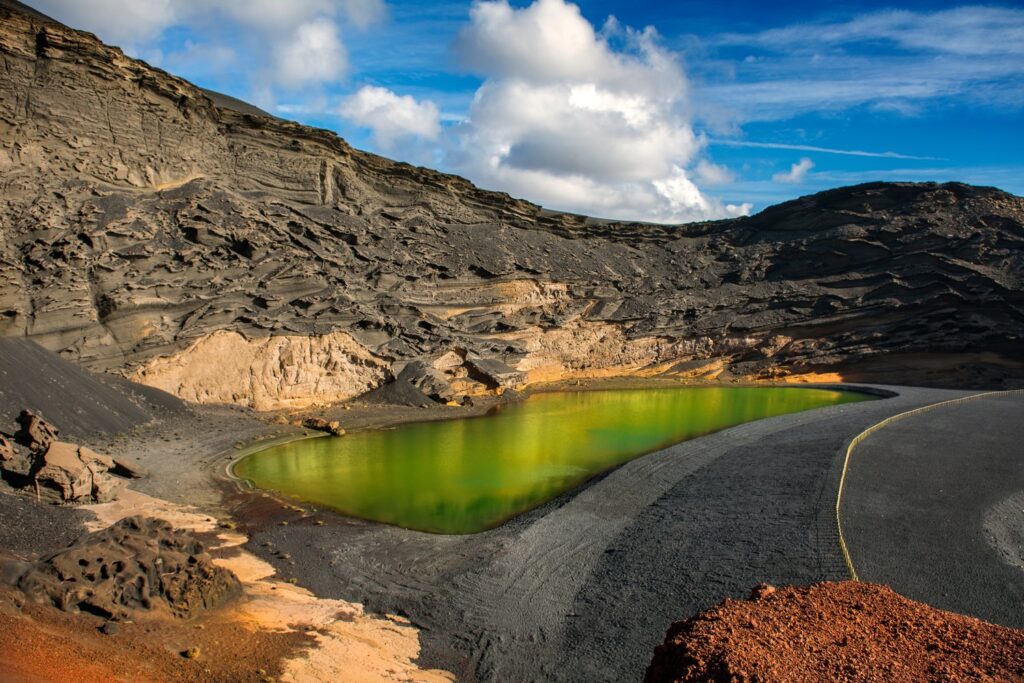
East of Timanfaya, the vineyards of La Geria are a great stop for a glass of local wine at one of the bodegas along the LZ-30 road. If you have another day, head north to the lava tube of Jameos del Agua and the nearby Cueva de los Verdes, both shaped by a different volcano, La Corona.
When to visit and how long to stay
Timanfaya is open all year, and the weather on Lanzarote is mild in every season. The biggest challenge is the queue at the entrance, which can reach an hour in the middle of the day. Arrive before 10am or after 2pm, and avoid days when large cruise ships are in Arrecife. Allow at least half a day for the Fire Mountains and Mancha Blanca, and a full day if you also want to see El Golfo, the salt pans and La Geria.
Visiting Timanfaya with kids
Children usually love Timanfaya, especially the geyser of steam and the brush that catches fire. The coach tour is short enough for younger kids, and the camel rides are a memorable extra. The paths at Islote de Hilario are uneven, so a baby carrier works better than a pushchair. Dogs and other pets are not allowed in the visitor area, apart from assistance dogs. After a hot morning among the volcanoes, the kids can cool off at one of the water parks in Lanzarote.
Practical information
- Tickets to Timanfaya National Park are best booked in advance. You will skip the long queue at the entrance and avoid the risk of finding all time slots sold out.
- Address: Montañas del Fuego, Carretera Yaiza-Tinajo (LZ-67), 35570 Yaiza, Lanzarote
- Book tickets on GetYourGuide
Hotels near Timanfaya National Park
Staying in the southwest puts you close to the park before the crowds arrive. Yaiza and the villages around it offer quiet rural hotels, while Playa Blanca has big resorts by the sea. For more choice, browse places to stay on Lanzarote.
💰 Hotelito La Era B&B
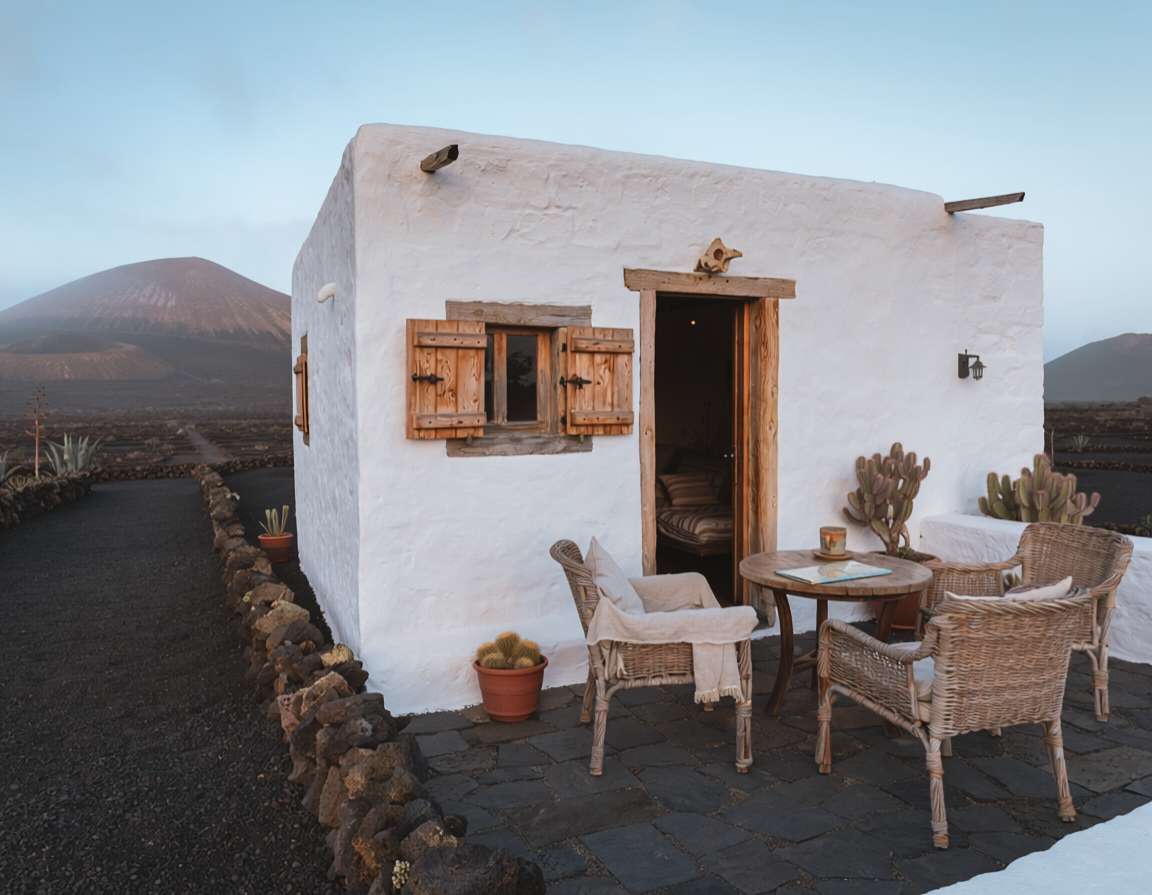
This small, good-value guesthouse sits in the village of Yaiza, about a 10-minute drive from the Fire Mountains. It has a relaxed rural feel, with whitewashed walls, a garden and a homely breakfast. You will be one of the first at the park gate in the morning, and the restaurants of Yaiza are within walking distance. It suits couples and independent travellers who want a quiet base close to the volcanoes.
🏨 Hotel Rural Finca de la Florida
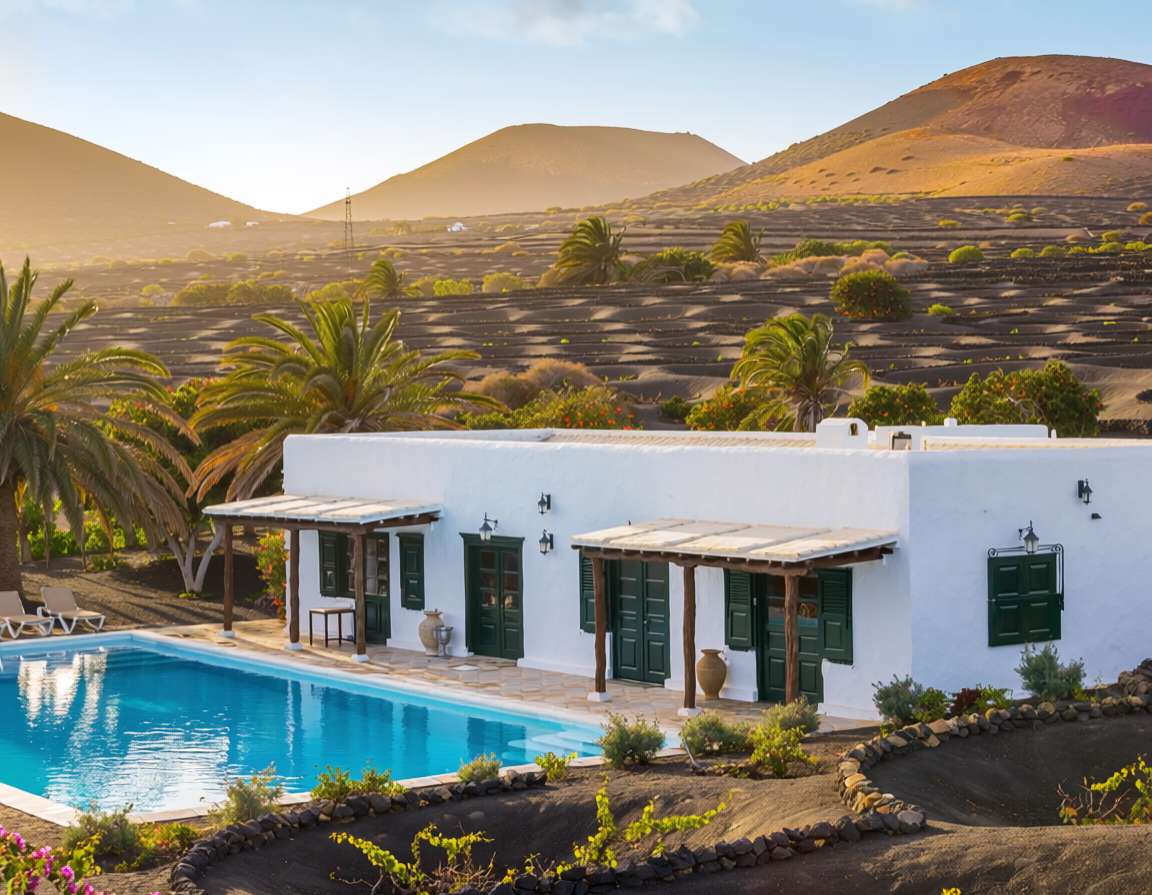
This country hotel stands among the vineyards near La Geria, in the centre of the island, about a 20-minute drive from the park. It has an outdoor pool, a spa and a restaurant serving local produce and wine. The location is handy for exploring the whole island, from Timanfaya in the west to the beaches of Puerto del Carmen. It is a peaceful choice for couples and families who prefer the countryside to a resort.
💎 Princesa Yaiza Suite Hotel Resort
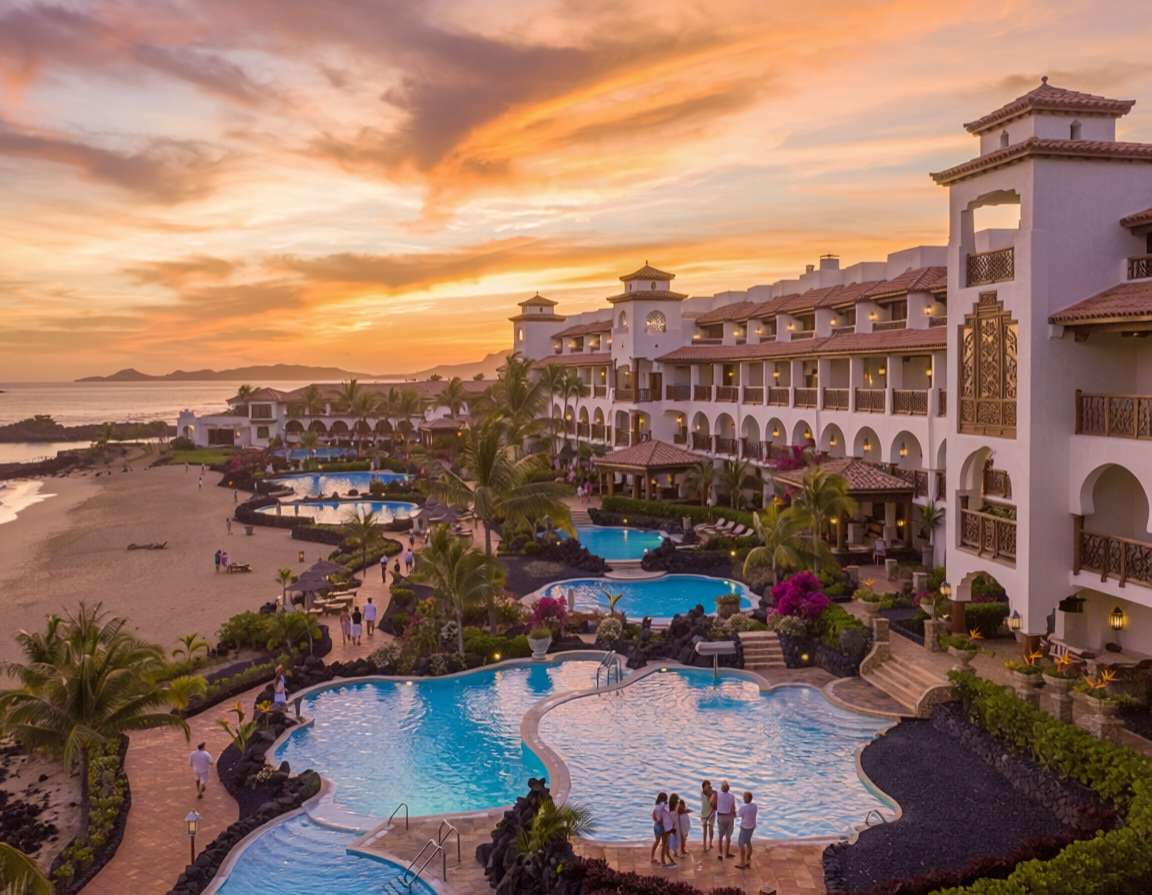
This luxury resort lies right on the beach promenade in Playa Blanca, about a 25-minute drive from the park. It offers spacious suites, several pools, a thalassotherapy spa and a choice of restaurants. Families will appreciate the kids’ club, and the ferries to Fuerteventura leave from the harbour nearby. It is the place to stay if you want a comfortable beach holiday with the volcanoes close at hand.
Timanfaya National Park FAQ
Is Timanfaya National Park worth visiting?
Yes, it is the most impressive sight on Lanzarote and quite unlike anywhere else in Europe. The coach tour through the lava fields, the geothermal demonstrations and the views from El Diablo make a memorable half-day trip.
Can you walk around Timanfaya on your own?
No, not inside the protected area. You can only see the Fire Mountains on the official coach tour or on guided walking routes booked in advance. The longer coastal route is the only one you can walk without a guide.
How long do you need at Timanfaya?
Plan 75 to 90 minutes for the Montañas del Fuego visitor area, including the coach tour. With the Mancha Blanca Visitor Centre and a camel ride, allow around half a day.
Can you drive through Timanfaya National Park?
Yes, the LZ-67 road between Yaiza and Mancha Blanca crosses the park, but you can’t stop or leave the road along the way. To see the volcanoes up close, you need to enter the Montañas del Fuego visitor area.
Is Timanfaya open every day?
Yes, the Montañas del Fuego visitor area opens daily from 9am, with the last entries in the middle of the afternoon. The Mancha Blanca Visitor Centre is also open every day, and entry there is free.

