Cross a crooked stone bridge, pass under its gate tower and the 21st century seems to stay behind on the other bank of the river.
Besalú is a small medieval town in the Garrotxa area of Catalonia, about half an hour from Girona, and one of the best-preserved historic villages in Spain. Its Romanesque bridge with a fortified gate is one of the most photographed sights in the region, and behind it lie cobbled lanes, arcaded squares, a rare Jewish ritual bath and centuries-old churches. In this article you’ll find what to see in Besalú, how much time you need, how to get there from Girona or Barcelona, where to eat and what to visit nearby, from volcanoes to a cliff-top village.
💰 La Fustana - Country guesthouse with a seasonal pool a few kilometres from Besalú.
🏨 Mas Pere Pau - Family-run Catalan farmhouse with a pool, five minutes’ drive from Besalú.
💎 Casa Marcial - Adults-only guesthouse with a garden pool, 100 metres from the bridge.
Where is Besalú and why visit?
Besalú, Catalonia lies in the province of Girona, at the meeting point of the Fluvià and Capellades rivers, around 35 km north-west of Girona and roughly 130 km from Barcelona. Today it’s a quiet village of about 2,500 people, but in the 10th and 11th centuries it was the capital of an independent county that ruled a large part of northern Catalonia. Its position on the route between the Pyrenees and the Mediterranean made it a busy crossroads for trade, and you’ll often see its name written without the accent, as Besalu.

That golden age left Besalú with an extraordinary medieval heritage, and the whole old town was declared a historic site in 1966. It’s small enough to see in a few hours, which makes it a perfect half-day trip from Girona or a stop on the way to the Pyrenees. Come early in the morning or late in the afternoon, when the stone glows in the low sun and the coach groups have gone.
The medieval bridge of Besalú
The fortified bridge over the Fluvià is the symbol of Besalú. First recorded in the 11th century and remodelled in Gothic times, it stretches about 105 metres across the river in a zigzag of seven uneven arches, following the rocks of the riverbed. Halfway across stands a tower with a portcullis gate, where tolls were once collected from merchants entering the town.

The bridge was blown up during the Spanish Civil War and carefully rebuilt in the 1960s using old drawings and photos. For the classic view, walk down to the riverbank on the far side, or follow the path along the water just below the town. The bridge looks its best at sunset and when it’s lit up at night, so it’s worth staying for dinner.
The Jewish quarter and the mikveh
In the Middle Ages, Besalú had a small but important Jewish community that lived in the lanes between the river and the main square. Its greatest treasure is the mikveh, a 12th-century ritual bath used for purification. It lay forgotten under a dyer’s workshop until 1964, when it was rediscovered, and it’s one of the very few medieval mikvehs preserved in Spain.

You walk down a stone staircase into a vaulted room, where natural spring water still fills the small pool. Next to it you can see the remains of the medieval synagogue. The site can usually only be visited on a guided tour from the tourist office, which also takes in other monuments of the town. The guides tell the story of the community until its expulsion in 1492.
Romanesque churches and medieval houses
The monastery church of Sant Pere, founded in 977 and consecrated in 1003, dominates a wide square called the Prat de Sant Pere. Its simple stone façade has a large window flanked by two carved stone lions. Inside you’ll find an ambulatory, a semicircular walkway around the altar, which is rare in Catalan Romanesque churches.
The church of Sant Vicenç, a little further north, is another Romanesque gem, with a beautifully carved doorway and a Gothic chapel dedicated to the True Cross. Look out too for the Casa Cornellà, a merchant’s house from the 12th century and one of the oldest civil buildings in Catalonia, and the remains of the hospital of Sant Julià, which once cared for pilgrims and the poor. On the hill above the town, the ruined church of Santa Maria marks the site of the old castle of the counts, first mentioned in the 10th century.

Between these monuments, the medieval town is a pleasure to explore. The arcaded Plaça de la Llibertat is the heart of Besalú, with the town hall, cafés and shops selling local crafts. From there, the Carrer del Comte Tallaferro and other narrow lanes lead between stone houses with heavy wooden doors and Gothic windows.
Festivals and the best time to visit
The biggest event of the year is the medieval festival held on the first weekend of September. Locals dress up, the streets fill with craft stalls, music and jugglers, and the bridge becomes the stage for parades and tournaments. It’s great fun but very busy, so arrive early.
Spring and autumn are the best seasons for a visit, with mild weather for walking and the green hills of the Garrotxa at their best. In summer, Besalú gets warm and crowded at midday. In winter it’s calm and atmospheric, but some shops and restaurants close on weekdays.
Where to eat in Besalú
Besalú has a good choice of restaurants for its size, many with terraces on the main square or views of the bridge. The local cooking of the Garrotxa is known as volcanic cuisine, built on beans from Santa Pau, buckwheat, wild mushrooms, local pork and hearty stews. In autumn, look for dishes with game and fresh mushrooms from the nearby forests.

Finish your meal with ratafia, a sweet herbal liqueur typical of the area. For a cheaper lunch, many restaurants offer a menú del dia on weekdays, and the bakeries around the square sell cakes and coques for a picnic by the river.
How to get to Besalú
By car, Besalú is about 30 to 35 minutes from Girona on the C-66 road, and about 1 hour 30 minutes from Barcelona. There’s a large car park just across the river from the old town, a short walk from the bridge. Driving also makes it easy to combine Besalú with other villages in the area, so hiring a car is the most flexible option.
Without a car, take a bus from Girona, which runs several times a day and takes around 45 minutes. There are also direct buses from Barcelona that take about 2 hours. You can check bus times from Barcelona and Girona before you travel. Many guided day trips from Barcelona also combine Besalú with Girona or the volcanic landscapes of La Garrotxa.
How much time do you need in Besalú?
Two to three hours are enough to cross the bridge, explore the old town, see the churches and stop for a coffee in the main square. Add another hour if you join the guided tour of the mikveh. If you’d like to enjoy the bridge lit up at night, stay for dinner or book a room in the village.
Besalú combines well with other places in the area. Many visitors spend the morning in Besalú and the afternoon in the nearby volcanic park, or pair it with Girona and Figueres for a longer day trip.
Day trips from Besalú - volcanoes, lakes and cliff-top villages
Just 15 minutes west of Besalú, Castellfollit de la Roca sits on top of a basalt cliff about 50 metres high, with its houses built right to the edge. A little further on, the Garrotxa Volcanic Zone Natural Park protects around 40 extinct volcanoes. An easy walk takes you to the Santa Margarida crater, with a small hermitage in the middle, and through the beech forest of La Fageda d’en Jordà.
The medieval village of Santa Pau and the town of Olot, with its Modernista houses, are both within half an hour. To the south-east, Lake Banyoles, which hosted the rowing events of the 1992 Barcelona Olympics, is perfect for a walk or a boat trip. Art lovers can continue to the Dalí Theatre-Museum in Figueres, about 30 minutes away by car.
Hotels in and around Besalú
Spending a night in Besalú lets you see the bridge lit up and enjoy the village after the day visitors leave. These three places to stay suit different budgets and travel styles.
💰 La Fustana
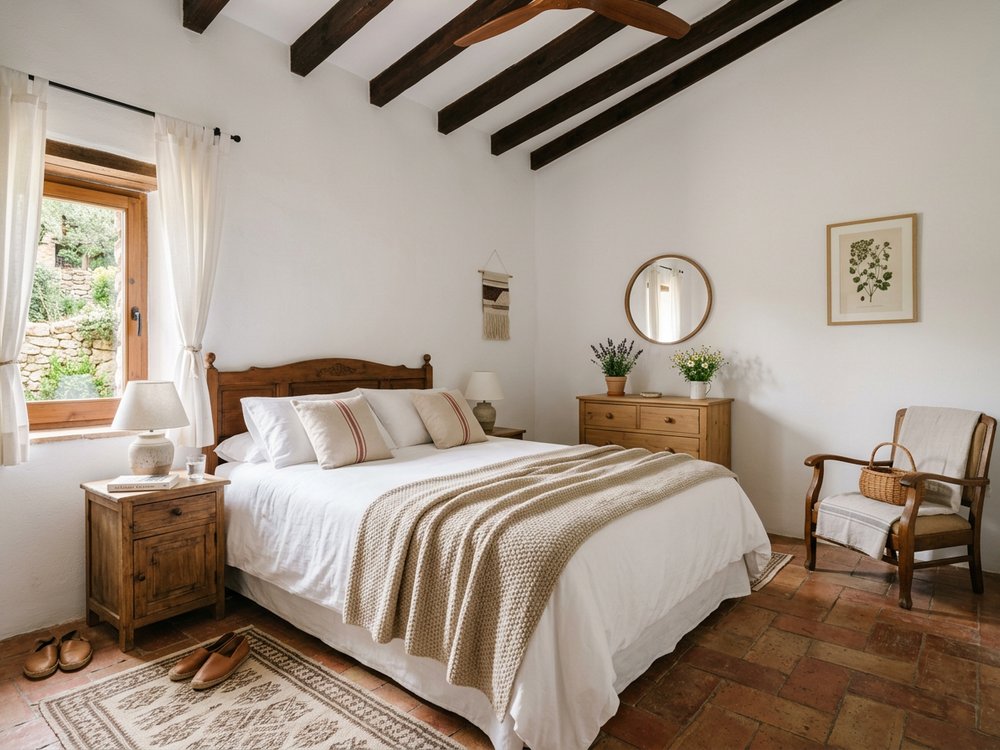
A relaxed country guesthouse in Maià de Montcal, a few kilometres from Besalú, with a garden, a terrace and a seasonal outdoor pool. Rooms are simple and comfortable, with private bathrooms, and the breakfast gets excellent reviews from guests. It’s a good-value base if you have a car and want quiet nights surrounded by the green hills of the Garrotxa.
🏨 Mas Pere Pau
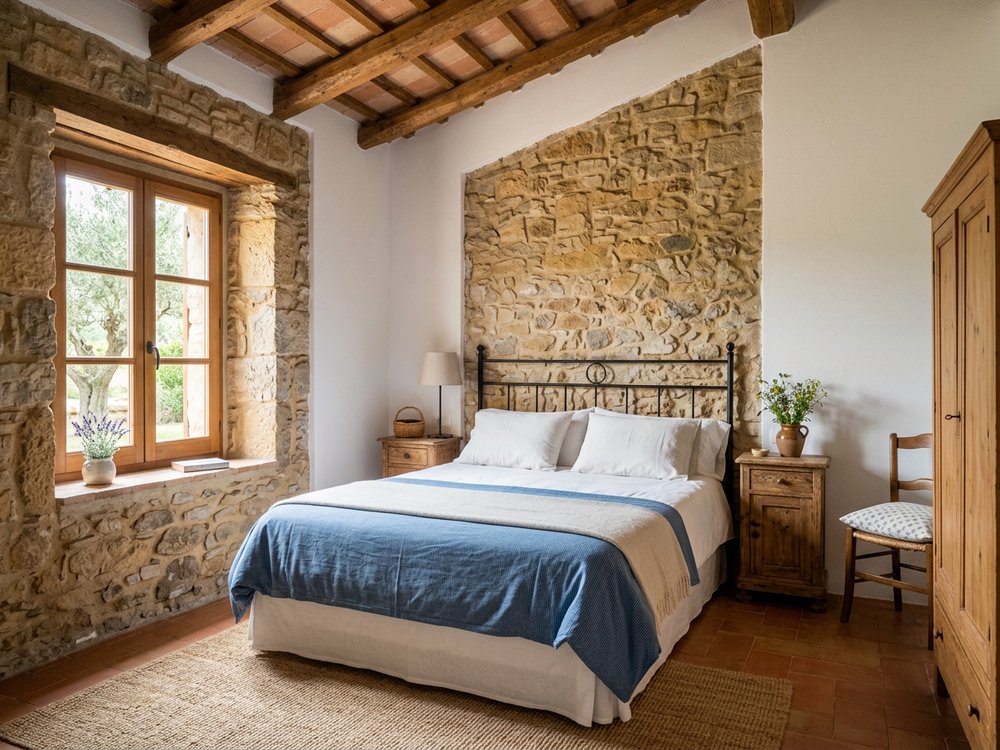
A family-run guesthouse in a traditional Catalan farmhouse, about five minutes by car from the centre of Besalú. The rustic rooms, studios and apartments look out over the mountains or the garden, and there’s a pool, a terrace bar and a lounge with a fireplace. At weekends the restaurant serves Catalan dishes made with local produce, which makes it ideal for families and couples on a rural break.
💎 Casa Marcial
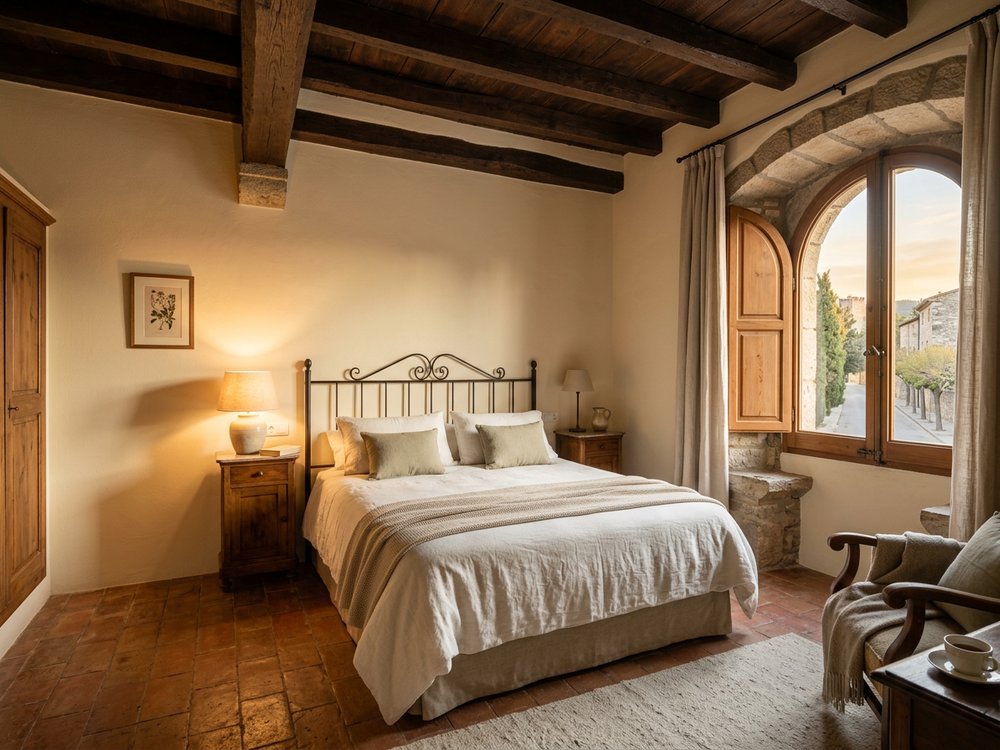
An adults-only guesthouse in Besalú itself, only about 100 metres from the medieval bridge. It has a garden with an outdoor pool and lovely views, and the modern rooms are air-conditioned and quietly stylish. It’s the best choice for couples who want a peaceful, romantic stay with the old town on the doorstep and Lake Banyoles just 15 minutes away.
Besalú FAQ
Is Besalú worth visiting?
Yes, Besalú is one of the most beautiful medieval villages in Catalonia. The fortified bridge, the Jewish mikveh and the Romanesque churches are all within a few minutes’ walk. It’s also a good base for the volcanoes of La Garrotxa.
Where is Besalú in Spain?
Besalú is in Catalonia, in the province of Girona, about 35 km north-west of Girona and 130 km from Barcelona. It lies in the Garrotxa area, between the Costa Brava and the Pyrenees.
Can you visit Besalú from Barcelona in a day?
Yes, Besalú is an easy day trip from Barcelona by car or on a guided tour, which often adds Girona or the Garrotxa volcanoes. By public transport, the direct bus takes about 2 hours each way.
Can you visit the mikveh in Besalú?
Yes, but usually only on a guided tour organised by the tourist office. The tours run several times a day and also include other monuments of the medieval town. Check the times at the tourist office when you arrive.
When is the medieval festival in Besalú?
The medieval festival takes place on the first weekend of September. The old town fills with craft stalls, music, parades and people in costume. It’s lively but crowded, so arrive early or stay overnight.

