A vintage Cadillac where it rains indoors, a living room that turns into a film star’s face and a painter buried under the stage. Welcome to the strangest museum in Spain.
The Dalí Theatre-Museum in Figueres is the world’s largest surrealist object, as Salvador Dalí himself described it. It’s run by the Gala-Salvador Dalí Foundation, and you’ll often see it written simply as the Dali Theatre Museum, without the accent. He designed every corner of it, from the egg-topped red façade to the crypt where he lies, and it’s one of the most visited museums in Spain. In this article you’ll find how to book Dalí Museum tickets, opening hours by season, how long a visit takes, the highlights not to miss, the Dalí Jewels collection next door and how to combine the museum with Púbol and Portlligat in the so-called Dalí Triangle.
💰 Hotel Pirineos Figueres - Simple, friendly budget hotel about ten minutes on foot from the museum.
🏨 Hotel Duran - Historic family-run hotel a few steps from the museum, where Dalí and Gala dined.
💎 Hotel Peralada Wine Spa & Golf - Five-star resort with a wine spa among the vineyards of Peralada.
What is the Dalí Theatre-Museum?
The Teatre-Museu Dalí stands on the ruins of the old municipal theatre of Figueres, the town where Dalí was born in 1904. As a teenager he showed his first paintings in that theatre. It burned down at the end of the Spanish Civil War, and in the 1960s the mayor asked Dalí to donate a painting to the town. The artist offered a whole museum instead.

The Dalí Museum opened on 28 September 1974, and Dalí kept working on it until his death in 1989. He wanted visitors to leave “with the sensation of having had a theatrical dream”, so there’s no set route or chronological order. The building is crowned by a huge geodesic glass dome over the old stage, and its red walls are decorated with giant eggs and hundreds of golden loaves of bread, a typical Catalan symbol.
Dalí is buried in a crypt beneath the stage, so the museum is also his tomb. In 2017 his body was briefly exhumed for a paternity test, which proved that he was not the father of the woman who had claimed to be his daughter. Since it opened, the museum has welcomed around 35 million visitors, including more than 726,000 in 2023 alone.
Highlights not to miss inside the Dalí Museum
The visit begins in the open courtyard of the old theatre, where you’ll find the Rainy Taxi. This black Cadillac is filled with plants and mannequins, and if you drop a coin in the slot, it starts to rain inside the car. Above it stands a statue of Queen Esther and a tower of tyres topped by Dalí’s boat, which belonged to his wife Gala.
On the stage under the dome, look for the huge painting Gala Nude Looking at the Sea. From close up you see Gala at a window, but from about 20 metres away the image turns into a portrait of Abraham Lincoln. It’s one of the best examples of Dalí’s double images and optical illusions.

The Mae West Room is the museum’s most famous trick. A sofa shaped like red lips, a fireplace and two framed pictures look like ordinary furniture, but when you climb the small staircase and look through a lens, they come together as the face of the Hollywood actress. Expect a short queue here at busy times.
Upstairs, the Palace of the Wind Room has a painted ceiling showing Dalí and Gala rising to the sky, with only the soles of their feet visible from below. Elsewhere you’ll find portraits of Gala, early works from Dalí’s impressionist and cubist years, holograms, stereoscopic pieces and works by other artists from his own collection. Look out for the red velvet Treasure Room and Soft Self-Portrait with Grilled Bacon, one of Salvador Dalí’s best-known oil paintings, in which his drooping face is propped up by crutches.
The Dalí Jewels
Next to the main building, in a separate gallery, you’ll find the Dalí Jewels, a collection of jewellery that Dalí designed between the 1940s and the 1970s. Gold, rubies, diamonds and pearls become melting clocks, beating hearts and lips. The star piece is The Royal Heart, a golden heart of rubies that actually pulses thanks to a small mechanism.
The jewels were made by the New York jeweller Carlos Alemany from Dalí’s designs, and many are shown alongside the original drawings. Your Theatre-Museum ticket includes the Dalí Jewels, and the entrance is a few steps from the museum exit. Allow 20 to 30 minutes for this part of the visit.
Dalí Museum tickets
All visits to the Dalí Theatre-Museum use timed tickets, and you choose a specific entry slot. In summer and during school holidays, the best time slots sell out days in advance, so it’s worth booking your Dalí Museum tickets online as soon as your dates are fixed. Children up to 8 years old go in free, and there are reduced tickets for students and seniors.
If you’re travelling from Barcelona, a guided day trip is the easiest option. Most include transport, a skip-the-line entry ticket and often a stop in Girona or Cadaqués. Before booking, check the cancellation conditions of the ticket or tour you choose, as they vary from product to product.
Dalí Museum opening hours and how long to spend
The Dalí Theatre-Museum opening hours change with the season. From July to September it’s open every day from 9am to 8pm. From March to June and in October it opens from 9.30am to 6pm, and from November to February from 10.30am to 6pm. From October to May the museum is closed on Mondays, apart from some public holidays, and the last entry is shortly before closing time, so check the times for your date when you book.
Plan about two hours for the Theatre-Museum and the Dalí Jewels. Fans of Dalí’s work can easily spend three. The museum is busiest from late morning to mid-afternoon, when tour coaches arrive from Barcelona and the Costa Brava, so the first slot of the day or a late-afternoon entry is calmer. In August the museum also opens at night, from 10pm to 12.30am, which is a magical and much cooler way to see it.
Tips for visiting
Large bags and backpacks must be left in the cloakroom, and you can take photos without flash in most rooms. Much of the museum is accessible by lift, but some spaces have steps, so visitors with reduced mobility should contact the museum in advance. There’s no fixed route, so pick up a map at the entrance and make sure you don’t miss the crypt, the Mae West Room and the Palace of the Wind.
Children usually love the Rainy Taxi, the optical tricks and the strange objects in every corner, but some rooms can be crowded and noisy. Pick a quieter time slot if you’re visiting with little ones. After the museum, the leafy Rambla of Figueres is just a few minutes away for lunch.
The Dalí Triangle - Púbol and Portlligat
The Theatre-Museum is one corner of the Dalí Triangle, a route linking the three main Dalí sights in the Empordà. The Gala Dalí Castle in Púbol is a medieval castle that Dalí bought for Gala in 1969 and decorated for her. She lived there alone, and Dalí could visit only by written invitation. Gala is buried in the castle crypt, and the gardens are full of elephant sculptures with long, spindly legs.
The Salvador Dalí House in Portlligat, a quiet fishing cove next to Cadaqués, was Dalí’s home and studio for more than 50 years. It’s a maze of small fishermen’s huts joined together, with an egg on the roof and a swimming pool shaped like a phallus. Visits take place in small groups, so book Portlligat several weeks ahead in high season.
Púbol is about 45 minutes from Figueres by car, and Portlligat around 40 minutes. You can see all three in one long day with a car or a guided tour, but two days are more relaxed. Car hire gives you the most freedom, as public transport to Púbol is limited.
How to get to the Dalí Museum in Figueres
Figueres is about 55 minutes from Barcelona by high-speed train and around 15 minutes from Girona. From Figueres Vilafant station it’s about 20 minutes on foot to the museum, while the regional train station is just 10 minutes away. You can compare train and bus times to Figueres online. By car, use the public car parks in the centre, as the streets around the museum are pedestrianised.
To make the most of the trip, spend the rest of the day in the town itself. Sant Ferran Castle, the Toy Museum and the Rambla are all close by, and you’ll find ideas in our guide to Figueres. The medieval village of Besalú is also an easy add-on with a car.
Practical information
- Tickets to the Dalí Theatre-Museum are best bought in advance. You’ll avoid the long queue at the entrance and won’t risk finding your preferred time slot sold out.
- Address: Plaça Gala i Salvador Dalí 5, 17600 Figueres, Girona
- Buy tickets on GetYourGuide
Hotels near the Dalí Theatre-Museum
Staying in Figueres means you can be at the museum for the first time slot of the day, before the coaches arrive. These three hotels are close to the museum or a short drive away.
💰 Hotel Pirineos Figueres
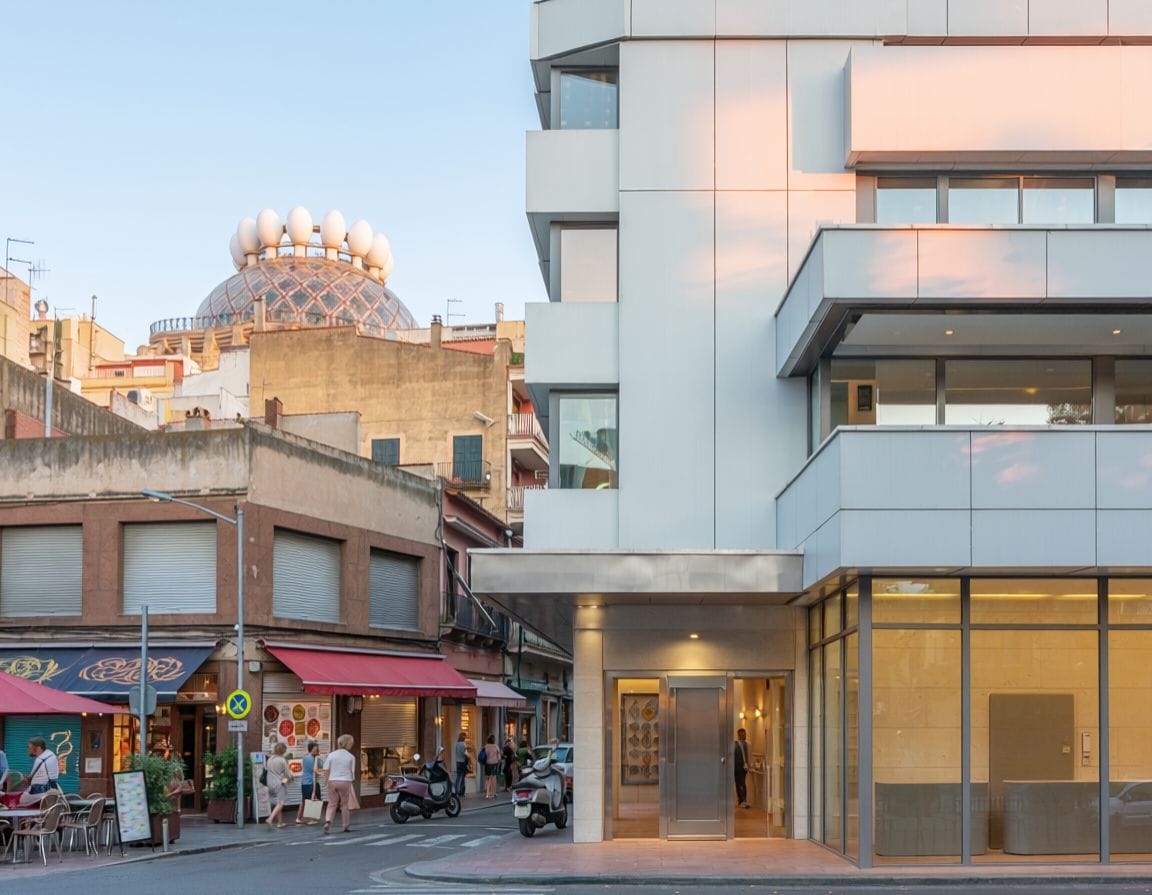
A simple, friendly hotel about ten minutes on foot from the Dalí Theatre-Museum and close to the regional train station. Rooms are plain but clean and comfortable, and there’s a restaurant serving local dishes and a car park, which is handy if you’re driving around the Empordà. It’s a solid budget base for one night in Figueres.
🏨 Hotel Duran
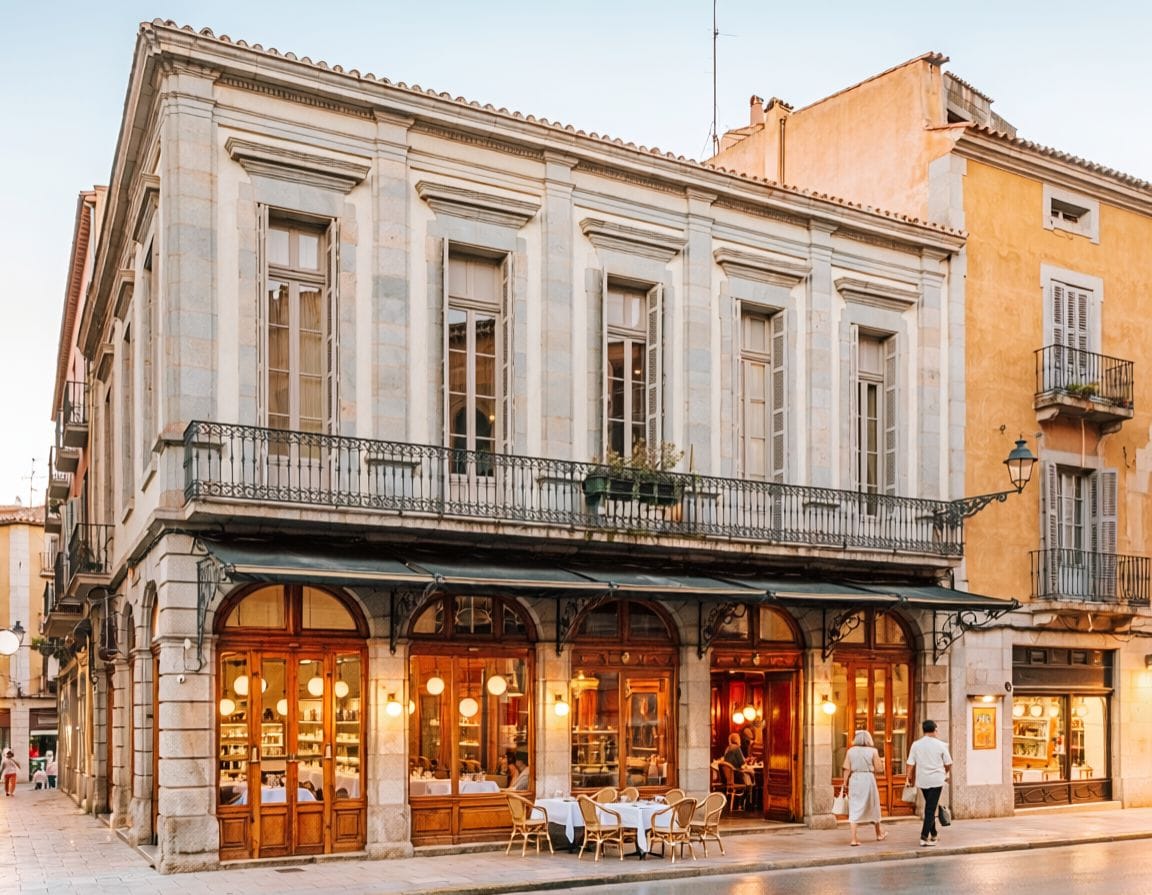
A historic family-run hotel just off the Rambla, only a few steps from the museum. Dalí and Gala were regulars in its restaurant, which still serves classic Empordà cooking under photos of the artist. The rooms are comfortable and quiet, so it’s ideal if you want to stay in the heart of Dalí’s Figueres.
💎 Hotel Peralada Wine Spa & Golf

A five-star resort among vineyards and a golf course in Peralada, about 15 to 20 minutes’ drive from the Dalí Museum. It has a spa with wine-based treatments, indoor and outdoor pools and large rooms with views across the Empordà plain. It’s perfect for a special break that combines Dalí, wine tastings and the Costa Brava.
Dalí Theatre-Museum FAQ
Is the Dalí Museum in Figueres worth it?
Yes, the Dalí Theatre-Museum is worth it, even if you’re not a big fan of surrealism. Dalí designed the whole building as a work of art, so the experience is playful and surprising. Combined with the Dalí Jewels and a walk around Figueres, it makes a memorable day trip.
How long do you need at the Dalí Theatre-Museum?
Most visitors need about two hours for the Theatre-Museum and the Dalí Jewels. If you like to look at every detail, plan three hours. Add time for lunch in Figueres or a visit to Sant Ferran Castle.
Do you need to book Dalí Museum tickets in advance?
It’s strongly recommended, especially from spring to autumn and during school holidays. Entry is by timed slot, and popular times often sell out. Booking ahead also saves you from queuing at the ticket office.
Is the Dalí Museum in Barcelona or Figueres?
The Dalí Theatre-Museum is in Figueres, not in Barcelona. Figueres is about 140 km north of Barcelona, and the high-speed train takes about 55 minutes, so it’s an easy day trip from the city.
What is the Dalí Triangle?
The Dalí Triangle links the three main Dalí sites in Catalonia: the Theatre-Museum in Figueres, the Gala Dalí Castle in Púbol and Dalí’s house in Portlligat near Cadaqués. You can visit all three in one or two days by car or on a guided tour.

