What do a Phoenician city wall, a Renaissance coffered ceiling and a ceramic plate painted with a bull’s head have in common? They all share one address, a five-minute walk from the house where a young boy first picked up his father’s brushes.
The Picasso Museum Málaga (Museo Picasso Málaga) is the museum that finally brought Pablo Picasso back to the city where he was born. It fills the 16th-century Palacio de Buenavista on Calle San Agustín, right in the old town of Málaga, and shows the artist’s work from his teenage studies to the paintings he made in his nineties. If you’re an art lover or a first-time visitor with a day in the city, in this article you’ll find what to see inside, the temporary exhibitions for 2026, how tickets and the free Sunday slot work, opening hours, how long a visit takes and how to fit it into a day in the city.
💰 Carlos V Malaga - Simple, good-value rooms 50 metres from the Alcazaba, a three-minute walk from the museum.
🏨 Catalonia Molina Lario - Four-star hotel by the cathedral with a rooftop pool and city views.
💎 Palacio Solecio, a Small Luxury Hotel of the World - Boutique hotel in an 18th-century palace on Calle Granada, two minutes from the museum.
Why the Picasso Museum in Malaga matters
Pablo Picasso was born in Málaga on 25 October 1881, in a flat on Plaza de la Merced. His father, José Ruiz Blasco, was a painter and art teacher, and the boy took his first drawing lessons here. The family left for A Coruña in 1891, when he was ten, and later moved to Barcelona. So did Picasso live in Malaga? Only for his first ten years, but he never forgot the bullfighting, the pigeons and the light of the Costa del Sol. Doves and bulls turn up in his work right to the end.
That is why Picasso’s presence in Malaga reaches far beyond the museum walls. The city has his birthplace, the church where he was baptised and a bronze statue of the artist sitting on a bench in Plaza de la Merced. The Picasso Museum is the heart of it all, and the place to see the largest collection of his work in Andalusia and one of the most important in Spain.
History of the museum - from an idea in 1953 to an opening in 2003
The idea of a Picasso museum in his home town was first discussed in 1953, when local historian Juan Temboury wrote to the artist about it. Picasso liked the plan, but under Franco it went nowhere. He died in Mougins, France, in 1973 without seeing it happen.
The project came back to life thanks to his family. Christine Ruiz-Picasso, the widow of his son Paulo, donated 133 works, and her son Bernard Ruiz-Picasso, the artist’s grandson, added another 22. The regional government of Andalusia bought the Palacio de Buenavista in 1997, and King Juan Carlos I and Queen Sofía opened the Museo Picasso Málaga on 27 October 2003. You’ll sometimes see 17 October quoted online, but the museum itself gives the 27th, and it still celebrates the anniversary with free entry on that day.
At the opening, the permanent collection had 233 works. Since then the Almine and Bernard Ruiz-Picasso Foundation (FABA) has continued to lend further works, so the galleries now show far more than the museum owns. More than 3.5 million people had already visited by the tenth anniversary in 2013.
The Palacio de Buenavista is worth seeing in its own right. Diego de Cazalla, a knight who fought in the Christian conquest of the city in 1487, built it over the remains of a Nasrid palace. It mixes Renaissance and Mudéjar styles, with a square tower, an arcaded courtyard and carved wooden ceilings. The building was declared a National Monument in 1939 and housed the city’s fine arts museum from 1961 to 1997.
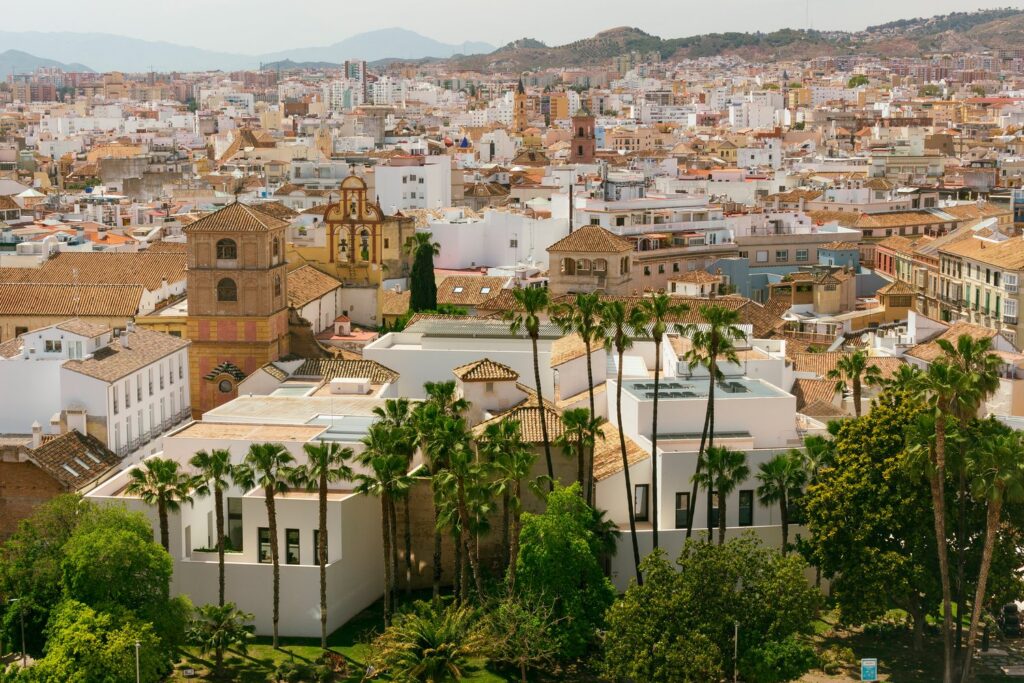
American architect Richard Gluckman led the conversion, together with Isabel Cámara and Rafael Martín Delgado. They linked the Buenavista Palace with several houses in the old Jewish quarter and added white, light-filled galleries. After a fire in 2002, craftsmen recreated the damaged 16th-century coffered ceilings, so look up as you walk through the old rooms.
Don’t skip the basement. During the building works, archaeologists found part of a Phoenician city wall with its towers, a Roman factory that made garum (a fermented fish sauce) and traces of the Nasrid palace. You can walk among them on the lower floor, and in places you can see them through glass panels. It’s a quiet, slightly unexpected way to end an art museum visit.
What to see in the permanent collection
Since March 2024 the permanent collection has been shown as Pablo Picasso: Structures of Invention. The Unity of a Life’s Work, curated by Michael FitzGerald. It brings together around 144 artworks dating from 1895 to 1972: paintings, sculptures, ceramics, drawings, prints and sketchbooks. The display runs until 2028.
The galleries are not arranged as a neat walk through the Blue, Rose and Cubist periods. Each room mixes decades and techniques around themes that recur throughout Picasso’s work, such as the Minotaur, the bullfight, the family and desire. You may find an academic study from his teens next to a late canvas, which makes it easy to see how far he travelled. Five small “focus” displays sit within the galleries. They look at Picasso and African sculpture, his paintings on wooden panels, his plaster sculptures of the 1930s, his life in Paris during the Second World War and the mural he created for UNESCO in 1957-58.
Highlights not to miss
Look out for Paul, the Artist’s Son (1922), a tender portrait of his first child, and Head of a Woman (1928), from the years when Cubism was giving way to something stranger. The sculpture Woman Leaning on Her Elbow (1933) and the ceramic Spanish Plate Decorated with a Bull’s Head (1957) are among the pieces shown in Spain for the first time. Three African sculptures from Picasso’s private collection are displayed alongside his own work, so you can compare the two directly. The rooms also hold personal photographs and sketchbooks, which give a feel for how Picasso worked day to day.
One thing to know before you go: Picasso’s most famous paintings are elsewhere. Guernica hangs in the Reina Sofía in Madrid and Les Demoiselles d’Avignon is at MoMA in New York. If you want to follow his early years, the Picasso Museum in Barcelona has more of his youthful work. The Malaga collection shines differently, showing the whole span of his life in a manageable size.
Temporary exhibitions in 2026
Alongside the permanent collection, the Museo Picasso Málaga runs several temporary exhibitions a year, and it has hosted more than 70 since 2003. The big one this season is Munch-Picasso, open from 30 October 2026 to 28 February 2027. It sets Edvard Munch beside Picasso, with loans from the Munch Museum in Oslo and major Picasso collections, and looks at themes both artists returned to: anxiety, desire, motherhood, the nude and death.
The museum also has a full calendar of cultural activities, from lectures and concerts to family workshops. On 28 October 2026 Michael FitzGerald will give a talk on presenting Picasso’s work as a whole. Exhibition dates can change, so check the programme close to your trip, especially in the weeks between exhibitions, when some rooms may be closed.
Picasso Museum Malaga tickets, discounts and free entry
The museum sells one full-access ticket that covers the permanent collection, the temporary exhibitions and the archaeological remains. The audio guide is included. Book your Picasso Museum Malaga tickets online, especially for weekends, Holy Week (Semana Santa) and the summer months. Time slots do sell out, and on quieter days the ticket office sells whatever places are left.
Reduced tickets are available for visitors over 65, students under 26 and European Youth Card holders. Entry is free for children under 17, visitors with disabilities (plus one companion) and registered jobseekers in Spain, among others. Bring ID or a card that proves you qualify.
So is the Picasso Museum in Malaga free? Yes, at set times. Every Sunday, entry is free for the last two hours before closing, which means 4pm to 6pm in winter, 5pm to 7pm in spring and autumn and 6pm to 8pm in July and August. The museum is also free on 28 February (Andalusia Day), 18 May (International Museum Day), 27 September (World Tourism Day) and 27 October (the museum’s anniversary). Expect a queue on these days and arrive early, because the last entry is 30 minutes before closing.
Opening hours of the Picasso Museum Malaga
The Museo Picasso Málaga is open every day of the year except three. Hours change with the seasons:
- March to June: 10am to 7pm
- July and August: 10am to 8pm
- September and October: 10am to 7pm
- November to February: 10am to 6pm
On 24 and 31 December and 5 January the museum closes at 3pm. It is closed on 25 December, 1 January and 6 January. Staff start clearing the galleries ten minutes before closing time, so plan to finish a little earlier than that.
How long do you need at the Picasso Museum in Malaga?
Allow about 1.5 to 2 hours at the Picasso Museum Malaga for the permanent collection and the ruins in the basement. Add another 45 minutes if you want to see the temporary exhibition properly. Art lovers who listen to the full audio guide can easily spend half a day here.
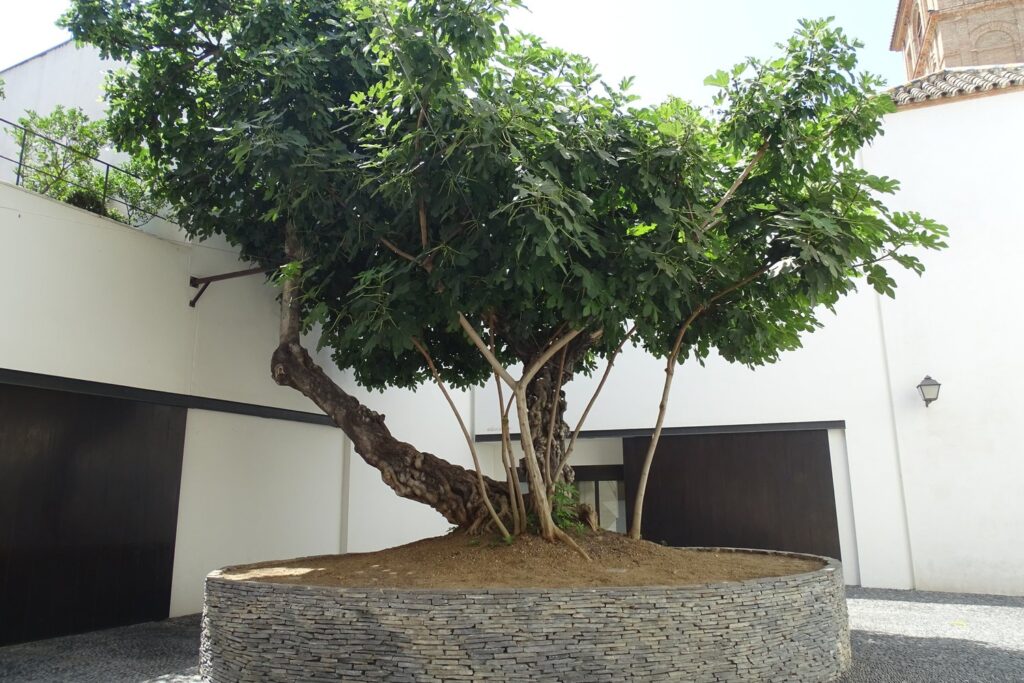
The quietest time is usually right at opening, at 10am, or on a weekday afternoon outside the free Sunday slot. Afterwards, sit for a while in the shady garden courtyard or have a coffee at the museum café, which serves a Mediterranean menu. The shop and bookshop stock art books and gifts about Picasso and his era.
Audio guide and guided tours
The audio guide comes with every ticket and works as a web app on your own phone, with nothing to download. Bring headphones and a fully charged phone. It covers the main works and the building, so you can choose how deeply to explore each room.
If you’d rather have someone explain the paintings, book a guided tour. Small-group guided tours with an art historian usually last 1 to 1.5 hours and include fast-track entry, which helps on busy days. Some tours combine the museum with the cathedral and the old town, a good option if you only have one day in Malaga.
Picasso’s Birthplace Museum and other Picasso sites
Picasso’s birthplace museum (Museo Casa Natal Picasso) is located at Plaza de la Merced 15, about 300 metres (a five-minute walk) from the Palacio de Buenavista. The Picasso Foundation runs it in the building where he was born. You’ll see a recreated 19th-century family home, personal belongings, photographs and family documents, plus a collection of his prints and ceramics and small temporary exhibitions.
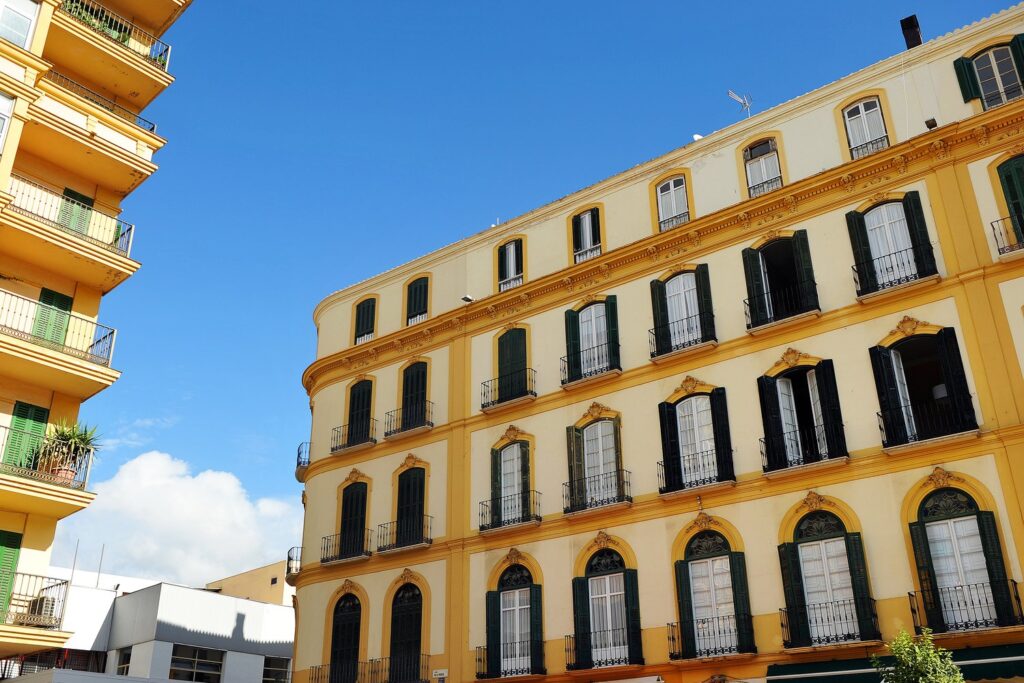
The birthplace museum is open daily from 9.30am to 8pm. Entry is free on Sunday afternoons from 4pm to 8pm, and always free for visitors under 18. There is no official joint ticket with the Picasso Museum, although some ticket sellers bundle the two. A good plan is to visit the birthplace museum first, have a drink in Plaza de la Merced and walk down Calle Granada to the main museum. On the way, stop at the Iglesia de Santiago, the church where Picasso was baptised in 1881.
What to see near the Picasso Museum
The museum sits in the middle of old Malaga, so the city’s main landmarks are all within a short walk. Walk two minutes downhill to the Roman Theatre and the Moorish Alcazaba fortress above it, then climb to Gibralfaro Castle for the best view over the port and the bullring. The cathedral, nicknamed La Manquita (“the one-armed lady”) because its second tower was never finished, is about five minutes away.
Malaga has become a real city of art museums. The Carmen Thyssen Museum shows Spanish and Andalusian painting from the 19th century, and the colourful glass cube of the Centre Pompidou Málaga stands on the Muelle Uno waterfront, around 15 minutes on foot. If you have more time, add a day trip to the Caminito del Rey gorge walk or the white town of Nerja. For more ideas across the region, see our list of the best things to do in Andalusia.
How to get to the Picasso Museum in Malaga
The address is Palacio de Buenavista, Calle San Agustín 8, in the pedestrian old town. Most visitors simply walk. Street signs and maps usually say Museo Picasso Malaga, without the accent, so that’s the name to look for. It’s about ten minutes’ walk from Calle Larios and the port, and 15 to 20 minutes from Málaga María Zambrano station.
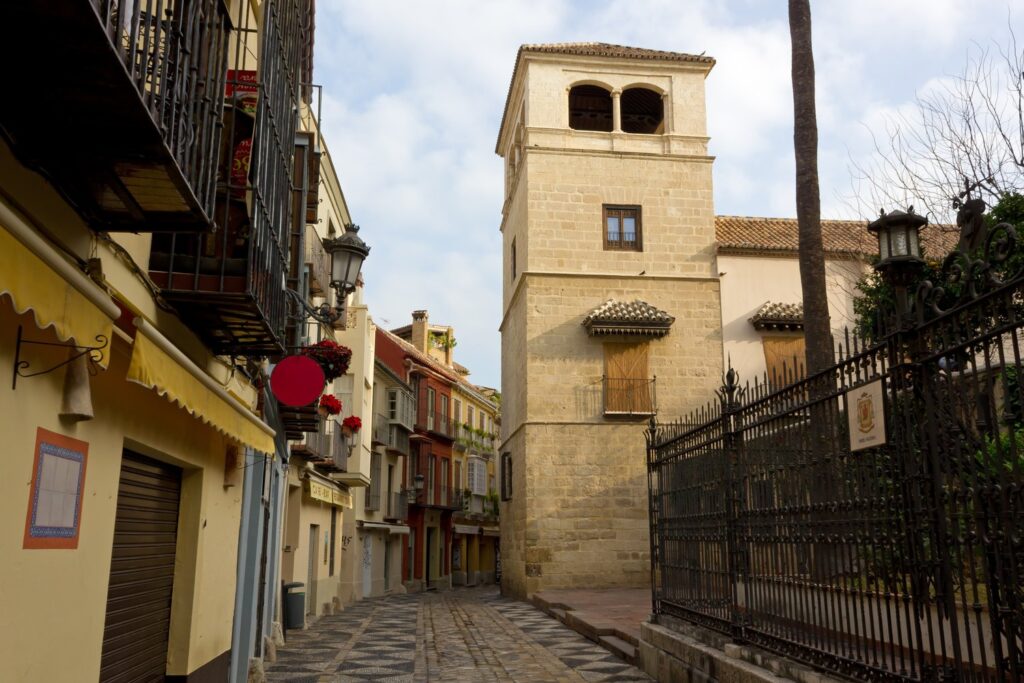
From the airport, take the C1 suburban train to Málaga Centro-Alameda, then walk for about 15 minutes through the centre. The nearest city bus stops are Paseo del Parque-Ayuntamiento to the south and Plaza de la Merced to the north. Coming from Seville, Granada or Madrid, you can compare trains and buses to Malaga online.
If you’re touring the Costa del Sol by hire car, don’t try to drive into the old town. Leave the car in the public car parks at Plaza de la Marina or under the Alcazaba, both a few minutes’ walk from the museum.
Is the Picasso Museum in Malaga worth visiting?
Yes, especially if this is your first time in the city. You won’t find Picasso’s most famous canvases here, but you get a clear, well-told story of his whole career in a beautiful Renaissance palace, plus Phoenician and Roman ruins downstairs. It’s also a welcome break from the midday heat in summer.
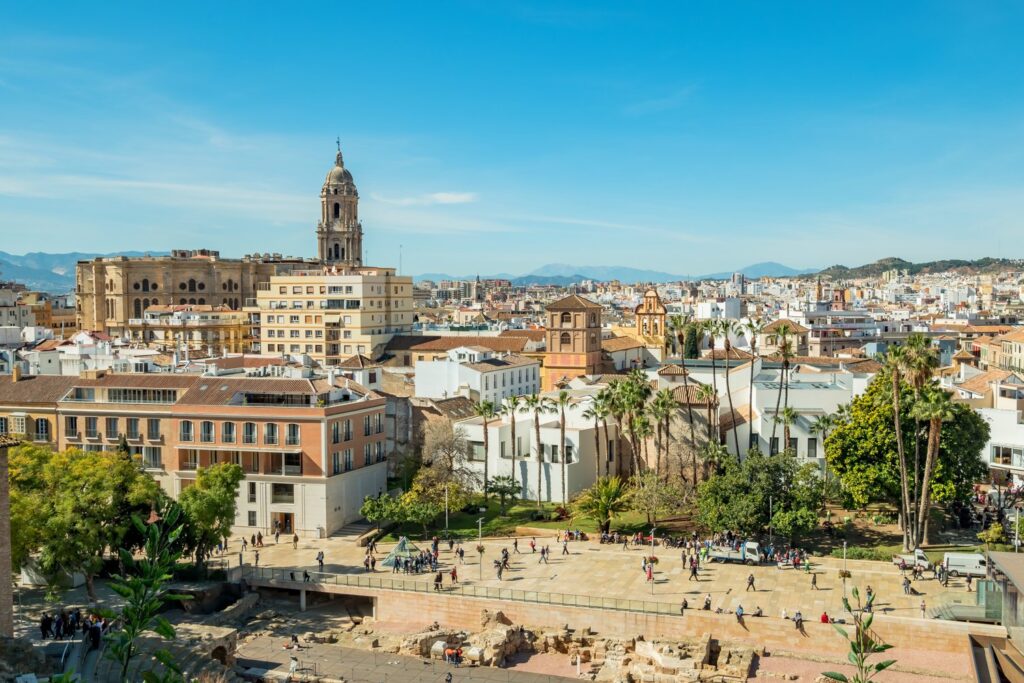
A few insider tips make the visit easier. Come at 10am or book a weekday slot, keep the free Sunday hours for a short second look rather than a first visit, and check which temporary exhibition is on before you go. If you’re spending a few days in the city, book your hotel in the old town early, as central rooms book up quickly in spring and during the August fair.
See available places to stay in Malaga
Practical information
- Tickets to the Picasso Museum Málaga are best bought in advance. You’ll skip the queue at the ticket office and avoid the risk of finding your time slot sold out.
- Address: Museo Picasso Málaga, Palacio de Buenavista, Calle San Agustín 8, 29015 Málaga
- Buy tickets on GetYourGuide
Hotels near the Picasso Museum in Malaga
The Picasso Museum is in the very heart of Malaga‘s historic centre, surrounded by narrow streets full of tapas bars, churches and other museums. Staying nearby means you can see the main sights on foot and come back for a siesta in the afternoon heat.
💰 Carlos V Malaga
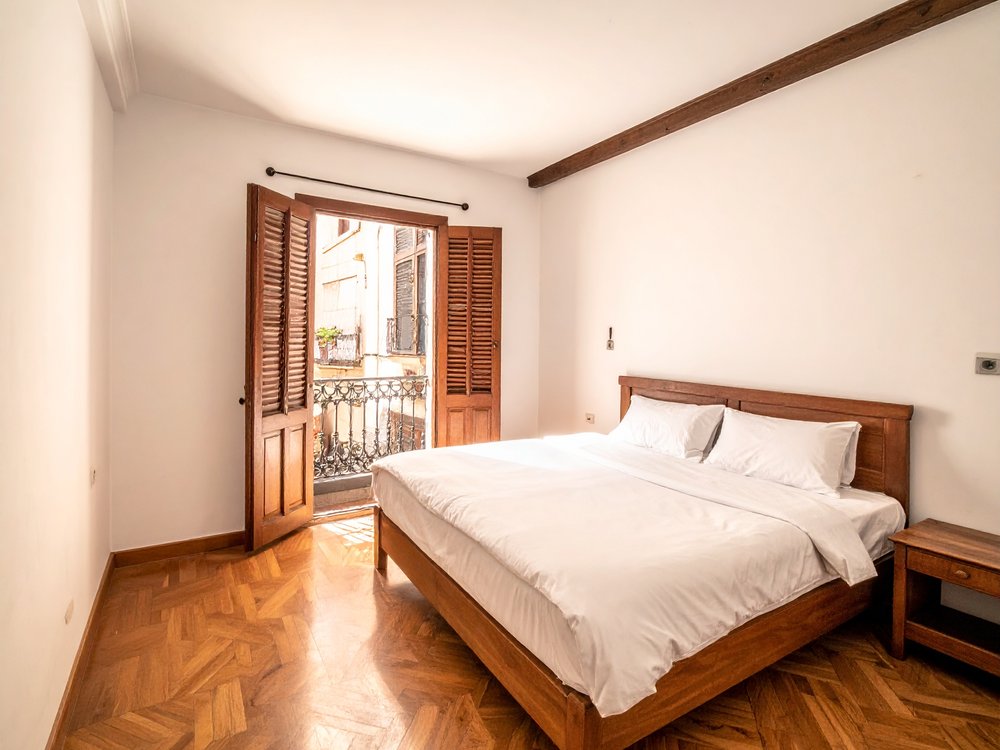
A simple, good-value hotel in the old town, about 50 metres from the Alcazaba and the Roman Theatre and a three-minute walk from the Picasso Museum. Rooms are classic in style, with parquet floors, air conditioning and free Wi-Fi. Several cafés and restaurants are right outside the door, and the cathedral is around the corner. It suits travellers who want an unbeatable location and plan to spend most of the day out exploring.
🏨 Catalonia Molina Lario
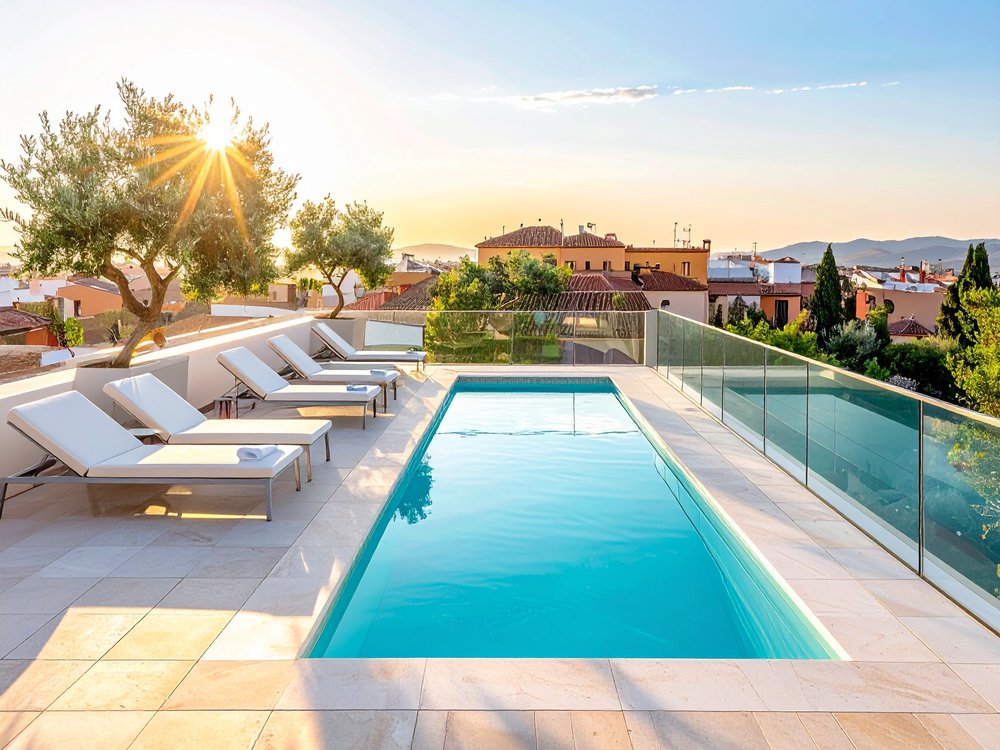
A four-star hotel behind a 19th-century façade, next to the cathedral and around 700 metres from the museum. Its big draw is the rooftop terrace with a swimming pool and views of the cathedral and the port. Rooms are modern and soundproofed, and the chill-out bar on the roof opens in the summer months. A great choice for couples and anyone who wants a pool after a hot day of sightseeing.
💎 Palacio Solecio, a Small Luxury Hotel of the World
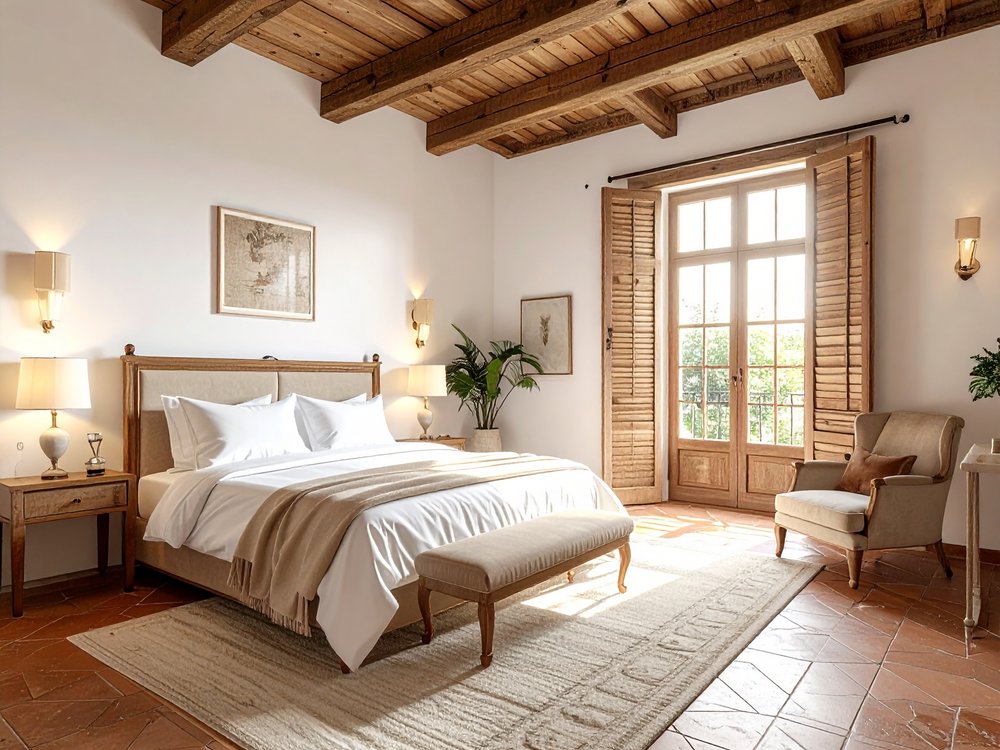
An 18th-century palace on Calle Granada, just a two-minute walk from the Picasso Museum and close to Picasso’s birthplace. The restored courtyard, high ceilings and elegant rooms keep the feel of an old Andalusian mansion. There’s a seasonal outdoor pool, a fitness centre and a restaurant on site. It’s the place to stay if you want a special, upmarket base in the old town.

