In spring, the whole city smells of orange blossom. Locals call it azahar, and once you have walked under it at dusk, you will understand why people keep coming back.
Seville is the capital of Andalusia and, for many travellers, the most Spanish city in Spain. It is where flamenco, tapas bars and whitewashed patios full of geraniums come together in one walkable historic centre. You can spend the morning in a Moorish royal palace, the afternoon at the foot of the largest Gothic cathedral in the world and the evening watching flamenco in Triana. In this article you will find the best things to do in Seville, a two-day itinerary, tips on when to go and where to stay. Whether you are planning a first city break in southern Spain or a longer trip around Andalusia, it will help you make the most of your time in Seville, Spain.
💰 Hotel Murillo - Good-value hotel in a quiet lane of Santa Cruz.
🏨 Hotel Rey Alfonso X - Four-star hotel with a rooftop pool near the Alcázar.
💎 EME Catedral Mercer Hotel - Luxury design hotel opposite the cathedral.
Why visit Seville?
Seville, the fourth-largest city in Spain, sits on the Guadalquivir River in south-west Spain, around 1.5 hours from the coast. For centuries it was one of the richest cities in Europe. After 1503 it held the royal monopoly on trade with the New World, so every galleon loaded with silver had to sail up the river to its port. That wealth paid for the palaces, churches and mansions you see today.
The city is also compact and flat, which makes it easy to explore on foot. Most of the main sights lie within 20 minutes’ walk of each other. Three of them - the cathedral, the Royal Alcázar and the Archivo de Indias - form a single UNESCO World Heritage Site.
Things to do in Seville - the essential sights
If it is your first visit to Seville, start in the historic centre around the cathedral and the Alcázar, then cross the river to Triana. Book tickets for the two biggest monuments in advance, as queues can be long, especially in spring.
Royal Alcázar of Seville
The Royal Alcázar of Seville is one of the oldest royal palaces still in use in Europe. Known in Spanish as the Real Alcázar, it began as a Moorish fortress in the 10th century and grew throughout the Middle Ages into the vast complex you see today. Its most famous part, the Palace of King Peter I, was built in the 14th century in the Mudéjar style by craftsmen from Toledo and Granada. Expect carved stucco, tiled walls and courtyards with reflecting pools, such as the Patio de las Doncellas.
The gardens are almost as impressive as the palace. They are full of palm trees, fountains and pavilions, and fans of Game of Thrones will recognise them as the Water Gardens of Dorne. Plan at least two hours for your visit and arrive early to enjoy the courtyards before the tour groups.
Seville Cathedral and the Giralda
Seville Cathedral is the largest Gothic cathedral in the world. Construction began in 1401, on the site of the city’s great mosque, and took more than a century. It was built on the site of the city’s great mosque, and its bell tower, the Giralda Tower, began life as the 12th-century minaret. Instead of stairs, the tower has 35 ramps, wide enough for a man on horseback, so the climb is gentler than you might expect.
Inside, look out for the huge gilded altarpiece and the tomb of Christopher Columbus, believed to be his final resting place, carried by four statues representing the kingdoms of Spain. To visit Seville Cathedral without the biggest crowds, come as soon as it opens. Do not miss the Patio de los Naranjos, the old mosque courtyard planted with orange trees.
Plaza de España and María Luisa Park
Plaza de España is Seville’s most photographed spot. It was built for the Ibero-American Exposition of 1929, a world’s fair held in the city, and covers around 50,000 m². It forms a vast semicircle around a canal crossed by tiled bridges. Along the walls you will find 48 colourful tiled alcoves dedicated to the provinces of Spain - a lovely place to look for your favourite city.
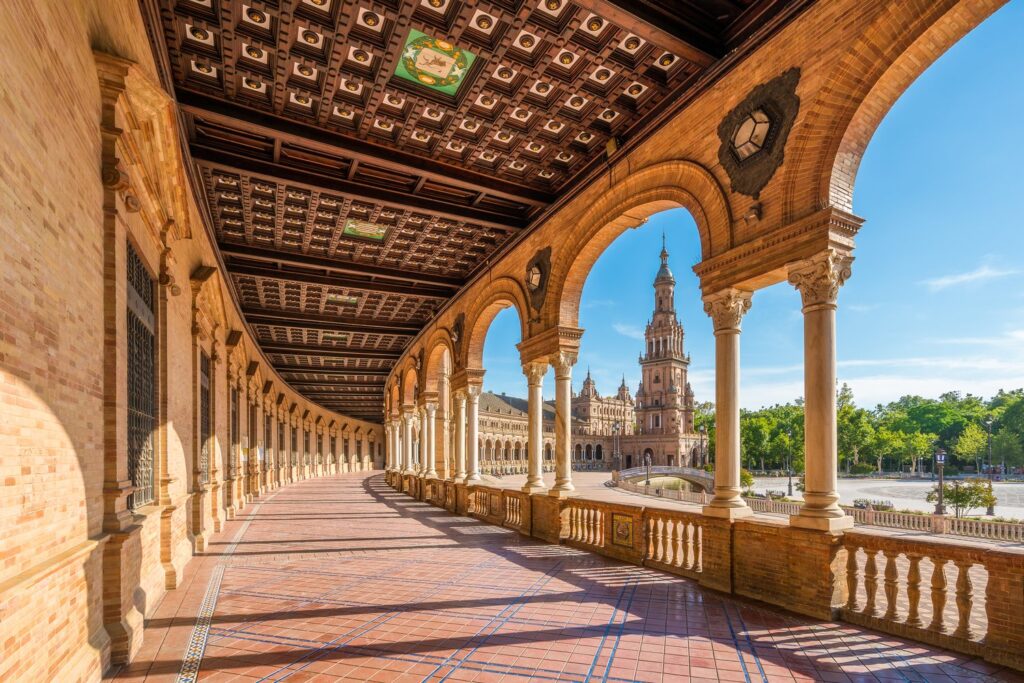
The square sits on the edge of María Luisa Park (Parque de María Luisa), the city’s green lung, which covers around 34 hectares and was once part of the gardens of San Telmo Palace. It has shady avenues, ponds and pavilions. It is the perfect place to escape the midday heat. You can rent a rowing boat on the canal or a bike and cycle through the park.
Barrio de Santa Cruz
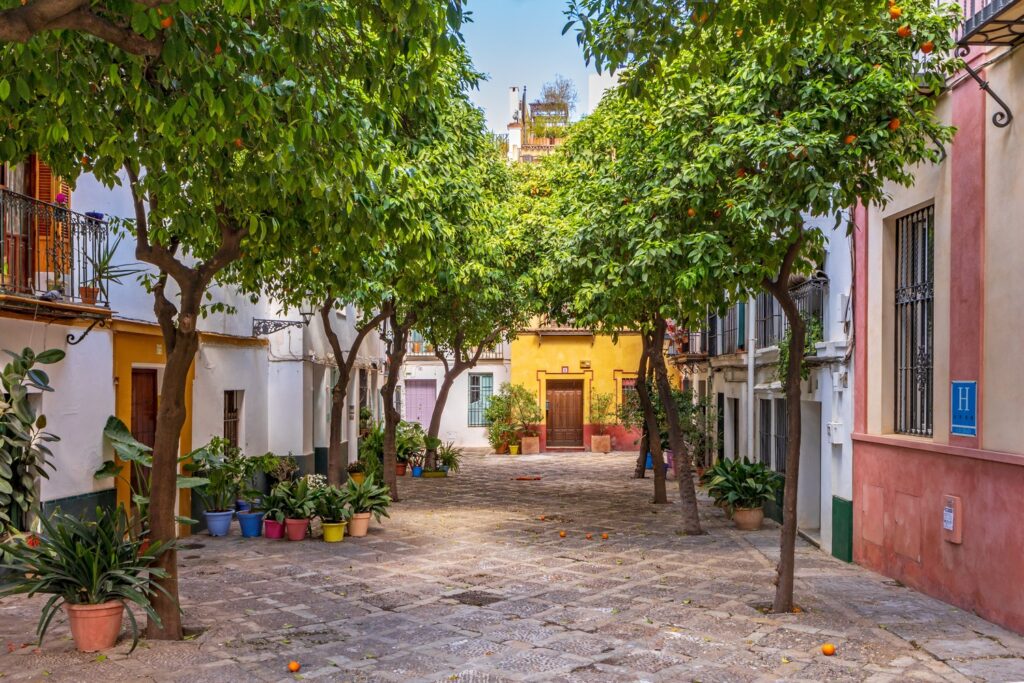
Barrio de Santa Cruz is the old Jewish quarter, a maze of narrow lanes, small squares and whitewashed houses with wrought-iron balconies. The streets are so narrow that the houses almost touch in places, which keeps them cool in summer. Wander along Callejón del Agua, stop at Plaza de Doña Elvira and simply get lost - that is the best way to discover it. Exploring Barrio Santa Cruz costs nothing, and on its edge you will find the Jardines de Murillo, once part of the Alcázar gardens and given to the city in the 19th century.
Metropol Parasol (Las Setas)
Metropol Parasol, known locally as Las Setas de Sevilla (the Mushrooms of Seville), is one of the largest wooden structures in the world. This modern landmark, designed by Jürgen Mayer, opened in 2011 in Plaza de la Encarnación. Take the lift to the walkway on the roof for panoramic views over the old town, especially at sunset.
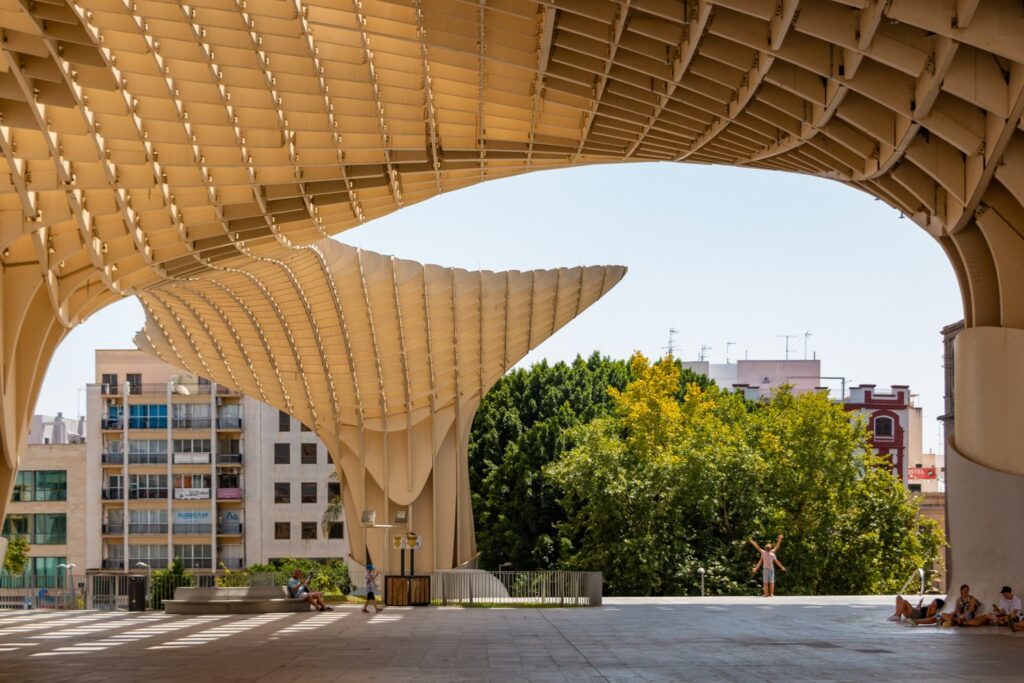
FUN FACT: During the construction of Metropol Parasol, workers uncovered Roman and Moorish remains, which you can now see in the Antiquarium museum underneath the structure.
Torre del Oro and the riverside
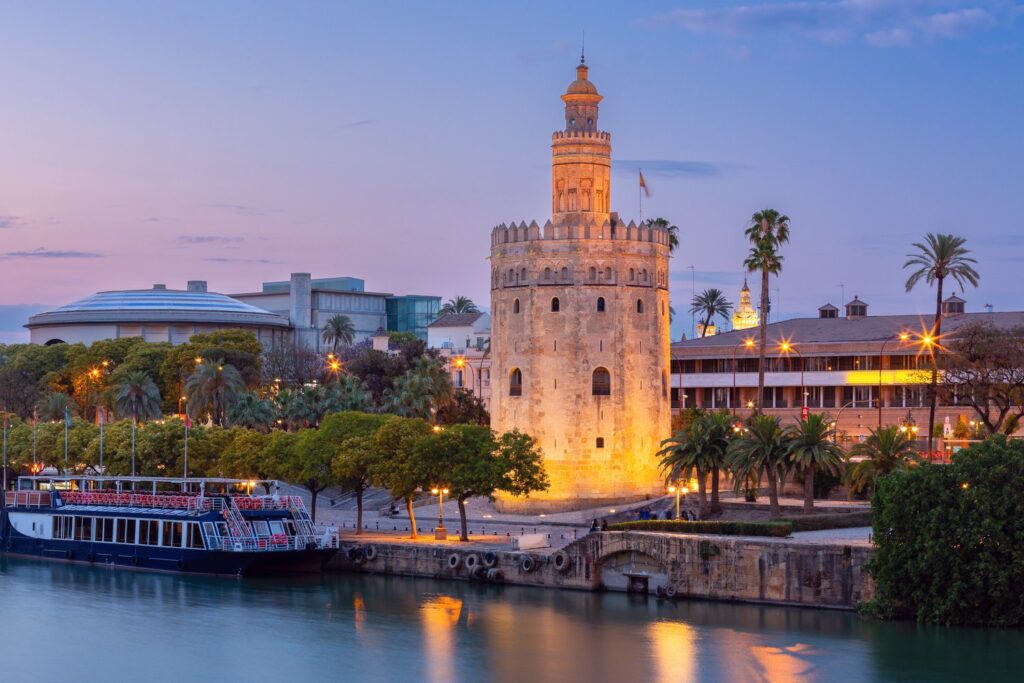
The Torre del Oro is a 13th-century Almohad watchtower on the banks of the Guadalquivir. It once guarded the port, and today it houses a small naval museum. From here, a pleasant riverside walk leads past the Maestranza bullring towards Triana Bridge. You can also take a sightseeing cruise along the river.
Triana and flamenco
Across the river lies Triana, the traditional district of sailors, potters and flamenco artists. Visit the Mercado de Triana, built on the ruins of the Castillo de San Jorge, once the headquarters of the Spanish Inquisition, browse the ceramic workshops on Calle Alfarería and finish the day at a tapas bar on Calle Betis. Seville is the heart of flamenco, so try to see a live show. The most intimate performances take place in small venues called tablaos, where you sit just a few metres from the flamenco dancers. To learn more about the art form, visit the Museo del Baile Flamenco in the old town, founded by the dancer Cristina Hoyos. Every two years, Seville also hosts La Bienal, one of the biggest flamenco festivals in the world.
More things to do in Seville
Once you have seen the major sights, Seville still has plenty of palaces, museums and squares that most visitors miss. These are some of the best things to do in Seville on a second or third visit.
Casa de Pilatos
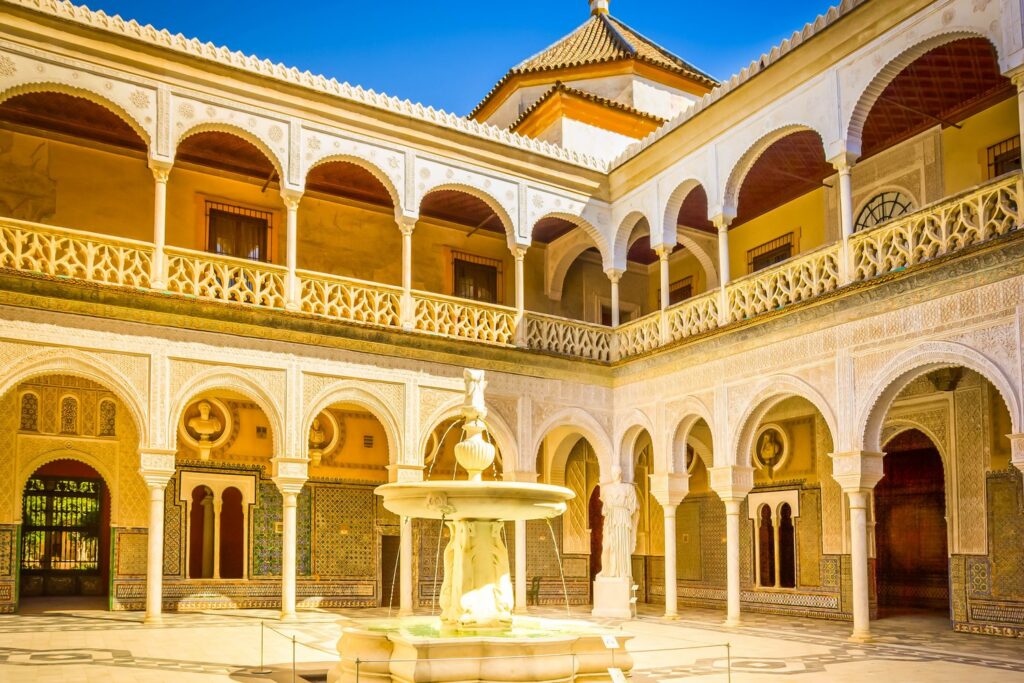
Casa de Pilatos is a 16th-century Andalusian palace, an example of Italian Renaissance architecture with Mudéjar decoration and a few Gothic details. Its courtyards are covered in some of the finest tiles in the city, and its gardens are a quiet escape from the crowds. In 1962, scenes from Lawrence of Arabia were filmed here.
Palacio de las Dueñas
Palacio de las Dueñas belongs to the House of Alba and is where the poet Antonio Machado was born. Inside, you will see an impressive art collection, Andalusian patios and a garden full of lemon trees.
Museo de Bellas Artes and Plaza de San Francisco
The Museo de Bellas Artes, housed in a former convent, has one of the finest collections of Spanish Golden Age painting, with works by Murillo and Zurbarán. In the heart of central Seville, Plaza de San Francisco is overlooked by the City Hall, whose richly carved façade is a fine example of the Plateresque style. Nearby, Plaza del Triunfo between the cathedral and the Alcázar is one of the most beautiful spots in the city at night.
Archaeological Museum and the San Lorenzo district
Inside María Luisa Park, the Archaeological Museum displays Roman mosaics and statues from Itálica. If you want to see a more local side of the city, head to the San Lorenzo district, home to the Basilica of Jesús del Gran Poder, one of the most venerated images of Seville’s Holy Week.
Seville in 2 days - itinerary
Two days are enough to see the highlights of Seville at a relaxed pace. On day one, visit the Royal Alcázar in the morning, have lunch in Santa Cruz and see the cathedral and the Giralda in the afternoon. In the evening, go up Metropol Parasol at sunset and end with tapas around Plaza de la Alfalfa.
On day two, start at Plaza de España and María Luisa Park, then walk along the river past the Torre del Oro. Cross to Triana in the afternoon and finish with a flamenco show. With a third day, you can visit Itálica, a Roman city founded in 206 BC only about 10 km from Seville, with one of the largest amphitheatres of the Roman Empire. You can also take a day trip to Córdoba to see the Great Mosque, or to the white villages and Ronda.
Food in Seville - what to eat
For food lovers, Seville has some of the best tapas culture in Spain, and eating standing at the bar is part of the experience. Try salmorejo, a thick cold tomato soup, espinacas con garbanzos (spinach with chickpeas), pringá sandwiches, fried seafood called pescaíto frito and, of course, jamón ibérico. For a taste of history, have a drink at El Rinconcillo near the Church of Santa Catalina, which has been serving customers since 1670 and is often called the oldest tapas bar in Seville. In summer, order a glass of tinto de verano or a cold manzanilla sherry from nearby Sanlúcar.

The locals eat late. Lunch is usually served between 2 and 4 pm, and dinner rarely starts before 9 pm. If you want a table at a popular bar on a Friday or Saturday night, arrive early or be ready to wait.
When to visit Seville
The best time to visit Seville is spring (March to May) and autumn (late September to November). Temperatures are pleasant, around 20-28°C, and the streets smell of orange blossom in spring. Two big festivals take place in spring: Holy Week (Semana Santa) and the April Fair (Feria de Abril). During Holy Week, from Palm Sunday to Easter Sunday, dozens of brotherhoods carry religious floats through the streets day and night. During both, hotels fill up months in advance, so book your accommodation early.
See available accommodation in Seville
Summer in Seville is extremely hot, with afternoon temperatures often above 40°C. If you travel in July or August, sightsee early in the morning and late in the evening, and spend the hottest hours indoors or by a pool. Winters are mild and sunny, ideal for a city break without the crowds.
How to get to Seville and get around
Seville Airport is around 10 km from the city centre and has direct flights from several UK airports. A bus runs to the centre in about 35 minutes. High-speed AVE trains connect Seville with Madrid in around 2.5 hours and with Córdoba in about 45 minutes. Compare train and bus times with Omio.
In the city itself, you will walk almost everywhere. There is also a tram, one metro line and city buses, and renting a bike is an easy way to cover more ground. Keep in mind that Sunday is the quietest day, when many shops close. You do not need a car in Seville, but car hire is handy if you plan to explore the white villages or continue to Granada and Málaga.
Where to stay in Seville
The most convenient areas are Santa Cruz and the streets around the cathedral, where you can reach most sights on foot. Triana is a good choice if you prefer a more local atmosphere and lively evenings.
💰 Hotel Murillo
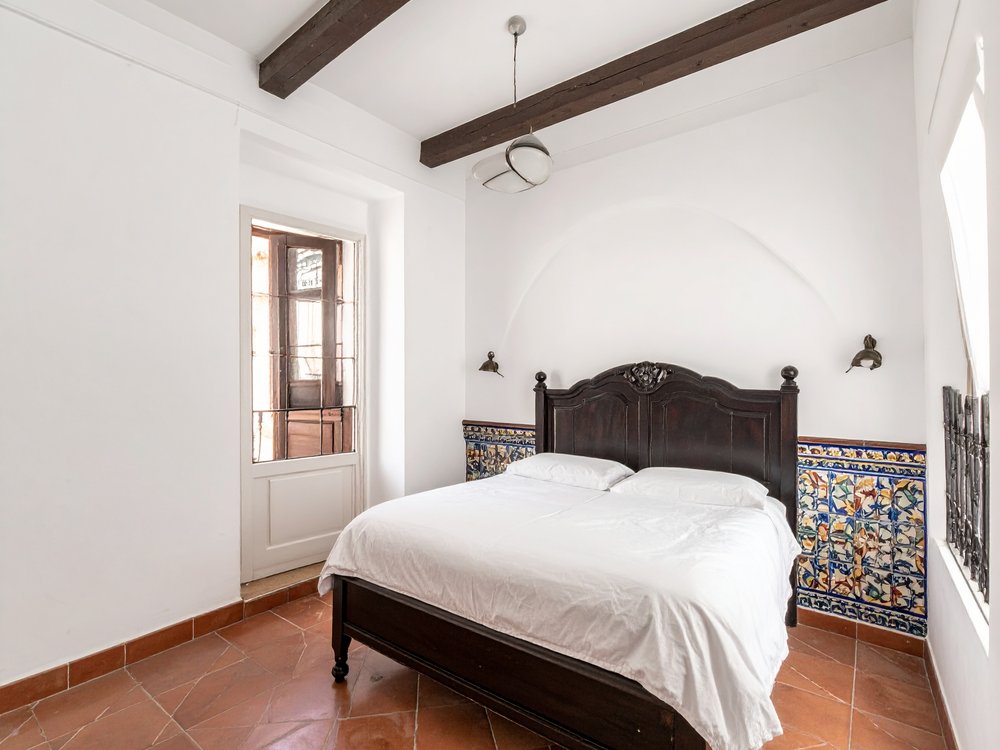
A charming, good-value hotel tucked into a quiet lane in Barrio de Santa Cruz, just a few minutes from the Alcázar and the cathedral. The rooms are simple but comfortable, and traditional tiles and wooden details give the building an authentic Andalusian feel. You will be surrounded by tapas bars and little squares, so you can explore the old town on foot from morning to night. A great choice for budget travellers who want a central location.
🏨 Hotel Rey Alfonso X
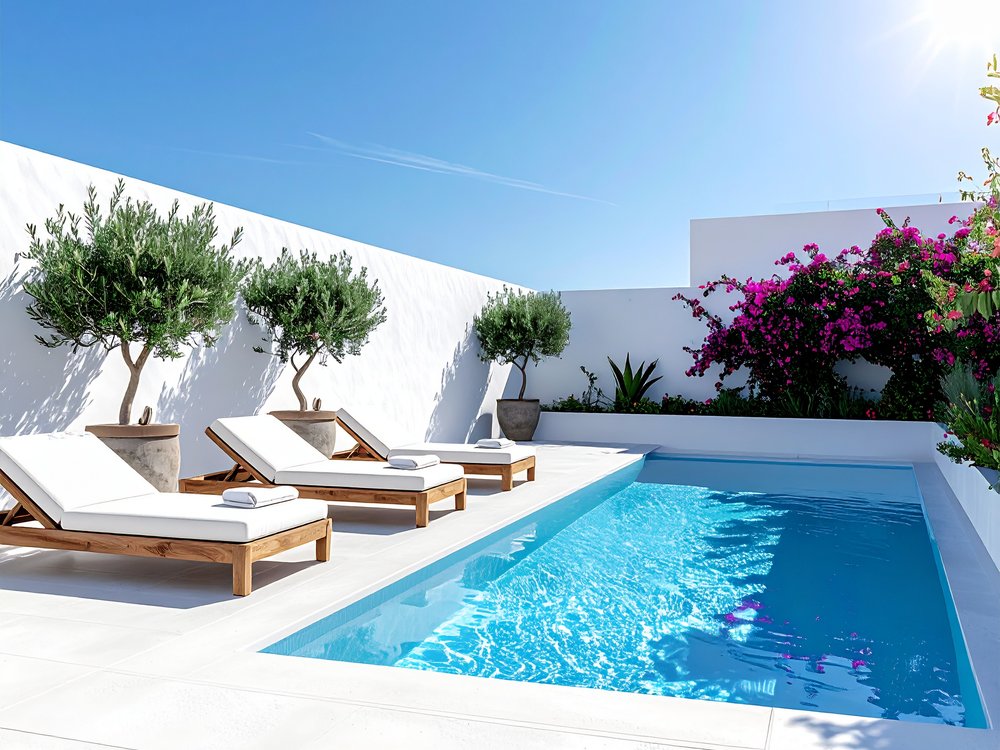
A modern four-star hotel on the edge of Santa Cruz, a short walk from the Alcázar and the Jardines de Murillo. The highlight is the rooftop terrace with a small pool, perfect for cooling off after a hot day of sightseeing. Rooms are bright and stylish, and the location makes it easy to reach both the old town and María Luisa Park. Ideal for couples and families looking for comfort at a mid-range price.
💎 EME Catedral Mercer Hotel
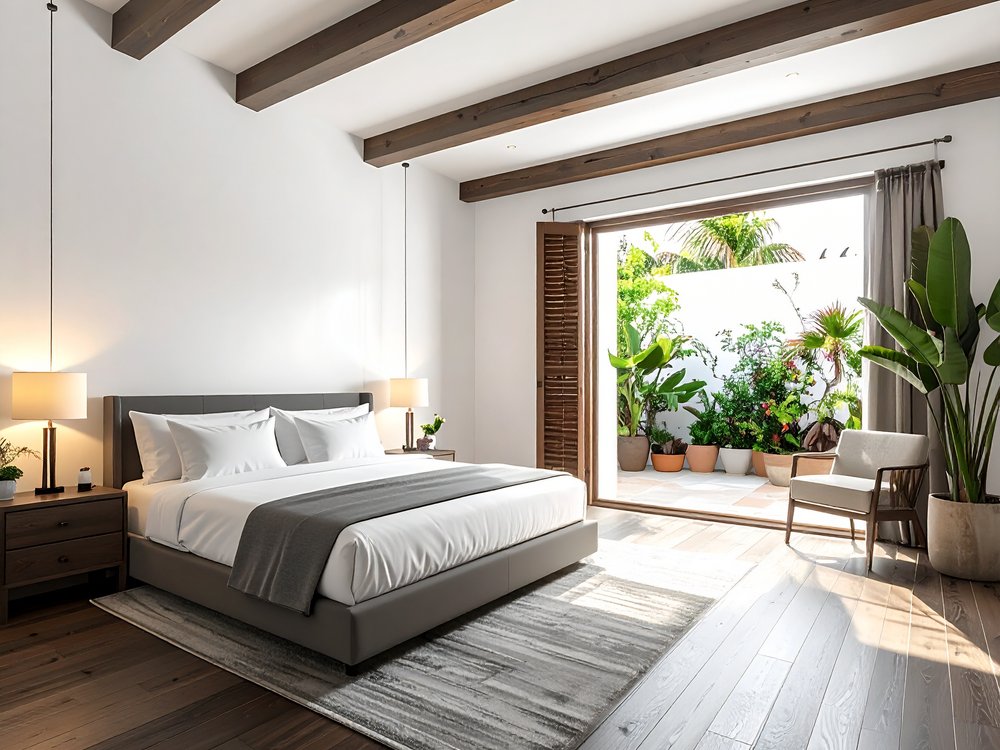
A luxury design hotel set in several historic houses directly opposite Seville Cathedral. Guests enjoy a rooftop terrace with a pool and close-up views of the Giralda, as well as several restaurants and bars. The rooms combine elegant modern design with original architectural details. The perfect choice if you want to wake up next to Seville’s most famous monument.
Seville FAQ
How many days do you need in Seville?
Two full days are enough to see the main sights of Seville, including the Alcázar, the cathedral, Plaza de España and Triana. With three or four days, you can add a day trip to Córdoba, Ronda or the white villages. Seville is also a good base for exploring the rest of Andalusia.
Is Seville worth visiting?
Yes, Seville is one of the most beautiful cities in Spain. It combines Moorish palaces, Gothic architecture, flamenco and a great tapas scene in a compact, walkable centre. It is a perfect choice for a city break at almost any time of year, except perhaps the hottest weeks of summer.
What is the best month to visit Seville?
April, May and October are the best months to visit Seville. The weather is warm but not too hot, and spring brings orange blossom and the city’s biggest festivals. Avoid July and August if you do not cope well with heat, as temperatures often exceed 40°C.
Do you need to book the Alcázar in advance?
It is strongly recommended. The Royal Alcázar has a limited number of entries per time slot, and tickets often sell out, especially in spring and on weekends. Booking ahead also lets you skip the ticket queue and choose your preferred time.
Is Seville easy to explore on foot?
Yes, the historic centre is flat and compact, and most sights are within walking distance of each other. Comfortable shoes are all you need. For longer distances, there is a tram, a metro line and city buses, while taxis are reasonably priced.

