Half an hour from the airport, and you’re barefoot on golden sand that looks like a slice of the Sahara dropped into the Atlantic.
Maspalomas, Gran Canaria, sits at the southern tip of Gran Canaria and was one of the island’s first beach resorts. Today it’s a long, sunny strip of hotels, beaches and promenades, with a protected desert of sand dunes right in the middle. You can spend a week here doing very little, or fill every day with boat trips, theme parks and drives into the mountains. Planning a family holiday, a couples’ break or a winter-sun escape? Below you’ll find the best things to do in Maspalomas, from the famous dunes and the 19th-century lighthouse to markets, day trips and practical tips.
💰 Bungalows Cordial Green Golf - Relaxed bungalows with pools and kitchenettes next to the golf course.
🏨 Bohemia Suites & Spa - Adults Only - Stylish adults-only suites with a spa, a short walk from the beach.
💎 Seaside Grand Hotel Residencia - Gran Lujo - A five-star colonial-style retreat close to the dunes and the lighthouse.
What is Maspalomas like and is it worth visiting?
Maspalomas isn’t a single old town with a main square. It’s the name for the southern resort area of the municipality of San Bartolomé de Tirajana, which also covers Playa del Inglés, Meloneras and San Agustín. Each part has its own character. Playa del Inglés is lively and busy, Meloneras is more upmarket and calm, and San Agustín feels quiet and residential. If you’re wondering about the poshest part of Gran Canaria, most locals would point you towards Meloneras.
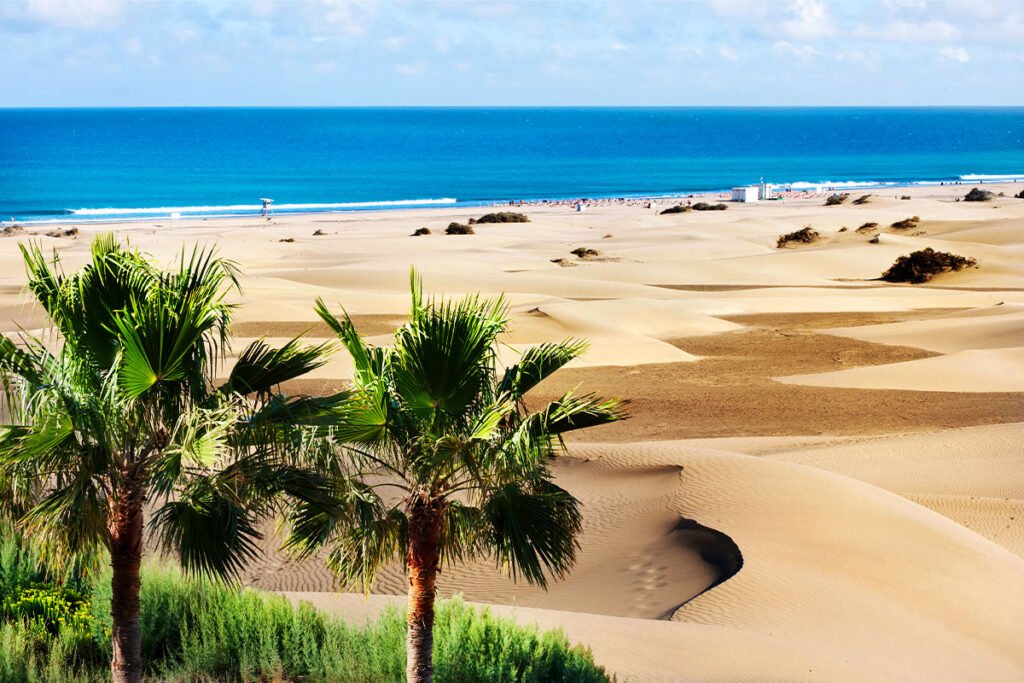
So is Maspalomas worth visiting? If you want guaranteed sun in winter, wide sandy beaches and plenty of easy activities, the answer is yes. The south of the island gets very little rain, and the sea breeze keeps temperatures pleasant for most of the year. It works well for families, couples and groups of friends, and it’s also one of Europe’s best-known LGBTQ+-friendly destinations.
Walk through the Maspalomas Dunes nature reserve
The Maspalomas Dunes are the main reason most tourists come here, and their natural beauty is hard to match. This Special Nature Reserve covers about 404 hectares and has been protected since 1987. The golden sand moves with the wind, so the dunes are constantly shifting. Some of the sand dunes rise to around 10 metres, and the reserve is home to rare plants, lizards and birds. Early in the morning, before the crowds and the heat, the sand dunes are at their most photogenic. Late afternoon is just as good, when the low light picks out every ripple.
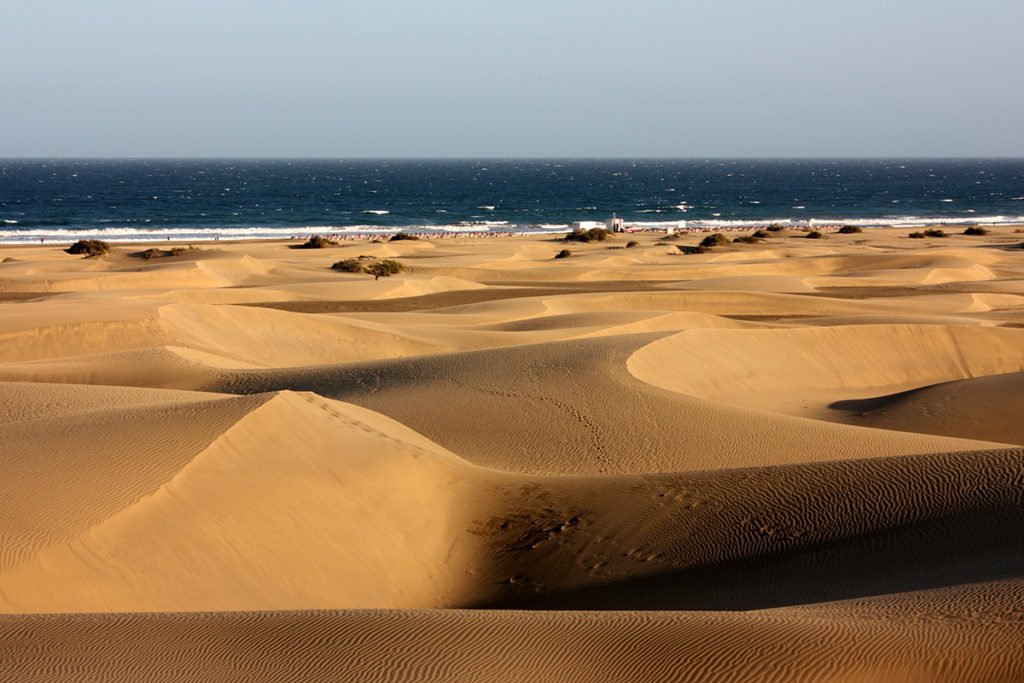
The easiest way in is from the end of Playa del Inglés, next to the Riu Palace Maspalomas hotel and its viewing terrace, or from the beach by the lighthouse. From the viewing terrace you’ll see the whole field of sand dunes stretching towards the sea. Bring water, a hat and proper sunscreen, because there’s no shade at all once you’re out on the sand. Walking on soft sand is tiring, so allow an hour or two to cross the dunes to the beach and back.
Can you still walk on the dunes in Maspalomas?
Yes, you can, but only on the marked paths and the public corridors. Large parts of the reserve are fenced off to protect plants, birds and the shape of the dunes. Rangers can fine people who wander into closed zones, and building stone windbreaks on the sand is also forbidden. Stick to the routes marked with posts, and you’ll still get the full desert experience.
Take a camel ride in the dunes
A short camel ride is one of the most popular things to see and do in Maspalomas, especially with children. The rides start from a camel station on the edge of the reserve and follow a set route through the sand. It only takes around half an hour, but the views of the sand dunes with the sea behind them are worth it. Go in the morning, when it’s cooler for you and for the animals.
Relax on Maspalomas beach and Playa del Inglés
Maspalomas beach is one long stretch of golden sand that runs from the lighthouse all the way to Playa del Inglés, about six kilometres in total. You’ll find sun loungers, parasols and kiosks selling drinks along the way, and plenty of quieter spots in between. The water is generally calm, but the Atlantic can still bring waves and currents, so watch the flags. A section of the beach in front of the dunes is popular with naturists, and it’s also a well-known gay beach.
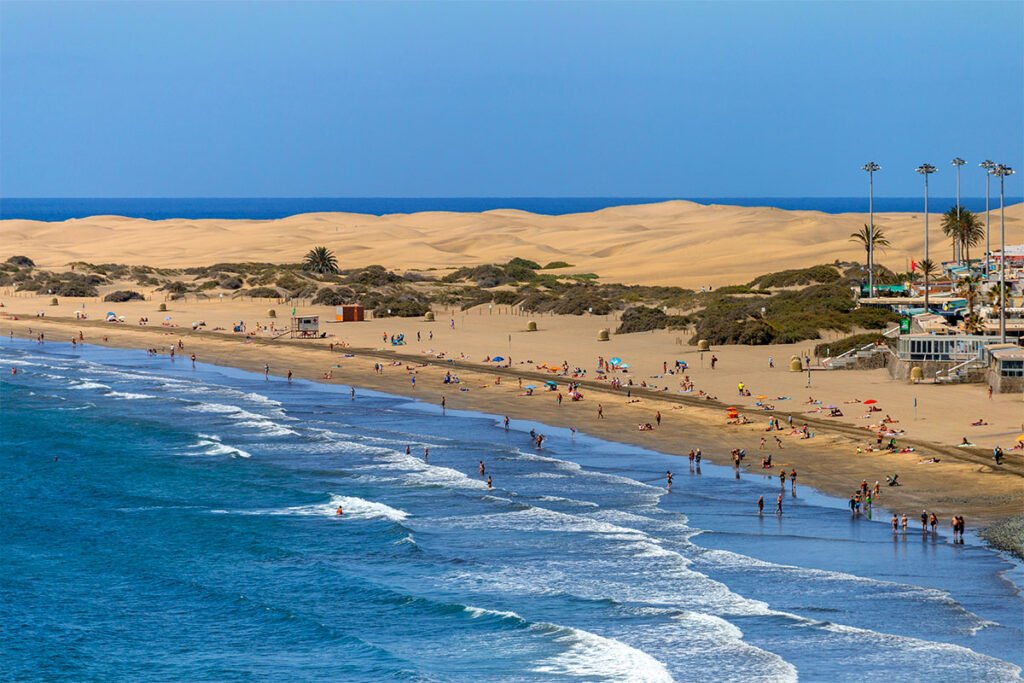
Playa del Inglés is the busier end, and its long promenade is lined with bars, cafes and restaurants. It’s the place for people-watching, an ice cream and a sundowner with your feet in the sand. If you’d rather swim at a smaller beach, head a little further east to San Agustín, where the sea is often calmer and the atmosphere more relaxed.
Other beaches near Maspalomas
Next to the lighthouse, Playa del Faro is a small beach with a lively promenade behind it. West of Meloneras you’ll reach the coves around Pasito Blanco. A short drive away, Playa de Amadores near Puerto Rico has pale sand and calm, turquoise water, which makes it ideal for younger children. In the north of the island, Las Canteras beach in Las Palmas is one of the best city beaches in Spain.
Visit the Maspalomas lighthouse and walk to Meloneras
The Maspalomas lighthouse (Faro de Maspalomas) is the town’s best-known landmark, standing close to the southernmost tip of Gran Canaria. It’s about 56 metres tall and was designed by the engineer Juan León y Castillo. Its light first shone on 1 February 1890, long before the first hotels appeared. The building at its base houses a small museum, a craft centre and tourist information, so it’s worth a look inside if it’s open.
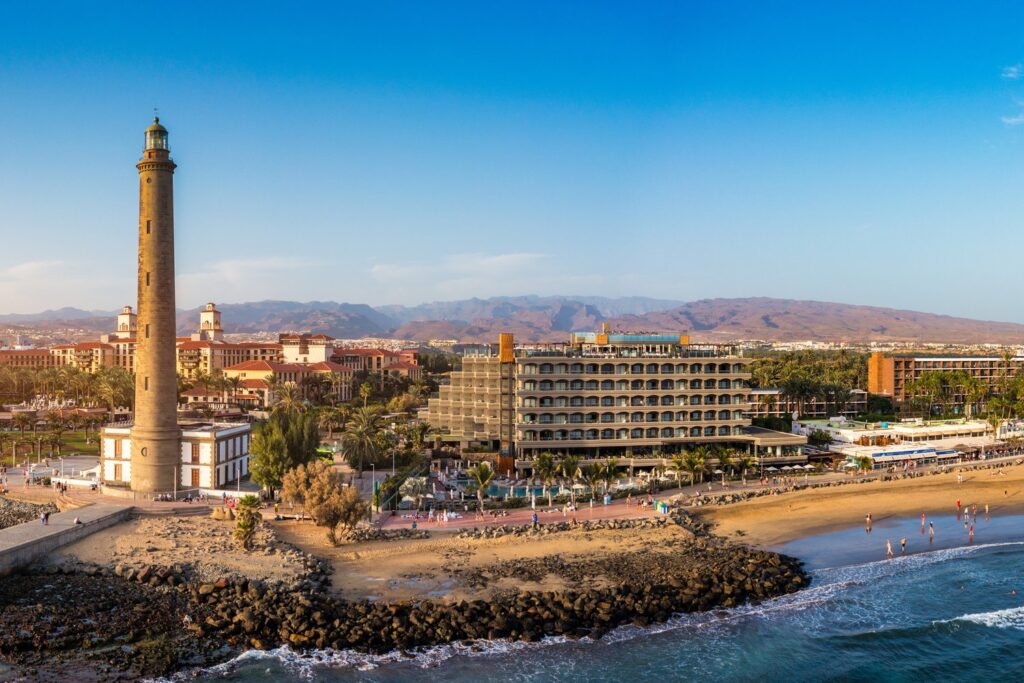
The Paseo de Meloneras, a seafront walkway lined with restaurants, designer boutiques, upmarket hotels and terraces, runs from the lighthouse towards Meloneras. This is the best place in town to watch the sunset, with the dunes on one side and the coastline on the other. In the evenings you’ll often hear street musicians, and the whole seafront fills with people strolling and eating out.
Discover the Charca de Maspalomas lagoon and palm grove
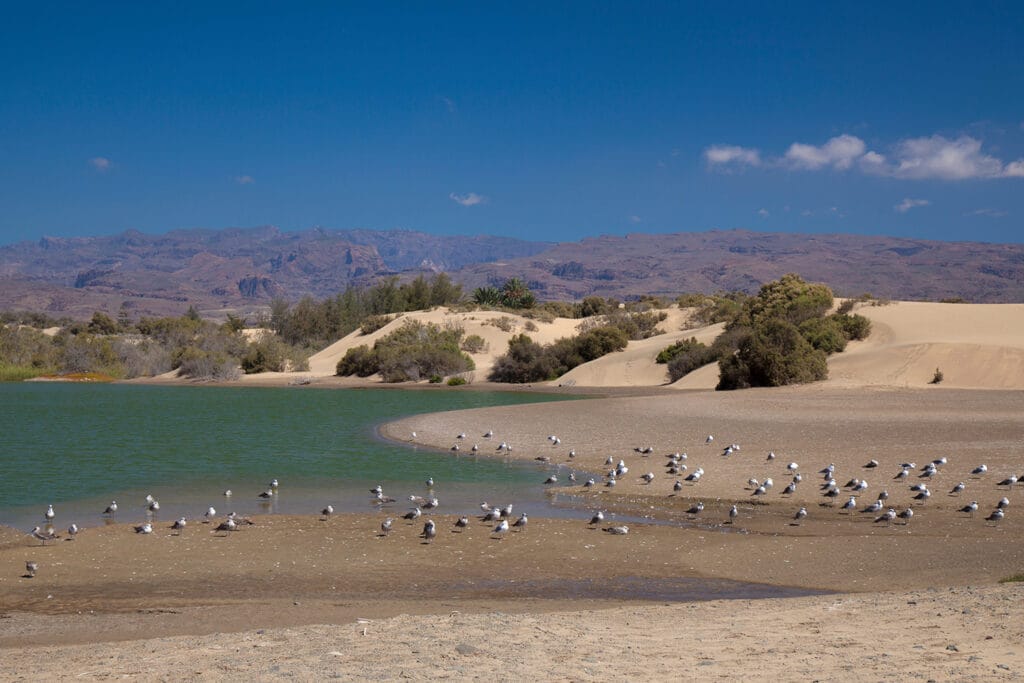
Right next to the lighthouse, at the western edge of the reserve, lies the Charca de Maspalomas. It’s a small coastal lagoon separated from the ocean by a sandbar. Herons, ducks and migrating birds stop here on their way between Africa and Europe. The Palmeral, a grove of Canary Island palms behind it, gives the area the feel of a desert oasis. A gentle walk around the lagoon fits nicely between a swim and dinner in Meloneras.
Family days out: Palmitos Park and other theme parks
Palmitos Park lies in a green ravine called Barranco de los Palmitos, about 10 km inland from Maspalomas. It’s part zoo, part botanical garden, with exotic birds, an aquarium, a butterfly house and a cactus garden. The highlights for most visitors are the birds of prey display and the parrot shows. The paths climb up and down the slope, so wear comfortable shoes and plan your day around the show times posted at the entrance.
Aqualand Maspalomas and Holiday World
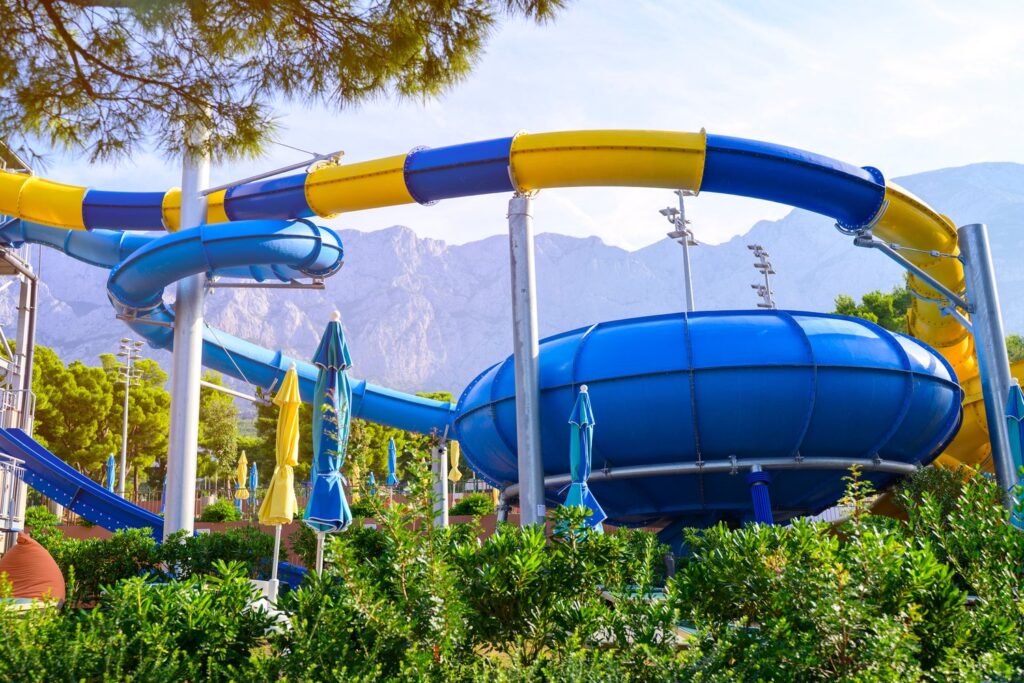
Aqualand Maspalomas is the biggest water park in the south of the island, with pools, a lazy river and more than 20 slides and attractions for all ages. It’s a good choice on a windy day, when the beach is less pleasant. Holiday World Maspalomas, in the Campo Internacional area, is an amusement park with rides, a big wheel and evening entertainment. Both are easy to reach by bus or taxi from Playa del Inglés.
Step into the Wild West at Sioux City Park
Sioux City Park was built in 1972 in the dry Barranco del Águila, near San Agustín, as a film set for Westerns. Today it’s a theme park with a saloon, a jail, a bank and daily shows with cowboys, stunt riders and staged shoot-outs. Kids love the bank robbery show and the lasso tricks. The park is usually closed on Mondays, so check the opening days before you go.
Take a boat trip along the south coast
A boat trip is one of the best activities in Maspalomas if you want to see the coast from a different angle. Most catamaran cruises leave from Puerto Rico, Arguineguín or Puerto de Mogán and sail along the cliffs of the southwest. On many tours you can swim and snorkel in a quiet bay, and dolphins are often spotted on the way. Choose a morning departure, when the sea tends to be calmer.
Get an adrenaline rush on land, in the air and on the water
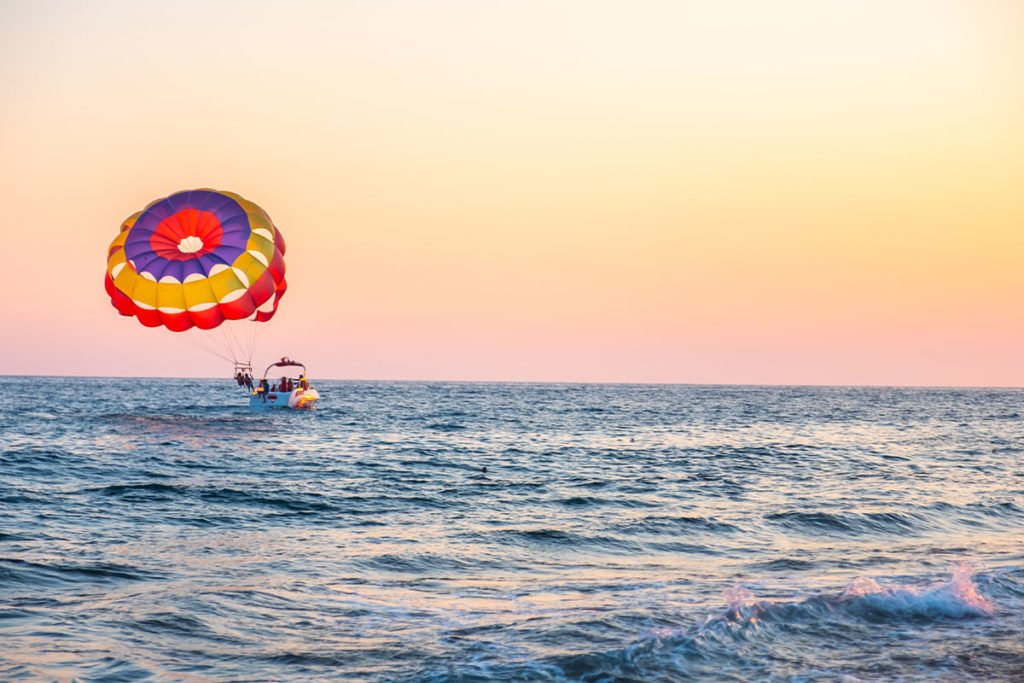
The dry hills behind the resort are perfect for off-road buggy tours, which take you through canyons and up to viewpoints over the coast. If you prefer the sea, you can try jet skiing, parasailing or a beginner’s surf lesson at Playa del Inglés. For the ultimate view of the dunes, there are even tandem skydives that land on the beach. Book these activities in advance in winter, when demand is at its peak.
Play golf next to the dunes
Maspalomas Golf is one of the oldest courses on the island. The 18-hole, par-73 course opened in 1968 and was designed by Mackenzie Ross. The flat fairways are lined with palm trees and border the dunes, so the sea breeze is part of the game. Golfers also head to Meloneras Golf, where several holes have ocean views.
Shop at the local markets
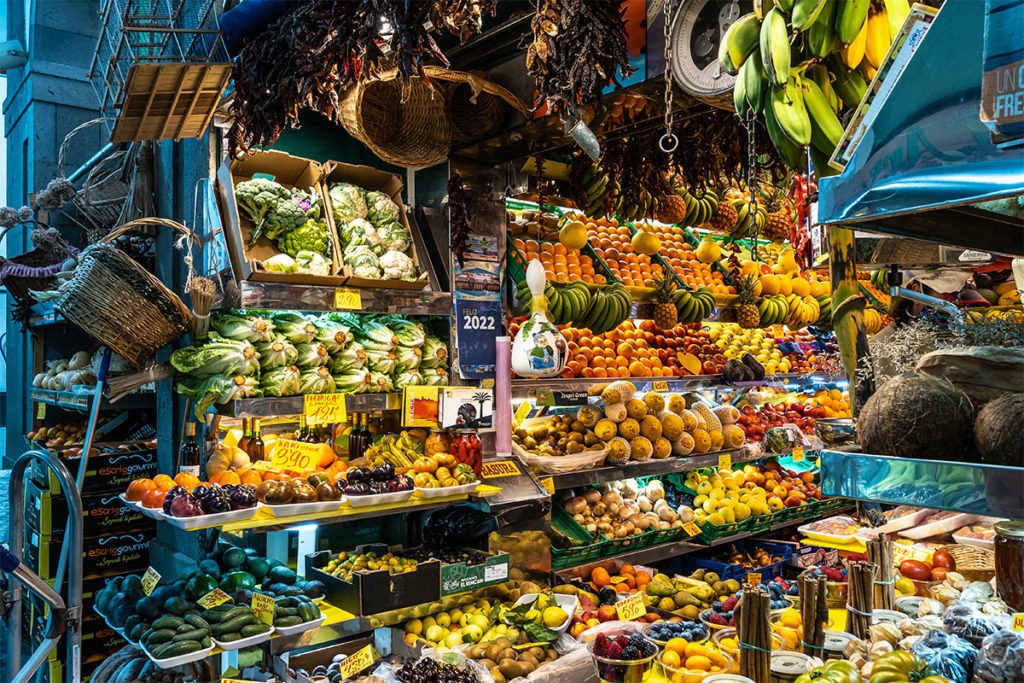
What day is market day in Maspalomas? The big street market takes place on Wednesday and Saturday mornings in the San Fernando area. Hundreds of stalls sell clothes, leather goods, handmade crafts, souvenirs and fresh local produce. On Fridays, many visitors take a bus or a boat to the market in Puerto de Mogán, which is smaller but more scenic. For modern shopping, try the boutiques and souvenir shops of the Yumbo Centre or the two-storey Faro 2 shopping centre in Campo Internacional. Most shops stay open late into the evening.
Eat, drink and go out in the evening
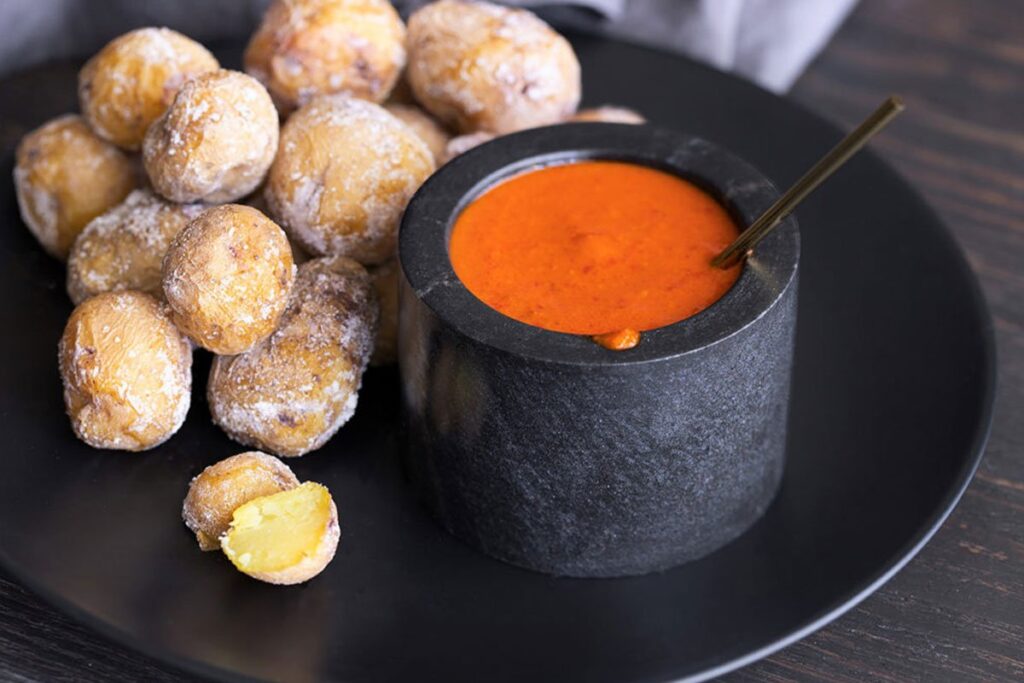
The dining scene in Maspalomas covers every budget, from quick street food and tapas bars to restaurants serving fresh fish on the promenade. Try papas arrugadas, which are small salty potatoes served with red and green mojo sauce. Gofio, a toasted grain flour, appears in many local dishes and desserts too. In Meloneras, the atmosphere is relaxed and stylish, with cocktail bars facing the sea.
Is Maspalomas lively? It depends on where you stay. Playa del Inglés is the party hub, and the Yumbo Centre is the heart of the LGBTQ+ nightlife, with bars and drag shows until the early hours. The nearby Kasbah centre is packed with bars and clubs too. Maspalomas Pride in May is one of the biggest events of the year. Meloneras and the area around the lighthouse are much quieter at night.
Day trips from Maspalomas
You’ll get the most out of your stay with a hire car for a day or two, because the interior of Gran Canaria looks completely different from the coast. If you don’t want to drive, there are plenty of organised tours with hotel pick-up.
Puerto de Mogán
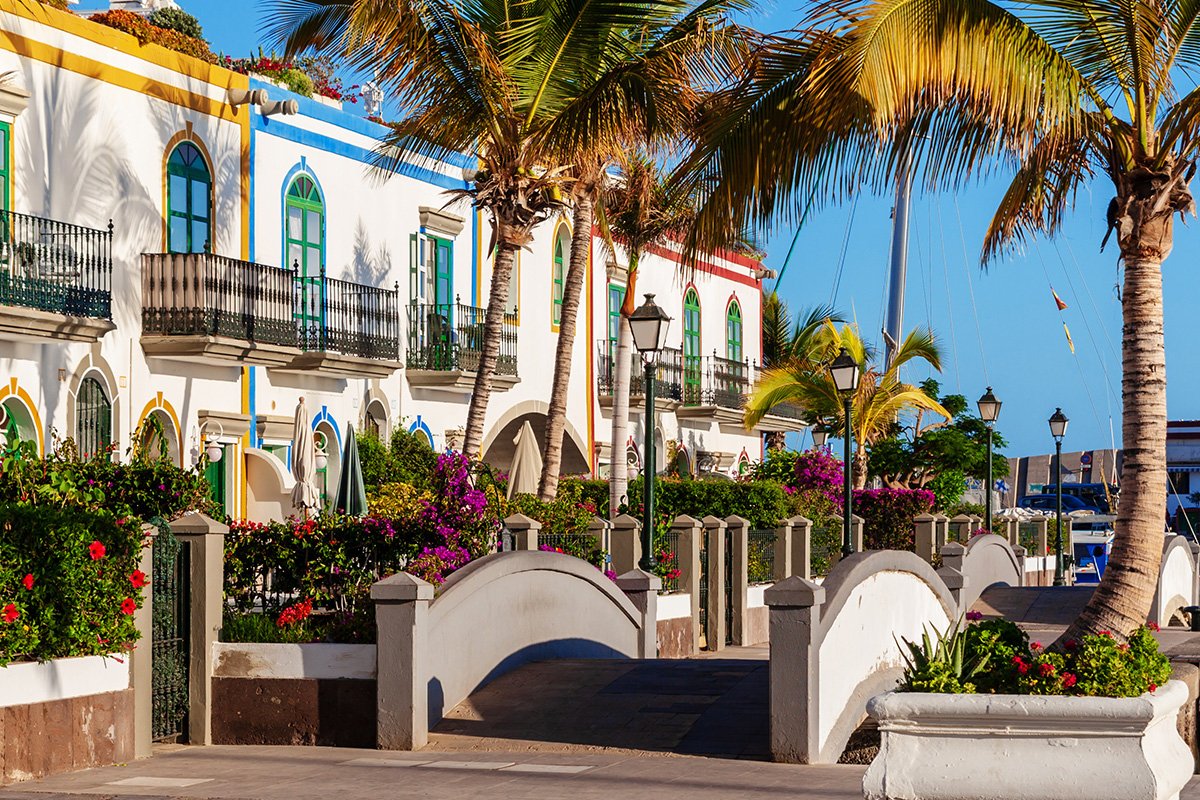
Puerto de Mogán is a pretty fishing port about 40 minutes west of Maspalomas. Its little canals and bridges, flower-covered walls and busy marina have earned it the nickname “Little Venice of the Canaries”. Come on a Friday for the market, then stay for a seafood lunch by the harbour.
Fataga, Mundo Aborigen and the mountains
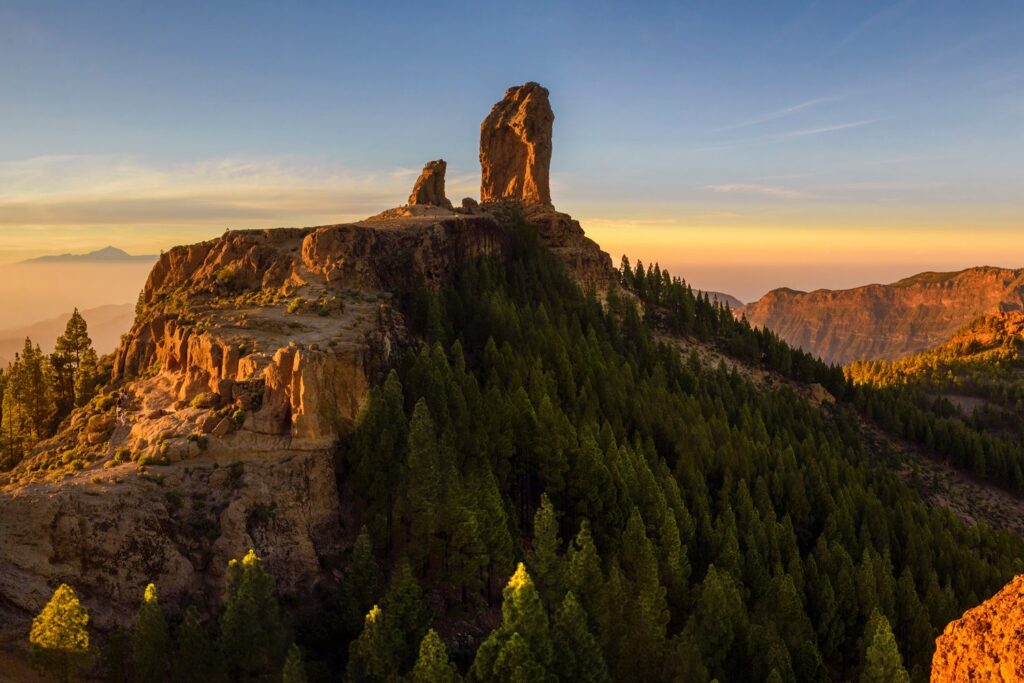
The road north from Maspalomas climbs into the Fataga valley, often called the Valley of a Thousand Palms. Along the way you can stop at Mundo Aborigen, an open-air museum with over 100 life-size figures showing how the island’s first inhabitants lived. Check it’s open before you set off. Further up, Roque Nublo is a huge volcanic rock that rises above the central peaks. It lies within the Risco Caído and the Sacred Mountains of Gran Canaria Cultural Landscape, a UNESCO World Heritage Site since 2019.
Las Palmas de Gran Canaria
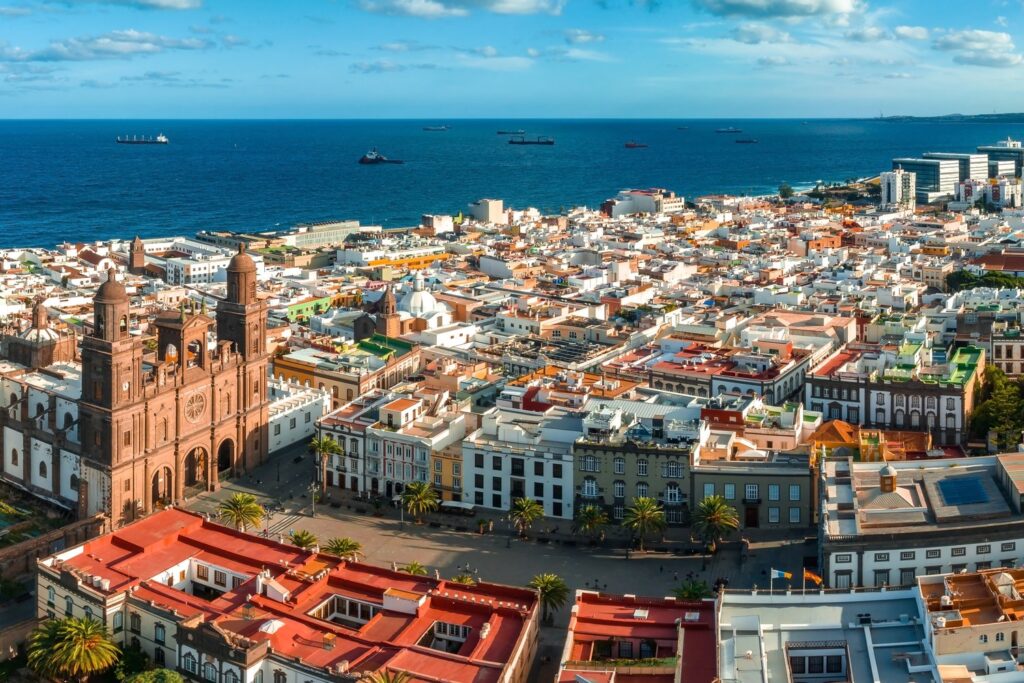
The capital, Las Palmas de Gran Canaria, is about 50 km north of Maspalomas. Explore the old Vegueta district with its cathedral and historic Canarian mansions, then finish the day at Las Canteras beach. The Canary Islands have two capitals, and Las Palmas shares the role with Santa Cruz de Tenerife.
Getting to Maspalomas and getting around
The closest airport to Maspalomas is Gran Canaria Airport (LPA), about 30 km away. The drive takes around 30 minutes along the GC-1 motorway, and there are regular Global buses to the resort. A taxi from Las Palmas to Maspalomas takes roughly 45 minutes. Within the resort you can walk, cycle or use local buses, which connect Playa del Inglés, Maspalomas and Meloneras.
The south of the island is warm all year round. Daytime temperatures are usually around 22°C in winter and 28°C in summer, which is why Maspalomas is so popular with British travellers from October to April. Book your hotel well in advance for Christmas, February half-term and Easter.
See available places to stay in Maspalomas
Is there a lot to do in Maspalomas?
There’s more than enough to fill a week or two. The dunes, the lighthouse and the long beach cover the classic sights, while theme parks, boat trips and days out inland keep the whole family busy. Maspalomas holds its own against the resorts on Tenerife, Fuerteventura and Lanzarote, and its dunes are among the most impressive sights in the Canary Islands. Our list of things to do in Maspalomas is a good starting point, and the sun will take care of the rest.
Hotels in Maspalomas
Hotels in Maspalomas are spread across three main areas: by the dunes and the lighthouse, around Playa del Inglés, and in the quieter Campo Internacional next to the golf course. Here are three places to stay for different budgets.
💰 Bungalows Cordial Green Golf
A relaxed bungalow complex beside the Maspalomas golf course, with two outdoor pools set in tropical gardens. Each bungalow has a kitchenette and a private terrace, which makes self-catering easy. There’s a kids’ club and a restaurant on site, plus a free shuttle to Maspalomas beach and Playa del Inglés. It’s a great base for families and couples who want peace and quiet without being far from the dunes.
🏨 Bohemia Suites & Spa - Adults Only
A four-star adults-only hotel in Playa del Inglés, a short walk from the beach. It has two pool areas, a hot tub, a spa and a gym, plus a Mediterranean restaurant with a terrace. The spacious suites have balconies facing the gardens or the sea. Choose it if you want a calm, stylish stay with the bars and restaurants of Playa del Inglés within walking distance.
💎 Seaside Grand Hotel Residencia - Gran Lujo
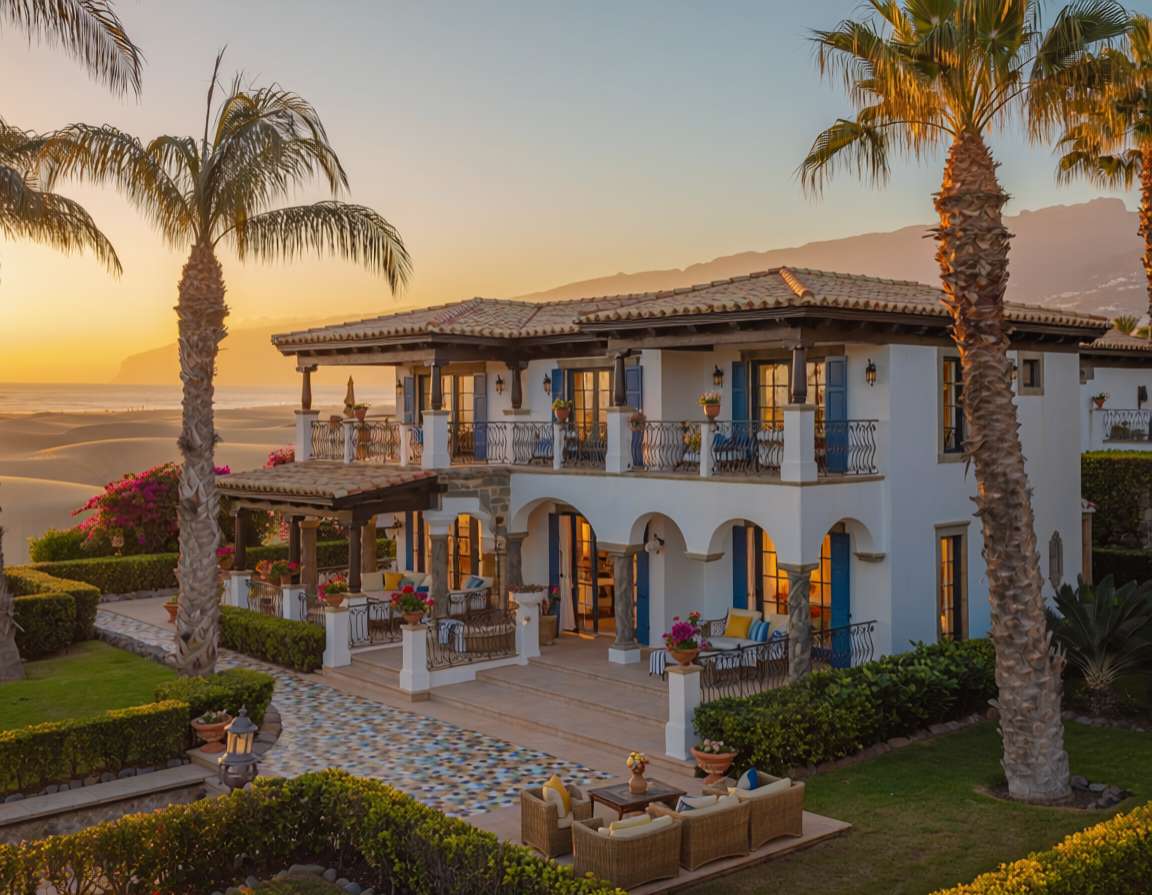
A five-star boutique hotel built in the style of a colonial Canarian villa, close to the dunes and the lighthouse. Low buildings surround a pool and lush palm gardens, and there’s a spa for slow afternoons. The service is attentive and the atmosphere feels peaceful even in high season. It’s the luxury option to book for a special occasion or a truly restful holiday.

