Eight seats, a wide window and a few quiet minutes with pine trees, rooftops and the Mediterranean sliding past below your feet.
The Montjuïc cable car, or Telefèric de Montjuïc in Catalan, is the easiest way to reach Montjuïc Castle from halfway up Montjuïc mountain. It’s short and smooth, it runs all year, and it gives you some of the best panoramic views of Barcelona without any climbing. In this article you’ll find the route and stations, ticket types, operating hours by season, how to get there with the funicular from Paral·lel, and how it differs from the other Barcelona cable car that swings over the port.
💰 Hostal Apolo - Affordable guesthouse in Poble-sec, about a 10-minute walk from the lower Montjuïc cable car station.
🏨 Hotel Brummell - Comfortable boutique hotel at the foot of Montjuïc, a few minutes’ walk from the cable car.
💎 Miramar Barcelona Hotel - Exceptional luxury hotel on Montjuïc hill, close to the upper station of the Montjuïc cable car.
Montjuïc cable car at a glance
The Montjuïc cable car links Parc de Montjuïc, halfway up the hill, with Montjuïc Castle at the top. The line opened in 1970 with small open gondolas. It closed in 2004 for a complete rebuild and reopened in 2007 with modern closed cabins, which is the system you ride today. It’s run by TMB, the same company that operates the metro and city buses.
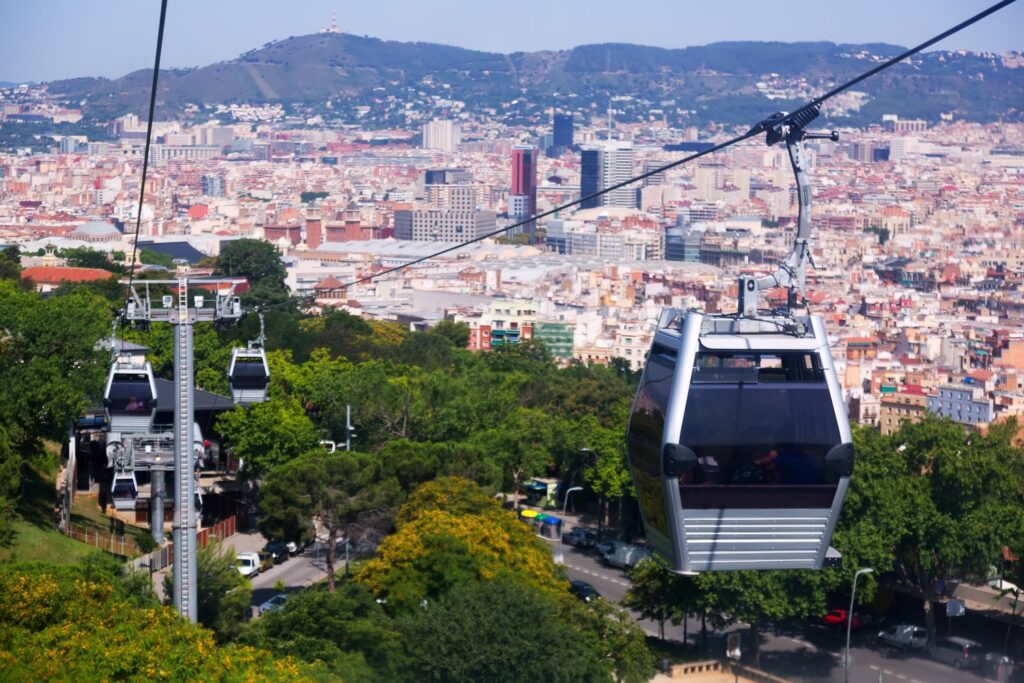
The route is 752 metres long and climbs about 85 metres. There are 55 cabins, each for up to eight people, and the line can carry around 2,000 passengers an hour. The ride up takes only a few minutes, so think of it as a smooth cable car ride and a scenic shortcut rather than a long excursion. You’ll also see the name written without accents, as the Montjuic cable car or Teleferic de Montjuic, or simply as the Barcelona cable car.
Barcelona cable car route - the three stations
The Montjuïc cable car has three stations, and you can board at any of them. On the way up, the cabins go straight from the bottom to the castle without stopping. On the way down, they stop at the middle station, so you can hop off to see the viewpoint before finishing the return journey.
Parc de Montjuïc station
The lower cable car station is on Avinguda de Miramar (often shortened to Avinguda Miramar), right next to the upper funicular station. It’s the natural starting point if you arrive by metro and funicular from Paral·lel. From here, the Fundació Joan Miró, the Olympic Stadium and the Olympic Ring are a short walk away, and you’ll also find the Mossèn Costa i Llobera gardens with their huge cactus collection on the slope below.
Mirador station
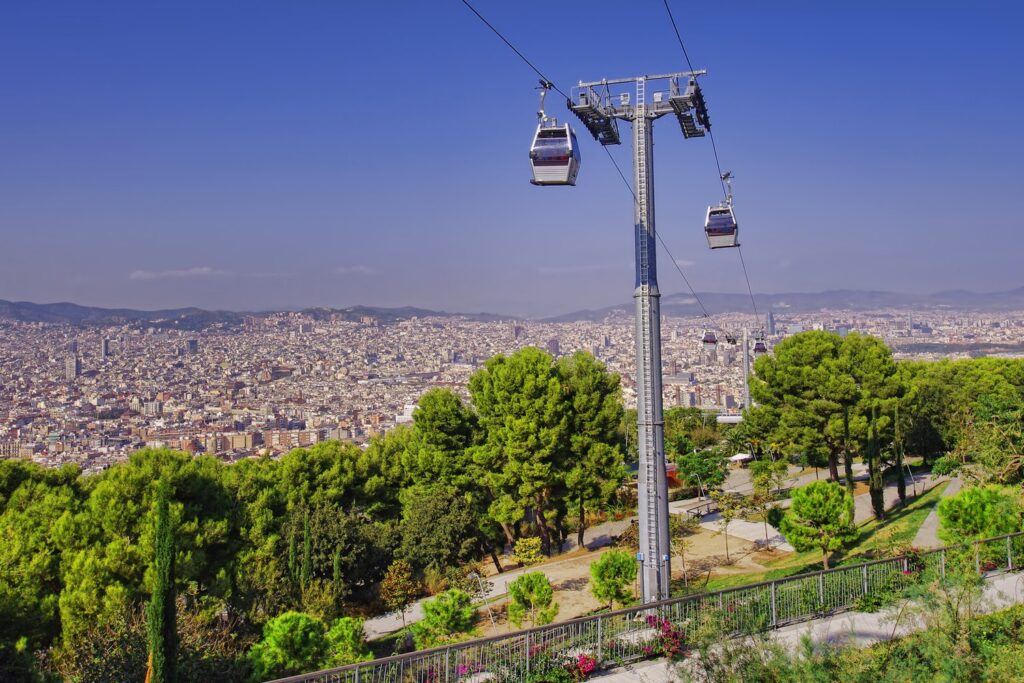
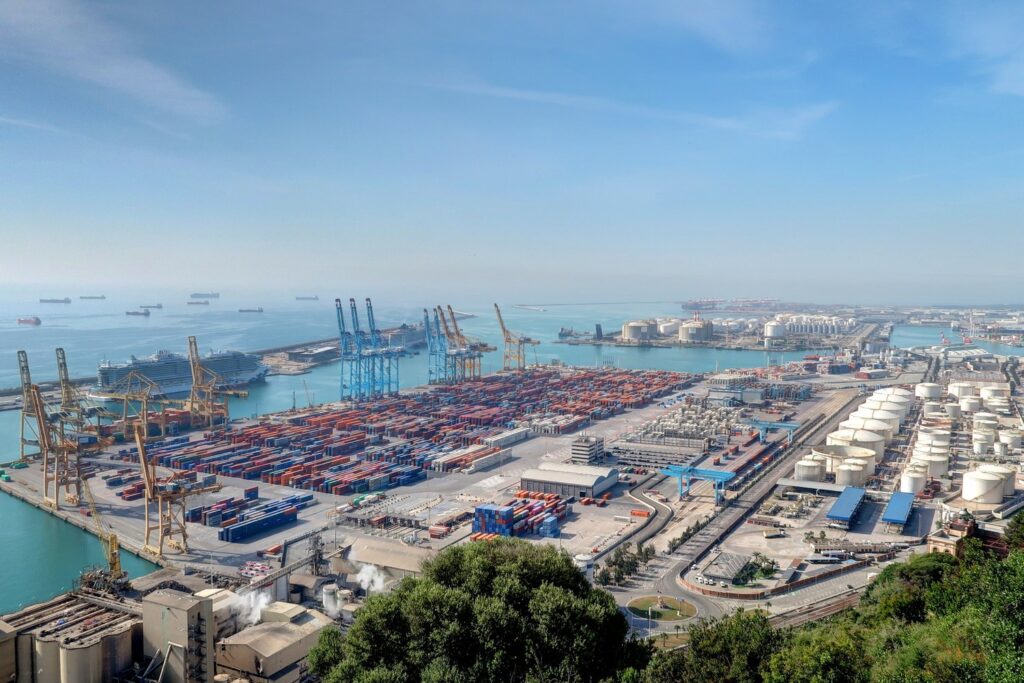
The middle stop sits by the Mirador de l’Alcalde, the Mayor’s Viewpoint. It’s a terraced garden with a mosaic floor and a balcony overlooking the port, the container terminals and the sea. Cabins only stop here on the way down, so plan to visit it after the castle.
Castell station at Montjuïc Castle
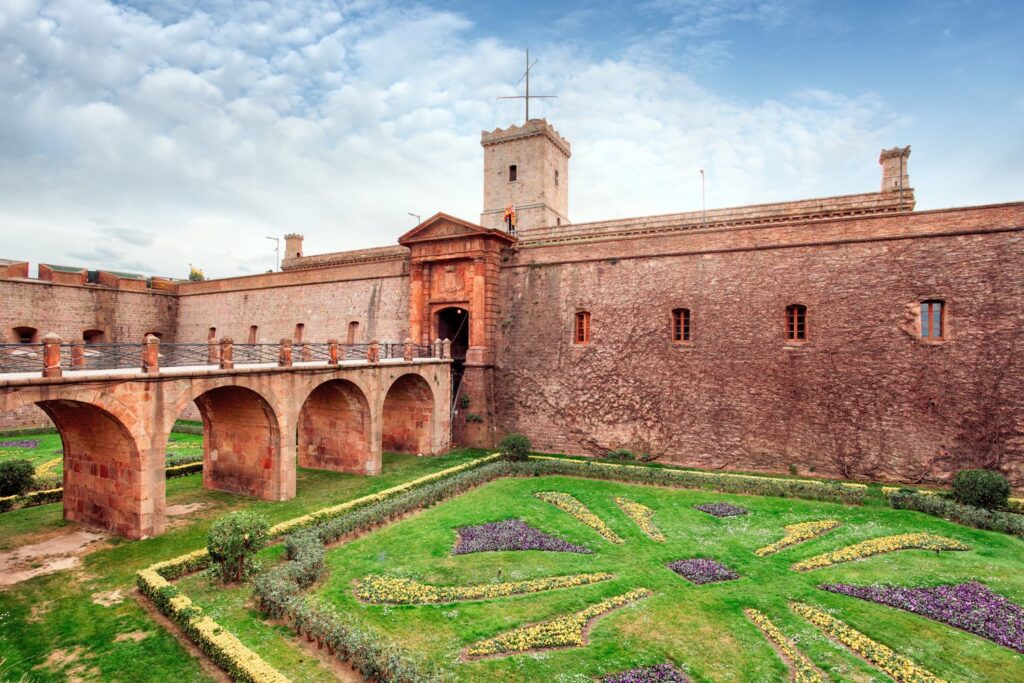
The top cable car station drops you a few steps from the gates of Montjuïc Castle (sometimes spelled Montjuic Castle), an 18th-century fortress built on the site of an older watchtower. Its walls and bastions give you full 360-degree views of Barcelona and the coast. Even if you don’t plan a full castle visit, the esplanade around the walls is free and worth the trip on its own.
Montjuïc cable car tickets - where to buy tickets and which to choose
There are two main ticket types. A return ticket is the most popular choice, and it isn’t limited to one trip up and one down. You can use it on the same day for one-way trips in any direction, get off at the other stations and continue later. A one-way ticket suits you if you want to ride up and walk down through the gardens, and you can buy it at the station.
Children under four ride free, and there’s a cheaper child ticket for ages 4 to 12. It’s worth booking tickets online before you go, as online tickets are usually cheaper than at the station and you skip the ticket office queue. Online bookings stay valid for months after purchase, so you can buy them before your trip and pick the day that suits the weather. Groups of more than 25 people can ask for special group rates.
One thing often surprises visitors. The cable car isn’t part of the public transport network, so your metro ticket, the Hola Barcelona Travel Card and the transport included in the Barcelona Card don’t cover it. They do cover the Montjuïc funicular, which takes you up to the cable car, and city buses such as the 150.
Montjuïc cable car operating hours
The cable car opens daily at 10am. Closing time depends on the season:
- January and February: 10am to 6pm
- March to May: 10am to 7pm
- June to September: 10am to 9pm
- October: 10am to 7pm
- November and December: 10am to 6pm
- 25 December, 1 January and 6 January: 10am to 2.30pm
Last entry is 15 minutes before closing time, or 20 minutes if you want to ride the full route. Every year the cable car stops for its technical inspection, usually for a few weeks in late winter. In 2025, for example, it was closed from 3 February to 3 March. During these closures, bus 150 runs from Plaça d’Espanya to the castle as an alternative. Service can also be suspended in strong winds, so check the service status on stormy days.
How to get to the Montjuïc cable car
The lower station sits on Avinguda de Miramar, about halfway up Montjuïc. Most visitors come by public transport, and there are several easy options:
- Metro and funicular: take metro line L2 or L3 to Paral·lel, then change to the funicular inside the station. It brings you right to the cable car.
- City buses: line 55 stops at Parc de Montjuïc, near the funicular station, and line 150 runs from Plaça d’Espanya up to the castle.
- Barcelona Bus Turístic: the hop-on hop-off red route has a Telefèric de Montjuïc stop.
- On foot: from Poble-sec it’s a steep 20- to 25-minute climb up steps and through gardens.
Driving up is possible, but parking near the stations and the castle fills up quickly at weekends. A car makes more sense if you’re also planning day trips, for example to Montserrat. In that case, pick up a hire car on the day you leave the city and use the metro while you’re in town.
The Montjuïc funicular from Paral·lel
The Montjuïc funicular is the smartest way to start your cable car ride. It opened in 1928 for the International Exposition of 1929 and runs mostly through a tunnel, climbing 76 metres over 758 metres in about two minutes. The lower funicular station is inside Paral·lel metro station, and the upper one is Parc de Montjuïc, next to the cable car.
The funicular is part of the metro network, so a normal public transport ticket works and you don’t pay extra. It runs from 7.30am on weekdays and from 9am at weekends, until the evening. It was closed for sewer works on the street above from 20 October 2025 and reopened on 13 April 2026, with a replacement bus running in the meantime.
Cable car, funicular or bus - which is best?
The funicular and the cable car aren’t rivals, as they cover two different sections of the hill. The funicular takes you from the city to Parc de Montjuïc, and the cable car carries you on from there to the castle. Together they make one smooth trip from the metro to the top of the mountain.
If your budget is tight, bus 150 also reaches the castle and is covered by your transport ticket. It’s practical, but you miss the bird’s-eye view over the city that makes visiting Barcelona from above so special. The cable car ride is short, yet it’s the moment when the whole city opens up below you, and that’s what most people remember.
Telefèric de Montjuïc vs the Port Cable Car
Barcelona has two cable cars, and people often mix them up. The Telefèric de Montjuïc runs only on the hill, between Parc de Montjuïc and the castle. The other one, the Barcelona Port Cable Car, is officially called Transbordador Aeri del Port, and you’ll also see it as Telefèric del Port. It flies high over the harbour, from Barceloneta to Montjuïc.
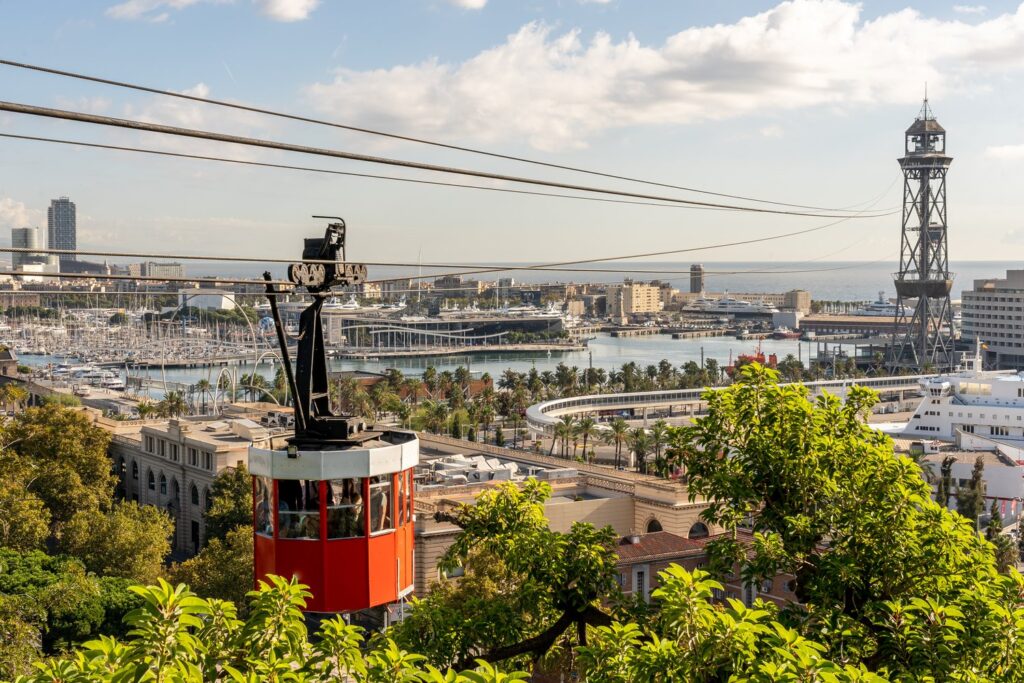
The Port Cable Car opened in 1931 and is about 1.3 km long. It runs between the 86-metre Torre de Sant Sebastià in Barceloneta and Miramar station on the slopes of Montjuïc. The middle tower, Torre Jaume I, is 107 metres tall, but its station is currently closed. The large cabins hold around 20 people, and the crossing takes roughly ten minutes. It’s operated by a private company, so tickets are separate from both the Montjuïc cable car and public transport.
You can combine both rides in one route. Start in Barceloneta, cross the port to Miramar, and enjoy views over the marina and the Barcelona Aquarium. Then walk about 10 to 15 minutes along Avinguda de Miramar to Parc de Montjuïc station and continue up to the castle.
Views of Barcelona from the cable car and the best time to ride
From the cable car cabins you get wide, panoramic views of Barcelona: the port and its cruise ships, the long line of beaches, the Mediterranean and the dense grid of the Eixample. On clear days you can pick out the towers of the Sagrada Familia and Torre Glòries, with the Tibidabo church on the Collserola hills behind them. From the castle walls you’ll also spot the Camp Nou area and the airport.
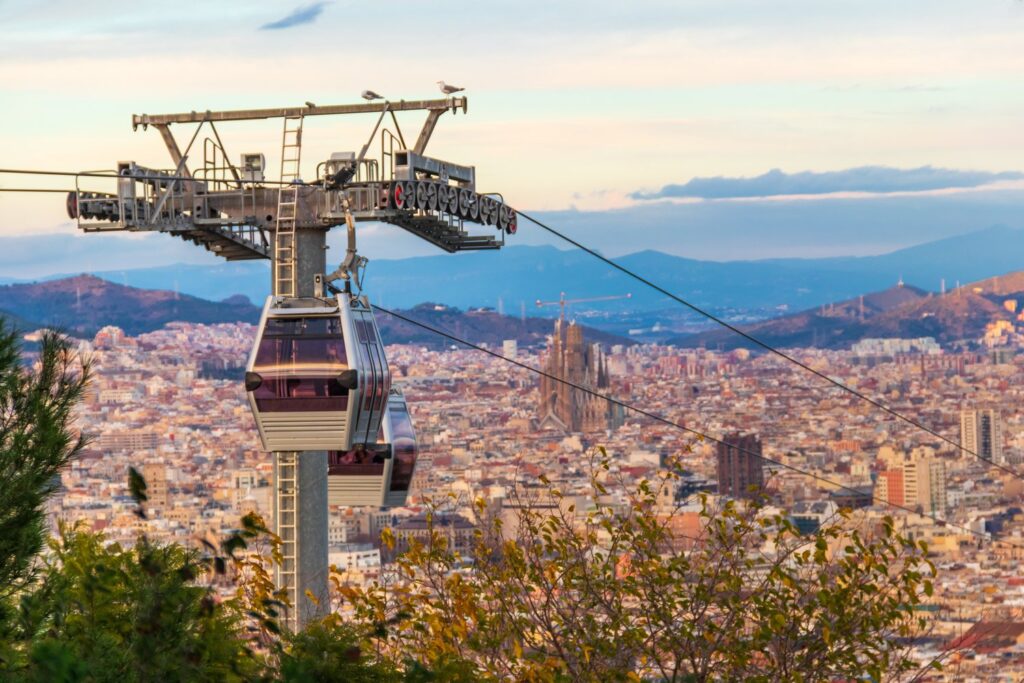
The best time is the last two hours before closing, when the light softens and the views of Barcelona turn golden. In summer the cable car runs until 9pm, so you can time your ride with sunset. Mornings straight after opening are the quietest, while late morning and early afternoon at weekends bring the longest queues. Avoid hazy or windy days if panoramic views are your main reason to go.
What to see on Montjuïc hill after your ride
The cable car is a great way to start a day on Montjuïc, as the hill is packed with gardens, museums and Olympic sites. It’s an easy way to access the top of the mountain, and a good plan is to ride up to the castle first and then walk downhill, so gravity does the hard work.
- Montjuïc Castle: the fortress has exhibitions on its long and often dark history. Entry is free on Sunday afternoons and on the first Sunday of every month.
- Gardens: the Mirador de l’Alcalde, the Joan Brossa gardens and the cactus slopes of Mossèn Costa i Llobera are all close to the cable car line.
- Fundació Joan Miró: a bright, modern museum dedicated to the Catalan artist, near Parc de Montjuïc station.
- Olympic Ring: the Olympic Stadium and the Palau Sant Jordi from the 1992 Games.
- MNAC: the National Art Museum of Catalonia, with superb Romanesque murals and a terrace looking down to Plaça d’Espanya.
- Poble Espanyol: an open-air village with copies of buildings from all over Spain, built for the 1929 Exposition.
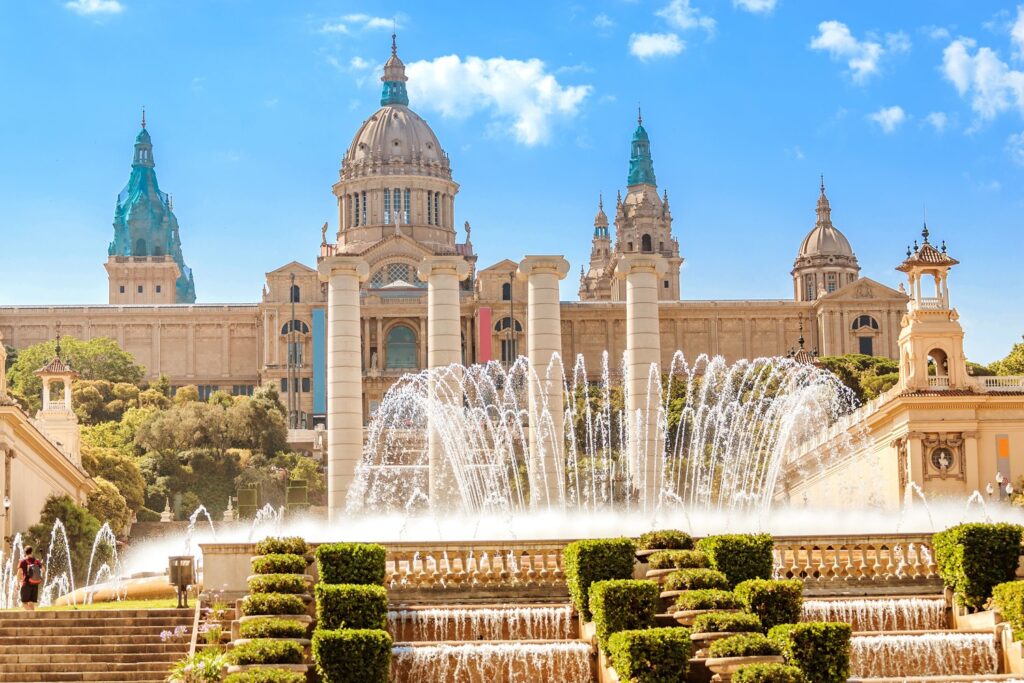
- Magic Fountain: below the MNAC, the Magic Fountain of Montjuïc puts on evening light and music shows on selected days.
Accessibility, families and practical tips
The Montjuïc cable car is fully adapted for people with reduced mobility. The stations have ramps, the gap between platform and cabin is small enough for wheelchairs, and in 2008 the line received a universal accessibility certificate. Staff at each station are on hand if you need help. You can take a pushchair on board, but you’ll be asked to fold it so there’s room for other passengers.
A few more tips will make the trip easier:
- Plan the return journey. With a return ticket you can ride down, stop at the Mirador and still get back to Parc de Montjuïc station.
- Bring a jacket. It’s often windier and cooler at the castle than down in the city.
- No pets. Only assistance dogs are allowed in the cabins.
- Use Google Maps carefully. Search for “Telefèric de Montjuïc - Parc de Montjuïc”, not just the castle, or you may be sent to the top by road.
Is the Montjuïc cable car worth it?
Yes, especially on your first trip to Barcelona. The ride is short, but it saves you a steep climb up the mountain, works well for families and gives you some of the best views of the city. Combine the funicular from Paral·lel, a cable car ride to the castle and a slow walk down through the gardens, and you’ve got one of the most relaxing half-days in town. If you’re watching your budget or travelling with a large group, bus 150 is a sensible alternative.
Practical information
- Montjuïc cable car tickets are best bought in advance. You’ll avoid the queue at the ticket office and won’t risk finding your slot sold out on busy summer evenings.
- Address: Avinguda de Miramar 30, 08038 Barcelona (Parc de Montjuïc station)
- Buy tickets on GetYourGuide
Hotels near the Montjuïc cable car
Staying in Poble-sec or on Montjuïc itself puts you a short walk or one funicular ride from the cable car, with tapas bars on your doorstep and the city centre close by. Here are three options for different budgets.
💰 Hostal Apolo
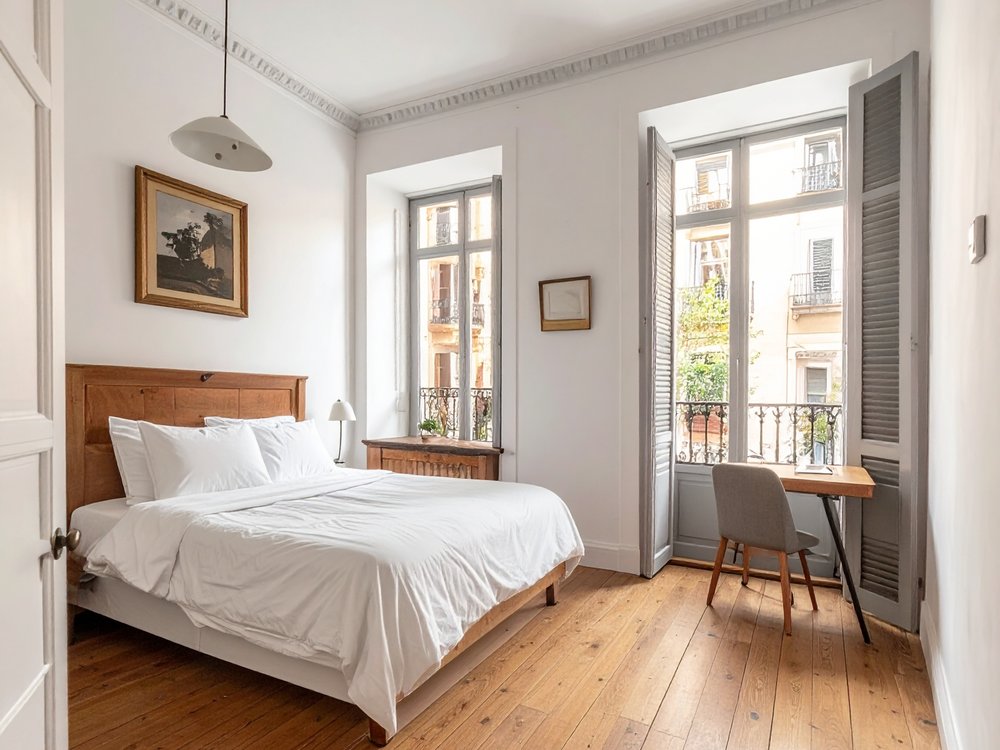
A small, spotless guesthouse on Carrer Lafont, about three minutes on foot from Paral·lel metro station, where the funicular to the cable car starts. Rooms are simple and compact, with a choice of private or shared bathrooms, and the friendly 24-hour reception gets excellent guest reviews. It’s a good pick if you want a central base on a budget and plan to spend your days out exploring rather than in your room.
🏨 Hotel Brummell
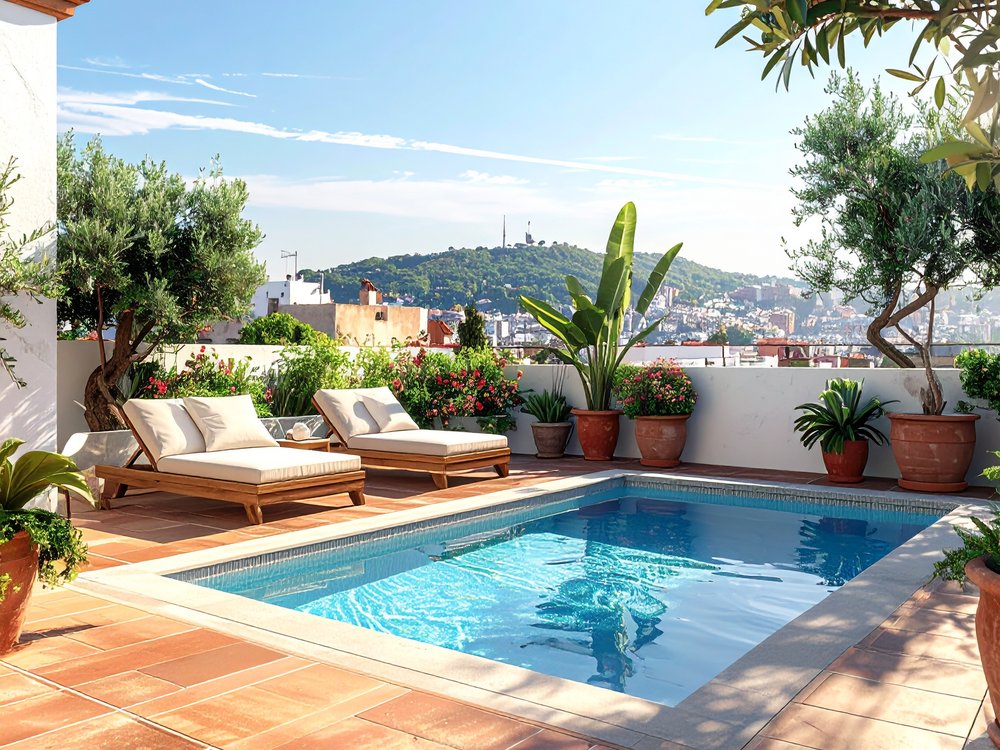
A 20-room boutique hotel on Carrer Nou de la Rambla, at the foot of Montjuïc in Poble-sec. It has a calm, design-led interior, a small rooftop pool, a sauna and free yoga classes for guests. From here it’s about ten minutes on foot to the funicular at Paral·lel, and you can come back in the evening for tapas on nearby Carrer Blai. It suits couples who want a quiet, stylish stay in a lively neighbourhood.
💎 Miramar Barcelona Hotel

A five-star hotel in a restored Noucentista palace on Montjuïc, surrounded by gardens and right next to the Port Cable Car’s Miramar station. Many rooms look out over the port and the sea, and there’s a seasonal outdoor pool and a spa with an indoor pool. The Montjuïc cable car is about a 10 to 15-minute walk away, so it’s the ideal choice if you want a treat with views and peace and quiet away from the crowds.
Montjuïc cable car FAQ
How long is the ride on the Montjuïc cable car?
The ride on the Montjuïc cable car takes only a few minutes. The line is about 752 metres long and climbs around 85 metres from Parc de Montjuïc to Montjuïc Castle. The closed cabins hold up to eight people, and the line is accessible for wheelchair users.
Is the Montjuïc cable car the same as the Barcelona port cable car?
No, they are two different lines. The Telefèric de Montjuïc is run by TMB and links Parc de Montjuïc with the castle. The port cable car (Transbordador Aeri del Port) is a separate, privately run line that crosses the harbour between Barceloneta and Miramar, and it needs its own ticket.
How do you get to the Montjuïc cable car?
The easiest way is to take metro line L2 or L3 to Paral·lel and then the Montjuïc funicular up to the Parc de Montjuïc station, where the cable car starts. City buses 55 and 150 also serve the area. If you prefer to walk, it’s about 20 to 25 minutes uphill from Poble-sec.
Is the Montjuïc cable car included in the Barcelona Card?
No, the cable car isn’t included in the Barcelona Card, the Hola Barcelona Travel Card or standard metro tickets. Those tickets do cover the Montjuïc funicular and bus 150, so you can use them to get to the bottom station. For the cable car itself you need a separate ticket, ideally booked online in advance.
Does the Montjuïc cable car run all year?
Yes, the Montjuïc cable car runs every day from 10am, with later closing times in summer than in winter. It closes for a technical inspection for several weeks in late winter, and service can be suspended in strong wind.

