
When it comes to the most important monuments in a city, it is important to know what we are actually visiting. Before you travel to Seville, take a moment to learn more about the greatest attraction in the city.
The Alcázar of Seville (Spanish: El Real Alcázar de Sevilla) is a symbol of Andalusia. This beautiful palace complex witnessed many important events in the history of Spain. It was here that Isabella of Castile and Ferdinand of Aragon received Christopher Columbus after his journey to the Americas. It was also here that trade with Spanish colonies was managed and where the decision was made to organize the expedition of Ferdinand Magellan and many other voyages to the New World.
GOOD TO KNOW: The Alcázar of Seville was added to the UNESCO World Heritage List in 1987.
History of the Palace
The first residence in this location was built in Antiquity, when this part of the Iberian Peninsula was under Roman rule. Unfortunately, none of the structures from that period have survived to the present day.
At the beginning of the 10th century (913), during the time of the Caliphate of Córdoba, the ruler Abdurrahman II an-Nasir ordered the construction of his residence here. In the following centuries, his successors expanded the complex with new buildings and rooms. The site quickly became a cultural showcase of the city, attracting poets and writers, among others.
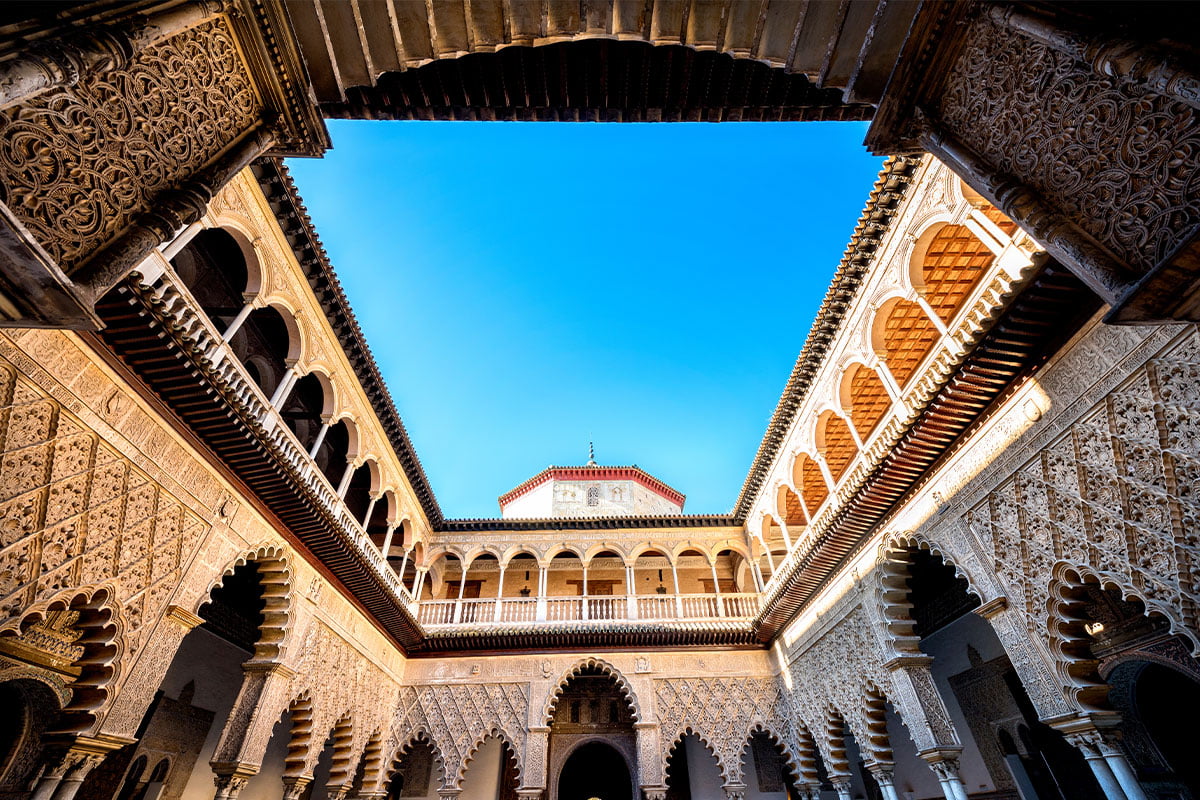
In 1248–1249 the city was conquered by Castilian troops. The Christian rulers decided to preserve the palace buildings, turning them into a Royal Residence and the political center of the city. This was a turning point in the history of the Alcázar, which soon began to gradually change its architectural character. The first manifestation of this transformation was the Gothic Palace built during the reign of Alfonso X.
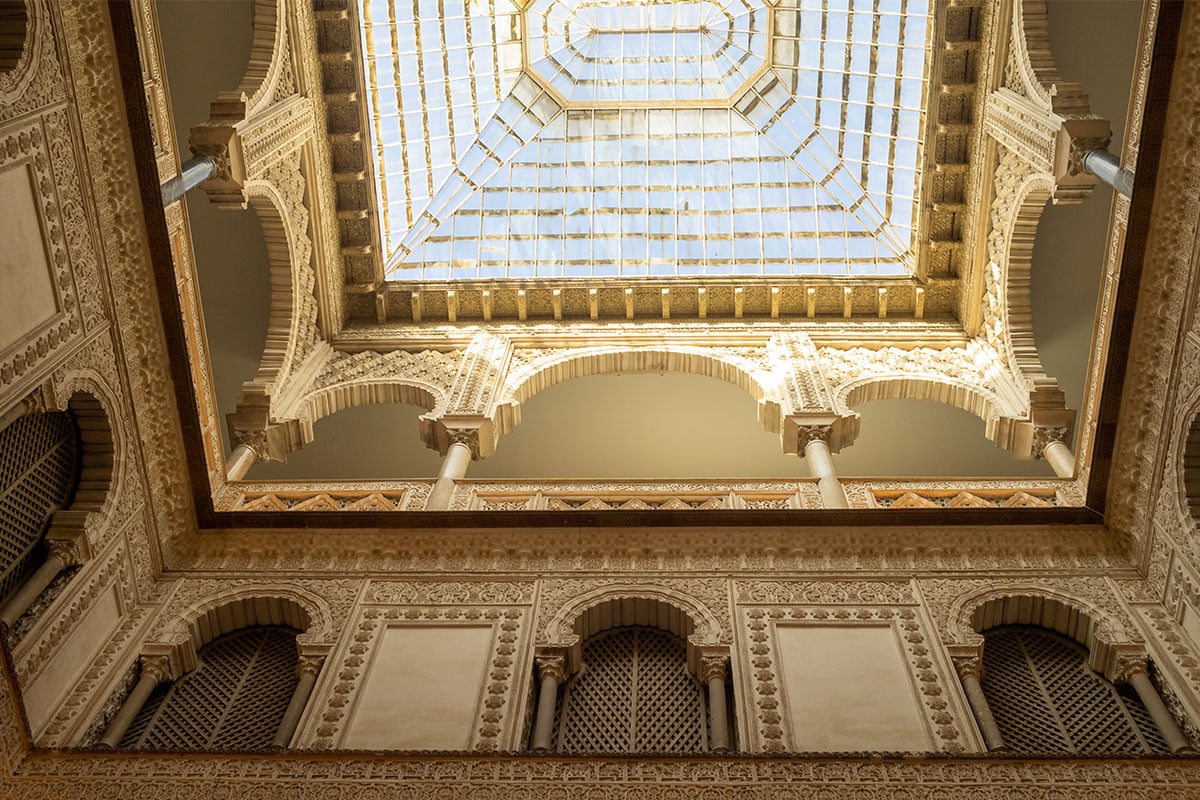
Greater changes began to take place in the 14th century. At that time, Peter I the Cruel ordered the construction of a palace that in terms of beauty and grandeur could compete with the Alhambra in Granada. The task was entrusted to the best artists from Granada, Córdoba, and Toledo. Their goal was to combine the finest elements of Islamic architecture with Christian aesthetics. The construction lasted ten years. As a result, a building was created that is considered one of the most beautiful examples of Mudéjar art in Spain.
By order of subsequent Catholic monarchs, the Alcázar of Seville underwent many further modifications (mainly in the 15th and 16th centuries). For this reason, in addition to the Mudéjar and Gothic styles, which are the most visible here, we can also see references to the Renaissance, Mannerism, and Baroque.

GOOD TO KNOW: Mudéjar is a style in art and architecture that combines elements characteristic of both Islam and Christianity. Many examples of this style can be found throughout Spain. Other important monuments built in the Mudéjar style include the monastery of Sant Jeroni de Cotaiba (Valencia), the architectural complex of the city of Teruel (Aragon), the Church of Corpus Christi (Segovia), and the churches of Santa María la Blanca and San Benito (Toledo).
The Palace of King Pedro (Palacio del Rey Don Pedro)
It is often said that this is the most “Arab” part of the Alcázar. In reality, however, it is not Arabic architecture but the Mudéjar style, which Europeans often confuse with it. The richly decorated walls and ceilings are filled with geometric patterns. Another striking feature is the Andalusian azulejos tiles, which create stunning mosaics on the walls.

One of the most captivating places in the Palace of King Pedro is the Hall of Ambassadors (Salón de los Embajadores). The richly decorated ceiling immediately draws attention. To see it more closely, take a tour of the royal apartments located on the upper floors.
Courtyard of the Maidens (Patio de las Doncellas)
This is probably the most photographed place in the Alcázar. However, it was not always like this. After the murder of King Peter I, the garden was burned. By the end of the 16th century, the pool had also completely disappeared, and the patio no longer served any specific function. It was rediscovered only in the years 2002–2004. Thanks to the work of archaeologists, it was possible to uncover how the Patio de las Doncellas originally looked and restore its former glory.
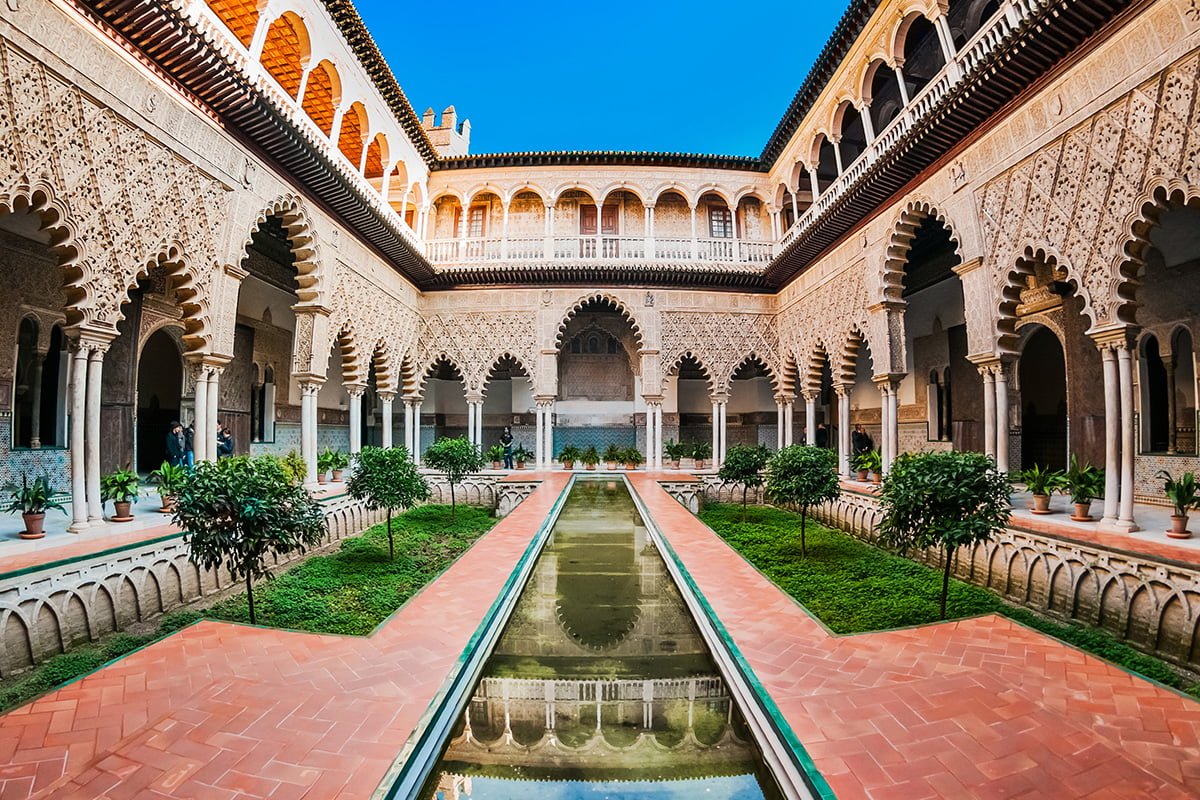
And where does this unusual name come from? The Courtyard of the Maidens refers to a legend that says that during the time of the Caliphate, Christian rulers were required to send 100 maidens each year. A more convincing explanation, however, says that young noblewomen would stroll along the upper gallery of the courtyard, observing the guests arriving at the palace.
The Gothic Palace (Palacio Gótico)
This part of the Alcázar is completely different from the others. It was built during the reign of Alfonso X and architecturally follows the Gothic style. As a result of the earthquake in 1755, some parts of the Palacio Gótico were destroyed, and what we can see today are reconstructions. An example is the Patio del Crucero, which must be crossed to enter the interior of the palace. Originally, this courtyard had two levels, but after reconstruction only one level was preserved.
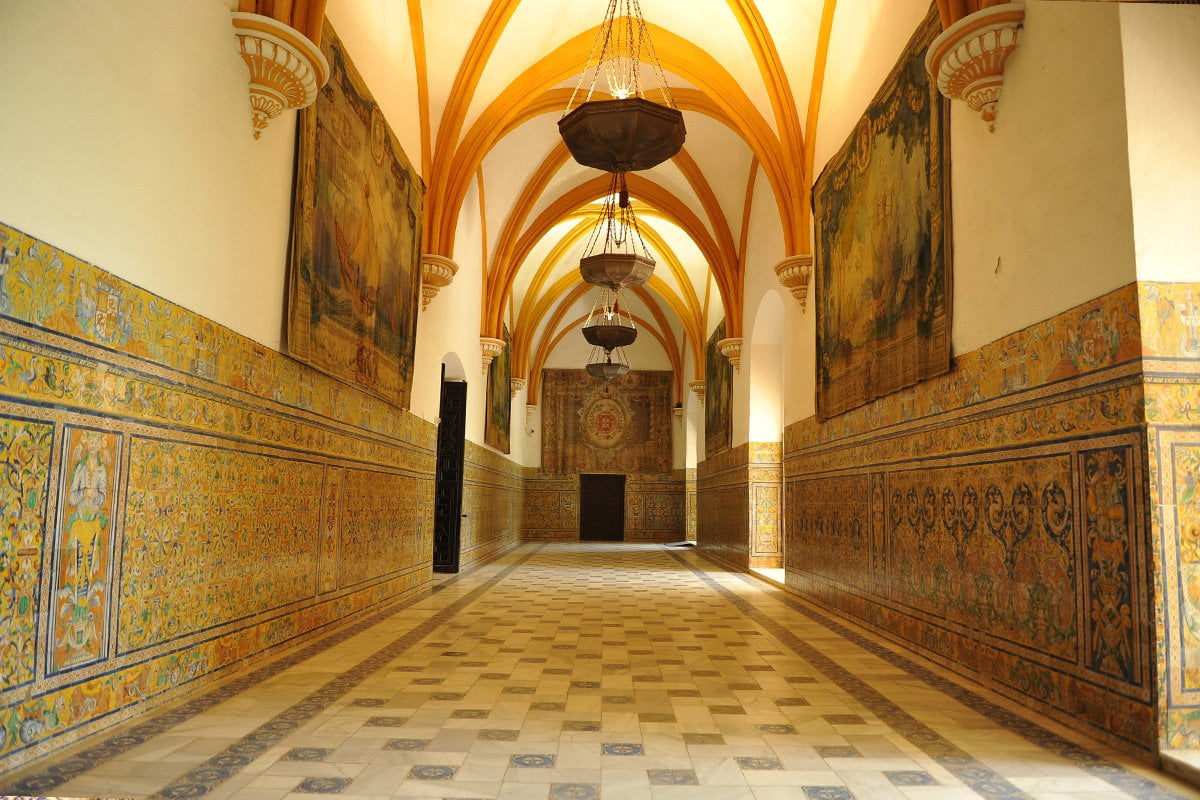
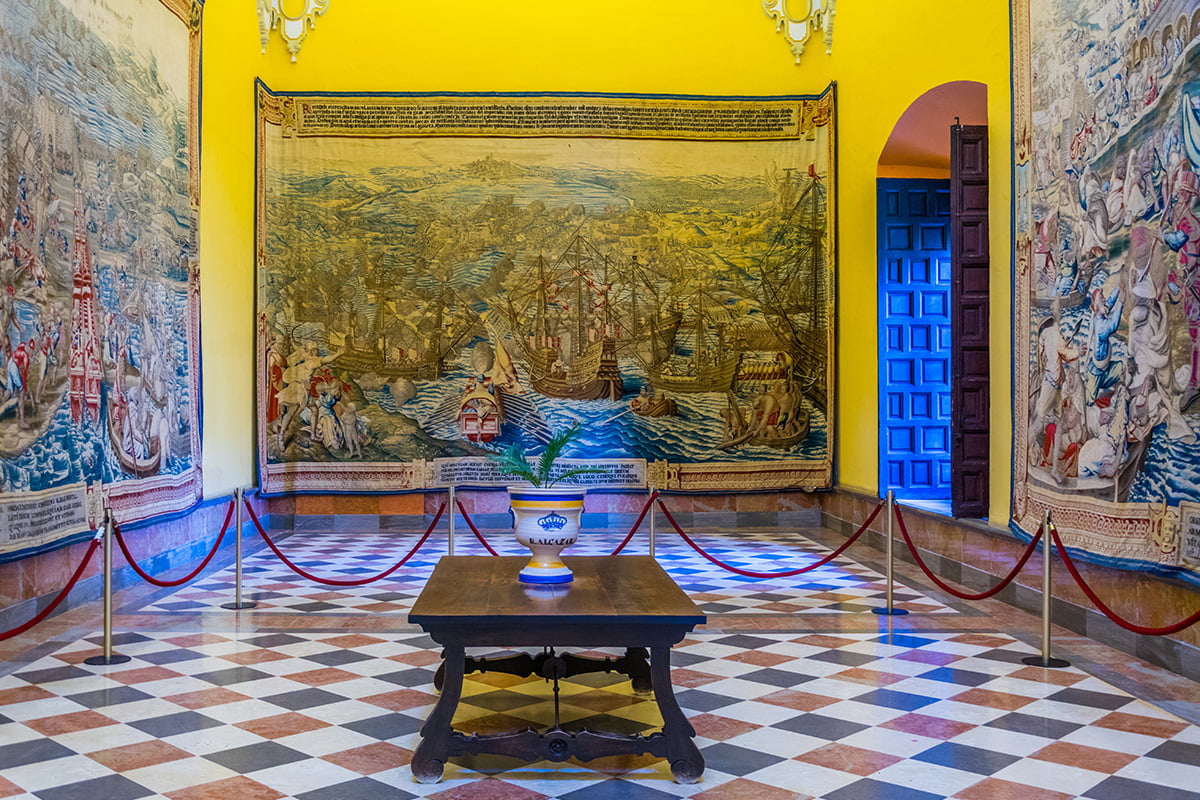
The Gothic Palace includes several emblematic rooms. One of them is the chapel with a spectacular altar created by Diego de Castillejo. Another interesting space is the Gothic Hall (Sala Gótica), where important events in the life of the royal family were held. Another fascinating room is the Hall of Tapestries (Salón de Tapices), which, as the name suggests, displays a collection of various tapestries.
Los Baños de Doña María de Padilla
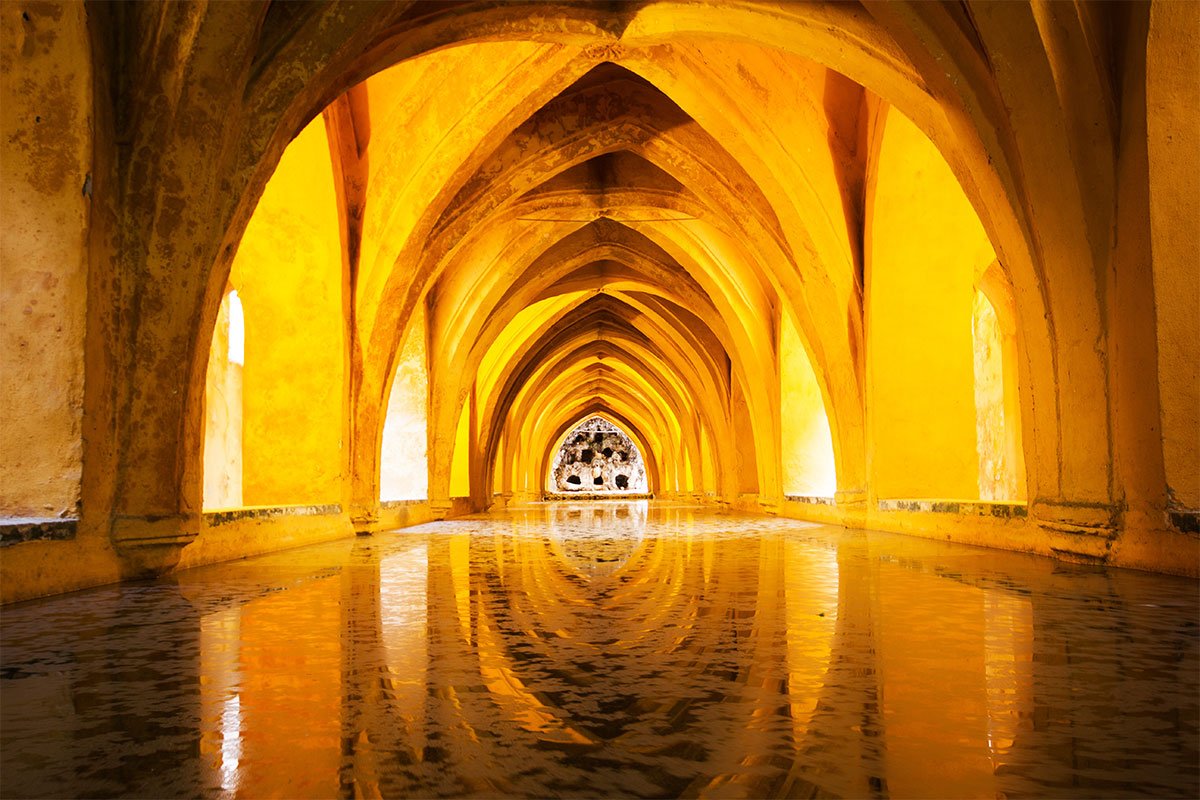
To experience an atmosphere completely different from the rest of the complex, visit the baths located beneath the Gothic Palace. The entrance to them is located in the La Danza Garden (Jardín de la Danza). Although today the Baths of Doña María de Padilla impress mainly with their mystical atmosphere, their original function was much more practical. A rainwater reservoir was located here, allowing better control of irrigation in the gardens.
Royal Rooms
The Alcázar is the oldest royal residence in Europe that is still in use. The royal rooms are located on the upper floors. Visiting them takes just under 30 minutes, and during this part of the tour you are not allowed to use a camera or a phone. Of course, visiting this part of the Alcázar is not possible if the Royal Family is currently staying in Seville and using the residence.
Other Chambers and Interesting Places
Among other interesting places in the Alcázar are: Patio de Levies, Salón del Almirante, Patio del León, Patio del Yeso, Sala de los Infantes, Sala de los Reyes Católicos, Patio del Crucero, and Puerta del León.
The Alcázar Gardens
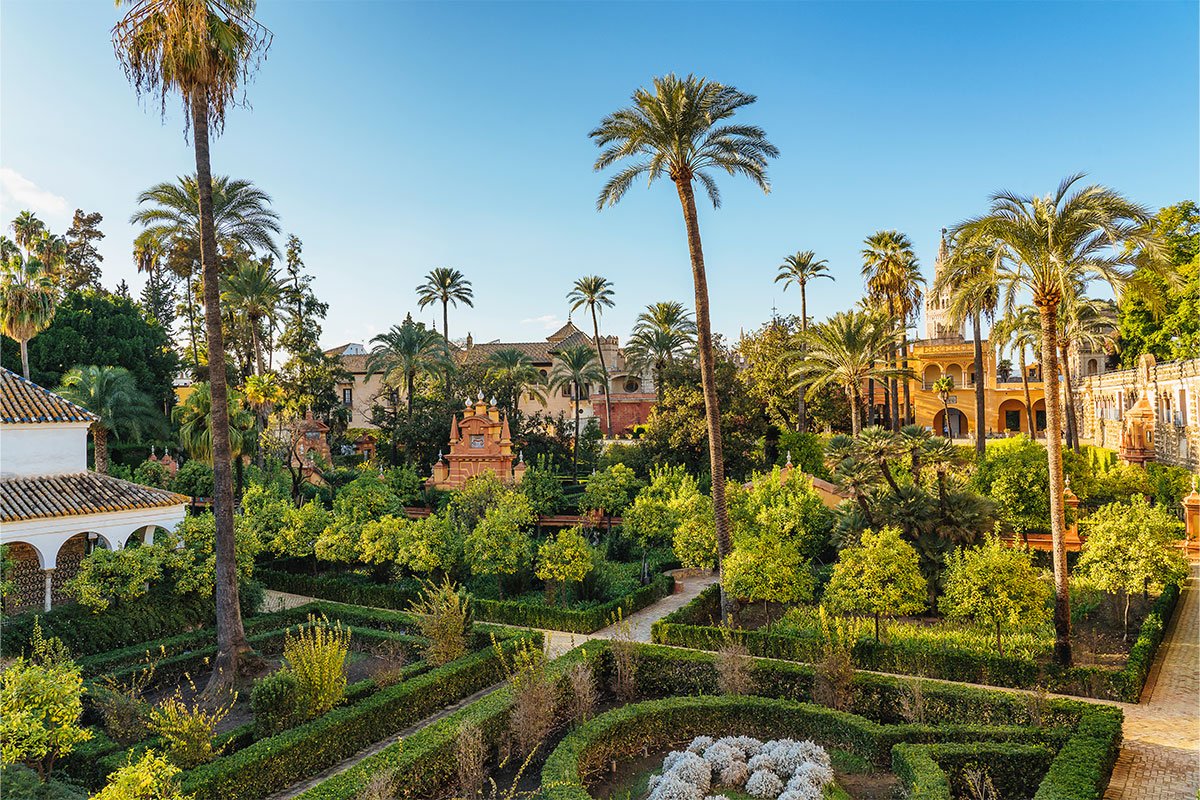
When visiting the Alcázar of Seville, it would be a mistake not to see the palace gardens. They impress not only with their size (60,000 m²), but also with the variety of plants (over 170 different species) and their extraordinary atmosphere. Fountains, ponds, and the scent of flowers are everywhere. It is also worth knowing that from July to September intimate concerts are organized here, which is a great opportunity to visit the Alcázar Gardens not only during a sightseeing tour but also in a more atmospheric setting.
DID YOU KNOW: The Alcázar of Seville was used as a filming location in the TV series “Game of Thrones”?
Practical information
- Entrance tickets to the Alcázar of Seville are best purchased in advance. This will allow you to avoid standing in long lines and reduce the risk that all tickets have been sold out.
- Address: Patio de Banderas, s/n, 41004 Sevilla, Spain
- Buy Tickets on GetYourGuide

