Order a small beer here and a plate of food arrives with it, unasked and unbilled. Order a second, and the plate usually gets better.
Granada sits at the foot of the snow-capped Sierra Nevada in southern Spain, and it packs more history into its hills than many whole regions. For almost 800 years this was Moorish Spain, and the Nasrid sultans left behind the Alhambra, one of the most beautiful palaces in Europe. Below it you’ll find a whitewashed Moorish quarter, cave houses where flamenco still echoes at night and bars that give you food with every drink. In this article we cover the best things to do in Granada, with a two-day plan, tips on booking the Alhambra and practical advice on getting there from the UK.
💰 Hotel Comfort Dauro 2 - Three-star hotel in a traditional townhouse on Calle Navas, five minutes’ walk from the cathedral.
🏨 Alhambra Palace Hotel - A four-star Moorish-style hotel on the hill by the entrance to the Alhambra.
💎 Parador de Granada - A former 15th-century Franciscan convent inside the Alhambra, once the burial place of Ferdinand and Isabella.
Is Granada worth visiting?
Yes, and not just for the Alhambra. Granada is compact, walkable and far more relaxed than Seville or Madrid. It’s also a university city, so the streets stay lively well after dark and the tapas bars are full of locals rather than tour groups. Many travellers who come for one night end up wishing they’d booked three.
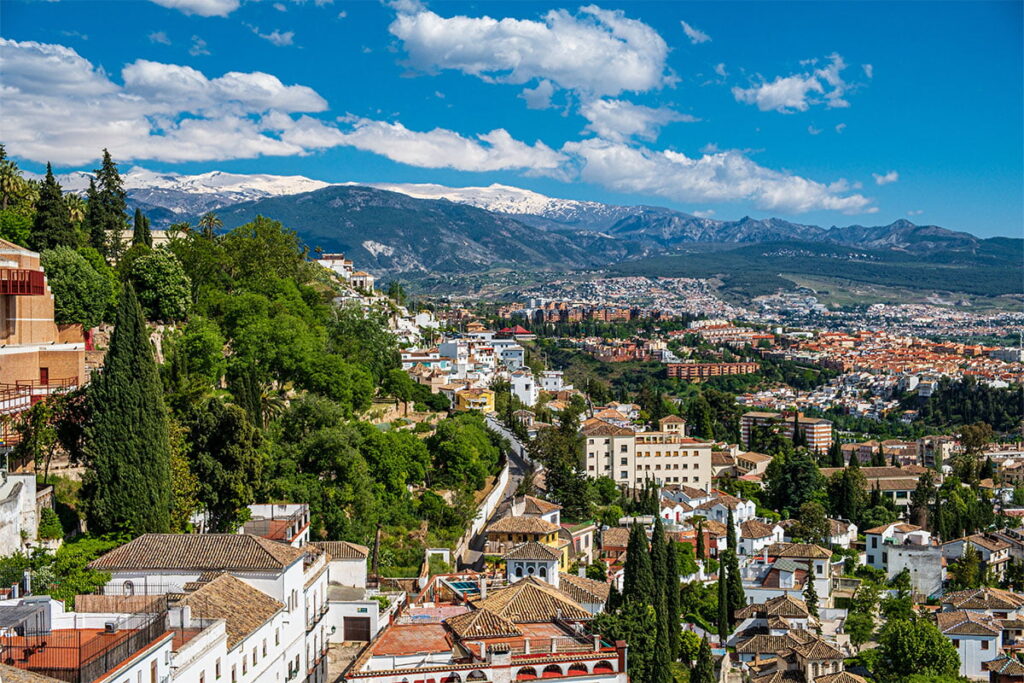
People often ask which is nicer, Granada or Seville. Honestly, they feel very different. Seville is grand and flat, with the Alcázar and the vast cathedral, while Granada is hilly and intimate, with a mountain backdrop. If you’re touring Andalusia, try to include both, along with Córdoba, under two hours from Granada by train.
The Alhambra: the must-see sight in Granada
The Alhambra is the reason most people visit Granada, and it lives up to the hype. This red-walled palace city stretches along a hill above the River Darro. It was the seat of the Nasrid dynasty, the last Muslim rulers in Western Europe, until the Catholic Monarchs took the city in January 1492. Together with the Generalife and the Albaicín, it’s a UNESCO World Heritage Site and one of the high points of Moorish architecture.
Allow three to four hours for the visit. Wear comfortable shoes, carry water in summer and start with the outdoor areas if you visit on a hot day.
Nasrid Palaces
The Nasrid Palaces are the jewel of the Alhambra. You walk past carved stucco walls and under cedarwood ceilings, through tiled rooms that open onto quiet courtyards. Don’t miss the Court of the Myrtles with its long reflecting pool, the Hall of the Ambassadors and the famous Court of the Lions. Entry to the palaces is timed, and if you’re late for your slot, you won’t be let in.

Alcazaba, Generalife and the Palace of Charles V
The Alcazaba is the oldest part of the complex, a military fortress with city walls and watchtowers. Climb the Torre de la Vela for one of the best views over the city and the Sierra Nevada mountains. The Generalife was the sultans’ summer palace, surrounded by gardens, fountains and the sound of running water. The Palace of Charles V is a Renaissance building with a perfectly round courtyard, added after the Christian conquest.
How to book Alhambra tickets
Daily visitor numbers are strictly limited, and tickets for spring and summer can sell out weeks in advance. Book ahead as soon as you know your travel dates. Tickets are named, so you’ll need to bring the same passport or ID card you used when booking. A general ticket covers the Nasrid Palaces, the Alcazaba and the Generalife. There are also night visits to the Nasrid Palaces, which are well worth booking.
If your dates are already sold out, a guided tour that includes tickets is often the easiest way in. It also saves you from getting lost in a site this size, and a good guide brings the stories of the sultans to life. Check the cancellation terms before you book, as they vary from tour to tour.
Wander the Albaicín, Granada’s Moorish quarter
The Albaicín is the old Moorish quarter on the hill opposite the Alhambra. It’s a maze of cobbled streets, steep stairways and whitewashed buildings with flowers spilling over the walls. Many of the houses here are carmens, traditional homes hidden behind high walls with private gardens and orchards. Getting lost is part of the fun, so put the map away for an hour and just follow the lanes uphill.
Look out for the Dar al-Horra Palace, a small 15th-century Nasrid palace once home to the mother of Boabdil, the last sultan of Granada. Nearby, the Carmen de la Victoria belongs to the University of Granada and has terraced gardens with views across to the Alhambra. Further down, Calle Calderería Nueva is lined with tea rooms and shops selling Arabic crafts, lamps and leather goods.
Sunset at Mirador de San Nicolás
Mirador de San Nicolás is the most famous viewpoint in Granada. From the square in front of the church of San Nicolás you look straight across at the Alhambra, with the snowy peaks of the Sierra Nevada behind it. It gets busy at sunset, often with buskers and flamenco guitarists, so arrive early to grab a spot on the wall. For a quieter alternative, walk higher to the Mirador de San Miguel Alto, which gives you a sweeping view over the whole city.

Carrera del Darro and Paseo de los Tristes
Carrera del Darro is often called one of the most beautiful streets in Spain. It runs along the narrow River Darro at the bottom of the Alhambra hill, past stone bridges, old mansions and churches. It starts at Plaza Nueva, one of the city’s busiest squares, and it’s lovely both early in the morning and after dark.
At the end of the street you reach Paseo de los Tristes, a wide promenade with café terraces and a dramatic view up to the Alhambra walls. It’s a great spot for an evening drink, when the walls glow golden under the floodlights.
El Bañuelo, the Arab baths on Carrera del Darro
Halfway along Carrera del Darro, look out for the entrance to El Bañuelo. These 11th-century Arab baths are among the oldest and best-preserved in Spain. You’ll see brick vaults with small star-shaped skylights that let in thin beams of light. The visit only takes 15 to 20 minutes, but it’s one of the most atmospheric corners of the city.
Granada Cathedral and the Royal Chapel
In the city centre, the huge Granada Cathedral is the defining symbol of the Christian city. Construction began in 1523 on the site of the main mosque and took 181 years to complete. The cathedral has a striking white-and-gold interior, with a light-filled main chapel and soaring columns. It’s one of the finest Renaissance churches in Spain.
Right next door, the Royal Chapel is where Queen Isabella and King Ferdinand, the Catholic Monarchs, are buried. They chose Granada because its conquest in 1492 was the crowning moment of their reign. You can see their marble tombs and, in the crypt below, the simple lead coffins. The chapel also displays Isabella’s crown and sceptre and part of her art collection. Visiting both the Royal Chapel and the cathedral takes about two hours, and a guided tour helps you make sense of the history.
Alcaicería, Plaza Bib-Rambla and Corral del Carbón
Just behind the cathedral, the Alcaicería was once the great silk bazaar of Moorish Granada. Today its narrow alleys are packed with souvenir stalls selling ceramics, lanterns and scarves. It was rebuilt after a fire in the 19th century, but it still has the feel of an old market.

A few steps away, Plaza Bib-Rambla is a pretty square with flower stalls and café terraces. It’s the classic spot for churros with thick hot chocolate, especially on a cool morning. Across Calle Reyes Católicos, the Corral del Carbón is a 14th-century merchants’ inn with a beautiful patio. It’s the only building of its kind from the Nasrid era that survives in Spain, and it’s free to step inside.
Sacromonte: cave houses and a flamenco show
Beyond the Albaicín, the hillside of Sacromonte is dotted with whitewashed cave houses. For centuries this was home to Granada’s Roma community, and it’s considered one of the heartlands of flamenco. Some caves are still lived in, while others have become small bars and venues.
A flamenco show in a Sacromonte cave is one of the most memorable things to do in Granada. The local style is the zambra, a raw and intimate performance with singing, dancing and guitar, just a few feet from the audience. Most shows run in the evening, and many bars in the area combine the show with dinner or drinks. Book a spot in advance in summer, as the best caves fill up fast.
During the day, visit the Sacromonte Caves Museum to see how families lived in the caves. If you’ve still got energy, walk up to Sacromonte Abbey, a 17th-century abbey at the top of the hill, with catacombs and fine views.
Relax in the Arab baths
After a day of climbing hills, a session in the Arab baths is a great way to recover. Granada has several modern hammams inspired by the bathhouses of Moorish Spain. Hammam Al Ándalus, close to Plaza Nueva, is the best known. You move between warm, hot and cold pools in candlelit rooms with horseshoe arches and tiled walls, and you can add a massage for an extra cost.
Sessions are timed and numbers are limited, so it’s worth booking ahead, especially at weekends. Bring a swimsuit, as the baths are mixed.
Free tapas in Granada: how it works
Granada is one of the few cities in Spain where the free tapas tradition is still alive. In most traditional tapas bars, every drink you order comes with a free plate of food. You don’t choose the tapa; the bar does, and in many places it gets more generous with each round. Order three or four drinks and you’ve had a proper dinner.
A free tapa can be anything from a slice of tortilla to a small plate of stew, fried fish or a mini burger. Any drink usually counts, from a caña of beer to a glass of red wine or a tinto de verano, the local mix of red wine and lemonade. Standing at the bar often gets you served faster and sometimes earns a better plate.
Where to go for tapas
Calle Navas near the town hall is the classic tapas street, with one bar after another. Los Diamantes, with branches near Plaza Nueva and on Calle Navas, is famous for its seafood tapas. The Realejo, the old Jewish quarter, has a more local feel, and around Paseo de los Tristes you can enjoy your tapas with a view of the Alhambra. Bars such as La Fontana on Carrera del Darro are popular too.

If you want to do a tapas crawl with someone who knows the best places, join a food tour. A local guide takes you to bars you’d never find on your own and explains what you’re eating.
More things to see in Granada
Once you’ve ticked off the big sights, Granada still has plenty more to see. These are good picks for a second or third day.
Basilica of San Juan de Dios
From the outside, the Basilica of San Juan de Dios looks fairly plain. Inside, it’s one of the most lavish baroque churches in Spain, covered in gold leaf, mirrors and paintings from floor to ceiling. It’s a short walk from the cathedral and rarely crowded.
Monastery of San Jerónimo
The 16th-century Monastery of San Jerónimo has a peaceful cloister with orange trees and a richly decorated church. It’s the burial place of Gonzalo Fernández de Córdoba, the general known as El Gran Capitán, who fought in the conquest of Granada.
Carmen de los Mártires
On the Alhambra hill, the gardens of Carmen de los Mártires are free to visit and far quieter than the Generalife. You’ll find ponds, fountains, statues and peacocks wandering between the hedges. Opening hours change with the season, and there’s a long break in the middle of the day.
Realejo and Huerta de San Vicente
The Realejo neighbourhood is known for its street art and relaxed tapas bars. On the edge of the centre, Huerta de San Vicente was the summer house of the poet Federico García Lorca, Granada’s most famous son. Today it’s a small museum surrounded by a park.
Science Park
If you’re travelling with children, the Science Park (Parque de las Ciencias) is one of the best interactive museums in Spain. It has a planetarium, a butterfly house and plenty of hands-on exhibits.
Day trips from Granada
Some of the best things to do in Granada are just outside the city, and Granada makes a great base for the surrounding mountains and villages. If you’d rather go at your own pace, car hire is the easiest option, but there are good guided tours too.
Sierra Nevada
The Sierra Nevada is home to the highest peak in mainland Spain, Mulhacén, at 3,479 metres. The ski resort at Pradollano is only about 30 km from Granada, and buses from the city’s bus station take about an hour. The ski season usually runs from late November to April. In summer the same slopes are great for hiking, with cool air and far-reaching views over southern Spain.
The Alpujarra villages
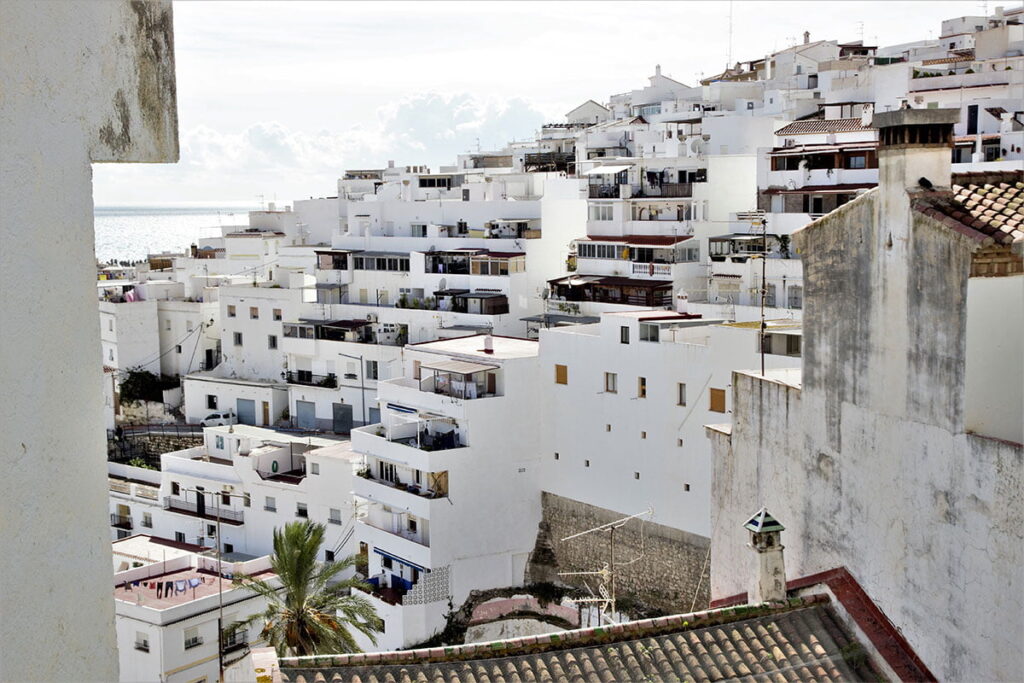
On the southern slopes of the Sierra Nevada, the Alpujarra is a region of white villages clinging to steep valley sides. Pampaneira, Bubión and Capileira are the most popular, with flat-roofed houses, local crafts and hiking trails. The drive takes around an hour and a half, so a day trip is easy.
Los Cahorros de Monachil
Just 20 minutes from the city, Los Cahorros is a narrow gorge with hanging footbridges, caves and waterfalls. The walk is easy enough for most people and makes a great half-day escape from the heat.
Córdoba, Málaga and the coast
You can also visit Córdoba and its Great Mosque on a day trip by train. To the south, the coast is about an hour away, and Nerja and Málaga are easy to combine with Granada on a longer holiday.
How many days in Granada is enough?
Two days is enough to cover the main things to do in Granada at a relaxed pace. You’ll have time for the Alhambra, the Albaicín, the cathedral, a flamenco show and two evenings of tapas. With three days you can add a day trip to the Sierra Nevada or the Alpujarra, or simply slow down and enjoy the city. If you only have one day, focus on the Alhambra in the morning and the Albaicín in the afternoon, finishing at Mirador de San Nicolás for sunset.
Day 1 - The Alhambra and the Albaicín
Start early at the Alhambra and spend the morning in the Alcazaba, the Nasrid Palaces and the Generalife. Walk down through the woods to Plaza Nueva for lunch. In the afternoon, stroll along Carrera del Darro, stop at El Bañuelo and climb into the Albaicín. Watch the sunset from Mirador de San Nicolás, then head to Sacromonte for a flamenco show.
Day 2 - The historic centre and tapas
Begin with churros at Plaza Bib-Rambla, then visit the Royal Chapel and Granada Cathedral. Wander through the Alcaicería, step into the Corral del Carbón and finish the morning at the Basilica of San Juan de Dios. In the afternoon, relax in the Arab baths, then spend the evening on a tapas crawl along Calle Navas or in the Realejo.

Best time to visit Granada
Spring and autumn are the best seasons to visit Granada, Spain. In April, May, September and October the days are warm, the gardens are at their best and walking up the hills is a pleasure. Semana Santa, the Holy Week before Easter, brings dramatic processions, while early May is the time of the Cruces de Mayo, when squares are decorated with flower-covered crosses. In June and July the International Festival of Music and Dance holds concerts in the Alhambra.

Summer is very hot, with afternoon temperatures often above 35°C, so plan your sightseeing for the morning and evening. Winter is cold for southern Spain, with nights close to 0°C, but it’s also quiet. On a clear day you’ll see snow on the mountains behind the Alhambra.
How to get to Granada from the UK
Granada’s small airport, Federico García Lorca Granada-Jaén, is about 17 km from the city. Wizz Air has run flights to Granada airport from London Luton, but schedules are seasonal and change often, so check the current timetable before you plan around them. From the airport, a bus timed to the flights takes you into the city centre in around 40 minutes.
Many visitors from the UK fly into Málaga instead, which has far more flights. There are direct buses from Málaga airport to Granada, and the journey takes between 90 minutes and two hours. You can also travel by train or bus from Málaga city, Seville, Córdoba or Madrid. If you’re combining several cities, hiring a car at Málaga airport gives you the most freedom.
Getting around Granada
The historic centre is best explored on foot, but the hills are steep. Small red minibuses link Plaza Nueva with the Albaicín, Sacromonte and the Alhambra, and they save your legs on a hot afternoon. Public transport also includes a metro line and regular city buses. Avoid driving in the old town, as many streets are closed to private cars.
Where to stay in Granada
For a first visit, stay in the city centre between the cathedral and Plaza Nueva. You’ll be within walking distance of almost everything and close to the best tapas bars. The Albaicín has charming small hotels with views, but expect steep walks. The area around the Alhambra is quiet and handy for an early start at the palace. Granada fills up in spring and during Semana Santa, so book your hotel early.
See available hotels in Granada
Hotels in Granada
Here are three hotels for different budgets, all well placed for exploring the city and the Alhambra.
💰 Hotel Comfort Dauro 2
A good-value hotel on Calle Navas, one of the best tapas streets in the city. Granada Cathedral is about five minutes away on foot, and Plaza Nueva is just around the corner. The building is traditional, while the rooms are smart, with dark wood floors, air conditioning and very comfy beds. It’s a great choice if you want to hop between tapas bars in the evening and walk everywhere.
🏨 Alhambra Palace Hotel
A historic hotel in a neo-Moorish building on the Alhambra hill, a short walk from the Puerta de la Justicia, one of the historic gates into the monument. The rooms have Moorish-inspired decor, and the bar terrace has some of the best views in Granada, over the rooftops of the old town. A bus stop right outside takes you down to the city centre. It suits couples and anyone who wants a special stay with an easy walk to the palace.
💎 Parador de Granada
A luxury hotel inside the Alhambra itself, set in a former 15th-century convent built on the site of a Nasrid palace. Stone arches, beamed ceilings and antique furniture blend with contemporary decor. The restaurant terrace looks over the gardens towards the Generalife, and in the evening you can stroll around the grounds after the day visitors have gone. It’s the ultimate splurge for a romantic trip, so book months ahead.

