A thousand years ago an Arab governor ruled the island from these walls. Today the King of Spain hosts state receptions here, and you can walk into his throne room.
The Royal Palace of La Almudaina (Palau de l’Almudaina in Catalan, Palacio Real de La Almudaina in Spanish) stands on the old sea walls of Palma de Mallorca, right next to the cathedral. It began life as an Arab citadel, became the Gothic palace of the Kings of Mallorca and is still the official residence of the Spanish royal family on the island. After a major renovation, the palace reopened on 29 July 2026 with a new route and rooms that had never been open to the public.
In this article you’ll find the palace’s history, the rooms you shouldn’t miss, opening hours, tickets and practical tips for your visit. You’ll also find out how to combine it with La Seu Cathedral and the rest of the old town in a single morning. If you’re spending a few days in Palma and enjoy history, it’s one of the best places to understand how the island changed hands over a thousand years.
💰 Hotel Almudaina - A good-value central hotel with a rooftop terrace, five minutes from the palace.
🏨 Hotel Born - A charming hotel in a former palace with breakfast in a stone courtyard.
💎 Sant Francesc Hotel Singular - A five-star hotel with a rooftop pool, 300 m from the cathedral.
Where is the Royal Palace of La Almudaina?
La Almudaina palace stands at the top of the old town of Palma, on a terrace above the Parc de la Mar and its seawater lake. The cathedral rises just a few steps away, and together the two buildings form the famous skyline you see from the seafront. The best photos are taken from the Parc de la Mar, especially in the morning, when the walls are reflected in the water.

The address is Carrer del Palau Reial, s/n, 07001 Palma. The visitor entrance is on the cathedral side, through the Portal Major and across the parade ground. From the Passeig del Born you’ll be there in about five minutes on foot, and from Plaça d’Espanya, the main bus and train hub, in about 20 minutes.
The history of La Almudaina - from Arab citadel to royal palace
An Islamic alcázar
There was probably a Roman fortress on this spot first, but the story of the current structure begins with the Muslims, who ruled the island from 902. They built an alcázar, a fortified palace, as the seat of the governors of Madina Mayurqa, as Palma was then called. The name Almudaina comes from the Arabic word for “citadel”. Parts of the walls and the horseshoe arches of this Arab fortress still survive inside the later building.
King James II and the Gothic palace
In 1229 King James I of Aragon took the city in the Christian conquest of Mallorca, and the Arab citadel passed to the crown. The real transformation came under his son, King James II, ruler of the independent Kingdom of Mallorca. In the first half of the 14th century, from around 1309 to 1314, he turned the alcázar into a Gothic royal residence inspired by his palace in Perpignan. From this period date the Royal Chapel of Saint Anne, the great Gothic main hall and the bronze statue of the Archangel Gabriel that still crowns the main tower.

In 1349 Mallorca returned to the Crown of Aragon, and the palace lost its role as the permanent home of a king. Later it housed the royal court of justice and the military government of the islands. In 1860 Queen Isabella II stayed here during a visit to the Balearic Islands with her family, a trip that the new route now tells in detail.
The official residence of the Spanish royal family
Today the palace is the official residence of the King of Spain in Mallorca, and it’s run by Patrimonio Nacional, the body that manages Spain’s royal heritage. The royal family uses it for receptions and state ceremonies, especially during its summer stay on the island. For their private holidays, the King and other members of the family stay at the Marivent palace on the outskirts of Palma.
What’s new after the 2026 renovation
The Almudaina Palace closed in January 2026 for a seven-month renovation and reopened on 29 July 2026. The works brought new lighting, which cuts the building’s energy use by around a third, and a new visitor centre on the ground floor with the ticket office, a cloakroom and a shop, all fully accessible.
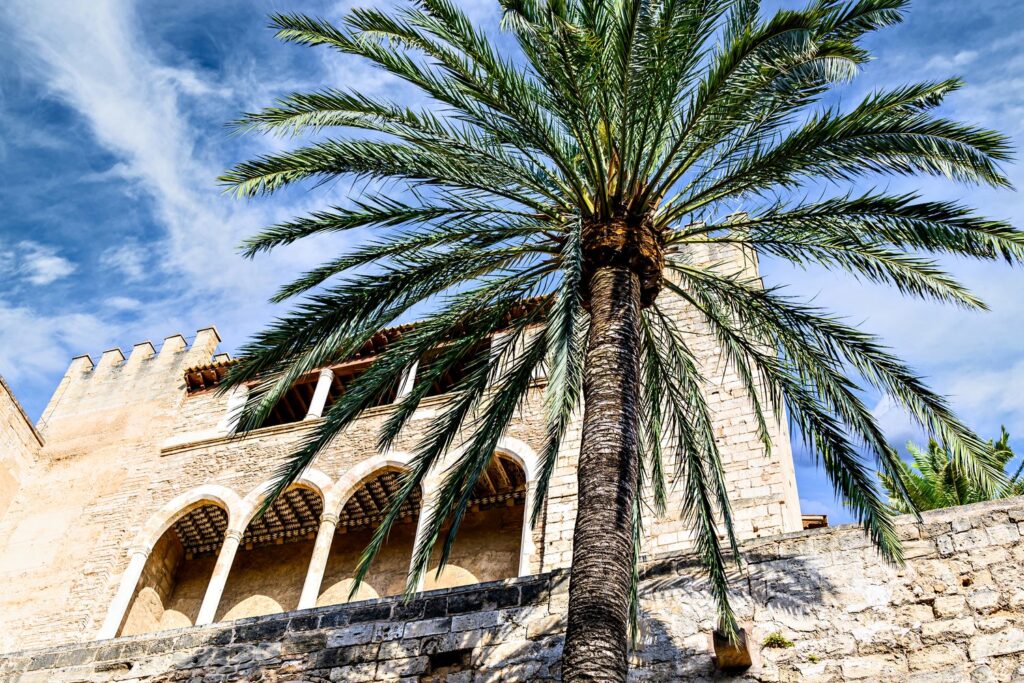
The biggest change for visitors is the route itself. It now follows the island’s history in order, from the Roman period and the Islamic city to the Kingdom of Mallorca, the Crown of Aragon and the Bourbons. For the first time, you can also visit the upper floor, known as the Queen’s Palace, which was previously used only for official receptions. Three 16th-century Flemish tapestries from the series History of the Emperor Octavian are due to go on display once their restoration is finished.
What to see inside the Almudaina Palace
The parade ground and the King’s Palace
Your visit starts in the Patio de Armas, the parade ground, where you get the first view of the palace’s Gothic arches and towers. On the ground floor of the King’s Palace, the first rooms tell the story of the site from Roman times, with coins, ceramics and amphorae lent by the Museum of Mallorca. The architecture itself shows how the Arab citadel became a Christian palace, with Gothic windows set into much older walls.

The Islamic room and the white marble lion
The new room dedicated to the Islamic period is one of the highlights of the route. Its star is a white marble lion from the 10th century, carefully restored, which once poured water into a fountain in the palace gardens. Next to it, you’ll see a 12th-century bronze griffin with a lion’s head and the stone tympanum of the Coronation of the Virgin, carved for the portal of the Chapel of Saint Anne in the late 13th or early 14th century.
The Queen’s Palace and the throne room
Upstairs, the Queen’s Palace tells the story of the Bourbon kings in the 19th century and of Isabella II’s trip to the Balearic Islands. The rooms are filled with portraits, clocks, antique furniture and Flemish tapestries from the royal collections, and many of them are still used for official events. The route ends in the throne room, decorated in the time of Alfonso XIII, the most formal space in the royal apartments.
The Royal Chapel of Saint Anne
The Royal Chapel of Saint Anne, founded by James II, is one of the gems of the palace. Its portal is one of the finest late Romanesque doorways in Mallorca, while the interior has a Gothic vault. Look closely at the details: the chapel was built when artistic styles were changing, and you can see both worlds in the same building.
The Arabic baths
Small but well-preserved, the Arabic baths inside the palace complex are a rare trace of Islamic Madina Mayurqa. You can still see how warm and hot rooms followed one another, heated from below. If you’d like to see more, the Banys Àrabs in the Calatrava quarter, a ten-minute walk away, are the best-preserved Arab baths in Palma.
S’Hort del Rei gardens below the palace walls
At the foot of La Almudaina lie the S’Hort del Rei gardens, whose name means “the King’s Garden”. In the Middle Ages this was the royal orchard and vegetable garden, outside the city walls. The current design dates from the 1960s, by the architect Gabriel Alomar, with fountains, channels, palm trees and shady paths. Look out for a sculpture by Joan Miró and the Arc de sa Drassana, an Islamic arch that once led to the palace dockyard.

The gardens are free to visit and make a lovely stop before or after the palace. From here, you can stroll along the Passeig del Born, the most elegant avenue in Palma, towards the shops and cafés of the old town.
The changing of the guard at La Almudaina
If you’re in Palma on the last Saturday of the month, head to the front of the palace at 12 noon. Soldiers in historic uniforms perform the solemn changing of the royal guard, a free ceremony that takes place in front of the main gate, weather permitting. It can be cancelled in the hottest months or for official events, so check the date before you go and arrive a little early to get a good spot.
Royal Palace of La Almudaina tickets and opening hours
The Royal Palace of La Almudaina is open from Tuesday to Sunday and closed on Mondays. From October to March, the opening hours are 10am to 6pm, and from April to September 10am to 7pm. The ticket office and the entrance close one hour earlier. In 2026 the palace is also closed on 1 and 6 January, 1 May and 24, 25 and 31 December, and it can close at short notice for official ceremonies.
Entry is free on Wednesdays and Sundays from 3pm for citizens and residents of the European Union and for Latin American citizens, with proof of nationality or residence. UK visitors don’t qualify unless they live in the EU, so most British travellers need a regular ticket. Children under 5 go in free. You can explore on your own, rent an audio guide or use the official app with your own headphones, and guided tours run in Spanish, English and German.
In summer and at weekends, book your ticket in advance, as nearly 250,000 people visited the palace in its last full year before the renovation. Photos without flash are allowed for personal use, but tripods and selfie sticks are not.
How long does a visit take and when should you go?
Allow around one and a half hours for the palace at a relaxed pace, or about an hour with a guided tour. The quietest times are just after opening and late in the afternoon, outside the hours when cruise ship groups arrive. If you want to see the gardens and the cathedral too, set aside half a day for this corner of the old town.
The palace works well with children, especially the lion, the soldiers’ parade ground and the changing of the guard. The visitor centre is fully accessible, and the ticket office can tell you which parts of the route are step-free for wheelchairs and pushchairs.
La Almudaina, La Seu Cathedral and the old town in one morning
The palace and La Seu Cathedral stand side by side, so it makes sense to see them together. Start with the cathedral when it opens, then cross to La Almudaina and finish in the S’Hort del Rei gardens. You’ll find opening times, terraces and tips for the cathedral in our separate article, while our Palma de Mallorca guide covers the rest of the city.
If you have more time, continue to Bellver Castle, a round Gothic fortress on a hill west of the centre, built for the same king, James II. For a day out of the city, the Serra de Tramuntana mountains and the village of Valldemossa are less than half an hour away by car.
Practical information
- Tickets to the Royal Palace of La Almudaina are best booked in advance. You’ll skip the queue at the ticket office and avoid the risk of tickets selling out on busy days.
- Address: Carrer del Palau Reial, s/n, 07001 Palma, Mallorca
- Book tickets on GetYourGuide
Hotels near the Royal Palace of La Almudaina
Staying in the old town of Palma means you can walk to the palace, the cathedral and the seafront without needing a bus or taxi. All three hotels below are within about ten minutes on foot of La Almudaina.
💰 Hotel Almudaina
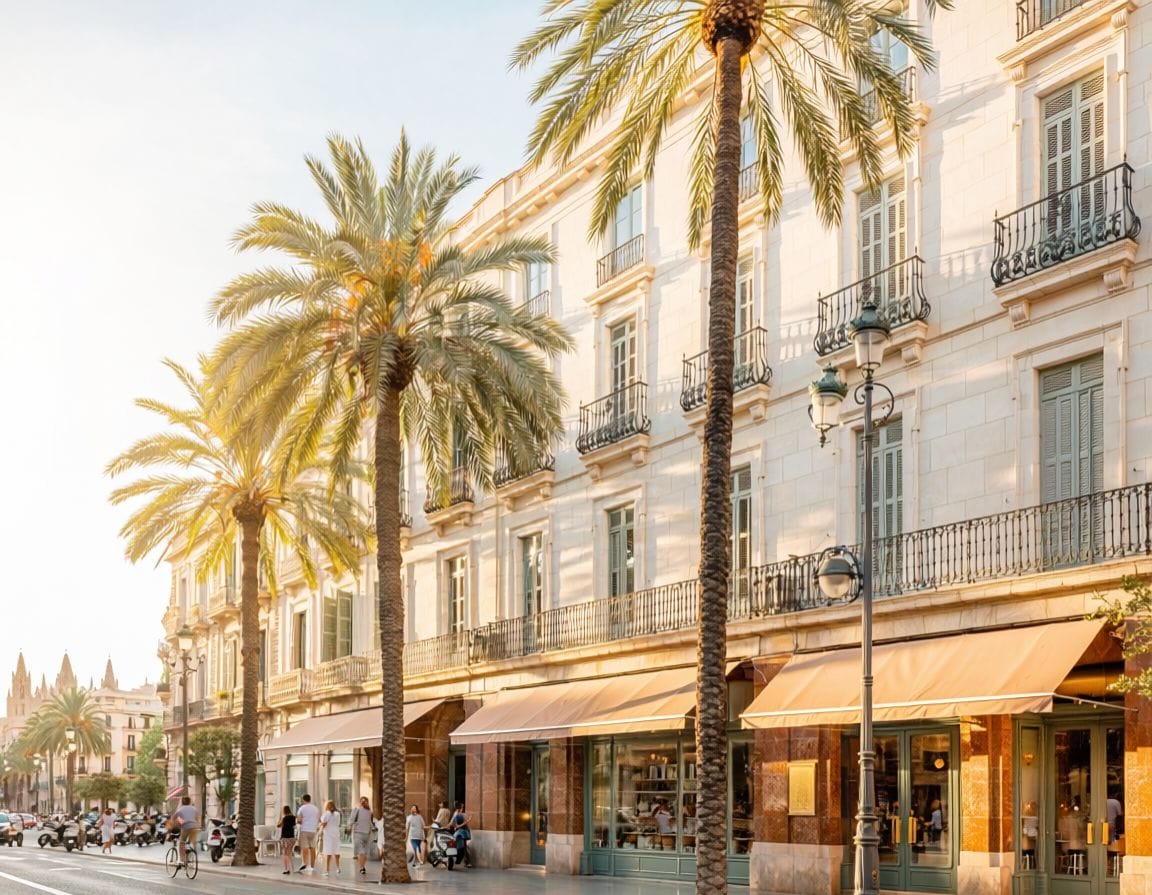
A good-value hotel on Avinguda Jaume III, one of Palma‘s main shopping streets, about a five-minute walk from the palace. The rooms are spacious and modern, and some have balconies with views over the bay and the cathedral. The big rooftop terrace looks out over the city and the port, and breakfast is a hot and cold buffet. It’s a smart choice if you plan to spend your days sightseeing and want a central base.
🏨 Hotel Born
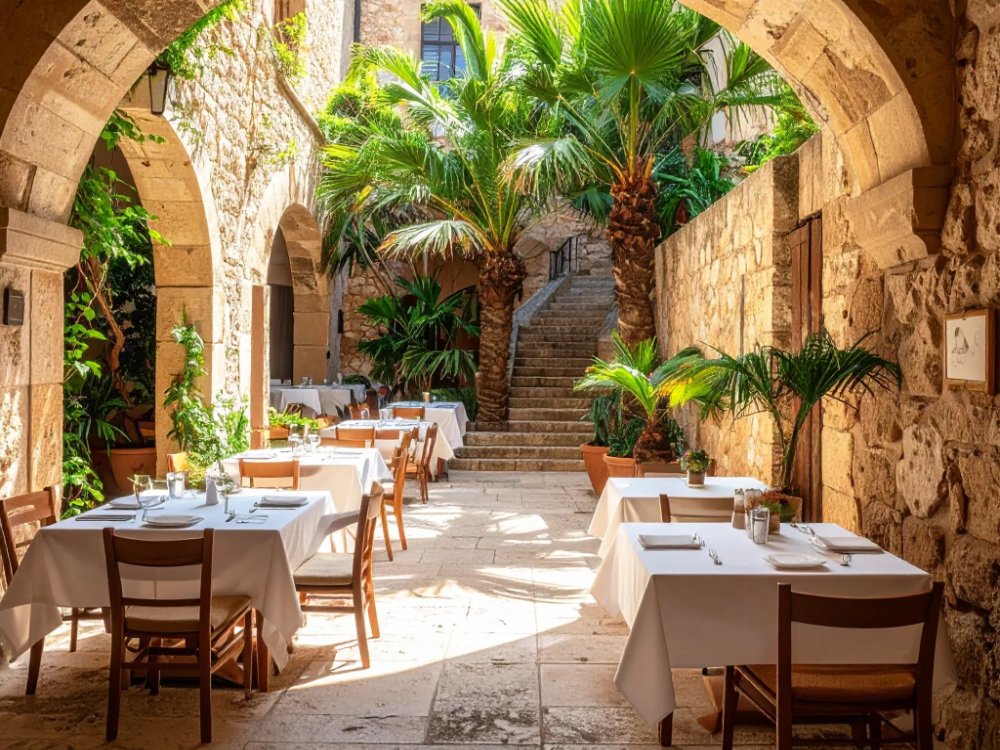
A charming hotel in a former palace, also known as Can Maroto, about ten minutes on foot from La Almudaina and the cathedral. The lobby has red marble columns and a grand staircase, and breakfast is served in the stone courtyard. Rooms have tiled floors and traditional Mallorcan furniture. It’s ideal for couples who want historic character at a sensible price.
💎 Sant Francesc Hotel Singular
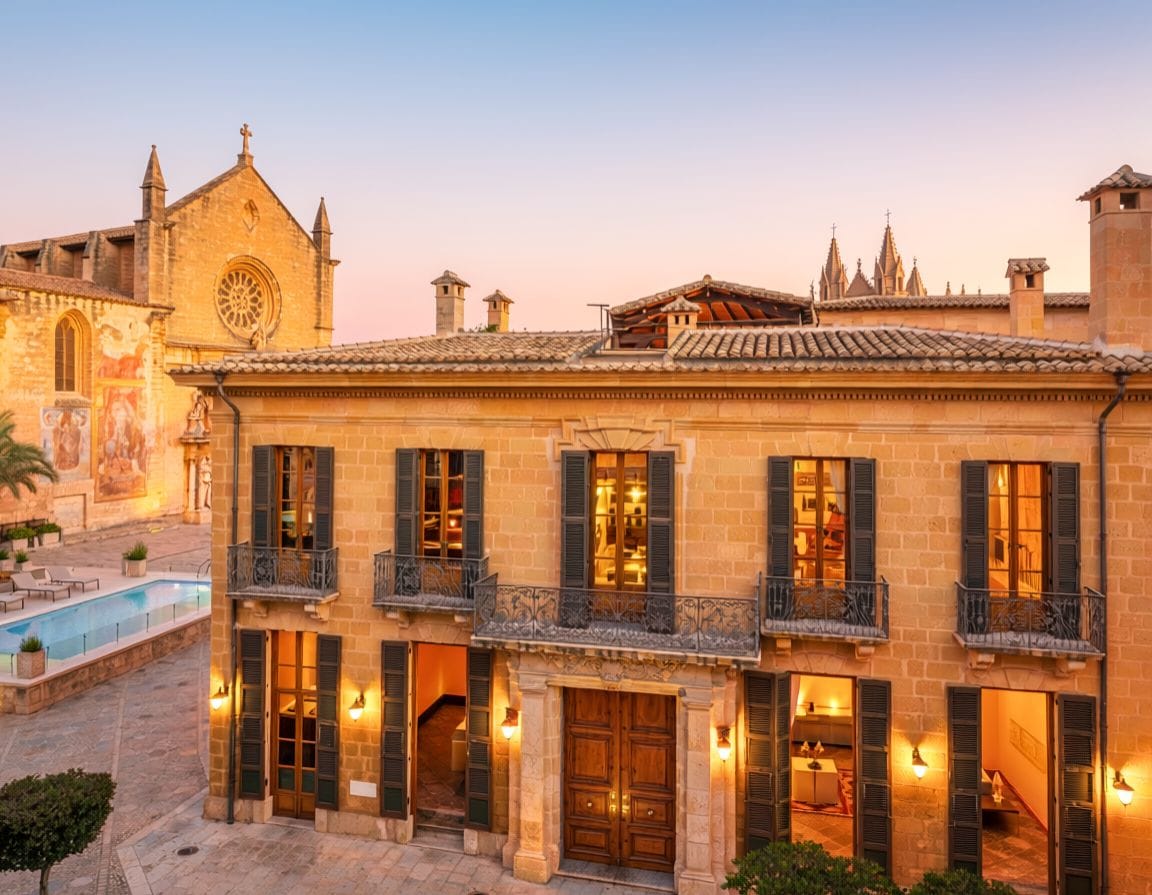
A five-star hotel in a 19th-century manor house on Plaça de Sant Francesc, about 300 m from the cathedral. Its 42 rooms and suites mix wooden beams, original frescoes and stucco with modern comforts. On the roof, a pool and bar look out over the rooftops of the old town. Choose it for a romantic break or a special occasion in the heart of the city.
Royal Palace of La Almudaina FAQ
Is the Royal Palace of La Almudaina worth visiting?
Yes, especially since the 2026 renovation. The palace tells the whole story of the island in one building, from the Arab citadel to today’s monarchy, and the new rooms, the marble lion and the throne room are real highlights. It’s also right next to the cathedral, so it’s easy to fit into a morning in the old town.
Is La Almudaina open on Mondays?
No, the palace is closed on Mondays. From Tuesday to Sunday it opens at 10am and closes at 6pm from October to March or 7pm from April to September, with last entry one hour before closing.
When is entry to La Almudaina free?
Entry is free on Wednesdays and Sundays from 3pm for EU citizens and residents and for Latin American citizens, with ID. Children under 5 go in free every day. Visitors from the UK who don’t live in the EU need a regular ticket.
How long does it take to visit the Almudaina Palace?
Plan around one and a half hours for a self-guided visit. Guided tours last about an hour. Add another hour or two if you want to see the S’Hort del Rei gardens and the cathedral next door.
Does the Spanish royal family live in La Almudaina?
Not permanently. La Almudaina is the official residence of the King in Mallorca and is used for receptions and ceremonies, while the royal family spends its private summer holidays at the Marivent palace in Palma.
When is the changing of the guard at La Almudaina?
The solemn changing of the guard takes place on the last Saturday of the month at 12 noon in front of the palace, weather permitting. It’s free to watch, but it can be cancelled for official events, so check before you go.

