Most holidaymakers only ever see this town through the window of an airport transfer coach. Give it a slow morning instead, and you may see the island differently.
Puerto del Rosario is the capital of Fuerteventura and the island’s busiest working town, home to around 43,000 people across the whole municipality. It isn’t a resort, and that’s the appeal. Instead of all-inclusive strips you’ll find whitewashed streets, locals chatting over coffee, a calm city beach and more outdoor sculptures than you can count. In this article you’ll find the best things to do in Puerto del Rosario, the beaches worth your time, tips for cruise ship passengers and the easiest day trips from the capital.
💰 Hotel Tamasite - A good-value hotel in the centre, next to the island’s main bus station.
🏨 Barceló Fuerteventura Castillo - A four-star seaside resort with pools and a marina in nearby Caleta de Fuste.
💎 Hotel El Mirador de Fuerteventura - A former parador on Playa Blanca with panoramic ocean views.
Where is Puerto del Rosario?
Puerto del Rosario sits on the east coast of Fuerteventura, roughly halfway between the dunes of Corralejo in the north and the long beaches of the Jandía peninsula in the south. Fuerteventura Airport is only about 6 km south of the city centre, so most visitors drive past the town within minutes of landing. The resort of Caleta de Fuste is around a 15-minute drive further south, while Corralejo is roughly 35-40 minutes away by car.
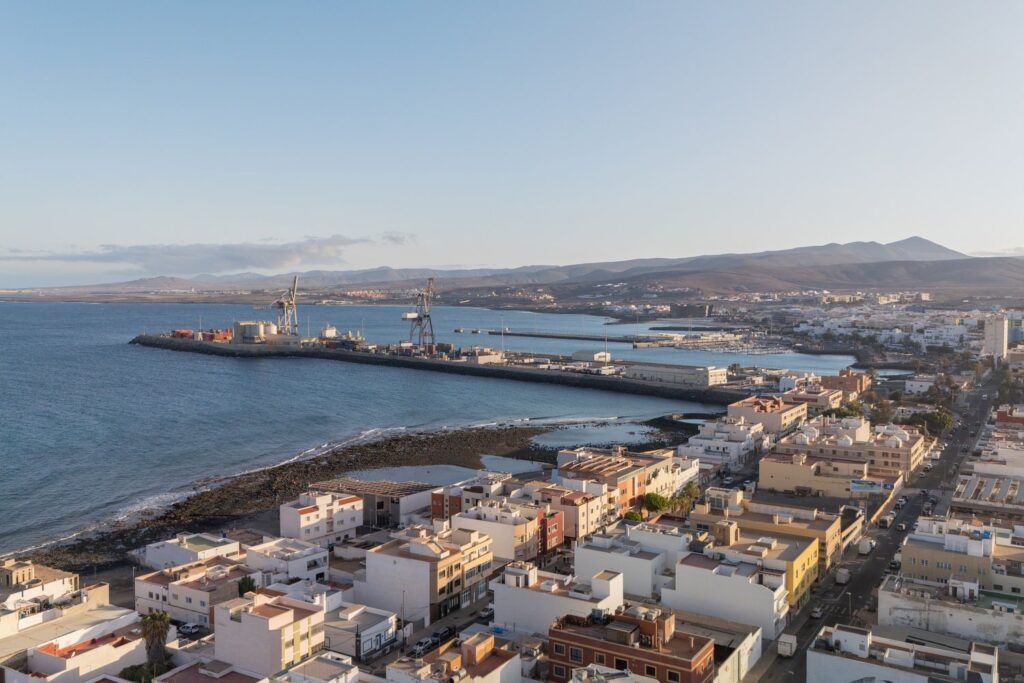
The city also has the island’s main harbour. Ferries link it with Las Palmas on Gran Canaria and with Santa Cruz on Tenerife, and cruise ships regularly tie up right next to the town centre. That makes Puerto del Rosario a natural gateway to the rest of the Canary Islands, even if few people plan to stay here for long.
From Puerto de Cabras to the capital of Fuerteventura
The town started life as a small fishing village with a sheltered natural harbour called Puerto de Cabras, or “Port of the Goats”. For centuries, it lived in the shadow of Betancuria, the ancient capital hidden in the mountains, and later of Antigua. As maritime trade grew, the port took over, and in 1860 it became the island’s capital.
In the 1950s the local authorities decided that a capital city deserved a more dignified name than “Port of the Goats”. They renamed it Puerto del Rosario, after the town’s patron saint, Our Lady of the Rosary. In the 20th century the harbour also earned another nickname, “Puerto de la Cal” (Port of Lime). Lime production was a major industry here, and you can still see the old kilns along the coast.
Is Puerto del Rosario worth visiting?
Yes, as long as you know what to expect. Puerto del Rosario won’t wow you with grand monuments, and a few hours are enough to see the highlights. What it offers instead is one of the most authentic towns in the Canary Islands and a glimpse of everyday life on Fuerteventura, away from the hotel pools and souvenir shops.
A half-day is ideal, or a full day if you like to take things slowly. You can wander the pedestrian streets, spot sculptures and murals, visit a free museum, have lunch with the locals and finish with a swim at Playa Chica. If you’re staying in Caleta de Fuste or Corralejo, it makes a pleasant change from the beach. It’s also a practical stop if you’re arriving by ferry or cruise ship.
Things to do in Puerto del Rosario
The city centre is compact and flat, so you can see everything on foot. Pick up a free tourist map at the information office, located near the harbour. It marks the main sights, sculptures and murals.
Hunt for statues in the open-air sculpture park
Puerto del Rosario calls itself a city-museum, and it’s easy to see why. Around 150 sculptures are scattered around its streets, squares, roundabouts and seafront. Many were created during the international sculpture symposiums held in the city, and the styles range from abstract metal shapes to playful figures and works inspired by island life.
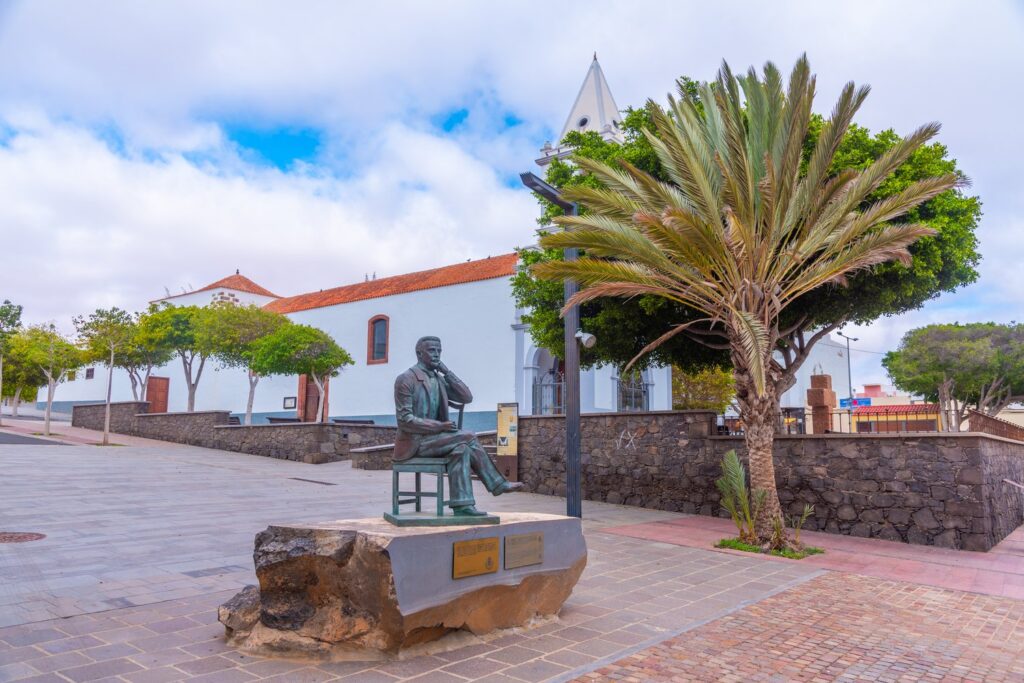
There’s no single route to follow, which is half the fun. Some pieces have small information panels, while others are left for you to interpret. The biggest concentration of sculptures is along the harbour front and the promenade, so that’s a good place to start your walk.
Follow the street art through the city centre
Alongside the sculptures, colourful murals cover many of the whitewashed walls in the centre. Street art projects have been transforming blank facades and side streets since around 2011, and new pieces keep appearing. You’ll see portraits, abstract designs, sea creatures and scenes from traditional Canarian life.
The murals are spread out, so it’s worth simply getting lost in the streets around Calle Primero de Mayo and the harbour. Bring your camera and comfortable shoes, because some of the best works are tucked away on quieter residential streets.
Church of Our Lady of the Rosary
The Iglesia de Nuestra Señora del Rosario (Church of Our Lady of the Rosary) is the town’s main parish church and the heart of the old Puerto de Cabras. Building work began in the 19th century. Today, the dark volcanic stone details stand out against the white walls. Look up at the bell tower. Its two bells were brought all the way from Marseille.
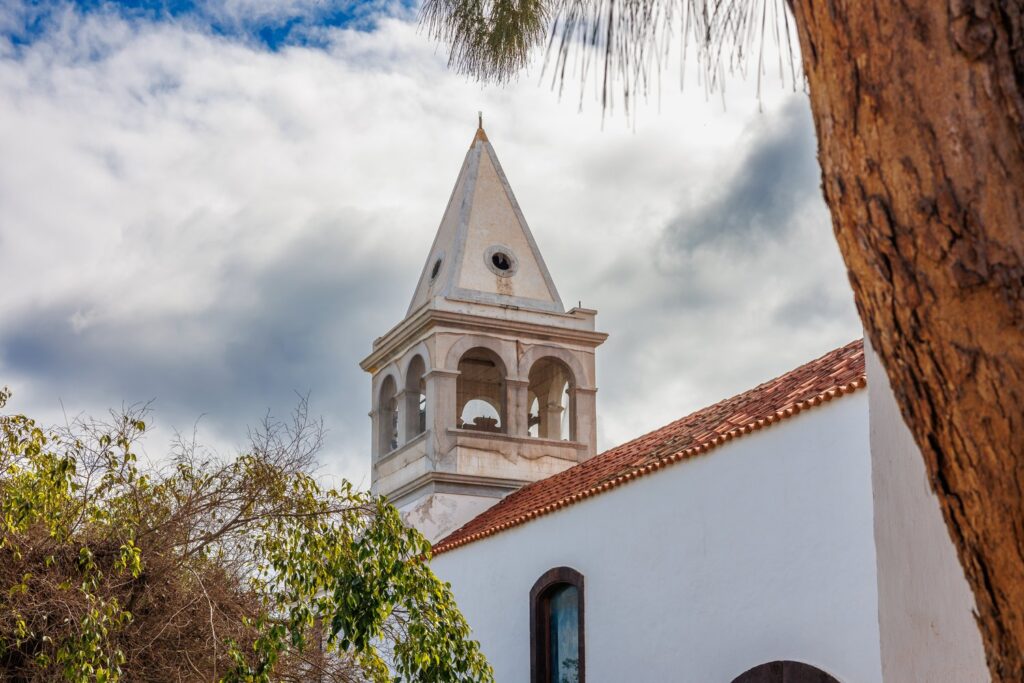
The interior is simple and calm, with a striking altar framed by a grey stone arch. The square in front of the church is a good spot to sit in the shade. If you visit in early October, you’ll catch the fiestas in honour of the town’s patron saint, with processions, concerts and plenty of local food.
Miguel de Unamuno House Museum
Right by the church, at Calle Virgen del Rosario 11, stands the Casa Museo Unamuno (Unamuno House Museum), set in the former Hotel Fuerteventura. The Spanish writer and philosopher Miguel de Unamuno stayed here in 1924, after Primo de Rivera’s dictatorship exiled him to the island. He spent several months on Fuerteventura before escaping to France, and he wrote passionately about its bare, rugged landscapes.
The museum recreates the rooms as they looked in his time, with period furniture, a typewriter and a phonograph, plus quotes from his writings about the island. A statue of the writer greets you at the entrance. Entry is free, but the museum is usually open on weekdays only, so plan your visit for Monday to Friday.
Juan Ismael Art Centre
The Centro de Arte Juan Ismael (Juan Ismael Art Centre) is the island’s leading space for contemporary art. It’s named after Juan Ismael, a surrealist painter born in La Oliva, in the north of Fuerteventura. The centre hosts temporary exhibitions, mostly by Canarian artists, as well as talks, workshops and film screenings.
The programme changes regularly, so check what’s on before you go. Even if modern art isn’t your thing, the building is a pleasant, air-conditioned break on a hot afternoon.
Walk the seafront promenade
One of the nicest things to do in Puerto del Rosario is simply to stroll along the seafront. The coastal promenade runs from the harbour past Playa Chica and the modern Palacio de Formación y Congresos, the city’s conference centre, and continues south towards Playa Blanca. It’s flat and easy, with sea views all the way and cafés at both ends.
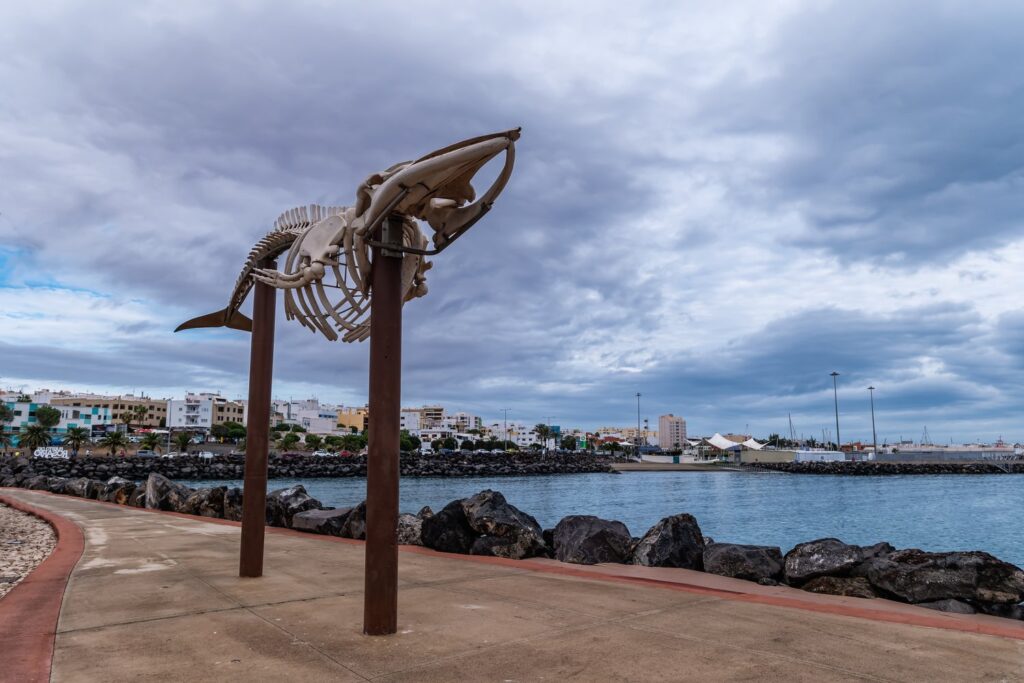
Next to Playa Chica, look out for the skeleton of a Bryde’s whale on display by the water, one of several whale skeletons on the island. Further south, keep an eye on the rocks for Barbary ground squirrels. These cheeky little animals were introduced from North Africa in the 1960s and now live wild across the island. Please don’t feed them, even when they beg.
See the old lime kilns
The lime kilns along the coast tell the story of the town’s old lime industry. Limestone was burnt in these round stone ovens and turned into lime, which was used to whitewash houses and shipped to the other islands. The kilns stayed in use until around the 1970s, when cement replaced lime in construction.
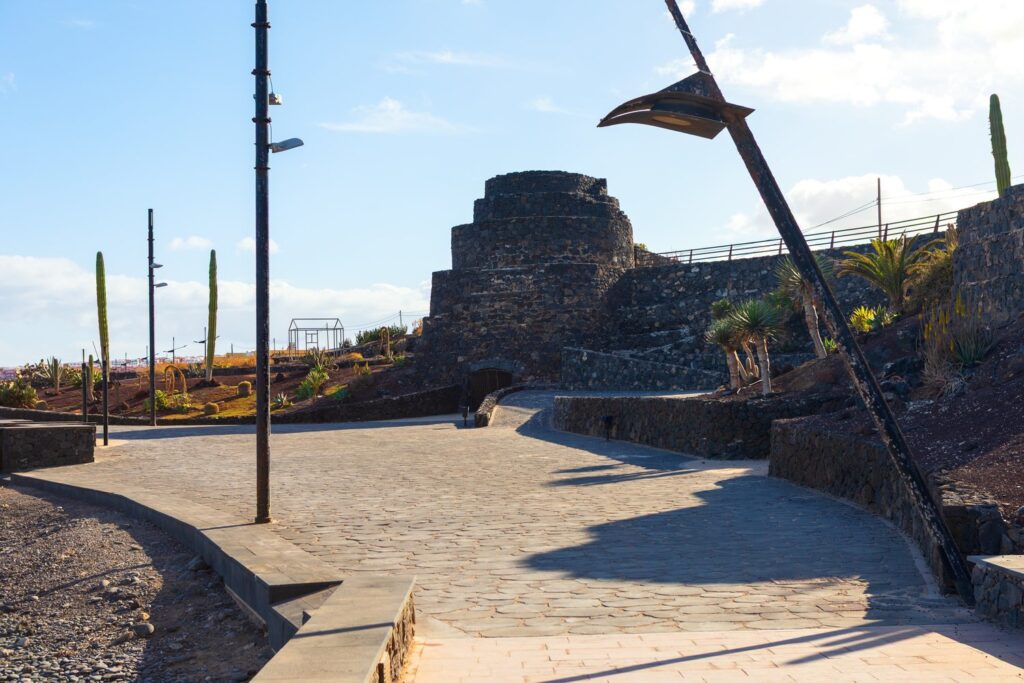
You’ll find several lime kilns within walking distance of the centre, including one just off Playa Chica and another along the path towards Playa Blanca. Further south, the El Charco lime kilns have an interpretation centre explaining how the whole process worked.
Race at Fuerteventura Gran Karting
If you’re travelling with older children or just fancy some speed, head to Fuerteventura Gran Karting on the outskirts of the city. Its track is around 1 km long, with fast straights and tight bends. There are also two-seater karts for younger passengers and a terrace where you can watch the races.
Beaches in Puerto del Rosario
Puerto del Rosario isn’t a beach resort, but you still have two very different city beaches to choose from. For the famous white dunes and turquoise water, you’ll need to head north to Corralejo or south to the Jandía peninsula.
Playa Chica
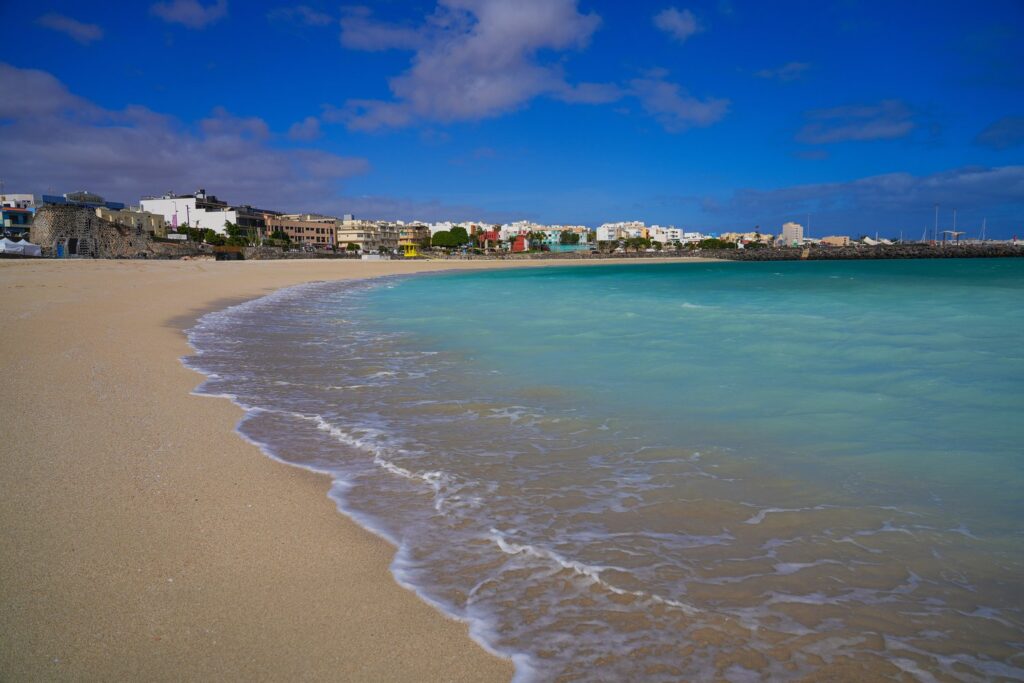
Playa Chica is the small urban beach right in the city centre, at the end of Calle Primero de Mayo. It’s only around 120 metres long, but the fine sand and calm waters make it ideal for a quick swim, especially with children. Thanks to the breakwater, the sea is usually gentle and clear.
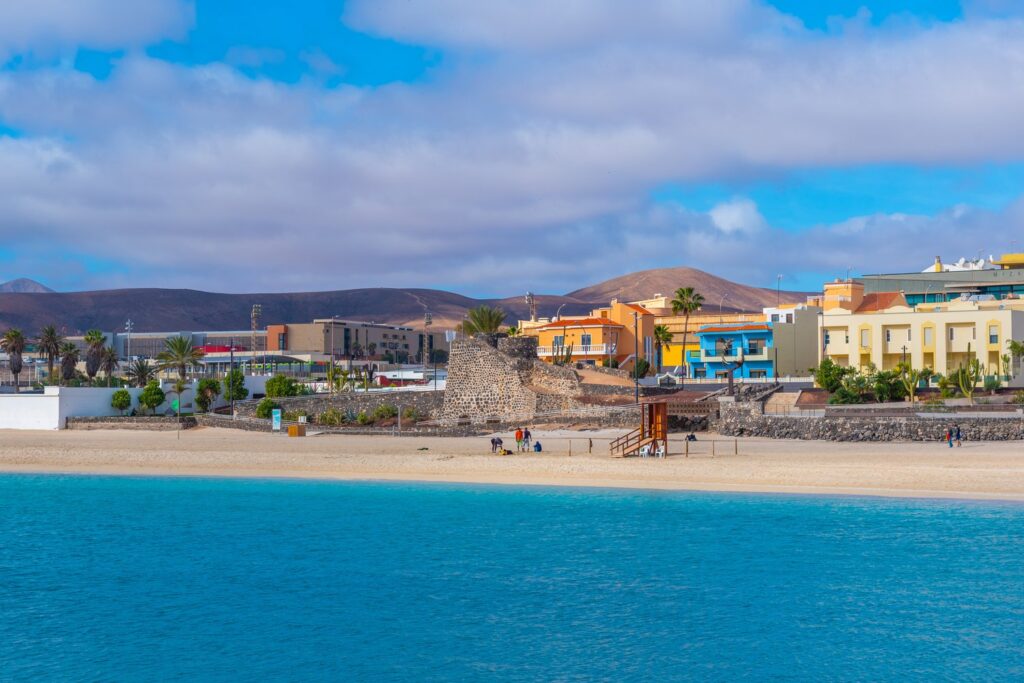
The beach has showers and toilets, and lifeguards are on duty during busy periods. Several restaurants and cafés sit close by, so it’s easy to combine a swim with lunch by the sea.
Playa Blanca
Playa Blanca is the main beach of Puerto del Rosario, about 2 km south of the centre and close to the airport. It’s around 500 metres long, mostly undeveloped and much wilder than Playa Chica. The sand is mixed with stones in places, and the Atlantic waves roll in with more force.
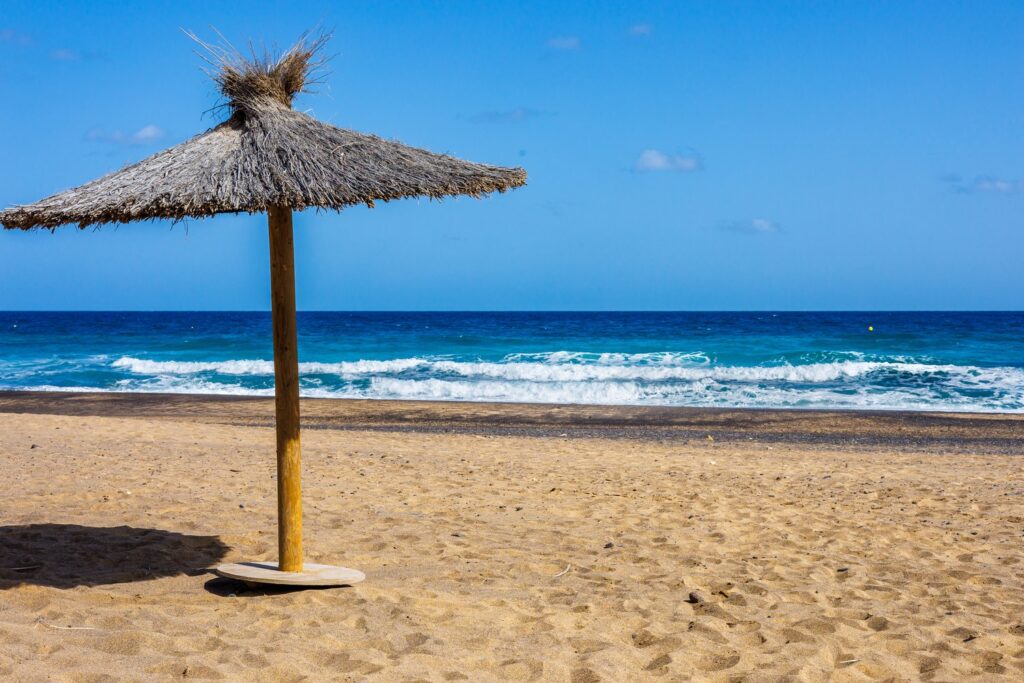
That makes Playa Blanca popular with surfers and kitesurfers, but not ideal for less confident swimmers. You can walk here along the promenade or drive and park at the southern end, where you’ll also find showers and toilets. The beachfront hotel overlooking the sand was once one of Spain’s state-run paradors.
Where should you eat in Puerto del Rosario?
Because the city caters to locals rather than tourists, you’ll find good, honest cooking here. Many restaurants serve classic Canarian dishes such as fresh fish, papas arrugadas (wrinkly potatoes with mojo sauce) and roast goat. Don’t leave without trying majorero cheese, the famous goat’s cheese with Protected Designation of Origin status from Fuerteventura.
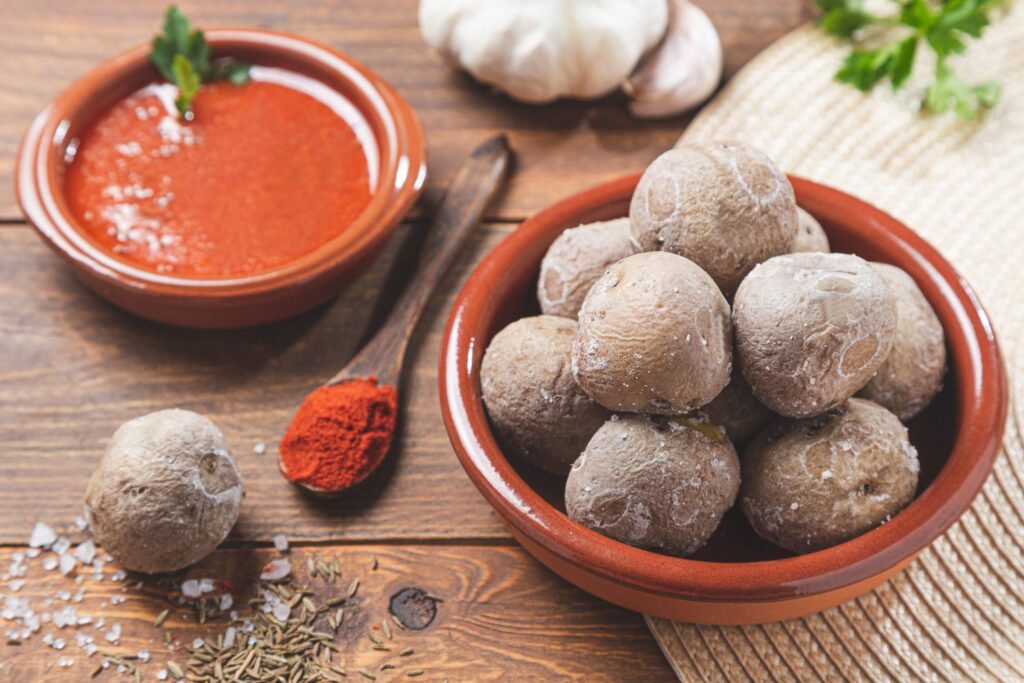
La Jaira, on Calle La Cruz, is a favourite for Canarian food and goat dishes, and it gets busy, so booking ahead is a good idea. For something more casual, Tasca El Perenquén serves small plates and has a balcony overlooking the ocean. The streets around the harbour and Playa Chica also have plenty of seafood restaurants and tapas bars.
Puerto del Rosario for cruise ship passengers
Puerto del Rosario is the island’s cruise port, and ships dock just a short walk from the centre. If you only have a few hours to spend, you can easily explore the town on foot. Walk from the port to the church and the Unamuno museum, follow the sculptures along the seafront and finish with a swim or a drink at Playa Chica.
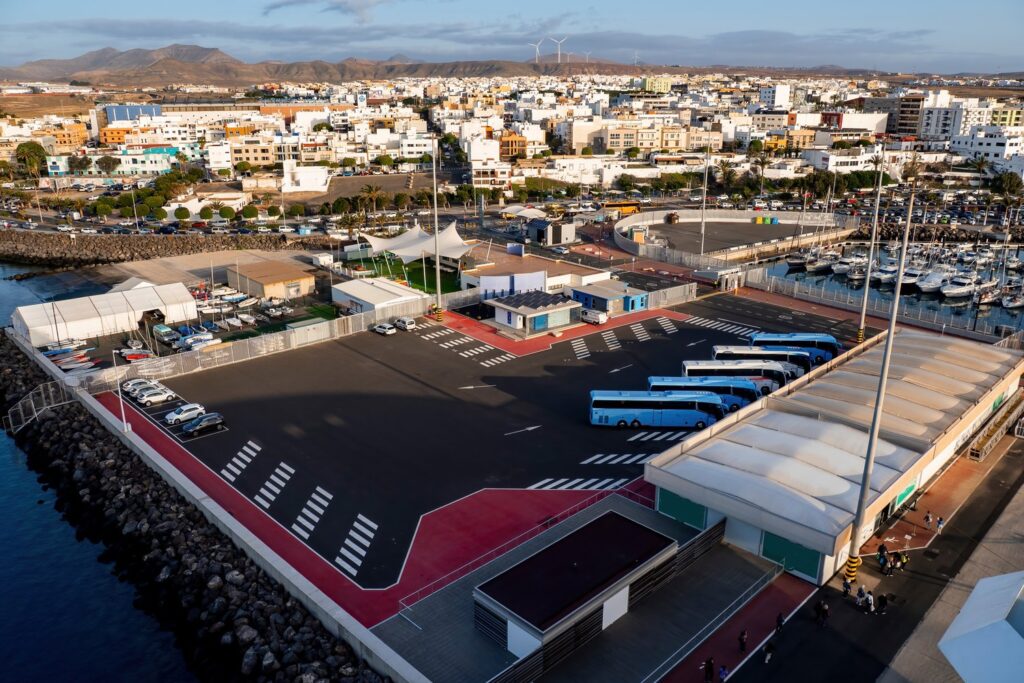
Cruise ship passengers who want to see more of the island usually head north. The most popular shore excursions visit the sand dunes of Corralejo, the village of La Oliva and the mountain road with views over the volcanic landscape. Always leave plenty of time to get back to the ship, especially if you’re travelling independently.
Day trips from Puerto del Rosario
Puerto del Rosario makes a practical base for exploring Fuerteventura, as most of the island is within an hour’s drive. The easiest way to get around is by hire car, although buses also connect the capital with the main towns.
Tefía and La Alcogida Eco-Museum - about 20 km inland, this open-air museum recreates traditional rural life in a group of restored farmhouses, with animals, crafts and bread-making.
Betancuria - the island’s ancient capital, set in a green valley among the mountains, with a historic church and quiet cobbled streets.
Corralejo - the lively northern resort, famous for the huge sand dunes of the Corralejo Natural Park and for boat trips to the tiny island of Lobos.
Caleta de Fuste - a family-friendly resort with a sheltered sandy bay, a marina and an 18th-century defence tower, just south of the capital.
Puerto Lajas - a small village just north of the city, with a long black sand beach that’s perfect for a walk.
Families heading south can also spend a day at Oasis Park Fuerteventura, the island’s biggest zoo and botanical garden near La Lajita.
How do you get to Puerto del Rosario and get around?
Getting here couldn’t be simpler. Fuerteventura Airport receives direct flights from across the UK and Europe, and the city centre is only a 10-minute drive or a short bus ride away. Taxis wait outside the terminal, and car hire desks are inside the arrivals hall.
The island’s public buses, run by Tiadhe, start from the bus station in Puerto del Rosario. Line 3 connects the city with the airport and Caleta de Fuste, line 6 runs to Corralejo in about 45 minutes, line 2 goes to Betancuria, and lines 1 and 10 head south to Morro Jable. If you’re island-hopping, Naviera Armas ferries sail from the harbour to Las Palmas de Gran Canaria and Santa Cruz de Tenerife.
When is the best time to visit Puerto del Rosario?
Thanks to its desert climate, Puerto del Rosario is pleasant all year round, with little rain and plenty of sunshine. Winter days are usually mild, around 20-22°C, while summer brings temperatures in the high 20s and strong trade winds. Those winds keep the heat bearable but can make the sea choppy, especially at Playa Blanca.
Autumn is a particularly good time to visit. The sea is still warm after the summer, and in early October the city celebrates its patron saint, Our Lady of the Rosary, with concerts, processions and street parties. Carnival in February is another lively time to be in the capital, and the Achipencos race is one of its highlights.
Hotels in Puerto del Rosario
Puerto del Rosario has only a handful of hotels, so it’s a good choice if you want a local feel, have an early flight or need easy ferry connections. If you want a beach holiday, nearby Caleta de Fuste offers more resorts. Here are three options for different budgets.
💰 Hotel Tamasite
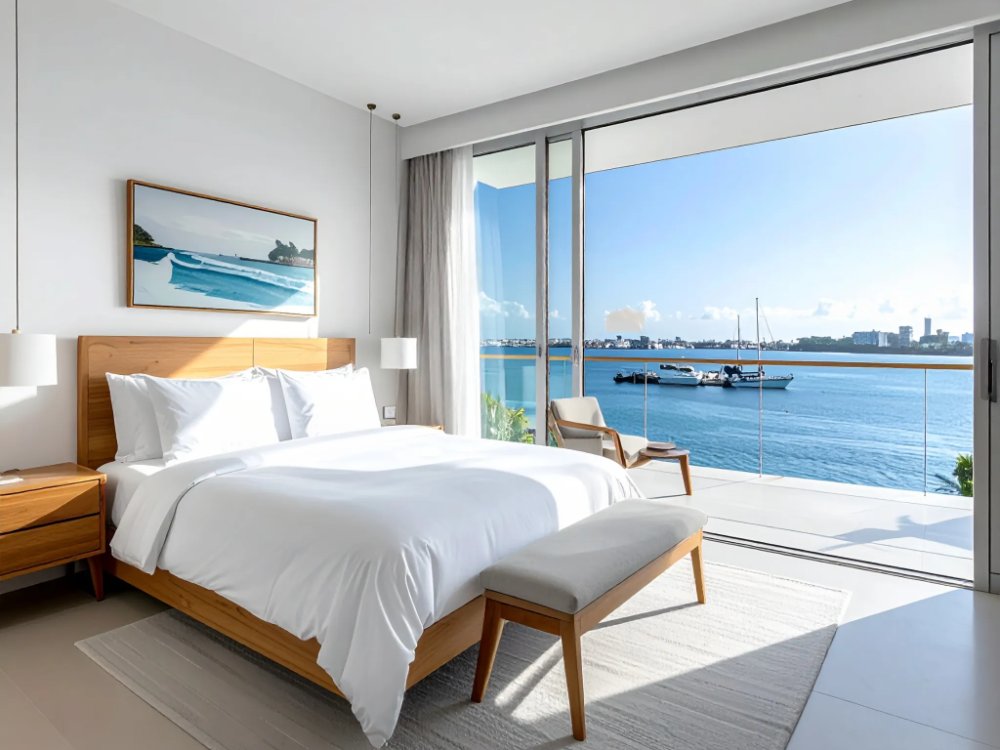
An intimate hotel in central Puerto del Rosario, around 200 metres from the Unamuno House Museum and right next to the island’s main bus station. Rooms have balconies, many with harbour views, and there’s a large rooftop solarium overlooking the sea. It’s a good-value base if you plan to explore the island by bus or catch an early ferry.
🏨 Barceló Fuerteventura Castillo
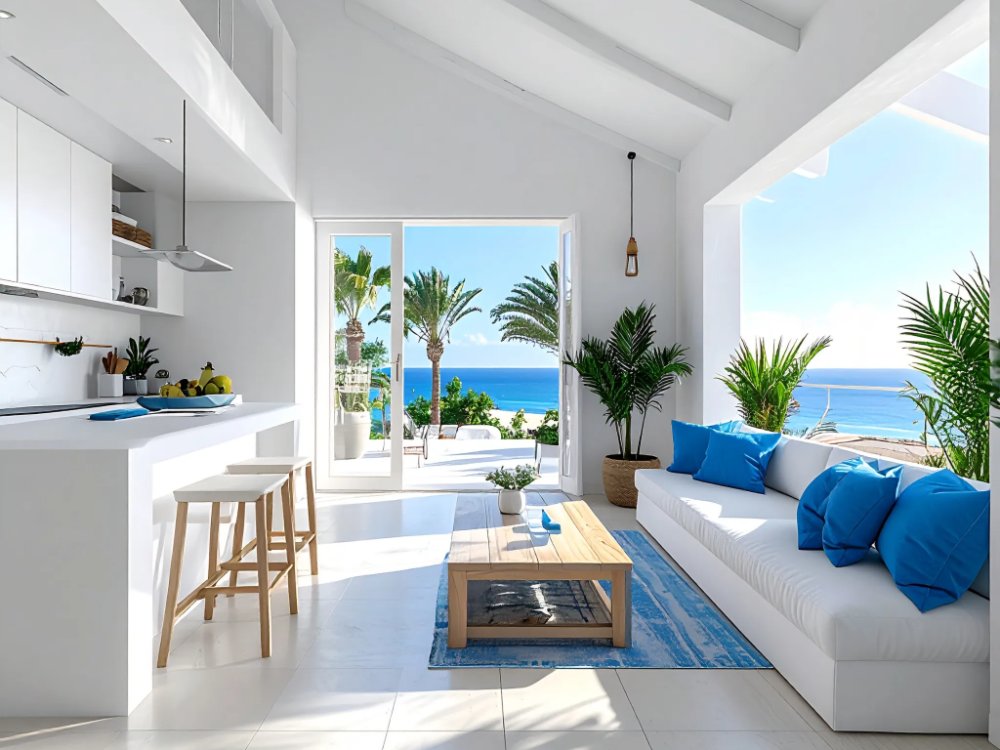
A four-star resort on Playa del Castillo in Caleta de Fuste, about a 15-minute drive from the capital. Its bungalows with balconies and kitchenettes sit right by the sea, surrounded by pools and gardens. There’s a thalasso wellness centre with a saltwater pool, plus a marina for windsurfing and diving, which makes it ideal for families and active couples.
💎 Hotel El Mirador de Fuerteventura
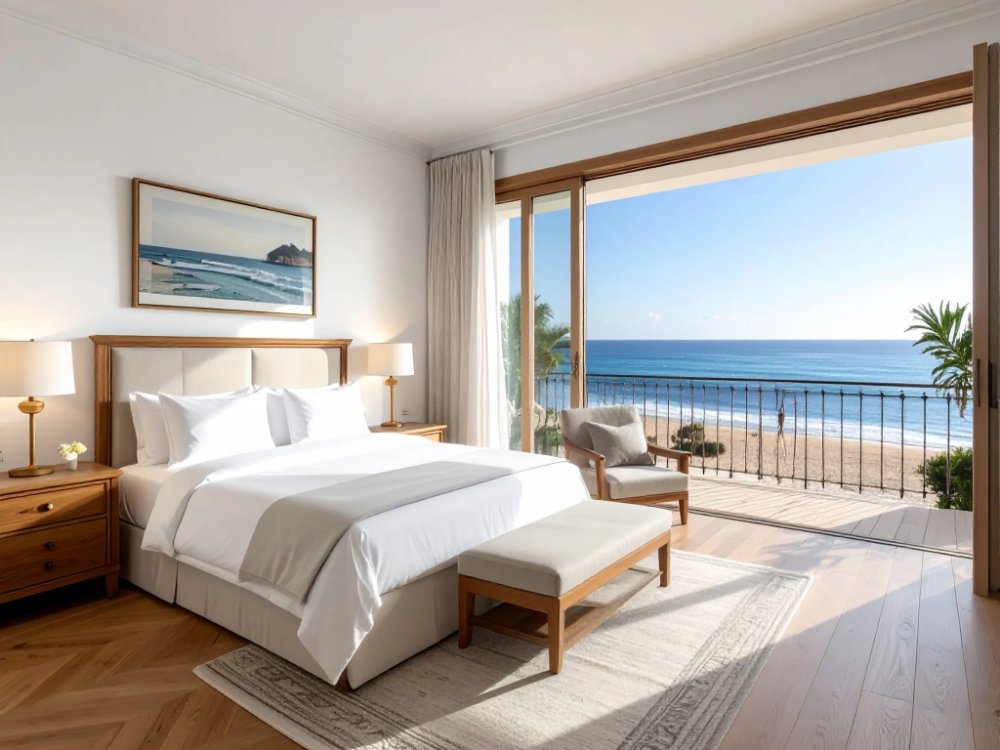
A four-star hotel right on Playa Blanca, a short drive or a pleasant walk along the promenade from central Puerto del Rosario. For years the building was a parador, part of Spain’s state-run hotel chain, and you can still feel it in its calm, elegant architecture and spacious sea-view rooms. The terrace and restaurant offer panoramic ocean views, perfect for a long dinner by the sea.

