Think this island is all package hotels and pool bars? Look past the resort strips and you’ll find a UNESCO-listed mountain range, a Gothic cathedral by the sea and coves you can only reach on foot.
Mallorca is the largest of the Balearic Islands, and it packs far more into its 3,640 square kilometres than most visitors expect. In a single week you can wander the narrow streets of a medieval capital, ride a wooden train through orange groves, swim in turquoise coves and hike a limestone ridge high above the Mediterranean Sea. Few islands mix Gothic architecture and dramatic mountain landscapes so closely. Planning a first beach holiday, a family trip or a hiking break? This guide gathers the best things to do in Mallorca, region by region, with practical tips on getting around, how many days you need and where to stay.
If this is your first Mallorca trip, a quick note on names: Mallorca is the Spanish and Catalan spelling, and Majorca is the traditional English one. They are the same island, so whichever version you type into a search, the things to do in Majorca below are exactly the same.
💰 Palau Sa Font - An intimate boutique hotel in a 16th-century palace, 5 minutes’ walk from La Seu Cathedral.
🏨 Son Brull Hotel & Spa - A design hotel in a restored former Jesuit monastery near Pollença.
💎 La Residencia, a Belmond Hotel - A legendary five-star hotel in two 16th- and 17th-century manor houses in the artists’ village of Deià.
Where to go in Mallorca - The island at a glance
Before you pick your things to do in Mallorca, it helps to picture the island’s layout. Palma de Mallorca, the capital, sits on a wide bay on the south-west coast, about 15 minutes from Palma airport. Along the north-west coast runs the Serra de Tramuntana, a wall of mountains dotted with stone villages. The north has long sandy beaches around Alcúdia and the dramatic headland of Cap de Formentor.
The east coast is the land of caves and small coves, with Porto Cristo as its best-known harbour. The south and south-east coasts hide the island’s most photographed calas, from Caló des Moro to Cala Mondragó, plus the long white dunes of Es Trenc. The flat interior, called Es Pla, is all almond orchards, windmills and beautiful towns built around a church square.
Distances look short on a map, but mountain roads are slow. Driving from Palma to Cap de Formentor or to the far east coast takes well over an hour, so base yourself in one or two areas rather than moving every night.
Palma de Mallorca - Cathedral, castle and tapas in the old town
Most itineraries start in Palma, and for good reason. The city mixes Gothic churches, Arab baths, modernist shopfronts and a buzzing food scene within walking distance of the harbour. You can easily spend two days here before heading out to the rest of the island.
Palma Cathedral (La Seu)
The first thing you see from the seafront is Palma Cathedral, known locally as La Seu. Work began after the Christian conquest of the island in 1229 and the cathedral was completed in 1601, almost four centuries later. Inside, look for Gaudí’s floating iron canopy above the altar and Miquel Barceló’s ceramic chapel, which looks like the inside of an underwater cave. The great rose window is one of the largest Gothic rose windows in the world.
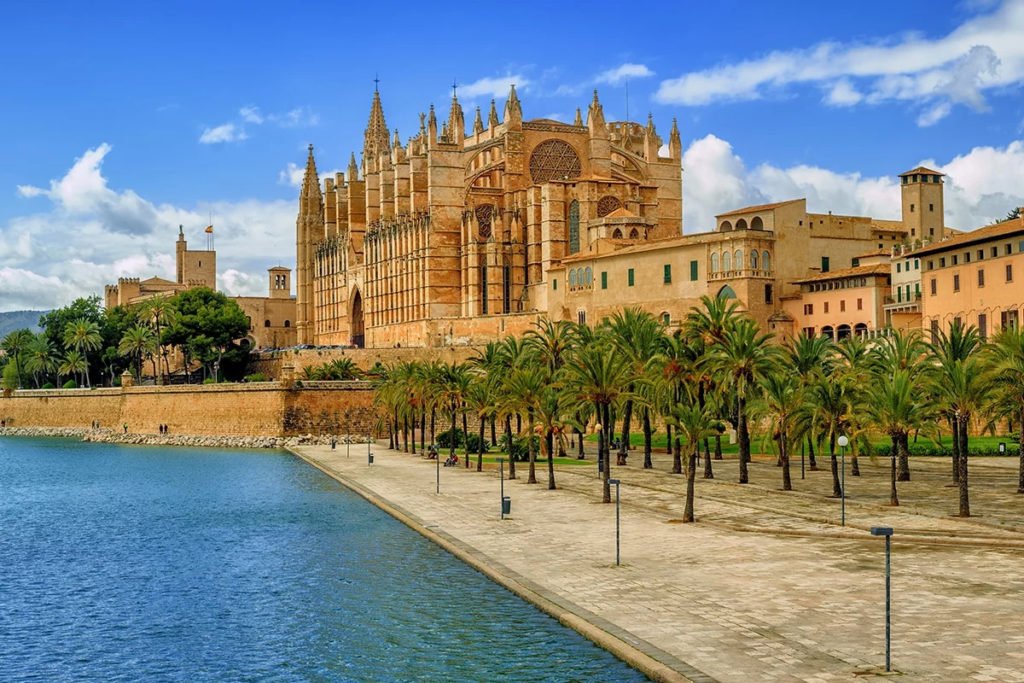
Go on a sunny morning, when coloured light pours through the stained-glass windows. Around 2 February and 11 November, the sun projects the image of the main rose window onto the wall below the opposite one, an event locals call the Festa de la Llum. Book your ticket in advance in summer, as the queue along the seafront can be long when cruise ships are in port.
Royal Palace of La Almudaina
Right next to the cathedral stands the Royal Palace of La Almudaina, a former Moorish fortress rebuilt as the royal palace of the kings of Mallorca. Today it is still an official residence of the Spanish royal family, used for ceremonies and receptions. The tour takes in Gothic halls, tapestries and the small Chapel of Saint Anne. Afterwards, stroll through the S’Hort del Rei gardens below the walls.

Bellver Castle
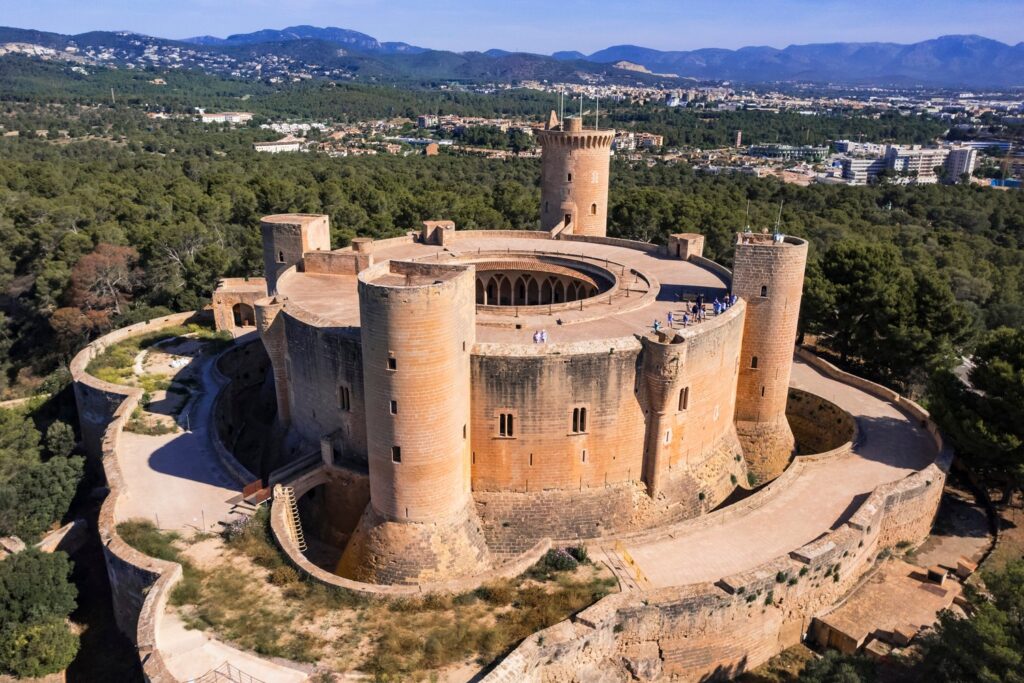
About three kilometres west of the centre, on a pine-covered hill, rises Bellver Castle. Built in the early 14th century for King James II of Mallorca, it is one of the very few circular castles in Europe. Climb to the roof terrace for panoramic views over the bay, the cathedral and the Tramuntana mountains. You can walk up through the forest in about 30 minutes or take a taxi to the gate.
Old town, Santa Catalina and the art museums
Palma‘s lovely old town is best explored without a plan. Wander the narrow cobbled streets behind the cathedral, peek into patios of noble houses and stop at Plaça Major, the main square. In the evening, walk west to Santa Catalina, a former fishermen’s quarter full of tapas restaurants and cocktail bars.

The Mercat de Santa Catalina, which opened in 1920, is Palma‘s oldest food market. Come for a mid-morning coffee at one of the counters and try ensaïmada, the island’s spiral pastry, or a slice of sobrassada sausage on bread. It’s one of the easiest ways to eat the way locals do.
Art lovers have two strong reasons to stay longer. Es Baluard, set inside a Renaissance bastion on the old city walls, shows modern and contemporary art with sea views from its terraces. The Fundació Pilar i Joan Miró in Cala Major preserves the studios where Joan Miró worked during the most productive period of his later life, from 1956 until his death in 1983.
Palma Aquarium
If you are travelling with children, Palma Aquarium near Can Pastilla makes an easy half-day trip. Its Big Blue tank is one of the deepest shark tanks in Europe, and there’s also a jungle zone with outdoor play areas for younger children.

Palma is also the most practical base for a first visit, with the best public transport links on the island. Book your hotel early for July and August, when the old town fills up fast.
See available places to stay in Palma
Serra de Tramuntana - Mountain villages on the west coast
The Tramuntana mountains run for about 90 kilometres along the north-west coast and are a UNESCO World Heritage Site, listed in 2011 for their cultural landscape of dry-stone terraces, watermills and ancient paths. They hold more than 200 hiking routes, including the long-distance GR 221, known as the Dry Stone Route. Even if you are not a hiker, the drive along this rugged coastline is one of the most beautiful in Spain, with stunning mountain views on one side and the sea on the other.
Valldemossa
Valldemossa is the most visited village in the mountains and lies only about 30 minutes from Palma. Carthusian monks arrived here in 1399, and in the winter of 1838 the composer Frédéric Chopin rented a cell in the Royal Charterhouse together with the writer George Sand. Her book “A Winter in Majorca” made the village famous. Today you can visit the cells, the pharmacy and the gardens, then wander streets lined with stone houses and flowerpots.
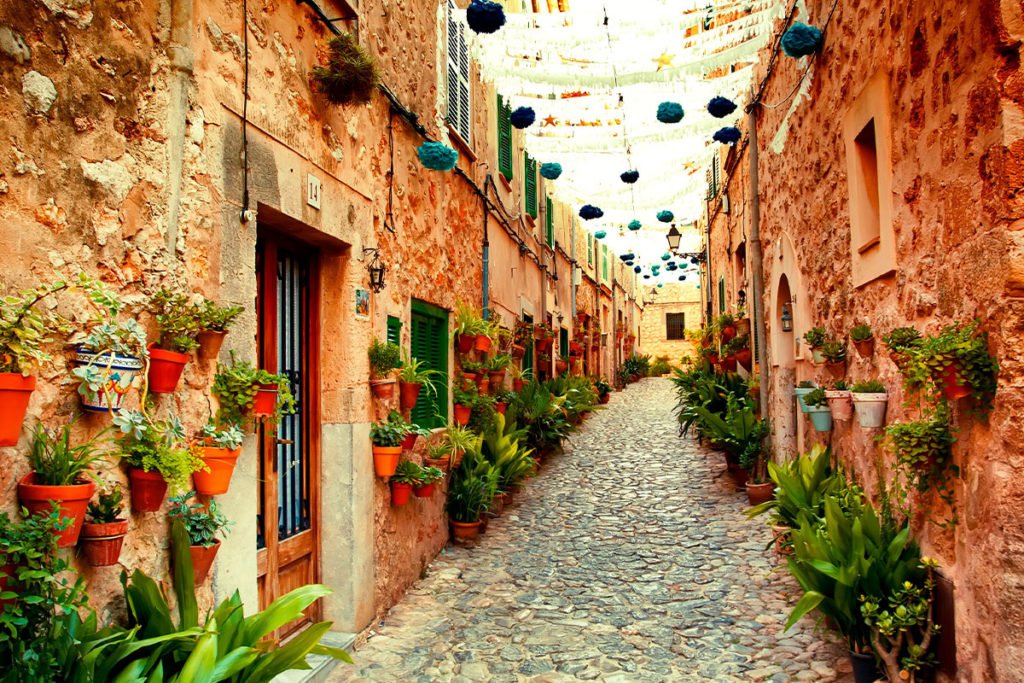
Look out for small ceramic tiles on many front doors. They honour Santa Catalina Thomàs, a 16th-century nun born in Valldemossa and the only saint from Mallorca. Go early in the morning or late in the afternoon, as the car park fills by mid-morning.
Deià
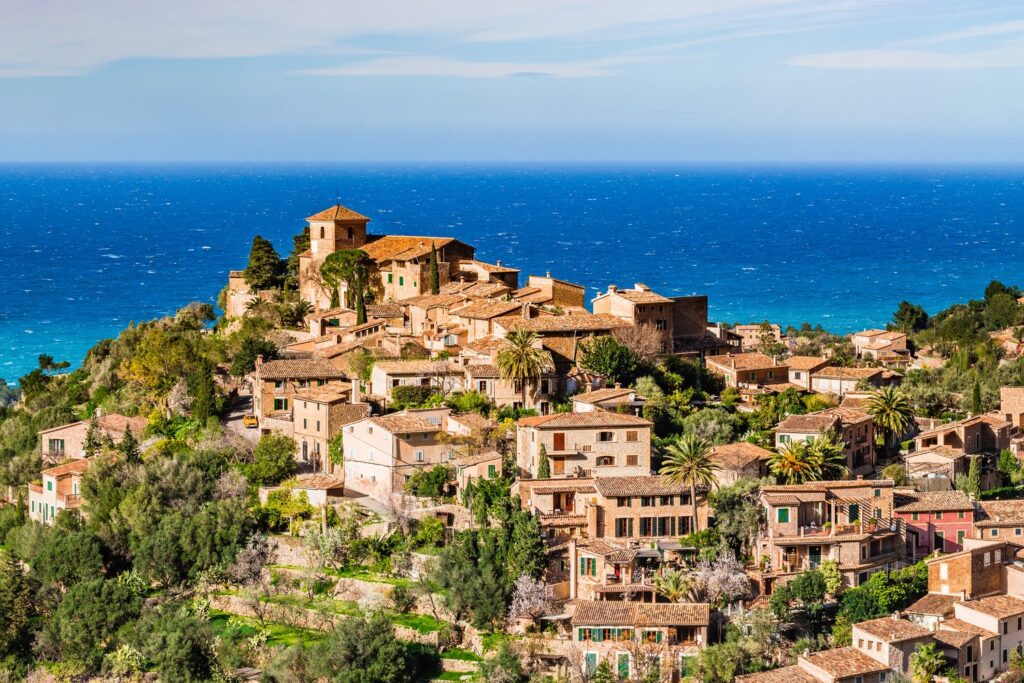
A few bends further along the coast, Deià clings to a hillside above the sea. The poet and novelist Robert Graves settled here in 1929, and his home, Ca n’Alluny, is now a small museum. Graves is buried in the churchyard at the top of the village, which also has wonderful sea views. Follow the path down to Cala Deià, a rocky beach with clear water and the seafood restaurant Ca’s Patró March, which appeared in the TV series “The Night Manager”.
Sóller and Port de Sóller
Sóller sits in a valley of orange trees, surrounded by peaks. Its town centre revolves around Plaça de sa Constitució, a market square with cafés and the modernist façade of the Church of Sant Bartomeu. The most charming way to arrive is on the old wooden train from Palma, which takes about an hour and crosses the mountains through tunnels, orange and olive groves.

FUN FACT: The Sóller railway opened in 1912 and still runs with its original wooden carriages.
From Sóller, a vintage tram rattles down to Port de Sóller, a horseshoe-shaped bay with a sandy beach, seafood restaurants and boat trips along the coast. The port is a great base for exploring the north-west, and the sunsets from the lighthouse at Cap Gros are worth the short climb.
See available places to stay in Port de Sóller
Fornalutx, Sa Calobra and Lluc Monastery
Just above Sóller, Fornalutx is often called one of the prettiest villages in Spain, with steep stone lanes and views over the citrus valley. Further north, the road to Sa Calobra is one of the most famous hairpin roads in the world. It drops all the way down to the sea in a series of tight bends, including a loop that passes under itself. At the bottom, a short walk through rock tunnels leads to the mouth of the Torrent de Pareis gorge, where a pebble beach sits between vertical cliffs.
On the way back, stop at the Sanctuary of Lluc, the spiritual heart of the island. Pilgrims have come here for centuries to see the Black Madonna, and the boys’ choir Els Blauets still sings in the basilica. It is also a good starting point for walks in the natural park around the monastery.
Cap de Formentor and the north of the island
The north of Mallorca combines Roman history, long beaches and one of the most spectacular viewpoints in the Mediterranean. Its shallow bays make it ideal for families, and it is a good choice if you want sandy beaches and day trips in the same week.
Cap de Formentor
The narrow peninsula of Cap de Formentor is the island’s northernmost point. A winding road leads past the Mirador Es Colomer, where the cliffs fall straight into the sea, to a lighthouse built in 1863. In summer the last stretch to the lighthouse is usually closed to private cars during the day, so check the current rules or take the bus from Port de Pollença. Halfway along the peninsula, Playa de Formentor (Formentor beach) is a strip of fine sand backed by pine trees, with calm water that is perfect for swimming.

Pollença and Port de Pollença
The inland town of Pollença has a lovely old town and a challenge for your legs: the 365 stone steps of the Calvari, one for every day of the year. At the top, a small chapel and panoramic views over the bay reward the climb. The Sunday market fills the town square with local produce and crafts. Down on the coast, Port de Pollença has a long promenade lined with pine trees, a beach of golden sand and a quieter feel than the big resorts.
Alcúdia
Alcúdia is two places in one. The old town is surrounded by 14th-century walls, and just outside them lie the ruins of Pollentia, the Roman city founded in 123 BC. The modern resort of Port d’Alcúdia, a short drive away, has one of the longest beaches on the island, with golden sand, shallow water and rows of sun loungers. Families can also cool off at Hidropark, a water park near the beach.
See available places to stay in Alcúdia
Caves of Drach and the east coast
The east coast of Mallorca is softer and greener than the north-west, with small fishing harbours and a limestone underground world. This is where you will find two of the most popular Mallorca attractions, both just outside Porto Cristo.
Caves of Drach
The Caves of Drach stretch for more than a kilometre underground and end at Lake Martel, one of the largest underground lakes in the world. The visit finishes with a short classical music concert played from boats gliding across the lake, and afterwards you cross the lake by boat yourself. Tickets are sold for timed entries and sell out in summer, so reserve ahead. Read more in our guide to the caves in Mallorca.

Caves of Hams and Porto Cristo
A few minutes away, the Caves of Hams owe their name to the hook-shaped stalactites inside (hams means fishhooks in Mallorcan). The visit includes a sound and light show on an underground lake. Afterwards, spend an hour in Porto Cristo, a small town on a narrow inlet with a sandy cove, fishing boats and restaurants nearby serving the catch of the day.
Cala Millor, Cala Agulla and Artà
North of Porto Cristo, Cala Millor and Sa Coma are busy family resorts with wide beaches. For something wilder, head to Cala Agulla near Cala Ratjada, a sandy cove fringed with pine woods. Inland, the hilltop town of Artà is crowned by a fortified sanctuary with views across the whole north-east.
Best beaches in Mallorca - From Es Trenc to Caló des Moro
Mallorca has more than 200 beaches and coves, so you’ll never run out of places to swim. The best beaches are on the south and south-east coasts, where pine-fringed calas cut into the rocks. Here are the ones most worth a detour.
Es Trenc beach
Es Trenc beach is a long strip of white sand and dunes on the south coast, protected as part of a natural park. There are no high-rise hotels behind it, only salt flats and scrubland, so its natural beauty feels untouched compared with the resorts. The water is shallow and turquoise, and you will only find sun loungers in a few spots. Bring shade, water and snacks.

Caló des Moro and Cala s’Almunia
Caló des Moro is the cove you have probably seen on Instagram: a tiny sandy cove between pine-covered cliffs with water like glass. You can only reach it on foot, and in summer it gets very crowded. Arrive before 9am, and do not miss the old fishermen’s huts at Cala s’Almunia on the path. For a quieter option, head to Cala Llombards nearby.
Mondragó Natural Park
Cala Mondragó lies inside the Mondragó Natural Park, between Santanyí and Cala d’Or. Two sandy coves, S’Amarador and Cala Mondragó, are linked by a short coastal path. There is a paid car park, a few beach bars and easy walking trails, which makes it a great choice for families and nature lovers.
Cala d’Or, Cala Figuera and Cala Pi
The resort of Cala d’Or is built around a string of small coves. Cala Gran is the largest, Cala Esmeralda is famous for its emerald water, and Cala Ferrera has the most facilities. A short drive south, Cala Figuera is a picture-perfect fishing village where boats still moor in a narrow fjord-like inlet. Further west, Cala Pi is a deep, narrow cove reached by a staircase from the clifftop, with a watchtower above it.

Not far from Santanyí, look out for Es Pontàs, a natural rock arch standing in the sea. On Wednesdays and Saturdays, the market in Santanyí is a good stop for local cheese, olives and ceramics.
Mallorca attractions for families
Travelling with children? Some of the most fun things to do in Mallorca are aimed at families, and they go well beyond the pool. Our guide to water parks in Mallorca compares the options in detail. Western Water Park near Magaluf has a Wild West theme and some of the steepest slides on the island. Aqualand El Arenal is close to Palma and suits younger children.
Marineland Mallorca in Costa d’en Blanes has sea lion, dolphin and parrot shows. Safari Zoo Mallorca near Sa Coma lets you drive through enclosures with zebras, rhinos and giraffes. In Magaluf, Katmandu Park has an upside-down house and adventure golf. For family-friendly hotels, see our list of family hotels in Mallorca.
Boat trips, wine tasting and other things to do in Mallorca
Some of the best views of the island are from the water. A boat trip from Port de Sóller to Sa Calobra follows cliffs that you cannot reach by road. From Sant Elm, boats cross to Dragonera, an uninhabited island and natural park known for its lizards and seabirds. Catamaran cruises from Palma combine swimming stops with snorkelling and paddleboarding. From Colònia de Sant Jordi, you can sail to the Cabrera Archipelago National Park.
The island also produces excellent red and white wines. Most wineries are around Binissalem in the centre, and many offer wine tasting and wine tours. Bodega Ribas in Consell, founded in 1711, is one of the oldest wineries on the island. Combine a tasting with lunch in a cellar restaurant, and try local dishes such as tumbet or pa amb oli.
For something special, a sunrise or sunset hot air balloon flight lasts about an hour, drifting over almond orchards and inland villages. Cyclists come from all over Europe to climb the Tramuntana passes, and in late January and February the whole island turns white and pink with almond blossom.
How many days do you need in Mallorca?
A long weekend is enough for a taster of the top things to do in Mallorca: two days in Palma and a day trip to Valldemossa, Deià and Sóller. With four or five days you can add the north, with Cap de Formentor and Alcúdia, or the caves and coves of the east. To see the whole island at a relaxed pace, plan seven to ten days and split your stay between two bases. With two weeks, you can slow right down and spend three or four nights in each area.
A simple 7-day Mallorca itinerary could look like this. Spend days one and two in Palma, then take the train to Sóller on day three. On day four, drive the west coast through Deià and Valldemossa. Day five is for Sa Calobra and Lluc, day six for Cap de Formentor and Alcúdia, and day seven for the Caves of Drach and a cove on the south-east coast.
Getting around Mallorca - Car hire, buses and the Sóller train
Hiring a car is the easiest way to reach hidden beaches, mountain villages and viewpoints. You can compare car rental in Mallorca before you arrive and pick the car up at Palma airport. Keep in mind that parking is limited in Valldemossa, Deià and at popular coves, so start early and use the marked car parks.
Public transport is better than many people think. The TIB bus network connects Palma with nearly every town, and a direct bus runs from Palma airport to the city centre. Trains link Palma with Inca, Sa Pobla and Manacor, and the historic railway runs to Sóller. If you are coming from mainland Spain, there are ferries from Barcelona, Valencia and Dénia, which you can compare and book online.
When is the best time to visit Mallorca?
The best months for visiting Mallorca are May, June, September and early October. The sea is warm, the days are long and the crowds are smaller than in high season. Like the rest of the Balearic Islands, Mallorca has a Mediterranean climate with hot, dry summers and mild winters. July and August are hot, often above 30°C, and the beaches and roads are at their busiest. Winter is mild and quiet, perfect for hiking and city breaks, although many beach hotels close between November and March.
Hotels in Mallorca
Where you stay decides which things to do in Mallorca are within easy reach. Palma is best for culture and public transport, the north and east coast for beach holidays with children, and the Tramuntana villages for peace, hiking and views. Below are three hotels we like, from a boutique bargain in Palma to one of the most famous hotels on the island. For more ideas, see our lists of luxury hotels in Mallorca and adults-only hotels in Alcudia.
💰 Palau Sa Font
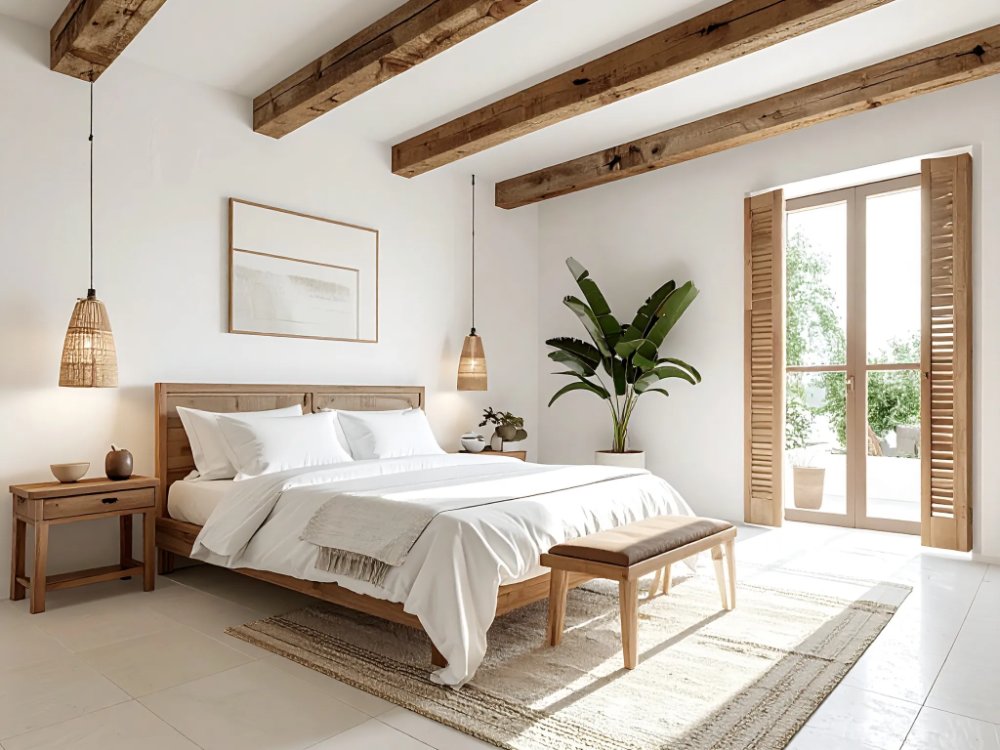
An intimate boutique hotel in a 16th-century palace in Palma‘s old town, a 5-minute walk from the cathedral. Rooms are bright, modern and air-conditioned, and there is a courtyard with a small pool and a rooftop terrace with sunset views. It is one of the best-value boutique hotels in central Palma and especially popular with couples who want to explore the city on foot.
🏨 Son Brull Hotel & Spa
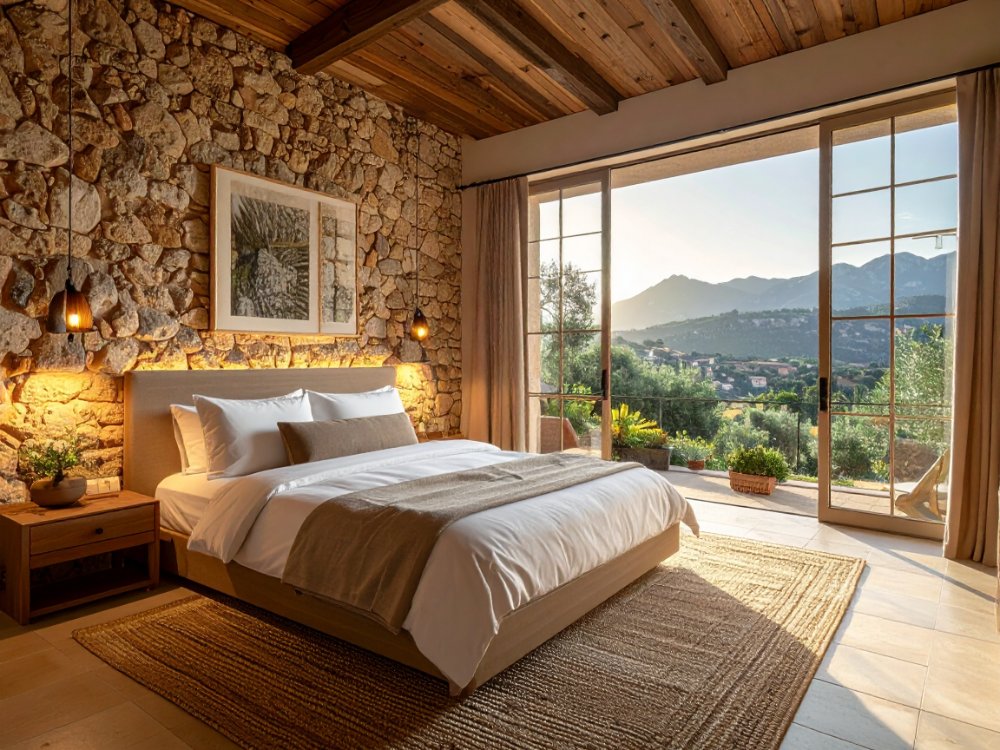
A design hotel in a restored former Jesuit monastery among olive groves and vineyards near Pollença, in the north of the island. Expect stylish rooms, two outdoor pools, tennis courts and a highly regarded restaurant. Surrounded by the Tramuntana mountains and close to the beaches of Alcúdia, it is a perfect base for travellers who want both countryside calm and easy day trips.
💎 La Residencia, a Belmond Hotel
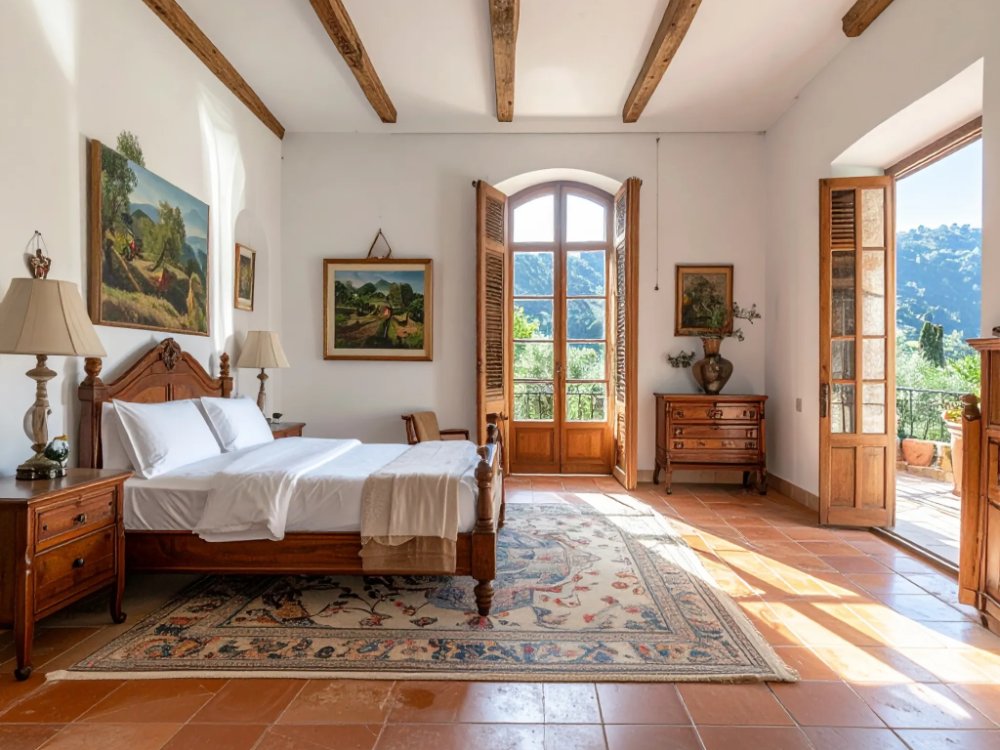
A legendary five-star hotel in two 16th- and 17th-century manor houses on the slopes of the Serra de Tramuntana in Deià. The El Olivo restaurant is set in an old olive mill, and the hotel owns original works by Joan Miró as part of a large art collection. With a sculpture garden, two pools and a spa with mountain views, it is ideal for a special occasion or a romantic escape.
Mallorca FAQ
Are Majorca and Mallorca the same place?
Yes, they are the same island. Mallorca is the Spanish and Catalan name, while Majorca is the older English spelling that is still common in the UK. You will see both spellings on signs, in brochures and in flight searches.
What is Mallorca famous for?
Mallorca is famous for its beaches and turquoise coves, but also for Palma Cathedral, the UNESCO-listed Serra de Tramuntana and the Caves of Drach. It is known for ensaïmada pastries, sobrassada sausage and local wine, and for its links with Chopin, Robert Graves and Joan Miró.
Which is the nicest part of Mallorca?
For scenery, the north-west around Sóller, Deià and Valldemossa is hard to beat, with mountains, stone villages and sea views. For beaches, the south-east coast between Santanyí and Cala d’Or has the most beautiful beaches and coves. Families often prefer the shallow bays of Alcúdia and Port de Pollença in the north.
How many days is enough in Mallorca?
Three days is enough to see Palma and the highlights of the Tramuntana, but a week lets you explore the whole island without rushing. With seven to ten days, you can split your stay between Palma or the west coast and a beach base in the north or east.
Do you need a car in Mallorca?
You do not need a car for Palma, which is easy to explore on foot and by bus. To reach hidden coves, mountain villages and viewpoints such as Sa Calobra, a hire car gives you much more freedom. Buses and the Sóller train cover the main towns if you prefer not to drive.
What is the best month to visit Mallorca?
June and September are the best months for most visitors, with a warm sea and fewer crowds than in July and August. May and October are ideal for hiking, cycling and sightseeing. February is quiet but beautiful, when the almond trees are in blossom.

