Torremolinos is where package holidays on the Costa del Sol began. In the 1950s and 1960s, this small fishing village between Málaga and Benalmádena drew film stars, writers and the first hotels on the coast. Today it’s a busy resort town of about 70,000 people with long sandy beaches, a pedestrian shopping street and some of the best fried fish in Andalusia. It’s also just a short train ride from Málaga Airport, so you can be on the sand an hour after landing.
In this article you’ll find the best things to do in Torremolinos, from the old town and Calle San Miguel to La Carihuela, Parque de la Batería and the beaches. You’ll also get tips on day trips, nightlife, markets and where to stay.
💰 tent Torremolinos - A simple, good-value hotel in the town centre, close to Calle San Miguel.
🏨 Hotel Ocean House Costa del Sol by Grupotel - A four-star beachfront hotel in Montemar, near La Carihuela.
💎 Medplaya Hotel Pez Espada - The iconic seafront hotel from 1959, with gardens leading to the beach.
Things to do in Torremolinos - Is it worth visiting?
Torremolinos still has a reputation from the 1970s and 1980s, when high-rise hotels went up fast and cheap package deals filled them. Some of that remains. You’ll see concrete apartment blocks, English breakfasts and souvenir shops. But the town has changed a lot. The seafront has been rebuilt, the promenade runs for kilometres, and the old fishing district of La Carihuela is one of the nicest places to eat on the whole coast.
So, is it worth it? Yes, if you want an easy beach holiday with good transport links, affordable prices and plenty to do without a car. The things to do in Torremolinos are simple pleasures: long walks by the sea, grilled sardines at a beach bar, sunset drinks and lazy days on the sand. Add a few day trips and you have a very relaxed week.
The town is also famous for its open, welcoming atmosphere. Torremolinos was the birthplace of Spain’s LGBTQ+ scene, and today it’s one of the most gay-friendly resorts in Europe. Families, couples, groups of friends and retirees all share the same beaches.
Calle San Miguel and the town centre
Calle San Miguel is the main shopping street in Torremolinos and the best place to start exploring. This pedestrian street runs downhill from Plaza Costa del Sol towards the sea. It’s lined with clothes shops, shoe stores, ice cream parlours and cafés, and it’s busy from morning until late at night. Halfway down, look for the parish church of San Miguel, a small whitewashed church that gives the street its name.
At the top end, Plaza Costa del Sol is the heart of central Torremolinos and the place where many locals meet. Nearby you’ll find the Torre Pimentel, a 12-metre watchtower built around 1300 under the Nasrid sultans of Granada. It was first called the Torre de los Molinos, or Tower of the Mills, and that’s where the town’s name comes from. It later took the name of Rodrigo de Pimentel, a knight who fought for the Catholic Monarchs in the conquest of Málaga.
At the bottom of Calle San Miguel, the street turns into the Cuesta del Tajo, a steep lane of steps that drops down the cliff to El Bajondillo. If you don’t fancy the walk back up, there’s a public lift from Plaza del Panorama to the beach. The view from the top is worth a stop.
Just off Calle San Miguel is La Nogalera, a pedestrian square of white buildings from the 1960s, full of bars and restaurants. Spain’s first gay and lesbian bars opened here, and in the evening it’s still one of the liveliest corners of town. A few steps away, the narrow Pasaje Begoña has an important place in Spanish history. On the night of 25 to 26 June 1971, police raided its bars and arrested over a hundred people. It’s often called the “Spanish Stonewall”, and in 2019 the alley got its original name back.
Torremolinos old town - El Calvario and the mill streams
Torremolinos old town is small, so don’t expect a medieval centre like the one in Málaga or Marbella. The old part of Torremolinos is the area around Calle San Miguel and the hill of El Calvario, just above the town centre. Here you’ll find narrow streets, cobblestone streets and whitewashed houses with flower pots on their walls, a reminder that this was a farming and fishing village less than a century ago.
The town grew up around fresh water springs. Water from the hills powered several flour mills, and the mills gave the town its name. Wander up the lanes of El Calvario and you’ll get a feel for the village that stood here before the tourists came. It’s quiet and a nice contrast to the busy shopping streets below.
The old town is also the place for tapas bars and traditional restaurants. Look for little bars serving local wine from the barrel, fried fish and plates of Iberian ham. Prices are usually lower here than on the seafront, and you’ll eat alongside locals rather than other tourists.
The Casa de los Navajas is the most photographed building in Torremolinos. This small palace was built in 1925 for the Luque-Navajas family, who made their money in the sugar cane business. Its neo-Mudéjar style mixes red brick, horseshoe arches, coloured tiles and a little tower, a style inspired by the Moorish architecture of Andalusia.
The house stands on the cliff above El Bajondillo, and its gardens look out over the sea and the beaches. It was restored by the town and today hosts weddings, concerts and art exhibitions. Entry is free, so it’s one of the best free things to do in Torremolinos. Opening times change with the season and with events, so check before you go if you want to see the inside.
Come in the late afternoon, when the low sun lights up the brick and the tiles. The gardens are a lovely spot for photos with sea views behind you.
Parque de la Batería - Cannons, a lake and a lookout tower
Parque de la Batería is the biggest park in Torremolinos and a great place to escape the sun for an hour. It covers more than 74,000 square metres on the hill above La Carihuela and has over 1,000 trees. You’ll also see it written as Parque de la Bateria, without the accent.
The park takes its name from an old artillery battery that once guarded the coast. Some of the old cannons are still on display, and there are two underground bunkers from that time. The main feature today is an artificial lake of more than 9,000 square metres, surrounded by lawns, shady paths and benches.
Don’t miss the 15-metre observation tower. From the top you can see the whole bay, from Málaga to Benalmádena. The park also has a children’s playground, a running track, a bike lane and an open-air stage used for summer concerts. Entry to Parque de la Batería is free, and dogs are welcome.
Molino de Inca - Torremolinos’ botanical garden
The Molino de Inca botanical garden sits just outside the town centre, on the road up to the pine-covered hills. It was built around the Inca Mill, the oldest of the town’s flour mills, and restored in 2003. A working replica of the mill still turns with water from the springs.
The botanical garden has almost 1,000 plant species, from palms and cacti to tropical flowers. There’s also a 500-square-metre Japanese Garden, a calm place to sit for a while. The water comes from the Inca and Albercón del Rey springs, which King Alfonso XIII visited in 1926.
The garden is a good choice for a cooler morning or a family outing. Higher up in the hills, the Mirador de la Cañada del Lobo viewpoint offers wide views over the bay of Málaga, and walking trails lead through the pine woods.
Torremolinos beaches - From La Carihuela to Los Álamos
Torremolinos has more than 6 km of beaches of soft, grey-gold sand, all joined by one seafront promenade. The water is calm for most of the year, the beaches have sunbed rental, showers and lifeguards in the summer season, and you’re never far from a beach bar. Here’s how they differ.
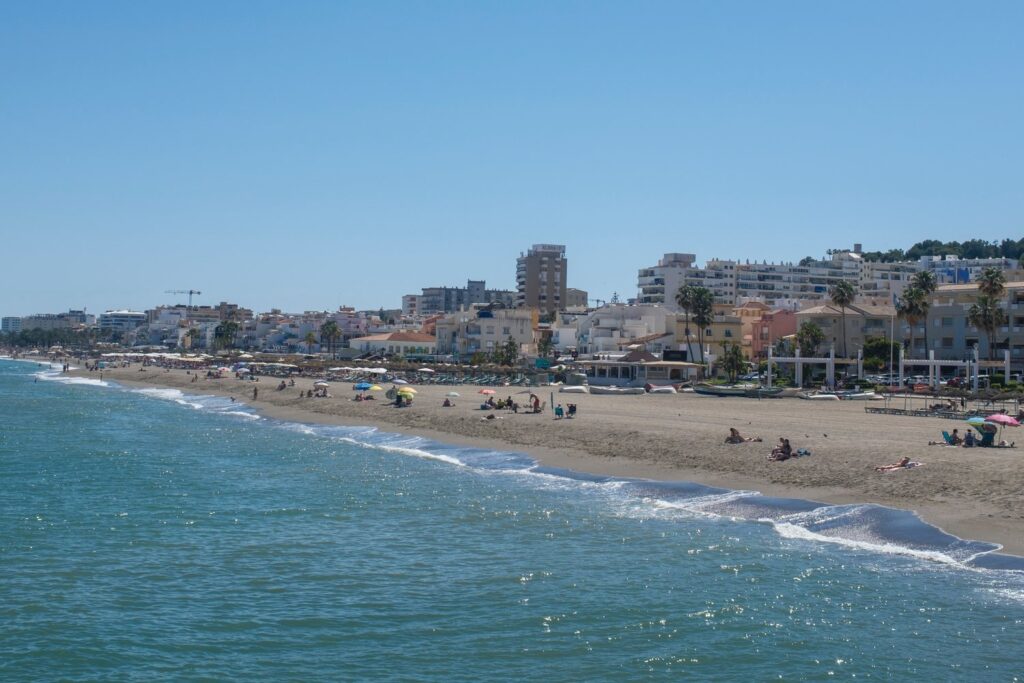
La Carihuela beach
La Carihuela beach lies at the western end of town, next to Benalmádena. It’s the most popular stretch for families, with calm water and shallow areas for small children. The promenade behind it is more than 2 km long and lined with seafood restaurants. In the 1950s and 1960s it was a favourite of Hollywood stars who stayed at the nearby hotels.
Bajondillo beach
Bajondillo beach is the town beach, right below the cliff of central Torremolinos. It’s about 1.3 km long and 40 metres wide, with plenty of beach bars and hotels. It’s the easiest beach to reach from Calle San Miguel and from the train station, so it gets busy in July and August. Its western end used to be cut off from La Carihuela by a rocky headland called El Morro, but today the promenade links them.
Playamar beach and Los Álamos
Playamar beach continues east from El Bajondillo. It’s backed by apartment blocks and is a good choice for water sports, with pedal boats, kayaks and paddle boards for hire. Further east, Los Álamos beach is more than 1 km long and 60 metres wide, with more space for your towel. It’s known for its beach clubs, where DJs, cocktails and day beds turn a beach day into a party. Los Alamos is also close to the border with Málaga, so planes from the airport fly low overhead.
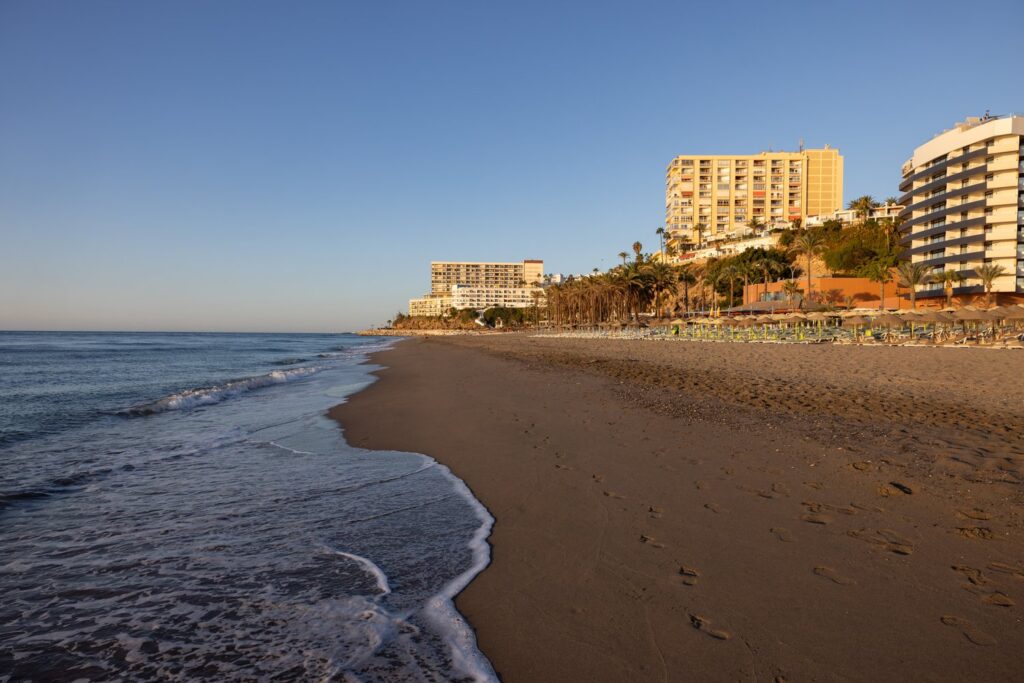
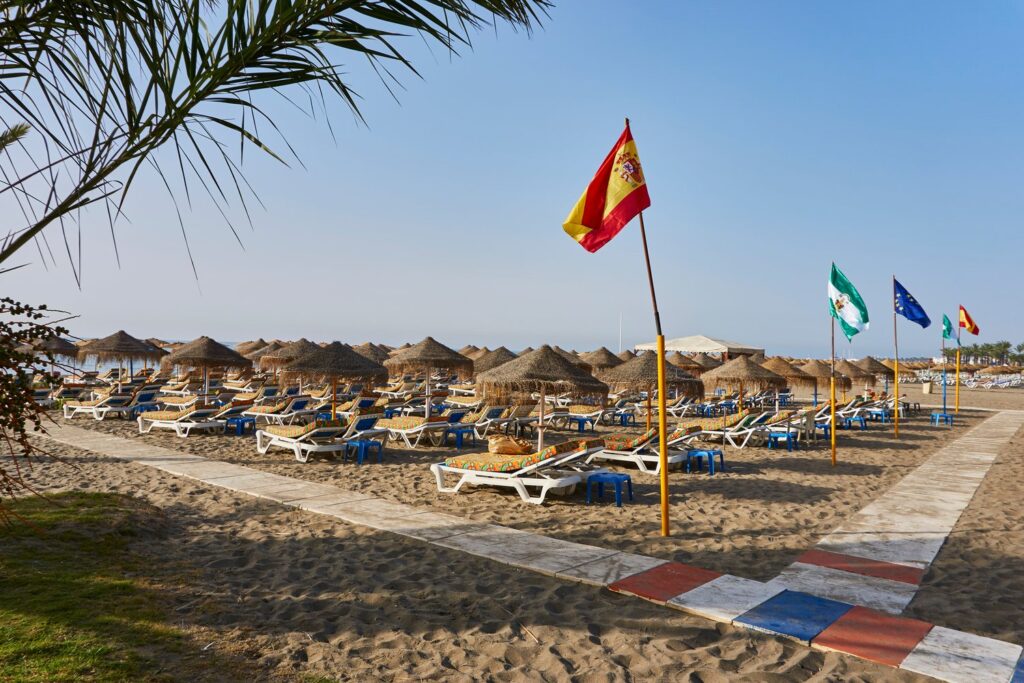
Whichever beach you choose, rent sunbeds early in the summer months. By late morning the front rows are often taken.
La Carihuela - Fried fish and espetos in the old fishing district
La Carihuela is the old fishing district of Torremolinos and the best reason to visit the town. Its low white houses, narrow streets and seafood restaurants still have the feel of a fishing village. The local speciality is pescaíto frito, small fried fish such as anchovies, squid and red mullet, served hot with a squeeze of lemon.
The other must-try is espetos, sardines grilled on skewers over an open fire. On the beach you’ll see old fishing boats filled with sand, which serve as barbecues. The cook pushes the skewers into the sand at an angle so the fish roast slowly in the heat and smoke. Espetos taste best from May to September, when the sardines are fat.
FUN FACT: The Pez Espada hotel in La Carihuela opened in 1959, and over the years its guests included Frank Sinatra, Ava Gardner and Brigitte Bardot.
Most restaurants in La Carihuela have tables right on the promenade, with sea views and the sound of the waves. Order a mixed fried fish platter to share, a salad and a cold drink, and you have a perfect, delicious food stop. Go at lunchtime or after sunset, and book ahead on summer weekends, when many families from Málaga come here to eat.
Walk the Torremolinos promenade to Benalmádena
The Torremolinos promenade is one of the best free things you can do here. It runs along the whole coast, from Los Álamos to La Carihuela, and then continues straight into Benalmádena. It’s flat and well kept, so it’s great for long walks, jogging or a bike ride.
From La Carihuela, keep walking west and in 20 to 30 minutes you’ll reach Puerto Marina in Benalmádena, an unusual marina with white buildings and restaurants on the water. From there, boats leave for dolphin-watching trips along the coast, and the Selwo Marina dolphin park and the Benalmádena cable car are a short taxi ride away.
Walk the promenade at sunset, when the sky turns pink over the sea and the beach bars light their fires for the evening espetos. It’s one of the most relaxing hours of any holiday in Torremolinos.
Torremolinos with kids - Crocodile Park, Aqualand and more
Torremolinos is a good base for a family holiday, with calm beaches and plenty of fun activities nearby. Kids love the Crocodile Park, on the western edge of town close to Aqualand. It’s home to more than 200 crocodiles, including some real giants, and the feeding sessions are the highlight of a visit. There’s also a small museum and a mini-zoo with small animals, other reptiles and birds.
In summer, Aqualand Torremolinos is the biggest draw for families. This water park has fast slides, wave pools and gentler areas for younger children. It opens only for the summer season, so check the dates before you plan your day. For more ideas, see our guide to the best water parks in Spain.
Other ideas for kids include a picnic by the lake in Parque de la Batería, mini golf along the seafront and pedal boats at Playamar. If your kids love animals and theme parks, the Selwo Marina dolphin park in Benalmádena and the Selwo Aventura safari park near Estepona are within easy driving distance.
Torremolinos nightlife - Where to go out
Torremolinos nightlife is one of the best on the Costa del Sol. The lively atmosphere starts after dinner, around 11pm, and many bars and clubs stay open until dawn in the summer months. There isn’t one single strip. Instead, the nightlife is spread across a few areas.
La Nogalera and the streets around it are the centre of the gay scene, with bars, drag shows and dance clubs. Plaza Costa del Sol and the side streets near Calle San Miguel have cocktail bars and pubs. Down by the sea, the beach clubs at Los Álamos host DJ sets and sunset parties. If you prefer something calmer, La Carihuela’s seafront bars are perfect for a drink with sea views.
For a taste of Andalusian culture, book a flamenco show. Several venues in town put on evening performances with dinner or drinks, and there are shows that combine flamenco with Andalusian horses.
Markets, festivals and golf courses
Torremolinos has a street market on Thursday and Sunday mornings, at the fairground (Recinto Ferial) on Camino de la Sierra. It runs from about 9am to 2pm. You’ll find clothes, leather goods, fruit, souvenirs and second-hand bargains. Arrive early, before the heat and the crowds.
The biggest local event is the Romería and Feria de San Miguel, held every year at the end of September in honour of the town’s patron saint. The pilgrimage sees decorated carts, horses and people in traditional dress walking up into the hills. The fair that follows brings music, dancing and fairground rides for several days. Torremolinos also hosts a big Pride festival every June.
Golfers are well served too. There are several golf courses within a short drive, including the Parador de Málaga Golf course just east of Los Álamos and the many courses of Mijas and Benalmádena.
Day trips from Torremolinos
Its central position makes Torremolinos a great base for day trips along the Costa del Sol and into Andalusia. The easiest is Málaga, just a short train ride away. Spend a day in the old town, visit the Picasso Museum and climb to the Alcazaba.
West along the coast, you can visit the white village of Mijas in the hills, and continue to Marbella for its orange-tree squares and the yachts of Puerto Banús. East of Málaga, Nerja has the Balcón de Europa viewpoint and huge caves.
For a longer trip, head inland. The Caminito del Rey is a walkway along the walls of a deep gorge, about an hour’s drive north. Ronda sits on the edge of a deep canyon, with a famous bridge and one of Spain’s oldest bullrings. With an early start, you can also reach Granada and the Alhambra, or cross into Gibraltar for the day.
Many of these places are easy to reach by bus or train, and Omio is useful for checking train and bus connections. For the white villages and the mountains, a rental car or an organised day trip is far more practical.
How many days do you need in Torremolinos?
You can see the main sights of Torremolinos in one busy day: Calle San Miguel, the old town, Casa de los Navajas, a walk along the beach and lunch in La Carihuela. But most people come for a beach holiday, not a city break. A week is the classic length of a Torremolinos holiday, and it gives you time for lazy beach days plus three or four day trips.
If you only have a long weekend, stay near La Carihuela or El Bajondillo, so the beach and the restaurants are within walking distance. With 4 or 5 days, add a day in Málaga and one trip inland, to Ronda or the Caminito del Rey.
The best time to visit Torremolinos is May, June and September, when the sea is warm and the beaches are less crowded than in July and August. Winters are mild, with many sunny days around 17°C, so the town is also popular for long winter stays.
Getting to Torremolinos and getting around
Torremolinos is only about 8 km from Málaga Airport, and getting there is easy. The C1 suburban train (Cercanías) runs from the airport to Torremolinos in about 10 minutes. Trains run roughly every 20 minutes during the day and continue to Benalmádena and Fuengirola in one direction and to Málaga city centre in the other. The town has several train stops, including Torremolinos, La Colina, Los Álamos and Montemar Alto, so check which one is closest to your hotel.
Taxis from the airport take about 15 minutes. Buses also link Torremolinos with Málaga, Benalmádena and other towns on the coast.
You don’t need a car in Torremolinos itself, as the town centre and the beaches are walkable and parking is hard to find in summer. For day trips into the mountains, though, car hire makes life much easier. Pick up your rental car at the airport and you’re on the motorway in minutes.
Hotels in Torremolinos
Torremolinos has hotels for every budget, from simple guesthouses in the town centre to big beachfront resorts. For a quiet stay with the best restaurants, choose La Carihuela or Montemar. For shops, nightlife and the train station, stay in central Torremolinos or near El Bajondillo. In July and August, book your hotel well in advance, as the best seafront rooms sell out early.
See available hotels in Torremolinos
💰 tent Torremolinos
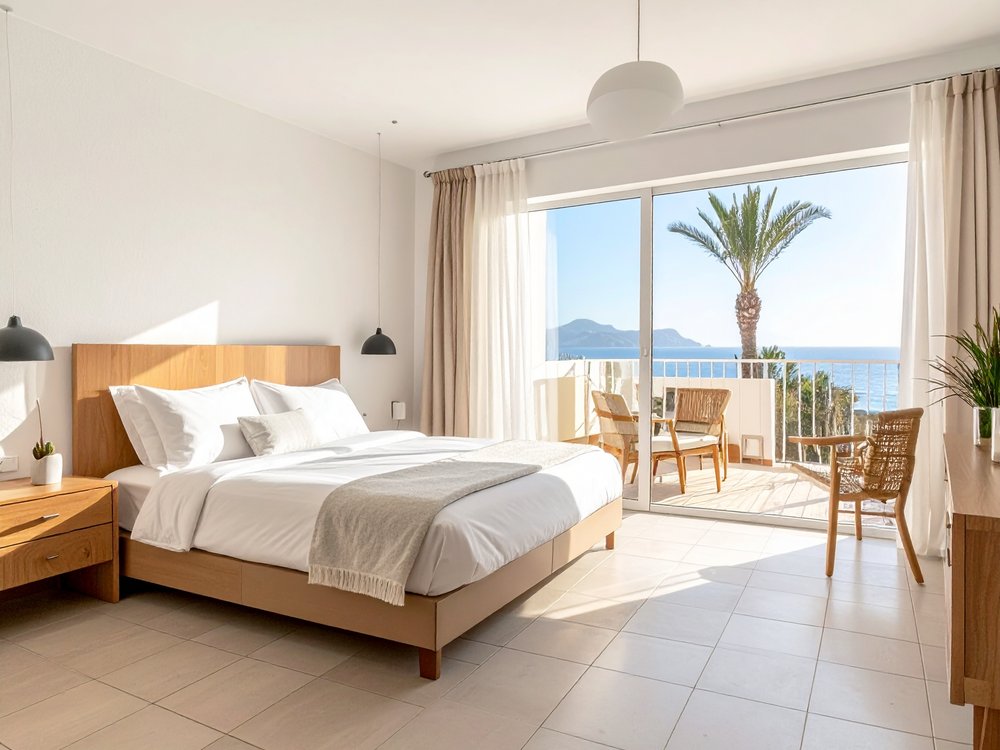
This simple, good-value hotel sits on Calle Hoyo in the town centre, about 600 metres from the train station and close to Calle San Miguel. Rooms are plain and practical, with tiled floors and air conditioning, and many have a balcony with views of the sea or the outdoor pool. The beach is about a 15-minute walk away. It’s a smart choice if you want a central base for shopping, nightlife and day trips without spending much.
🏨 Hotel Ocean House Costa del Sol by Grupotel
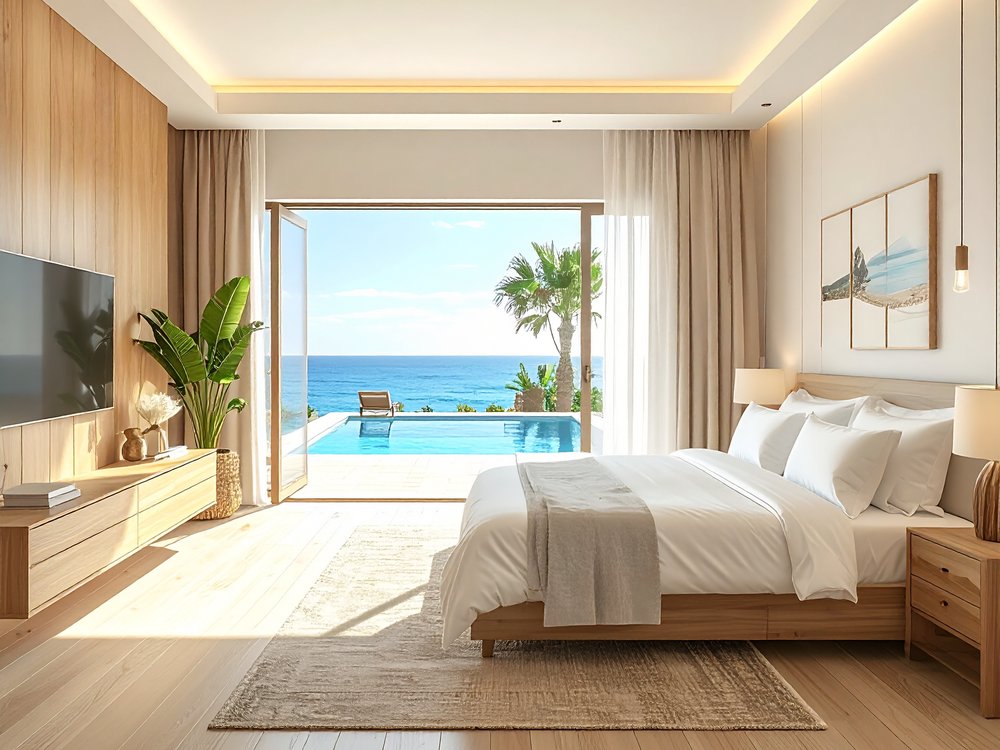
This four-star hotel stands right on the beach in Montemar, between La Carihuela and Benalmádena. It has an outdoor pool, a garden, a fitness centre and a terrace, plus evening entertainment in season. Breakfast is a buffet, and the rooms have air conditioning and flat-screen TVs. It suits couples and families who want a beach holiday with La Carihuela’s fish restaurants a short walk away.
💎 Medplaya Hotel Pez Espada
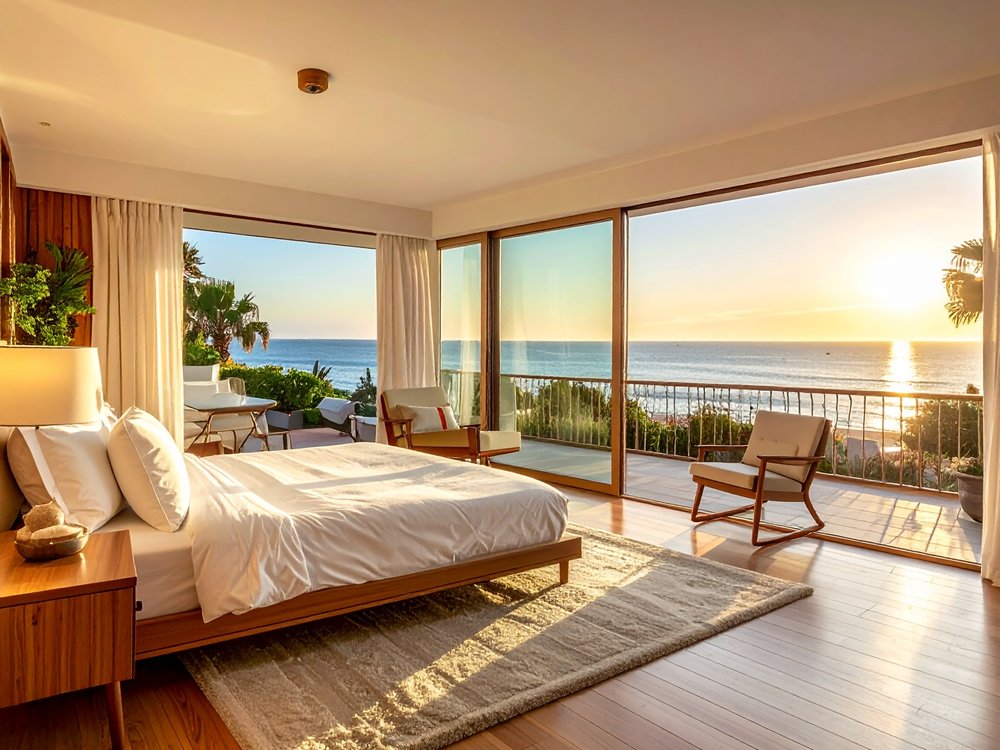
The most famous hotel in Torremolinos opened in 1959 and once welcomed Hollywood stars. It stands on the seafront near La Carihuela, with gardens leading straight to the beach. Guests have two outdoor pools, a gym, a solarium and two restaurants with views over the bay. Choose it if you want a touch of the Costa del Sol’s golden age, with modern comfort and the sand on your doorstep.
Torremolinos FAQ
Is Torremolinos tacky?
Not as much as its old reputation suggests. There are still high-rise hotels and some British bars, but the seafront has been renovated and La Carihuela keeps its fishing-village charm. Many visitors are surprised by the good food, the clean beaches and the relaxed atmosphere.
Is it better to stay in Torremolinos or Málaga?
Stay in Torremolinos for a beach holiday and in Málaga for a city break. Torremolinos has longer beaches and more resort hotels, while the city has museums, monuments and a bigger food scene. The two are linked by a short train ride, so you can easily visit one from the other.
Does Torremolinos have nice beaches?
Yes. Torremolinos has more than 6 km of sandy beaches with calm water, sunbeds, beach bars and a promenade along the whole coast. La Carihuela is best for families and seafood, El Bajondillo is the most central, and Los Álamos has the trendy beach clubs.
What day is the market in Torremolinos?
The street market takes place on Thursday and Sunday mornings at the fairground (Recinto Ferial) on Camino de la Sierra. Both markets run from about 9am to 2pm, so go early to avoid the midday heat.
Where is the old part of Torremolinos?
The old part of Torremolinos is around Calle San Miguel, the Torre Pimentel watchtower and the hill of El Calvario, just above the beach of El Bajondillo. The old fishing district of La Carihuela, at the western end of town, is the other historic area.
Is Torremolinos LGBTQ+ friendly?
Very much so. Spain’s first gay bars opened in La Nogalera, and the Pasaje Begoña is known as the birthplace of the country’s LGBTQ+ rights movement. Today the town has a large gay scene and hosts a big Pride festival every year.

