Long before the dragons, the mosaics and the unfinished basilica, a young architect got his first big commission. He spent it on tiles covered in yellow flowers.
Casa Vicens is the first house Antoni Gaudí designed, a colourful summer villa tucked into the narrow streets of the Gràcia district of Barcelona. Built between 1883 and 1885, it’s a riot of green and white tiles, red brick, palm-leaf railings and Moorish-style turrets. Inside you’ll find painted ceilings, a smoking room that looks like it came from a palace in Granada and a roof terrace with views over the neighbourhood. It only opened as a museum in 2017, so it’s still far quieter than Gaudí’s famous houses on Passeig de Gràcia. In this article you’ll learn the story of the house, the seven things not to miss, how to get tickets and how to combine the visit with Gràcia and Park Güell.
💰 Hotel Via Augusta - A good-value hotel next to the FGC Gràcia station, about ten minutes on foot.
🏨 Catalonia Park Güell - A modern hotel with a rooftop pool between Gràcia and Park Güell.
💎 ABaC Hotel Boutique 5 GL - A five-star boutique hotel with a celebrated restaurant and a spa.
What is Casa Vicens?
Casa Vicens is a Modernista house at Carrer de les Carolines 20-26, and the first important work of Antoni Gaudí. It was built as a summer home for a wealthy family, at a time when Gràcia was still a separate town surrounded by gardens. Today the Casa Vicens Gaudí museum shows the restored rooms of the house, an exhibition about its history and temporary art exhibitions.
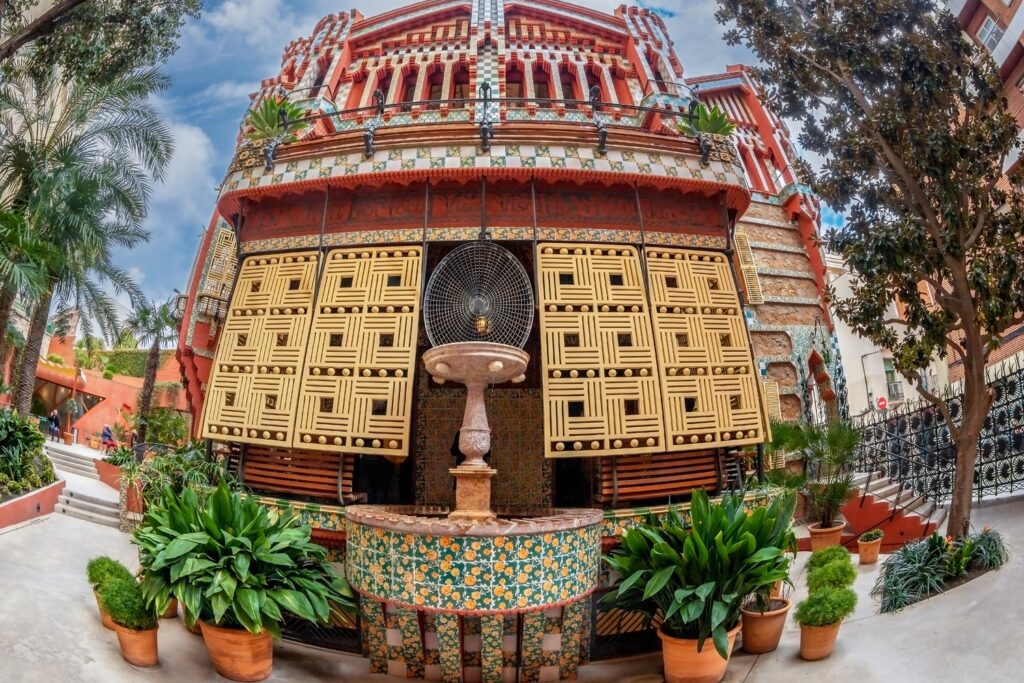
The house is a UNESCO World Heritage Site, listed in 2005 as part of the Works of Antoni Gaudí. It’s smaller than Casa Batlló or Casa Milà, and you can see it properly in about an hour. That makes it a perfect first stop if you want to understand where Gaudí’s style began.
The history of Gaudí’s first house
In 1878 the stockbroker Manuel Vicens i Montaner asked a young Gaudí to design a summer house on his plot in Gràcia. You may read that Vicens owned a tile factory, which supposedly explains all the ceramics, but that’s a popular myth. He was a stockbroker, and the tiles were simply Gaudí’s choice. The plans were signed in 1883, and the house was finished in 1885.
After Vicens died, his widow sold the house in 1899 to Antonio Jover, a doctor. Between 1925 and 1927 the house was extended and turned into three flats. Gaudí was asked to do the work but declined, and recommended his former assistant Joan Baptista Serra de Martínez, who copied the original style so carefully that it’s hard to spot the difference. The house stayed in private hands for over a century.
In 2014 the Andorran bank MoraBanc bought Casa Vicens. After a careful restoration it opened to the public as a museum on 16 November 2017. Later additions were removed, the original colours were brought back and a lift was installed, so most of the house is now accessible.
7 things not to miss at Casa Vicens
The visit follows a route from the garden through the main floors to the roof. These are the highlights to look out for.
1. The marigold tiles on the façade
Start outside, on Carrer de les Carolines. The façade is covered in green and white tiles decorated with yellow flowers. They show the African marigold, or clavell de moro in Catalan, a plant that grew wild on the plot before the house was built. Gaudí liked to use what he found on site, and here he turned a weed into the house’s signature.

2. The palm-leaf railings
Look closely at the cast-iron railings and the garden gate. They’re made up of hundreds of fan-shaped leaves of the dwarf palm, another plant from the original garden. The design was modelled by Llorenç Matamala. It’s one of the first signs of Gaudí’s love of nature, which later shaped all his work.
3. The dining room
On the ground floor, the dining room is the most richly decorated space in the house. The walls and ceiling are painted with branches, fruit and birds, as if you were sitting in a garden arbour. Look for the paintings by Francesc Torrescassana between the wooden beams, and the cherry branches that seem to grow across the ceiling.
4. The Moorish smoking room
The smoking room is the most surprising room in Casa Vicens. Its ceiling is a honeycomb of mocárabes, the stalactite-like decoration found in Moorish palaces such as the Alhambra, here made of papier-mâché. Blue and gold tiles cover the lower walls. In the 19th century this was a room only for men, who came here to smoke and talk after dinner.
5. The gallery with the fountain
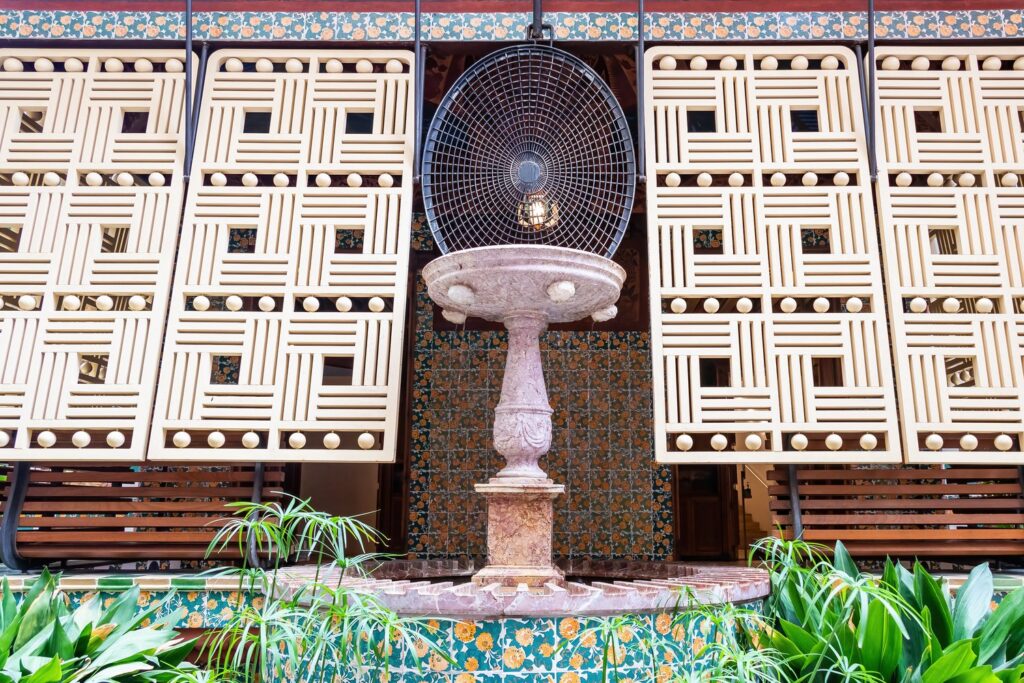
Next to the dining room is a small gallery that once opened onto the garden, with a small fountain. Gaudí designed it to bring the garden into the house and to keep the rooms cool in summer. Originally the garden also had a large brick waterfall, which was demolished long ago.
6. The upper floors and the exhibition
On the first floor you’ll see the family’s bedrooms, including a simpler room for the women of the house. The second floor holds a permanent exhibition about the history of the house and of Gràcia, with plans and models, and space for temporary exhibitions.
7. The roof terrace
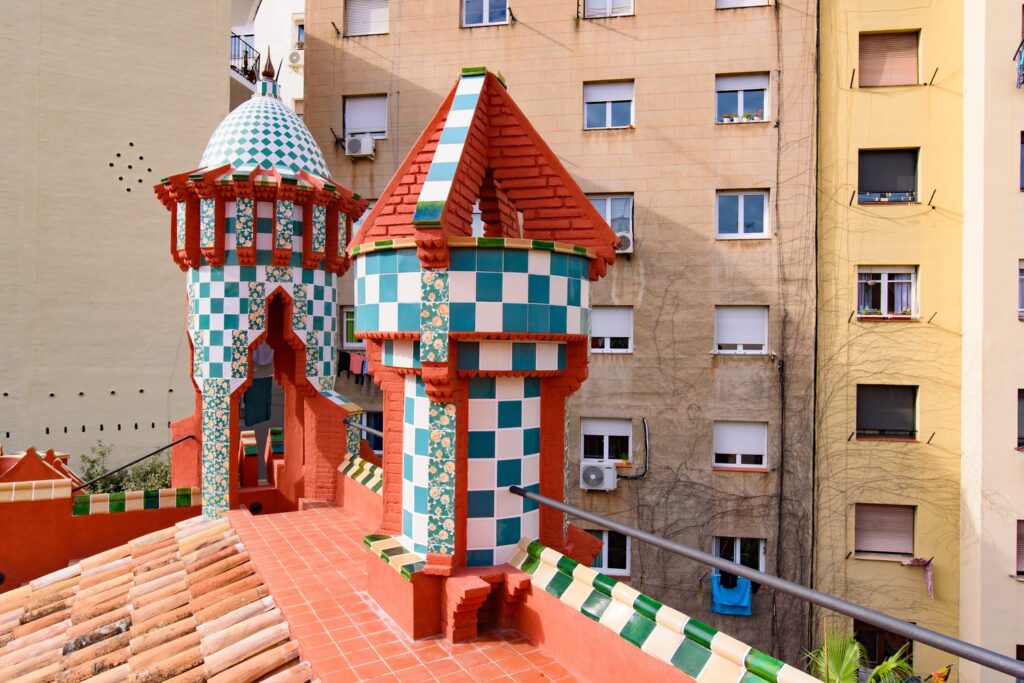
Finish on the roof terrace, among the turrets and the small domes covered in ceramic tiles. From here you can look out over the rooftops of Gràcia towards Collserola hill. It’s a peaceful place to sit for a few minutes before you go down to the café and shop.
Casa Vicens tickets and visit options
Tickets are sold for a time slot, and Casa Vicens rarely sells out the way Casa Batlló or the Sagrada Familia do. Still, it’s worth booking online to skip the queue, especially at weekends and in summer. The standard ticket includes the self-guided route, and an audio guide is available in many languages.
If you’d like more background, join a guided tour. Groups are small, usually up to about 12 people, and the guide explains the symbolism of the decoration and the story of the house. A visit takes about 60 to 75 minutes.
Planning to see several of Gaudí’s houses? Look for combined tours that cover Casa Vicens, Casa Batlló and Casa Milà in one go. Check the cancellation terms of each ticket before you book.
Opening hours and the best time to visit
Casa Vicens opens every day of the year except Christmas Day. Opening hours change with the season, so check the times for your date when you book. The house is quietest first thing in the morning and in the last hour of the day.
Spring is especially lovely, when the plants in the garden are in bloom and the light on the tiles is soft. In summer, the shady garden and the café make it a pleasant escape from the heat of the centre.
How to get to Casa Vicens
Casa Vicens is in the heart of the Gràcia district, at Carrer de les Carolines 20-26. The easiest way to get there is by metro. Fontana station, on line L3 (green), is about five minutes’ walk away, and Lesseps on the same line is another option. Several buses run up Gran de Gràcia, the main street of the neighbourhood.

The house is about 1.7 km from Park Güell, an uphill walk of around 25 minutes. From Passeig de Gràcia you can walk up to Casa Vicens in 20 to 30 minutes through Gràcia, passing plenty of cafés on the way.
Casa Vicens with kids
Casa Vicens is a good choice with children because it’s compact and rarely crowded. Kids enjoy spotting the yellow flowers, the palm leaves and the painted birds, and the roof terrace is a fun reward at the end. The lift makes the visit possible with a pushchair.
Turn the visit into a nature hunt: how many different plants and animals can they find on the walls and ceilings? Afterwards, let them burn off energy in one of Gràcia’s squares, such as Plaça del Sol or Plaça de la Virreina.
Gràcia - the neighbourhood around Casa Vicens
Gràcia was an independent town until it became part of Barcelona in 1897, and it still feels like a village. Its narrow streets open onto small squares full of terraces, bars and local shops. Plaça de la Virreina, Plaça del Sol and Plaça de la Vila de Gràcia, with its clock tower, are all a short walk from Casa Vicens.
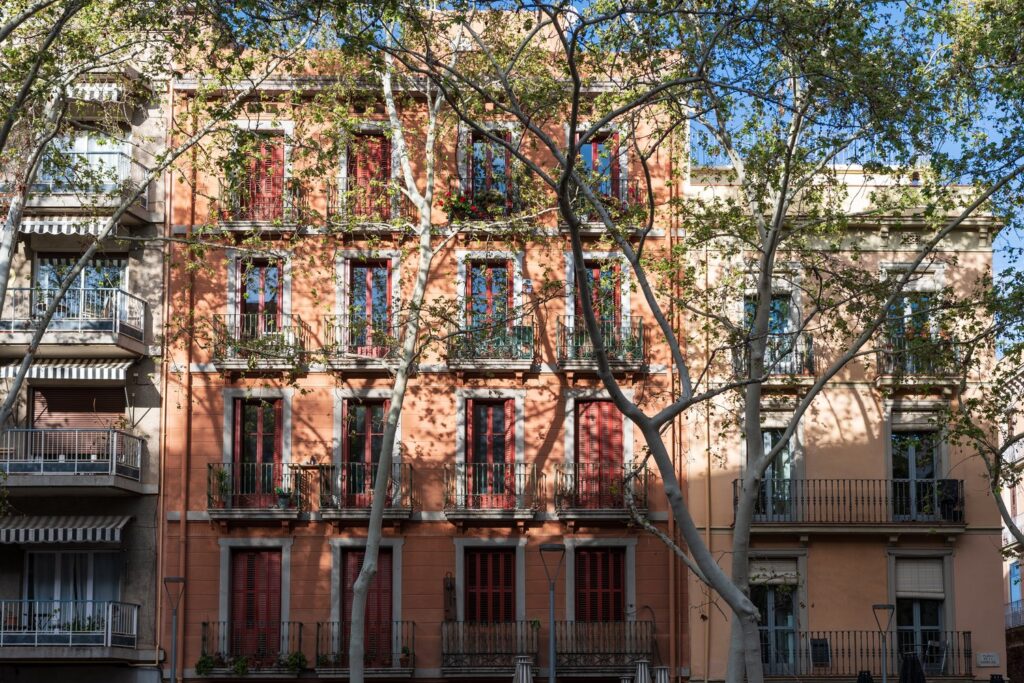
In mid-August the neighbourhood holds the Festa Major de Gràcia, when residents decorate whole streets with homemade decorations. If you visit in that week, book your accommodation early, as the area gets very busy.
See available hotels in Barcelona
Casa Vicens, Casa Batlló or Casa Milà?
If you’re choosing between Gaudí’s houses, think about what you want to see. Casa Vicens shows the young Gaudí, still inspired by Moorish and oriental art, and it’s the calmest of the three. Casa Batlló is the most colourful and theatrical, while Casa Milà impresses with its stone façade and its rooftop of warrior chimneys.
If you have two days for Gaudí, pair Casa Vicens with Park Güell on one day, and the Passeig de Gràcia houses with the Sagrada Familia on the other.
Practical information
- Tickets to Casa Vicens are best bought in advance. You’ll avoid queues and won’t risk finding your preferred time slot sold out.
- Address: Carrer de les Carolines 20-26, 08012 Barcelona (metro Fontana, line L3)
- Buy tickets on GetYourGuide
Hotels near Casa Vicens
Staying in or near Gràcia gives you a local, relaxed base with easy access to Park Güell and the centre. Here are three hotels for different budgets.
💰 Hotel Via Augusta
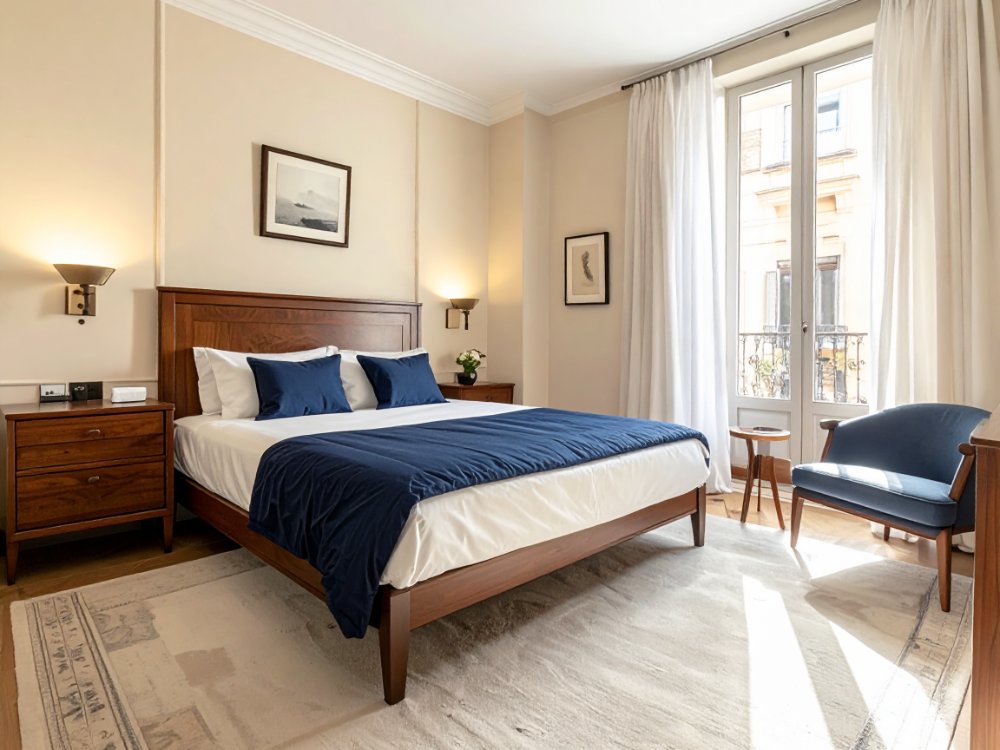
A good-value hotel next to the Gràcia station of the local FGC train, about ten minutes’ walk from Casa Vicens. Rooms are classic and comfortable, and there’s a roof terrace where you can relax in the evening. The trains get you to Plaça de Catalunya in a few minutes. It suits travellers who want a quiet, practical base on a budget.
🏨 Catalonia Park Güell
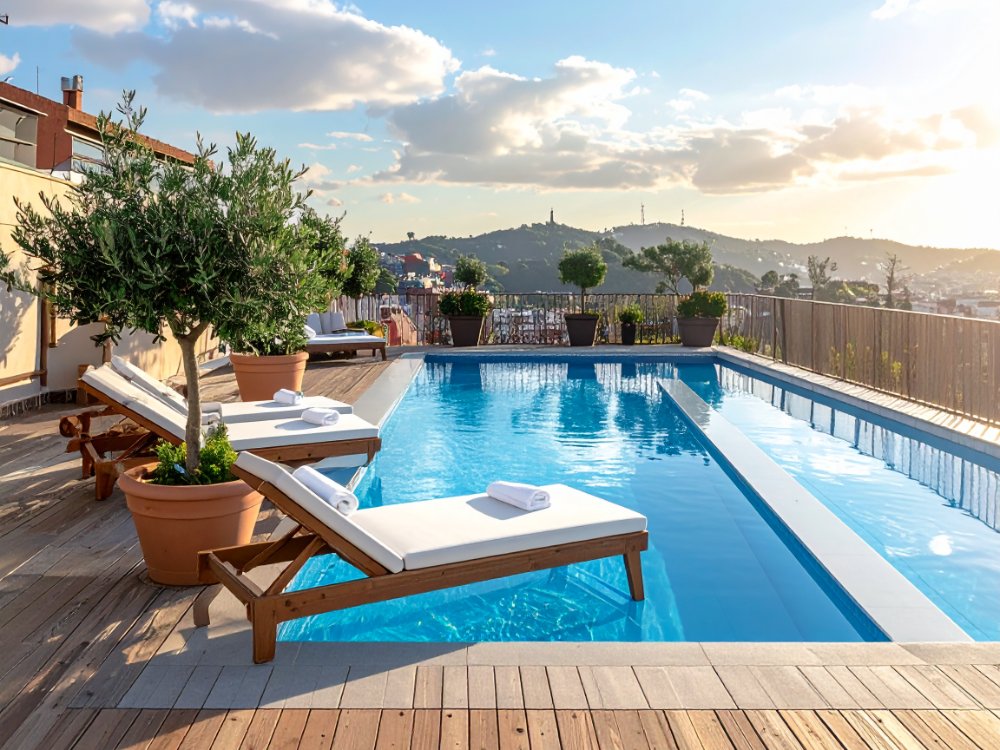
A modern four-star hotel in upper Gràcia, about 600 metres from Park Güell and 300 metres from Vallcarca metro station. Its rooftop pool and terrace are a real bonus after a day of sightseeing. Rooms are bright and spacious, and the metro takes you down to Casa Vicens and the centre quickly. It’s a great choice for families and couples.
💎 ABaC Hotel Boutique 5 GL
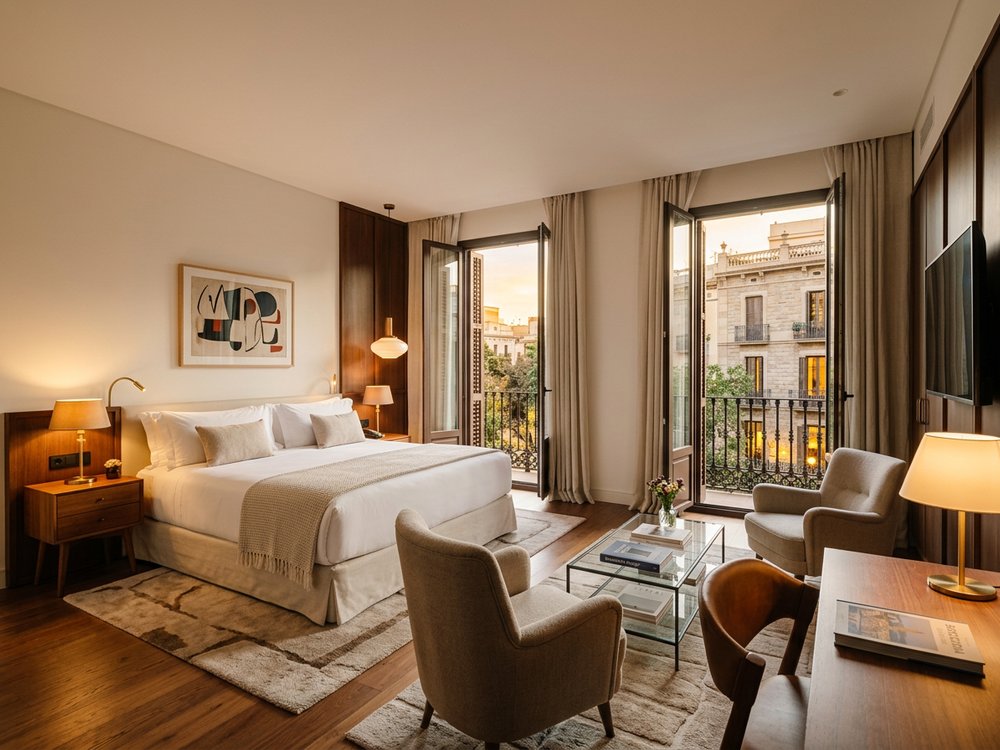
A five-star boutique hotel at the foot of Avinguda del Tibidabo, a short taxi ride from Casa Vicens. It’s home to the ABaC restaurant, one of the finest gourmet addresses in the city. The rooms are elegant and calm, and there’s a spa with an indoor pool. Choose it for a special trip or a food-focused stay in the leafy upper part of the city.
Casa Vicens FAQ
Is Casa Vicens worth visiting?
Yes, especially if you love Gaudí or want to avoid the crowds. It’s his first house, full of colour and detail, and much quieter than the famous houses on Passeig de Gràcia. An hour is enough to see it well.
Why is Casa Vicens important?
Casa Vicens is Gaudí’s first major work, built between 1883 and 1885. You can already see the ideas that made him famous: nature as inspiration, bold colour and a mix of styles, here with strong Moorish influence.
How long do you need at Casa Vicens?
Plan about an hour for the house, the exhibition and the roof terrace. Add time for a coffee in the garden café, or a walk around the squares of Gràcia afterwards.
How do you get to Casa Vicens?
Take metro line L3 to Fontana and walk about five minutes. From Park Güell it’s around 25 minutes on foot, and from Passeig de Gràcia it’s a pleasant 20 to 30-minute walk uphill through Gràcia.
Can you visit Casa Vicens with a pushchair?
Yes. A lift was installed during the restoration, so most of the house, including the upper floors, is accessible. The garden and the café are also easy to reach.

