Spain’s highest mountain doesn’t stand on the mainland. It rises straight out of the Atlantic, a few hours’ flight from home, and on a clear day you can count four other islands from its slopes.
Tenerife is the largest of the Canary Islands and easily the most varied. In a single week you can ride a cable car up a volcano, watch pilot whales from a boat, swim in natural rock pools and wander through colonial towns that later served as models for cities in South America. Because the island sits off the coast of Africa, it stays warm all year, so there is no bad time to visit. In this article you’ll find the best things to do in Tenerife, from the famous sights to quieter corners in the green north, plus practical travel tips on getting around and where to stay.
💰 DWO Nopal - A small hotel with a rooftop pool by Plaza del Charco in Puerto de la Cruz.
🏨 H10 Tenerife Playa - A four-star seafront hotel with an outdoor pool, a short walk from the old town.
💎 Hotel Botánico & The Oriental Spa Garden - A luxury hotel in tropical gardens with one of the best-known spas on the island.
The best things to do in Tenerife at a glance
If this is your first visit and you only have a week, these are the places to see in Tenerife that most travellers remember long after the tan has faded:
- Take the cable car up Mount Teide and walk among the lava fields of Teide National Park.
- Go whale watching off the south coast, where pilot whales live all year round.
- See the cliffs of Los Gigantes from the sea and drive the mountain road to Masca.
- Walk the colourful streets of La Laguna, a UNESCO World Heritage Site.
- Explore the laurel forests of Anaga Rural Park.
- Swim in the natural pools of Garachico.
- Spend a day at Siam Park or Loro Park with the kids.
- Watch the stars from above the clouds.
The rest of this article covers each of these main attractions in more detail, along with plenty of other ideas on what to do in Tenerife once you’ve ticked off the big names.
Mount Teide and Teide National Park
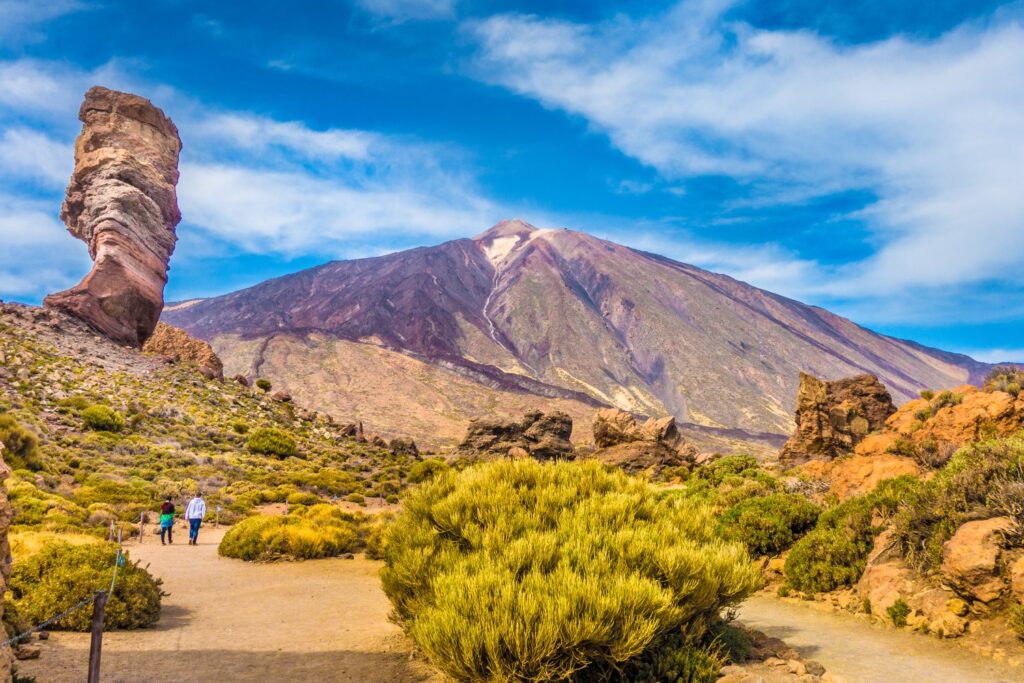
Mount Teide is Spain’s highest peak at 3,718 metres, and it dominates almost every view on the island. Around it lies Teide National Park, a UNESCO World Heritage Site since 2007 and one of the most visited national parks in Europe. The landscape up here could hardly be more different from the beach resorts below. You drive through pine forest, climb above the clouds and suddenly find yourself in a huge volcanic crater full of red, black and ochre rock.

The national park is a must for anyone visiting Tenerife, and you can see a lot of it in half a day. The roads are good, but they get busy by late morning, so set off early. Bring a warm layer even in summer, because temperatures near the top can be 15°C lower than on the coast.
FUN FACT: Measured from its base on the ocean floor, Teide is around 7,500 metres tall, which makes it one of the highest volcanoes on Earth.
Ride the Teide cable car
The cable car is the easiest way up Mount Teide. The ride takes about eight minutes and drops you at La Rambleta, just over 3,550 metres above sea level. From there, short marked paths lead to viewpoints over the crater, and on a clear day you can see La Gomera, La Palma, El Hierro and Gran Canaria. The Pico Viejo viewpoint looks down into the vast crater of Teide’s older neighbour.
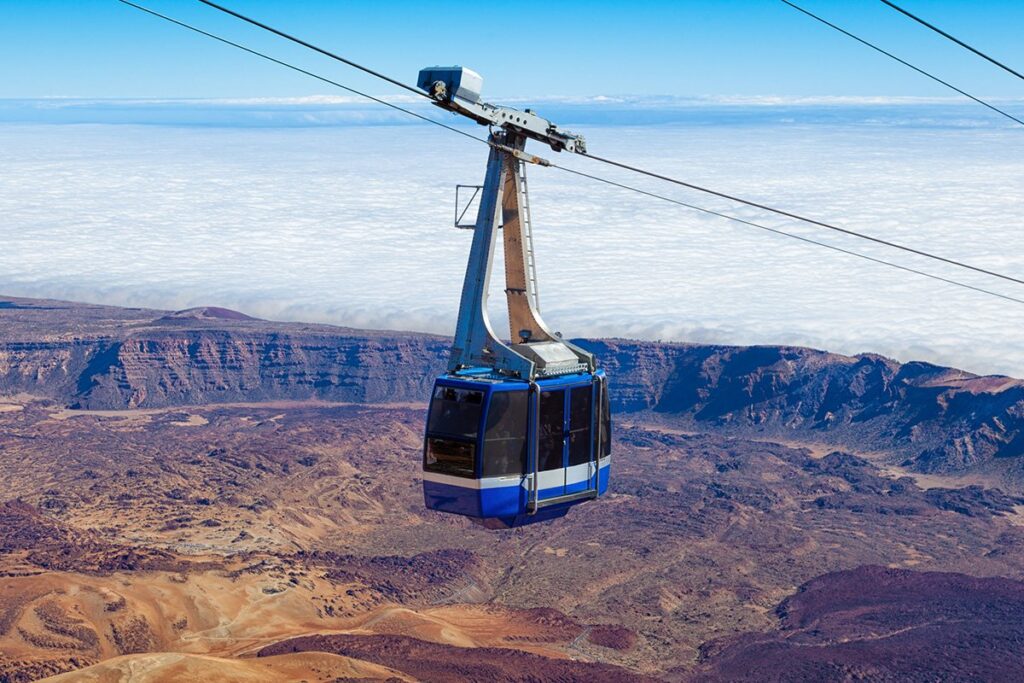
The final stretch to the summit crater is a protected area. You need a free permit from the national park, and places are limited, so book well ahead. The cable car closes in strong wind, which is fairly common in winter. Check the forecast on the morning you go and have a backup plan.
Walk the Roques de García
If you only do one walk in the park, make it the Roques de García loop. It’s an easy 3.5 km trail around a group of unusual rock formations, including the Roque Cinchado, the rock that looks like a tree trunk balancing on a narrow base. The visitor centre at El Portillo is a good first stop if you want to understand how the volcano formed. There are dozens of other hiking trails in the park, from gentle strolls to the long climb up Montaña Blanca.
Stargazing above the clouds
Teide is one of the best places in Europe for stargazing. The air is dry, the sky is dark and the clouds usually sit far below you, which is why the island has a major observatory up here. Sunset tours take you into the park as the light turns the rocks red, then set up telescopes so you can see planets, star clusters and the Milky Way. It’s one of the most memorable things to do in Tenerife, and it works just as well with older children.
Whale and dolphin watching off the south coast
The channel between Tenerife and La Gomera is home to a resident colony of short-finned pilot whales, so you have a very good chance of seeing them whatever the month. Bottlenose dolphins are common too, and you may also spot turtles and, if you’re lucky, passing sperm whales. Boat trips leave from Los Cristianos, Costa Adeje and Puerto Colón, and from the marina at Los Gigantes on the west coast.
Choose an operator with the blue flag of the Canary Islands’ responsible whale watching scheme, as these boats keep their distance from the animals and limit the time spent with each group. Many trips also stop in a quiet bay for a swim. Mornings tend to be calmer, which helps if you’re prone to seasickness.
Los Gigantes cliffs and the village of Masca
On the west coast, the cliffs of Los Gigantes drop between roughly 500 and 800 metres straight into the Atlantic Ocean. The name means “the giants”, and once you see them from a boat you’ll understand why. The small town at their foot has a marina, a black sand beach and a large natural swimming pool by the sea, so it makes a relaxed base for a few days on the quieter side of the island.
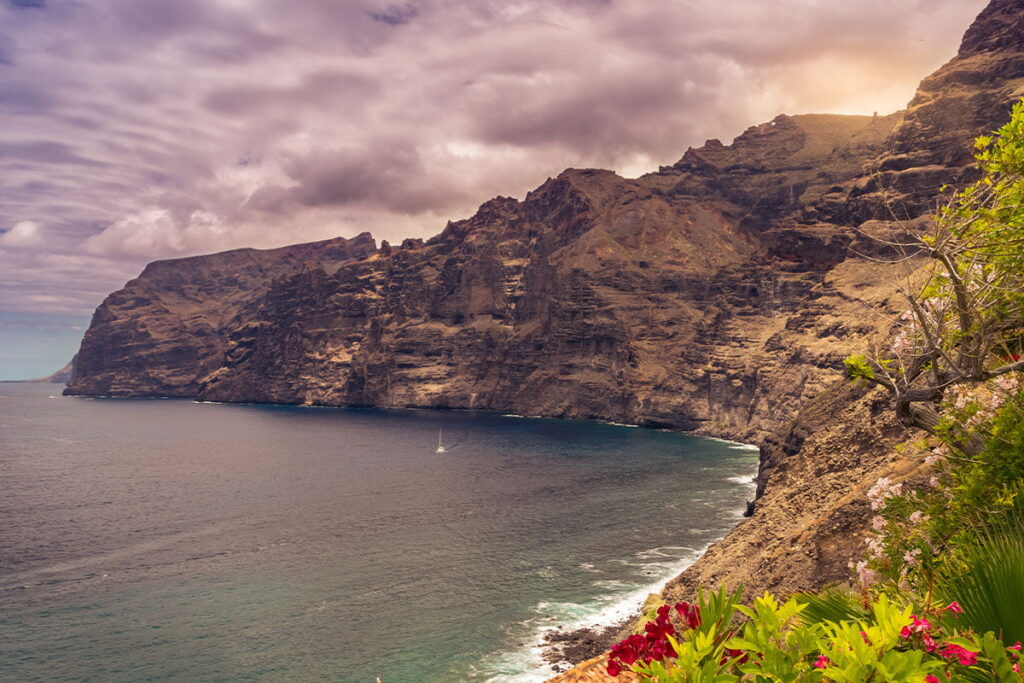
The best views of the cliffs are from the water. Short boat trips from the marina often combine dolphin watching with a swimming stop at the mouth of the Masca gorge, where the dark rock walls tower above you.
Masca village and the Masca gorge
Masca is often called the Machu Picchu of Tenerife. This tiny village sits at about 650 metres in the Teno mountains, with stone houses scattered along a ridge and palm trees growing from the slopes. The road to Masca is narrow and full of hairpin bends, so drive slowly and use the horn on blind corners. The views on the way are among the most dramatic on the island.
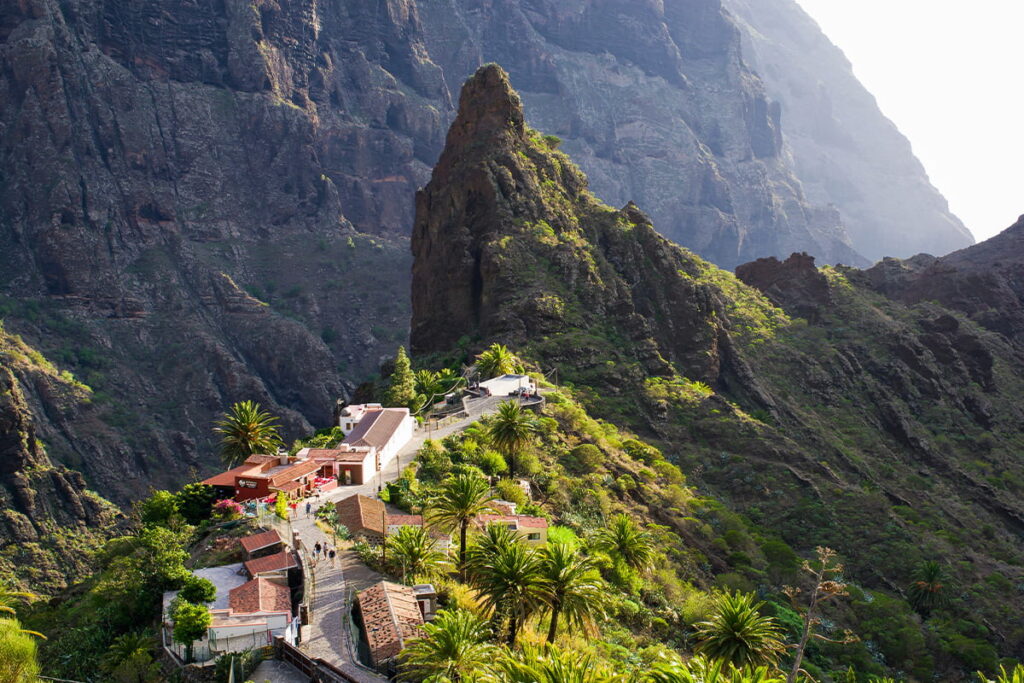
The gorge below the village leads down to a tiny beach by the sea. Access to the trail is regulated: there’s a daily limit on walkers, and you need to book a slot in advance. The hike down is about 5 km and takes roughly three hours over steep and rocky ground, so wear proper walking shoes and take plenty of water.
Charming towns in north Tenerife
Many people who stay in the resorts of southern Tenerife never see the north, and that’s a real shame. North Tenerife is greener, cooler and full of history. Its towns have colourful buildings, wooden balconies and quiet squares where locals still sit for hours over a coffee. These are some of the best places to visit in Tenerife if you want a taste of local life.
San Cristóbal de La Laguna
San Cristóbal de La Laguna, usually shortened to La Laguna, was founded in 1496 and was once the capital of the island. Its grid of streets became the model for many Spanish colonial cities in South America, and it was listed as a UNESCO World Heritage Site in 1999. Today it’s a lively university town with a buzzing food market, plenty of good restaurants and tapas bars.
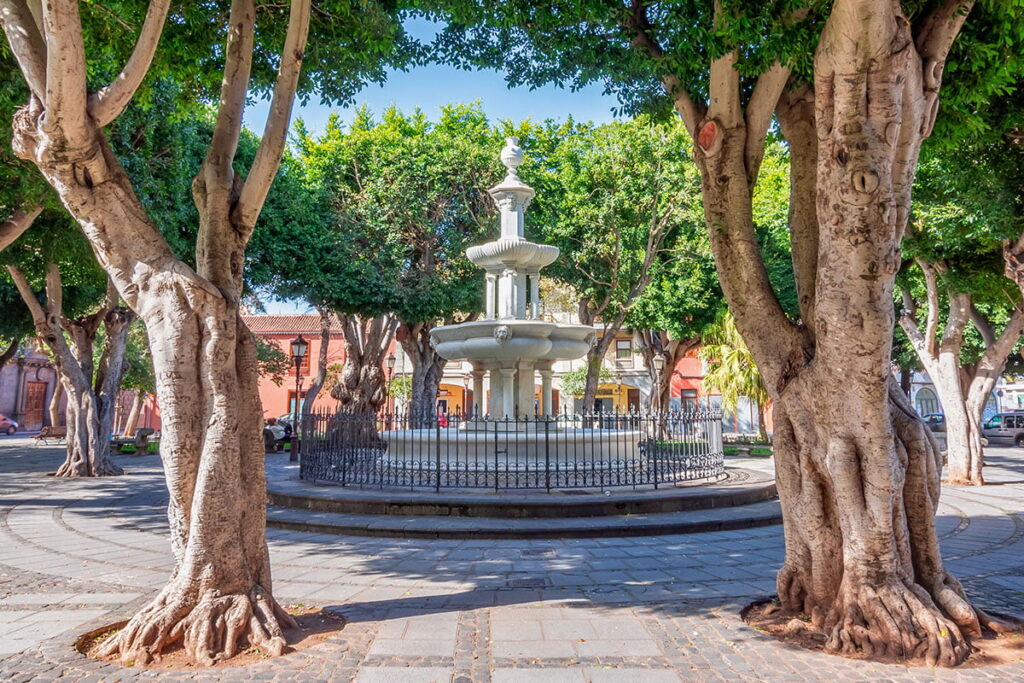
Don’t miss the Iglesia de la Concepción, whose bell tower you can climb for a view over the rooftops. Walk along Calle San Agustín to see some of the finest mansions, then rest in the leafy Plaza del Adelantado. A tram links La Laguna with Santa Cruz de Tenerife, so you don’t need a car to visit.
La Orotava
La Orotava sits on the slopes of the green valley of the same name, with Teide rising behind it. Its old town is famous for steep cobbled streets and carved wooden balconies. The best known are at the Casa de los Balcones, a 17th-century mansion with a beautiful courtyard and a shop selling local embroidery. Nearby you’ll find the terraced Victoria Gardens and the Iglesia de la Concepción, one of the finest baroque churches in the Canary Islands.
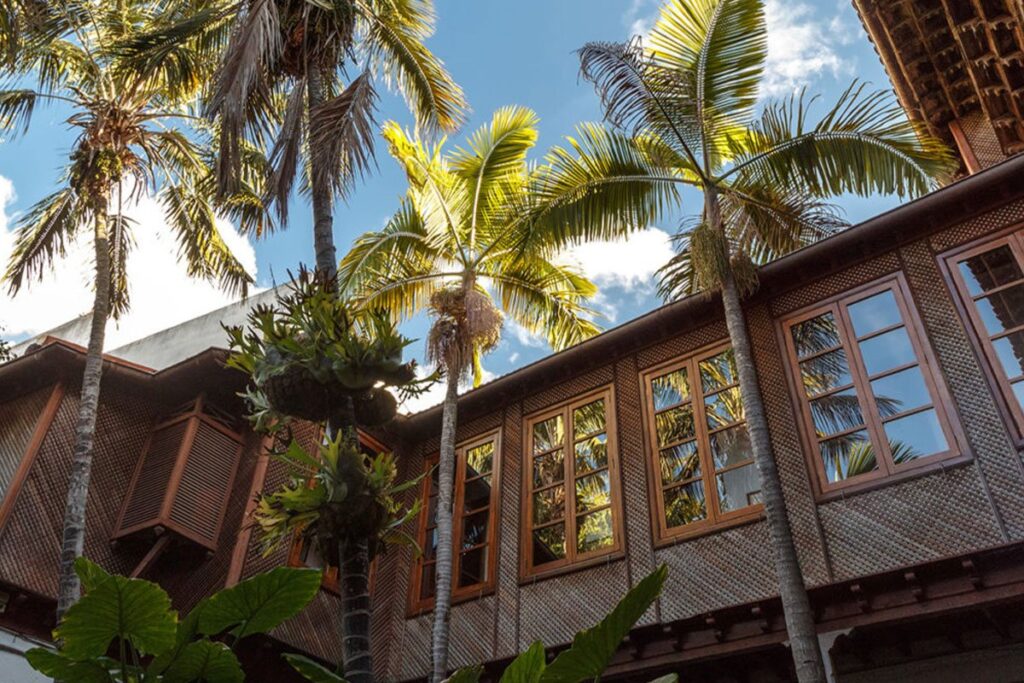
Puerto de la Cruz and its Botanical Garden
Puerto de la Cruz was the island’s first tourist resort, and British visitors have been coming here since the 19th century. It has kept the feel of a real town, with a fishing harbour, a pretty old quarter around Plaza del Charco and a seafront promenade. The Lago Martiánez lido, designed by the artist César Manrique, has saltwater pools surrounded by palm trees and volcanic rock.

The town’s Botanical Garden was founded in the 18th century to acclimatise tropical plants for Spain, and its giant fig tree alone is worth the visit. At sunset, head up to the Mirador de La Paz for a view over the coast. Puerto de la Cruz is also home to Loro Park, which makes it a convenient base for families.
Garachico and Icod de los Vinos
Garachico was once the island’s busiest port, until a volcanic eruption in 1706 sent lava pouring into the harbour. The town was rebuilt, and today it’s one of the most charming towns in Tenerife. Its main square, the Plaza de la Libertad, is surrounded by the Iglesia de Santa Ana and the Convento de San Francisco. By the sea, the lava created El Caletón, a group of natural rock pools where you can swim when the sea is calm.

A short drive away, Icod de los Vinos is home to the Drago Milenario, the oldest and largest dragon tree on the island. Its age is estimated at around 800 to 1,000 years, although locals like to claim it’s much older. You can see the dragon tree from the square by the church, or pay a small entrance fee to walk around it in a garden of Canarian plants.
Santa Cruz de Tenerife
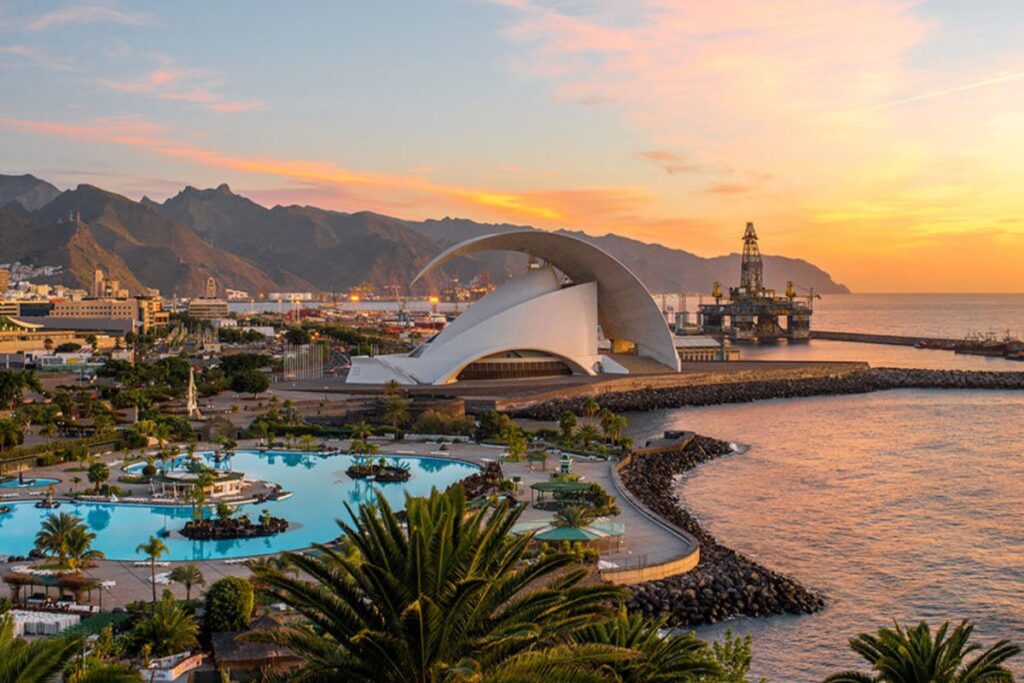
Santa Cruz de Tenerife is the island’s capital and the busiest city in the Canary Islands after Las Palmas. It’s a working port rather than a resort, so it feels refreshingly local. Walk from Plaza de España to the shopping streets, visit the market of Nuestra Señora de África and see the white curves of the Auditorio de Tenerife on the seafront. In February or March, Santa Cruz hosts one of the biggest carnivals in the world, with parades and street parties that last for days.
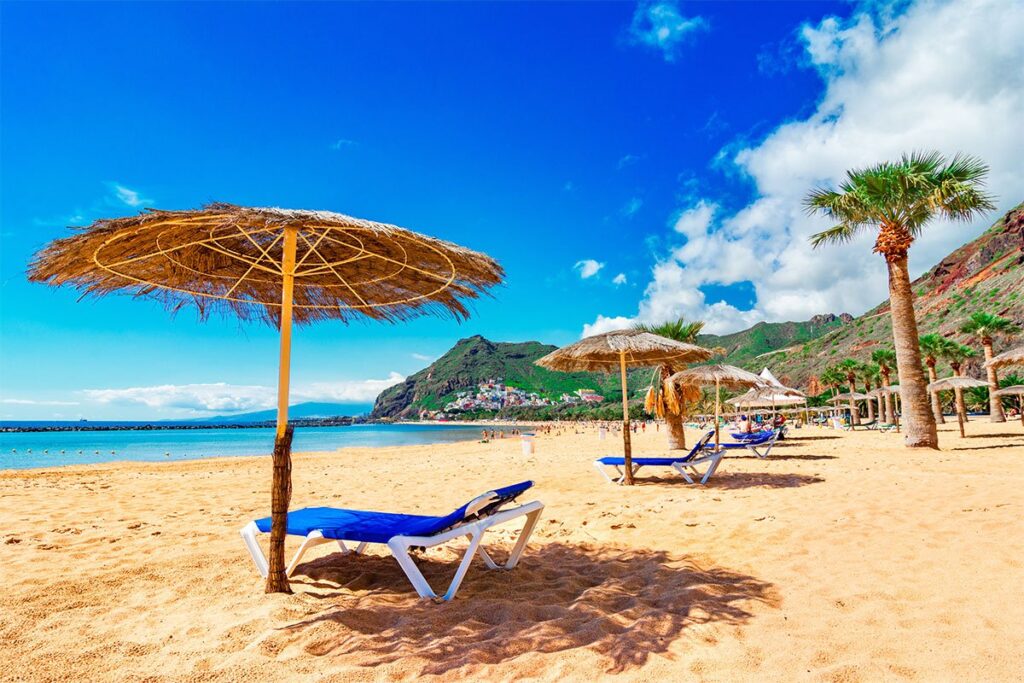
Just north of the city, by the fishing village of San Andrés, Playa de las Teresitas is a long beach of golden sand brought from the Sahara, lined with palm trees and backed by green mountains. It’s popular with local families at weekends and makes a pleasant afternoon after sightseeing in the capital.
Anaga Rural Park and the wild east coast
Anaga Rural Park covers the mountainous north-eastern tip of the island. It’s a UNESCO Biosphere Reserve and is home to some of the oldest laurel forests in the world, the kind that once covered much of southern Europe. On misty days, with moss hanging from the branches and ferns underfoot, it really does look like an enchanted forest.

Start at the Cruz del Carmen visitor centre, where several hiking trails begin, including the easy Sendero de los Sentidos. Then drive down to the coast at Taganana and the black sand beaches of Benijo and Roque de las Bodegas. The seafood restaurants here are perfect for a long lunch by the sea. The roads are slow and winding, so allow a full day for Anaga.
More hiking trails worth your time
Tenerife has hundreds of kilometres of signposted hiking trails, and some of the best routes are far from the volcano. In the south, the Barranco del Infierno, or Hell’s Gorge, near Adeje leads through a deep ravine to a small waterfall. Access is limited to a set number of walkers per day, so book a slot well ahead and check that the trail is open before you go.
In the far north-west, Teno Rural Park has quiet villages, terraced fields and the lighthouse at Punta de Teno, surrounded by dramatic cliffs, where you can watch the sun set over La Gomera. Private cars can’t always drive the last stretch of road to the lighthouse, so check the current rules before setting off.
Tenerife’s beaches and natural swimming pools
Tenerife’s beaches are mostly made of dark volcanic sand, which surprises many first-time visitors. The south coast has the calmest water and the most sunshine. Playa de las Américas and Los Cristianos have long promenades, sunbeds and plenty of high-rise hotels, while Costa Adeje is home to the elegant Playa del Duque. For something more laid-back, head to El Médano, a windsurfing and kitesurfing town with a relaxed, bohemian feel.
In the north, the Atlantic is wilder. Playa Jardín in Puerto de la Cruz has black sand and gardens designed by César Manrique. Playa del Bollullo is a beautiful cove reached by a steep path through banana plantations, but strong currents make swimming risky on rough days.
When the sea is too rough, try the natural pools instead. Besides El Caletón in Garachico, the rock pools at Bajamar and Punta del Hidalgo in the north-east are filled by the tide and protected from the waves. Never swim in natural pools when waves are breaking over the rocks, as conditions can change very quickly.
Tenerife attractions for families - Siam Park, Loro Park and Jungle Park
If you’re travelling with children, Tenerife has some of the best family attractions in Spain. Siam Park in Costa Adeje is regularly named one of the best water parks in the world. It has a Thai theme, a huge wave pool with a sandy beach and the Tower of Power, a slide with a near-vertical drop that ends in a tube through a shark aquarium. Read our guide to the best water parks in Spain to see how it compares with others.
Loro Park in Puerto de la Cruz began as a parrot park and now has penguins, gorillas, jaguars and one of the largest collections of parrots in the world. In the south, Jungle Park has rope bridges, birds of prey shows and a bobsleigh run through the trees. If you plan to visit both Siam Park and Loro Park, a combined ticket saves you time at the entrance.
Caves, pyramids and island history
Near Icod de los Vinos, the Cueva del Viento is one of the largest lava tubes in the world, with more than 18 km of tunnels formed by flowing lava. Guided visits take small groups through a short section, with helmets and lamps, so book ahead.
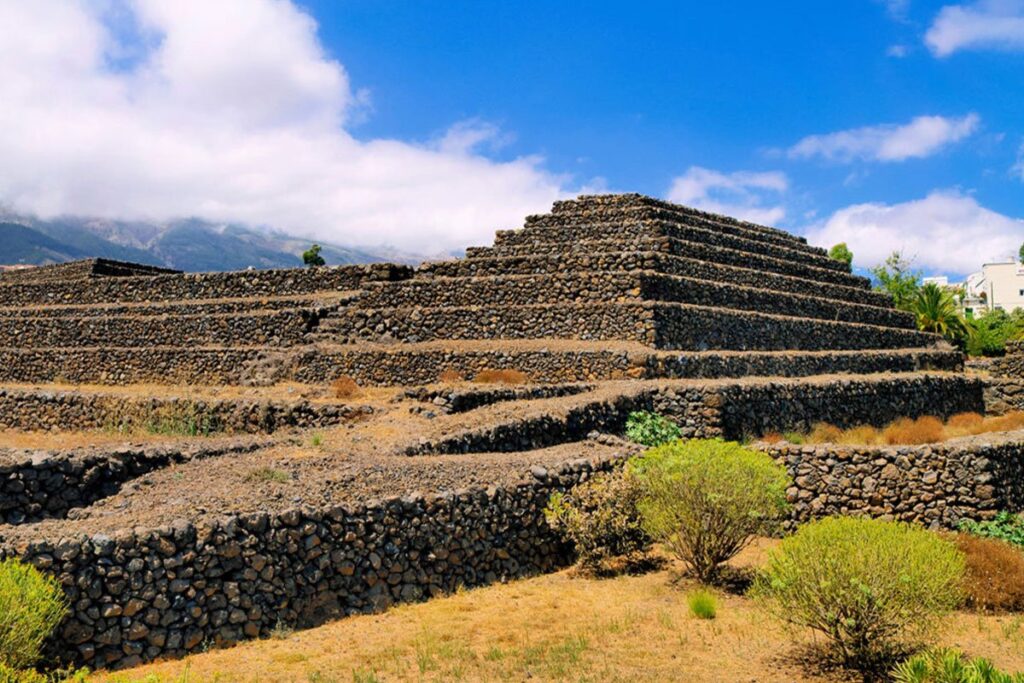
On the east coast, the Pyramids of Güímar are a set of terraced stone platforms that have puzzled visitors for decades. The ethnographic park around them explains the different theories and has a garden of plants from the Canary Islands. Nearby Candelaria is home to the Basilica of the island’s patron saint, with statues of the Guanche kings, the island’s original inhabitants, lining the seafront.
A day trip to La Gomera island
La Gomera is the closest island to Tenerife and a perfect day trip. Ferries from Los Cristianos reach San Sebastián de La Gomera in under an hour. The island is small and very green, with deep ravines, terraced valleys and Garajonay National Park, another UNESCO World Heritage Site, protecting a large area of misty laurel forest.
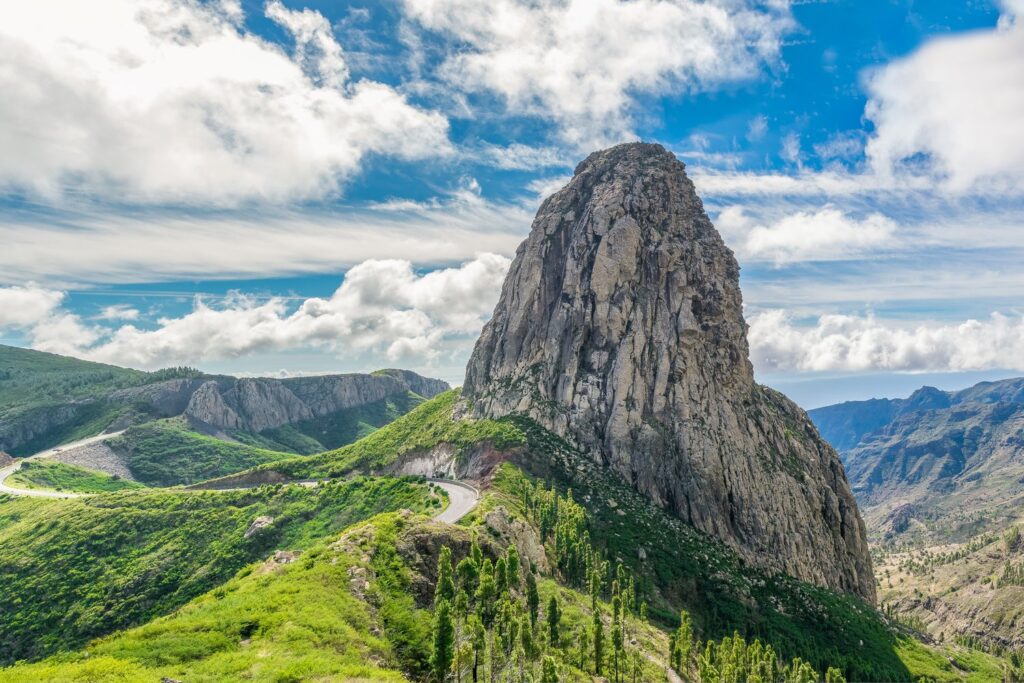
The island has its own whistled language, Silbo Gomero, which locals still use to talk across the valleys. Organised tours make the day easy, but you can also take your hire car on the ferry and explore at your own pace. La Gomera island feels like a step back in time to the Canaries before mass tourism, and that’s exactly its appeal.
Local food and culture
Trying local cuisine is one of the most enjoyable things to do in Tenerife. Order papas arrugadas, small salty potatoes with red and green mojo sauces, along with grilled fresh fish, goat’s cheese and gofio, a toasted grain flour that has been eaten here since Guanche times. In the north of the island, look for guachinches, simple family-run places, often in a garage or on a farm, that serve home cooking with their own wine.
For coffee, try a barraquito, a layered drink with condensed milk, liqueur, espresso and cinnamon. Tenerife also has excellent wines grown on volcanic soil, especially around Icod de los Vinos and the Orotava valley. Many wineries in northern Tenerife offer tastings.
Getting around Tenerife - Car rental, buses and the tram
A hire car is the easiest way to see the island, especially Teide National Park, Masca and Anaga, where buses are infrequent. Car rental is widely available at both airports, and driving is straightforward, although mountain roads are narrow and slow. Parking can be hard to find in La Laguna and Puerto de la Cruz, so use the public car parks on the edge of the old towns.
The island’s TITSA buses are an inexpensive way to travel between the main towns and resorts, and the tram connects Santa Cruz with La Laguna. Organised tours, or a private tour if you’re travelling as a group, are worth considering for Teide, Masca and stargazing, as they save you the drive and often include extras such as a boat trip.
North or south - where to stay in Tenerife?
The south coast, around Costa Adeje, Playa de las Américas and Los Cristianos, has the most sunshine, the calmest beaches and the biggest choice of hotels. It suits beach holidays, families and anyone who wants to be close to Siam Park and the whale watching boats. The north, around Puerto de la Cruz and La Laguna, is greener and feels more local, with cooler temperatures and better access to the island’s historic towns and forests.
If you want to combine both, consider splitting your stay. Tenerife is busiest during the winter months and school holidays, so book your accommodation well in advance.
See available accommodation in Tenerife
Hotels in Tenerife
For a first visit focused on sightseeing, Puerto de la Cruz is a great base. It’s close to La Orotava, La Laguna and the main road up to Teide, and it has hotels for every budget. These three are all within walking distance of the old town and the seafront.
💰 DWO Nopal
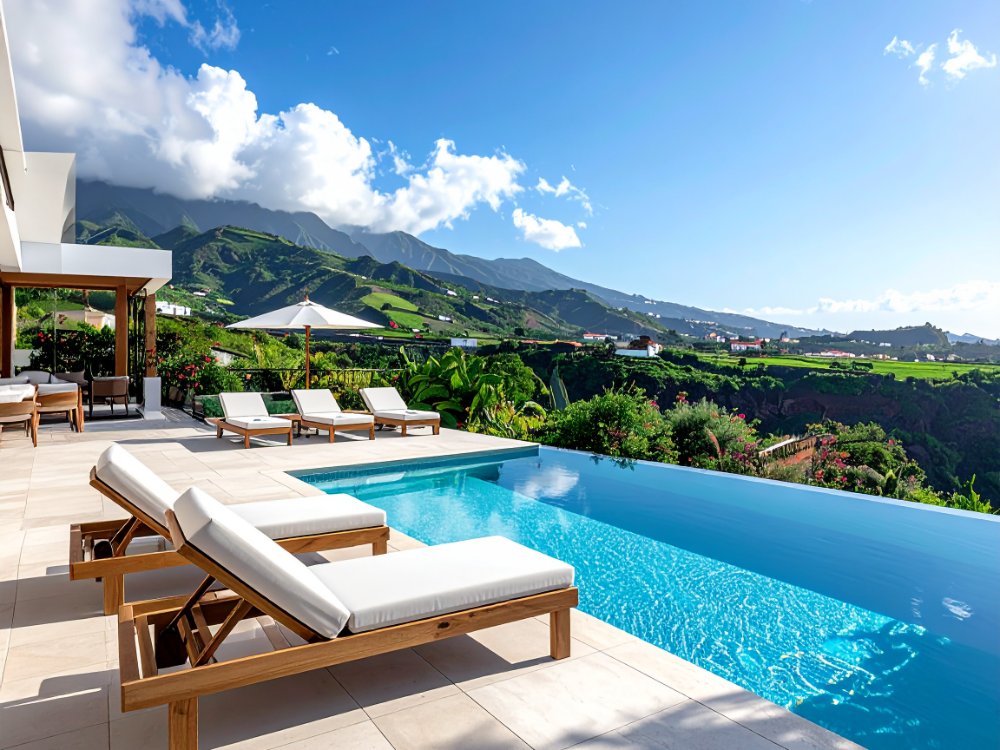
A small, good-value hotel on Calle San Juan, a few steps from Plaza del Charco, one of the most atmospheric squares in Puerto de la Cruz. The rooftop has a pool with views of Mount Teide, a sun terrace with loungers and a bar, which is a lovely spot at the end of a day out. Rooms are simple but comfortable, with air conditioning. It suits couples and independent travellers who want to be in the heart of town.
🏨 H10 Tenerife Playa
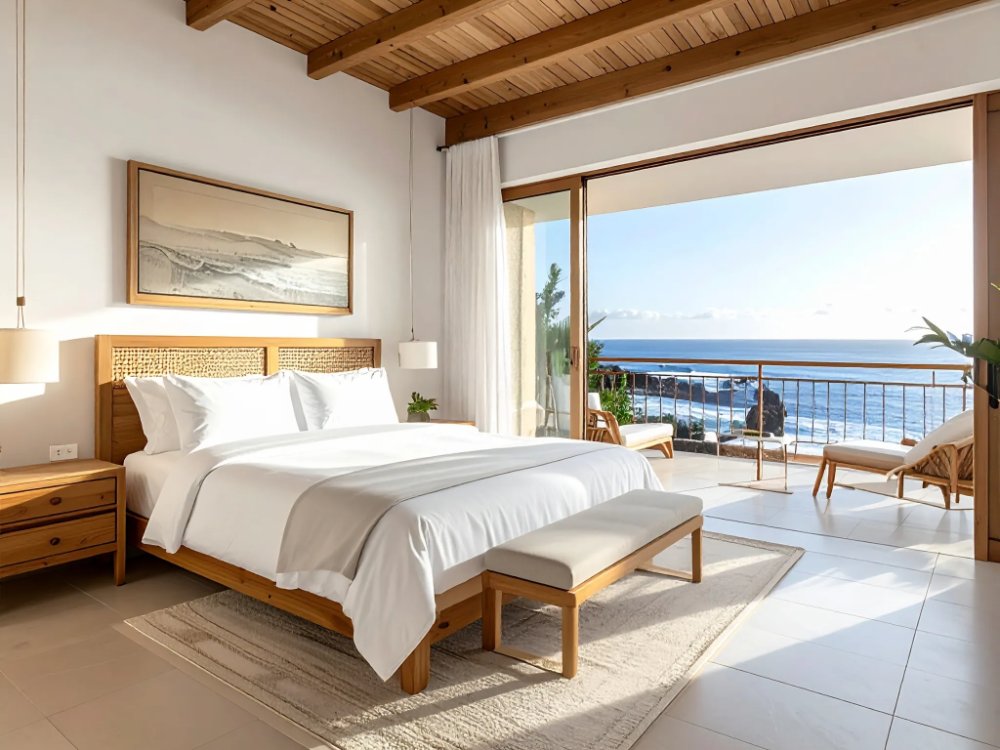
A four-star hotel right on the seafront, with an outdoor pool and a sun terrace overlooking the Atlantic. Many rooms have balconies with ocean views, and the restaurant serves a varied buffet. The old town, Lago Martiánez and the harbour are all a few minutes’ walk away. It’s a good choice for couples and families who want a classic seaside hotel without the busy feel of the southern resorts.
💎 Hotel Botánico & The Oriental Spa Garden
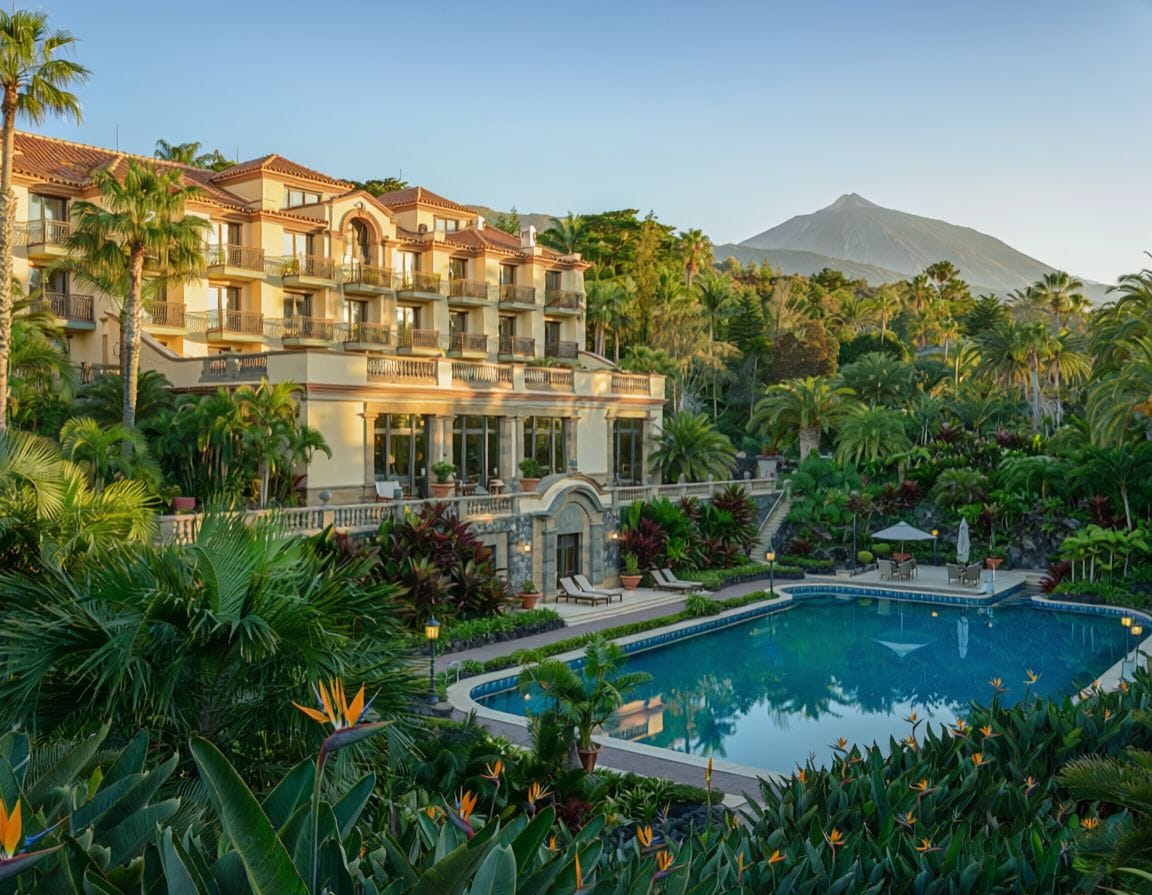
One of the most prestigious hotels in the Canary Islands, set in large tropical gardens right next to the Botanical Garden. The Oriental Spa Garden is one of the best-known spas on the island. There are several restaurants serving Asian and Mediterranean cuisine, three pools and views of the Atlantic and Mount Teide. It’s perfect for a special occasion or a slow, pampering holiday.
Tenerife FAQ
What is the best month to go to Tenerife?
Tenerife is warm all year, so any month works. Spring and autumn are ideal for hiking and sightseeing, with pleasant temperatures and fewer crowds than in winter. Summer is hot and dry in the south, while winter is the peak season for visitors escaping the cold, and snow can fall on Teide.
How many days in Tenerife is enough?
A week is enough to see the main sights. Plan a day for Teide National Park, a day for Masca and Los Gigantes, a day for La Laguna and Anaga, and a day for the northern towns, then add a whale watching trip and time on the beach. With ten days or more, you can add a day trip to La Gomera.
Is the north or south of Tenerife better?
It depends on what you want from your holiday. The south has more sunshine, calmer beaches and bigger resorts, so it’s better for a relaxing beach break. The north is greener and more traditional, with historic towns and forests, so it’s better for sightseeing and hiking.
Do you need a car in Tenerife?
You don’t need one for a beach holiday, but a car makes exploring much easier. Buses link the main towns, yet many of the best places, such as Masca, Anaga and parts of the national park, are hard to reach without one. Alternatively, join an organised tour to reach places further afield.
What is Tenerife famous for?
Tenerife is best known for Mount Teide, Spain’s highest mountain, and for its year-round sunshine. It’s also famous for whale watching, the carnival in Santa Cruz, Siam Park and the historic town of La Laguna. Together, they make it one of the most popular islands in Spain.

