Here, dinner rarely starts before 9pm and the streets are still buzzing long after midnight. Adjust to Madrid’s body clock and the city will reward you.
Madrid is the kind of capital city that wins you over slowly and then refuses to let go. It has no beach and no Gaudí, yet it gives you three of the world’s great art museums within a 15-minute walk, a royal palace with more than 3,400 rooms and some of the liveliest tapas bars in Europe. In this article you’ll find the best things to do in Madrid for first-time visitors and returning fans: the top sights, the neighbourhoods, free entry times, money-saving passes, a 3-day plan, day trips and practical tips checked for 2026.
💰 Preciados - A four-star hotel in a restored 19th-century building, a 5-minute walk from Puerta del Sol.
🏨 NH Collection Madrid Gran Vía - A four-star NH Collection hotel right on Gran Vía, a few minutes’ walk from Puerta del Sol.
💎 Mandarin Oriental Ritz, Madrid - An exceptional luxury hotel a few minutes’ walk from the Prado Museum and Retiro Park.
What is Madrid famous for?
The Spanish capital is famous above all for art. The Prado Museum, the Reina Sofía Museum and the Thyssen-Bornemisza Museum form the so-called Golden Triangle of Art along the Paseo del Prado. Together they cover European art from medieval altarpieces to Picasso’s Guernica. In 2021 the boulevard and the neighbouring Retiro Park were added to the UNESCO World Heritage List as “a landscape of arts and sciences”.
Madrid is also about royal splendour, football and food. The Royal Palace of Madrid is still the official residence of the Spanish royal family, although the King and his family actually live at the Zarzuela Palace outside the city. Real Madrid and Atlético both play a short metro ride from the city centre. And then there’s the eating: tapas in centuries-old taverns, churros dipped in thick hot chocolate and dinners that start when much of Europe is going to bed.
If you’re wondering which is nicer, Barcelona or Madrid, the answer is that they’re very different. Barcelona has the sea and Gaudí. Madrid feels more Spanish, less touristy and more about everyday life on the street. Many travellers who visit Madrid after Barcelona end up preferring it.
How many days do you need in Madrid?
Is 2 days in Madrid enough? Two days let you see the main sights in central Madrid at a brisk pace: the Royal Palace, Plaza Mayor, Puerta del Sol and one of the famous museums. Three days is the sweet spot for a first visit. You’ll have time for the Prado and the Reina Sofía, a slow afternoon in El Retiro Park and an evening of tapas without rushing. With 4-5 days you can add a day trip to Toledo or Segovia.
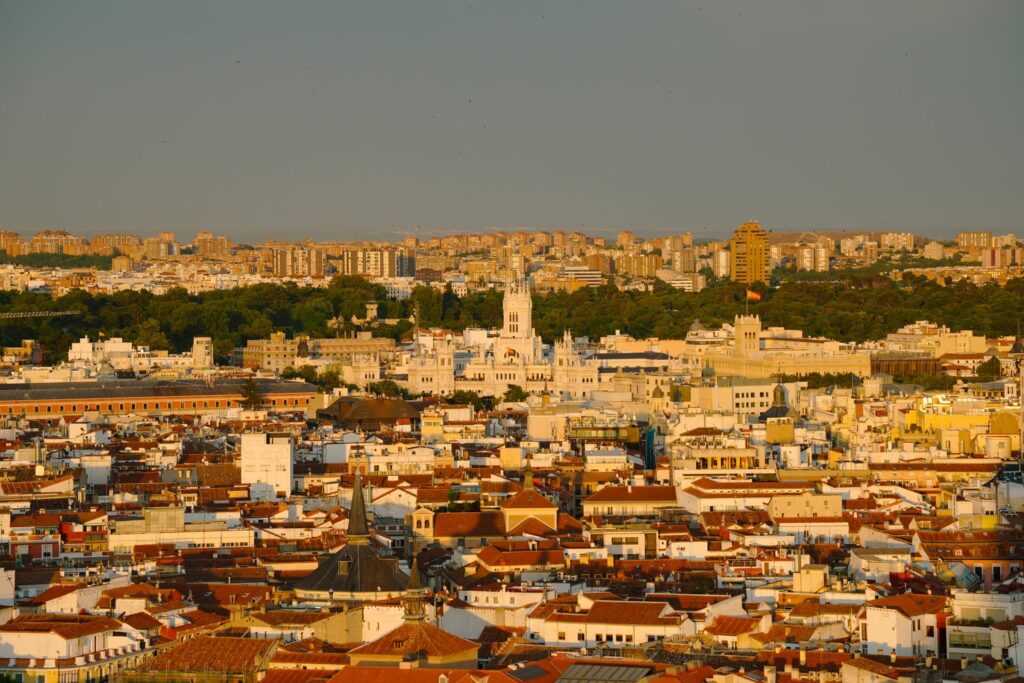
The historic centre is compact, so you can explore Madrid on foot and use public transport only for longer hops. Most top attractions sit between the Royal Palace in the west and Retiro Park in the east, about 3 km apart. Below you’ll find the places to visit in Madrid, then a 3-day plan that links them together.
Top things to do in Madrid
Here are the must-visit places and our favourite things to do in Madrid. The list mixes the famous Madrid sights with a few places where locals actually spend their weekends.
Royal Palace of Madrid
The Royal Palace of Madrid (Palacio Real) is the largest royal palace in Western Europe by floor area. It was built between 1738 and 1755 on the site of the old Moorish Alcázar, which burned down on Christmas Eve 1734. Charles III was the first king to live here. Today the royal family uses it only for state ceremonies and official receptions, so most of the year it’s open to visitors.
Inside, the route takes you up the grand staircase and through the Throne Room with its ceiling by Tiepolo, the Royal Armoury and the Royal Pharmacy of the Madrid Royal Palace. Our separate guide to the palace covers the rooms and the best time to go in detail. Two tips to remember: EU citizens and residents get free entry from Monday to Thursday in the last two hours (4pm-6pm from October to March, 5pm-7pm from April to September), and the queues for those slots form early.
Don’t miss the Changing of the Guard. It takes place every Wednesday and Saturday from 11am to 2pm (10am to 12pm in July and August) at the Puerta del Príncipe, and it’s free to watch. On the first Wednesday of most months, except January, August and September, the Solemn Changing of the Guard starts at noon in the Plaza de la Armería. It lasts about 50 minutes and brings out hundreds of soldiers and horses in 19th-century uniforms.
Next door, the Gallery of Royal Collections opened in 2023 to show tapestries, carriages, armour and paintings collected by Spanish monarchs over five centuries. It’s worth combining with the palace on one ticket, and EU citizens can also enter free from Monday to Thursday between 6pm and 8pm.
Almudena Cathedral and Plaza de Oriente
Right across the courtyard from the palace stands Almudena Cathedral. Its construction began in 1883, but it wasn’t consecrated until 1993, by Pope John Paul II. The result is a curious mix: a neoclassical exterior, a neo-Gothic nave with brightly painted ceilings and a neo-Romanesque crypt below. Climb up to the dome for one of the best views over the palace and Casa de Campo.
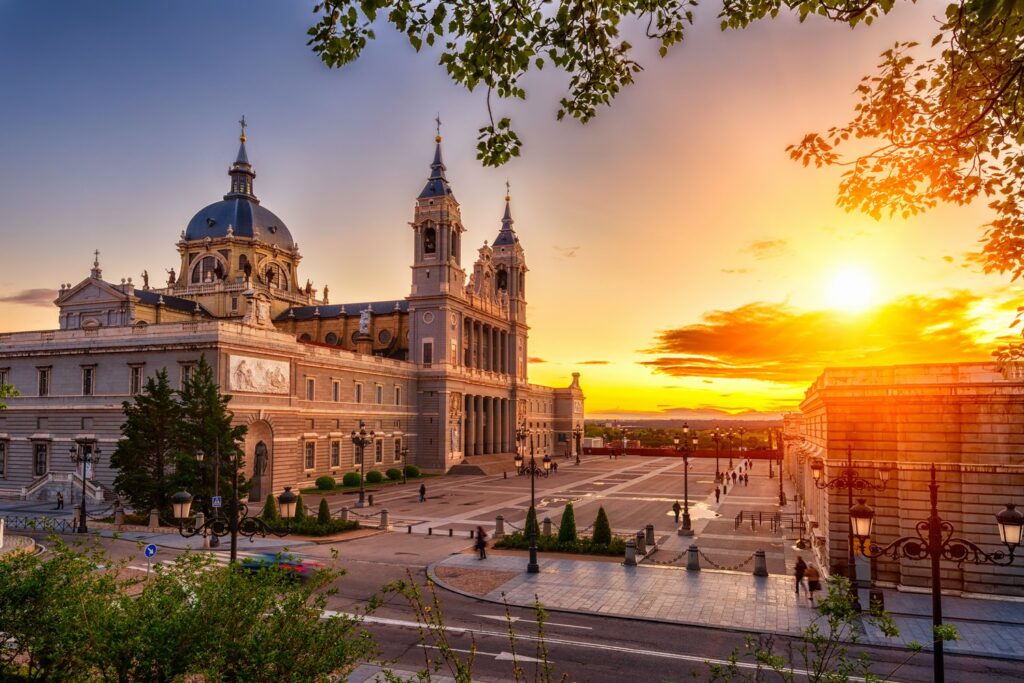
On the other side of the palace lies Plaza de Oriente, an elegant square with gardens, statues of Spanish kings and the Teatro Real opera house. It’s a lovely place to sit on a bench after your palace visit. At sunset, walk a few minutes north to the terraces of the Sabatini Gardens.
Plaza Mayor
Plaza Mayor was completed in 1619 under Philip III, whose equestrian statue still stands in the middle. Over the centuries the square has hosted markets, bullfights, royal proclamations and even executions. Look out for the Casa de la Panadería, the former bakers’ guild building with colourful frescoes on its façade.
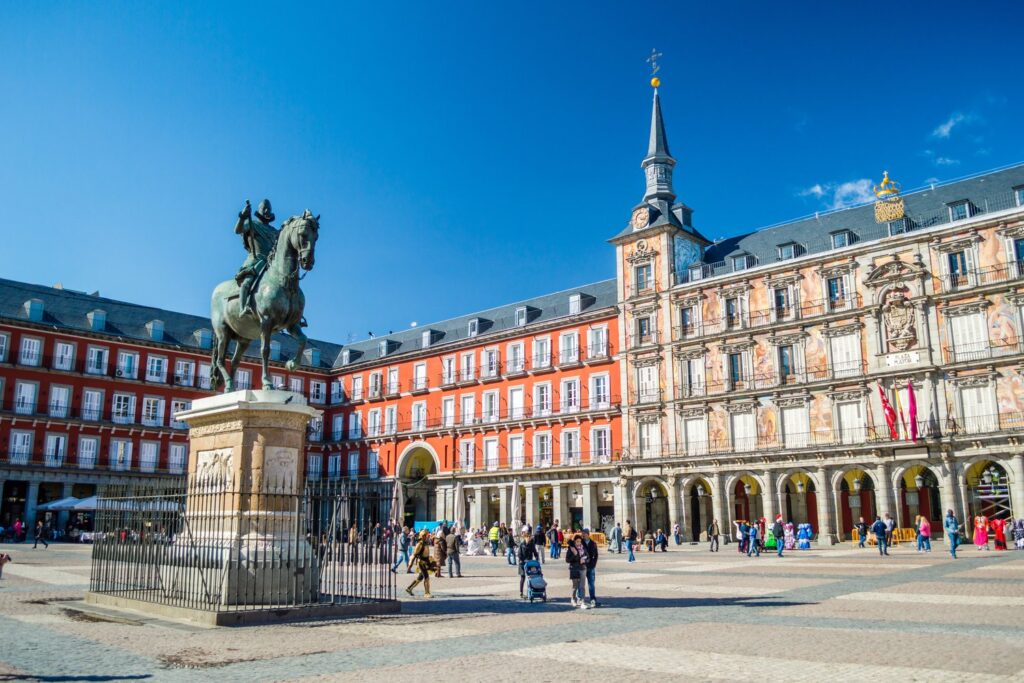
The cafés under the arcades are handy but pricey, so have a drink here for the atmosphere and eat elsewhere. Before you leave, try a bocadillo de calamares, a crusty roll filled with fried squid rings. It’s Madrid’s most famous street snack, and the bars in the side streets serve it from morning till late.
Mercado de San Miguel
Just west of Plaza Mayor, the Mercado de San Miguel occupies a handsome iron and glass market hall from 1916. It’s no longer a place where locals do their weekly shopping. Instead, you’ll find dozens of counters selling oysters, Iberian ham, croquetas, vermouth and Spanish wines by the glass.
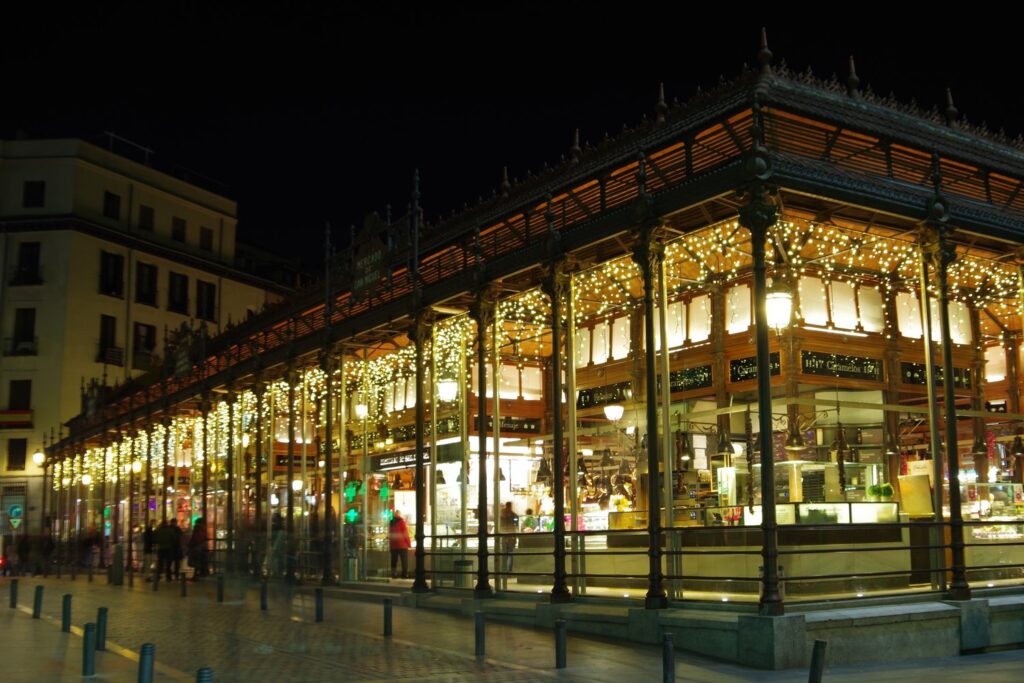
The market gets extremely busy in the evenings and at weekends, so come mid-morning or mid-afternoon. It’s a great introduction to Spanish food, although traditional bars a few streets away are cheaper and more authentic.
Puerta del Sol
Puerta del Sol is Madrid’s busiest square and the city’s main meeting point. Look down in front of the Real Casa de Correos to find the Kilómetro Cero plaque, from which Spain’s national roads are measured. On the opposite side stands the statue of the Bear and the Strawberry Tree, the symbol of Madrid.
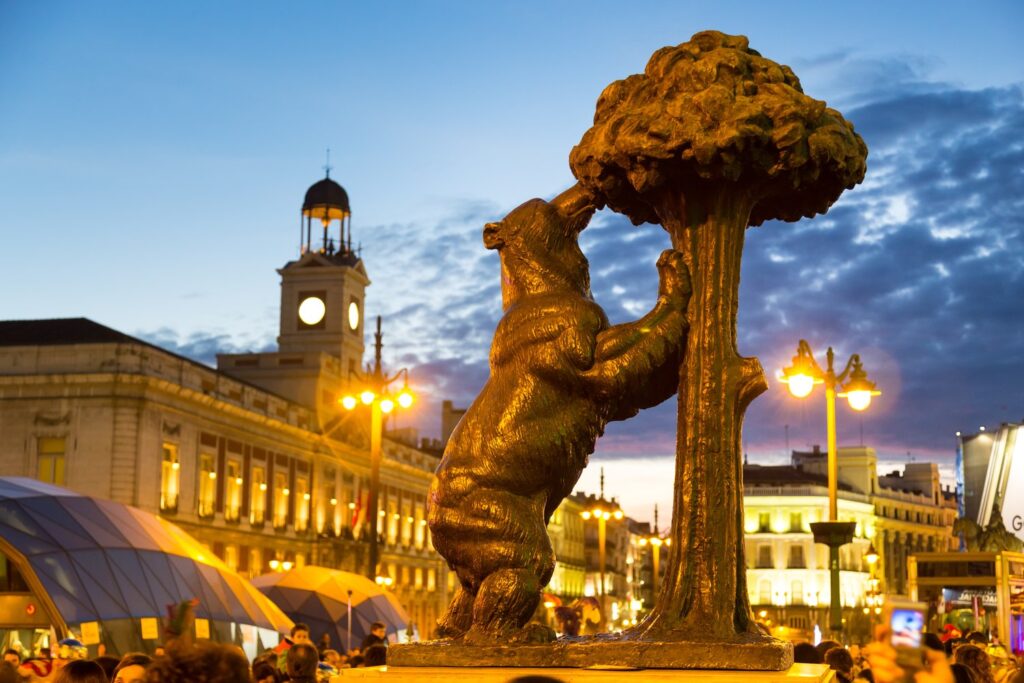
On New Year’s Eve, thousands of people gather here to eat 12 grapes with the 12 chimes of the clock. On any other night, you’ll find street performers and crowds heading down the main streets to the shops on Calle de Preciados and Calle del Carmen. Keep an eye on your bag, as pickpockets love the square too.
Gran Vía
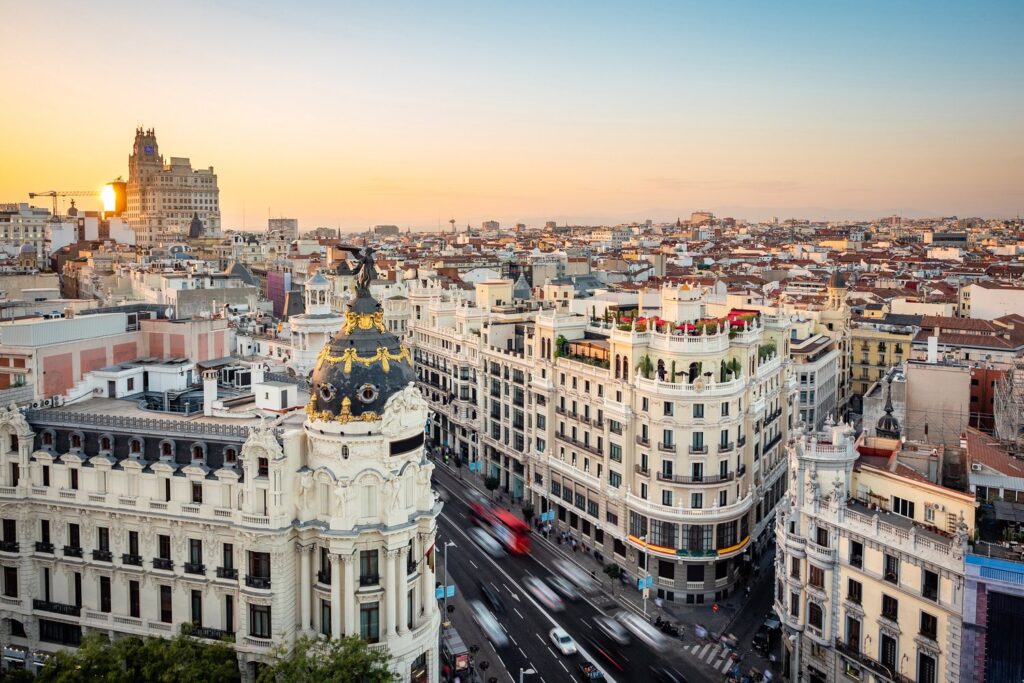
Gran Vía is Madrid’s grandest boulevard, built from 1910 onwards and often called the Spanish Broadway, or even Madrid’s Hollywood Boulevard, because of its theatres, musicals and old cinema palaces. Its early 20th-century buildings, like the Metrópolis with its winged statue and the Telefónica tower, look their best at sunset.
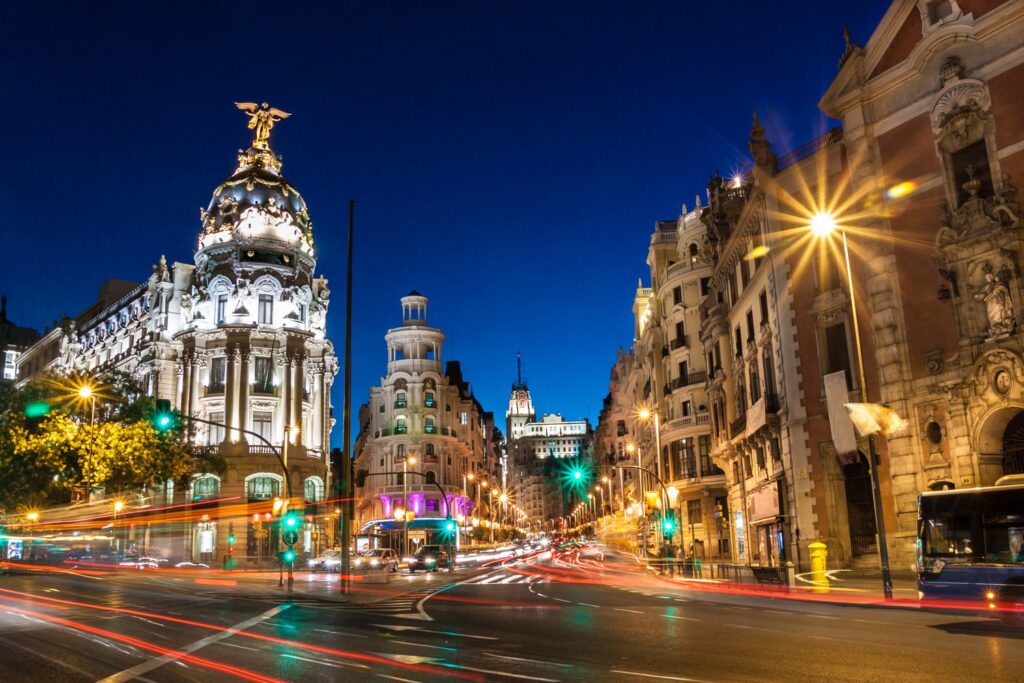
This is also the place to try a rooftop bar. The terraces at Riu Plaza España, at the Círculo de Bellas Artes and on several hotel roofs along the street offer wide views over the city. On Saturday nights the bustling streets around Gran Vía stay lively until the early hours.
Prado Museum
If you only visit one museum in Madrid, make it the Prado Museum. It opened in 1819 and holds one of the finest collections of European art in the world. Its rooms are a crash course in Spanish art history, with masterpieces by Velázquez, Goya and El Greco, alongside Titian, Rubens and Hieronymus Bosch.
You can’t see everything in one go, so pick a handful of works such as Las Meninas, Goya’s Black Paintings and the Garden of Earthly Delights. Our Prado guide suggests a route around the crowds. Admission is free in the last two hours before closing: Monday to Saturday from 6pm to 8pm, and on Sundays and public holidays from 5pm to 7pm. Expect long queues during free hours, so a timed ticket earlier in the day is more relaxing.
Reina Sofía Museum
The Reina Sofía Museum is Madrid’s main museum of 20th-century and contemporary art. It occupies a former hospital near Atocha train station, with glass lifts added to the façade. The star of the collection is Picasso’s Guernica, painted in 1937 after the bombing of Guernica, a small Basque town. You’ll also see works by Dalí, Miró and Juan Gris.
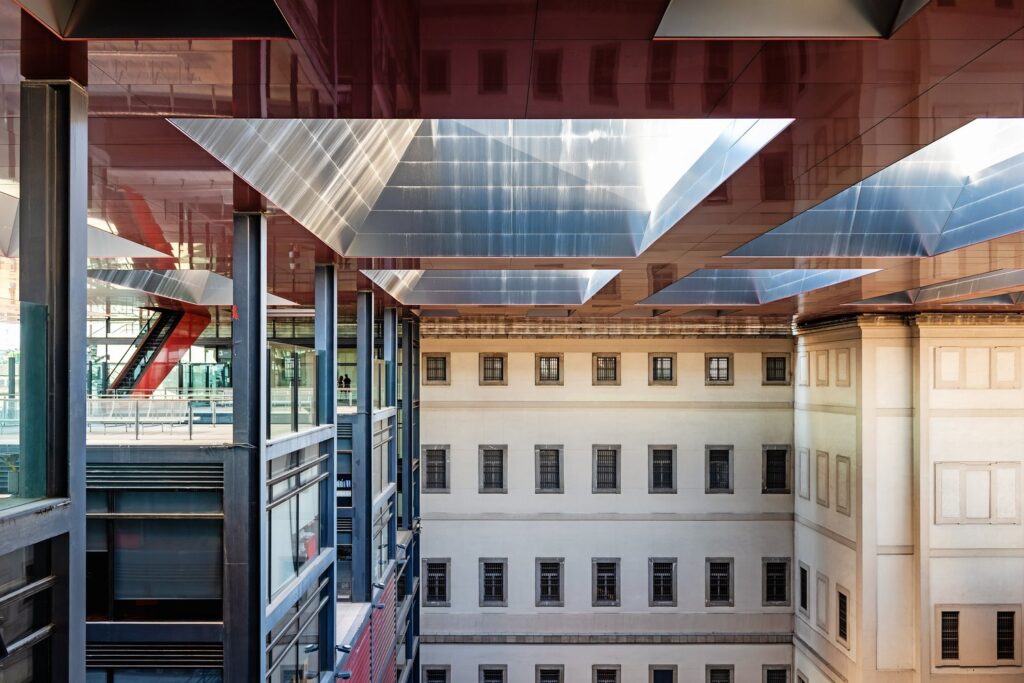
The museum is closed on Tuesdays. Entry is free from 7pm to 9pm on Mondays and from Wednesday to Saturday, and on Sundays from 12.30pm to 2.30pm. You still need a free ticket for those slots. Don’t try to see it all: pick the second floor with Guernica and the Spanish avant-garde, and enjoy it properly.
Thyssen-Bornemisza Museum
The third corner of the triangle, the Thyssen-Bornemisza Museum, fills the gaps left by the other two. This extraordinary collection, once privately owned, spans some 800 years, from Italian primitives to Impressionism, Van Gogh, German Expressionism and American pop art. It’s also the best place in Madrid to see modern art beyond Spanish names, from Hopper to Lichtenstein.
The museum is smaller and calmer than the Prado, so it’s perfect on a rainy afternoon. The permanent collection is free on Mondays from 12pm to 4pm, with no ticket needed. On Saturday evenings its temporary exhibitions stay open until 11pm.
Still hungry for art? The Sorolla Museum, in the painter’s former home and garden, is a small, charming house museum full of Mediterranean light. Across from the Prado, CaixaForum Madrid hosts temporary exhibitions behind a vertical garden of some 15,000 plants.
El Retiro Park
El Retiro Park covers 118 hectares right next to the Golden Triangle of Art. Once the private gardens of the Spanish kings, it opened to the public in the 19th century. Today this beautiful park is where Madrileños go running, read in the shade of thousands of trees and row boats on the Estanque Grande (Great Pond), overlooked by the monument to Alfonso XII.
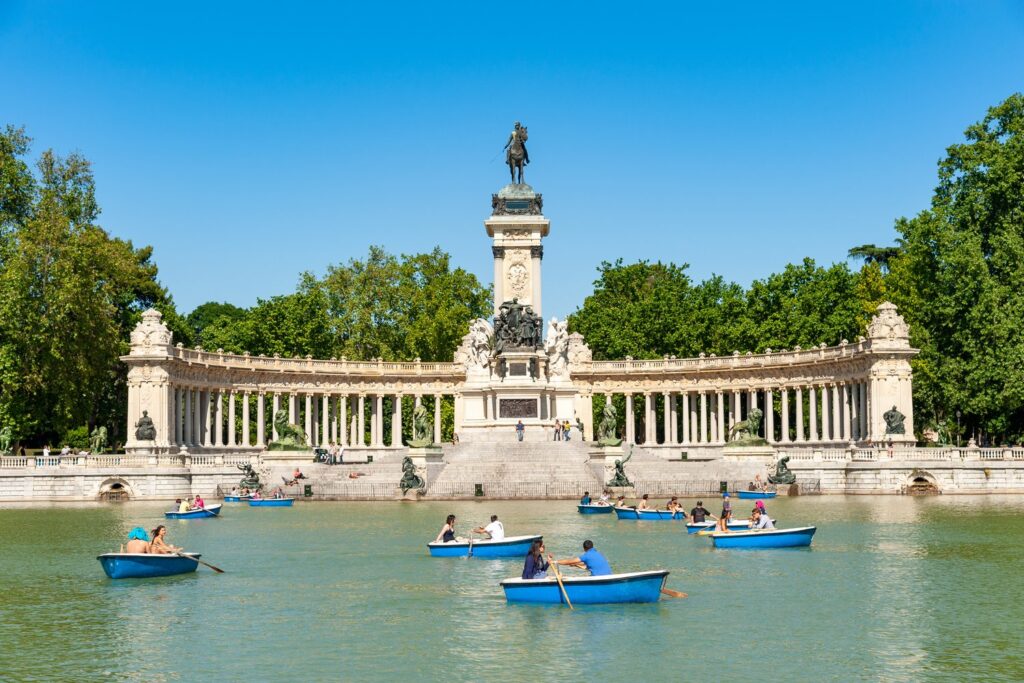
The park’s most photographed building is the Crystal Palace (Palacio de Cristal), an iron and glass pavilion from 1887 that normally hosts exhibitions of the Reina Sofía. The Palacio de Cristal is closed for restoration until around 2027. Until 1 January 2027 it’s wrapped in Fardo, a huge textile installation by the artist Andrea Canepa, which you can see for free from outside. Wander south to the Rose Garden and find the Fallen Angel fountain, said to be one of the very few public statues of the Devil in the world.
Puerta de Alcalá and Plaza de Cibeles
At the north-west corner of Retiro stands the Puerta de Alcalá, a neoclassical gate commissioned by Charles III and finished in 1778. It once marked the road to Alcalá de Henares and the edge of the old city walls. A few minutes’ walk away is Plaza de Cibeles, with its fountain of the goddess Cybele in a lion-drawn chariot.
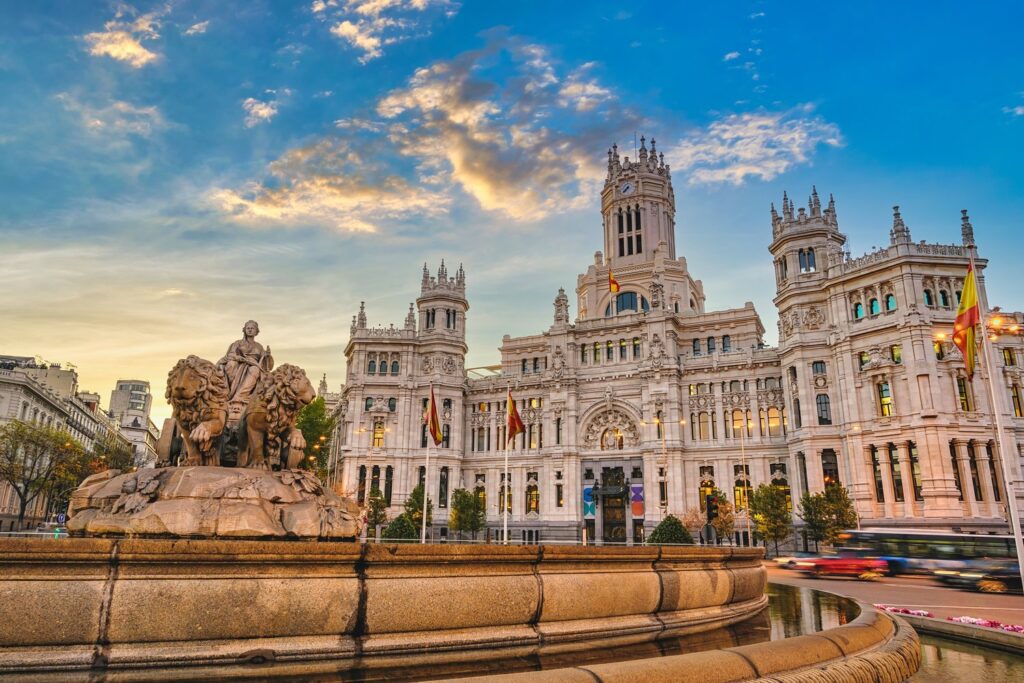
Behind the fountain rises the Palacio de Cibeles, the former post office and now City Hall. Take the lift to its viewing platform for a sweeping view down Gran Vía and Calle de Alcalá. When Real Madrid win a big trophy, the fans celebrate right here at the fountain.
Egyptian Temple of Debod
One of the most surprising places to visit in Madrid is a genuine Egyptian temple. The Temple of Debod dates from the 2nd century BC and originally stood on the banks of the Nile, south of Aswan. Egypt gave it to Spain in 1968, in thanks for Spain’s help in saving the Nubian temples, including Abu Simbel, and it opened in its current spot in 1972.
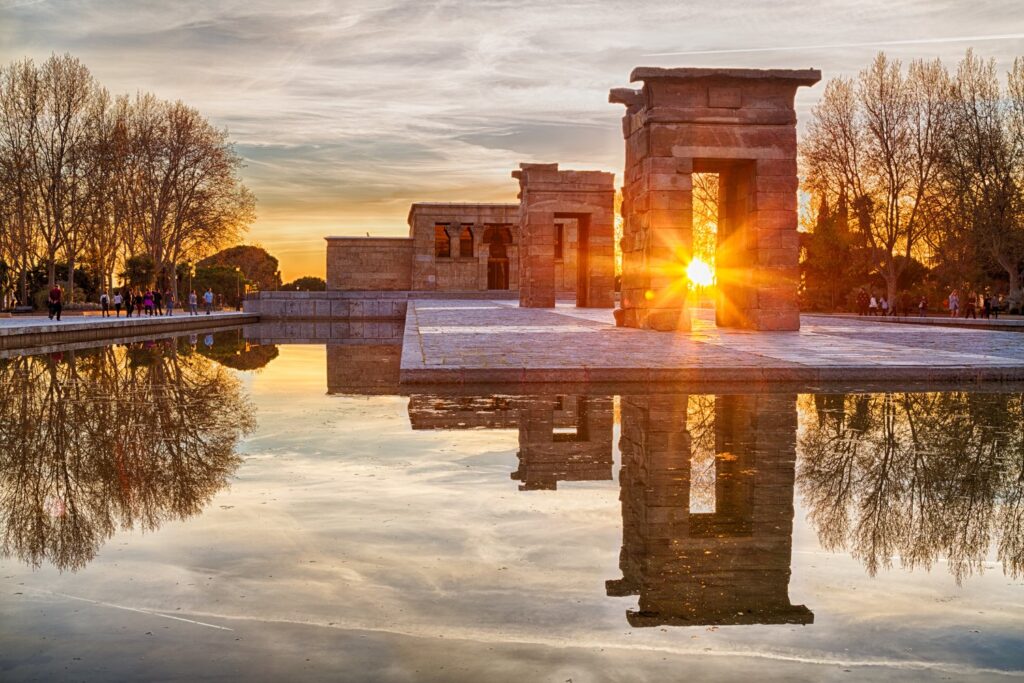
The temple stands in a park on a hill west of Plaza de España, reflected in a shallow pool. Come for sunset, when the sky behind it turns orange over Casa de Campo. Entry to the small interior is free, but only 30 people can go in at a time for up to half an hour. It’s closed on Mondays, and free timed tickets can be booked online from the 15th of the previous month.
El Rastro flea market
On Sundays and public holidays, the streets of La Latina fill with the El Rastro flea market. Around 1,200 stalls run down from Plaza de Cascorro along Ribera de Curtidores and the side streets. You’ll find vintage clothes, vinyl records, antiques, leather goods and plenty of tourist souvenirs.
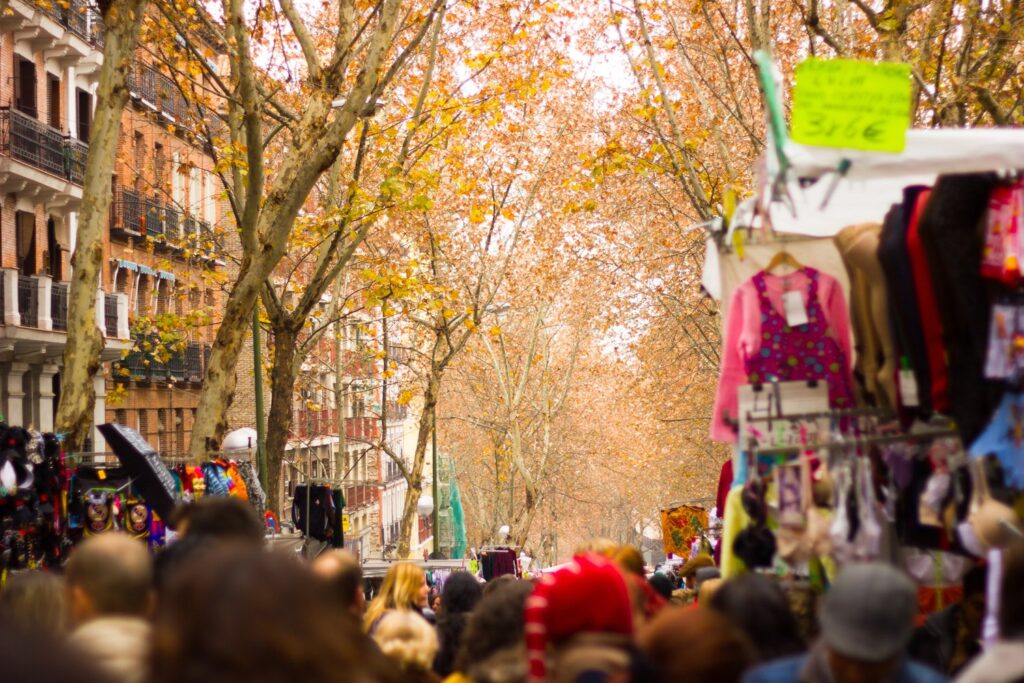
El Rastro has been held for centuries, and it’s a true treasure trove for bargain hunters. Trading runs from about 9am to 3pm, and it’s most crowded between 11am and 2pm, so arrive early. After browsing, do as the locals do and head to the bars of La Latina for a vermouth.
Santiago Bernabéu and Metropolitano stadiums
Football fans shouldn’t miss a tour of the Santiago Bernabéu Stadium, home of Real Madrid since 1947. After a massive renovation, the stadium now has a retractable roof and a shiny steel façade. It’s one of the most modern football grounds in the world. The self-guided tour includes a panoramic view of the stands, the dressing room, the press room, the players’ tunnel and a trophy hall packed with Champions League cups.
Plan your route carefully in 2026. Metro line 10 between Nuevos Ministerios and Cuzco is closed for works until the end of 2026, while the Bernabéu station itself is rebuilt, with reopening due in early 2027. Until then, take line 6 or 8 to Nuevos Ministerios and walk up the Paseo de la Castellana for about 15 minutes, or hop on bus 27 or 147. On home match days the tour runs shorter hours or may not run at all, so check the fixtures before you book.
Atlético fans can head east to the Metropolitano, Atlético de Madrid’s stadium since 2017. Its tour takes you into the dressing rooms and down to pitchside, and it’s right next to the Estadio Metropolitano stop on metro line 7.
Flamenco show
Flamenco was born in Andalusia, but Madrid has some of the best tablaos (flamenco venues) in Spain. Watching a live show in an intimate venue is one of the most memorable things to do in Madrid at night. Many shows include tapas or dinner and start around 7pm or later.
The guitar, the singing and the rhythmic footwork can be overwhelming at first. Choose a small venue where you’ll be close to the stage, and book a few days ahead, especially at weekends.
Explore Madrid neighbourhood by neighbourhood
Madrid’s real charm lies in its barrios. Each district has its own character, and walking between them is the best way to get to know the city.
La Latina
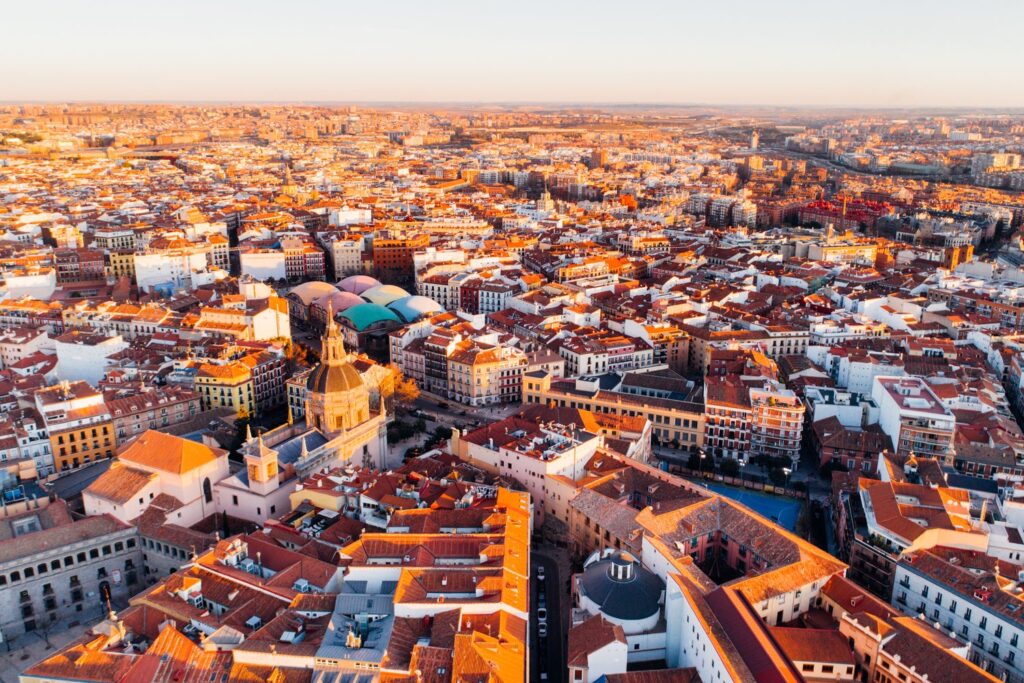
La Latina is one of the oldest parts of the city, with crooked medieval streets and small squares. Many call it Madrid’s best foodie neighbourhood. On Sundays after El Rastro it turns into one big tapas crawl along Calle Cava Baja. The Basilica of San Francisco el Grande, with one of the largest domes in Spain, is also worth a stop.
Barrio de las Letras
The Barrio de las Letras (Literary Quarter) lies between Puerta del Sol and the Paseo del Prado. Cervantes, Lope de Vega and Quevedo all lived here, and quotes from their works are set into the pavement of Calle de las Huertas. At its heart is Plaza de Santa Ana, surrounded by traditional bars where Ernest Hemingway once drank.
Malasaña and Chueca
Malasaña is Madrid’s creative, alternative neighbourhood, full of independent shops, street art and laid-back cafés. It takes its name from Manuela Malasaña, a young seamstress killed during the uprising against Napoleon’s troops on 2 May 1808. Next door, Chueca is the centre of the city’s LGBTQ+ scene, with stylish restaurants and some of the best nightlife in town.
Salamanca
For elegant boulevards and designer boutiques, head to Salamanca, north of Retiro. Calle de Serrano is the smartest shopping street in Madrid. The area is also home to excellent restaurants and the Mercado de la Paz, a local food market.
Madrid Río and Casa de Campo
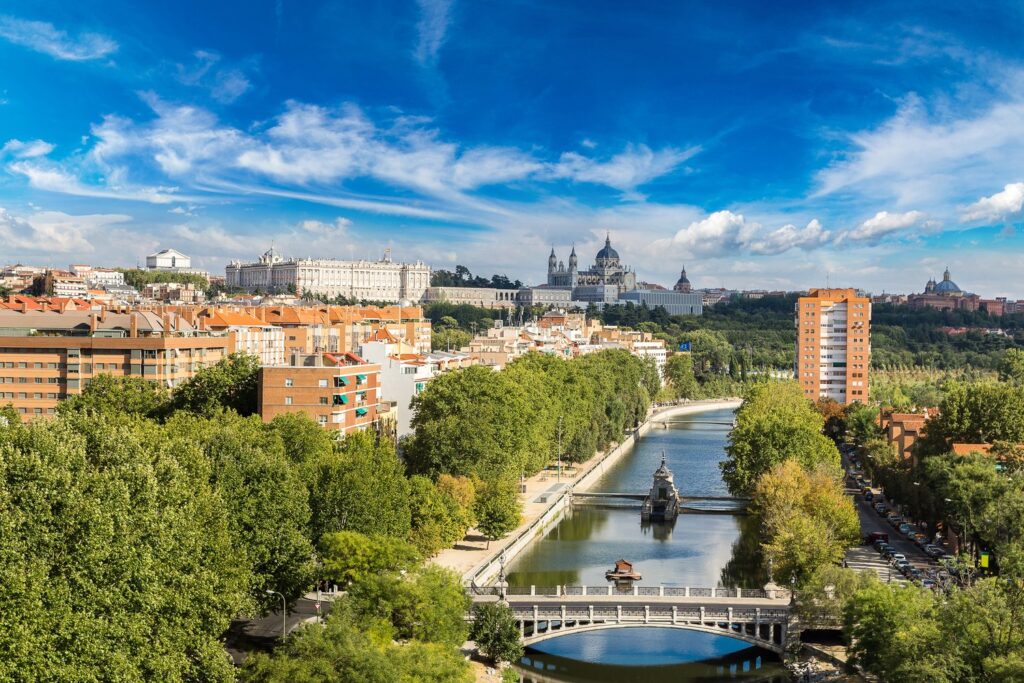
West of the centre, the Madrid Río park follows the River Manzanares for several kilometres, with cycle paths, playgrounds and old bridges. It leads south to Matadero, a former slaughterhouse turned arts centre. Across the river lies Casa de Campo, Madrid’s biggest green space. The cable car that links it with the city is closed for renovation and should reopen in early 2027.
Where can you enjoy tapas and Madrid’s food scene?
Madrid has amazing food, and much of it comes in small plates meant to be shared. Classic tapas here include patatas bravas, croquetas, Iberian ham, tortilla de patatas and gambas al ajillo (garlic prawns). Many traditional bars still serve a small free tapa with your drink, and at weekends locals order vermouth on tap. For a hearty local dish, try cocido madrileño, a slow-cooked chickpea stew.
Two places deserve a special mention. Chocolatería San Ginés, open since 1894 in a passage near the Church of San Ginés, is the place for churros with hot chocolate, ideally at breakfast or after a night out. Botín, founded in 1725, is listed by Guinness as the oldest restaurant in the world and is famous for its roast suckling pig.
Remember that Madrid eats late. Lunch is usually between 2pm and 4pm, and restaurants fill up from about 9pm. Tipping isn’t compulsory in Spain. Locals leave small change in bars and around 5-10% in restaurants if the service has been good.
Madrid with kids
Madrid is a surprisingly easy city to visit with children. Retiro’s boats and puppet shows, the playgrounds of Madrid Río and churros at San Ginés keep most kids happy. For a full day out, Casa de Campo has both the Parque de Atracciones amusement park and the Zoo Aquarium de Madrid, with pandas, dolphins and a big aquarium.
Older kids will love Parque Warner Madrid, a theme park with themed zones inspired by Looney Tunes, DC superheroes and old Hollywood, about 25 km south of the city. In summer its water park, Warner Beach, opens next door. Keep in mind that most kids’ attractions get extremely busy at weekends and during Spanish school holidays.
Free things to do in Madrid
Madrid is generous with free culture. The big three museums all have free hours, as do the Royal Palace and the Gallery of Royal Collections for EU citizens. The Temple of Debod, the Changing of the Guard, El Rastro and Retiro cost nothing at all. You can also join a free walking tour, watch the sunset from the Debod hill or stroll along Madrid Río.
The downside of free slots is the crowds. If your time is short, it’s often better to book a timed ticket for the morning and save the free evening hours for a second visit.
Madrid tourist passes and combined tickets
If you plan to see all three art museums, the Paseo del Arte pass gives you one visit to the permanent collections of the Prado, the Reina Sofía and the Thyssen at a discount. It stays valid for a year, so you don’t need to cram all three into one day. The Royal Palace and the Gallery of Royal Collections also sell a combined ticket.
For transport, the Tourist Travel Pass (Abono Turístico) gives unlimited rides for 1, 2, 3, 4, 5 or 7 days on a contactless Tarjeta Multi card. The city’s own Madrid City Card goes further. It combines unlimited travel in zone A, including the airport supplement on the metro, with fast-track entry at some attractions and discounts at museums, restaurants and shops. It’s available for 1 to 5 days at tourist offices, including both airport terminals.
3 days in Madrid - a plan for your first visit
This 3-day plan covers the top attractions without exhausting you. Plan the order around the museums’ closing days, and remember that El Rastro takes place only on Sundays and public holidays.
Day 1 - Royal Madrid and the historic centre
Start at the Royal Palace when it opens and visit Almudena Cathedral next door. Stroll through Plaza de Oriente and the Sabatini Gardens, then walk to Mercado de San Miguel for a late-morning snack. After lunch, explore Plaza Mayor and Puerta del Sol, and finish the afternoon on Gran Vía. Watch the sunset from a rooftop bar and spend the evening on a tapas crawl in La Latina.
Day 2 - The Golden Triangle of Art and El Retiro
Spend the morning at the Prado Museum, then have lunch in the Barrio de las Letras. In the afternoon, wander through El Retiro Park, rent a rowing boat on the lake and walk out through Puerta de Alcalá to Plaza de Cibeles. Go up to the viewpoint of the Palacio de Cibeles, then pick either the Reina Sofía or the Thyssen for the evening. End the day with a flamenco show.
Day 3 - Markets, football and sunset at the temple
If it’s Sunday, start at El Rastro and stay in La Latina for vermouth. On other days, take a morning tour of the Bernabéu or browse Salamanca’s shops. Spend the afternoon in Malasaña and Chueca, then walk to the Temple of Debod for sunset. Finish your stay with churros at San Ginés.
Day trips from Madrid
Madrid is a perfect base for day trips. Thanks to high-speed trains, several UNESCO-listed cities are less than an hour away. You can book train tickets to Toledo or Segovia online in advance.
Toledo, the old imperial capital, sits on a hill above the River Tagus, about half an hour by train from Atocha. Its medieval streets hide a magnificent Gothic cathedral, synagogues and many paintings by El Greco, who lived here for almost 40 years. Segovia is famous for its Roman aqueduct, its fairy-tale Alcázar and roast suckling pig. High-speed trains from Chamartín take about 27 minutes, then a local bus drops you at the aqueduct.
Other great options include the vast monastery of El Escorial, built for Philip II, and walled Ávila. You can also take an organised tour that combines Toledo and Segovia in one day. If you prefer flexibility, car hire makes it easy to explore the countryside, but don’t drive in central Madrid, where low-emission zones and parking are a hassle.
Practical information and tips for your first visit
How do you get from Madrid Barajas Airport to the centre?
Madrid Barajas Airport is about 12 km from the city centre. Metro line 8 runs from the airport to Nuevos Ministerios in around 15-20 minutes, where you can change to line 6 or to Cercanías trains. Remember that single metro tickets from the airport carry a supplement. The Airport Express bus runs 24 hours a day: by day it goes to Atocha station, and from around midnight to 6am it ends at Cibeles. Cercanías trains also link Terminal 4 with Chamartín, Nuevos Ministerios and Atocha. Taxis charge a fixed fare to the city centre, and airport transfers are a good option late at night.
How do you get around Madrid?
Madrid’s public transport is excellent. The metro has 12 lines plus three light rail lines and reaches almost every sight in this article, while buses fill the gaps. Trains run from 6am to 1.30am. A tourist travel pass will save you time at the ticket machines. In the historic centre, though, walking is usually faster than the metro, and it’s the best way to explore Madrid.
When is the best time to visit Madrid?
Spring (April to June) and autumn (September and October) are ideal, with temperatures of 15-25°C and long evenings outdoors. July and August can exceed 35°C, and many locals leave the city. Winter is cold but sunny, and Christmas lights make the centre look magical. Keep an eye on public holidays, too. The San Isidro festival around 15 May brings concerts, traditional dress and street parties.
Is Madrid safe?
Madrid is one of the safest capitals in Europe, and there are no central areas most visitors need to avoid. The main problem is pickpocketing in crowded places like Puerta del Sol, Gran Vía, El Rastro and the metro. Keep your phone and wallet in a front pocket and you’ll be fine.
Is Madrid worth visiting?
Absolutely. Madrid combines world-class art and royal heritage with a relaxed, sociable lifestyle that’s hard to find in other European cities. Come for the museums, the football or the food, and these things to do in Madrid will easily fill a long weekend. You’ll probably start planning your next trip before you leave.
The best areas to stay are around Sol, Gran Vía and the Barrio de las Letras, close to the main sights. Book your accommodation early for spring and autumn, when the best-located hotels fill up fast.
See available accommodation in Madrid
Hotels in Madrid
Madrid’s centre is compact and well served by the metro, so staying near Sol, Gran Vía or the Paseo del Prado puts most sights within walking distance. Here are three hotels for different budgets.
💰 Preciados
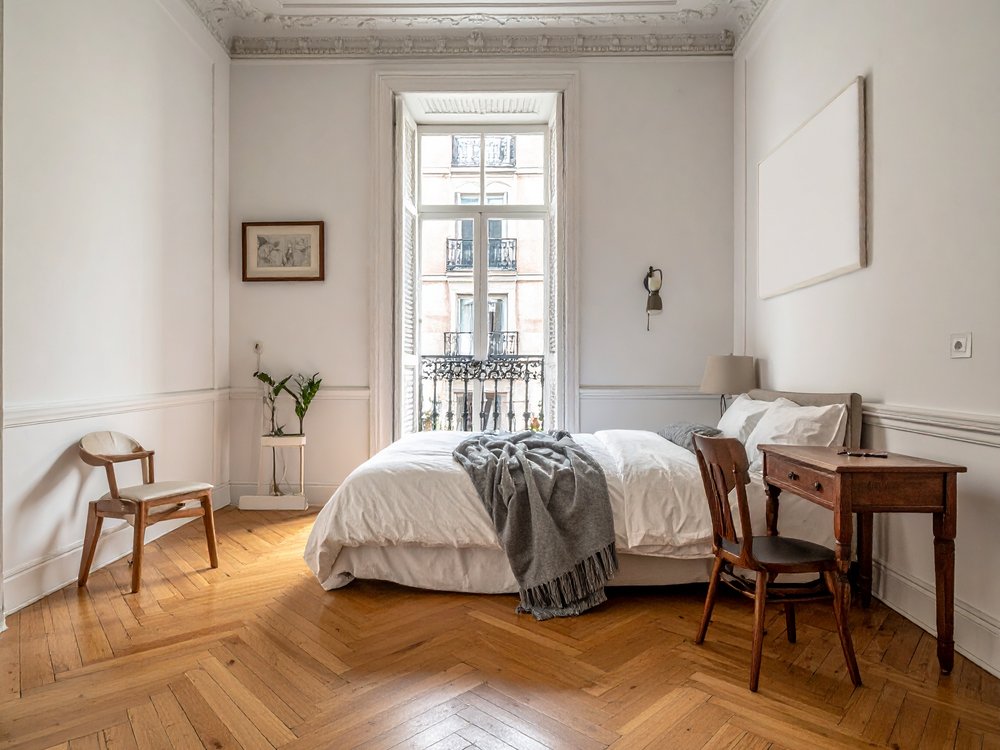
This four-star hotel sits in a restored 19th-century building on Calle de Preciados, a 5-minute walk from Puerta del Sol. Plaza Mayor and the Royal Palace are also within an easy stroll, so you can see the historic centre without using the metro. Rooms are tastefully decorated and quiet for such a central street. It’s a smart choice if you want to be in the thick of it at a sensible price.
🏨 NH Collection Madrid Gran Vía
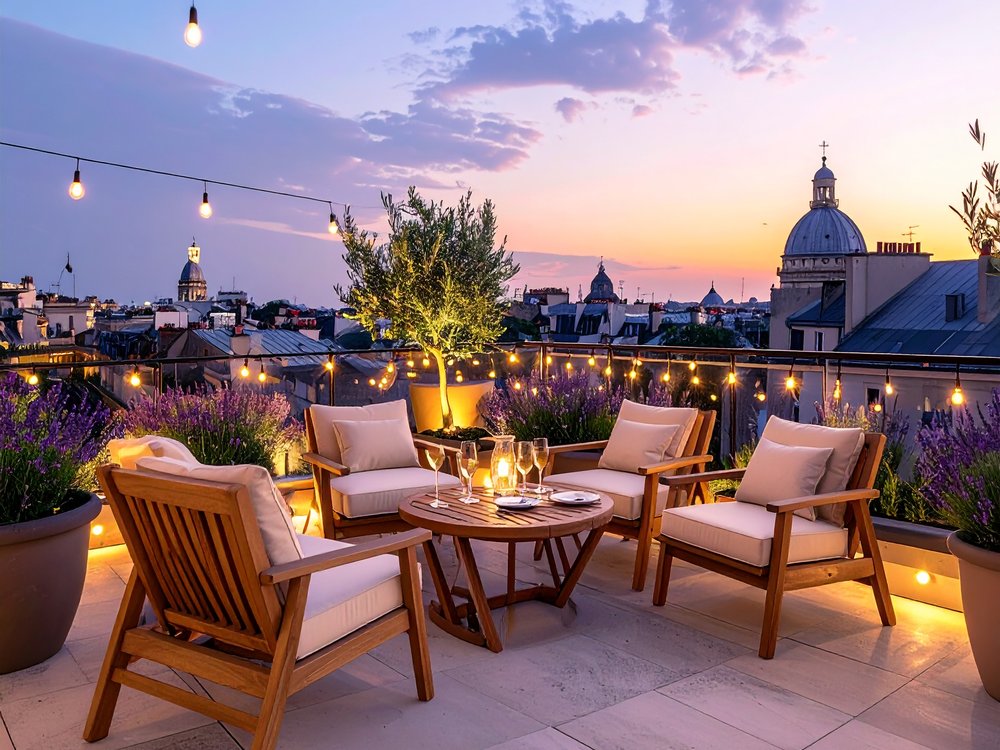
You’ll stay right on Gran Vía, a few minutes’ walk from Puerta del Sol, in an elegant early 20th-century building. Stylish rooms come with a coffee machine, and a generous buffet breakfast sets you up for a day of sightseeing. The rooftop terrace overlooks the boulevard and is lovely at sunset. It’s ideal for couples and anyone who wants the theatres and shops on the doorstep.
💎 Mandarin Oriental Ritz, Madrid
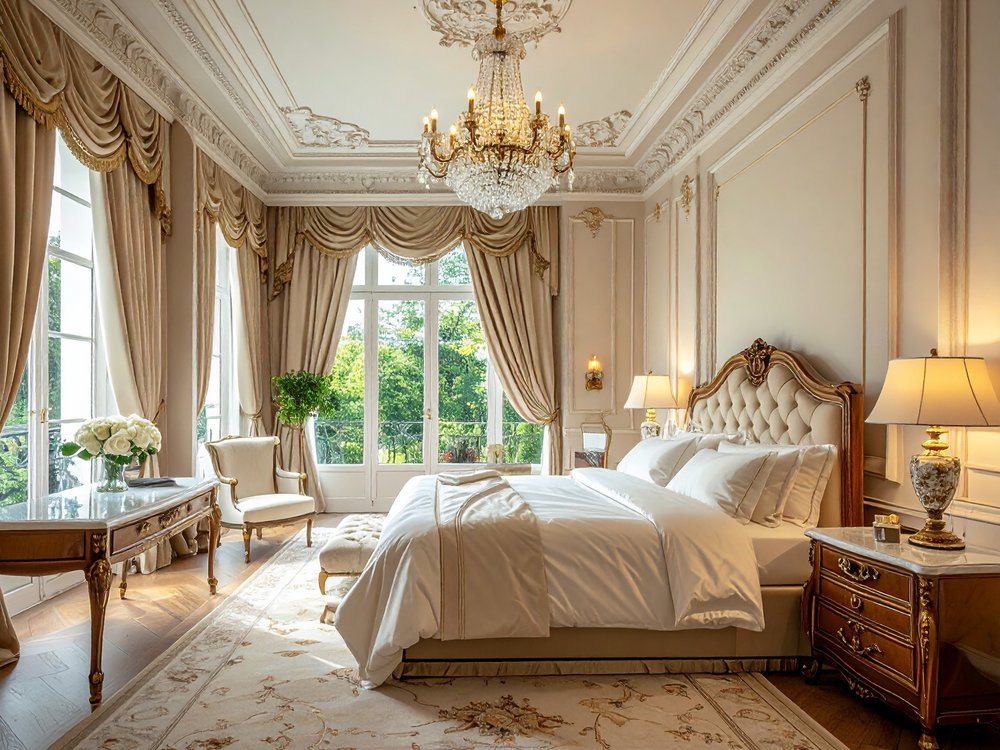
This Belle Époque palace from 1910 stands on Plaza de la Lealtad, steps from the Prado Museum and El Retiro Park. After a careful restoration, its rooms and suites blend classic elegance with contemporary comfort. The spa has an indoor pool and a steam room, perfect after a long day on your feet. It’s the place to splurge on a special occasion in the Spanish capital.

