The Autonomous Community of Valencia is a region located in the southwest of the Iberian Peninsula.
You can find coasts there such as Costa Azahar, Costa Valenciana and Costa Blanca. The latter (transl. White Coast) undoubtedly attracts the most tourists. The beaches in this place are even about 350 m wide, and the weather in this region is good all year round, which also favors the development of agriculture.
It is the Autonomous Community of Valencia that is considered one of the most fertile areas in all of Europe (crops can be harvested here 2-3 times a year). This fertile land is made up of three provinces: Alicante, Castellón and Valencia. Its territory also includes Rincón de Ademuz, which lies in the east of the Autonomous Community of Madrid.
Valencia Province
The capital of the Autonomous Region of Valencia is the 800 000 - person city of the same name - the third largest in Spain in terms of population. It is surrounded by fertile gardens and orchards of Huerta de Valencia and located on the right bank of the Turia River, called Guadalaviar (transl. White River) by the Arabs.
💰 Hotel & Spa Castillo de Peñíscola - A four-star beachfront hotel in Peñíscola, overlooking the famous Papa Luna Castle.
🏨 Hotel Cardenal Ram (Morella) - A former 16th-century bishop’s palace, now a boutique hotel in the heart of medieval Morella.
💎 Hotel RH Don Carlos & Spa (Peñíscola) - A modern four-star hotel 100 m from Playa Norte, with a distinctive glass rooftop pool.
The course of the White River was shifted after a huge flood that hit this area in 1957 and caused the death of several dozen people and damage estimated at several million pesetas! Currently, the largest park in Spain is located on the site of the dried-up riverbed. It is a 6.5 km long strip of greenery in the very center of the city, bustling with life from morning until late evening.

Where the Turia River once ended its course, a kilometer from the coast, the City of Arts and Sciences (Ciudad de las Artes y las Ciencias) was built, designed by one of the most famous Spanish architects, Santiago Calatrava. It was built in the back of the port, as the artist himself claims - in the most depressed part of Valencia. Now it is the most visited place by tourists in the whole city. The complex is called the “district of the future” by the locals due to its very modern appearance. The Ciudad de las Artes y las Ciencias includes, among others, the largest oceanarium in Europe with 40,000 animals representing over 500 different species!
While in Valencia, it is also worth visiting the unique zoo. BIOPARC Valencia is a place that perfectly reflects the climatic conditions of Africa. The animals that we find there also come from this continent, and in addition, some of them - we can see really up close!
It is also worth planning your trip to the capital of the Valencian Community in such a way as to be there on Thursday at 12:00, because that is when, in front of the cathedral at Plaza de la Virgen, the Water Court (Tribunal de Las Aguas) has been gathering for 1000 years. The deliberations usually last only a few minutes and take place exclusively in the Valencian language (a variant of Catalan), which functions in this region on an equal footing with Spanish.
Alicante Province
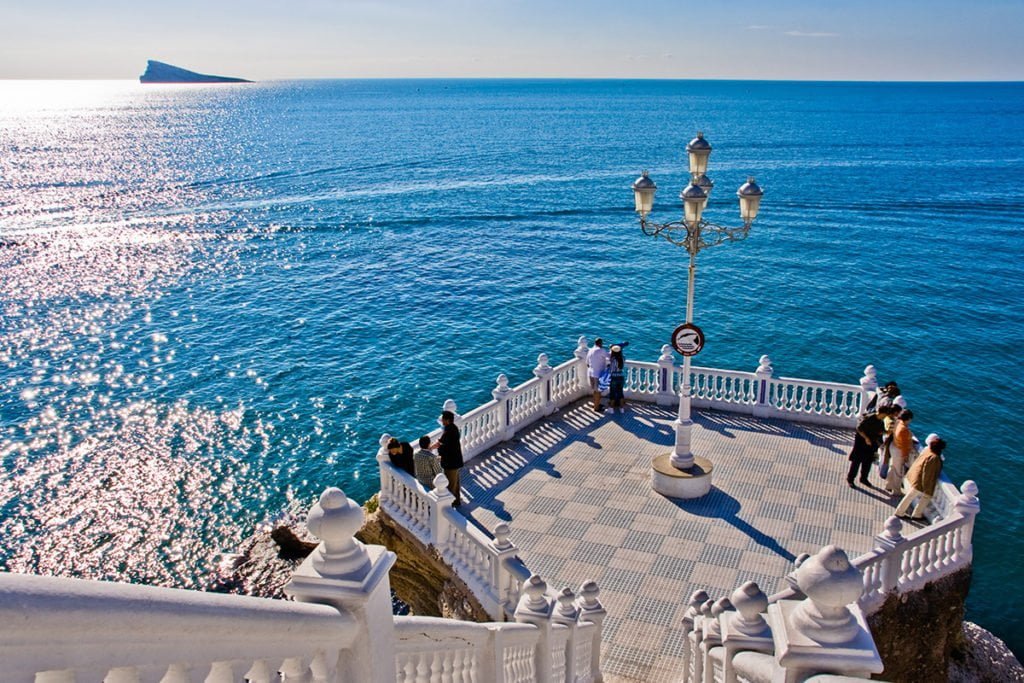
About 150 km from Valencia lies the province of Alicante, and its capital is a city of the same name. Once this place was especially appreciated by the Romans, calling it Lucentum (transl. City of Light). Currently, however, its landscape is dominated by hotels and skyscrapers…
A monument worth visiting is the ancient Castle of St. Barbara (Castillo de Santa Barbara), from which you can admire the panorama of the beautifully restored old part of the city. In its inner courtyard there is the Museo de Hogueras, where cardboard figures are exhibited, burned on the night of St. John, on the beach during the Hogueras de San Juan. This is the most popular local fiesta, which takes place at the beginning of summer.
In the province of Alicante there is also Benidorm, the largest and most important resort on the Costa Blanca. In the 1950s it was still a small fishing village. Today it resembles a seaside Manhattan. The city is visited by about 3 million tourists annually.
Castellón Province
The province of Castellón, bordering Catalonia from the east, combines the sea and high mountains. It is the third tourist destination (after Valencia and Benidorm), which includes the Autonomous Community of Valencia. Here you can see typical Valencian, rural houses called barracas. They are made of brick and covered with reeds.
In this region there is also the natural park “Desierto de Las Palmas”. As its name suggests, it deserves attention especially due to the unique abundance of palm trees growing there. On its territory you can also visit the ruins of a Carmelite monastery from the 17th century.
Hotels in the Valencia region
The Valencian Community stretches from the sunny beaches of the Costa Blanca to the mountain villages of the Maestrazgo. The three places below reflect that variety, from a seaside papal fortress to a walled medieval town in the mountains.
💰 Hotel & Spa Castillo de Peñíscola
A four-star hotel right on the beach in Peñíscola, overlooking the famous Papa Luna Castle - a Gothic fortress built by the Knights Templar in the 13th century and later home to the antipope Benedict XIII. The heart of the old town, ringed by defensive walls and narrow whitewashed lanes, is just a 5-minute walk away. The hotel has an outdoor pool open in summer and free Wi-Fi throughout, and its location makes it a great base for exploring both Peñíscola and the nearby beaches of the Costa del Azahar.
🏨 Hotel Cardenal Ram (Morella)
A former 16th-century bishop’s palace, now a boutique hotel in the heart of Morella - a medieval town in the Maestrazgo mountains, completely encircled by defensive walls more than two and a half kilometres long. Elegant, atmospheric rooms look out over the surrounding mountains and the rooftops of the old town, and there’s a beauty salon and a characterful restaurant serving Maestrazgo cooking, including the black truffles Morella is famous for across Spain. It’s a completely different kind of trip from the coast - a mountain town with a perfectly preserved Gothic street plan, narrow lanes climbing steeply up to the castle and temperatures much cooler than on the Costa Blanca.
💎 Hotel RH Don Carlos & Spa (Peñíscola)
A modern four-star hotel just 100 metres from Playa Norte, with a distinctive glass rooftop pool that seems to hang in mid-air and offers spectacular views over the town, the Papa Luna Castle and the whole coastline. The extensive spa offers a full range of relaxing treatments, and the elegant, carefully designed interiors combine modern style with the comfort of the Costa del Azahar’s upmarket hotels.

