Twenty minutes after you leave the arrivals hall, you can be eating sardines grilled on a fishing boat, with your feet in the sand.
The Costa del Sol is the sunny stretch of coast along the province of Málaga in southern Spain, running for around 150 km from Nerja in the east to the edge of Gibraltar in the west. For decades this beautiful stretch of the Mediterranean Sea has been one of Europe’s favourite holiday destinations, and Málaga’s tourist board likes to promise around 300 days of sunshine a year. Behind the beach resorts, though, you’ll find Moorish castles, Picasso’s home town, whitewashed mountain villages and one of the most famous walkways in Spain. In this article you’ll find the best things to do on the Costa del Sol, from Málaga and Marbella to Nerja and the Caminito del Rey, along with day trips, beaches and tips on where to stay. It’s written for first-timers planning a beach holiday and for anyone who wants to see more than the sunbed.
💰 Carlos V Malaga - Good-value rooms in Málaga old town, steps from the Alcazaba.
🏨 OPUNTIA Hotel Boutique - A stylish boutique hotel on the main square of Mijas Pueblo.
💎 La Zambra Resort Mijas - Marbella - A five-star resort with a spa and infinity pool in the hills.
Things to do on the Costa del Sol - The coast at a glance
The Costa del Sol stretches either side of Málaga, the capital of the province and the main gateway thanks to its airport. To the west lie the big resorts of Torremolinos, Benalmádena and Fuengirola, followed by Mijas, Marbella and Estepona. To the east, the coast is quieter and greener, with the long beaches of Torre del Mar, Nerja and the white village of Frigiliana.
The western part of the coastline is the busiest and best connected, while the east suits travellers who want traditional towns and a more relaxed Andalusian atmosphere. Wherever you stay, the mountains are never far away. A short drive inland takes you to white villages, natural parks and some of the best day trips in southern Spain.
Málaga - Picasso, a Moorish fortress and tapas by the sea
Málaga (often written Malaga in English) is no longer just the city you fly into. It’s the capital of the Costa del Sol and one of the oldest cities in Europe, with almost 3,000 years of history. Its compact old town is packed with museums, tapas bars and pedestrian streets such as Calle Larios. Start at the Alcazaba, an 11th-century Moorish fortress with patios and fountains, then climb to Gibralfaro Castle, built in the 14th century, for panoramic views over the port and the bullring.
At the foot of the Alcazaba lies a Roman theatre from the 1st century BC, which was only rediscovered in 1951. Pablo Picasso was born in Málaga in 1881, and the Picasso Museum shows his work in a Renaissance palace. Add the cathedral, nicknamed “La Manquita” because its second tower was never finished, the colourful cube of the Centre Pompidou and a swim at La Malagueta beach, and you have a perfect city day on the Costa del Sol.
Torremolinos - Where the Costa del Sol holiday began
Torremolinos was a quiet fishing village until the 1950s, when artists, film stars and the first package tourists put it on the map. Today it’s a lively resort with long sandy beaches, a busy shopping street, Calle San Miguel, and plenty of bars and nightlife.
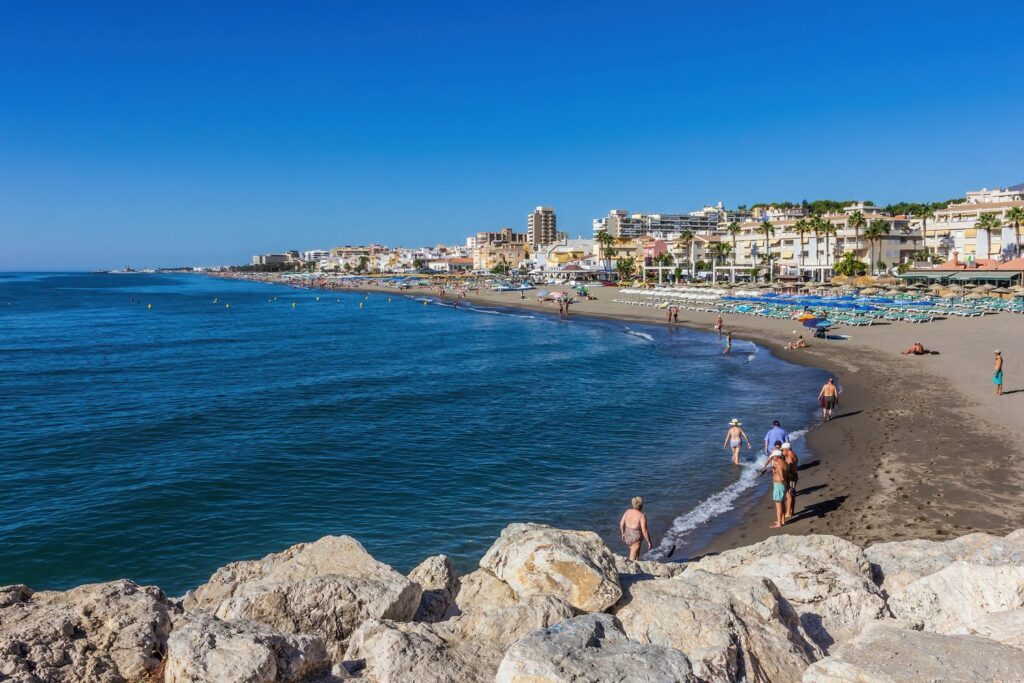
The best part of town is La Carihuela, the old fishermen’s quarter at the western end of the beach. Its seafront promenade is lined with restaurants serving pescaíto frito, a plate of small fried fish, and espetos, sardines grilled on skewers over an open fire in an old boat filled with sand. Come at sunset and order a cold drink with your sardines.
Benalmádena - Cable cars, a castle and a Buddhist stupa
Benalmádena has more attractions than any other resort on the coast. The Benalmádena cable car climbs to Mount Calamorro, at almost 800 metres, with views stretching to Africa on a clear day. Down by the sea, Puerto Marina is a marina of white buildings that look like a fairy-tale village, with restaurants, boat trips and the Sea Life aquarium. The town is split into three parts: Arroyo de la Miel, Benalmádena Costa and the old village of Benalmádena Pueblo.
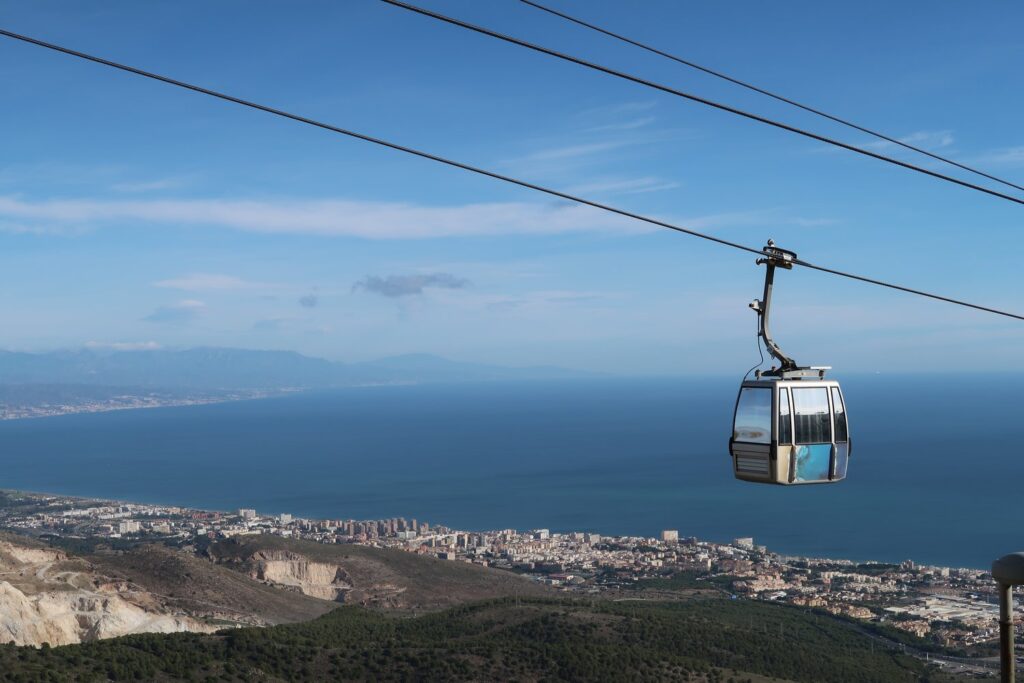
Families love Selwo Marina, with its dolphin and sea lion shows, as well as the butterfly park in Benalmádena Pueblo. Nearby you’ll also find Colomares Castle, a fantasy monument to Christopher Columbus built between 1987 and 1994, and a Buddhist stupa on the hillside, one of the most surprising sights in southern Spain.
Fuengirola - A long promenade and a Moorish castle
Fuengirola is a favourite with British families and long-stay visitors. Its seafront promenade runs for several kilometres, past wide sandy beaches, cafés and play areas. At the western end of town stands Sohail Castle, a Moorish fortress on a hill above the river mouth, which now hosts concerts and medieval fairs.
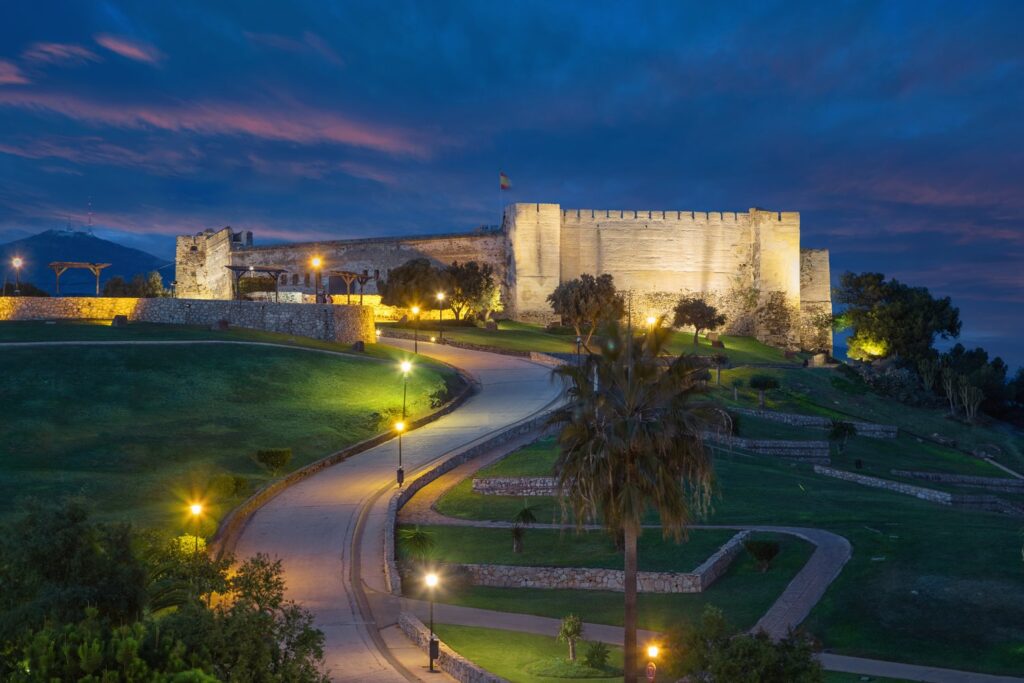
The town’s star attraction is Bioparc Fuengirola, a modern zoo that recreates the habitats of tropical forests, from Madagascar to Equatorial Africa. Fuengirola also has one of the best local markets on the coast and is the last stop of the train line from Málaga airport, around 45 minutes from the city centre, which makes it easy to reach without a car.
Mijas Pueblo - A white village above the coast
Above Fuengirola, Mijas Pueblo is the classic white village of the Costa del Sol. Its streets of whitewashed houses and flowerpots climb the mountainside, with views across the coast to the sea. Children love the famous donkey taxis. Visit the little Virgen de la Peña chapel, carved into the rock, walk around the old walls and take a look at the unusual square bullring.
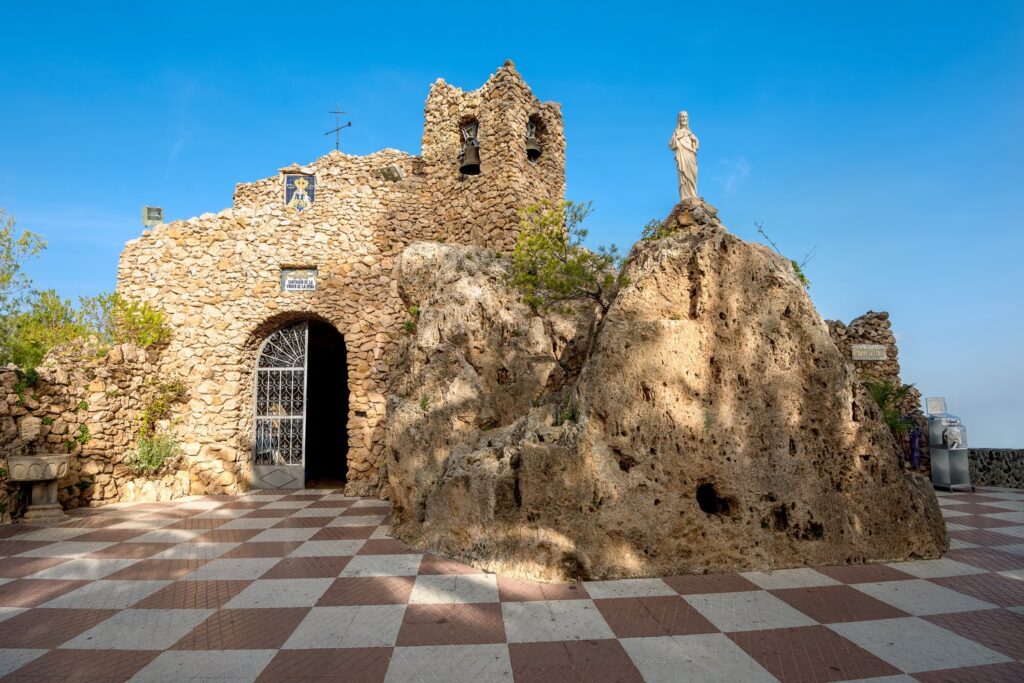
Mijas is easy to visit from any of the resorts, as buses run up from Fuengirola. Go in the morning or late afternoon to avoid the heat and the coach tours. If you want a quieter base than the beach towns, the village has small hotels with panoramic views.
Marbella and Puerto Banús - Old town charm and superyachts
Marbella is known for luxury, but its old town is one of the prettiest on the coast. Plaza de los Naranjos, laid out after the Christian conquest in 1485, is surrounded by orange trees, whitewashed houses and café terraces. From here, narrow lanes lead past flower-filled balconies and little churches.

West of the centre, the Golden Mile is lined with villas and five-star hotels, and leads to Puerto Banús. This marina, often spelt Puerto Banus, opened in 1970 and is still the place to see superyachts, designer boutiques and the glamorous side of the Costa del Sol. Marbella’s beaches are calmer than you might expect, and the bars and live music at night make its nightlife some of the best on the coast.
Estepona - The garden of the Costa del Sol
Estepona has earned the nickname “the garden of the Costa del Sol”. Its old town is full of whitewashed streets decorated with hundreds of colourful flowerpots, and many buildings are covered with large murals painted by local and international artists. Following the mural route is a great way to explore the town.
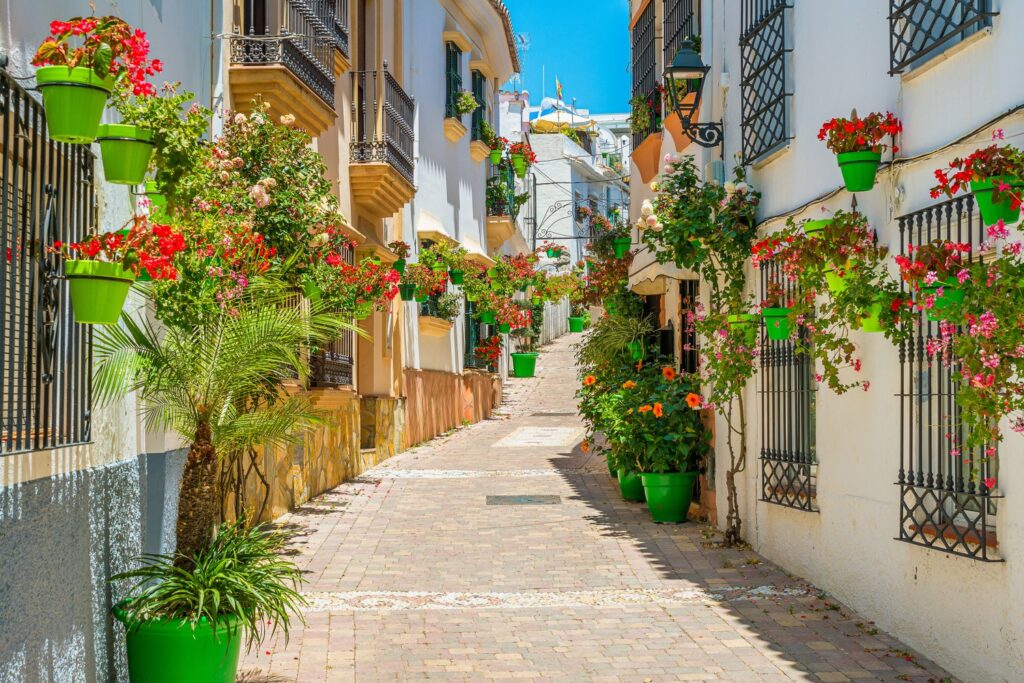
Don’t miss the Orchidarium, a huge glass building with thousands of orchids and a tropical waterfall. Estepona’s long, wide sandy beach of La Rada is just a few steps from the centre, and the town feels more relaxed and traditional than its glamorous neighbour, Marbella.
Nerja and Frigiliana - Caves, cliffs and the Balcón de Europa
Nerja, on the eastern Costa del Sol, is one of the most charming towns on the coast. Its centrepiece is the Balcón de Europa, a palm-lined viewpoint on a cliff that King Alfonso XII is said to have named in 1885. Below it lie small sandy coves, while Burriana beach is perfect for a long lunch of paella by the sea.
Just outside town, the Caves of Nerja were discovered in 1959 by five local boys. Inside you’ll see vast halls of stalactites and one of the largest columns in the world. Combine the caves with Frigiliana, a white village in the hills with Moorish lanes, or with a kayak tour to the Maro waterfall.
The Caminito del Rey - Spain’s most famous walkway
About an hour inland from Málaga, the Caminito del Rey is one of the most popular day trips from the Costa del Sol. The walkway clings to the walls of the Gaitanes Gorge, high above the river. It was built in the early 20th century for workers at a hydroelectric plant, fell into disrepair and reopened in 2015 after a full restoration.
The route is about 7.7 km long, including the access paths, and takes around three to four hours. Helmets are compulsory, and the number of visitors is limited, so book your tickets or a guided tour well in advance, especially in spring and autumn.
Best day trips from the Costa del Sol
The Costa del Sol makes a great base for exploring Andalusia. Ronda, about 1.5 hours from Marbella, sits on top of a deep gorge crossed by the Puente Nuevo, a stone bridge completed in 1793. On the way you can stop at the white villages of the Serranía de Ronda, the pueblos blancos.
Granada and the Alhambra are about 1.5 hours from Málaga, while Seville and Córdoba can also be visited in a long day, and the Mezquita of Córdoba is one of the largest mosques ever built. Closer to Málaga, Antequera has prehistoric dolmens, around 5,000 years old, listed by UNESCO. Gibraltar is around an hour from Marbella and makes an easy trip for British travellers. You can even cross to North Africa: ferries leave from Tarifa for Tangier in Morocco.
Costa del Sol - Best beaches for families and quiet swims
The Costa del Sol has dozens of beaches, and most resorts have wide sandy beaches with sunbeds and chiringuitos, the beach bars that serve grilled fish. The sand is often darker and coarser than in other parts of Spain, but the water is calm and the facilities are excellent. Families will feel at home in Fuengirola, Benalmádena and Torremolinos.
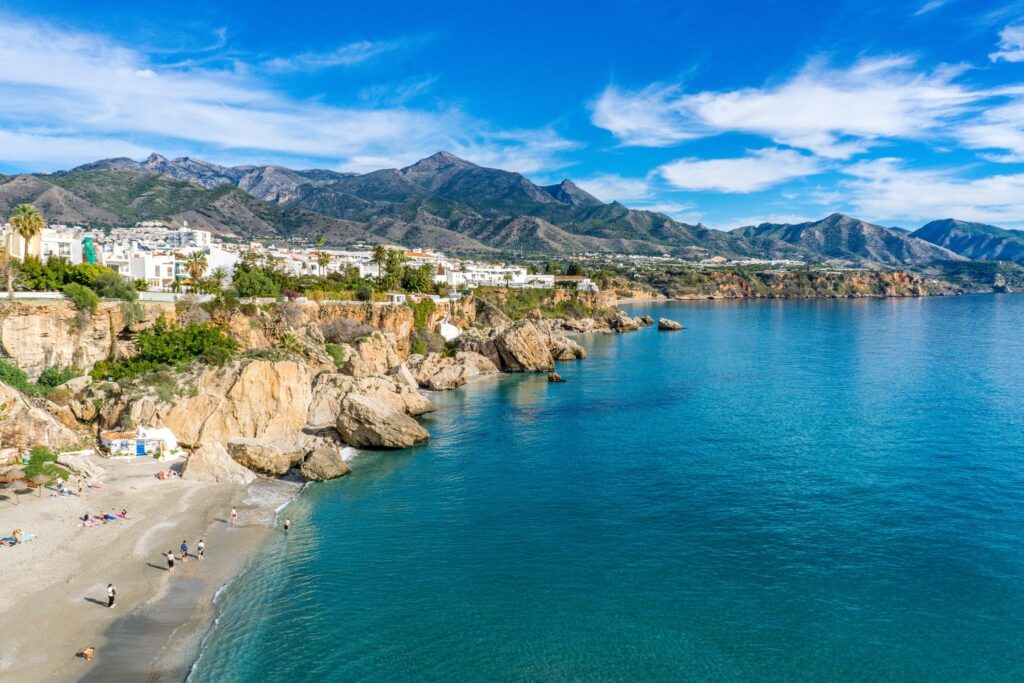
Some of the most beautiful beaches are away from the big resorts. For something more natural, head to the dunes of Cabopino near Marbella, the coves below the Balcón de Europa in Nerja or the Maro cliffs, where the water is clearer. La Malagueta in Málaga is the best beach for a swim after a morning of sightseeing.
Costa del Sol holiday tips - When to go and how to get around
The Costa del Sol has a mild climate all year, which is why sun seekers have been coming here since the tourism boom of the 1960s. Summer is hot, busy and perfect for the beach, while spring and autumn bring warm days, fewer crowds and better prices. Winter is mild and sunny, which makes the coast popular with long-stay visitors from northern Europe.
Málaga-Costa del Sol Airport, usually just called Malaga airport, is the third busiest airport in mainland Spain, with flights from almost every UK airport. From the airport, the local train runs to Málaga city centre in one direction and to Torremolinos, Benalmádena and Fuengirola in the other. Buses link the rest of the coast, and you can compare train and bus tickets before you travel. For the white villages, Ronda or the Caminito del Rey, car hire gives you the most freedom.
Where to stay on the Costa del Sol
Choosing a base is the biggest decision for your Costa del Sol holiday. Málaga is best for culture and city life, Torremolinos and Benalmádena for families and nightlife, Fuengirola for a relaxed resort with easy transport and Marbella for luxury and dining. Nerja and Mijas Pueblo suit travellers who prefer a quieter atmosphere. In summer, book your accommodation well in advance, as the best hotels fill up quickly.
See available places to stay in Málaga
💰 Carlos V Malaga
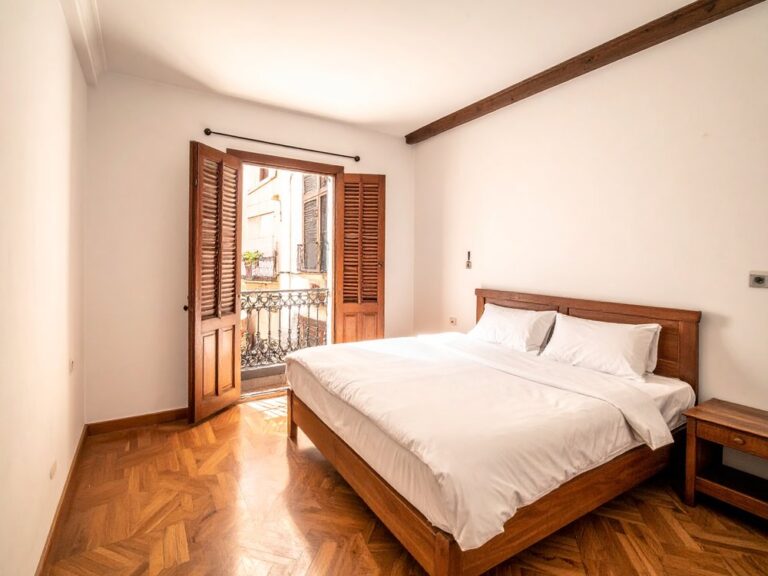
A simple, good-value hotel in the heart of Málaga’s old town, just a few steps from the Alcazaba and a short walk from the cathedral. Rooms are compact but clean and comfortable, and you can walk to the Picasso Museum, the Roman theatre and the tapas bars in a few minutes. Málaga’s main bus station and the train to the beach resorts are easy to reach, so it works well as a base for day trips along the coast. It’s a smart choice for budget travellers who want culture by day and the beach close by.
🏨 OPUNTIA Hotel Boutique
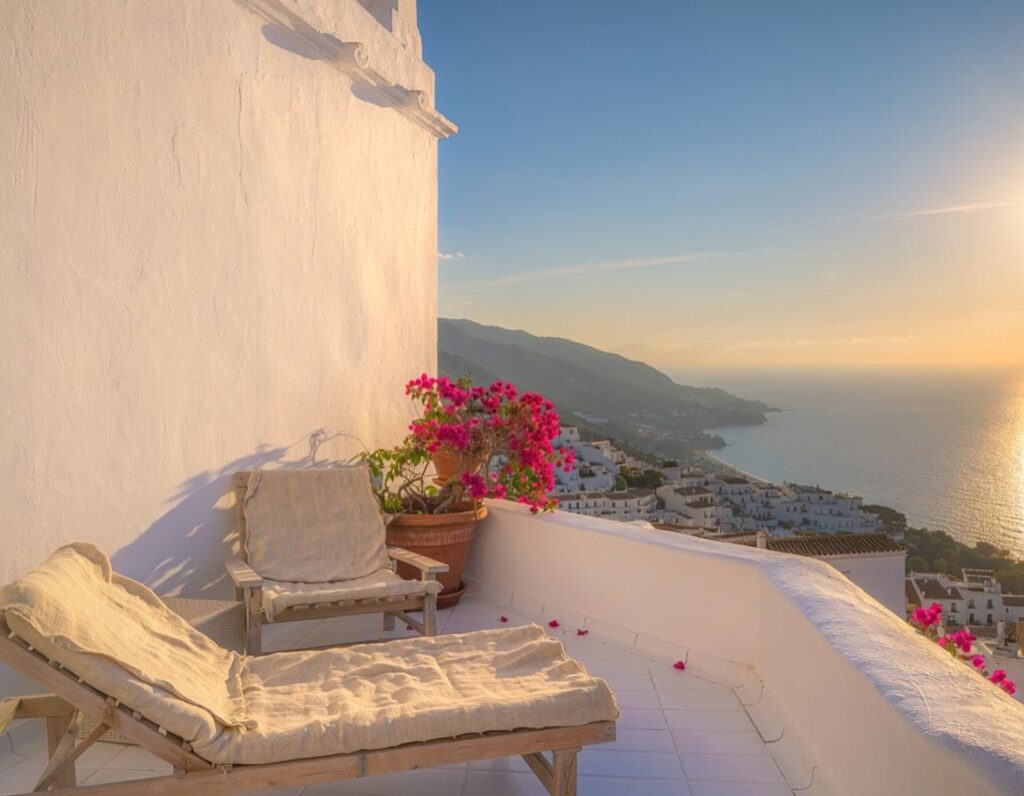
This small boutique hotel sits on Plaza de la Constitución, the main square of Mijas Pueblo, surrounded by whitewashed lanes. Rooms are stylish and bright, and some have balconies with views over the village or down to the sea. You’ll have the restaurants, shops and viewpoints of Mijas on your doorstep, while the beaches of Fuengirola are a short drive or bus ride away. It’s a great pick for couples who want a quieter, more authentic base than the big resorts.
💎 La Zambra Resort Mijas - Marbella - The Unbound Collection by Hyatt
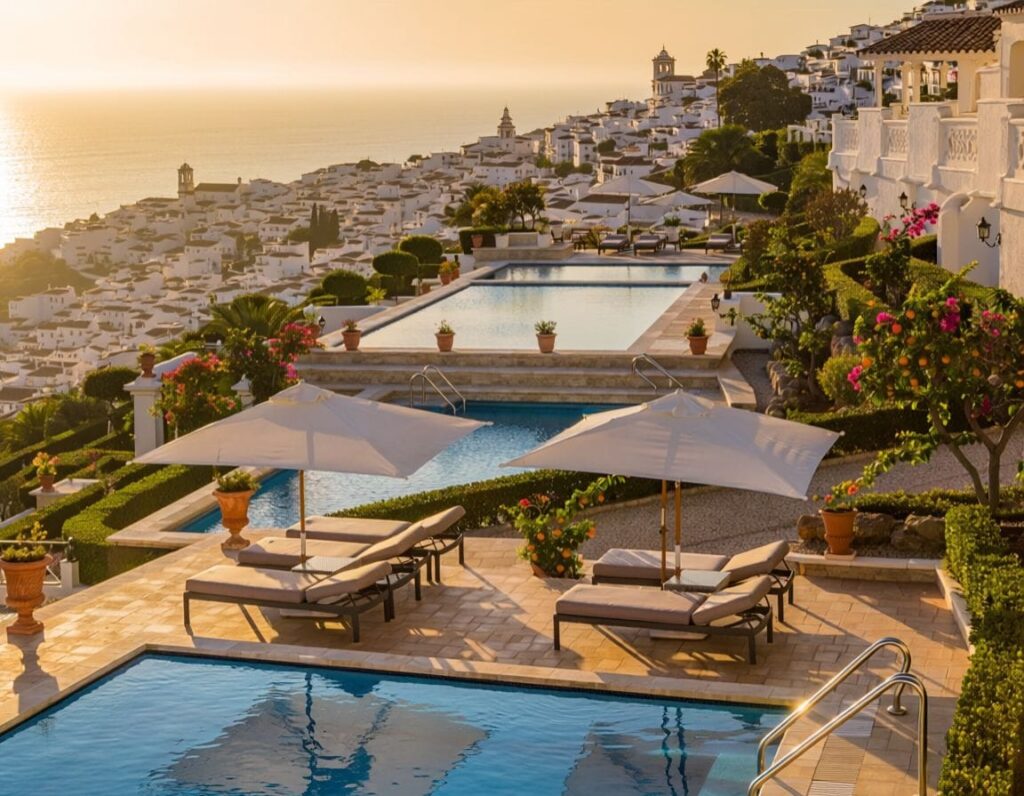
This elegant five-star resort lies in the green hills between Mijas and Marbella, close to several golf courses. It has an infinity pool, a spa and fitness centre, and lush gardens with views of the mountains and the coast. Rooms are spacious and calm, and the restaurants focus on Mediterranean and Andalusian cuisine. It’s the place for a luxurious, relaxing Costa del Sol holiday, whether you want spa days, rounds of golf or simply time by the pool.
Costa del Sol FAQ
Is the Costa del Sol the same as Málaga?
Not exactly. Málaga is the capital of the province and the biggest city on the Costa del Sol, but the coast also includes many other towns, such as Torremolinos, Benalmádena, Fuengirola, Marbella, Estepona and Nerja. Most visitors fly into Málaga airport and then head to one of the resorts.
What is the nicest part of the Costa del Sol?
It depends on what you want. Marbella’s old town and Nerja are often considered the prettiest places, while Mijas Pueblo is the most picturesque white village. For a lively holiday with lots to do, Benalmádena and Fuengirola are hard to beat.
Which month is best to visit the Costa del Sol?
May, June, September and October are the best months for most travellers. It’s warm enough for the beach, the sea is pleasant from June and the resorts are less crowded than in July and August. Winter is mild and good for sightseeing and walking.
Which is nicer, Fuengirola or Benalmádena?
Both are popular with families. Fuengirola is flatter, with a long promenade, easy train links and a relaxed feel. Benalmádena has more attractions, including the cable car, Puerto Marina and Selwo Marina, but it’s spread over a hillside, so you’ll walk or take the bus more often.
Do you need a car on the Costa del Sol?
Not if you stay in Málaga, Torremolinos, Benalmádena or Fuengirola, which are linked by train and bus. A car is useful for visiting the white villages, the Caminito del Rey, Ronda or the quieter beaches, as public transport to these places is limited.

