A journalist named this coast in 1908, and he chose the Catalan word for “wild”. Stand on a cliff above a turquoise cove and you’ll see he wasn’t exaggerating.
The Costa Brava stretches along the rugged Mediterranean coast of Catalonia, from Blanes, about 60 km north-east of Barcelona, all the way to the French border. Pine forests drop straight into the sea, fishing villages hide in narrow bays and medieval towns sit just a short drive inland. It’s also the land of Salvador Dalí, who was born in Figueres and painted in Cadaqués for most of his life. In this article you’ll find the best things to do on the Costa Brava, from the walled old town of Tossa de Mar to the wild headland of Cap de Creus, plus the best beaches, day trips and tips on where to stay. It suits families looking for sandy beaches just as well as couples and walkers who prefer quiet coves.
💰 Tarull - Family-run hotel near the beach and the walled old town of Tossa de Mar.
🏨 Hotel Sant Roc - Hotel on the rocks above the bay of Calella de Palafrugell.
💎 Hotel Aigua Blava - Classic hotel with a pool above the coves near Begur.
Things to do on the Costa Brava - Where to start?
The Costa Brava region belongs to the province of Girona and covers three counties: La Selva in the south, Baix Empordà in the middle and Alt Empordà in the north. The south is the busiest part, with big coastal towns such as Lloret de Mar and Blanes. The middle, around Palafrugell and Begur, is where you’ll find the prettiest coves and whitewashed villages. The north is a wilder, windier coast, closely linked to Dalí.
If you only have a day or two, pick one area rather than trying to see everything. For a first trip of a week, you can comfortably combine the beaches of the middle section with a day in Girona and a day around Figueres and Cadaqués. A car makes a huge difference here, because buses between the smaller villages are infrequent outside summer.
Tossa de Mar - A walled town on the beach
Tossa de Mar is the place most visitors fall for first. Above the main beach, Platja Gran, rises the Vila Vella, a fortified medieval old town with stone walls, round towers and cobbled lanes that climb to a lighthouse. It’s the only fortified medieval town still standing on the Catalan coast, so it’s well worth an early morning visit before the day-trippers arrive.
From the lighthouse you get stunning views along the coast in both directions. Below the walls, small boats leave for the hidden coves north of town, and the crystal clear waters around the headland are great for snorkelling. Tossa is also one of the best family bases on the Costa Brava, with a sandy beach, numerous restaurants in the old quarter and a calmer feel than its bigger neighbour.
Lloret de Mar - Clifftop gardens and quiet coves
Lloret de Mar is the largest resort on the Costa Brava and still has a reputation for nightlife. Look beyond the main beach, though, and you’ll find one of the most beautiful gardens in Spain. The Santa Clotilde Gardens were laid out in 1919 by the landscape architect Nicolau Rubió i Tudurí on a cliff above the sea, with terraces, cypress-lined stairs and marble statues.
A short walk along the coastal path takes you to smaller beaches such as Cala Banys, Sa Caleta and Santa Cristina, where the water is clear and the atmosphere is far more relaxed. From Lloret you can also catch boats along the coast to Tossa de Mar, which is the easiest way to see the rocky cliffs from the sea.
Blanes - Where the Costa Brava begins
Blanes marks the southern start of the coast. Its symbol is Sa Palomera, a rocky outcrop at the end of the main beach that is traditionally seen as the first rock of the Costa Brava. Climb its steps at sunset and you’ll see the whole bay glowing orange.
Above the town, the Marimurtra Botanical Garden hangs over the sea. It was created by the German businessman Karl Faust in the early 20th century and has thousands of plant species and a little temple with one of the most photographed sea views in Catalonia. Next door, the Pinya de Rosa garden is known for its huge cactus collection. Blanes is easy to reach by train from Barcelona, which makes it a good first stop if you don’t have a car.
Walk the Camí de Ronda, the Costa Brava’s coastal path
The Camí de Ronda is a network of old paths that once let guards patrol the shore and fishermen reach their boats. Today it’s part of the GR 92 long-distance trail, and walking even a short section is one of the best things to do on the Costa Brava. The path squeezes between pine forests and the sea, dips down to tiny beaches and climbs back up to viewpoints above dramatic cliffs.
The most popular section links Calella de Palafrugell, Llafranc and Tamariu. It takes about two hours one way, with plenty of places to stop for a swim. Another lovely stretch runs from Sant Feliu de Guíxols to S’Agaró. Altogether, the coastal paths of the Costa Brava cover more than 200 km. Start early in the morning in summer, take water and wear proper shoes, because some parts are steep and rocky.
Calella de Palafrugell, Llafranc and Tamariu
Calella de Palafrugell is a former fishing village of white houses and arched boathouses right on the sand. Fishing boats still sit on the little beaches of Port Bo, and in the evenings the seafront terraces fill up with people eating grilled fish and drinking cremat, a flambéed rum drink. Every summer the village holds a famous night of havaneres, sea songs brought back from Cuba by Catalan sailors.
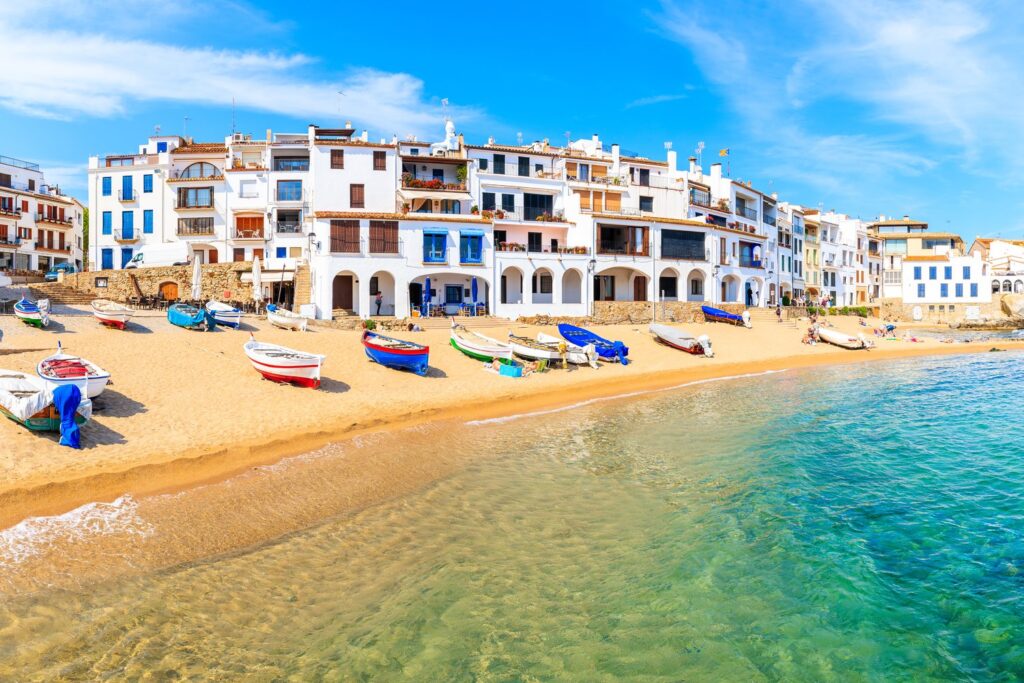
Above Calella, the Cap Roig Botanical Garden was created by a Russian colonel and his English wife from 1927. It’s now home to a summer music festival, one of the biggest cultural events on the coast, with views over the bay. Next door, Llafranc has a sandy crescent beach and a promenade lined with cafés, while Tamariu is a tiny cove with pine-covered hills and some of the calmest water on the coast.
Begur is a small town on a hill a few kilometres inland, crowned by the ruins of an 11th-century castle. Climb up to the castle for stunning views along the coast. In the 19th century many local men emigrated to Cuba, and those who came back rich built colonial mansions known as “cases d’indians”. You can still spot them in the lanes of the old town, painted in bright colours with columns and arched windows.
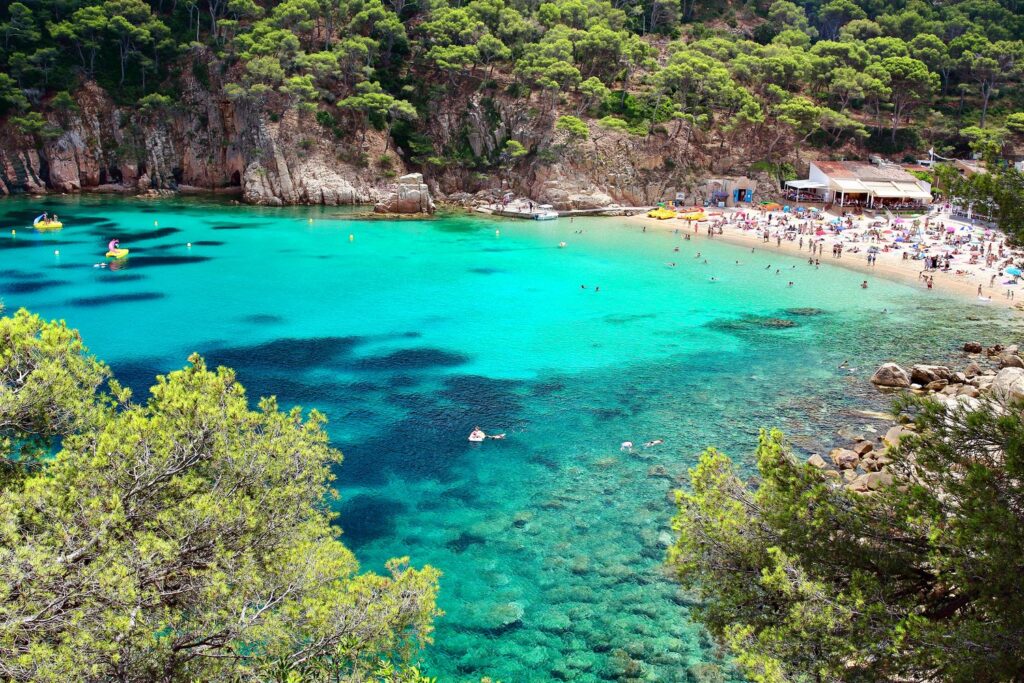
The real reason to come, though, is the coast below. Aiguablava, Fornells, Sa Tuna, Sa Riera and Aiguafreda are some of the most beautiful beaches on the Costa Brava, with turquoise water, rocky cliffs and pine trees down to the sand. Sa Tuna is a tiny fishing hamlet with a pebble beach and a couple of seafood restaurants. In July and August the car parks above the coves fill up fast, so arrive before 10am or take the shuttle bus that usually runs from Begur in summer.
Pals and Peratallada, the medieval villages of the Empordà
Inland from Begur, the countryside is dotted with medieval villages built of golden stone. Pals has a beautifully restored Gothic quarter around the Torre de les Hores, a Romanesque tower with wide views over the plain. Around the village you’ll see rice fields, as the Empordà has been growing rice for centuries. Order a local rice dish in one of the restaurants and you’ll taste the result.
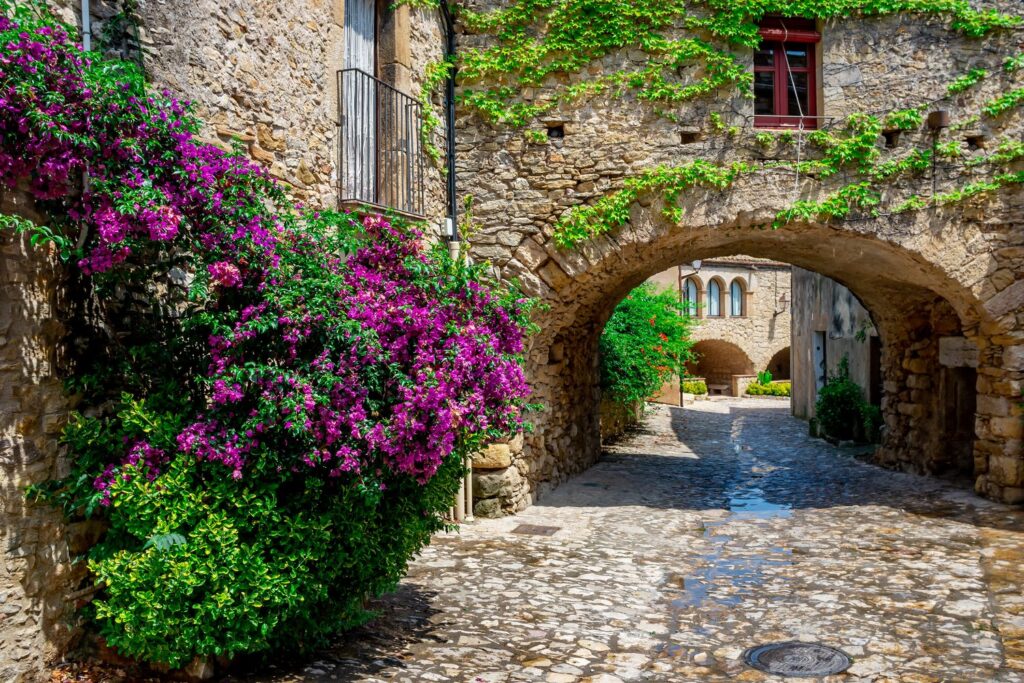
Peratallada is even more atmospheric. Its name means “carved stone”, and the moat around the old village was literally cut into the rock. Wander through the arches, porticoed squares and flower-filled lanes, then stop for lunch, because the village has numerous restaurants serving traditional Catalan dishes. Both villages are lovely in the early evening, when the stone turns honey-coloured, and the surrounding countryside is perfect for cycling.
L’Estartit and the Medes Islands
Just off L’Estartit lie the Medes Islands, a small archipelago of seven islets. They belong to Spain’s first marine reserve, and the protection shows: the water is full of groupers, octopus and red coral. You can explore it by glass-bottomed boat, on a guided snorkelling trip or with a scuba diving course, even as a beginner.
Back on land, L’Estartit has a long sandy beach that suits families. The nearby Montgrí massif, with a ruined castle on its summit, offers hiking with sea views, and the wetlands of the Baix Ter attract birdwatchers.
Empúries, the Greek and Roman ruins by the sea
A few minutes from the anchovy town of L’Escala, the ruins of Empúries sit right next to the beach. Greek traders founded the colony of Emporion here in 575 BC, and the Romans later built a city on the hill above it. You can walk among the foundations of temples, houses with mosaic floors and the old forum, with the sea glittering behind the pine trees.
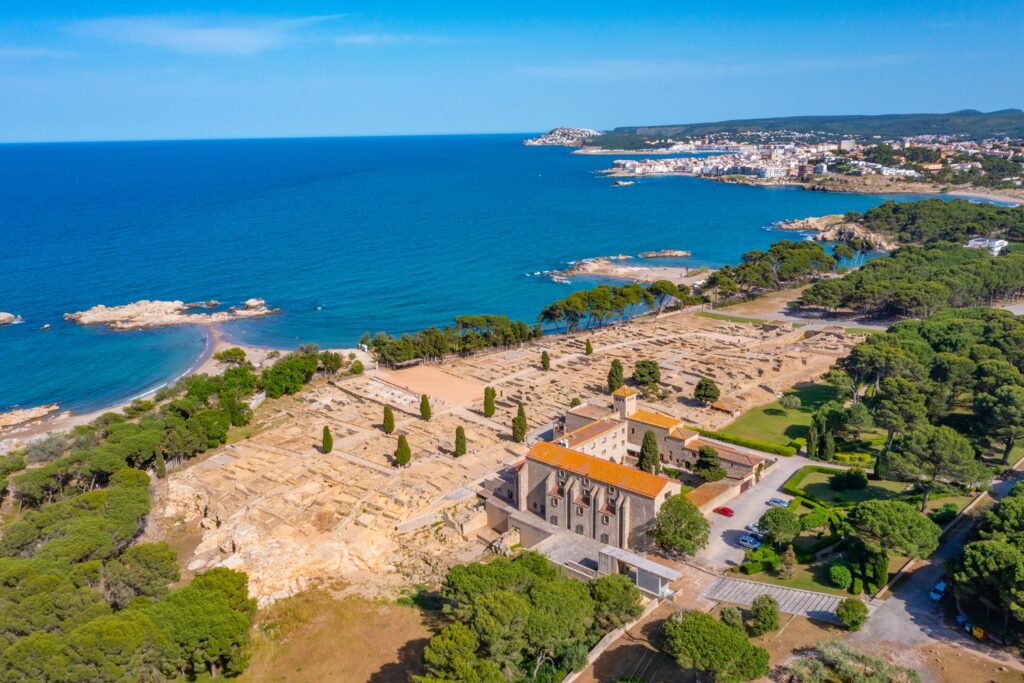
The site has a small museum and is easy to combine with a swim at the nearby beaches. Take a hat in summer, as there is little shade among the ruins. L’Escala itself is worth a stop for its salted anchovies, which have been prepared here for centuries.
Cadaqués and Dalí’s house in Portlligat
Cadaqués is the most beautiful village on the Costa Brava for many travellers. Its whitewashed houses tumble down to a bay full of fishing boats, with the church of Santa Maria at the top. For a long time it could only be reached easily by sea, which helped it keep its character. Often called the capital of Cap de Creus, it attracted Picasso, Duchamp and Lorca, but the village is mainly linked to Salvador Dalí.
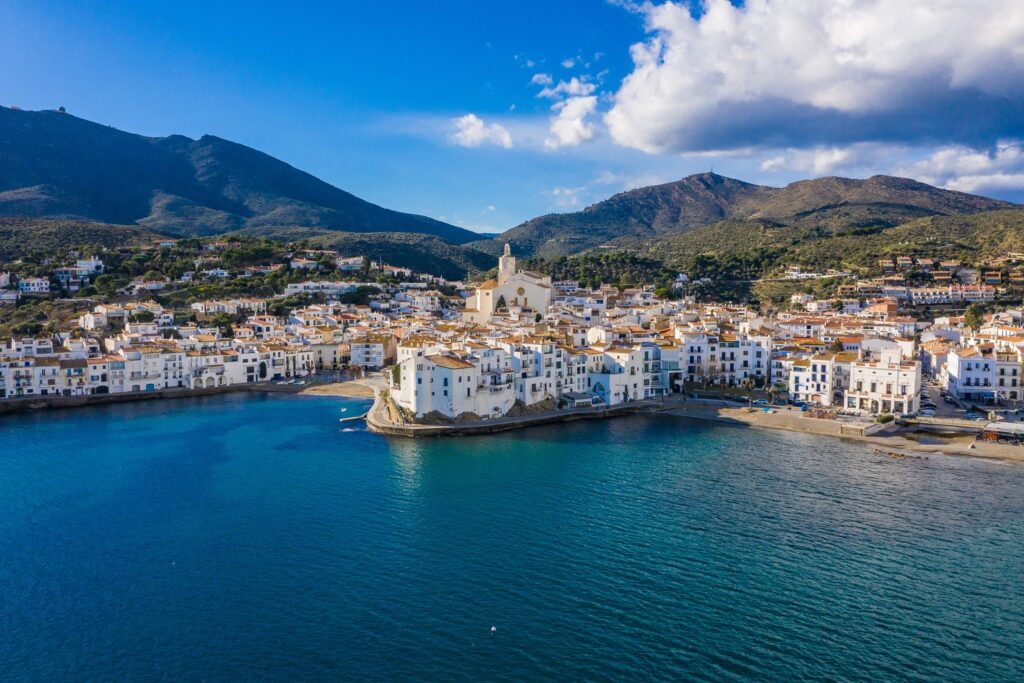
Dalí spent his childhood summers in Cadaqués and later bought a fishermen’s hut in the neighbouring bay of Portlligat (you’ll also see it written as Port Lligat). Over the years he and his wife Gala turned it into a maze of rooms, terraces and egg-shaped decorations. Today the Salvador Dalí House Museum can only be visited in small groups, so book your slot well in advance, especially in summer.
Cap de Creus Natural Park
North of Cadaqués, the road ends at Cap de Creus, the easternmost point of mainland Spain. The natural park protects 13,886 hectares of land and sea, where the Pyrenees finally plunge into the Mediterranean. Wind and salt have shaped this rugged coast into strange forms that inspired many of Dalí’s landscapes.
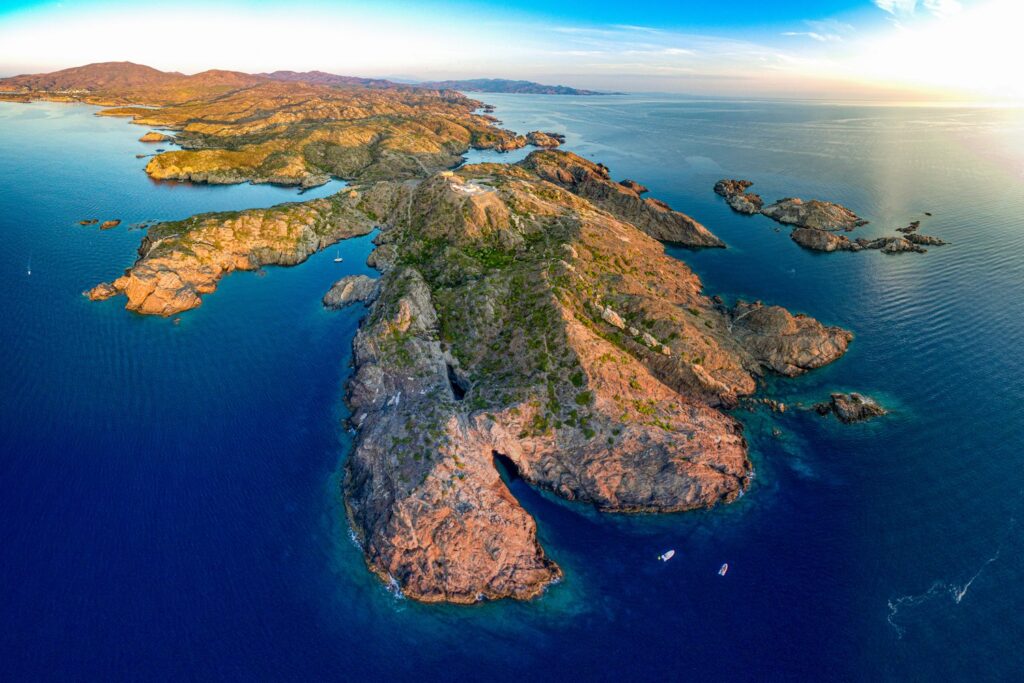
Walk from the lighthouse to the viewpoints, look for hidden coves where you can swim in early September when the crowds have gone, and stay for the sunset. A little further north, the monastery of Sant Pere de Rodes stands on a mountainside above El Port de la Selva, with panoramic views over the whole bay.
Figueres and the Dalí Theatre-Museum
Figueres, Dalí’s birthplace, is home to the Dalí Theatre-Museum, the largest surrealist object in the world. The artist designed it himself in the shell of the old municipal theatre, and it opened in 1974. Inside you’ll find the Mae West room, the Rainy Taxi and the crypt where Dalí was buried in 1989.
Together with his house in Portlligat and Púbol Castle, which Dalí bought for Gala in 1969, the museum forms the so-called Dalí Triangle. Figueres is also home to Sant Ferran Castle, one of the largest military fortresses in Europe. If you’re coming from Barcelona, the high-speed train gets you to Figueres in under an hour.
Girona and Besalú - Day trips inland
Girona is the capital of the province and makes a perfect day trip from the coast. Its old quarter rises above the Onyar river, with colourful houses on the banks, the Gothic cathedral at the top of a grand staircase and one of the best-preserved Jewish quarters in Europe. Fans of Game of Thrones will recognise several streets from the series, and you can walk along the medieval walls for views over the rooftops.

About 30 km north, Besalú is a medieval village with a fortified Romanesque bridge over the Fluvià river. It’s small, so an hour or two is enough. Combine it with the volcanic landscapes of La Garrotxa or with the Empordà wine region, where you can visit family wineries and join tastings. Wine has been made here for over 2,500 years.
Costa Brava - Best beaches and coves for swimming
The Costa Brava has hundreds of beaches, from long sandy bays to tiny coves reachable only on foot. For families, the main beaches of Tossa de Mar, Platja d’Aro, Roses and L’Estartit are a safe choice, with gentle entry into the water and lifeguards in summer. For crystal clear waters and a more natural setting, head to the coves around Begur, such as Aiguablava and Sa Tuna.
Other favourites include Platja Fonda near Begur, reached by a steep staircase, Cala Pola and Cala Giverola north of Tossa, Platja de Castell near Palamós, which is protected from development, and Cala Montjoi near Roses. The water is cooler than further south in Spain, so the sea is at its best from late June to September.
Boat trips, kayaking and other things to do
Seeing the Costa Brava coastline from the water is one of the highlights of any trip. Glass-bottomed boats run between Lloret de Mar and Tossa de Mar, catamarans leave from several resorts and kayak tours explore the sea caves around S’Agaró and Tossa. If you’re feeling adventurous, try the via ferrata at Cala del Molí near Sant Feliu de Guíxols.
Food is another big reason to visit. Try the red prawns of Palamós, the anchovies of L’Escala, fideuà, a seafood dish like paella but made with short noodles, and suquet de peix, a fish stew made by fishermen. Girona province is also home to some of Spain’s best-known restaurants, so it’s worth booking at least one special meal during your stay.
When to visit and how to get to the Costa Brava
The best months to visit are May, June and September. The weather is warm, the sea is swimmable from June and the coves are much quieter than in high season. July and August bring hot weather, packed beaches and higher prices. In winter many hotels and restaurants close, but the coastal path and the inland villages are lovely for hiking.
The nearest airport is Girona-Costa Brava, about 30 minutes from Lloret de Mar, with flights from the UK mainly in the warmer months. Barcelona airport has many more connections and is around 1 hour 15 minutes from the southern resorts. Buses link Barcelona with Lloret, Tossa and Palafrugell, and you can compare train and bus tickets before you travel. To explore the villages and coves at your own pace, car hire is the best option.
Where to stay on the Costa Brava
The Costa Brava towns all have a different feel, and accommodation ranges from boutique hotels in old fishermen’s houses to big family resorts. Families and first-time visitors usually choose Tossa de Mar or Lloret de Mar for their beaches and easy access. Couples and anyone looking for a quieter atmosphere will love Calella de Palafrugell, Llafranc, Begur and Cadaqués. In July and August, book your accommodation well in advance, because the small villages have few hotels.
See available places to stay in Tossa de Mar
💰 Tarull
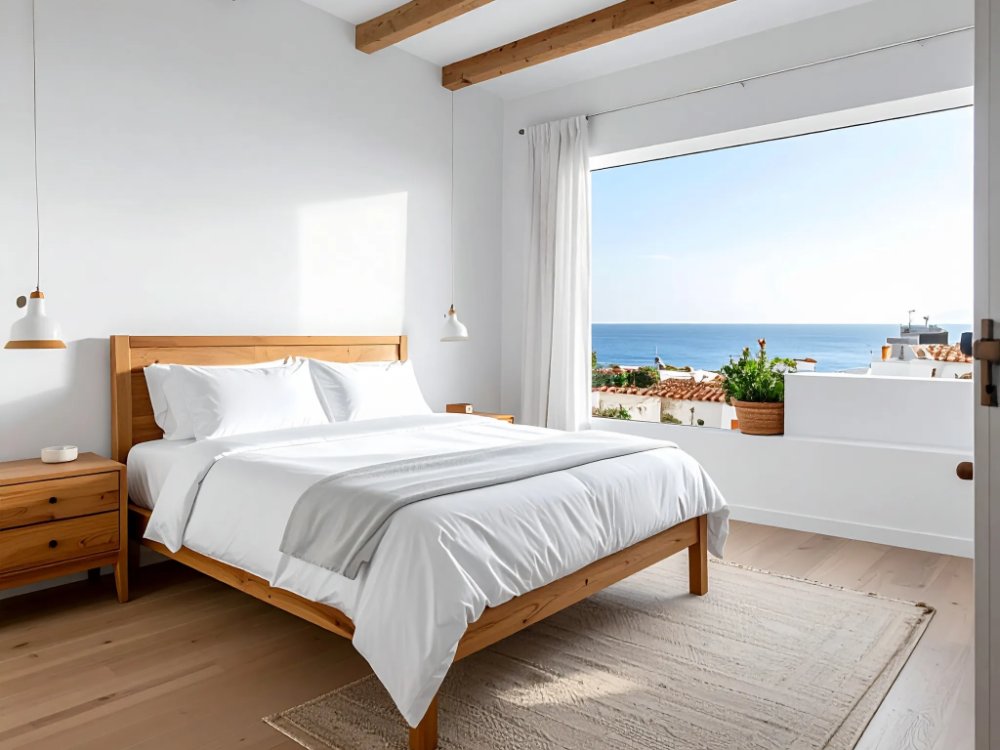
This small, family-run hotel sits in a quiet street of Tossa de Mar, about five minutes’ walk from the main beach and the walls of the Vila Vella. Rooms are simple but clean and comfortable, and the panoramic sun terrace looks out over the rooftops of the old town. Breakfast is served every morning, and the friendly owners are happy to share tips on coves and restaurants. It’s a good-value base for families and couples who want to explore the southern Costa Brava on a budget.
🏨 Hotel Sant Roc
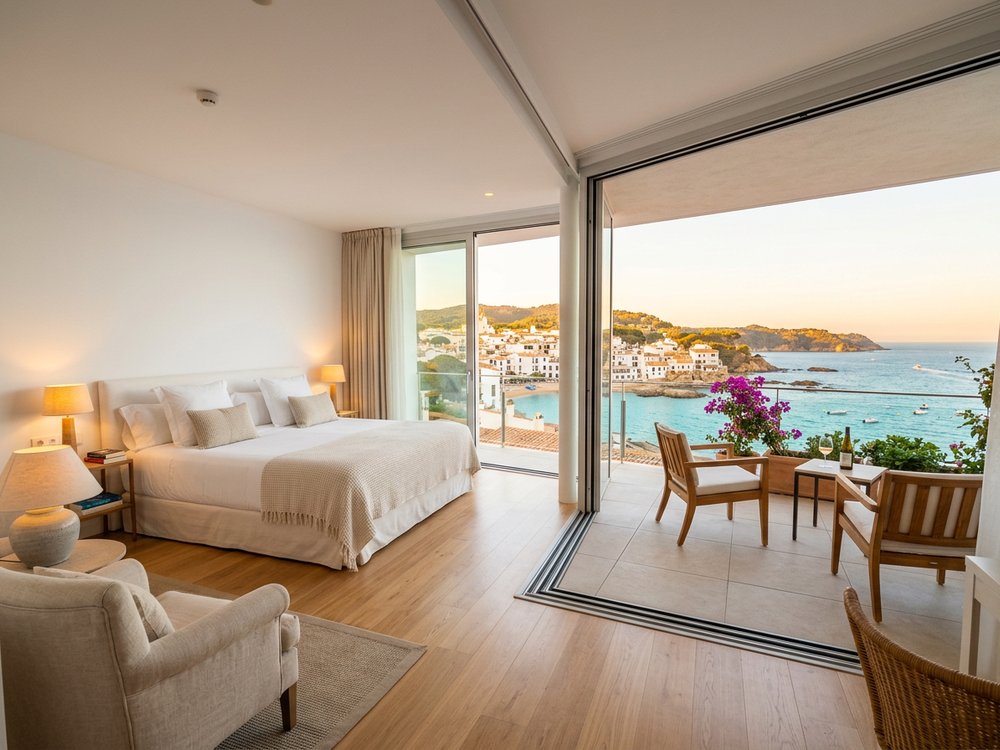
This family-run hotel sits on the rocks above the bay of Calella de Palafrugell, with gardens and terraces that look straight out to sea. Many rooms have balconies with sea views, and the terrace restaurant is a lovely spot for breakfast or a sunset drink. Steps lead down to the beaches of Calella in a few minutes, and the coastal path to Llafranc starts nearby. It’s ideal for couples and anyone who wants a peaceful base in the prettiest part of the coast.
💎 Hotel Aigua Blava
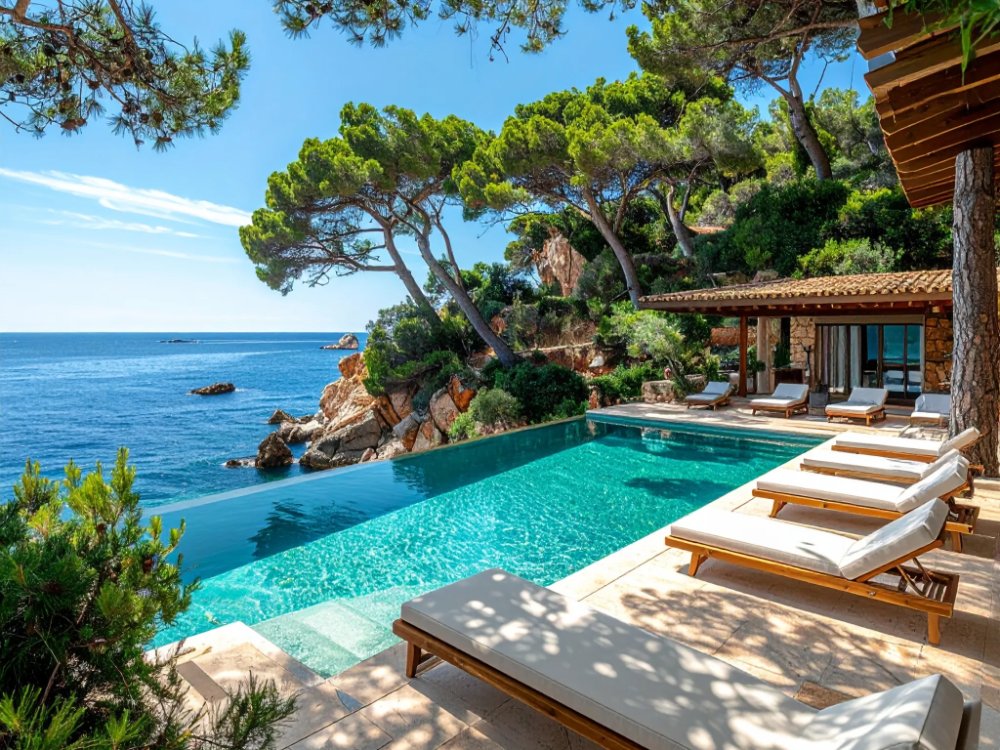
Set in gardens above the little bay of Fornells, near Begur, this classic hotel has been welcoming guests for decades. It has an outdoor pool, terraces with views over the turquoise water and a restaurant serving Mediterranean cuisine. Several of the most beautiful coves of the Costa Brava, including Aiguablava, are within walking distance. It’s a great choice for a special stay, whether you’re travelling as a couple or with children.
Costa Brava FAQ
What is the nicest town on the Costa Brava?
It depends on your style of holiday. Cadaqués is often called the most beautiful village thanks to its whitewashed houses and links with Dalí. Tossa de Mar combines a medieval walled town with a sandy beach, while Calella de Palafrugell is the classic choice for a quiet, picture-perfect fishing village.
Is the Costa Brava worth visiting?
Yes. It’s one of the most varied holiday destinations in Spain, and the Costa Brava offers far more than beaches: medieval towns, Greek and Roman ruins, the Dalí museums, coastal walks and excellent food. It’s also easy to reach from Barcelona and Girona, so you can combine a beach holiday with city breaks and cultural day trips.
Is Girona considered part of the Costa Brava?
The city of Girona lies about 40 km inland, so it isn’t on the coast itself. However, the whole Costa Brava belongs to the province of Girona, and the city is the main gateway to the region thanks to its airport and train station. Most visitors include it as a day trip.
Which airport is best for the Costa Brava?
Girona-Costa Brava airport is the closest, about 30 minutes from Lloret de Mar and around an hour from Begur. Barcelona airport has more flights from the UK all year round and is about 1 hour 15 minutes by car from the southern resorts. Perpignan in France is an option for the northern Costa Brava.
What is the best month to visit the Costa Brava?
June and September are the best months for most travellers. The sea is warm enough to swim, the days are long and sunny, and the beaches and coves are much quieter than in July and August. May is perfect for walking the coastal path, although the water is still cool.
Is it worth going to the Costa Brava from Barcelona?
Yes, the southern Costa Brava is only about 75 km from Barcelona, so Tossa de Mar, Lloret de Mar or Girona make easy day trips. To see the quieter coves around Begur or the Dalí sites in Cadaqués, plan at least one night on the coast.

