Two thousand years ago, the Romans farmed fish in pools cut straight into the rock here. Today you can snorkel in them before lunch.
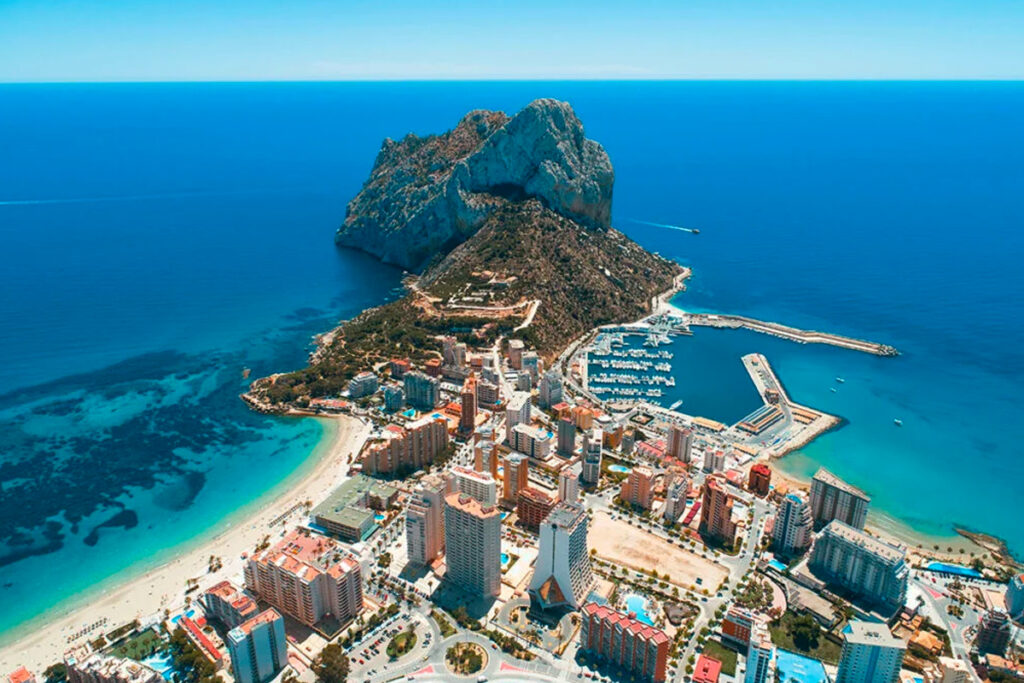
Calpe is a seaside town in eastern Spain, on the northern Costa Blanca in the province of Alicante. You’ll recognise it from miles away, because the Peñón de Ifach, a 332-metre limestone rock, rises straight out of the Mediterranean next to the town. Around it you’ll find long sandy beaches, quiet coves, a salt lake full of flamingos and a small old town that many visitors never even notice.
In this article you’ll find the best things to do in Calpe, from the hike up the rock to the daily fish auction and day trips along the coast. You’ll also learn how to get there, when to go and where to stay. Calpe, Spain, is compact, so you can see the highlights in two or three days and still have plenty of time for the beach.
💰 Hotel CALPE - A budget-friendly hotel six minutes’ walk from Arenal Bol beach, in a quiet part of town.
🏨 Hotel RH Ifach - A four-star hotel 150 m from the beach, with views of the Peñón de Ifach.
💎 AR Diamante Beach Spa Hotel & Convention Centre - A four-star beachfront hotel with a 2,000 m² spa, three outdoor pools and a Michelin-starred restaurant.
Climb the Peñón de Ifach
The Peñón de Ifach is the symbol of Calpe and the reason many people come here in the first place. The rock is joined to the mainland by a narrow strip of land, and since 1987 it has been protected as one of the smallest natural parks in the Valencia region. The cliffs are home to rare plants, peregrine falcons and colonies of gulls, so take your rubbish with you and stay on the marked paths.
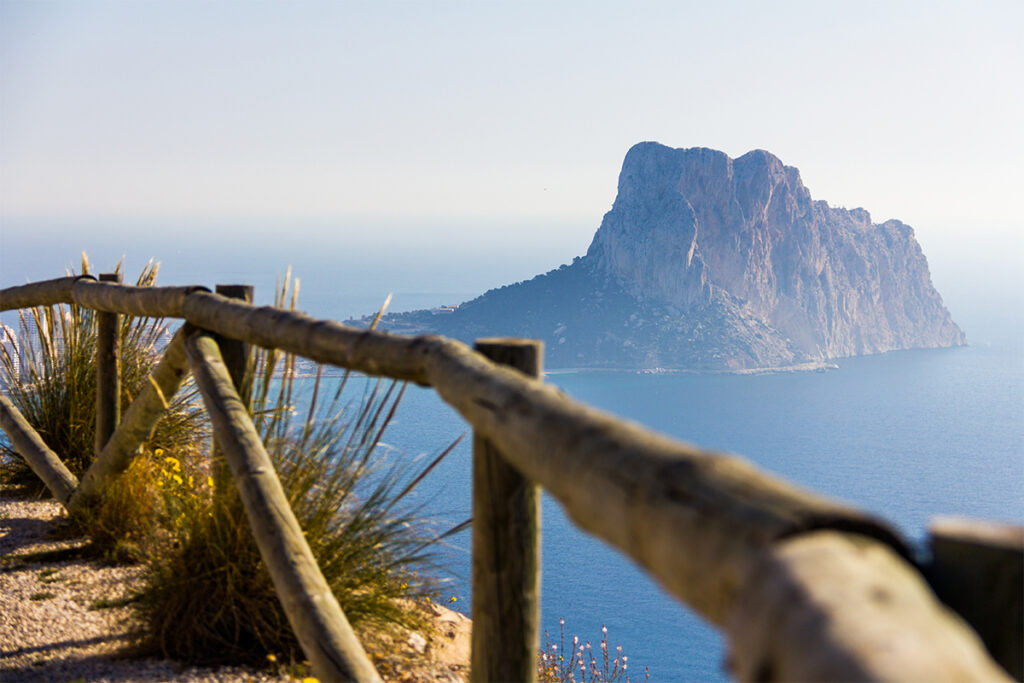
The walk to the summit follows the park’s red route. It starts at the visitor centre, climbs through a tunnel carved into the rock and continues to the top along a steep, rocky trail. The last stretch is polished smooth and slippery, so wear proper hiking shoes and leave the flip-flops at the hotel. From the summit you’ll see the whole bay, the beaches and, on a clear day, the coast as far as Altea and the mountains behind it.
You’ll need a free online booking from the natural park to walk the red route, and numbers are capped at 300 a day. Bookings open ten days before your visit, and in spring and summer the slots go quickly. If you don’t have a reservation, you can still walk the lower paths and the short trail to the Mirador de Carabiners viewpoint above the sea.
How long does the Peñón de Ifach hike take?
Allow about 2.5-3 hours for the return trip from the visitor centre to the summit, including a rest at the top. If you only go as far as the tunnel and the viewpoints, an hour and a half is enough. Start early in the morning, especially between June and September. There’s almost no shade on the rock, and the midday heat makes the climb much harder.
Walk around the salt flats and see the flamingos
Las Salinas, the old salt flats, lie right in the middle of town, between the two main beaches and the rock. In Roman times, the salt was used to preserve fish, and production carried on here until the 20th century. Today the lagoon is a protected wetland and one of the best birdwatching spots on the coast. The stars are the pink flamingos, which you can see all year round, with the biggest flocks usually in summer.
A flat path of roughly 2.4 km runs around the lake, with wooden viewpoints along the way. It’s an easy walk for families and a great place to catch the sunset with the Peñón de Ifach as a backdrop. In the hottest months, come early or at dusk, when the light is softer and the birds are more active.
Swim in the Roman ruins of Baños de la Reina
A swim at Baños de la Reina, or the Queen’s Baths, is one of the most unusual things to do in Calpe. Despite the name, these pools were never baths. They were part of a Roman fish farming site, cut into the seaside rocks in the 2nd century AD. Legend says a Moorish queen once bathed here, which is how the place got its name.
Next to the pools you can see the remains of a Roman villa and a small set of Roman baths, so the whole site is more than just a pretty rock pool. The water is shallow and calm, which makes it a good spot for snorkelling with children. The ruins sit right on the promenade between Arenal-Bol beach and the port, so you can easily combine them with a walk along the seafront.
Explore Calpe old town
Calpe’s old town sits on a small hill a few minutes’ walk from the beach. Most visitors head straight for the sea, so its narrow streets are surprisingly quiet. Start at the Torreó de la Peça, a defensive tower that once held a cannon to protect the town from pirate attacks. Next to it you’ll still see stretches of the 15th-century town walls.
A few steps away stands the Iglesia Antigua, the old church of Calpe. It dates from the 15th century and is a rare example of the Gothic-Mudéjar style in the Valencia region. It’s attached to the larger parish church of the Virgen de las Nieves (Our Lady of the Snows), so the two buildings form an unusual pair.
Walk on to the Forat de la Mar, a gap in the old walls that once led straight down to the sea. Then look for the painted staircase in Carrer Puchalt, where the steps are coloured in the red and yellow of the Spanish flag. Calpe old town is also full of murals and mosaics, so keep your camera ready. To dig into Calpe’s long history, visit the Museu d’Història de Calp (History Museum). It displays finds from the Bronze Age, the Iberian era and the Roman site of Baños de la Reina.
What are the best beaches in Calpe?
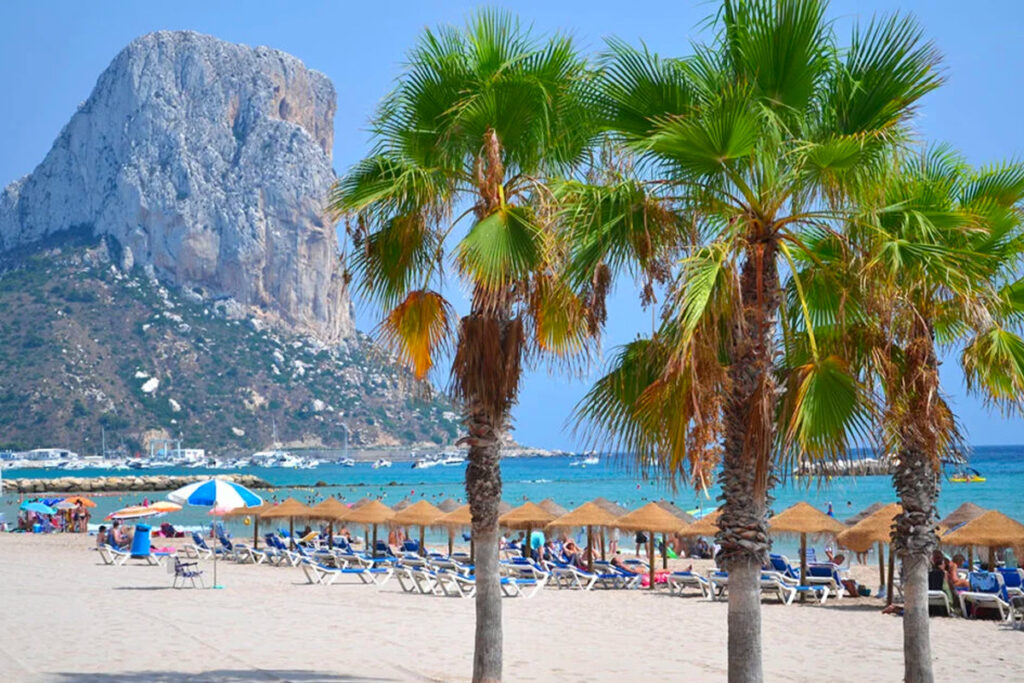
Calpe beaches are one of the main reasons to come here. The town has about 13 km of coastline, with a good mix of long sandy bays and small, rocky coves. The two big beaches lie on either side of the Peñón de Ifach, so you can pick your view depending on the time of day.
Arenal-Bol beach
Arenal-Bol is the main town beach, right next to the centre and the old town. It has fine golden sand, a busy promenade and plenty of restaurants and cafés just behind it. The water stays shallow near the shore, so it’s ideal for families, and the beach regularly flies the Blue Flag.
Playa de la Fossa
Playa de la Fossa, also called Levante beach, stretches along the northern side of the rock. It’s wider and a little calmer than Arenal-Bol, with clear water and great views of the Peñón de Ifach. It has held the Blue Flag for three decades. A long promenade runs along the whole beach, so it’s lovely for an evening walk too.
Quiet coves and Les Bassetes
For somewhere smaller, head to Cala del Racó, at the foot of the rock, or Cala Morelló and La Manzanera south of the town centre. Further north, the small bay of Les Bassetes has a marina, clear water and good conditions for scuba diving and snorkelling. Bring water shoes, as most of the coves are rocky.
Watch the fish auction at the port
For a real taste of local life, one of the best things to do in Calpe is to watch the fish auction at the port. From Monday to Friday, at around 5pm, the local fishing boats return with their catch. Buyers then bid for it at the fish market, called La Lonja. You can watch the whole auction from a viewing gallery above the hall.
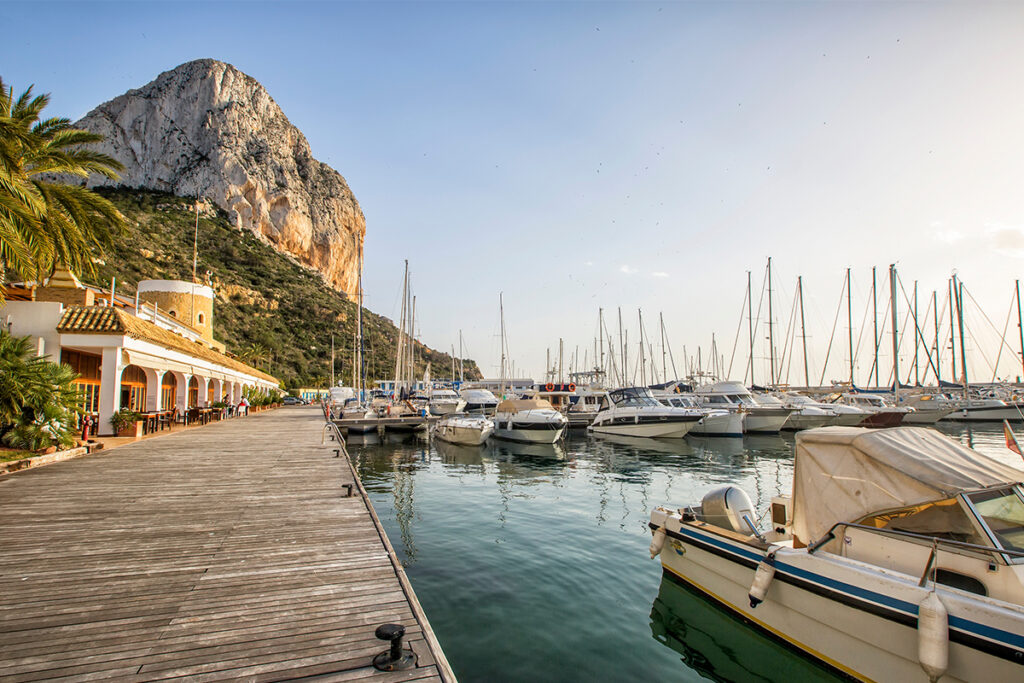
The auction works in reverse. The price on the electronic screen starts high and drops until a buyer presses a button. It’s fast, noisy and great fun to watch. Afterwards, walk along the marina and choose one of the restaurants around the port. Many of them cook fish caught by the same boats that day.
See Ricardo Bofill’s Muralla Roja
La Muralla Roja, or the Red Wall, is a striking apartment building designed by the Spanish architect Ricardo Bofill and completed in the early 1970s. It’s inspired by North African kasbahs, with pink and red walls, stairs and bridges that look like a maze. The building stands on the cliffs of La Manzanera, south of the town centre.
It’s a private residential building, so you can only see it from the outside. Please respect the residents and don’t try to get past the gate. Nearby you’ll also find Xanadú, another Bofill building whose shape echoes the Peñón de Ifach. The whole area is a rewarding stop for architecture fans and photographers.
Get out on the water
The bay is perfect for exploring by boat. Catamaran trips leave from the port and sail around the Peñón de Ifach, usually with a stop for swimming. Some run in the evening, so you can enjoy the sunset from the sea.
If you’d rather be active, you can hire a kayak or a paddleboard, try sailing or join a scuba diving course. The underwater cliffs around the rock and the small reserve near the coast are home to octopus and groupers, as well as swaying seagrass meadows. You’ll find most water sports centres near the port and on Playa de la Fossa.
What food is Calpe famous for?
Calpe has always been a fishing town, so fish and rice dominate the menus. Try arroz a banda, rice cooked in a rich fish stock, or a seafood paella in one of the restaurants by the port. Look out for local specialities such as pulpo seco, octopus dried in the sun and then grilled, and arroz a la llanda, cooked in a flat metal tray. For a special night out, Calpe also has several Michelin-starred restaurants.
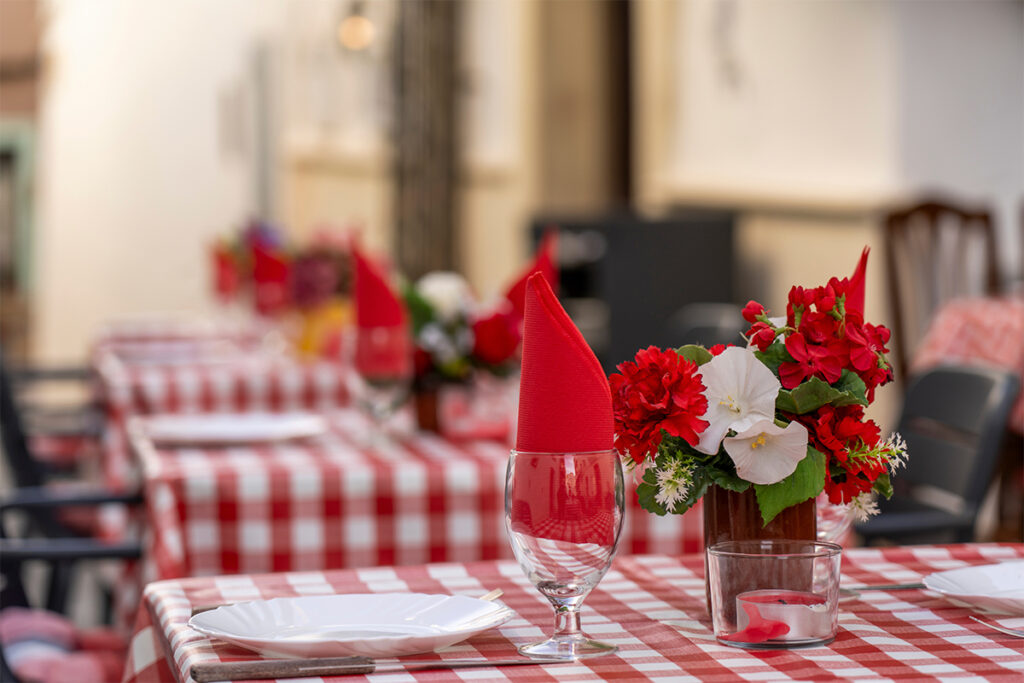
For a cheaper meal, stop at a tapas bar in the old town or along the promenade. On Saturday mornings, the weekly market is a good place to stock up on local fruit, olives and cheese for a picnic on the beach.
Join the Moors and Christians festival
If you visit Calpe in October, don’t miss the Moors and Christians festival. It’s held in honour of the Santísimo Cristo del Sudor (Holy Christ of the Sweat) around 22 October every year. Expect colourful parades, drums, gunpowder and a mock battle and a landing from the sea on Arenal-Bol beach.
In 2026 the town celebrates 50 years of the festival. The highlight is El Miracle, a re-enactment of events from 22 October 1744, when the town was attacked by pirates. Book your accommodation early if you plan to visit during the festival, as Calpe gets very busy.
See available accommodation in Calpe
Day trips from Calpe
Calpe is an excellent base for exploring the Costa Blanca. Pretty Altea, with its white houses and blue-domed church, is only 15 minutes away by car. Lively Benidorm, with its skyscrapers and theme parks, is about half an hour south.
Inland, the mountain village of Guadalest sits on a crag with a castle and spectacular views over a turquoise reservoir. Nearby, the Algar Waterfalls are perfect for a refreshing swim on a hot day. Many organised tours combine both places in one trip. To the north lie Moraira, Jávea and Dénia, with lovely coves and the Montgó mountain.
For a taste of city life, you can also head to Alicante, about an hour away, or to Valencia, around an hour and a half by car. Both are easy to visit in a day.
Is Calpe worth visiting?
Yes, especially if you want a beach holiday with plenty to see. Calpe offers more variety than many other resorts on the Costa Blanca. In one day you can hike in a natural park, swim in Roman ruins, watch flamingos and finish with fresh fish at the port.
Is Calpe like Benidorm? Not really. Calpe has its share of high-rise apartments along the beaches, but it’s smaller, quieter and has far less nightlife. That makes it popular with families, couples and active travellers who come for hiking and cycling. It’s also a good choice out of season, as the winters here are mild and sunny.
How to get to Calpe and get around
The nearest airport to Calpe is Alicante-Elche, about 70 km away, with direct flights from most UK airports. The transfer takes roughly an hour by car along the AP-7 motorway. Valencia airport is further, about 130 km away, but sometimes offers cheaper flights.
The easiest way to explore the area is to arrange car hire, especially if you plan day trips to Guadalest or the Algar Waterfalls. Without a car, take the TRAM d’Alacant. Line 9 runs along the coast between Benidorm and Dénia and stops in Calpe, Altea and other towns. Line 1 connects Benidorm with Alicante. You can also check trains and buses between the bigger cities and plan your journey in advance.
Calpe itself is easy to explore on foot. The old town, Arenal-Bol beach, the salt flats and the port are all within walking distance of each other.
Hotels in Calpe
Calpe has accommodation for every budget, from small family-run hotels to large resorts with spas. The best areas to stay are near Arenal-Bol beach, for the old town and restaurants, or along Playa de la Fossa, for views of the rock.
💰 Hotel CALPE
A small, budget-friendly hotel in a quiet street, about a six-minute walk from Arenal-Bol beach and close to the old town. The rooms are simple but clean and air-conditioned, with free Wi-Fi, a fridge and a kettle. There’s a sun terrace and a small garden, and the friendly staff are happy to share local tips. It’s a good choice if you want a comfortable base for exploring Calpe without spending much on accommodation.
🏨 Hotel RH Ifach
A four-star hotel next to the salt flats, a short walk from Playa de la Fossa and with views of the Peñón de Ifach. All rooms have private balconies, and guests can choose between an outdoor pool with a children’s area and a heated indoor pool with a hot tub. There’s a buffet restaurant, a poolside bar and a gym, and all-inclusive rates are available. It’s ideal for families who want everything in one place.
💎 AR Diamante Beach Spa Hotel & Convention Centre
A modern resort hotel a few minutes from Playa de la Fossa, with three outdoor pools and an extensive spa with a sauna, steam room and Turkish bath. Many rooms have balconies with Mediterranean views. The hotel has several restaurants, including a fine-dining venue with regional cuisine, and it’s popular with cyclists training on the Costa Blanca. Choose it if you’re after a relaxing holiday with spa treatments and plenty of comfort.

