Deep under the pine-covered hills, a string quartet glides across one of the largest underground lakes in the world. Up on the quay, the fishermen are still mending their nets.
Porto Cristo is a small harbour town on the east coast of Mallorca, tucked into a narrow, sheltered bay. It belongs to the municipality of Manacor and has long been known locally as Port de Manacor. Most visitors arrive for the famous caves on the edge of town, but there’s much more to it than a quick stop on a coach tour. You’ll find a sandy town beach, a lively marina, quiet coves within a short drive and a relaxed atmosphere that feels far removed from the big resorts. This article covers the best things to do in Porto Cristo, practical tips and ideas for day trips along the east coast.
💰 Hotel Castell dels Hams - Family-friendly hotel near the Caves of Hams with two pools and a free beach shuttle.
🏨 THB Felip - Adults Only - Four-star seafront hotel steps from Porto Cristo beach, with a spa and two pools.
💎 Belle Son Mas Luxury Finca Hotel - Restored 17th-century country estate with a spa, a large pool and peaceful gardens.
Is Porto Cristo worth visiting?
Yes, especially if you prefer a real town to a purpose-built resort. Porto Cristo has a genuine fishing harbour, a compact old town and two of the island’s main tourist attractions within walking distance: the Caves of Drach and the Caves of Hams. The town is about 13 km from Manacor and roughly an hour’s drive from Palma airport, so it works well as a base for exploring Mallorca’s east coast.
Porto Cristo isn’t a party town. Evenings here are about seafood dinners by the marina, a drink on a terrace and a stroll along the promenade. If you want a lively night out, the bars and clubs of Cala Millor and Sa Coma are only a short drive or bus ride away. Families and couples usually love the calm pace, while travellers looking for nightlife tend to stay further north.
Caves of Drach (Cuevas del Drach)
The Caves of Drach, also called the Dragon Caves (Coves del Drac in Catalan), are the most famous cave system in Mallorca and one of the most visited in Europe. They lie on the southern edge of Porto Cristo, a pleasant walk from the harbour. The visitor route runs for about 1.2 km and descends around 25 metres underground. Along the way you pass chambers full of stalactites, stalagmites and still pools that reflect the ceiling like mirrors.
The highlight is Lake Martel, the huge underground lake where the concert takes place. It’s named after the French speleologist Édouard-Alfred Martel, who explored and mapped the caves in 1896. At the end of the route you take a seat in a natural amphitheatre for a short concert of live classical music. The musicians play from illuminated boats that drift slowly across the dark water. After the concert you can cross the lake by boat or on foot over a bridge. Photos and videos aren’t allowed during the concert, so keep your phone in your pocket and simply enjoy the moment.
How long does it take to do the Caves of Drach?
Allow about an hour for the visit itself, including the concert. Tickets are sold for timed entry slots, and summer days get very busy, so book your Caves of Drach tickets or a tour in advance. The route has a few hundred steps and the floor can be damp and slippery, so wear shoes with a good grip. The temperature inside stays at around 20°C all year round, with high humidity. If you visit as part of a half-day trip from another resort, many tours also stop at the Majorica pearl showroom next to the caves, a nod to the area’s long-standing pearl industry.
Caves of Hams (Coves dels Hams)
The Caves of Hams lie about 1 km west of Porto Cristo, on the road to Manacor. They were discovered in 1905 and take their name from the curved, branching stalactites that look like fishhooks (“hams” in Mallorcan). The caves are smaller and narrower than the Caves of Drach, but they’re usually less crowded and the formations are remarkably delicate.
Your visit starts in the Round Cave, an open sinkhole with a garden full of birds. In the Blue Cave, you then watch a short documentary about the island’s history and the discovery of the caves. The visit ends at the underground lake known as the Sea of Venice, where a light and sound show set to music by Mozart is projected onto the cave walls. The tour takes about 45 minutes to an hour. It’s a good choice for families with children and on rainy days, as the temperature inside stays at 18-20°C all year.
Explore the natural harbour and old town
The heart of Porto Cristo is its natural harbour, a deep inlet protected from the open sea by rocky headlands. Colourful fishing boats bob next to sailing yachts, and the new marina stretches along the quay towards the mouth of the bay. Take an early morning walk along the waterfront, when the boats come in, or come back at sunset when the cafés fill up. On the rocky point of Es Morro de sa Carabassa you’ll spot the small lighthouse built in 1851.

The old town rises gently from the harbour. Its quiet streets are lined with old stone houses, small shops and family-run restaurants. Look out for the parish church of the Mare de Déu del Carme, dedicated to the patron saint of fishermen. The town’s name means “port of Christ”. According to local tradition, a boat carrying images of Christ and of the Virgin and Child landed here around 1260, a few decades after the Christian conquest of the island.
Relax on Porto Cristo beach
Porto Cristo beach (Platja de Porto Cristo) sits right in the town centre, at the inner end of the bay. It’s around 300 metres long and about 30 metres wide, with fine golden sand and calm, shallow water. Thanks to its sheltered position, the sea is usually flat even on windy days, which makes it one of the most family-friendly beaches on the east coast. You can hire sunbeds, parasols and pedal boats, and there are a few beach bars and restaurants just behind the sand.

In the summer months, the main beach gets busy by late morning, so come early to find a good spot for your towel. If you want more space or clearer water for snorkelling, head to one of the coves along the coast, described below.
Find a quiet cove near Porto Cristo
The coastline around Porto Cristo is full of small coves (calas) with turquoise water and pine trees growing right down to the rocks. North of the harbour, a footpath leads to Cala Petita, a tiny pebbly cove you can only reach on foot. To the south, Cala Anguila and Cala Mendia sit near the modern area of Porto Cristo Novo, about ten minutes away by car. Both have soft sand, shallow water and easy access, and a coastal path links them, so you can see the pair in one morning.
A little further south lies Cala Romantica (Cala Estany d’en Mas), a pretty bay with a sandy beach at the end of a narrow inlet. Beyond it, you’ll reach the resorts of Calas de Mallorca and Cala Murada. For a wilder experience, try Cala Varques, an undeveloped cove about 12 km south of Porto Cristo. There are no hotels or facilities, just clear water, cliffs and a few sea caves. You’ll have to walk the last part through the woods, so bring water and shoes that can handle a rough path.
Climb to the Torre dels Falcons watchtower
On the southern side of the bay stands the Torre dels Falcons (also called Torre del Serral dels Falcons), a defensive watchtower built in 1577. Towers like this were used to spot pirate ships approaching the coast and to send warning signals inland. Today it’s one of the landmarks of Porto Cristo. Walk up to it for a panoramic view over the entrance to the harbour, the town and the open sea. The best light comes in the late afternoon, so it’s a nice place to finish the day.

Take a boat trip along the east coast
Seeing the coast from the water is one of the most relaxing things to do in Porto Cristo. Boat trips leave from the harbour in season, including glass-bottom boats that sail past sea caves and secluded coves where you can spot fish without getting wet. Some trips stop for a swim, while others carry on further south. Ask at the harbour for the current timetable, as departures depend on the weather and the season.

Prefer something more active? The clear water around Porto Cristo is ideal for snorkelling, scuba diving, kayaking and stand-up paddleboarding. Local diving centres run courses for beginners, and you can hire a kayak to paddle into the sea caves south of town. Inland, the quiet country lanes are great for hiking, cycling and horse riding. Adventurous travellers can also join a guided coastal hike near Cala Romantica that combines walking, abseiling and exploring a sea cave.
Visit the Sunday market
Every Sunday morning, a market sets up in the centre of Porto Cristo, close to the harbour. It’s a small, local affair rather than a big tourist bazaar. You’ll find fresh fruit and vegetables, Mallorcan cheese and sausages such as sobrassada, clothes, leather goods and souvenirs. Come before midday, grab a coffee on one of the terraces and then wander down to the beach.
Learn about the history of Porto Cristo
For centuries, the bay served as the port of Manacor and a shelter for fishing boats. The modern town only began to grow in the late 19th century. In August 1936, at the start of the Spanish Civil War, Republican troops led by Captain Alberto Bayo landed on the beaches between Porto Cristo and Sa Coma in an attempt to retake the island. The landing began on 16 August, and after heavy fighting in the hills around Manacor, the troops re-embarked in early September. A large monument to the battle once stood on the headland, but it was removed in 2006.
Join a local fiesta
The biggest celebration in Porto Cristo is the festival of the Verge del Carme, the patron saint of fishermen, held around 16 July. After Mass, the statue of the Virgin is carried to the harbour and taken out to sea on a decorated fishing boat. A procession of boats follows it around the bay. The festival also brings concerts, food stalls and fireworks.

In January, the town celebrates Sant Antoni with bonfires, music and the traditional blessing of animals. Locals bring their dogs, horses and other animals to be blessed by the parish priest after a parade through the streets. If you visit in the low season, it’s a lovely chance to see the town without the summer crowds.
Day trips from Porto Cristo
Porto Cristo is a great base for exploring the east of Mallorca. Manacor, the island’s second-largest town, is only 15 minutes away. It’s the home town of Rafa Nadal, and the Rafa Nadal Museum at his tennis academy reopened in May 2026 with a completely new exhibition called “Inside the Legend”. You’ll see his original trophies, an immersive audiovisual space and interactive sports simulators. Manacor is also known for its furniture-making tradition and Majorica pearls.
North of Porto Cristo, the long sandy beaches of Sa Coma and Cala Millor are perfect for a beach day, and Cala Millor also has the liveliest nightlife in the area. Families shouldn’t miss the Safari Zoo Mallorca near Sa Coma, where you drive among giraffes, zebras and rhinos. For a cultural day out, head west to Palma de Mallorca, or take the mountain road to the village of Valldemossa in the Serra de Tramuntana, a UNESCO World Heritage Site.
Caves are a big part of any trip to this part of the island. If you’d like to see more underground lakes and stalactites, read our guide to the caves in Mallorca.
Where to eat in Porto Cristo
Food is one of the simple pleasures of a holiday here. The restaurants along the harbour and the promenade specialise in fresh fish, seafood paella and grilled prawns. In the old town, look for places serving Mallorcan classics such as tumbet (layered vegetables with tomato sauce), frit mallorquí (fried offal or lamb with potatoes and peppers) and ensaïmadas, the spiral pastries Mallorcans eat for breakfast. Many restaurants open their terraces in the evening, when the air cools down and the marina lights come on. In high season, book a table in advance for dinner at the most popular harbour restaurants.
How to get to Porto Cristo
Porto Cristo lies about 60 km east of Palma de Mallorca airport. By car, the journey takes around an hour along the Ma-15 via Manacor. A hire car is the easiest way to explore the coves and villages of the east coast, and parking in town is usually straightforward outside the peak summer weeks.
Public transport is a good option too. The Aerotib A42 bus connects Palma airport with Manacor, Porto Cristo, Sa Coma, Cala Millor and Cala Bona. Regular TIB buses also link Porto Cristo with Palma, Manacor and the neighbouring resorts. Many hotels and tour operators offer airport transfers as well, which is handy if you arrive late at night.
Hotels in Porto Cristo
Porto Cristo has a small choice of hotels, from family-friendly complexes to rural fincas. Rooms near the beach and the harbour sell out quickly in July and August, so book your accommodation early if you’re travelling in the summer holidays.
See available accommodation in Porto Cristo
💰 Hotel Castell dels Hams
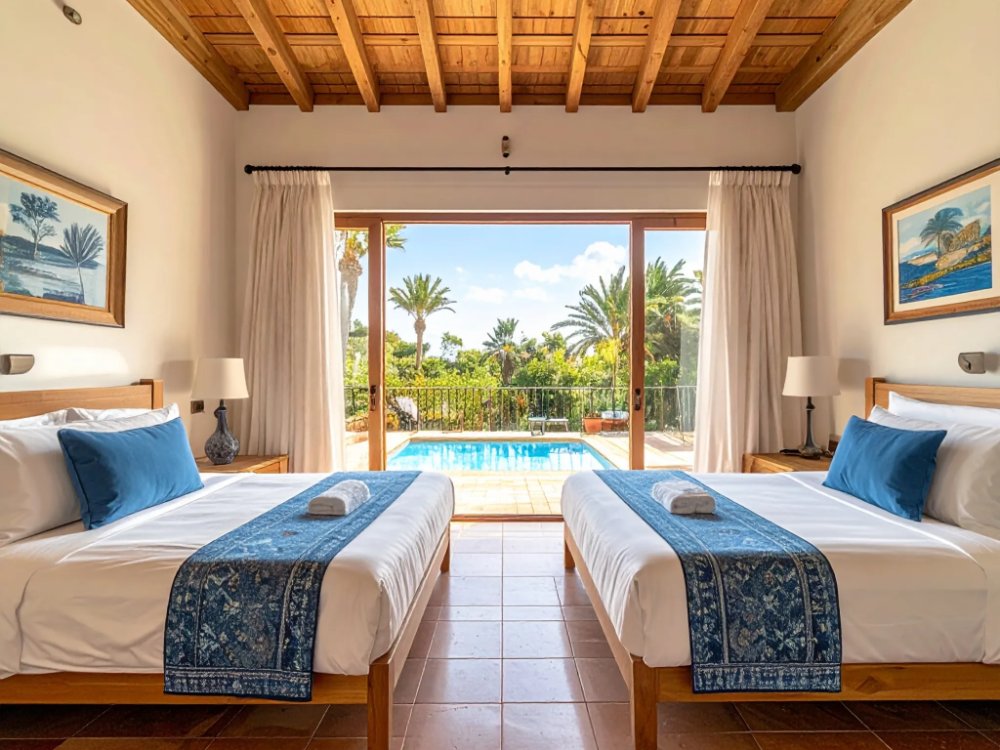
A good-value choice for families, set about 2 km from the centre of Porto Cristo and close to the Caves of Hams. The hotel has two outdoor swimming pools, tennis courts, mini golf and plenty of other sports facilities to keep children busy. A free shuttle bus runs regularly to the beach, so you don’t need a car to get to the sea. It’s ideal if you want a lively, activity-packed stay at a sensible price.
🏨 THB Felip - Adults Only
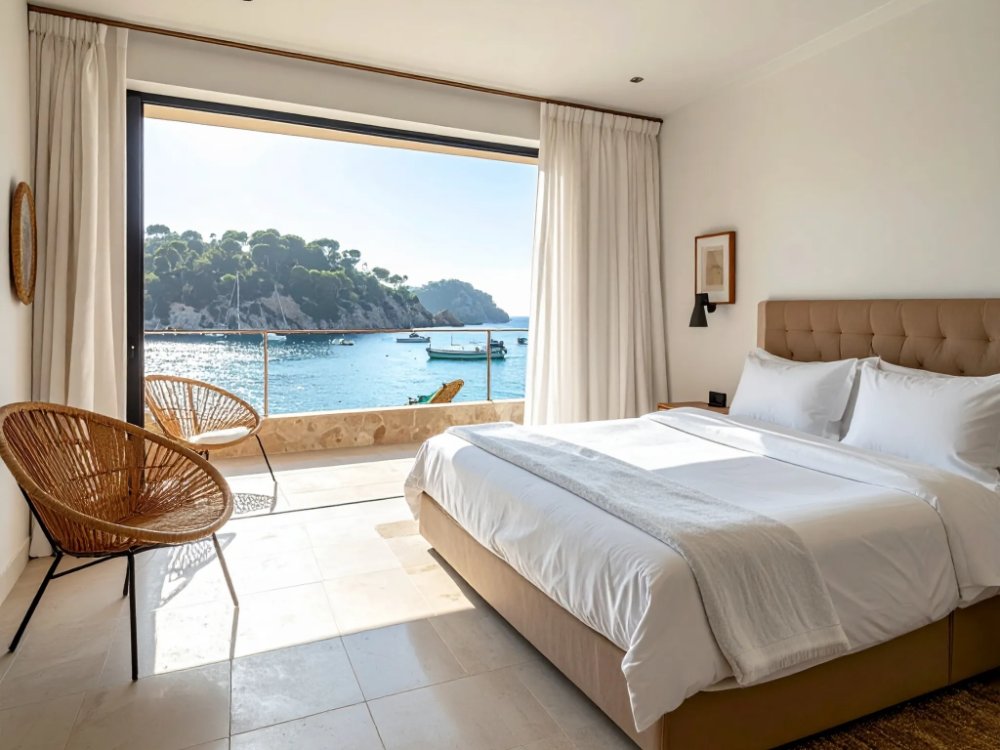
A modern four-star hotel right on the seafront, just a few steps from Porto Cristo beach and the sailing club. Many rooms have balconies with views over the bay, and the hotel has both an indoor and an outdoor pool, a wellness area with a sauna and a gym. The restaurant serves a buffet and à la carte dishes on a terrace overlooking the harbour. It’s a great choice for couples who want a relaxing break within walking distance of everything in town.
💎 Belle Son Mas Luxury Finca Hotel
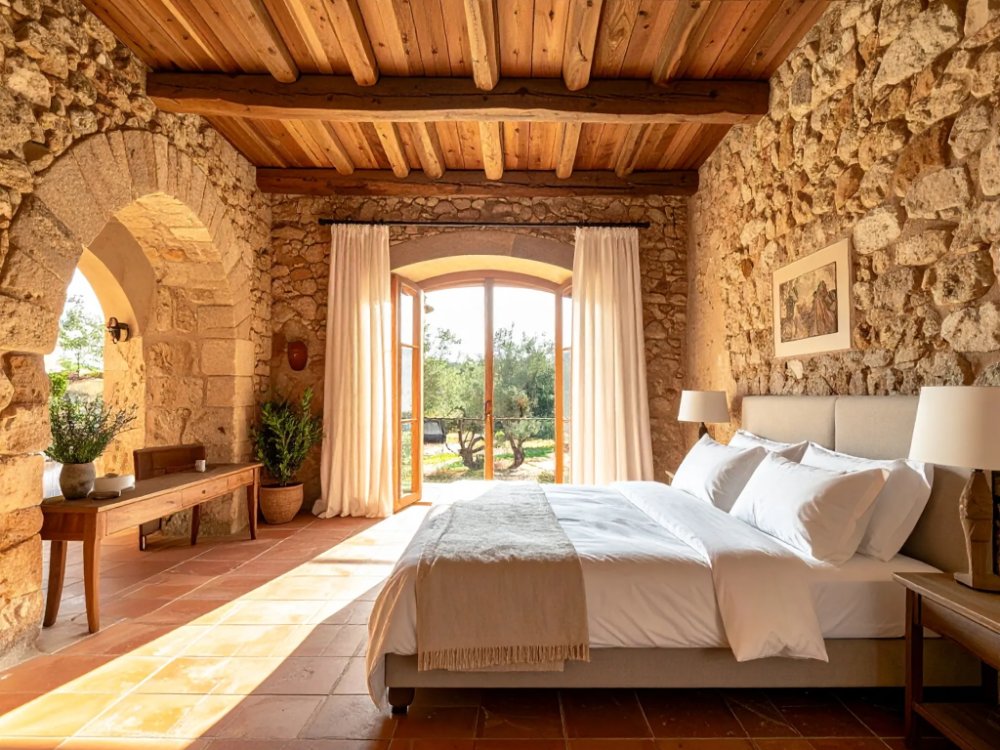
A stylish rural hotel in a restored 17th-century country estate, about 5 km from the Caves of Drach. The spacious rooms and suites combine original stone walls and arches with elegant modern furniture. Guests can enjoy a large outdoor pool, a spa with a sauna and hot tub, and a restaurant serving Mediterranean and local dishes. It’s perfect if you’re looking for peace, privacy and a touch of luxury in the Mallorcan countryside.

