Some of the whitest sand in the Canary Islands isn’t volcanic at all. It’s crushed seashells, piled into dunes by the trade winds over thousands of years.
Corralejo is located on the northern tip of Fuerteventura, in the municipality of La Oliva, and it’s one of the two biggest holiday towns on the second-largest of the Canary Islands. Until the middle of the 20th century it was a small fishing cove. Tourism arrived in the early 1970s and slowly turned the village into a resort. Today it’s a popular destination for holidaymakers from all over Europe, with a relaxed old town, a working harbour and miles of beautiful beaches on its doorstep. In this article you’ll find the best things to do in Corralejo, from the dunes of the natural park to day trips by boat, plus tips for families, surfers and anyone planning a first visit to Fuerteventura.
💰 Fuentepark Apartments - Self-catering apartments with a pool garden, a short walk from the beach and the harbour.
🏨 Hotel Riu Oliva Beach Resort - All Inclusive - An all-inclusive family resort right on Grandes Playas, among the dunes.
💎 Secrets Bahía Real Resort & Spa - Adults only - Hyatt Inclusive Collection - A five-star, adults-only beachfront resort with a spa and views of Lobos.
Things to do in Corralejo - Where to start?
Finding your way around Corralejo is easy. The old fishing quarter and the harbour are at the northern end of town, the main avenue runs south past shops, bars and restaurants, and the dunes of the Parque Natural de Corralejo begin just beyond the last hotels. Lobos Island lies about 2 km offshore, and on a clear day you can see the coast of Lanzarote across the strait.
That layout is what makes Corralejo such a good base, and you hardly need a map. You can spend the morning on a quiet beach, walk to the harbour for lunch and still be back in time for sunset on the promenade. If you’re wondering what to do in Corralejo on a short break, start with the dunes, the old town and a boat trip to Lobos. If you’re planning a full week of holiday, add the ferry to Lanzarote, a surf lesson and a drive to the villages of the north.
Parque Natural de Corralejo - The dunes and Grandes Playas
The Parque Natural de Corralejo covers more than 2,600 hectares of the north-east coast, between Corralejo and the volcanic cone of Montaña Roja. It was first protected in 1982, and together with Lobos it forms one of the most striking landscapes in the Canary Islands and one of the largest dune fields in Spain. Many visitors call it a mini desert by the sea. The light, almost white sand is mostly organic. It comes from fragments of shells and marine organisms, not from volcanic rock, which is why the Corralejo dunes look so different from the dark beaches elsewhere on the island.
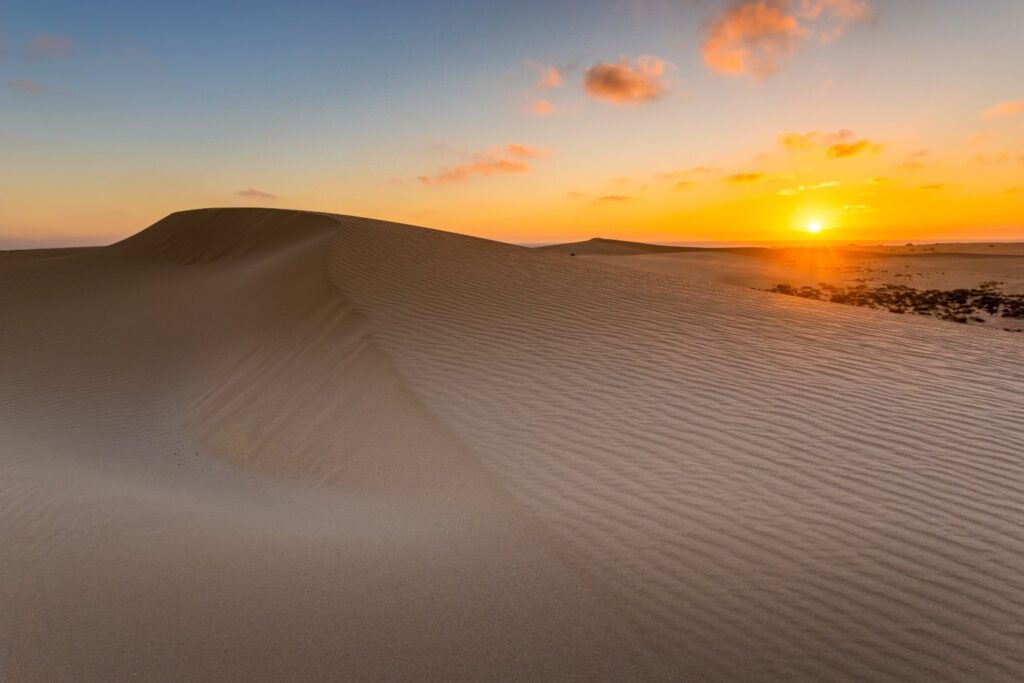
Entry to the natural park is free and you don’t need a ticket. Facilities are limited, though. There’s little shade, few kiosks and the wind can be strong, so bring water, sun cream, a hat and something to eat. Stick to the marked paths and the beaches, because the dunes and their plants are protected. Nature lovers can also look out for the small birds and lizards that live among the low shrubs.
Walking on the Corralejo dunes
Yes, you can walk on the dunes, and it’s one of the simplest free things to do in Corralejo. The easiest way in is from the southern edge of town or from the car parks along the road to Puerto del Rosario, which runs through the park. Go early in the morning or late in the afternoon, when the sand is cooler and the low light shows every ripple. At sunset the dunes turn gold and the view stretches to Lobos and Lanzarote.
If you’d rather not walk, guided buggy and quad tours explore the volcanic tracks around the park, and some tours combine the dunes with the villages of La Oliva. Sandboarding is possible too, but only where it’s allowed, so ask a local school before you head out.
Grandes Playas and Playa del Burro
Grandes Playas is the name for the long chain of beaches in front of the dunes, close to 10 km of fine sand and turquoise water. It’s the largest beach area near Corralejo and the one you’ll see on most postcards of Fuerteventura. Some stretches are busy with holidaymakers from the nearby resorts, while others feel almost empty, even in high season. There are no shops on most of the beach, so a picnic is a good idea.
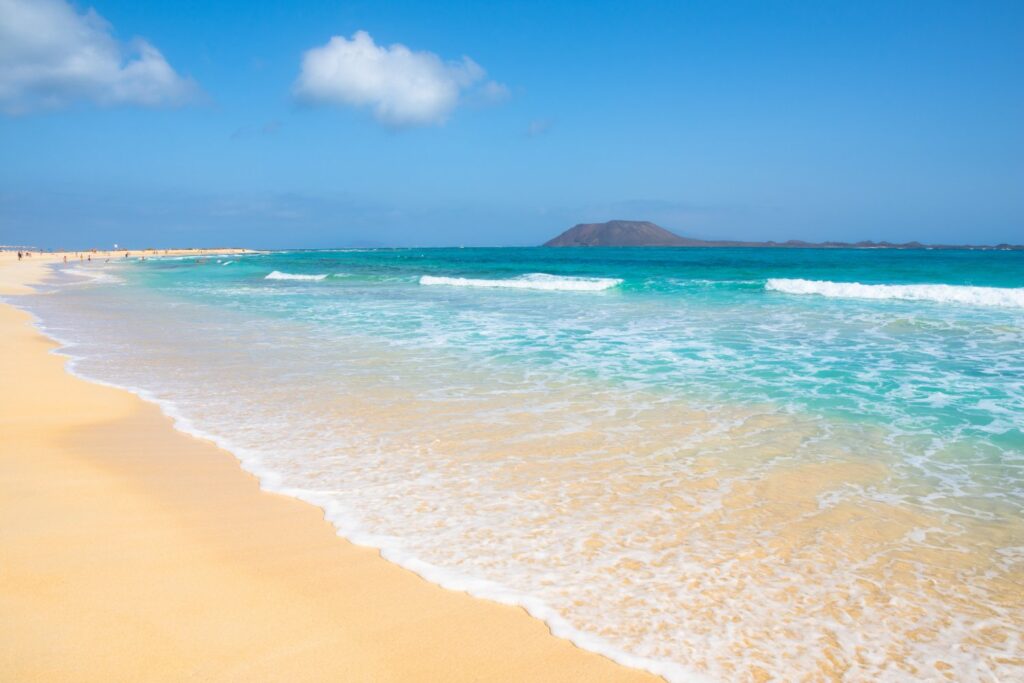
Playa del Burro, better known as Flag Beach, is the stretch closest to town and the island’s best-known spot for kitesurfing. Further south you’ll find quieter coves sheltered by low stone windbreaks, which locals build to escape the breeze. Swim only where the sea is calm and keep an eye on the flags, because currents can be strong on windy days.
Corralejo beach and the town beaches
You don’t have to leave town to find sand. Corralejo beach, the small bay closest to the harbour, is a good spot for a quick swim between sightseeing stops. Next to it are Muelle Chico, Playa de la Goleta, Playa del Medio and Playa de los Verilitos, a string of small town beaches with bars and terraces right behind them. They’re more sheltered than Grandes Playas, though a band of volcanic rock lines parts of the shore.
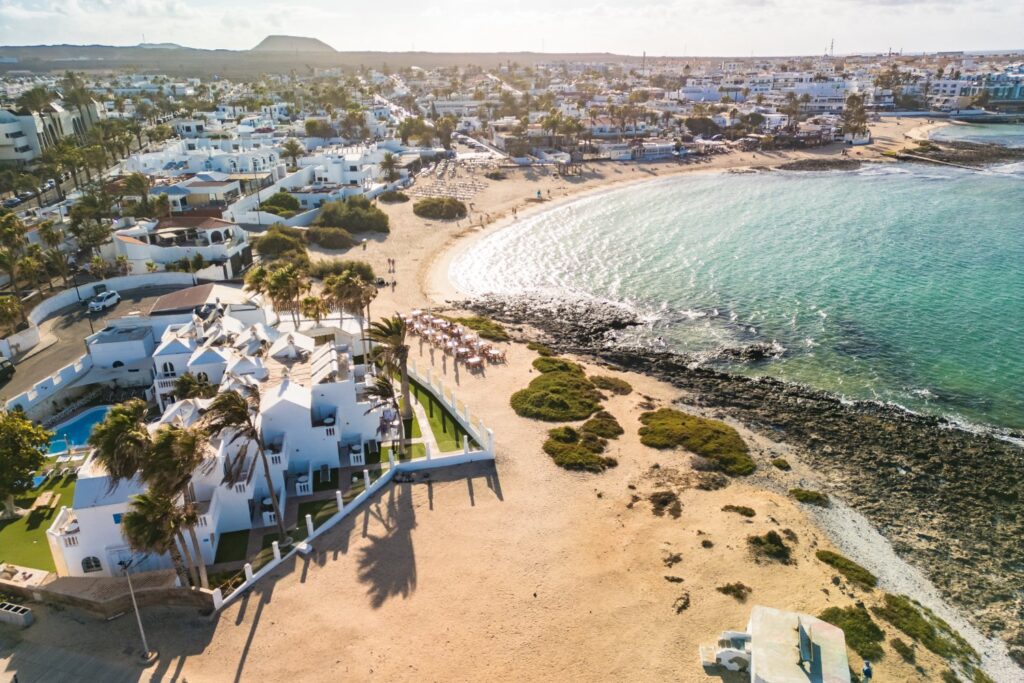
For families with young children, Playa del Bajo Negro is a calm option with facilities for a full beach day. North of town, a dirt track leads to Playa Vista Lobos, also known as Popcorn Beach. Its “sand” is made of small white rhodolith fragments that look just like popcorn. It’s a lovely place for photos, but don’t take any of it home, and avoid swimming there, because the currents are strong.
Corralejo old town and the harbour
Corralejo old town, called El Pueblo by locals, is the most charming part of Corralejo town. Low white houses, small squares and narrow lanes run down to the harbour, where fishing boats still unload their catch next to the ferries. Calle La Iglesia is lined with restaurants, and Plaza Patricio Calero hosts free concerts and events in summer. Walk along the seafront to the Bristol promenade in the evening and you’ll understand why so many visitors come back year after year.
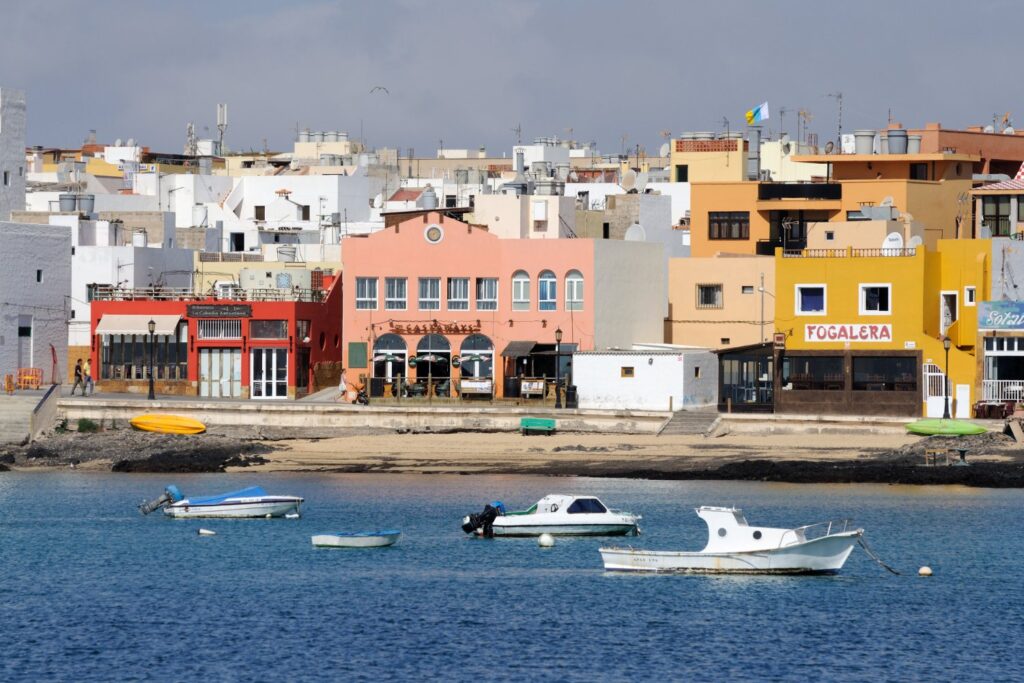
The main street, Avenida Nuestra Señora del Carmen, links the old town with the newer part of the resort. It’s where most shops, cafés and bars are, and it gets lively after dark. The name comes from the town’s patron saint. Every July, during the Fiestas del Carmen, the statue of the Virgen del Carmen is carried through the streets and then out to sea by boat to bless the fishing waters. The main day is 16 July.
If you like markets, head to the El Campanario shopping centre on a Thursday or Sunday morning. The market there sells crafts, jewellery, aloe vera products and souvenirs, and there’s often live music. It’s an easy plan for a slow morning before the beach, and a good place to find local food products such as goat’s cheese and mojo sauces.
Lobos Island - A day trip from Corralejo harbour
Lobos Island is the most popular day trip from Corralejo and one of the top attractions in the north of Fuerteventura. The islet covers only about 6 km², has no permanent population and is a protected natural park in its own right. Boats leave from Corralejo harbour several times a day, and the crossing takes around 15-20 minutes. Catamarans and glass-bottom boats also run trips with time for snorkelling.
Access to the island is limited to protect its landscape. You need a free permit for your visit, and the number of visitors per day is capped, so book a few days in advance. The simplest option is a ferry ticket or boat trip that includes the permit. Visits are limited to a few hours, there are no overnight stays and there’s only one small restaurant, so take water, snacks and sun protection. Expect a great day out in very simple surroundings, with nature as the main attraction.
Ferries land at El Puertito, a hamlet of fishermen’s huts with clear natural pools. From there, an easy path leads to La Concha, a sheltered sandy bay with calm water that’s ideal for a first snorkel. Fitter walkers can climb Montaña La Caldera, the island’s highest point at 127 metres, or follow the circular trail to the Punta Martiño lighthouse on the northern tip.
FUN FACT: Lobos takes its name from the monk seals, called lobos marinos in Spanish, that once lived on its shores.
Taking the ferry from Corralejo to Lanzarote
Corralejo is also the gateway to Lanzarote. Ferries cross the Bocaina Strait to Playa Blanca in around 25-35 minutes, depending on the weather and the boat. Several ferry companies share the route and there are many sailings a day, so a day trip is easy. You can book your ferry ticket online before you travel.
From Playa Blanca you can drive to the lava fields of Timanfaya National Park, see the volcanic cave of Los Jameos del Agua or spend a day with the kids at one of the water parks in Lanzarote. Guided day trips and other activities from Fuerteventura usually include the ferry, a coach and a stop in Timanfaya. If you prefer to explore on your own, take a car across or arrange car hire on Lanzarote.
Kitesurfing, windsurfing and surfing in Corralejo
The trade winds that shaped the dunes also make Corralejo one of the best places for water sports in Spain. Surfing, kitesurfing and windsurfing are among the most popular activities in Corralejo and across the Canary Islands, and the town is full of schools, board shops and surf houses. Flag Beach is the main kite and windsurf spot, with a sandy seabed and easy water entry. The wind is usually most constant in spring and summer.
Surfers head to the reef breaks north and west of town, and many schools drive their students to sandy beaches where the waves suit their level. A group lesson is the easiest way to start, because instructors pick the beach according to the swell and the wind. Experienced surfers often add a trip to El Cotillo, a fishing village on the west coast known for its waves and sunsets.
Corralejo with kids
Corralejo works well for a family holiday in Spain. The town is compact, the beaches are close and there’s plenty to do when the wind picks up. The town beaches and Bajo Negro are the calmest options for little ones, while older children love running down the dunes or spotting fish from a glass-bottom boat on the way to Lobos.
The top family attraction in town is Acua Water Park, located in the centre of Corralejo and the only water park on Fuerteventura. It features a wave pool, a lazy river, a variety of slides, including kamikaze slides for children and adults, the dark Black Hole slide and views over Corralejo, Lobos and Lanzarote. It’s a good plan B for a windy day. For more ideas, see our guide to the best water parks in Spain.
Corralejo also has minigolf and trampolines for a short break from the beach, and kids enjoy watching the fishing boats come in at the harbour. If you have a car, a day at Oasis Park Fuerteventura in the south of the island makes a great day out, with camels, sea lion shows and a huge botanical garden.
Beyond town - Calderón Hondo, Lajares and El Cotillo
The north of Fuerteventura is small enough to explore in a day, which makes Corralejo a good starting point for a simple itinerary. A short drive inland takes you to Lajares, a village of surf cafés, craft shops and old windmills. From there, a marked path climbs the Calderón Hondo volcano, around an hour on foot, with a view straight down into the crater. Guided stargazing tours start here too, because the dark skies of the north are ideal for spotting stars.
Carry on to El Cotillo, also in the municipality of La Oliva, for its lagoons, the Castillo del Tostón watchtower and a seafood lunch. On the way back you can stop in La Oliva, the municipal capital, with its church and historic houses. Bus line 6 links Corralejo with Puerto del Rosario, the island’s capital, but villages in the north are easier to reach with a hire car. For a complete list of the island’s highlights, see our guide to the best things to do in Fuerteventura.
A one-day Corralejo itinerary
If you only have one day, this simple itinerary covers the best of Corralejo without rushing. Start early with a walk on the dunes of the natural park, when the sand is cool and the light is soft. Then head to Grandes Playas for a swim and a rest in one of the stone windbreaks.
In the afternoon, take the boat to Lobos Island for a short walk to La Concha and a snorkel in its calm water, or spend a few hours at Acua Water Park if you’re travelling with kids. Back in town, wander through the old town, have a drink by the harbour and finish the day with seafood and a sunset walk along the promenade. On a Thursday or Sunday, start the day at the market instead.
Where to eat and go out in Corralejo
Food is a big part of any holiday here, and seafood is the star in Corralejo. Look for grilled fish of the day, limpets, octopus and wrinkly potatoes (papas arrugadas) with mojo sauce, plus local goat’s cheese from Fuerteventura. The terraces in the old town and around the harbour are the best places for a long lunch, while Calle La Iglesia has a good mix of Spanish, Italian and international restaurants.

Corralejo is known for its lively nightlife, but it’s more relaxed than the big resorts in the south of Tenerife or Gran Canaria. Most bars are on the main avenue and in the old town, many host live music, and some stay open until the early hours. Families and couples will find plenty of quieter spots for a sunset drink by the sea, while the old town is the place to dine late, Spanish style.
When to visit and how to get to Corralejo
Corralejo has good weather all year, with warm days even in winter, which is why so many tourists choose it for winter sun. Most of the little rain the island gets falls between November and January, and even then a rainy day is the exception. Summer is hot and windy, which is perfect for kitesurfers, while spring and autumn are great for walking in the dunes and day trips. If you’re coming for the beaches, pack a windbreaker for the afternoon breeze.
Fuerteventura Airport is about 37 km from Corralejo, which is roughly a 40-minute drive. There’s no direct public bus, so most visitors take a transfer, a taxi or a hire car. By bus, you change in Puerto del Rosario, so allow extra time on the day of arrival. If you plan to explore the north, car hire in Fuerteventura gives you the most freedom. Corralejo is in the Spanish province of Las Palmas, which covers Fuerteventura, Lanzarote and Gran Canaria, so don’t confuse the province with the city of Las Palmas de Gran Canaria.
Book accommodation early for school holidays and the winter sun season, when the best hotels on Grandes Playas fill up fast.
See available places to stay in Corralejo
Hotels in Corralejo
Corralejo has everything from self-catering flats in the old town to large resorts on the edge of the dunes. Stay in town if you want restaurants and the harbour on your doorstep, or on Grandes Playas if the beach comes first.
💰 Fuentepark Apartments
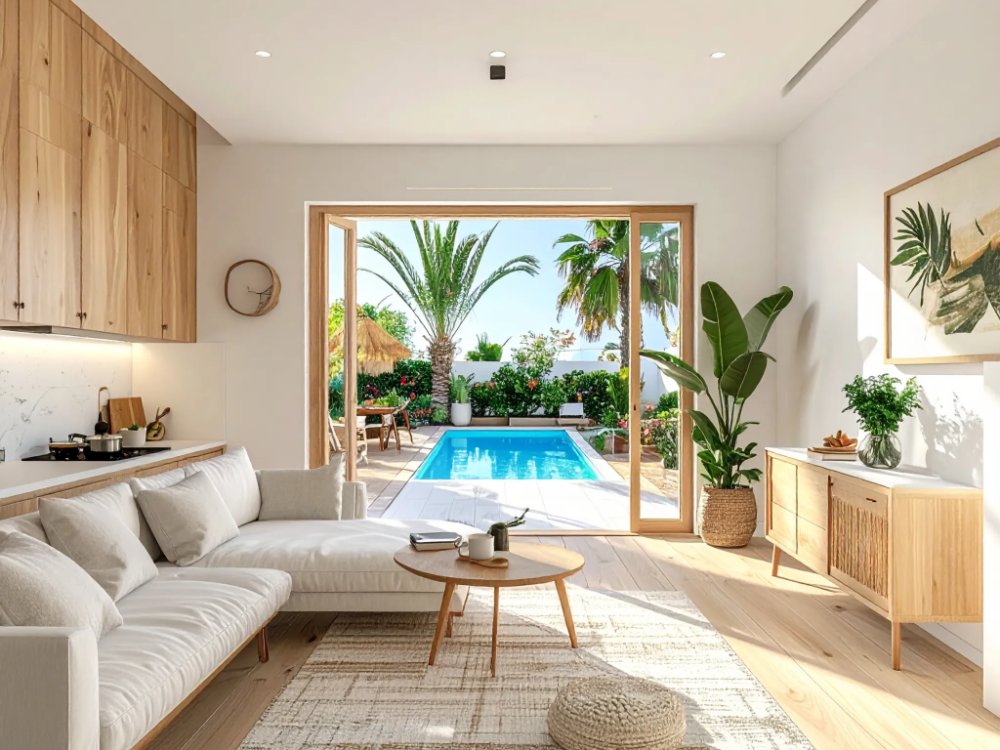
This apartment complex is around 250 metres from the beach and a ten-minute walk from the harbour, where the boats to Lobos leave. The apartments are spacious, with air conditioning, a balcony and a kitchenette, set around a tropical garden with an outdoor pool. Supermarkets, bars and restaurants are just a few steps away. It’s a good choice for families and anyone who prefers to self-cater and explore town on foot.
🏨 Hotel Riu Oliva Beach Resort - All Inclusive
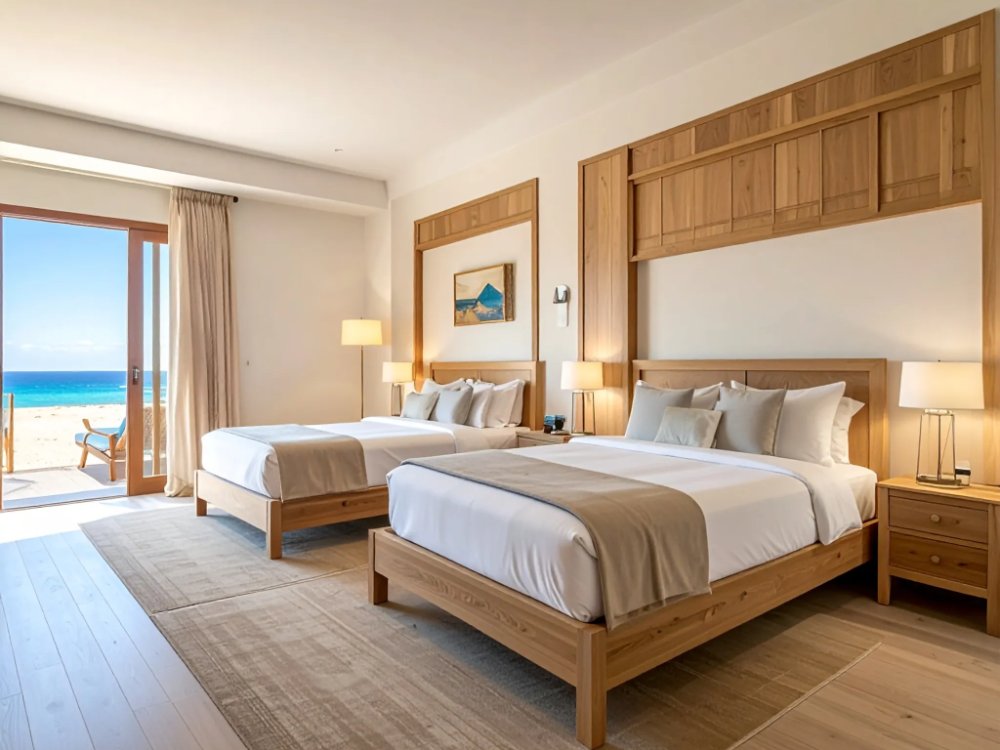
This all-inclusive resort stands right on Grandes Playas, surrounded by the white dunes of the natural park. You can walk from the garden straight onto the sand, and the outdoor pools, fitness centre and restaurants mean you never have to worry about meals. A kids’ club and a playground keep younger guests busy. It’s ideal for families who want an easy beach holiday with views of Lobos.
💎 Secrets Bahía Real Resort & Spa - Adults only - Hyatt Inclusive Collection
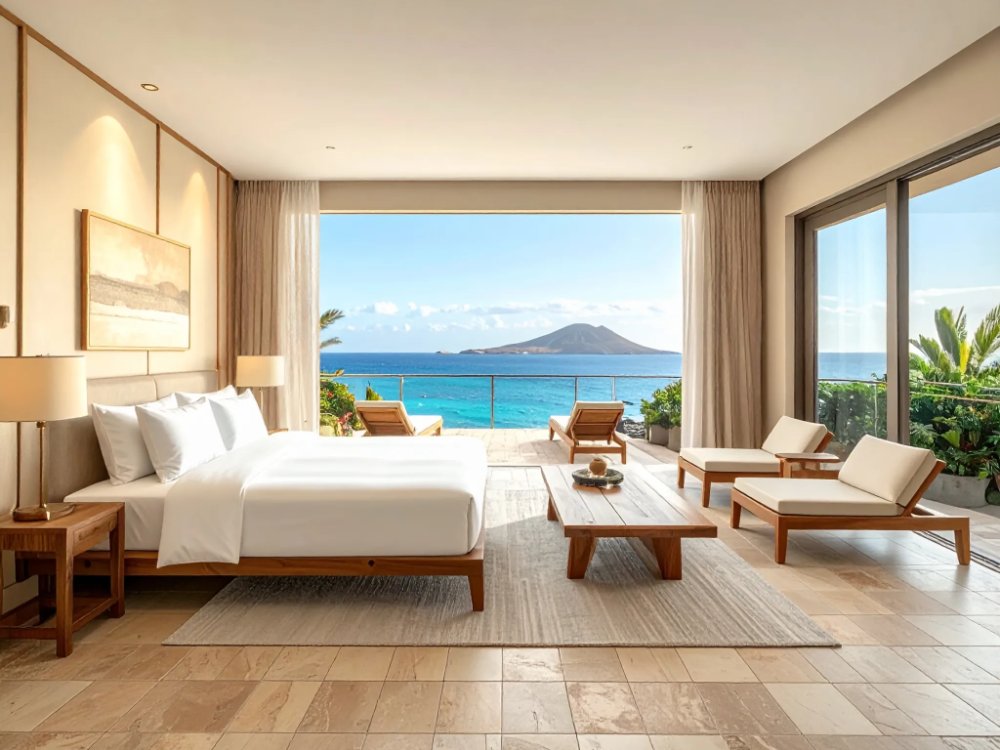
This five-star, adults-only resort sits on the beachfront on Avenida Grandes Playas, at the point where the town meets the dunes. Elegant rooms, a spa and several restaurants make it the most upmarket address in Corralejo. Many rooms look out over the sea towards Lobos and Lanzarote. It’s perfect for couples looking for a quiet, pampering break with the beach at the door.
Corralejo FAQ
Is Corralejo worth a visit?
Yes, Corralejo is one of the best bases on Fuerteventura and one of the most popular places to visit in the Canary Islands. It combines a charming old town and harbour with the dunes of the natural park, long sandy beaches and easy boat trips to Lobos and Lanzarote. It suits families, couples and water sports fans alike.
Can you walk to the sand dunes from Corralejo?
Yes, the dunes start at the southern edge of town, so you can walk there from many hotels. From the old town it’s a longer walk, so many visitors drive or take a taxi to the car parks along the road through the park. Bring water and stay on the marked paths.
Which is the nicest beach in Corralejo?
For most visitors it’s Grandes Playas, the long stretch of white sand in front of the dunes. If you want something closer to town, the small beaches near the harbour are handy for a quick swim. Families with young children often prefer the calm water at Bajo Negro.
Do you need a permit to visit Lobos Island?
Yes, you need a free permit, because Lobos is a protected natural area and daily visitor numbers are limited. Book it a few days before your visit, or choose a ferry ticket or boat trip that already includes the permit.
How far is Corralejo from the airport?
Fuerteventura Airport is about 37 km from Corralejo, roughly 40 minutes by car. There’s no direct public bus, so a transfer, taxi or hire car is the easiest option. By bus, you need to change in Puerto del Rosario.
Which is better, Corralejo or Jandía?
It depends on what you want. Corralejo has more life, a real town centre and quick boat trips to Lobos and Lanzarote. Jandía, in the far south, is quieter and more focused on long beaches and resort hotels. If you want to combine beach days with sightseeing, Corralejo is the better base.

