Most visitors land at the airport, pick up a hire car and head straight for the resorts in the south. They drive right past a 500-year-old historic quarter, a city beach with its own reef and some of the best tapas on the island.
Las Palmas de Gran Canaria is the island’s capital and the biggest city in the Canary Islands, home to around 384,000 people. It sits on the north-east coast of Gran Canaria, squeezed between the Atlantic and a ring of volcanic hills. This is a real working city, not a resort. That’s exactly why it’s so rewarding. In one day you can wander lanes that date back to the 15th century, swim behind a natural reef and finish with tapas on a busy square. In this article you’ll find the best things to do in Las Palmas, from the old town to the beaches, plus practical tips on getting around, eating and where to stay.
💰 Sercotel Playa Canteras - A three-star hotel 150 m from Las Canteras beach, on a quiet street with easy promenade access.
🏨 Hotel LIVVO Lumm - A four-star hotel in central Las Palmas, 10 minutes’ walk from Las Canteras and 15 from historic Vegueta.
💎 Santa Catalina, a Royal Hideaway Hotel - The oldest five-star hotel in the Canaries, opened in 1890 for wealthy travellers en route from Europe to Africa.
Is Las Palmas worth visiting?
Yes, and not just for a rainy day away from the beach. The city was founded in 1478, so its historic centre is one of the oldest in the archipelago. It also has a 3 km city beach, a lively port area and a food scene that feels local rather than touristy. If you’re staying in the south of Gran Canaria, a day trip here is easy. If you prefer cities to resorts, Las Palmas makes a great base for the whole island.
A question many visitors ask is why the Canary Islands have two capitals. Las Palmas shares the title with Santa Cruz de Tenerife, the result of a long rivalry between the two biggest islands. Since 1927 the archipelago has been split into two provinces, and the regional government’s presidency still rotates between the cities. Las Palmas is the capital of the eastern province, which also covers Lanzarote and Fuerteventura.
Things to do in Las Palmas old town (Vegueta)
Vegueta is where the city began, and it’s the place to start your visit. Its cobbled streets, carved wooden balconies and pastel façades have changed little in centuries. The district is compact, so you can see the highlights in a morning on foot. Come early, before the day-trippers from the south arrive, and you’ll have the squares almost to yourself.
Santa Ana Cathedral and the view from the tower
Santa Ana Cathedral took almost four centuries to finish. Work began in 1497, which is why you’ll see a late Gothic interior behind a neoclassical façade. Inside are works by Luján Pérez, the islands’ best-known religious sculptor, and the Diocesan Museum of Sacred Art. Don’t skip the south tower. A lift and a short flight of stairs take you to the top, where the whole city, the port and the ocean open up below you.
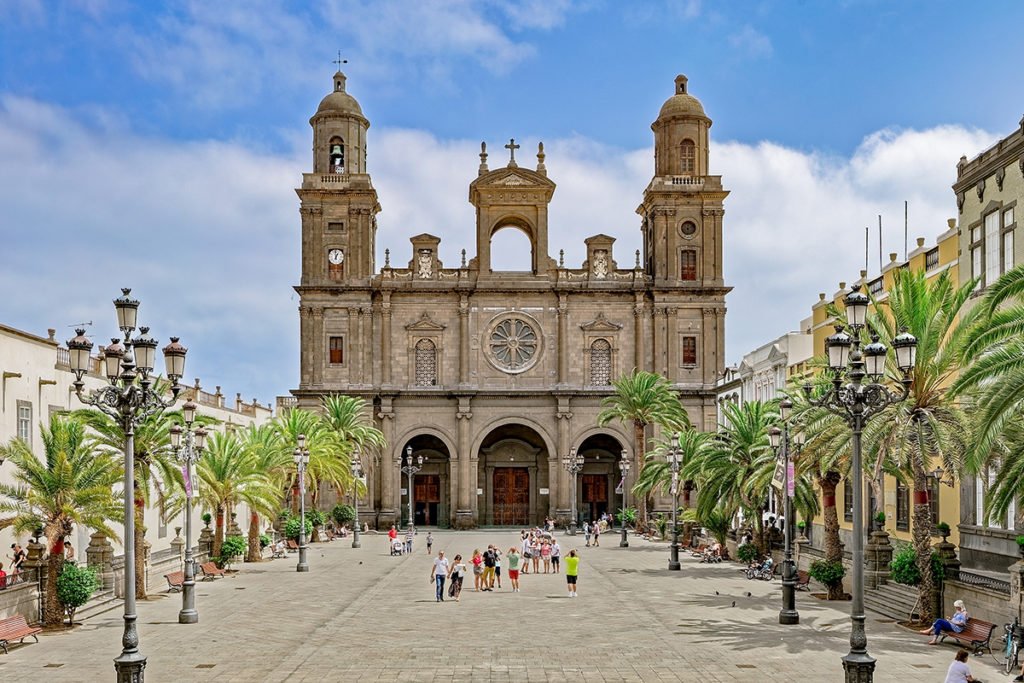
Plaza de Santa Ana in front of the cathedral is one of the most photographed spots in Las Palmas. Look for the bronze dog statues, a nod to the Latin word canis that some say gave the islands their name. On the far side of the square stand the Casas Consistoriales, the old town hall. The Episcopal Palace is next to the cathedral.
Casa de Colón
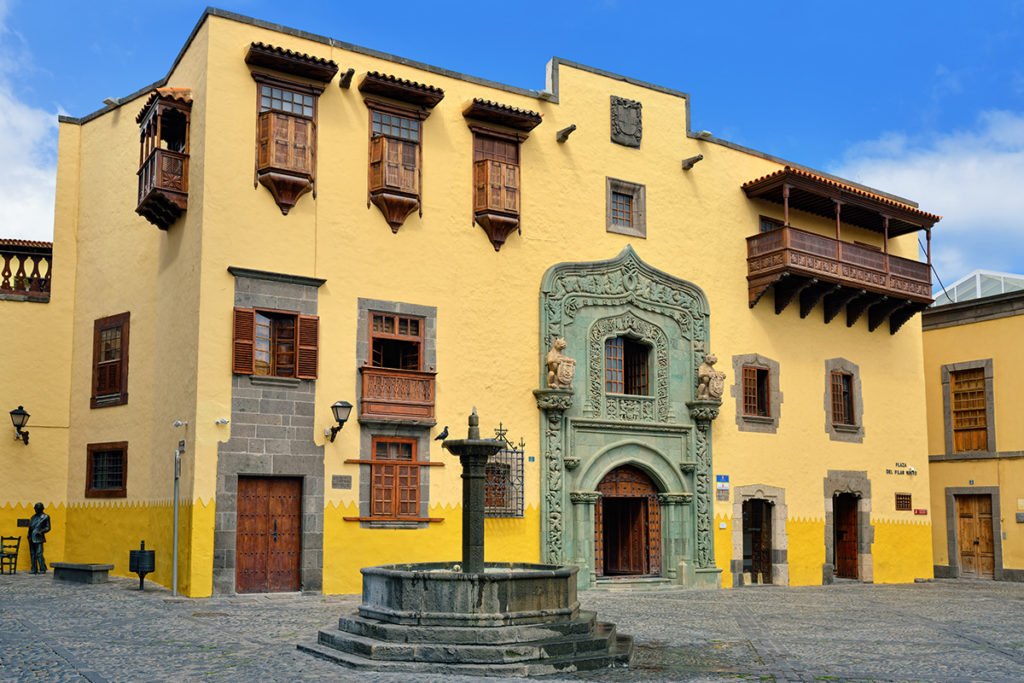
Legend has it that Christopher Columbus called at Gran Canaria in 1492 to repair the rudder of the Pinta, and that he met the island’s governor here. Historians still argue about how much time he really spent in town. Either way, the Casa de Colón is a lovely building with stone doorways and a leafy courtyard. Inside you’ll find maps, navigation instruments, ship models and rooms devoted to the links between the Canaries and the Americas.
Museo Canario
To understand who lived here before the Spanish conquest, visit the Museo Canario. It holds one of the most important collections on the islands’ first inhabitants, the Canarii. Expect pottery, tools, painted clay seals and a striking room of skulls and mummies. It’s a small museum, but it puts everything else you see on the island into context.
Vegueta Market, CAAM and the tapas streets
The Mercado de Vegueta is the city’s oldest market and a great place to see what locals buy. Look for tropical fruit, fresh fish and wheels of island cheese. A few streets away, the CAAM (Centro Atlántico de Arte Moderno) shows contemporary art from the Canaries, Africa and Latin America in a restored old building. In the evening Vegueta changes mood. The streets around Calle Mendizábal fill with people hopping between bars for tapas and a glass of local wine.
Triana - shopping, theatres and San Telmo Park
Cross the main road from Vegueta and you’re in the Triana district, the city’s traditional shopping area. Its spine is Calle Mayor de Triana, a long pedestrian street lined with modernist façades, local shops and pavement cafés. Take your time and look up, because the most beautiful details are on the upper floors.
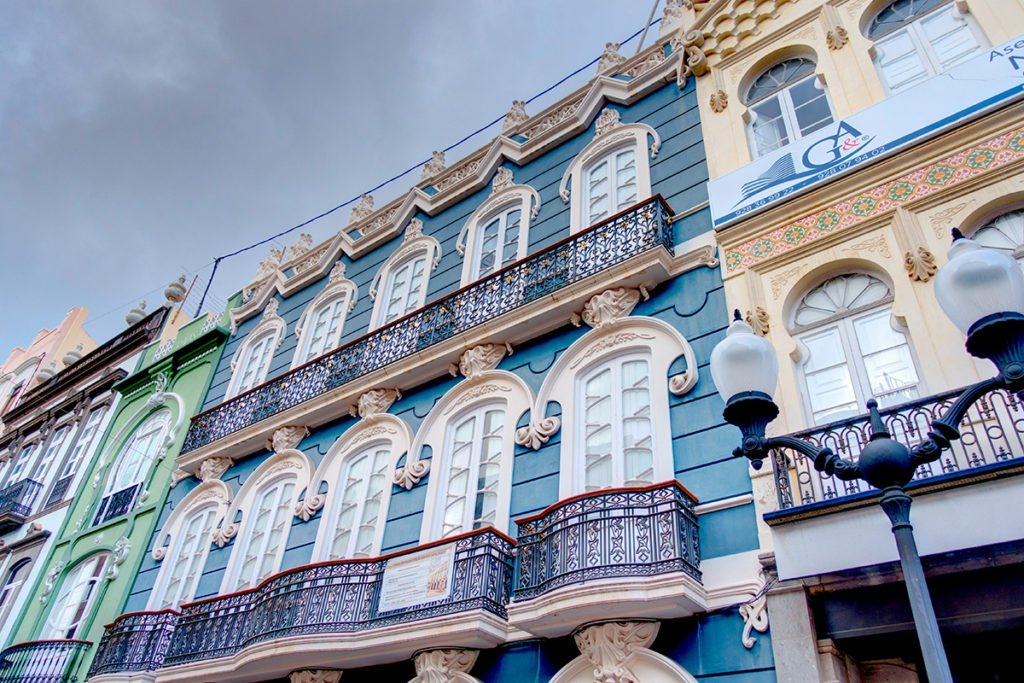
Culture lovers are well served here. The Pérez Galdós Theatre, named after the novelist Benito Pérez Galdós, is the city’s grand opera house. The writer was born in Las Palmas in 1843, and the Casa-Museo Pérez Galdós is set in his family home. At the northern end of Triana lies San Telmo Park, a shady square with a small chapel and a pretty modernist kiosk café. It’s also where many city buses stop and where you can pick up the hop-on hop-off tourist bus.
Playa de las Canteras - the best city beach in the Canaries
Playa de las Canteras is the reason many people fall for Las Palmas. This golden sweep of sand runs for more than 3 km along the city’s western shore, backed by a pedestrian promenade. Just offshore lies La Barra, a natural rock reef that shelters much of the beach from the Atlantic swell. At low tide you can see it clearly, and the calm water behind it is perfect for swimming and snorkelling.
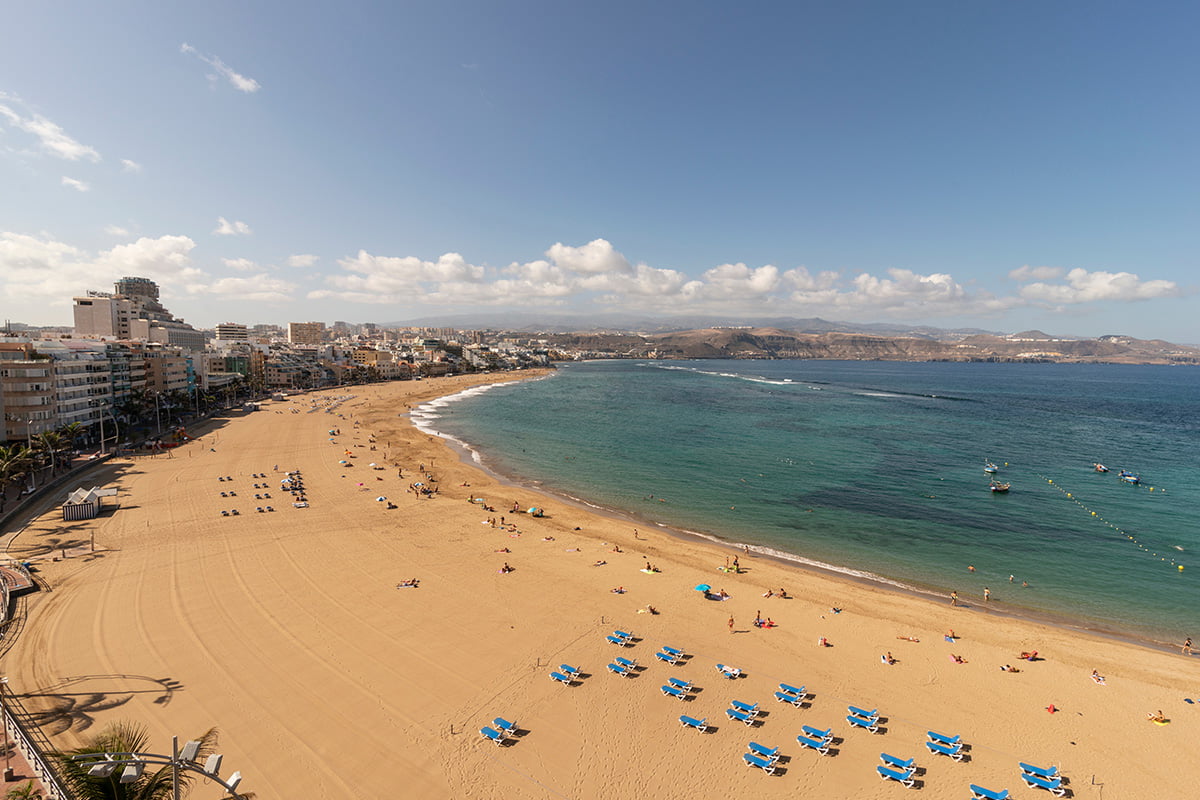
Las Canteras changes character along its length. The northern stretch near La Puntilla is the most sheltered and the most popular with families. In the middle the water is still gentle and there’s plenty of space to spread out your towel. The southern end, La Cícer, has no reef protection, so it’s the place for surfing and surf schools. Right at the end stands the Alfredo Kraus Auditorium, a concert hall built like a fortress facing the ocean.
Spend a lazy afternoon on the sand, and don’t leave without walking the promenade at sunset. The Paseo de Las Canteras is lined with restaurants, ice-cream parlours and bars, and on summer evenings you’ll often hear live music. If you only have time for one beach in the city, make it Las Canteras beach.
Other Las Palmas beaches
There’s more to Las Palmas beaches than Las Canteras. On the east side of the city, Playa de las Alcaravaneras is a quieter sandy beach next to the marina, popular with locals and sailing clubs. North of Las Canteras, past La Puntilla, El Confital feels wild and open, with rock pools and big waves loved by surfers. Further south, the dark sand of La Laja is where many beginners take their first surf lesson.
Santa Catalina, the port and La Isleta
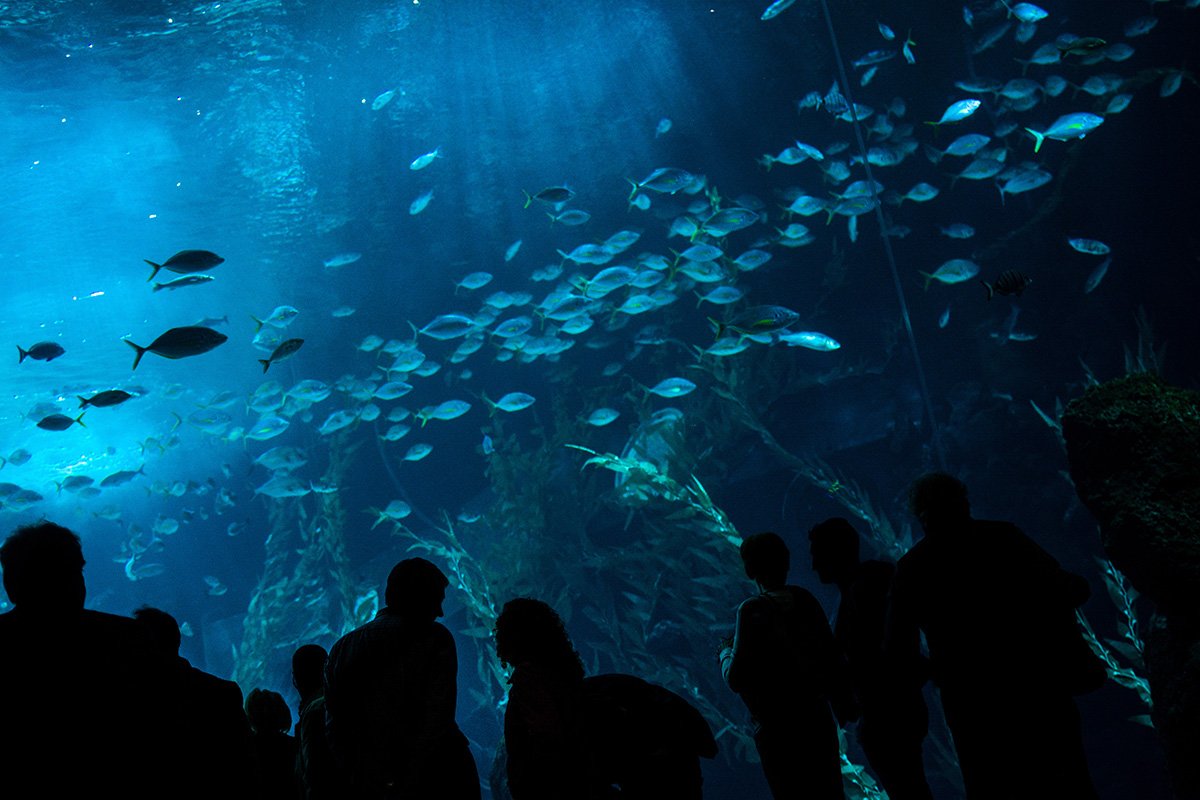
Parque Santa Catalina sits between Las Canteras and the port. It’s a big open square with café terraces and a bus station, and it hosts events throughout the year. Next to it is the Museo Elder, a hands-on science and technology museum that’s great for children. A short walk away, at the Muelle Sanapú, you’ll find the Poema del Mar aquarium. Its huge curved window and themed zones, from a tropical jungle to the deep sea, make it one of the most popular Las Palmas attractions for families. Book skip-the-line tickets in advance, especially at weekends and during school holidays.
Beyond the port rises La Isleta, a volcanic peninsula joined to the city by a narrow strip of land. At its foot stands the Castillo de la Luz, built in 1494 and the oldest fortress in the Canary Islands. Today it houses the Martín Chirino Foundation, so you can see medieval stone walls and modern iron sculptures under one roof. La Isleta itself is a lively, unpretentious neighbourhood with cheap fish restaurants and views back over the bay.
Ciudad Jardín, Parque Doramas and Pueblo Canario
Between the old town and the port lies the Ciudad Jardín district, shaped by the British community in the late 19th and early 20th centuries. Its villas and gardens are a reminder of the days when Las Palmas was a busy stop for steamships on the way to Africa and the Americas. At its heart is Parque Doramas, a leafy park with palm trees, fountains and the historic Santa Catalina hotel.
Next to the park is the Pueblo Canario, a small “Canarian village” designed by the painter Néstor Martín-Fernández de la Torre and built by his brother, the architect Miguel. It’s a showcase of traditional island architecture, with wooden balconies, a chapel and a square where folk music events take place. The Museo Néstor inside the complex is undergoing a major renovation that began in April 2026, so check whether it’s open before you go. The square itself is always worth a short stop.
Las Palmas at night - tapas, live music and Carnival
Nightlife in Las Palmas starts late, so you can enjoy the evening at a relaxed pace. Start with tapas in Vegueta or at one of the terraces on the Paseo de Las Canteras. Then head to the bars around Santa Catalina, where you’ll find everything from cocktail bars to venues with live music and dance floors. For a view over the bay, try one of the hotel rooftop bars around Parque Santa Catalina, a good place to watch the sunset with a drink in hand.
If you visit in February or early March, don’t miss Carnival. It’s one of the biggest in Spain, with weeks of parades, costumes and music, and the famous Drag Queen Gala is the highlight for many. Hotels in the city fill up fast during Carnival, so plan ahead.
Day trips from Las Palmas
One of the best things about Las Palmas is how quickly you can leave it behind. Within half an hour you can be among volcanoes, palm groves and mountain villages. Here are the trips that work best from the city, either by bus, with a hire car or on an organised tour.
Jardín Canario botanical garden
On the edge of the city, in Tafira, you’ll find the Jardín Botánico Canario Viera y Clavijo. Covering 27 hectares of a steep ravine, it’s the largest botanical garden in Spain. Paths lead through laurel forest, pine forest and a vast cactus garden. On sunny days you may even spot the Gran Canaria giant lizard from the stone bridge. Entry is free, and it makes an easy half-day trip.
Caldera de Bandama
Just above the botanical garden is the Caldera de Bandama, a volcanic crater about 1 km across and around 200 metres deep. You can walk around the rim or take the steeper path down to the bottom. For the best view, drive or walk up to the Pico de Bandama viewpoint. From there you can see the crater, the capital and, on a clear day, the coast of Fuerteventura.
Arucas, Teror and the mountains
To the west of the city, Arucas is known for its huge neo-Gothic church carved from dark volcanic stone and for its rum distillery. A little further inland, Teror is one of the prettiest towns on the island, with wooden balconies and a Sunday market. If you have a full day, head up to Roque Nublo, the rock pinnacle that has become the symbol of Gran Canaria. Guided tours from Las Palmas combine it with Pico de las Nieves, the island’s highest point.
Fancy some classic beach scenery too? The dunes of Maspalomas are about 50 minutes south by car or bus. If you want to explore the island at your own pace, hire a car for a day or two. Mountain roads are narrow and winding, but the views are worth every bend.
What to eat in Las Palmas?
Canarian food is simple and full of flavour. The dish you’ll see everywhere is papas arrugadas, small potatoes boiled in very salty water until their skins wrinkle. They come with mojo sauce, either the spicy red mojo picón or the green version made with coriander. Try gofio too, a toasted grain flour that the Canarii were eating long before the conquest. Locals stir it into stews, desserts and even milk.
As a port city, Las Palmas is also a great place for fresh fish. Vieja (parrotfish) is a menu favourite in La Isleta and along Las Canteras. Don’t miss the local cheese either, such as the soft queso de flor from Guía, and finish with a strong cortado coffee. Many restaurants offer a menú del día at lunchtime, which is the best way to eat well without spending much.
Getting around Las Palmas
Las Palmas lies about 20 km north of Gran Canaria Airport, around 25 minutes by car. The blue Global buses link the airport with Las Palmas, and line 60 takes you straight to the centre. In town, the yellow city buses known as guaguas cover every district. They’re the easiest way to get between Vegueta, Triana and Las Canteras, which are a few kilometres apart.
The hop-on hop-off tourist bus is a good choice if you only have one day in Las Palmas. It stops at the main sights, from Vegueta to the beach and the port. For day trips around the island, the Global intercity buses reach most towns, though a hire car gives you much more freedom.
Which part of Las Palmas is best to stay in?
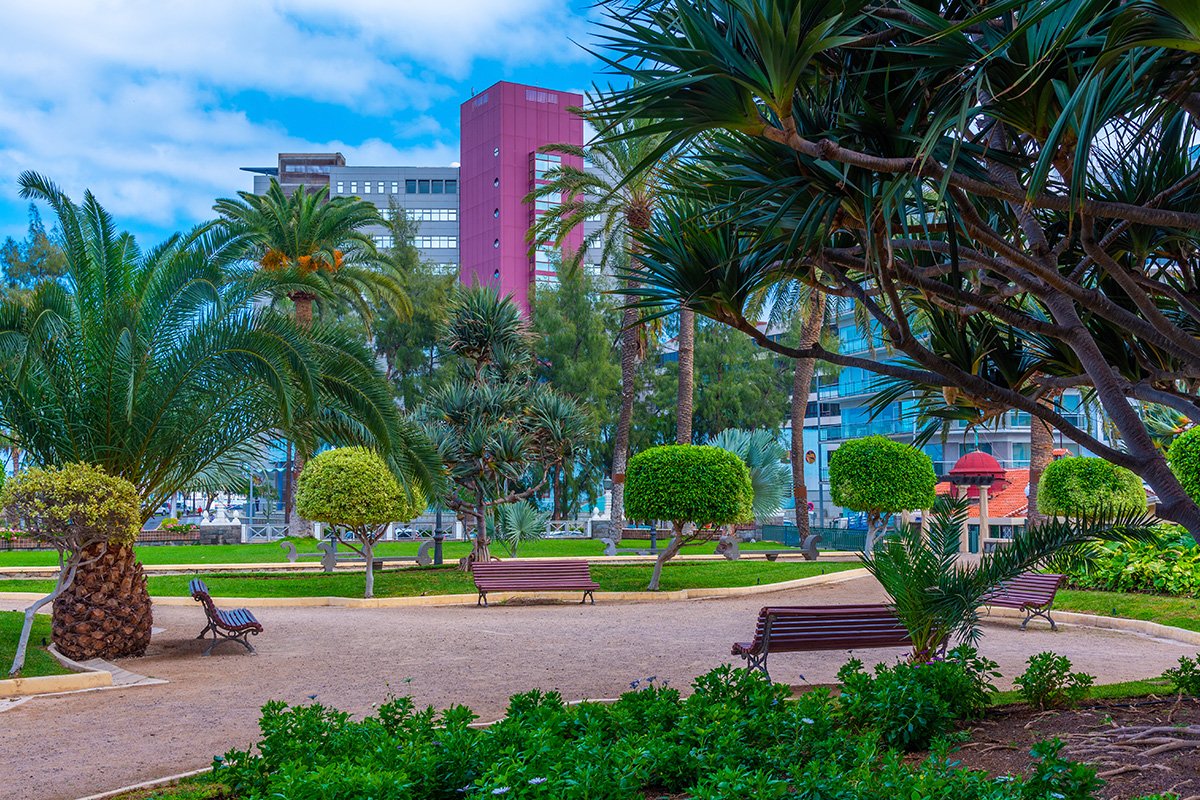
It depends on what kind of trip you want. Stay near Las Canteras if the beach is your priority. You’ll have the promenade, restaurants and Santa Catalina on your doorstep. Choose Vegueta or Triana if you prefer old streets, museums and evening tapas, and don’t mind taking a bus to the beach. Ciudad Jardín is a good fit if you’d like somewhere quieter and greener between the two.
Two or three days are enough to see the city at a relaxed pace. Add one or two more for day trips around the island. The weather is pleasant all year, with temperatures usually between 18°C and 27°C. In summer the north coast is often covered by a layer of low cloud that locals call panza de burro (donkey’s belly), so don’t be surprised by a grey morning.
See available places to stay in Las Palmas de Gran Canaria
Hotels in Las Palmas de Gran Canaria
Las Palmas has hotels for every budget, and the best-located ones sit close to Las Canteras beach and Parque Santa Catalina. Here are three options, from a good-value beach hotel to one of the most famous addresses in the Canary Islands.
💰 Sercotel Playa Canteras
This good-value hotel stands just a short walk from Las Canteras beach and its promenade. Rooms are simple and comfortable, and some look out over the ocean. The highlight is the outdoor pool with views of Las Canteras, perfect for a swim after a day of sightseeing. It’s a great choice if you want a beach location at a reasonable price.
🏨 Hotel LIVVO Lumm
This modern hotel overlooks Parque Santa Catalina and the bay, about a 10-minute walk from Las Canteras beach. Rooms are bright and stylish, and some have port views. On the roof you’ll find a pool, a sun terrace and the Skybar, one of the best spots in the city for a sunset drink. It suits couples and city-breakers who want to be close to restaurants, buses and the Poema del Mar aquarium.
💎 Santa Catalina, a Royal Hideaway Hotel
The most elegant hotel in Las Palmas sits in the gardens of Parque Doramas, next to the Pueblo Canario. This historic hotel first opened in 1890, and Winston Churchill is among its famous past guests. Today it combines classic Canarian architecture with a large spa, an outdoor pool and refined restaurants. Choose it for a special occasion or if you want a peaceful, green setting between the old town and the beach.

