They say this island never sleeps. Come in May and you’ll find farmers’ markets, empty coves and church bells louder than any DJ.
Ibiza is the third-largest of the Balearic Islands, a compact 572 km2 of pine forest, terraced farmland and more than 50 beaches in the Mediterranean Sea. Its reputation rests on superclubs, but that is only one corner of the picture. In this article you’ll find the best things to do in Ibiza for every kind of traveller: a walled old town on the UNESCO list, sunset coves on the west coast, hippy markets, boat trips to Formentera and sleepy villages where life still moves at the pace of the harvest.
Whether you’re planning a short break or a slow week by the sea, the island is small enough to explore from one base. You’ll also find practical tips on getting around, when to go and where to stay in Ibiza, with three hotels for different budgets at the end.
💰 Hotel Gran Sol - A good-value hotel near the beach in Sant Antoni, with a big pool and sunset bars nearby.
🏨 Hotel Riomar Ibiza, a Tribute Portfolio Hotel - A stylish beachfront hotel on Els Pins beach in calm, family-friendly Santa Eulària.
💎 Hotel Mirador de Dalt Vila - A small luxury hotel in a historic mansion inside the walls of Dalt Vila.
Things to do in Ibiza - a quick overview
If you only have a few days, these are the things to do in Ibiza that give you the best feel for the island. Start with a morning in Dalt Vila, the fortified old town above the harbour. Spend an afternoon at a west coast cove such as Cala Comte, then watch the sun drop behind Es Vedrà from the cliffs at Cala d’Hort.
Add a day on Formentera, a morning at a hippy market and a drive through the villages of the interior. Families usually love the calm bays around Santa Eulària des Riu, while the north rewards anyone looking for hidden coves and walking trails. Ibiza Spain is about far more than the party scene, and the natural beauty of the island surprises almost everyone on their first trip to Ibiza.
Explore Ibiza Town and Dalt Vila, the old town
Ibiza Town (Eivissa in Catalan) is the island’s capital and its most rewarding place to wander. It sits on the south-east coast, around 15 minutes by car from the airport. The modern streets around Vara de Rey are full of cafés and boutique shops. The real highlight, though, is the walled hilltop above the harbour.
Dalt Vila - walls, cathedral and the best views on the island
Dalt Vila, the Ibiza old town, is the heart of the UNESCO World Heritage Site “Ibiza, Biodiversity and Culture”, listed in 1999. Its Renaissance walls were built in the 16th century to protect the town from Ottoman and Barbary pirate raids. Seven bastions still stand, and you can walk along most of them for free. Come in the early morning or late afternoon, when the stone is cooler and the light is golden.
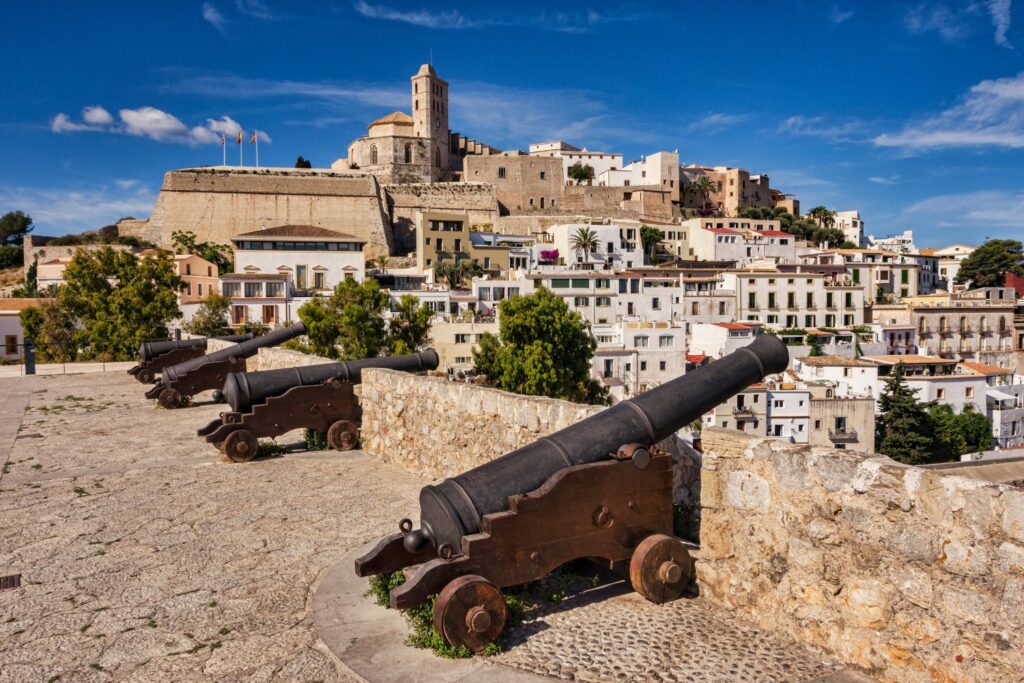
Enter through the Portal de ses Taules, the main gate, and follow the cobbled streets uphill. You’ll pass whitewashed buildings, small squares and the church of Santo Domingo with its tiled domes. At the top stands the cathedral of Santa Maria de les Neus, begun after the Catalan conquest of 1235 and remodelled in the 18th century. The terrace beside it looks out over the harbour, the salt flats and, on a clear day, Formentera.
Ibiza Old Town is not huge, so two to three hours is enough for a relaxed visit. A guided walking tour helps you make sense of 2,500 years of history, from the Phoenicians to the Moors and the Catalans. In the evening, the restaurants inside the walls offer an intimate atmosphere and amazing views, and a rooftop bar near the cathedral is a lovely place for a drink at dusk.
La Marina, Sa Penya and the harbour
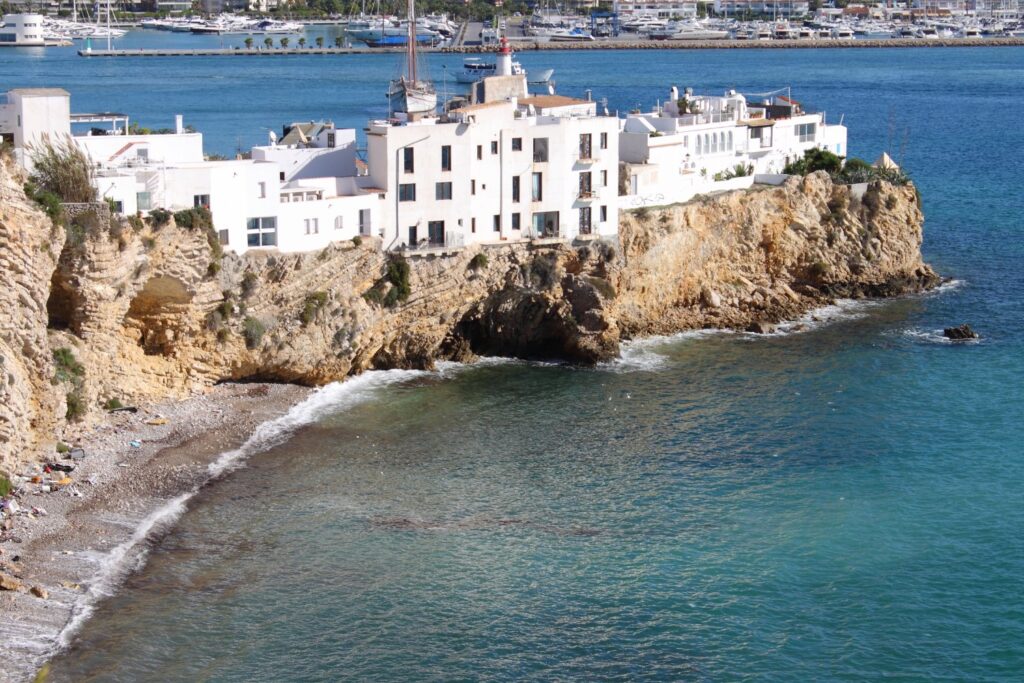
Below the walls, the old fishermen’s quarters of La Marina and Sa Penya are a maze of narrow lanes painted white and blue. By day, you’ll find fashion boutiques and the island’s “Adlib” style of loose white cotton. In summer, the night market stalls along the harbour stay open late, and the waterfront fills with diners and yachts. If you want to explore Ibiza Town at its liveliest, come after 9pm, when the whole port seems to be out for a stroll.
Puig des Molins - the Phoenician necropolis
A short walk from the old town, Puig des Molins is one of the best-preserved Phoenician and Punic necropolises in the Mediterranean. Ibiza was founded by the Phoenicians in the 7th century BC, and thousands of tombs were carved into this hillside over the following centuries. The small museum displays amulets, pottery and terracotta figures found in the graves. It’s a quiet, shady visit and a good break from the heat on a summer afternoon.
Ibiza beaches and coves worth the drive
Ibiza beaches are the main reason most people visit Ibiza, and the variety is huge for such a small island. You’ll find long sandy beaches with sunbeds, tiny rocky coves reached on foot and wild stretches of dune protected as a natural park. The water is famously clear thanks to the meadows of Posidonia seagrass, part of the same UNESCO listing as Dalt Vila. In July and August, arrive before 10am, because the parking area at the most popular coves fills up fast.
Cala Comte (Cala Conta) - west coast sunsets
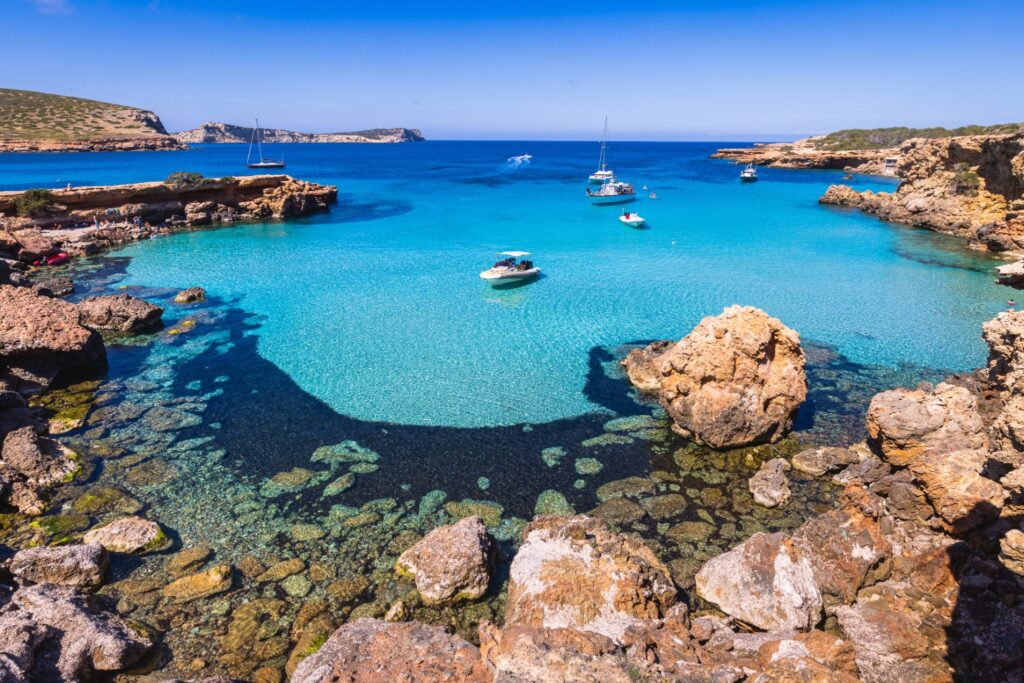
Cala Comte, also spelt Cala Conta, is a string of small sandy beaches and flat rocks on the west coast, near Sant Antoni. The turquoise waters are shallow and dotted with tiny islets, so it feels like a lagoon on calm days. Bring snorkelling gear and watch out for the currents further out. In the evening, crowds gather on the rocks or at the Sunset Ashram bar to applaud the sun as it sinks into the sea.
Cala d’Hort and Es Vedrà views
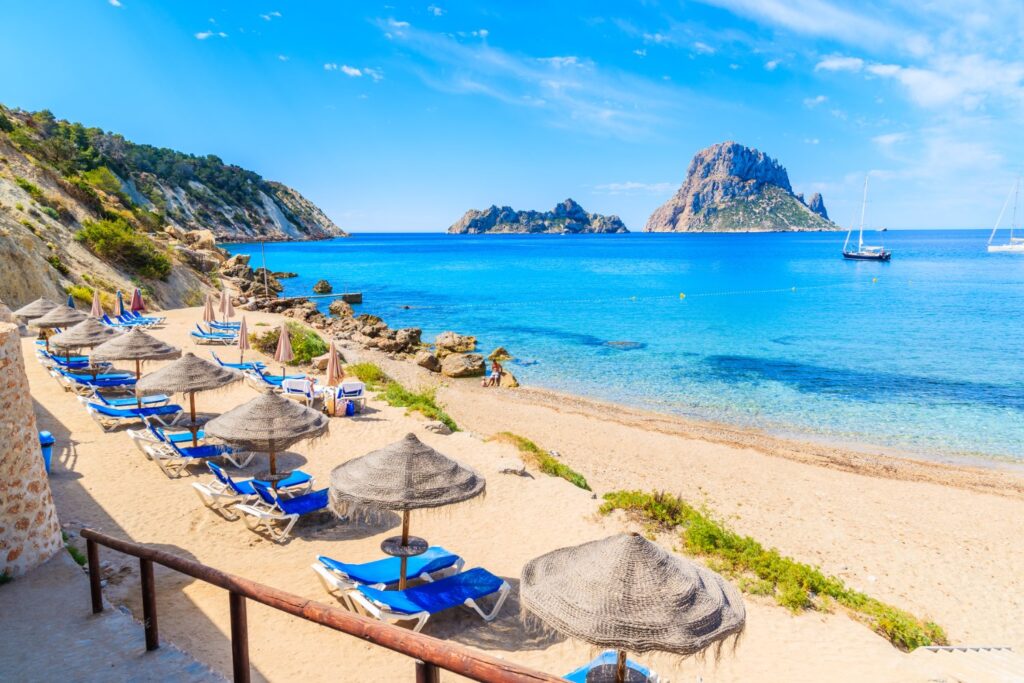
Cala d’Hort is a quieter beach in the south-west with a few fish restaurants right on the sand. Its big draw is the view of Es Vedrà, the limestone islet that rises sheer from the water just offshore (you’ll often see it written Es Vedra). Local legends link it to sirens, sea spirits and even the lost city of Atlantis. The rock and its smaller neighbour, Es Vedranell, are a protected nature reserve, so you can only admire them from the coast or a boat. For the classic Es Vedrà views at sunset, drive up to the viewpoint near the Torre des Savinar watchtower and walk the last stretch.
Cala Salada and Cala Saladeta
North of Sant Antoni, Cala Salada and its little sister Cala Saladeta sit in a pine-fringed bay with crystal clear water and soft white sand. Cala Saladeta is reached by a short walk over the rocks from the main beach, and it’s absolutely stunning in the morning light. Access by car is restricted in high season, when the small car park fills early and the road closes to traffic. Take the bus from Sant Antoni or come by boat instead, and check Google Maps for the current access before you set off.
Ses Salines and Es Cavallet - the salt flats and dunes
The south tip of the island is the Ses Salines Natural Park, which also covers part of Formentera. Here salt has been harvested since ancient times, and the shimmering salt flats attract flamingos and other migrating birds. Platja de ses Salines is a long sandy beach with beach clubs and a stylish crowd. Next door, Es Cavallet is wilder and partly naturist, backed by dunes and juniper.
Calm beaches for families on the east coast
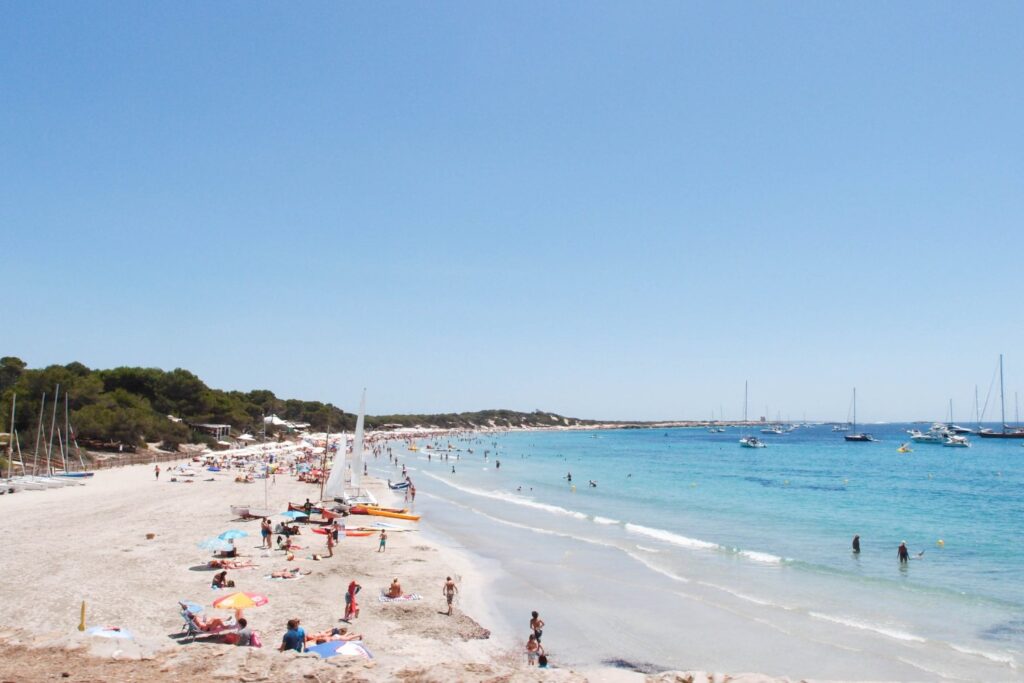
If you’re travelling with children, the east coast is your friend. Cala Llonga is a deep, sheltered bay with shallow water and a wide strip of sand. Es Canar and the beaches of Santa Eulària des Riu have gentle slopes, lifeguards in summer and plenty of cafés within walking distance. These are the best spots for a relaxing holiday, far from the club strips of the south and west.
Sunset in Sant Antoni de Portmany
Sant Antoni de Portmany, known to British visitors as San Antonio or simply San An, is famous for one thing above all: the sunset. The seafront strip north of the town centre, home to Café del Mar since 1980, turns into an open-air stage every evening. Music drifts out of the bars as the sky turns orange and pink over the bay. Arrive early if you want a table, or bring a drink and sit on the rocks.
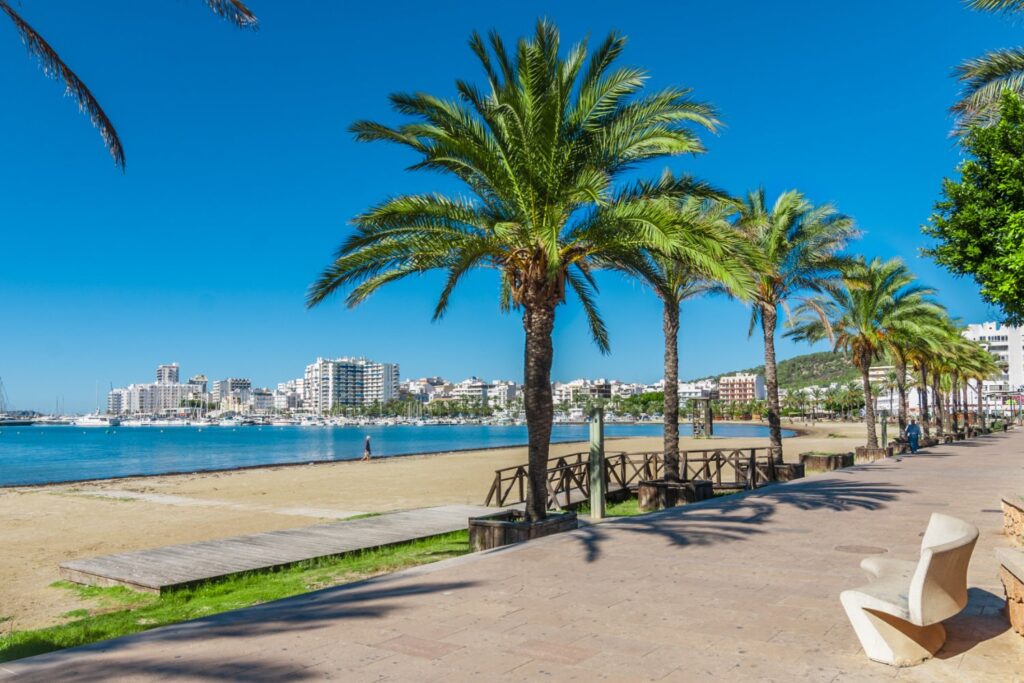
The town itself has a long promenade, a busy marina and plenty of family-friendly hotels on the edges. It’s also the main departure point for boat trips along the west coast. A sailing trip with a swim stop lets you see Cala Bassa, Cala Comte and the cliffs from the water. Book a sunset departure and you’ll watch the show from the deck instead of the shore.
Boat trips and a day on Formentera
Boat trips are one of the best things to do in Ibiza, because many of the prettiest coves are easier to reach by sea. You can choose a glass-bottom boat, a catamaran with lunch, a kayak tour into sea caves or a private charter. The calmest seas are usually in the morning, and most trips run from late spring to early autumn.
The most popular day trip is to Formentera, the smallest inhabited island of the Balearic Islands, just south of Ibiza. Fast ferries from the port of Ibiza Town reach La Savina in about 30 minutes, and in the summer months they leave every half hour or so. Rent a bike or a scooter on arrival and head for Ses Illetes, a narrow sandy beach with water so clear it looks Caribbean. A cruise with stops for swimming and lunch is the easiest option if you’d rather not plan the logistics yourself.
FUN FACT: Formentera has no airport, so everyone who visits arrives by sea, most of them via Ibiza.
Hippy markets and the villages of the interior
In the 1960s and 70s, Ibiza became a haven for hippies, artists and travellers from all over Europe. Their legacy lives on in the island’s markets, a must for any food lover or souvenir hunter. The oldest is the Punta Arabí hippy market in Es Canar, which has run since 1973. It’s held on Wednesdays from April to October, with hundreds of stalls selling jewellery, leather, clothes and crafts.
Las Dalias in Sant Carles began in 1985 with just five stalls and is now an island institution. The day market runs on Saturdays for most of the year, and in summer a night market with live music opens on Sunday, Monday and Tuesday evenings. On Saturdays, the Sant Jordi flea market near the airport is a good place for vintage finds and bargains.
The villages of the interior show a quieter, more traditional side of the island. Santa Gertrudis de Fruitera, right in the centre, has a whitewashed church, art galleries and café terraces where locals linger over breakfast. Sant Joan de Labritja in the north, often called San Juan, hosts a relaxed Sunday market with local produce and crafts. Sant Miquel, Sant Agustí and Sant Rafel each have their own fortified white church, built to shelter villagers from pirate attacks.
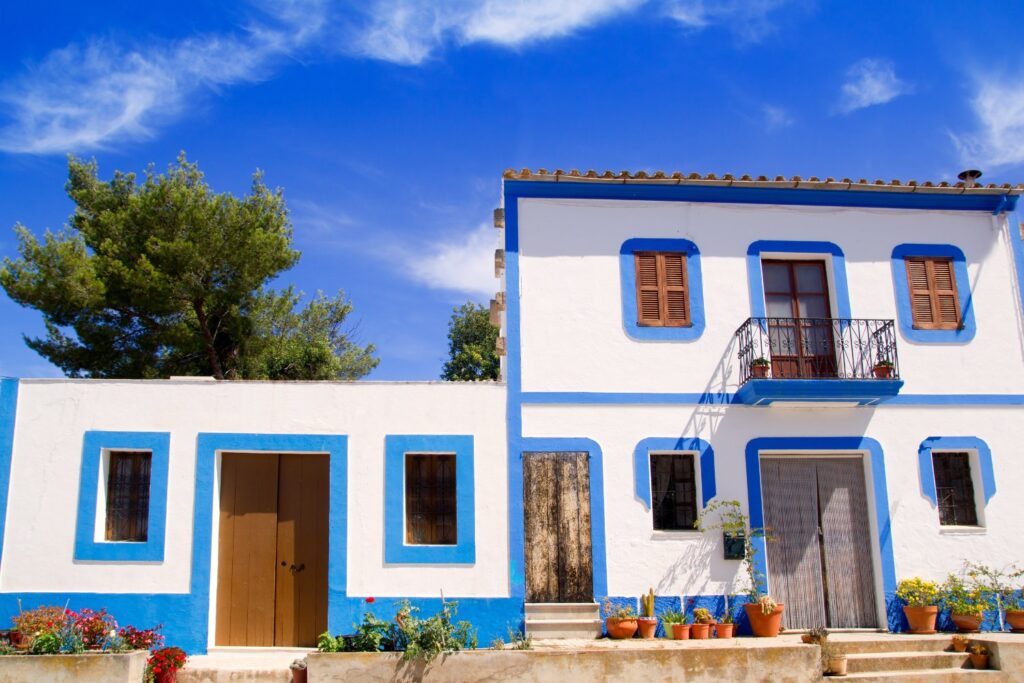
Around the villages you’ll find farm-to-table restaurants serving vegetables, olive oil and lamb from their own land. Many of them are in restored stone farmhouses called fincas. They’re perfect for a long lunch after a morning at the market.
Santa Eulària des Riu - the family-friendly side of the island
Santa Eulària des Riu, often written Santa Eulalia, is one of the island’s largest towns and its most family-friendly base. A palm-lined promenade runs along the beach to a modern marina, and the town centre has a pleasant mix of shops and restaurants. In the evenings it feels more like a seaside town than a resort.
Climb the hill of Puig de Missa to see the fortified white church and the small Ethnographic Museum, which shows how islanders lived before tourism arrived. The view over the town and the island’s only river is lovely at sunset. From Santa Eulalia it’s a short drive to Cala Llonga, Es Canar and the Punta Arabí market. If you’d love Ibiza without the noise, this is where to start.
See places to stay in Santa Eulària des Riu
The wild north - Portinatx, Benirràs and the Can Marçà caves
The north of Ibiza is greener, hillier and much less developed than the south. Pine-covered cliffs drop into small bays, and the roads wind between almond and olive groves. It’s the best part of the island for walking and outdoor activities, especially in spring and autumn.
Portinatx, at the northern tip, has three sheltered sandy beaches and a lighthouse walk with amazing views. On Sundays, people gather at Benirràs beach to drum the sun down, a tradition that dates back to the hippy years. Nearby, the bay of Port de Sant Miquel is home to the Cova de Can Marçà, a cave once used by smugglers. A guided tour takes you past stalactites and an underground waterfall lit by a light and sound show.
Ibiza’s party scene and beach clubs
You can’t write about Ibiza without mentioning the clubs. Pacha in Ibiza Town opened in 1973 and still flies its famous cherry logo. Ushuaïa and Hï Ibiza face each other across the road in Platja d’en Bossa, the island’s main clubbing strip. The big club season runs roughly from late spring to early autumn, and tickets for the best nights sell out in advance.
If late nights aren’t your thing, a beach club is a gentler taste of island style. You’ll find them on Platja d’en Bossa, Ses Salines and Cala Jondal, with sunbeds, cocktails and DJs playing in the afternoon. Beach parties and boat parties are popular with groups of friends, while couples often prefer a quieter beach bar and a sunset dinner.
Amazing food - what to eat in Ibiza
Island cooking is simple and seasonal, built on fish, pork, almonds and herbs. Try bullit de peix, a fish stew served with a second course of rice cooked in the broth. Sofrit pagès is a hearty winter dish of meat, sausages and potatoes, and flaó is a sweet cheese and mint tart that’s absolutely delicious with coffee.
Finish a meal with a glass of hierbas ibicencas, a herb liqueur flavoured with fennel, thyme and rosemary. Many restaurants by the sea grill the catch of the day, and a good lunch at a chiringuito is one of the simple pleasures of an Ibiza trip. Restaurants in resorts often close between November and March, while Ibiza Town and Santa Eulària stay open all year.
How to get to Ibiza and get around the island
Ibiza Airport has direct flights from most UK airports in the summer and a reduced schedule in winter. It lies about 7 km south-west of Ibiza Town. You can also arrive by sea: ferries sail to the island from Barcelona, Valencia and Dénia on the Costa Blanca. You can compare routes and book ferry and train tickets on Omio.
If you’re combining islands, ferries also link Ibiza with Palma de Mallorca in a few hours. See our guide to Mallorca if you’re wondering which island suits you better.
Public buses connect the airport, Ibiza Town and all the main resorts, and they’re cheap and reliable in summer. To reach remote coves, rural restaurants and the villages of the north, though, a car makes life much easier. Car hire in Ibiza is worth booking early for July and August, when demand is high. Taxis are plentiful but can be pricey, and the queues get long after the clubs close.
When to visit Ibiza and how long to stay
The best months for most visitors are May, June and September. The sea is warm, temperatures sit between 24°C and 28°C, and the beaches are less crowded than in peak season. July and August are hot, often above 30°C, and the island is at its busiest and most expensive. Book your accommodation well in advance for summer, as the best hotels fill months ahead.
From November to March the island goes quiet. Many resort hotels close, but Ibiza Town and Santa Eulària stay lively, and it’s a great time for walking, cycling and almond blossom in late January and February. As for timing, a long weekend gives you Dalt Vila, a couple of beaches and a sunset. Plan at least a week if you want to add Formentera, the markets and the north at an easy pace.
See places to stay in Ibiza Town
Best hotels in Ibiza
Where you stay in Ibiza shapes your whole holiday. Ibiza Town is best for sightseeing and restaurants, Sant Antoni for sunsets and nightlife, and Santa Eulària for families and a slower pace. Most hotels below are an easy drive from the beaches and coves in this article.
💰 Hotel Gran Sol
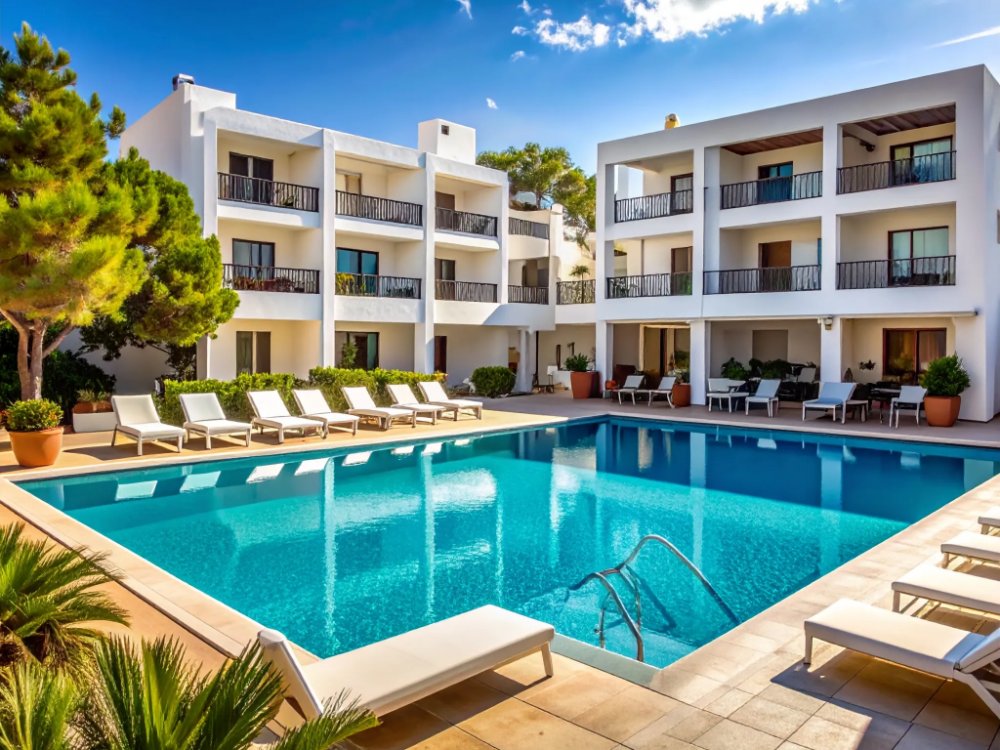
A good-value hotel in Sant Antoni de Portmany, a short walk from the little Caló des Moro cove and the sunset bars. The big outdoor pool with sun loungers is the centre of hotel life on hot afternoons. Rooms are simple and bright, and the town’s promenade, marina and boat trip departures are all close by. It suits couples and friends who want to be near the action without paying resort prices.
🏨 Hotel Riomar Ibiza, a Tribute Portfolio Hotel
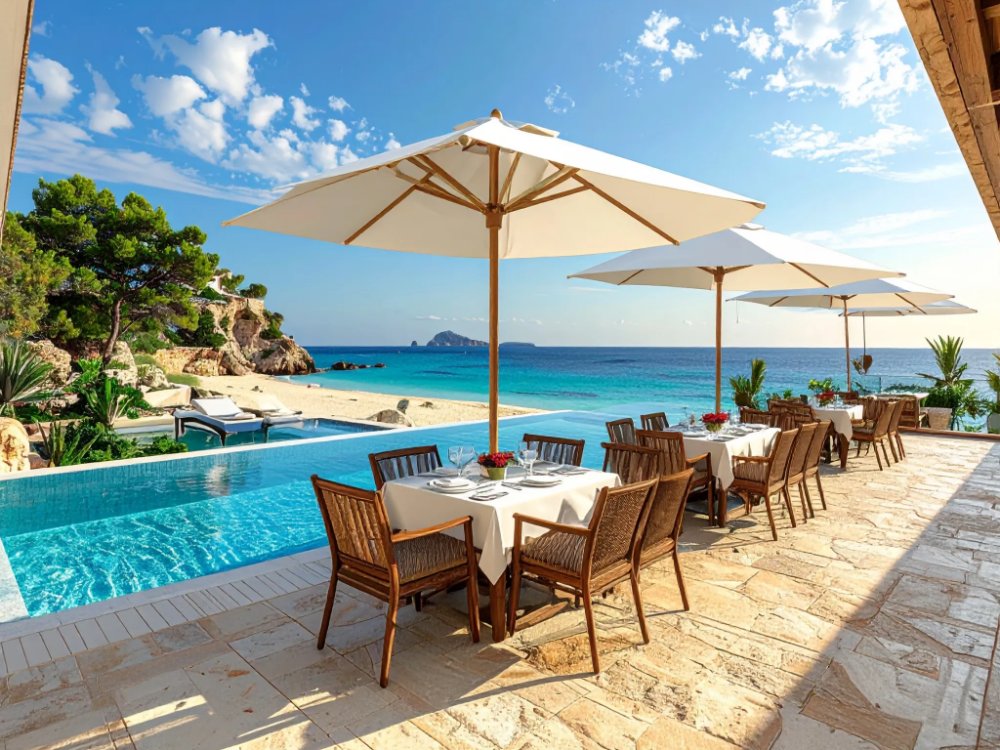
A stylish hotel right on Els Pins beach in Santa Eulària des Riu. The restaurant terrace and pool look straight out to sea, and the promenade leads into town in a few minutes. Rooms have a relaxed, beachy design with lots of natural light. It’s ideal for couples and families who want a calm base on the east coast.
💎 Hotel Mirador de Dalt Vila
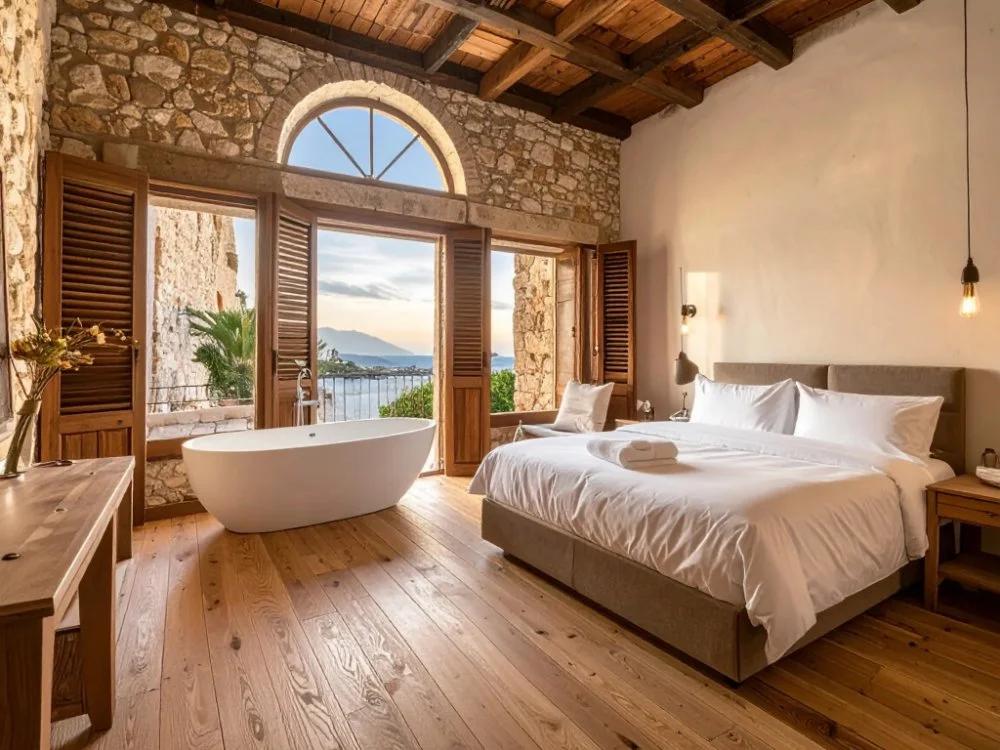
A small luxury hotel in a historic mansion on Plaza de España, inside the walls of the old town. Rooms combine antiques and artwork with modern comforts, and some have views over the harbour and the sea. There’s a small pool and a refined restaurant, and the cathedral is just a short walk uphill. Choose it for a romantic stay in the heart of Ibiza’s UNESCO World Heritage Site.
Ibiza FAQ
Is Ibiza Town the same as Ibiza Old Town?
Not quite. Ibiza Town (Eivissa) is the whole capital, including the modern centre, the marina and the beaches of Talamanca and Ses Figueretes. Ibiza Old Town refers to Dalt Vila, the walled quarter on the hill, and sometimes also to the old fishermen’s districts of La Marina and Sa Penya just below it.
Is there a non-party part of Ibiza?
Yes, most of it. The clubs are concentrated in Platja d’en Bossa, Ibiza Town and Sant Antoni. Santa Eulària des Riu, the villages of the interior and the north around Portinatx and Sant Joan are quiet, green and very family-friendly, with calm beaches and early nights.
Is Ibiza Old Town worth visiting?
Absolutely. Dalt Vila is a UNESCO-listed fortress town with Renaissance walls, a hilltop cathedral and some of the best views on the island. Two or three hours is enough to walk the walls and lanes, and it’s even more atmospheric in the evening, when the restaurants light up.
Which is nicer, Mallorca or Ibiza?
It depends on what you want. Mallorca is bigger, with mountains, many towns and a major city in Palma. Ibiza is smaller and easier to explore from one base, with more beach clubs, hippy markets and a famous nightlife. For a mix of coves, sunsets and laid-back villages, Ibiza is hard to beat.
How many days do you need in Ibiza?
Three or four days are enough to see Dalt Vila, a few beaches and a sunset in Sant Antoni. A week lets you add a day trip to Formentera, a hippy market, the villages of the interior and the wild north without rushing.
Is Ibiza expensive?
It can be, especially in July and August, when hotel rates and club tickets peak. You’ll save a lot by travelling in May, June or September, staying in Santa Eulària or a rural finca, eating in village restaurants and using the public buses instead of taxis.

