What do a 3,000-year-old tomb shaped like an upturned boat, a gin born of the Royal Navy and a bar carved into a sea cliff have in common? They all fit on one small island you can cross in an hour.
Menorca is the second-largest of the Balearic Islands and the one that has kept its calm. You’ll find no high-rise strip here, just pine-fringed coves, two elegant harbour towns and a countryside dotted with stone monuments older than Rome. In this article you’ll find the best things to do in Menorca, from the famous beaches of the south coast to the red-sand bays of the north, plus tips on when to go, how to get around and where to stay.
The whole island is a UNESCO Biosphere Reserve, so building has stayed low and much of the coast is protected. That makes Menorca a natural fit for a slow holiday: swim in the morning, wander an old town in the afternoon and finish with fresh seafood by the harbour.
💰 Hostal La Isla - Simple, friendly guesthouse a five-minute walk from the old town of Mahón.
🏨 S’Enclova Petit Hotel - Small, homely hotel in Ciutadella’s old town, about 400 m from the cathedral.
💎 Villa Le Blanc, a Gran Meliá Hotel - Luxury hotel with a pool between the beaches of Santo Tomás and San Adeodato.
Menorca, Spain - Where the quieter Balearic island lies
Menorca sits in the Mediterranean Sea, about 40 km north-east of Mallorca and roughly halfway between Barcelona and the coast of North Africa. It’s only about 50 km from end to end, so you can drive from Mahón in the east to Ciutadella in the west in under an hour. Its coastline is another story: some 216 km of cliffs, inlets and more than 100 beaches and coves.
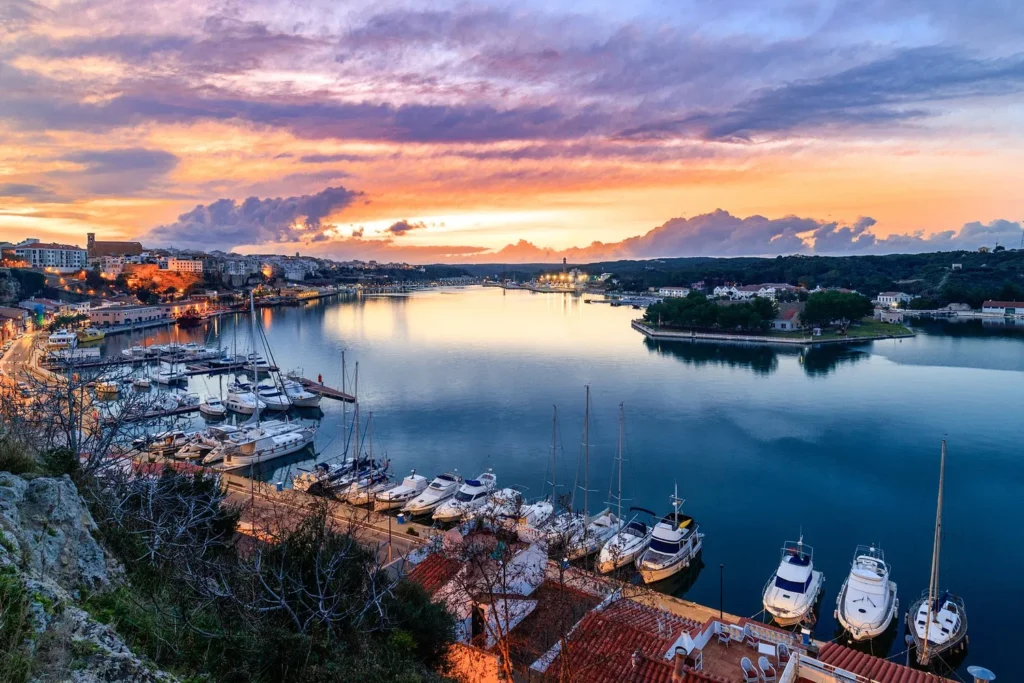
You’ll see the name written two ways. Menorca is the Spanish and Catalan spelling, while Minorca is the traditional English one, still used on some British maps and by plenty of travellers from the UK. Both mean the same island, the “smaller” sister of Majorca (Mallorca). Together with Ibiza, Formentera and Cabrera, they make up the Balearic Islands.
In 1993 UNESCO declared Menorca a Biosphere Reserve, and in 2023 its Talaiotic sites joined the UNESCO World Heritage List. Those two labels sum up what the island is best known for: natural beauty and ancient history, without the crowds you’ll meet on its bigger neighbours.
Things to do in Menorca - The island’s two towns
Most visitors split their time between the two towns at either end of the island. They feel completely different, and both are worth visiting even if you came for the beaches.
Mahón (Maó), the island’s capital, and its fish market
Mahón (Maó in Catalan) has been the island’s capital since 1722, when the British moved the seat of government here from Ciutadella. Its harbour stretches for about 5 km inland and is one of the largest natural harbours in the Mediterranean. That’s why the Royal Navy fought so hard to keep it through most of the 18th century.
The best way to see Mahón port is from the water. Short harbour cruises, many of them on yellow glass-bottom catamarans, glide past the naval base, the quarantine island of Lazareto and the little Illa del Rei with its old hospital. Back on land, climb the steps from the waterfront to the old town and visit Mahón’s Santa Maria church. Its organ, installed in 1810, has more than 3,000 pipes and still plays in short summer recitals.
Don’t miss the Mercat des Peix, the fish market on a small square above the harbour. In the morning locals buy fresh seafood there, and later in the day the stalls turn into a lively tapas bar. Nearby, the cloister of the Carmelite church hosts a covered market, and the Museu de Menorca fills an old Franciscan monastery with finds from the island’s ancient history. Finish with a visit to the Xoriguer gin distillery on the quayside, a reminder that the British sailors brought their taste for gin with them.
Es Castell, Fort Marlborough and La Mola fortress
Just east of Mahón, Es Castell was founded by the British as a garrison town. Its main square, the Plaça de s’Esplanada, is still lined with Georgian-style barracks, and the little Cales Fonts harbour below is packed with delicious restaurants in summer. It’s also the most easterly town in Spain, so it gets the first sunrise in the country.
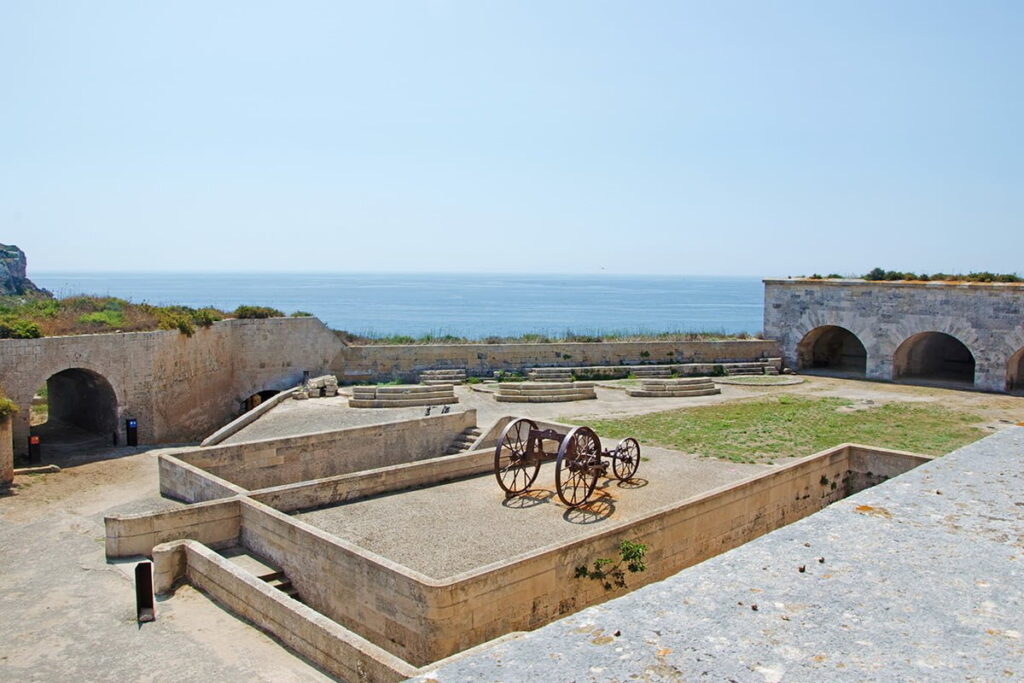
On the south side of the harbour mouth, Fort Marlborough is an 18th-century British fort dug into the rock, with tunnels and a small museum. Across the water, La Mola fortress (Fortalesa de La Mola) guards the northern headland. This vast 19th-century complex was built to protect the harbour and is today a heritage site and cultural centre where you can walk the ramparts, explore the tunnels and look out over the open sea.
Ciutadella, the ancient capital with narrow cobblestone streets
Ciutadella was Menorca’s ancient capital, and it still feels like a small aristocratic city. Its old town is a maze of narrow cobblestone streets, palaces and arcades, with the Ses Voltes arches leading towards the cathedral. The cathedral was built after the Catalan-Aragonese conquest of 1287, on the site of the old mosque.
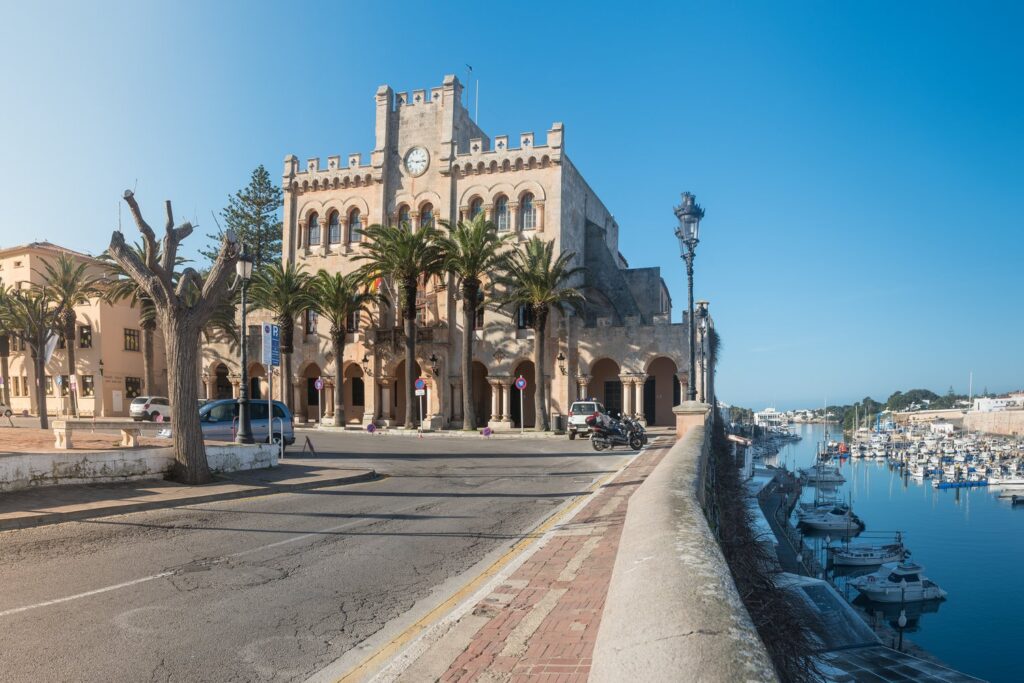
The town’s main square, Plaça des Born, is framed by the town hall and old palaces, with an obelisk in the middle. From there, follow the ramp down to the long, narrow port, where yachts and fishing boats sit below the old walls. In the evening the quayside restaurants fill up, and the sunset over the harbour mouth is one of the island’s simple pleasures.
If you come in late June, you’ll find Ciutadella at its liveliest. The Festes de Sant Joan bring horse riding through the crowds, with riders making their horses rear up among the onlookers. It’s spectacular, but book a room months ahead and expect packed streets.
For most people, the beaches are the reason for visiting Menorca. The island has more than 100 of them, and they come in two very different styles. The south coast has white sand, pine trees and turquoise water, while the north coast is wilder, with darker rock and reddish sand.
Secluded coves on the south coast
The most famous beaches lie south of Ciutadella. Cala Macarella is a horseshoe of white sand between limestone cliffs, and a short path over the rocks leads to its smaller sister, Cala Macarelleta. A little further east, Cala en Turqueta lives up to its name with crystal clear waters, while Cala Mitjana is a postcard bay of pale sand, steep cliffs and shady pines.
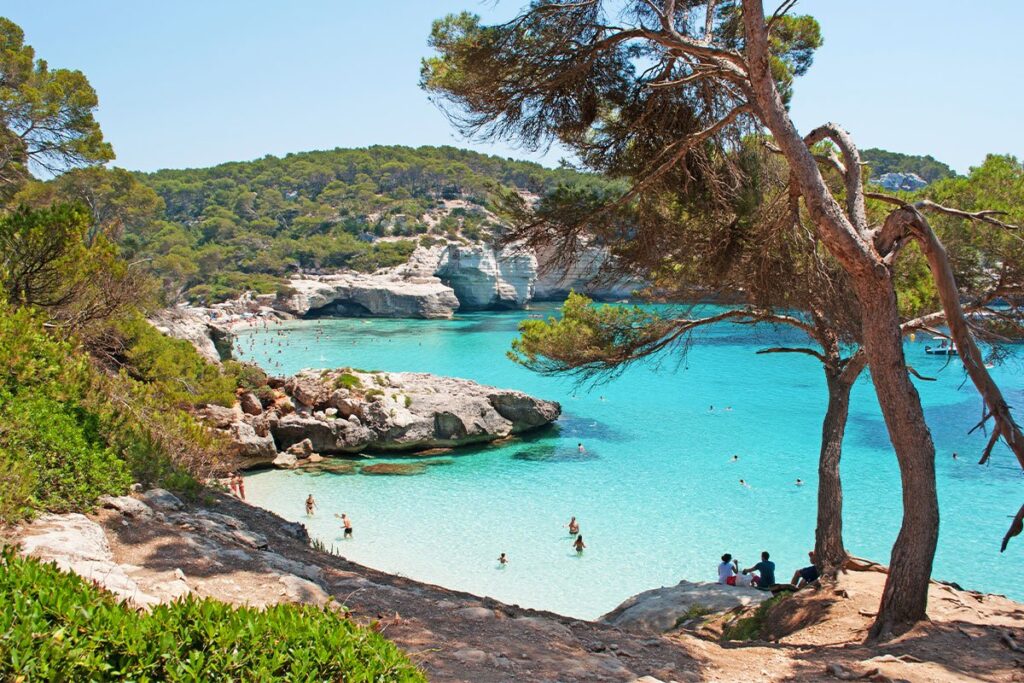
These small coves are no secret in high season. In peak season car access to some of them is restricted once the car parks are full, and seasonal buses run from Ciutadella. Arrive before 10am or come in late afternoon, bring water and shoes for the rocky paths, and you’ll still find quiet corners. Outside July and August, many of them feel like secret coves again.
Cala Galdana, Son Bou and other family beaches
Cala Galdana is the classic family beach: a wide, sheltered bay with shallow water, a promenade and cafés right behind the sand. It’s also a good base for walks to the rugged coves of Mitjana and Macarella. Further east, Son Bou is Menorca’s longest beach, with soft sand, dunes and room to spread out even in August.
On the south-east coast, Cala en Porter sits below tall cliffs, and the resorts near Sant Climent and Binibeca have small coves with calm water. For an easy beach day with children, these are better choices than the remote coves, where you’ll have to carry everything down a forest path.
North coast: Cala Pregonda and Cavalleria
The north coast is where Menorca looks wildest. Cala Pregonda has golden-red sand, rocky islets and a colour palette closer to a desert than a resort. You can only reach it on foot, which keeps it quieter than the southern beaches.
Nearby, Platja de Cavalleria is a broad bay of reddish sand below the Cap de Cavalleria lighthouse, one of the best sunset spots on the island. Swim when the north wind (tramuntana) is calm, though. When it blows, the sea here can get rough, while the south coast stays sheltered.
Take a boat trip around the coves
A boat trip is the easiest way to see several beaches in one day without the walking. From Ciutadella, half-day cruises follow the south coast to Macarella, Turqueta and other coves, with time to swim and snorkel. On the north coast, trips leave from Fornells to beaches you can’t reach by road.
If you’d rather stay in control, you can hire a small boat without a licence in several ports, or join a guided kayak tour. Fornells Bay, a huge, calm inlet, is the best place on the island to try kayaking or paddleboarding for the first time.
Walk the Camí de Cavalls coastal path
The Camí de Cavalls is a 185 km path that runs around the entire island. You’ll also see it written as Cami de Cavalls. It began as a bridle path used by soldiers on horseback to watch the coast for pirates, which explains the name (literally “horses’ path”). Today it’s divided into 20 stages and is waymarked all the way.
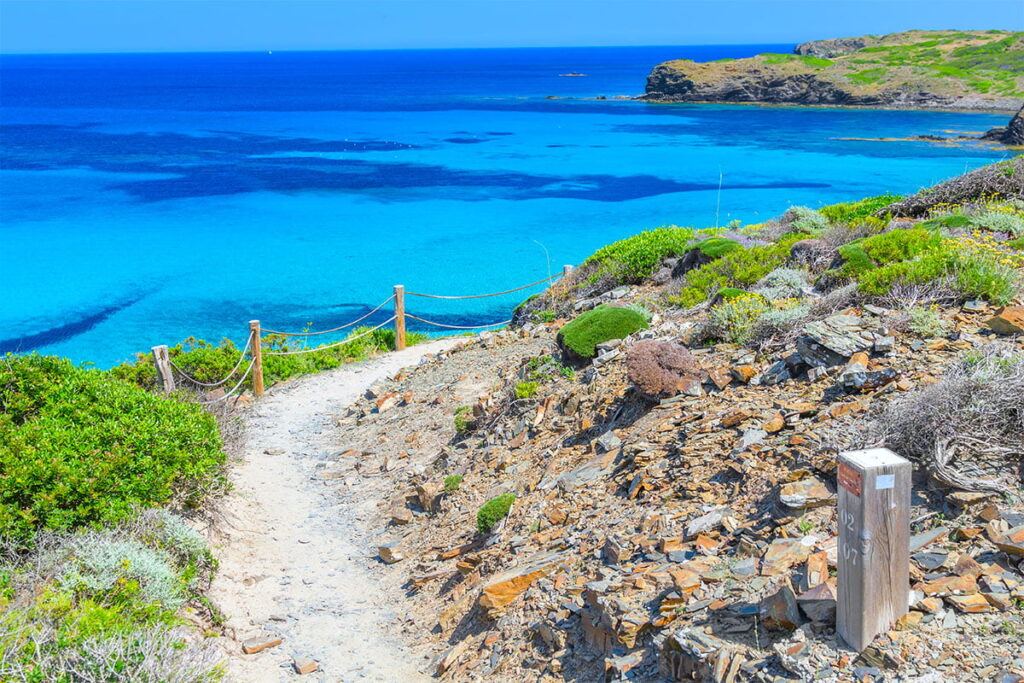
You don’t need to walk the whole thing. The stage between Cala Galdana and Cala Macarella is one of the most beautiful: a couple of hours along cliffs and through pine trees, with Cala Mitjana and Macarella as swim stops. In the north, the stretch around Cavalleria and Pregonda shows a completely different side of the island. Walk in spring or autumn, as summer heat makes long stages hard work.
Ancient history: Talaiotic Menorca
Menorca has one of the highest densities of prehistoric sites in Europe, with more than 1,500 known historic sites. They belong to the Talaiotic culture, which built stone towers (talaiots), T-shaped monuments (taules) and burial chambers here from around 1,500 BC. Nine groups of these sites have been on the UNESCO World Heritage List since 2023.
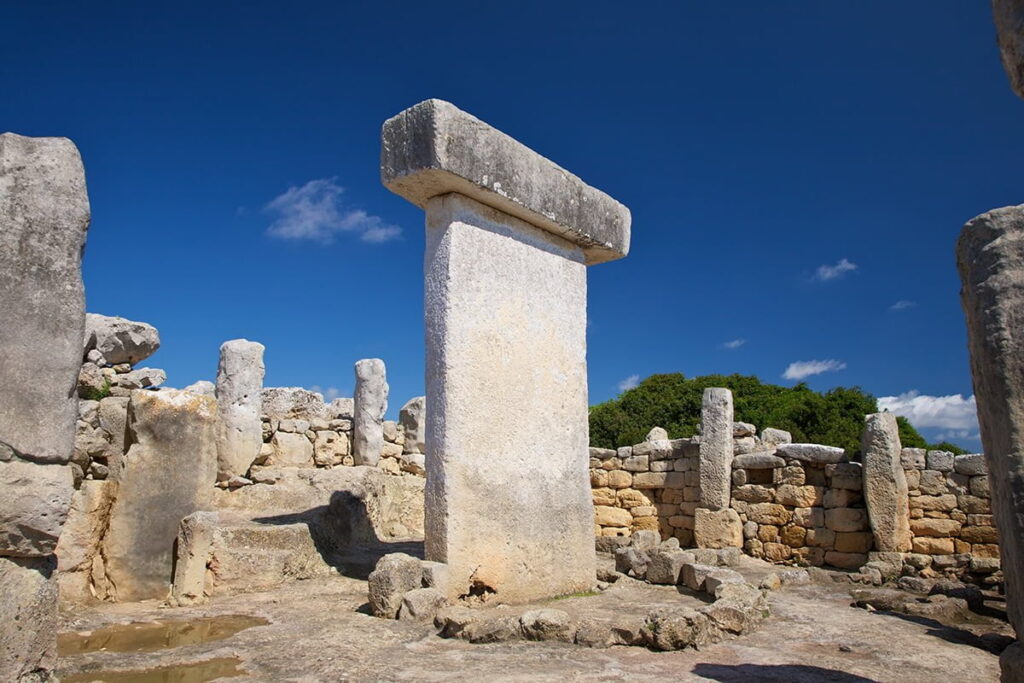
Start with the Naveta des Tudons near Ciutadella, a stone tomb shaped like an upturned boat and over 3,000 years old. Then head to Torre d’en Galmés, one of the largest Talaiotic settlements, with houses, cisterns and a taula you can walk among. In the north-west, the Necròpolis de Cala Morell has burial caves carved into the cliffs above a small cove.
Natural landscapes: S’Albufera des Grau and Favàritx lighthouse
S’Albufera des Grau Natural Park is the heart of the Biosphere Reserve. Its lagoon, dunes and marshes attract herons, ospreys and other birds, and easy marked trails start from the visitor centre. At the nearby fishing village of Es Grau, you can swim in a shallow, sheltered bay.
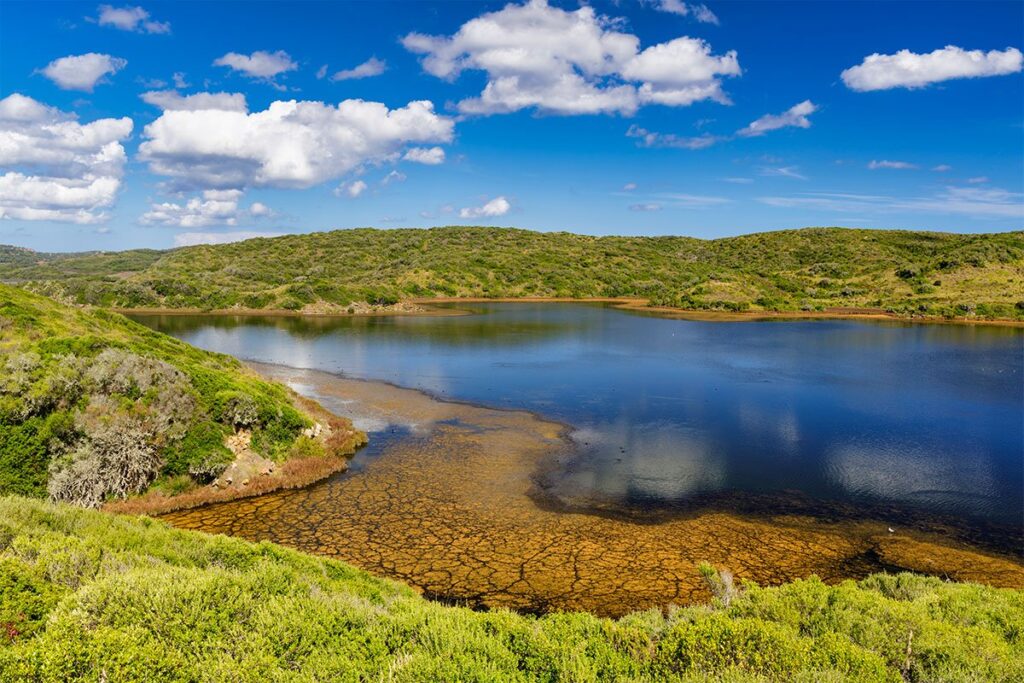
Further north, the road to Favàritx lighthouse crosses a strange, almost lunar landscape of dark slate. The lighthouse stands on a bare headland, and on a clear evening it’s one of the most atmospheric places on Menorca.
El Toro and the island’s interior
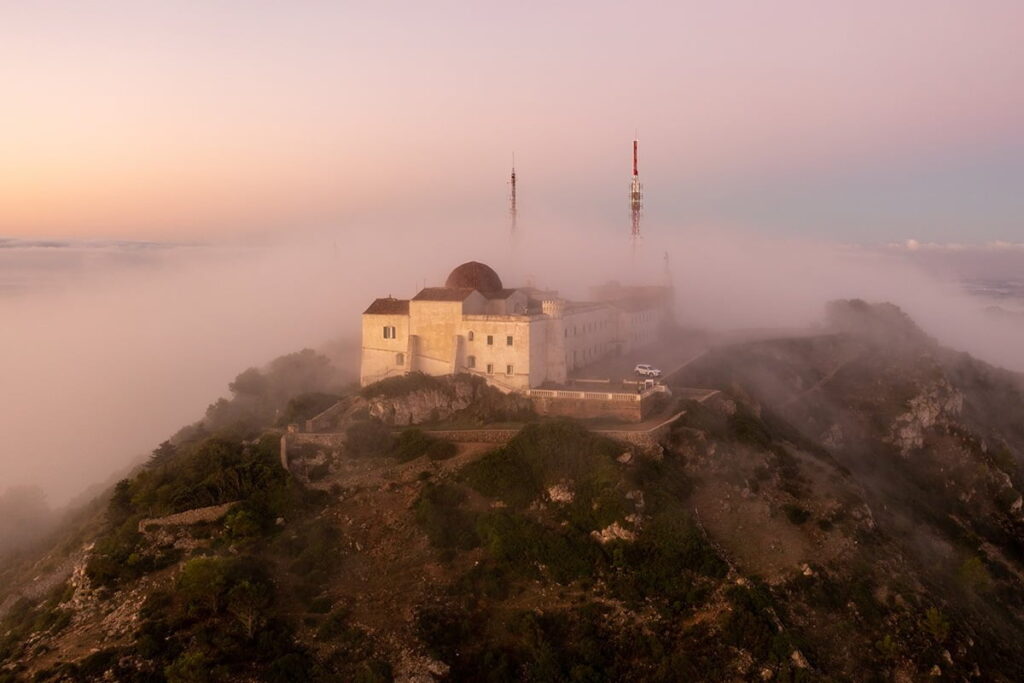
At 358 metres, Monte Toro (El Toro) is the highest point on Menorca. A winding road leads up to the sanctuary on the summit, where you can see most of the island on a clear day. At the foot of the hill, the village of Es Mercadal is known for its traditional pastries and a few good, honest restaurants.
Just outside Ciutadella, Lithica is a former sandstone quarry turned into a garden and labyrinth. The deep, geometric pits show how the stone for the island’s houses was cut by hand, and in summer the site hosts concerts.
Binibeca Vell and the Cova d’en Xoroi
Binibeca Vell looks like an old fishing village, with whitewashed houses, tiny alleys and chimneys. In fact, it was built in the 1970s as a holiday complex. People still live here, so keep your voice down and respect the signs asking visitors to be quiet.
On the cliffs at Cala en Porter, the Cova d’en Xoroi is a natural cave turned into a bar and club, with terraces hanging above the sea. Legend says a pirate from North Africa hid here with a kidnapped local girl. Come for a drink at sunset, which is the most popular time of day, so book ahead in summer.
What to eat and drink in Menorca
Menorca has great food built on simple local produce. The signature dish is caldereta de llagosta, a rich lobster stew. Fornells, a small fishing village on the north coast, is the place to try it. Mahón cheese (Mahón-Menorca) is the island’s other star, and you can visit dairies in the countryside to taste it at different ages.
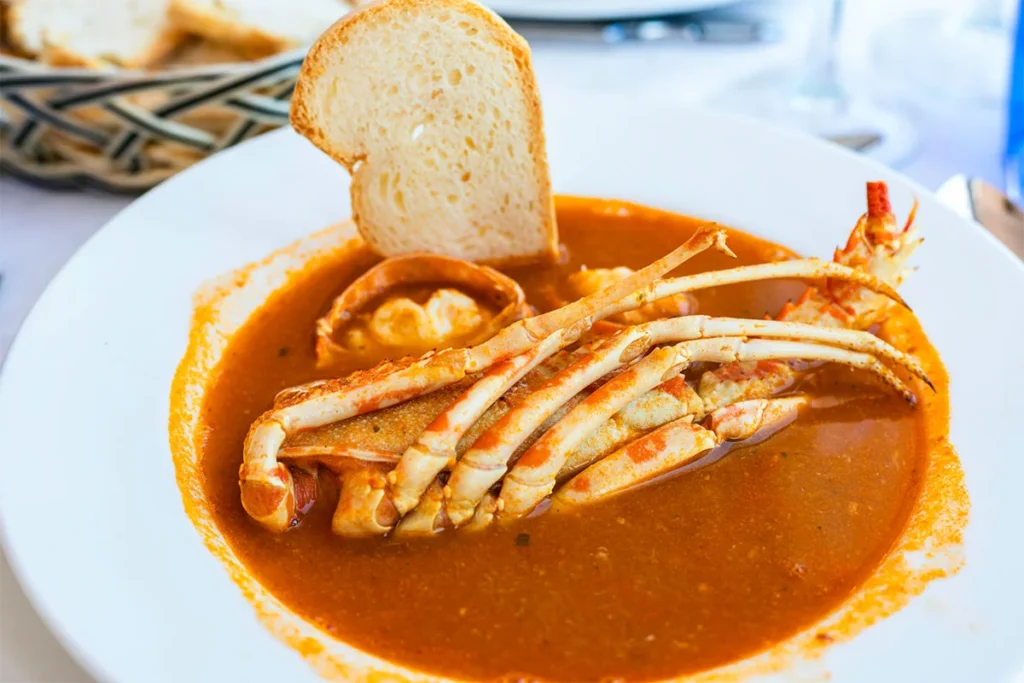
The island’s gin is distilled in Mahón, and locals mix it with lemonade to make pomada, the drink of the summer festivals. Look out also for sobrassada (soft cured sausage), ensaimadas (spiral pastries) and local wine and olive oil. Some say mayonnaise was named after Mahón, during the French occupation in 1756, though the story is still debated.
When to visit Menorca and how many days you need
The best months are May, June and September, when the sea is warm enough to swim, the sunny days are long and the beaches aren’t packed. July and August are the high season, with the hottest weather and the busiest coves. Many hotels and restaurants close from November to April, so a winter trip is quiet but limited.
For a first visit, plan five to seven days. That gives you a day each for Mahón and Ciutadella, a boat trip, a walk on the Camí de Cavalls and plenty of time on the beach. With just a long weekend, base yourself in one town and choose two or three highlights. Book your stay early for June to September, as the island has a limited number of hotels.
See available places to stay in Menorca
Getting to Menorca and getting around
Menorca Airport is just outside Mahón, with seasonal direct flights from many UK airports from spring to autumn. In winter you’ll usually need to connect in Barcelona or Madrid. You can also arrive by ferry from Barcelona, or hop over from Mallorca on the crossing between Alcúdia and Ciutadella. Compare ferry and travel connections before you book.
Public transport links Mahón and Ciutadella with the main resorts, with more buses in summer. To reach the remote coves, lighthouses and archaeological sites, though, you’ll want a car. Car hire is easy to arrange at the airport, and a small car is best for narrow country roads and tight beach car parks.
Where to stay in Menorca
Choose Mahón for history and harbour views, Ciutadella for old-town atmosphere and easy access to the southern coves, or a beach resort on the south coast for a pure seaside holiday. Here are three hotels for different budgets.
💰 Hostal La Isla
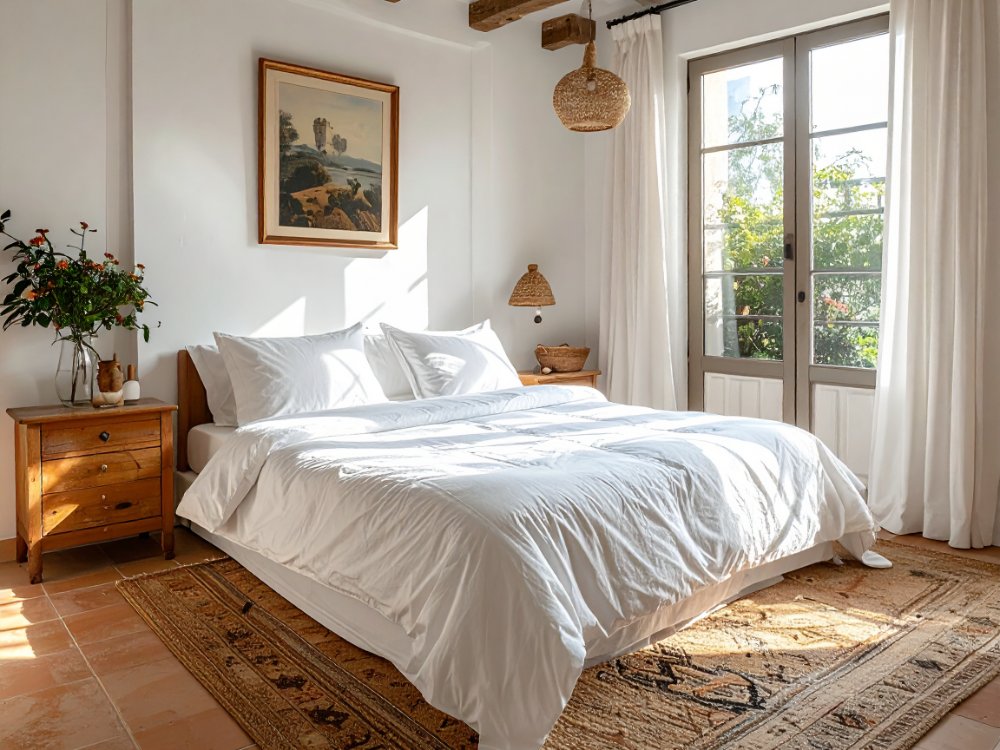
This simple, friendly guesthouse is in Mahón, a five-minute walk from the historic centre and about 700 m from the port. Rooms are air-conditioned and heated, with tiled floors and wooden furniture, and the reception is open 24 hours. It’s a good budget base if you want to explore the capital on foot and travel around the island by bus or hire car.
🏨 S’Enclova Petit Hotel
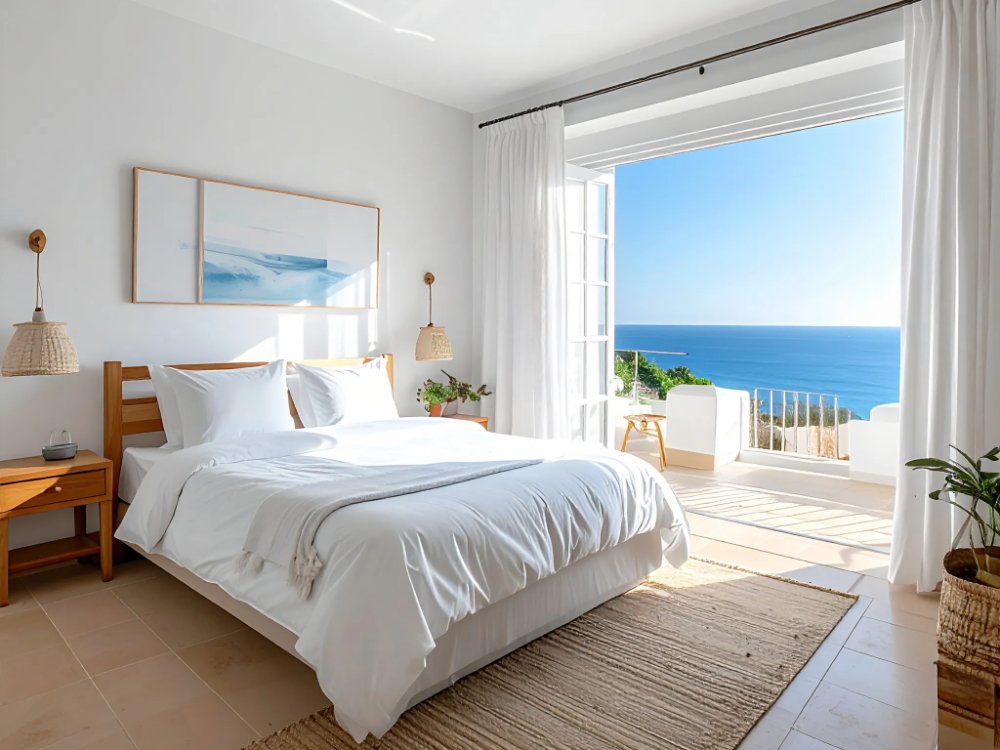
This small hotel is right in the old town of Ciutadella, about 400 m from the cathedral. It has a shared lounge, air-conditioned rooms and a calm, homely feel. It’s a great choice for couples who want to step out into the narrow streets in the evening and drive to the south coast coves in the morning.
💎 Villa Le Blanc, a Gran Meliá Hotel
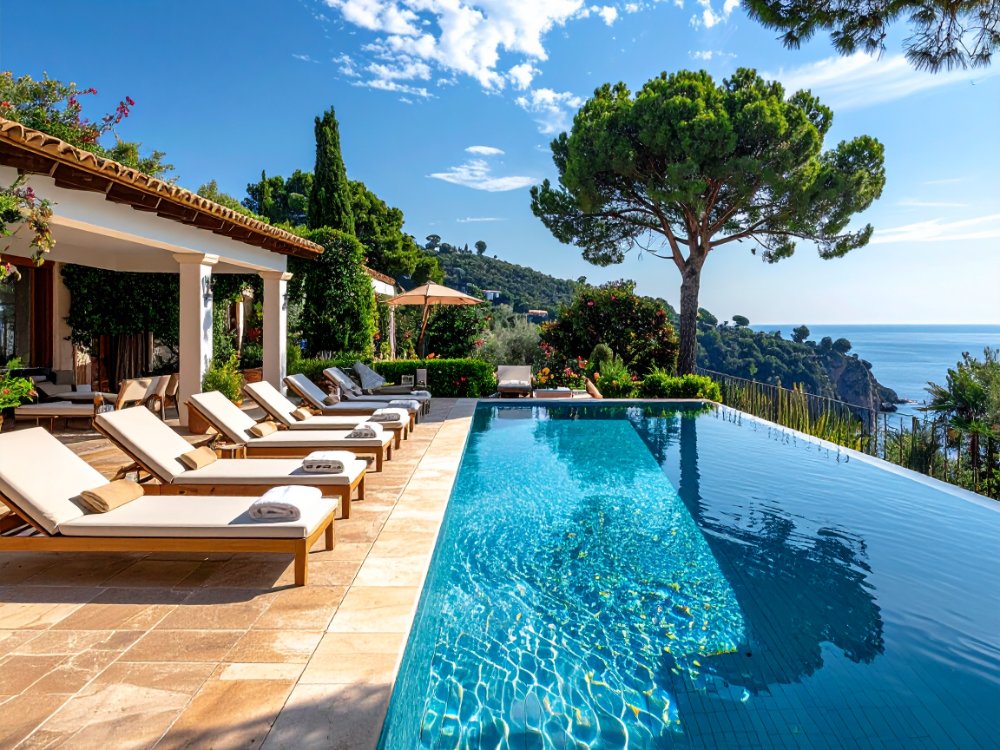
This luxury hotel sits between the beaches of Santo Tomás and San Adeodato on the south coast, about 30 minutes by car from the airport. Its bright, whitewashed buildings surround an outdoor pool and sun terraces with views of the Mediterranean, and most rooms have a balcony. Choose it for a romantic, upmarket beach holiday with direct access to the sand.
Menorca FAQ
Are Menorca and Minorca the same island?
Yes. Menorca is the Spanish and Catalan name, and Minorca is the traditional English spelling. Both refer to the second-largest of the Balearic Islands, east of Mallorca.
Is Menorca nicer than Majorca?
It depends on what you want. Menorca is smaller, calmer and less built-up, with more unspoilt coves and a slower pace. Mallorca offers more variety, including a big city in Palma, mountain villages and livelier nightlife.
What is Menorca best known for?
Menorca is best known for its turquoise coves, such as Cala Macarella and Cala en Turqueta, and for the 185 km Camí de Cavalls coastal path. It’s also famous for its Talaiotic monuments, Mahón cheese, gin and the lobster stew of Fornells.
What is the best month to go to Menorca?
June and September are usually the best months. The sea is warm, the weather is reliable and the beaches are less crowded than in July and August. May is lovely for walking, though the water is still cool.
How many days do you need in Menorca?
Five to seven days is ideal for a first trip. That’s enough to see Mahón and Ciutadella, visit a few coves, take a boat trip and walk part of the Camí de Cavalls without rushing.
Do you need a car in Menorca?
You can manage without one if you stay in Mahón or Ciutadella and use buses. A car makes it much easier to reach remote beaches, lighthouses and prehistoric sites, especially outside the summer months when buses are less frequent.

