What do an oval bullring, a chapel cut into a cliff and a ballerina carved from a toothpick have in common? They all sit within a ten-minute stroll of each other.
Mijas is one of the best-known white villages on the Costa del Sol, but it’s really two places in one. High on the slopes of the Sierra de Mijas sits Mijas Pueblo, a tangle of whitewashed streets with blue flowerpots and views down to the sea. Below it, Mijas Costa stretches for about 14 km along the Mediterranean, with beaches, golf courses and the relaxed fishing village of La Cala de Mijas. In this article you’ll find the best things to do in Mijas, from the old town’s chapels and museums to the coastal boardwalk, plus tips on getting there and where to stay. It’s written for day-trippers from Málaga and the coastal resorts, as well as anyone planning a longer stay.
So, is Mijas worth visiting? Yes, without a doubt. The village is only about 30 km from Málaga Airport, yet it feels a world away from the high-rise resorts below. Come for a morning, and you’ll probably stay for lunch, the sunset and a second glass of wine.
💰 TRH Mijas - An Andalusian-style hotel with a pool and gardens, a five-minute walk from the village centre.
🏨 OPUNTIA Hotel Boutique - A small boutique hotel on Plaza de la Constitución, right in the old town.
💎 La Zambra Resort Mijas - Marbella - The Unbound Collection by Hyatt - A luxury resort with an infinity pool and a spa in the Mijas Golf area.
Where is Mijas and what’s the difference between Mijas Pueblo and Mijas Costa?
Mijas is a large municipality in the province of Málaga, in Andalusia. It lies between Fuengirola, Benalmádena and Marbella, so it’s easily accessible from almost anywhere on the coast. When people say “Mijas”, they usually mean Mijas Pueblo, the historic hillside village around 8 km inland from Fuengirola.
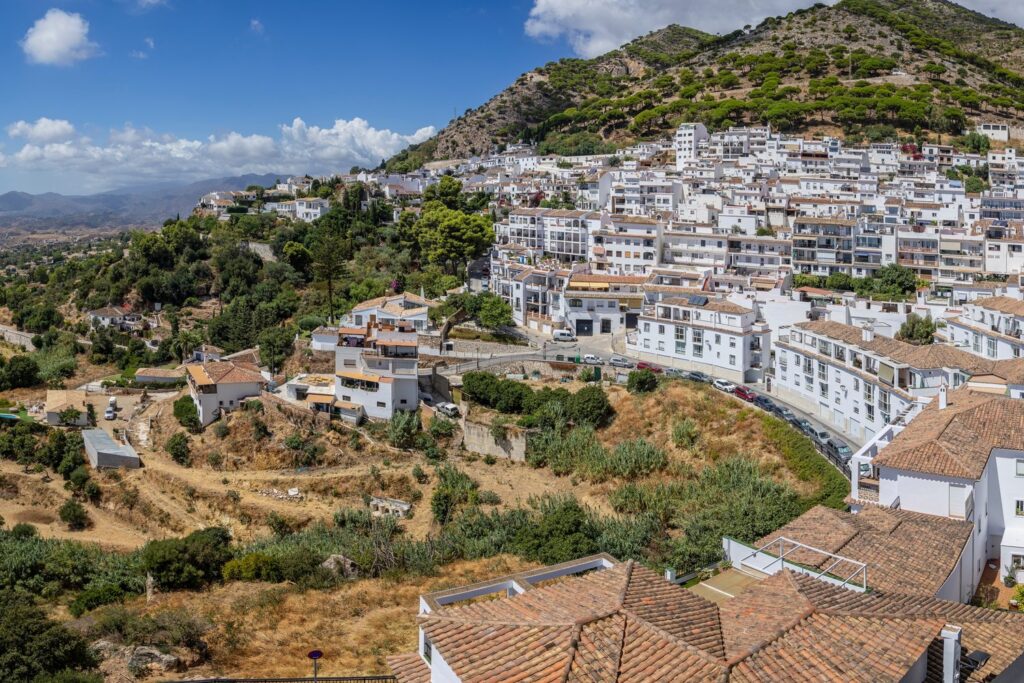
Mijas Costa is the coastal part of the municipality. It includes La Cala de Mijas, Calahonda, Riviera del Sol and the Las Lagunas district next to Fuengirola. You can’t really walk from Mijas Pueblo to the beach, as the road winds down for several kilometres. A short bus or car ride gets you there in about 15-20 minutes.
Like many towns in southern Spain, Mijas has deep roots. The Romans knew the settlement as Tamisa, the Moors called it Mixa, and over the centuries this became Mijas. The village resisted the Catholic Monarchs during the siege of Málaga in 1487, and today its historic centre is a protected Historic-Artistic Site.
Things to do in Mijas Pueblo
Mijas Pueblo is compact, so you can see the main attractions on foot in a few hours. Wear good shoes, though. The narrow cobbled streets climb and dip, and some of the best viewpoints are reached by steps. Most visitors start their walk around Mijas village at the car park and tourist office on Avenida Virgen de la Peña, right next to the main square.
Plaza Virgen de la Peña
The main square of Mijas Pueblo is the natural starting point for any visit. After a big makeover completed in 2016, it gained a shady gazebo and a statue of a donkey, a nod to the village’s most famous residents. Cafés, souvenir shops and the tourist office line the square, and a glass lift links it to the street below.
This is also where the donkey taxis wait for customers, and where Mayan Monkey makes its chocolate. Grab a coffee, get your bearings and then head left towards the cliff for the first big view of the day.
Ermita de la Virgen de la Peña and Mirador del Compás
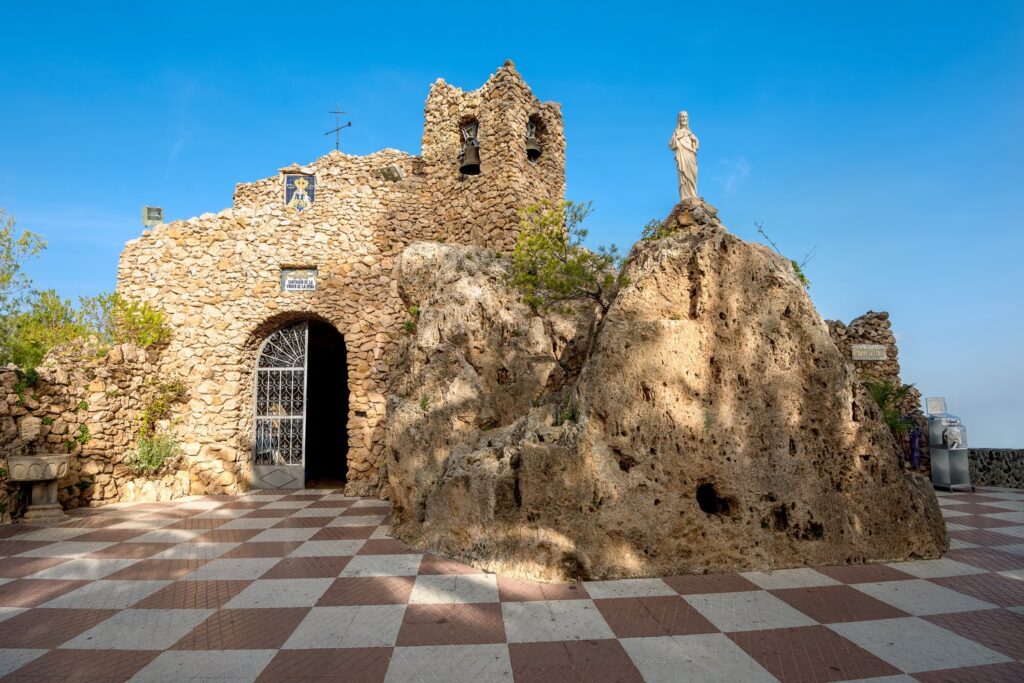
The tiny Ermita de la Virgen de la Peña (Chapel of the Virgin of the Rock) is carved straight into the cliff. According to local legend, in 1586 two young shepherds saw a white dove on the tower of the old castle. The dove turned into the Virgin Mary and led them to an image of her that had been hidden in the walls for centuries. The cave chapel was later dug out by a Carmelite friar.
Today the Virgen de la Peña is the patron saint of Mijas. Her feast day falls on 8 September, when the village celebrates with a procession and its annual fair. Entry to the chapel is free. Right next to it, the Mirador del Compás looks out over Fuengirola and the coast, especially in the late afternoon.
Calle San Sebastián and the whitewashed streets
Calle San Sebastián is said to be one of the most photographed streets on the Costa del Sol, and it’s easy to see why. White houses, blue and red flowerpots and a little 17th-century chapel at its foot make it the classic Mijas postcard. Try to come early in the morning, before the tour groups arrive.
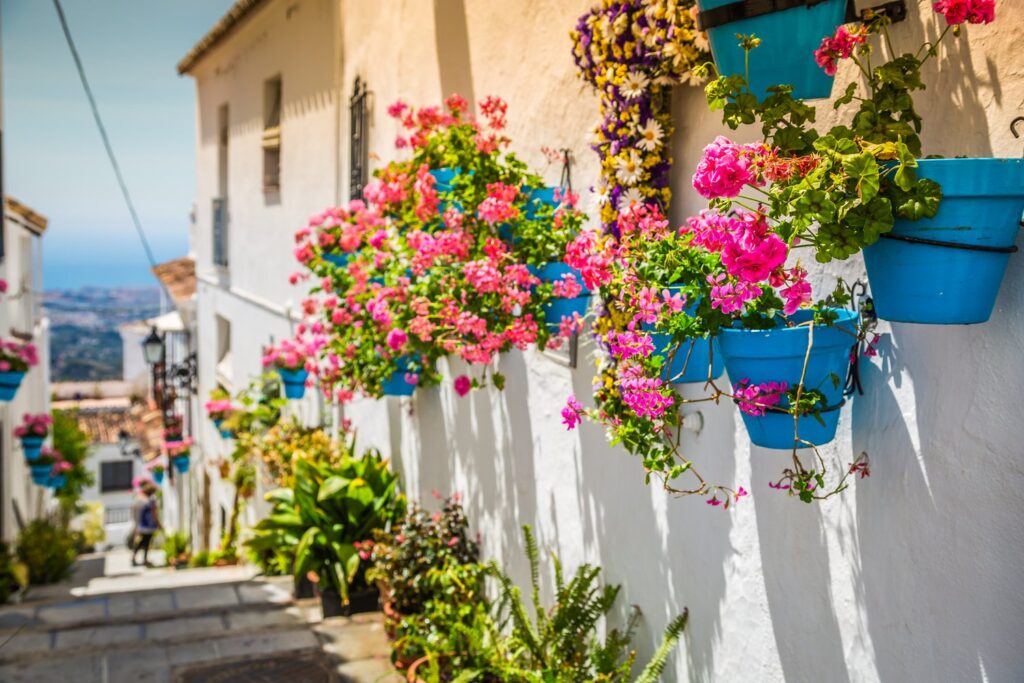
Don’t stop there. Wander along Calle Muro, Calle de Coín and the flower-filled steps of Callejón de los Gitanos. Getting a bit lost in these lanes is half the fun, and you’ll find small shops selling ceramics by local artists, leather and other handmade goods along the way.
Plaza de la Constitución
Higher up, Plaza de la Constitución is the old heart of the village. It’s a pleasant spot surrounded by craft shops, bars and restaurants. On Saturdays at 12pm it hosts one of Mijas’ free flamenco shows (more on that below).
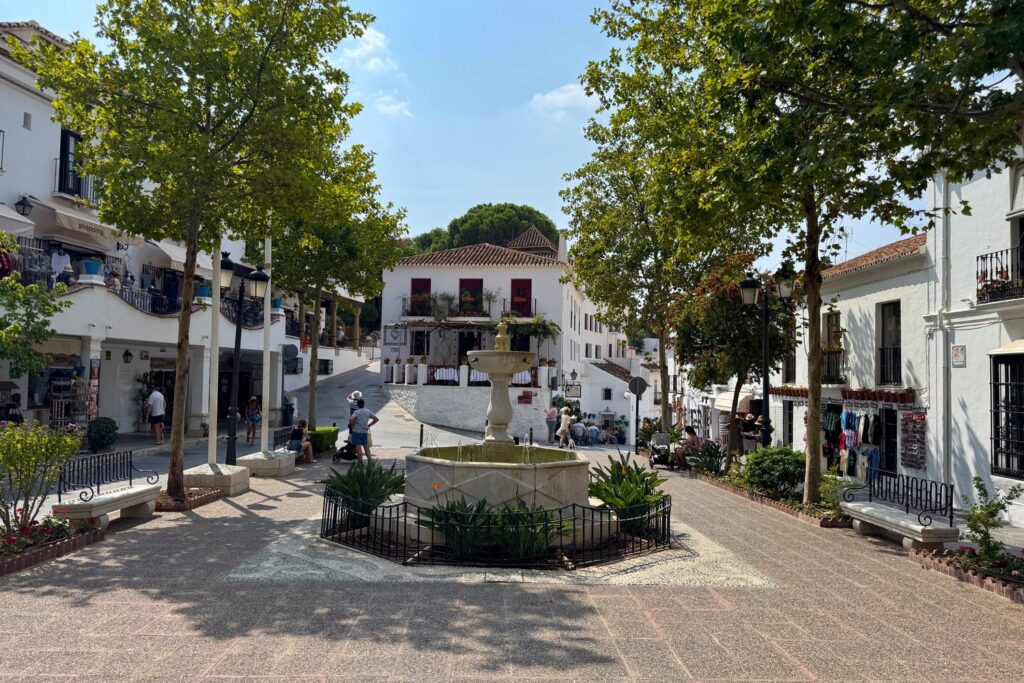
From here, a short climb takes you to the bullring and the church. Look out for the Cuevas de la Antigua Fragua on the way, an old forge cave that hints at how people worked here long before the tourists came.
Plaza de Toros - Mijas’ oval bullring
The Mijas bullring was built in 1900 after the villagers petitioned for one, and it opened on 8 September that year. Its most unusual feature is its oval shape, rare in Spain, which was dictated by the rocky ground it stands on. Inside there’s a small museum about the history of bullfighting.
Even if bullfighting isn’t your thing, it’s worth a look for the architecture and the views from the upper seats. A visit usually takes 20-30 minutes, and there’s a small fee to get in.
Church of the Immaculate Conception and La Muralla gardens
Next to the bullring stands the Iglesia de la Inmaculada Concepción (Church of the Immaculate Conception), the main church of Mijas. It was built on the remains of a mosque from the Moorish period, and its simple whitewashed walls hide a richly decorated interior.
Behind the church, the Parque de la Muralla (Muralla gardens) runs along what’s left of the Moorish fortress walls. It’s laid out as a botanical route with some 140 plant species from all over the world. The viewpoints here give stunning views over the whole coast, from Fuengirola to the Mediterranean horizon, and they’re perfect for a quiet break away from the busier streets.
CAC Mijas - Picasso ceramics in a white village
The Centro de Arte Contemporáneo, or CAC Mijas, is a real surprise in such a small village. Its permanent collection is built around works by Pablo Picasso and includes what is often described as the second-largest collection of his ceramics in the world. You’ll also find pieces by other famous artists, including Salvador Dalí and Joan Miró.
The museum is small, so you can see it in an hour. If you’re a Picasso fan, combine it with the Picasso Museum in Málaga, the artist’s home city, which is only a short drive away.
Miniature Museum (Carromato de Max)
This quirky little miniature museum lives inside a bright yellow wagon on Avenida del Compás. It was set up in 1972 by Juan Elegido Millán, a hypnotist known as Professor Max, who collected tiny curiosities on his travels around the world. After his death, his heirs handed the management over to the town hall.
Inside, you’ll find around 360 pieces, many of which need a magnifying glass. Highlights include dressed fleas, a ballerina carved from a toothpick, the Last Supper painted on a grain of rice and a shrunken head. It takes about half an hour, and children usually love it.
Historical-Ethnological Museum and the old flour mill
The Casa Museo de la Villa, Mijas’ Historical-Ethnological Museum, is housed in the old town hall on Plaza de la Libertad. It shows how people lived here in the 19th and 20th centuries, with rooms set up as a traditional home, a wine cellar and tools for making olive oil.
Nearby, the restored flour mill (Casa Museo Molino de Mijas) shows how grain was once ground into flour. Both are small, low-key places, but they give you a sense of the farming village Mijas was before mass tourism.
Mayan Monkey - make your own chocolate
Mayan Monkey on Plaza Virgen de la Peña is a working chocolate factory that has been welcoming visitors since 2012. Everything is made on site, from chocolate bars and bonbons to ice cream. You can peek through the glass into the factory, or book a workshop and make your own chocolate with dozens of toppings.
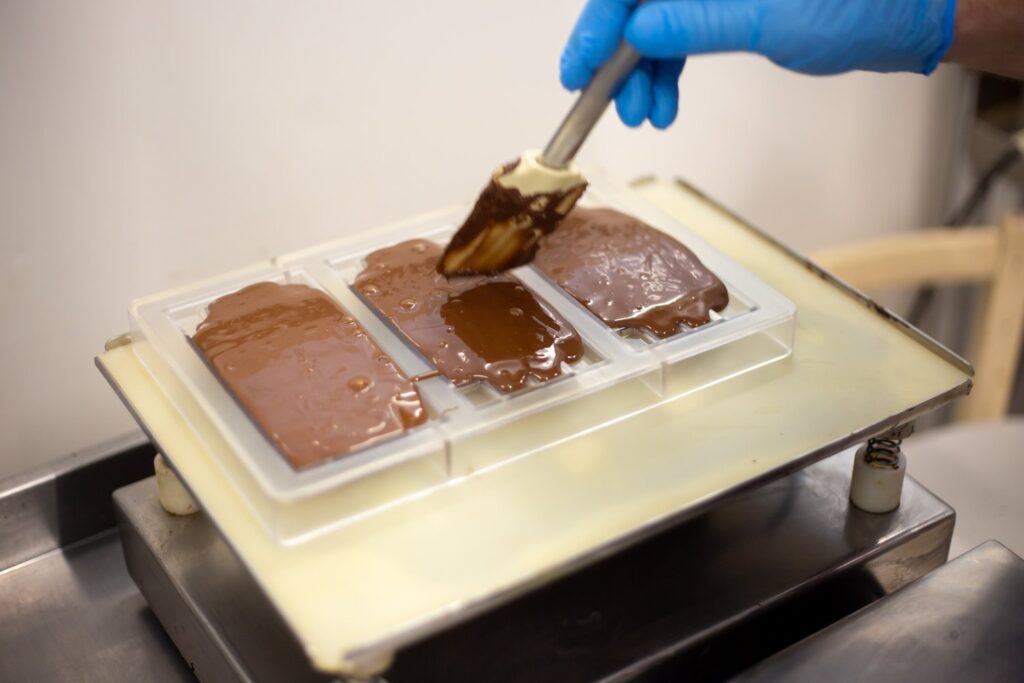
The short express workshop suits children from around three years old, so it’s one of the best things to do in Mijas with kids. If you skip the workshop, at least try the hot chocolate with ice cream.
Free flamenco shows
Mijas is one of the few places on the coast where you can watch flamenco outdoors for free. The town hall organises shows every Wednesday at 12pm in Plaza Virgen de la Peña and every Saturday at 12pm in Plaza de la Constitución, weather permitting. Arrive a little early to get a good spot.
In late September, Mijas also celebrates Tourist Day in Plaza Virgen de la Peña. It usually includes a flamenco show and free paella to thank visitors for coming.
Mijas donkeys - should you ride a donkey taxi?
The donkey taxis (burro-taxis) have been a symbol of Mijas since the late 1950s, when the first foreign film stars and tourists discovered the village. Today you’ll still see them waiting by Plaza Virgen de la Peña, along with donkey carts and horse-drawn carriages.
However, donkey rides are controversial. Animal welfare groups have long criticised the practice, and the town has tightened the rules over the years. Riders over 80 kg are not allowed, animals get regular vet checks, and services are suspended during the hottest hours on heat-warning days. Many visitors now choose not to ride, and we’d suggest the same.
If you’d like to see the village without too much walking, a better option is a short electric tuk-tuk tour. Small vehicles leave from Avenida del Compás and cover the main attractions in 25-45 minutes, with stops at the best viewpoints.
Hiking in the Sierra de Mijas
The mountain range behind the village is one of the best places for walking on the Costa del Sol. The easiest route climbs from the edge of Mijas Pueblo to the Ermita del Calvario, a small white chapel built by Carmelite friars. The circular trail is about 4 km long and takes around two hours, with pine forest and views over the whole coast.
Experienced hikers can continue to Pico de Mijas, which rises to over 1,100 m. The full route is steep and long, so start early, take plenty of water and avoid walking in the midday heat in summer. Trails are waymarked, and the local tourist office has maps.
Prefer wheels to walking? Guided buggy tours head up the dirt tracks into the hills above Mijas, stopping at viewpoints high above the coast.
Things to do in Mijas Costa and La Cala de Mijas
Down by the sea, Mijas Costa has a very different feel. It’s where most visitors to Mijas actually stay, with holiday flats, golf resorts and some beautiful beaches. Its heart is La Cala de Mijas, a former fishing village that still has a low-rise, local atmosphere.
Beaches of La Cala and Calahonda
Mijas has around 14 km of coastline, from small rocky coves to wide stretches of sand. La Cala beach is the most popular. It’s about 1.5 km long, holds a Blue Flag and has plenty of beach bars (chiringuitos) serving grilled sardines and cold drinks. In summer, you can hire sunloungers and parasols, and lifeguards are on duty.
Further west, the beaches of Calahonda and Riviera del Sol are quieter and great for long walks. In July and August, get to La Cala before 10am if you want a good spot.
Senda Litoral and the watchtowers
One of the best things to do in Mijas Costa is to walk the Senda Litoral, a coastal path made of wooden boardwalks and paved sections. It starts by the old watchtower in La Cala and runs west for several kilometres past coves, sandy beaches and chiringuitos towards Cabopino. It’s flat and easy, so it suits families, and many stretches are wheelchair accessible.
Along the way you’ll pass several old watchtowers built to warn of pirate attacks. The Torreón de La Cala houses an interpretation centre about these towers. The Torre de la Batería, at the eastern end of La Cala beach, is a great spot for sunset.
Markets, golf and horse racing
La Cala hosts a busy market on Wednesdays and Saturdays at the fairground, with clothes, crafts and fresh produce. Another market takes place in Las Lagunas on Saturdays. They’re good places to pick up local olive oil and leather goods.
Golfers are spoilt for choice. La Cala Resort has three 18-hole courses, and Mijas Golf has two more near the village. The Costa del Sol Racecourse (Hipódromo Costa del Sol), opened in 1999 in Mijas Costa, hosts race meetings and other events.
Aquamijas water park
On hot days, the Aquamijas water park near Fuengirola is a fun family day out. It has slides, a wave pool, a lazy river and a children’s area. The park is only open in the summer months, roughly from May to September.
For more family fun nearby, you can also visit the dolphins at Selwo Marina in Benalmádena or ride the Benalmádena cable car up Mount Calamorro.
Where to eat and drink in Mijas
Mijas Pueblo has plenty of restaurants with terraces facing the sea. Some are aimed squarely at tour groups, so walk a few streets away from the main square to find places where locals eat. Look out for Andalusian classics such as salmorejo (cold tomato soup), fried fish and grilled meats, and don’t miss a glass of sweet Málaga wine.
Wine lovers can also visit an organic vineyard in the hills of Mijas, for a tasting of its own wines and olive oils with tapas. In La Cala, the beach bars are the place for espetos, sardines grilled on skewers over an open fire.
How to get to Mijas
From Málaga Airport, Mijas Pueblo is about 30 km away, or roughly 30 minutes by car. The easiest way to explore the area is with a hire car, as it lets you combine the village, the beaches and the mountains in one day. In the village, use the multi-storey car park next to the tourist office.
Public transport works well too. Take the C1 local train from Málaga or the airport to Fuengirola, then the M-122 bus up to Mijas Pueblo, a ride of about 20 minutes. There’s also the M-112 bus from Málaga and the M-121 from Torremolinos and Benalmádena. You can check train and bus connections on the Costa del Sol before you travel.
If you don’t want to drive, many day trips from Málaga combine Mijas with Marbella and Puerto Banús. It’s an easy way to see two very different faces of the coast in one day.
How long do you need in Mijas Pueblo?
Half a day is enough to see the main attractions of Mijas Pueblo at a relaxed pace. Add a few hours if you want to visit the museums, have a long lunch or watch the flamenco show. A full day lets you combine the village with a walk in the Sierra or an afternoon on the beach in La Cala.
Spring and autumn are the best times to visit Mijas, when it’s warm but not too hot for walking. The village is lovely all year round, though. In winter the days are often sunny and around 17-18°C, and the streets are much quieter.
If you have more time, Mijas makes a great base for exploring the Costa del Sol. From here, easy day trips include Málaga, Nerja and the famous Caminito del Rey. Book your accommodation well in advance for July and August, as the village has only a handful of hotels.
See available accommodation in Mijas
Hotels in Mijas
Staying in Mijas Pueblo means quiet evenings and sunrise views over the sea. Here are three hotels for different budgets, all in or close to Mijas village.
💰 TRH Mijas
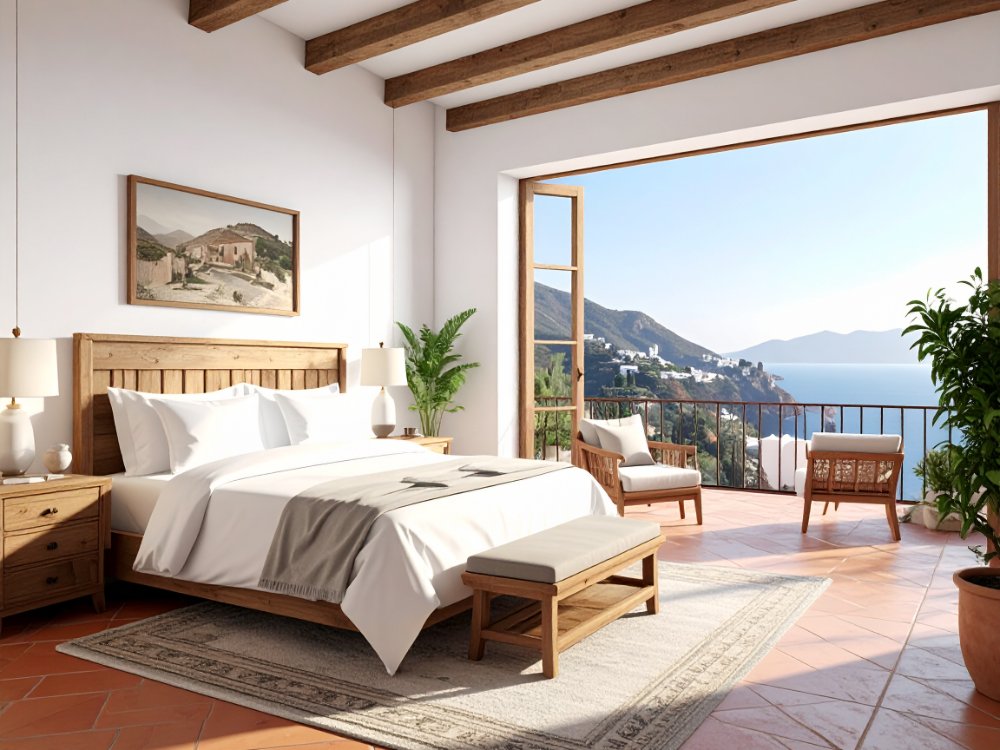
This Andalusian-style hotel sits on the edge of the village, about five minutes’ walk from the centre. Rooms look out over the mountains, the sea or the pool, and the grounds are full of patios, fountains and gardens. There’s an outdoor pool with a big sun terrace, a tennis court and a restaurant serving Mediterranean food. It’s a good-value choice for couples and families who want a village base with resort-style facilities.
🏨 OPUNTIA Hotel Boutique
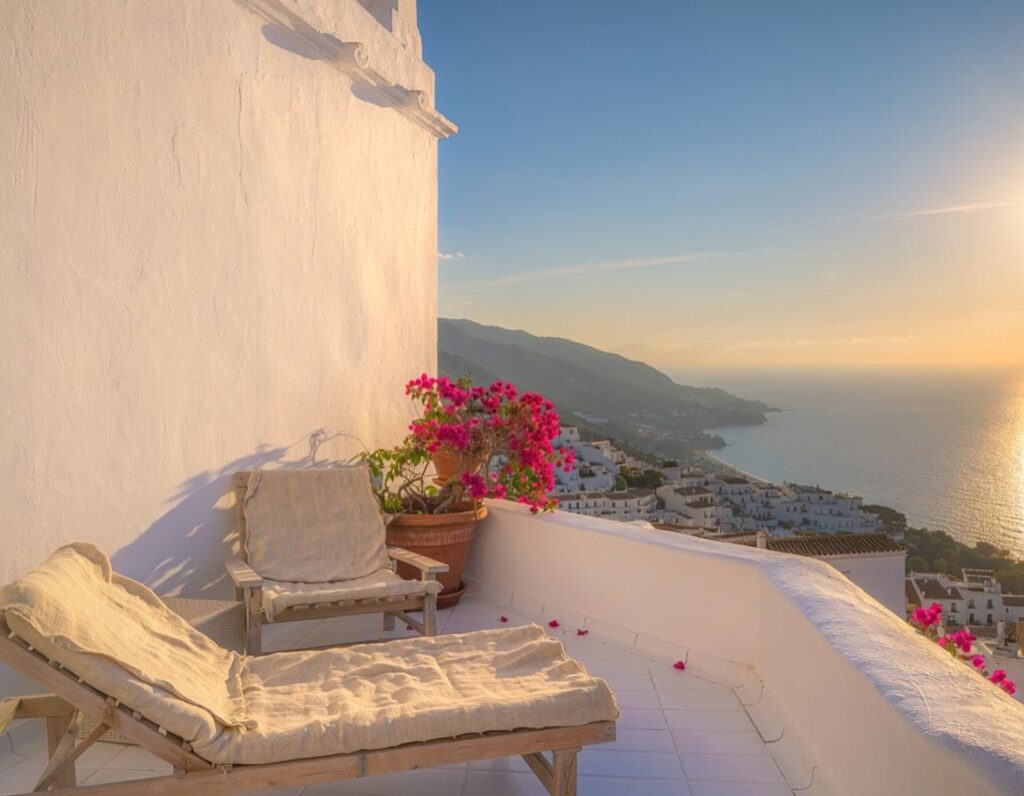
This small boutique hotel is right on Plaza de la Constitución, steps from the bullring and the Miniature Museum. Rooms are bright and air-conditioned, and many have a balcony. The restaurant serves Mediterranean and Spanish dishes, with vegetarian, vegan and gluten-free options, and breakfast features local specialities. It’s ideal if you want to walk out of the door straight into the old town.
💎 La Zambra Resort Mijas - Marbella - The Unbound Collection by Hyatt
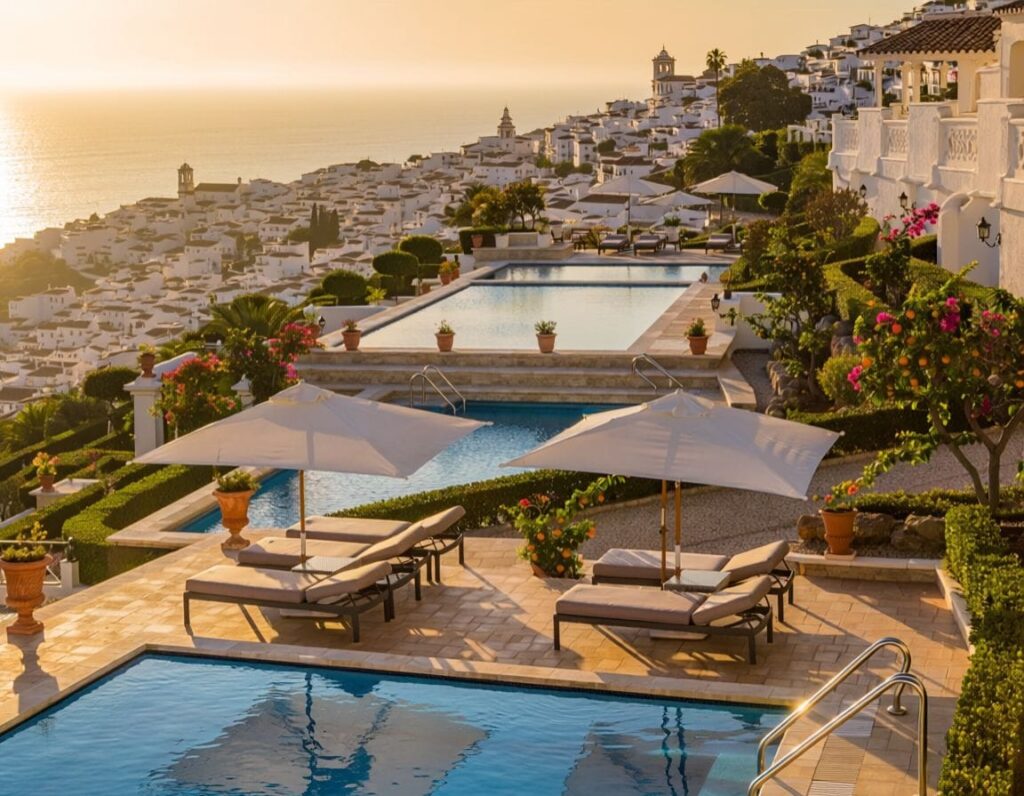
This elegant resort lies in the Mijas Golf area, between the village and the coast. It has an infinity pool, a spa, a fitness centre and lush gardens with views of the mountains. Breakfast comes with champagne and fresh pastries, and golf courses are just a short walk away. It’s the place for a luxurious, relaxing break with spa days and rounds of golf.

