What do a failed housing estate, a mosaic dragon and a bench that snakes for more than 100 metres have in common? They all belong to the same hillside.
Park Güell is Antoni Gaudí’s fairy-tale park on Carmel hill, in the north of Barcelona. It was meant to be an exclusive garden city for wealthy families, but the plan flopped, and the city ended up with one of the most playful public spaces in Europe. Here you’ll find gingerbread-style gatehouses, a staircase guarded by a colourful dragon, a hall of stone columns and a wavy mosaic bench with views of the sea. In this article you’ll find out how tickets and time slots work, which entrance to use, what to see in the Monumental Zone, how long to stay and how to get there without an exhausting climb. It’s for first-timers, families and anyone who wants to see the park without wasting half a day in queues.
💰 Hotel Travessera - A small, good-value hotel about 600 metres from the park.
🏨 Catalonia Park Güell - A modern hotel with a rooftop pool near Vallcarca metro.
💎 ABaC Hotel Boutique 5 GL - A five-star boutique hotel with a celebrated restaurant and a spa.
What is Park Güell?
Park Güell is a large park filled with gardens, viaducts and buildings designed by Antoni Gaudí between 1900 and 1914. It covers around 17 hectares on the slopes above the Gràcia district, close to the El Coll neighbourhood, and the most famous part, the Monumental Zone, is a UNESCO World Heritage Site. Many visitors simply call it the Gaudí park or the Gaudí gardens of Barcelona, and it’s one of the most visited attractions in the city. You’ll also see it written as Park Guell, Parc Güell or Güell Park.
The park is split in two. The Monumental Zone, with the dragon, the Hypostyle Room and Nature Square, needs a ticket with a time slot. The rest is a wooded park with paths, viewpoints and shady benches, and it’s free for everyone to enter. Lots of first-timers don’t realise this and get a surprise at the gate.
A short history - from garden city to public park
The idea came from Eusebi Güell, a rich industrialist and Gaudí’s most loyal patron. In 1900 he asked Gaudí to design an English-style garden city on a bare hill above the town, with 60 plots for luxury houses, roads, a market and a square. That’s why the park’s name is written the English way, “Park” rather than the Catalan “Parc”. At the highest point Gaudí planned a chapel, which was never built.
The project was a commercial failure. The site was far from the centre, the transport links were poor and the terms of sale were strict. Only two houses were built, and neither was designed by Gaudí. He bought one of them himself and moved in with his elderly father and his niece in 1906. Construction stopped in 1914, and after Eusebi Güell’s death the family sold the land to the city. Park Güell opened as a public park in 1926, so 2026 marks its centenary.
The park is a textbook piece of Catalan Modernisme. Gaudí avoided straight lines, used stone dug up on site and designed a clever system to collect rainwater, long before anyone talked about sustainable architecture. It’s also where he and his assistant Josep Maria Jujol made trencadís famous: mosaics of broken tiles, plates and bottles. In 1984 UNESCO added the park to the World Heritage List, together with other works by Antoni Gaudí. Since October 2013, access to the Monumental Zone has been limited and ticketed, to protect it from overcrowding.
What to see in the Monumental Zone
The Monumental Zone is compact, and you can see all its highlights in an hour or so. Check the map at the entrance to find your way between the main buildings. Here’s what not to miss, roughly in the order you’ll come across them if you come in through the main gate on Carrer d’Olot.
The gatehouses and Casa del Guarda
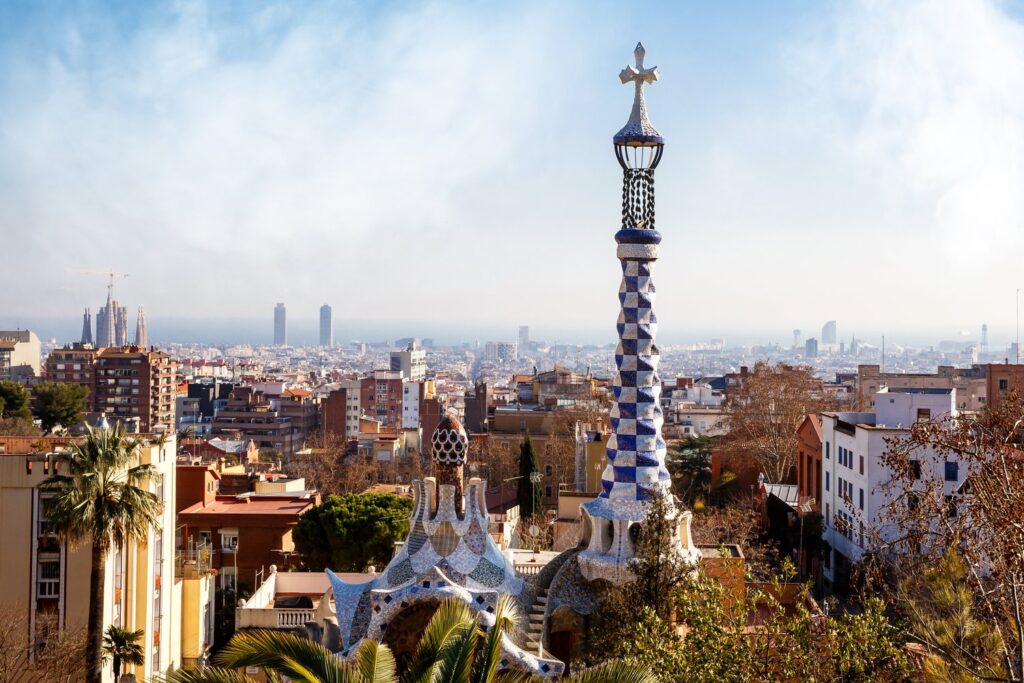
The main entrance is flanked by two pavilions with wavy roofs that look like they’re made of icing. Kids often compare them to the witch’s house in Hansel and Gretel. One was the porter’s lodge, and today Casa del Guarda houses a small exhibition about the park’s history, included in your ticket. The other pavilion is now a bookshop.
The dragon stairs
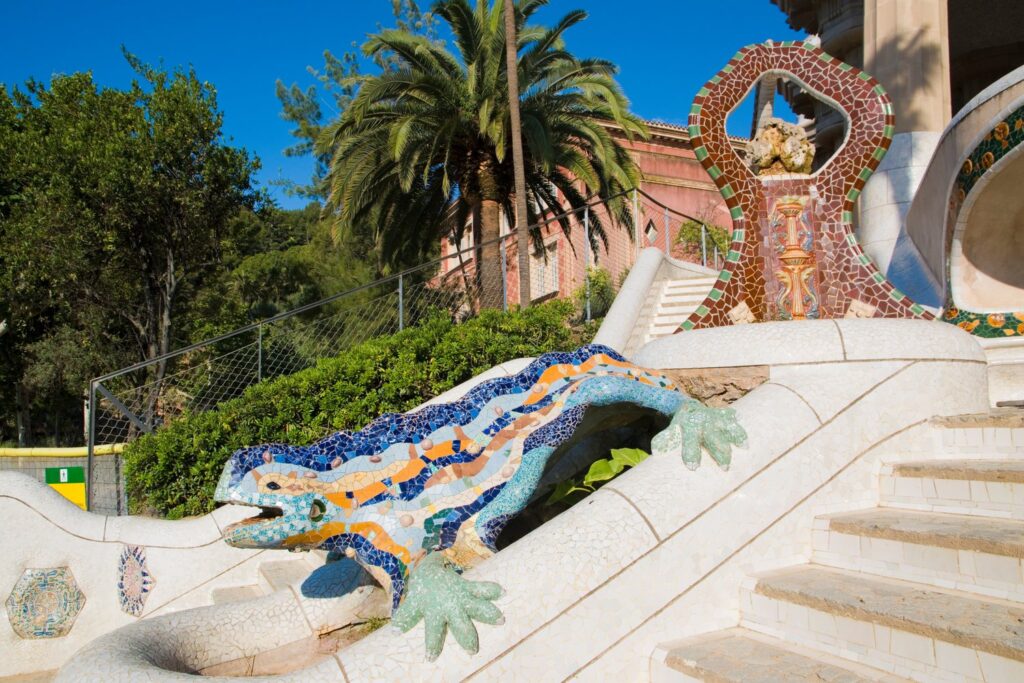
From the gate, a double staircase climbs between walls covered in broken tiles. Halfway up sits the park’s most famous resident: a salamander, or dragon, about 2.4 metres long and covered in colourful trencadís. It’s the city’s favourite photo spot, so be prepared to queue. Below it, look for a snake’s head poking out of a medallion with the Catalan flag.
The Hypostyle Room
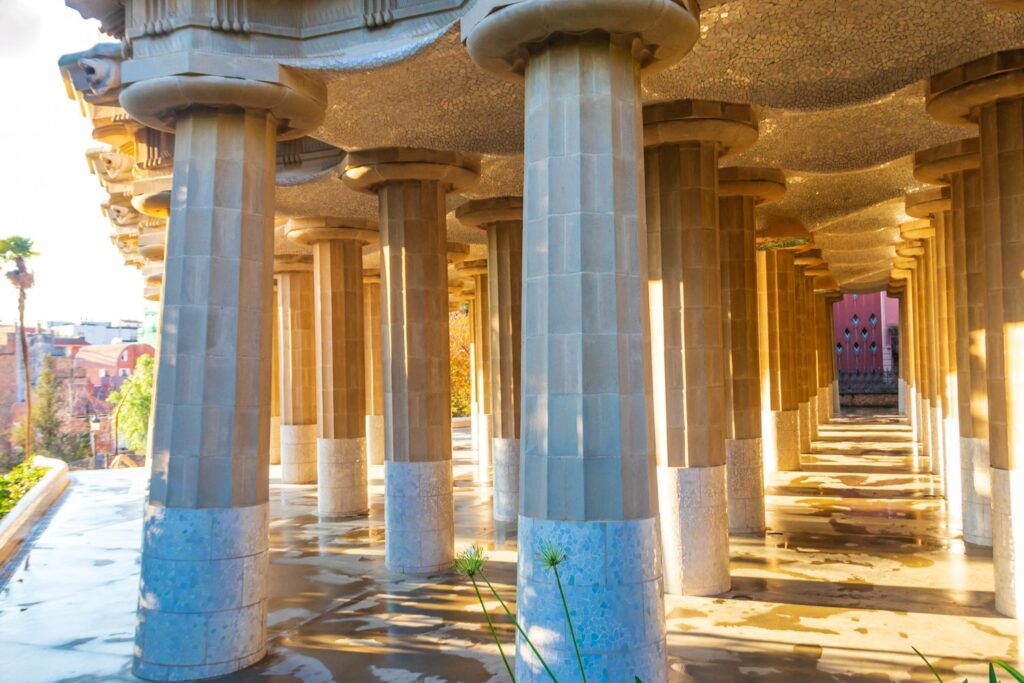
At the top of the stairs you reach the Hypostyle Room, a forest of 86 Doric columns. It was meant to be the covered market of the garden city. The outer columns lean slightly inwards, and the ceiling is decorated with round mosaic medallions by Jujol. The columns also hide the drainage system that carries rainwater from the square above to a large underground cistern.
Nature Square and the serpentine bench
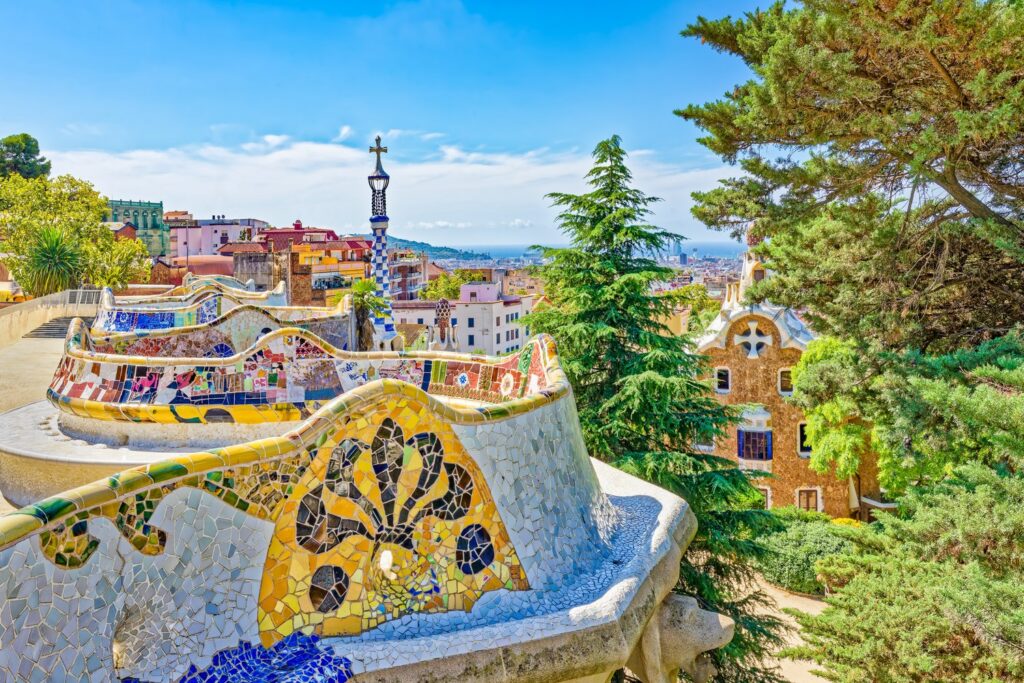
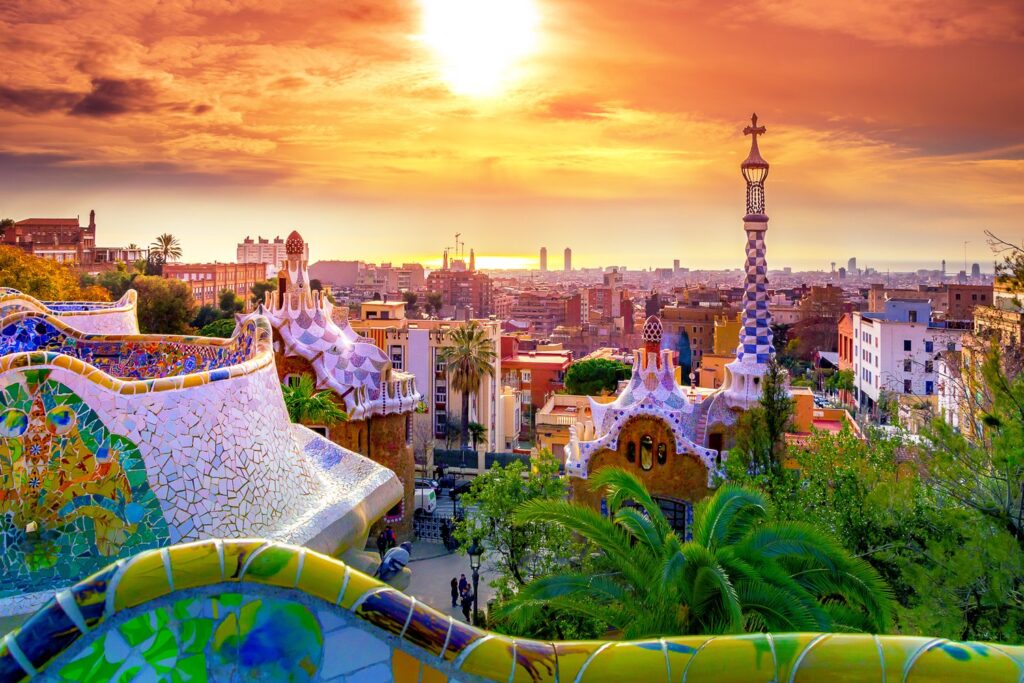
Above the Hypostyle Room is Nature Square, a huge open terrace with views over the rooftops of Barcelona to the Mediterranean. Around its edge runs the famous serpentine bench, covered in mosaics of broken tiles, bottles and plates. It curves so that groups can chat face to face, and the backrest is shaped to fit your back. Sit down for a few minutes, because this is the best view in the Monumental Zone.
The Laundry Room Portico and the viaducts
From the square, paths lead along stone viaducts that look as if they’ve grown out of the hillside. Gaudí built them with stone from the site, so they blend into the landscape like tree trunks. The best-known stretch is the Laundry Room Portico, a sloping gallery whose leaning columns look like a wave about to break. Look for the column carved as a washerwoman carrying a basket on her head.
The Gaudí House Museum
Near the Hypostyle Room stands a pink house with a pointed tower. This is the Gaudí House Museum, the show home of the garden city, designed by Gaudí’s friend Francesc Berenguer. Gaudí lived here from 1906 to 1925, shortly before he moved into his workshop at the Sagrada Familia. The house reopened in July 2024 after a renovation of its façade and rooms.
Inside you’ll see furniture Gaudí designed for Casa Batlló, Casa Calvet and the Colònia Güell crypt, along with his simple bedroom, religious objects and family belongings. A narrow staircase leads to the upper floor. The museum isn’t part of the standard Monumental Zone ticket, so choose a combined ticket if you want to go in. A visit takes about 30 minutes.
Park Güell tickets, discounts and time slots
Every entry ticket for the Monumental Zone has a fixed time slot. You can enter up to 30 minutes after the start of your slot, and once inside you can stay as long as you like. Re-entry isn’t allowed, though, so leave only when you’re done. Tickets are sold online in advance, and on busy days they’re gone long before you reach the gate.
Children aged 7 to 12 and visitors over 65 get a discount. Entry is free for children under seven and for people with disabilities, but they still need a ticket with a time slot. Barcelona residents can visit for free with the Passi Verd, which replaced the old Gaudir Més card in March 2026, and locals from neighbourhoods such as El Coll have their own pass. Early-morning and evening slots are reserved for residents, so tourists can’t book them.
You can choose between three main options. A general admission ticket covers the Monumental Zone and Casa del Guarda. A combined ticket adds the Gaudí House Museum. Guided tours include entry and a guide, and some also cover the Sagrada Familia on the same day. Check the cancellation terms before you book, as they differ between tickets and tours.
When to book
In spring and autumn, book three to five days ahead. In summer and around Easter, reserve your slot one to two weeks in advance, especially for slots between 10am and 1pm, which go first. In winter you can often find a ticket a day or two before your visit.
Guided tours of Park Güell - are they worth it?
A guided tour is worth it if you want the stories behind the symbols. Guides explain the hidden meaning of the dragon, the Catalan and religious symbolism, and why the garden city failed. Most tours last an hour to an hour and a half, and many reviews mention how much more you notice with someone pointing out the details.
If you prefer to explore at your own pace, the standard ticket is enough. Families with young children usually skip the guide and spend the time on the dragon stairs and in the free part of the park. Popular combinations are tours of Park Güell with the Sagrada Familia, and full-day Gaudí tours that also include the houses on Passeig de Gràcia.
Park Güell opening hours and how long to spend
The Monumental Zone is open every day of the year, and tourist time slots run from 9.30am to 7.30pm. The slots from 7am to 9.30am and from 8pm to 10pm are only for residents and Passi Verd holders. The free areas of the park are open for these longer hours too. The park can close at short notice in strong winds or heavy rain, so check the weather before you set off.
Plan about an hour to an hour and a half for the Monumental Zone. If you want to add the Gaudí House Museum and a walk up to the viewpoints in the free area, allow half a day. Bring water, a hat and sun cream in summer, as there’s little shade on Nature Square.
How to get to Park Güell in Barcelona
The park sits on a hill, and every route from the metro ends with a climb. The trick is to choose the least strenuous route.
- Metro: line L3 (green) to Lesseps or Vallcarca, about 20 minutes on foot from either station. From Lesseps, walk to the entrance on Avinguda del Santuari de Sant Josep de la Muntanya, where an escalator helps with the last stretch. From Vallcarca, take the outdoor escalators on Baixada de la Glòria, which carry you most of the way up.
- Bus: H6 and D40 stop on Travessera de Dalt, about 10 minutes from the Avinguda del Santuari or Carrer de Larrard entrances. Lines 24 and 92 also stop near the park, and line 24 is handy for the almost flat Carretera del Carmel entrance. This is the easiest option with small children or a pushchair.
- Hop-on hop-off buses: the city’s two sightseeing bus companies both have a Park Güell stop on Avinguda de la Mare de Déu de Montserrat, a 10-minute walk from the Carretera del Carmel entrance.
- Taxi: the quickest choice if you’re short of time. There’s a taxi rank on Carretera del Carmel.
The main entrance on Carrer d’Olot is the best for a first visit, because you walk straight in past the gatehouses and up the dragon stairs. If you arrive from the metro escalators, you’ll come in from the top and walk down through the park instead. If you come by car, there’s a small car park on Travessera de Dalt, but spaces fill up quickly and the streets around the park are narrow.
Best time to visit Park Güell
The first slot of the day, at 9.30am, is the calmest time to visit, especially on a weekday. Tour buses usually arrive from mid-morning, and the dragon stairs get very busy by 11am. Late afternoon is lovely too, particularly in spring and autumn, when the low sun turns the mosaics golden. A slot an hour or two before sunset gives you the best light for photos.
In July and August the park can be very hot, so go early. October and the mild winter months are quieter, with clear views to the sea. Avoid rainy days if you can, as the mosaics get slippery.
Park Güell with kids
Children usually love Park Güell. The dragon, the gingerbread houses and the twisting paths feel like a playground. There’s also plenty of space to run around in the free part of the park, including a small play area. The Monumental Zone itself is fine with a pushchair if you use the Carretera del Carmel entrance, but the main stairs and some paths are steep.
Keep the visit short with toddlers, and save the climb to the viewpoints for older kids. Snacks and water are a good idea, as the cafés in the park are small and busy. Turn the visit into a treasure hunt: who can spot the snake, the washerwoman and the most colourful piece of the bench?
The free area - Three Crosses viewpoint and more
Don’t leave without exploring the free part of the park. Paths lead up through pine trees and agaves to the Turó de les Tres Creus, a small hill topped with three stone crosses, where Gaudí planned the chapel. From the top you get a wide view over the whole city, from the Sagrada Familia to Montjuïc and the sea. It’s a short but steep walk, and on a clear day it’s the best free viewpoint in this part of Barcelona.
Drainage and irrigation works are under way in the upper part of the park, so a few paths near Forat del Vent may be closed when you visit. Follow the signs and you’ll still reach the main viewpoints without trouble.
What else to see nearby
Park Güell sits above the Gràcia district, a former village full of small squares, bars and local shops. Walk down through Gràcia to Casa Vicens, Gaudí’s first house, about 20 minutes away. From there you can continue to Passeig de Gràcia for Casa Batlló and Casa Milà.
Many visitors combine Park Güell and the Sagrada Familia on the same day. A bus or a taxi makes the transfer easy, and some guided tours cover both. If you’re staying in Gràcia, book early, as the neighbourhood has fewer hotels than the centre.
See available hotels in Barcelona
Practical information
- Tickets to Park Güell are best bought in advance. You’ll avoid long queues and won’t risk finding all the time slots sold out.
- Address: Carrer d’Olot, 5, 08024 Barcelona (metro Lesseps or Vallcarca, line L3)
- Buy tickets on GetYourGuide
Hotels near Park Güell
Staying near the park means quiet streets, local restaurants and an early start before the crowds arrive. These three hotels suit different budgets.
💰 Hotel Travessera
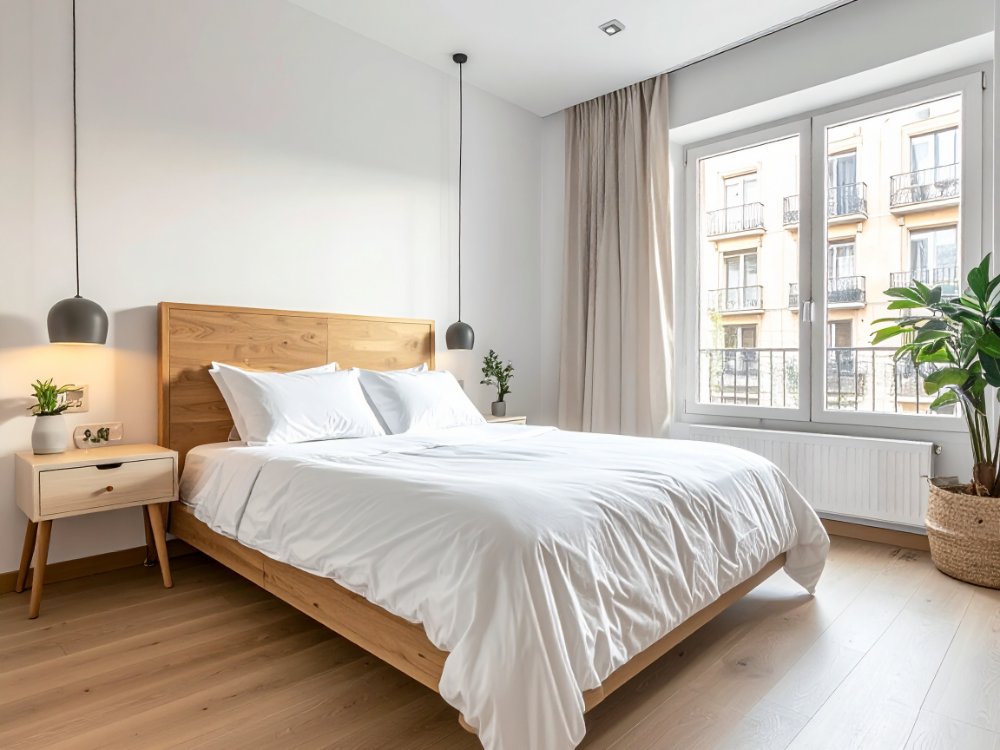
A small, good-value hotel on Travessera de Dalt, about 600 metres from the park and close to Alfons X metro station. Rooms are simple but comfortable, with air conditioning and a private bathroom. A buffet breakfast is served every morning, which saves time before an early time slot. Buses to the centre stop just outside, so it works well for budget travellers who want to be near the park.
🏨 Catalonia Park Güell
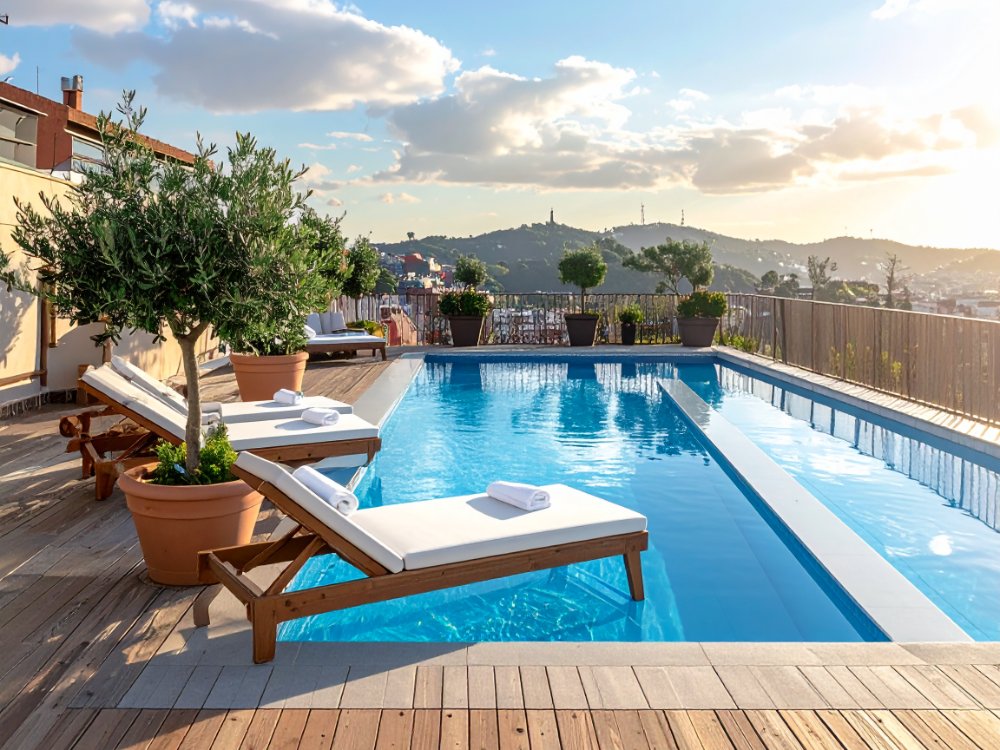
This modern hotel stands about 600 metres from Park Güell and around 300 metres from Vallcarca metro station. Its best feature is the rooftop pool and terrace, perfect after a hot morning on the hill. Rooms are bright and comfortable, and the metro gets you to the centre in minutes. It’s a smart choice for couples and families who want a pool and quick metro links.
💎 ABaC Hotel Boutique 5 GL
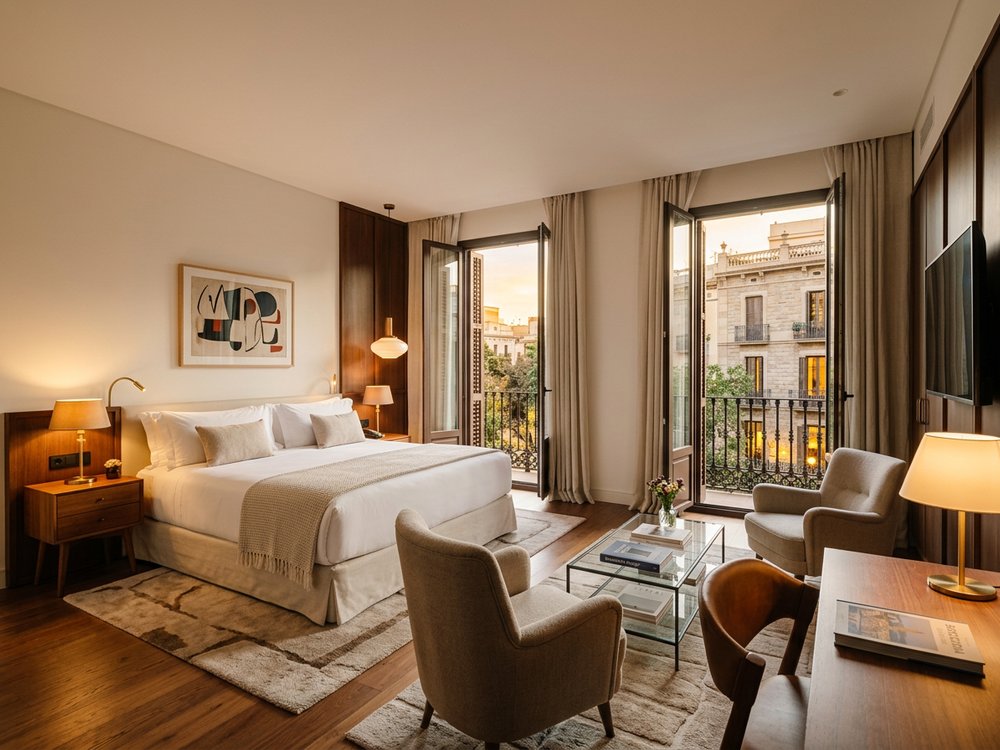
A five-star boutique hotel at the foot of Avinguda del Tibidabo, a short taxi ride from Park Güell. It’s best known for the ABaC restaurant, one of the top gourmet addresses in the city. The rooms are elegant and calm, and there’s a spa with an indoor pool. Choose it for a special occasion or a food-focused stay in the quieter, leafy upper part of the city.
Park Güell FAQ
Is Park Güell free to visit?
Only partly. The large wooded area of the park, including the Three Crosses viewpoint, is free to enter. The Monumental Zone with the dragon, the Hypostyle Room and the serpentine bench needs a ticket with a time slot, which is free for children under seven, people with disabilities and residents with a pass.
Is Park Güell worth visiting?
Yes, especially if it’s your first time in Barcelona. Nowhere else shows Gaudí’s playful side so clearly, and the views from Nature Square are superb. Book an early slot to enjoy it before the crowds.
How long do you need at Park Güell?
Plan about an hour to an hour and a half for the Monumental Zone. Add another hour if you want to visit the Gaudí House Museum and walk up to the viewpoints in the free area.
Which entrance is best for Park Güell?
For a first visit, use the main entrance on Carrer d’Olot, so you see the gatehouses and the dragon stairs first. If you want to avoid the climb, take the escalators to the Avinguda del Santuari entrance or bus 24 to the flatter Carretera del Carmel side.
Is the Gaudí House Museum included in the Park Güell ticket?
No, the standard ticket covers the Monumental Zone and Casa del Guarda only. To see the house where Gaudí lived for almost 20 years, book a combined ticket that includes the museum.
Can I buy Park Güell tickets at the entrance?
Not reliably. Tickets are sold for timed slots, and on most days they sell out well before you reach the gate. Make your reservation online a few days ahead, or one to two weeks ahead in spring and summer.

