Skip the supercars for an hour and walk uphill from the seafront. Behind the designer shops waits a whitewashed square whose orange trees were planted decades before the first yacht moored here.
Marbella has two faces, and the fun is in seeing both. One is the glossy resort of beach clubs, golf courses and the marina at Puerto Banús. The other is a compact old town of narrow streets, flower-filled balconies and churches that grew up around a Moorish castle. In this article you’ll find the best things to do in Marbella, from the Plaza de los Naranjos and the Dalí sculptures on Avenida del Mar to the beaches, boat trips, mountain walks and day trips along the Costa del Sol. There are also tips on getting there, when to go and where to stay.
💰 Óbal Hotel Marbella - A renovated hotel facing Alameda Park, a short walk from the beach and the old town.
🏨 Hotel Claude Marbella - A boutique hotel in a 17th-century house near the Plaza de los Naranjos.
💎 Marbella Club Hotel · Golf Resort & Spa - The legendary beach resort with gardens and a spa on the Golden Mile.
Things to do in Marbella - The highlights at a glance
Marbella, Spain, sits on the Mediterranean Sea in the province of Málaga, roughly halfway between Málaga and Gibraltar on the Costa del Sol, with the Sierra Blanca mountains rising straight behind the town. That backdrop shelters the coast from the wind and gives Marbella its mild climate. It also means you can swim in the morning and walk in pine-covered hills in the afternoon.
Most Marbella attractions are easy to combine. If you only have a day, focus on Marbella old town, Alameda Park, Avenida del Mar and the seafront promenade. With two or three days, add Puerto Banús, a boat trip, a beach club afternoon and a day trip inland. Most of the classic things to see in Marbella are within walking distance of each other. The marina at Puerto Banús is the main exception, around 6 km west of the centre.
Marbella is also a practical base for Andalusia. White villages, Roman ruins and some of southern Spain’s most famous towns are within an easy drive.
Marbella old town (Casco Antiguo) - Where to start exploring Marbella
The Casco Antiguo is the heart of central Marbella and the best place to begin. It is small enough to cross in ten minutes, yet you can happily lose a morning in its lanes. Whitewashed buildings, colourful flower pots and wrought-iron balconies line streets that are often too narrow for cars. Come early, before the day-trippers arrive, and you will have many of them to yourself.
Plaza de los Naranjos - The orange square
Sooner or later, every walk around the old town ends up in the Plaza de los Naranjos, or Orange Square. It was laid out after the Christian conquest of Marbella in 1485 and became the centre of the new town. A Renaissance fountain stands in the middle, surrounded by fragrant orange trees and café terraces.
Three historic buildings frame the square. The town hall was built in 1568 in Renaissance style, and a plaque on it remembers the conquest by Ferdinand and Isabella. The Casa del Corregidor dates from 1552 and mixes several architectural styles on its stone facade. In the corner stands the Ermita de Santiago, a small and simple chapel that is one of the oldest religious buildings in Marbella.
FUN FACT: The orange trees that give the square its name were planted in 1941, almost three decades before Puerto Banús opened.
The square is lovely for a coffee in the morning and for people-watching in the evening. Prices on the terraces are higher than in the side streets, so it’s worth having a drink here and eating a little further away.
Church of the Incarnation and the castle walls
A few steps away, the Iglesia de la Encarnación (Church of the Incarnation) stands on the site of the old main mosque. The building you see today dates from the 18th century and was inaugurated in 1767. Look up at its Rococo portal, carved in ochre stone, which faces the small Plaza de la Iglesia. Inside, the church is known for its large organ, the Órgano del Sol Mayor, completed in 1976.
Right behind the church run the castle walls of Marbella castle, the old Moorish citadel. The fortress was built in the 10th century, in the time of the Caliphate of Córdoba, and some of its stones were reused from Roman buildings. Little survives and you can’t go inside, but a short walk along the city walls shows how small and well defended medieval Marbella was. Follow Calle Carmen, Plaza de San Bernabé and Calle Castillo to trace the line of the walls.
Lanes, flower pots and small squares
Away from the main square, the old town is at its best in the quiet lanes of the Barrio Alto. Here you will find whitewashed houses, potted geraniums on every wall and tiny squares with a bench and a tree. Calle Ancha, lined with old mansions, climbs towards the upper part of the Casco Antiguo.
The old town has plenty of tapas bars, small boutiques and great restaurants. If you want to understand the local culture as well as see it, a guided walk with a resident is a good first step. You’ll hear stories about the conquest, the fishing town Marbella once was and the families who still live here.
Museums in Marbella - Engravings by Picasso and a free art collection
Marbella is not a museum city like Málaga, but two collections are worth your time. The Museo del Grabado Español Contemporáneo (Museum of Contemporary Spanish Engraving) occupies the old Hospital Bazán in the old town. Its rooms hold etchings, lithographs and other prints by artists such as Picasso, Miró, Dalí and Tàpies. It is open from Tuesday to Saturday and closed on Sundays, Mondays and public holidays.
The Museo Ralli is a private museum on the coast between Marbella and Puerto Banús, and entry is free. It focuses on Latin American and European art of the 20th century, including surrealist work, in bright galleries a short walk from the sea. Check the opening days before you go. The museum closes on Sundays and Mondays and for a winter break from late December to the end of January.
If Picasso is on your list, combine Marbella with a day in Málaga, where the Picasso Museum holds a much larger collection of his work.
Alameda Park and Avenida del Mar - Salvador Dalí on the way to the sea
Between the old town and the beach lies Alameda Park, a shady garden of palm trees, fountains and old trees. Its benches are covered with painted tiles, and on a hot afternoon it’s one of the coolest spots in Marbella city centre. Locals stop here for a chat, and children run around the fountain.
From the park, Avenida del Mar runs down to the seafront. This pedestrian boulevard is an open-air gallery of ten bronze sculptures designed by Salvador Dalí, cast in Verona. You can walk right around the statues, which include figures from Dalí’s best-known themes, and see them for free at any time of day. Ponds, pergolas and café terraces line the way, so it’s an easy place to linger.
Avenida del Mar ends on the Marbella promenade, the Paseo Marítimo. Here the beach, the sea and the mountains all appear in a single view, and the walk west begins.
The promenade and the Golden Mile - A seafront walk to Puerto Banús
The seafront promenade follows the coast for kilometres and is one of the most pleasant fun things to do in Marbella, especially at sunset. Rent a bike, go for a run or simply walk past the beach bars, small ports and families playing on the sand. The path is flat, which makes it easy for all ages.
West of the centre begins the Golden Mile, the road and coastline of villas, embassies and five-star hotels that runs for about 7.5 km towards Puerto Banús. The Golden Mile’s story began with the Marbella Club, opened in 1954 by Prince Alfonso von Hohenlohe. The hotel brought aristocrats and film stars to what was then a quiet fishing town. On the mountain side of the road you can see the white minaret of the King Abdul Aziz Mosque, built in 1981.
Further along, the Puente Romano resort was built in 1979 around a small Roman bridge, which still stands in its subtropical gardens. You can walk from the old town to Puerto Banús along the seafront in around an hour and a half. Many visitors walk one way and take a taxi or bus back.
Visiting Puerto Banús - Superyachts, boutiques and beach clubs
Puerto Banús is the Marbella most people picture. You’ll also see it spelt Puerto Banus, without the accent, on signs and bus timetables. The marina was built by the developer José Banús and opened in May 1970. Today it has berths for more than 900 boats, from fishing boats to luxury yachts that are longer than most houses. Visiting Puerto Banús is mostly about strolling the quay, spotting supercars and enjoying the people-watching.
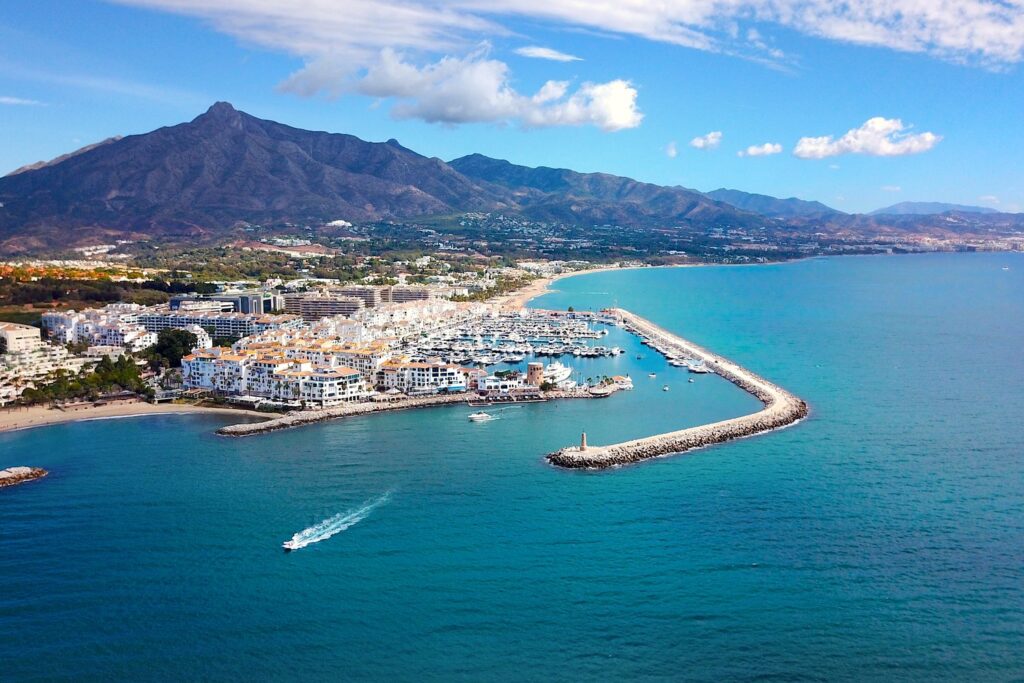
Behind the Puerto Banús marina, streets of designer boutiques sell everything from luxury watches to Italian fashion. On Plaza Antonio Banderas you’ll find El Corte Inglés, one of Spain’s best-known department stores. For high-street brands, La Cañada, a large shopping centre on the edge of town, is a better bet. There is a beach on each side of the marina, and boat trips and water sports leave from the harbour.
Is Puerto Banús in Marbella expensive? Yes, at least on the front row of the marina, where a coffee costs more than in the old town. Walk one or two streets back from the water and prices fall. The area really comes alive after dark, when the bars and clubs fill up and the yachts light up the port.
Marbella nightlife - Flamenco, beach bars and the Starlite Festival
Marbella’s nightlife has something for every mood. Puerto Banús is known for its exclusive nightclubs and late-night cocktail bars, where the party rarely starts before midnight. The bars and terraces around Avenida del Mar and the old town are more relaxed, and perfect for a glass of wine after dinner.
For something more traditional, book a flamenco show. The singing, guitar and footwork are performed just a few metres away from you, and many venues include a drink. In summer, the Starlite Festival brings international artists to an open-air stage set in an old quarry in the hills above the Golden Mile. Tickets for the biggest names sell out early.
Marbella beaches - From city sand to the Cabopino dunes
Marbella has around two dozen beaches along more than 20 km of coastline, and some of them are among the most popular on the Costa del Sol. In the centre, Playa de la Venus and Playa del Faro sit right below the old town and Avenida del Mar. They are convenient for a swim between sightseeing, with sunbeds, beach bars and calm water, and Playa de la Venus is usually the busiest beach in town. Along the Golden Mile, Playa de Nagüeles is known for its upmarket beach clubs. West of the centre, Playa de la Fontanilla is a long stretch of sand lined with restaurants and hotels.
East of the town, the coast becomes greener and more natural. Cabopino beach backs onto the Dunas de Artola, a protected natural monument with footpaths through the dunes. Nearby stands the Torre de los Ladrones, an old watchtower. Please stay on the paths, as walking on the dunes damages them.
Marbella’s beach clubs are part of its reputation. Expensive beach clubs such as Nikki Beach mix sunbeds, music, cocktails and a DJ, and they are popular for a long lunch that turns into an evening. For a more local experience, look for a chiringuito (beach bar) cooking espetos, sardines grilled on skewers over a wood fire in an old boat filled with sand.
Book sunbeds at the most famous beach clubs in advance in summer, especially at weekends.
On the water - Boat trips, dolphins and water sports
A boat trip is one of the best ways to see the beautiful coastline, with the Sierra Blanca behind the town and, on a clear day, the mountains of Africa on the horizon. Sailing trips leave from the marinas in Marbella and Puerto Banús. Many include drinks, swimming stops and the chance to see dolphins. Sunset cruises are especially popular in summer.
If you prefer something faster, the beaches and marinas offer jet skiing, paddleboarding, kayaking and parasailing. The water is usually calm in the morning, which is the best time for paddleboarding and kayaking. In the afternoon, the wind tends to pick up.
Food and drink in Marbella - Tapas bars, espetos and street markets
Eating well is one of the great pleasures of a trip to Marbella. In the old town, tapas bars serve fried fish, Iberian ham, salmorejo (a thick, cold tomato soup) and local wines. A tapas tour with a guide is a good way to get to know the local cuisine on your first evening, because you’ll discover bars you might walk straight past. On the seafront, the restaurants focus on fresh fish and seafood. In the morning, do as the locals do and order churros con chocolate in a café in the old town.
If you’re celebrating, Marbella’s food scene also includes several Michelin-starred restaurants, many of them on the Golden Mile and in the hills above the coast. Book well ahead, especially in summer.
Marbella also has a lively municipal food market, the best place to see what’s in season, and several street markets. The main street market takes place on Monday mornings in the Las Albarizas area. On Saturdays there is another one near Puerto Banús, in Nueva Andalucía. San Pedro holds its market on Thursdays, and on Sundays an artisan market appears at the Puerto Deportivo Virgen del Carmen. Arrive early for the best choice and the coolest hours.
Prices in Marbella vary a lot. A meal in a beach club or on the marina can cost several times more than tapas in the old town or in a neighbourhood bar. Mixing the two is the best way to enjoy Marbella without spending a fortune.
Golf, hiking and the Sierra Blanca mountains
The western Costa del Sol is so popular with golfers that it’s nicknamed the Costa del Golf. There are dozens of golf courses within a short drive of the town, many with views of the Mediterranean. Marbella golf is possible all year, and the mild winters bring golfers from northern Europe from autumn to spring.
If you’d rather walk, the Sierra Blanca mountains offer a very different side of Marbella. The landmark peak of La Concha rises to around 1,200 metres above the town. The classic route starts at the Refugio de Juanar and takes several hours, so set off early and carry plenty of water. From the top, on a clear day, you can see across the Costa del Sol to the coast of North Africa. Even a short walk from Juanar gives you pine forests and big views.
For more adventure, the Guadalmina River near Benahavís is a popular spot for canyoning. You’ll jump into pools, slide down rocks and swim through narrow gorges with a guide.
San Pedro de Alcántara and Roman Marbella
West of Puerto Banús, San Pedro de Alcántara is part of the municipality of Marbella but feels like a small town of its own. It has a relaxed promenade, a pleasant boulevard and a calmer atmosphere than the marina. It’s a good choice if you want to stay near the beach without the bustle of the centre.
This area is also the best place to discover Marbella’s Roman past. Near San Pedro you can see the Roman bath building known as Las Bóvedas and the remains of the early Christian basilica of Vega del Mar. On the coast at the mouth of the Río Verde, the Villa Romana de Río Verde has a well-preserved culinary mosaic, linked to the fish-salting trade that made this coast rich. Opening times for these sites are limited, so check them locally before you go.
Day trips from Marbella
Marbella is an ideal base for a day trip, whether you have a car or prefer an organised tour. Ronda, about an hour inland, sits above a deep gorge crossed by the Puente Nuevo. Many tours combine it with Setenil de las Bodegas, a white village whose houses are built under huge overhanging rocks.
Closer to Marbella, Mijas is a classic white village with views over the coast. The mountain villages of Benahavís, Istán and Ojén are also a short drive away. Gibraltar is around an hour west, which makes it an easy outing for British travellers who want to see the Rock and its famous apes.
Heading east, Málaga offers museums, the Alcazaba and a lively food scene. Further away, Nerja, Granada and Seville make long but rewarding days out. Walkers shouldn’t miss the Caminito del Rey, a cliff path above a gorge north of Málaga.
When to visit Marbella and the San Bernabé fair
Marbella has a mild climate all year, but the best time to visit depends on what you want to do. July and August are hot, busy and expensive, with full beach clubs and a lively nightlife. May, June, September and October are the sweet spot, with warm seawater, long days and fewer crowds. Winter is mild and sunny, which makes it a good season for walking, golf and exploring Marbella’s old town without the summer heat.
In June, the town celebrates its patron saint at the Feria de San Bernabé. The fair is held in the week around 11 June, the feast of San Bernabé, which is its busiest day, with parades and fireworks. In 2026 it ran from 8 to 14 June. Expect music, flamenco dresses and fairground rides until late at night.
In spring, the Semana Santa (Holy Week) processions wind through the narrow streets of the old town, carried by local brotherhoods. San Pedro de Alcántara holds its own fair in October, so even the shoulder season has something to celebrate.
Getting to Marbella and getting around
Which airport do you fly to for Marbella? Marbella has no airport of its own. The nearest is Málaga airport, about 51 km away by the AP-7 toll road. The drive takes around 35-40 minutes on the AP-7, or about an hour on the coastal A-7. Avanza buses run from the airport to Marbella bus station, often every 30 to 60 minutes, and the journey takes about 45 minutes. You can compare times and book tickets for buses to Marbella online.
There is no train to Marbella. If you arrive by train in Málaga, you can take the C1 suburban line to Fuengirola and continue by bus. If you plan several day trips, car hire gives you the most freedom. Parking in the old town is tight, so use one of the underground car parks, such as the one under Avenida del Mar.
In town, walking is the easiest way to get around the centre and the promenade. Local buses link the old town with Puerto Banús and San Pedro, and taxis are easy to find.
Where to stay in Marbella - Old town, Golden Mile or Puerto Banús?
For a first visit, stay in or near Marbella old town. You’ll be close to the restaurants, the Plaza de los Naranjos and the beach, and you won’t need a car. The Golden Mile is the place for luxury resorts with gardens and private beach access. Puerto Banús suits travellers who want nightlife and the marina on their doorstep, while San Pedro and the eastern beaches are quieter and good for families.
Marbella is one of the most popular resorts on the Costa del Sol, so book your accommodation well in advance for summer and the June fair.
See available accommodation in Marbella
Hotels in Marbella
These three hotels cover different budgets and styles, from a renovated hotel by Alameda Park to a legendary beach resort on the Golden Mile.
💰 Óbal Hotel Marbella
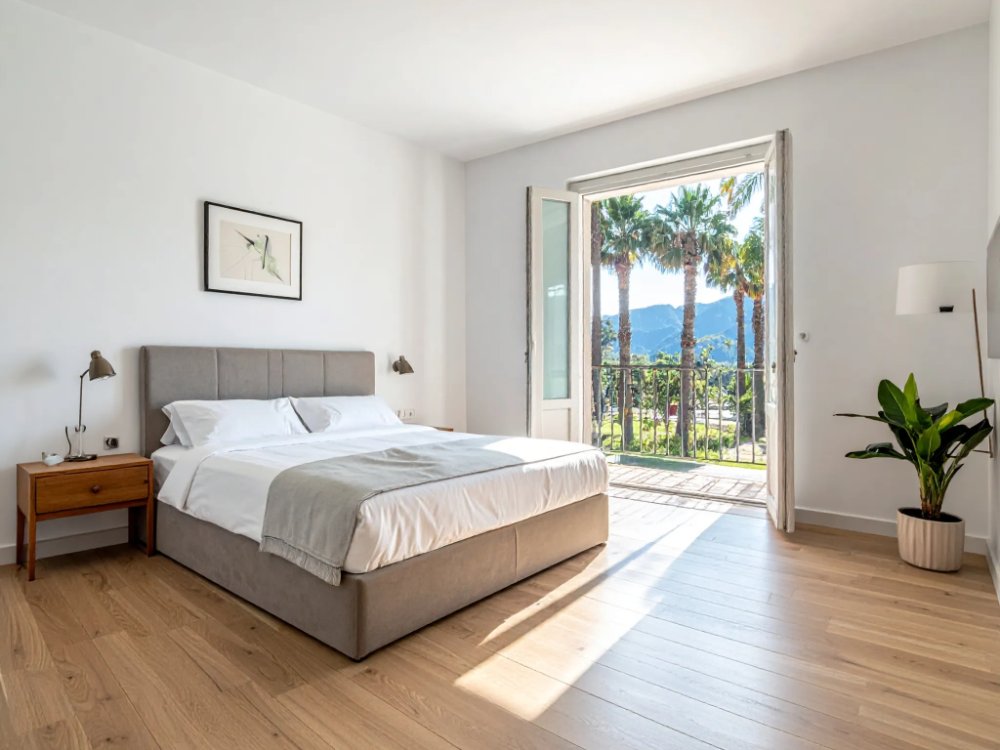
This hotel, renovated in 2023, faces Alameda Park on the edge of the old town and is about three minutes’ walk from the beach. The Plaza de los Naranjos is only 150 metres away, so you can explore Marbella on foot. Rooms are air-conditioned, and some have views of the park, the old town or the Sierra Blanca. There is a restaurant serving a buffet breakfast, a café-bar and a rooftop with panoramic views. It’s a smart choice if you want a central base at a sensible price.
🏨 Hotel Claude Marbella
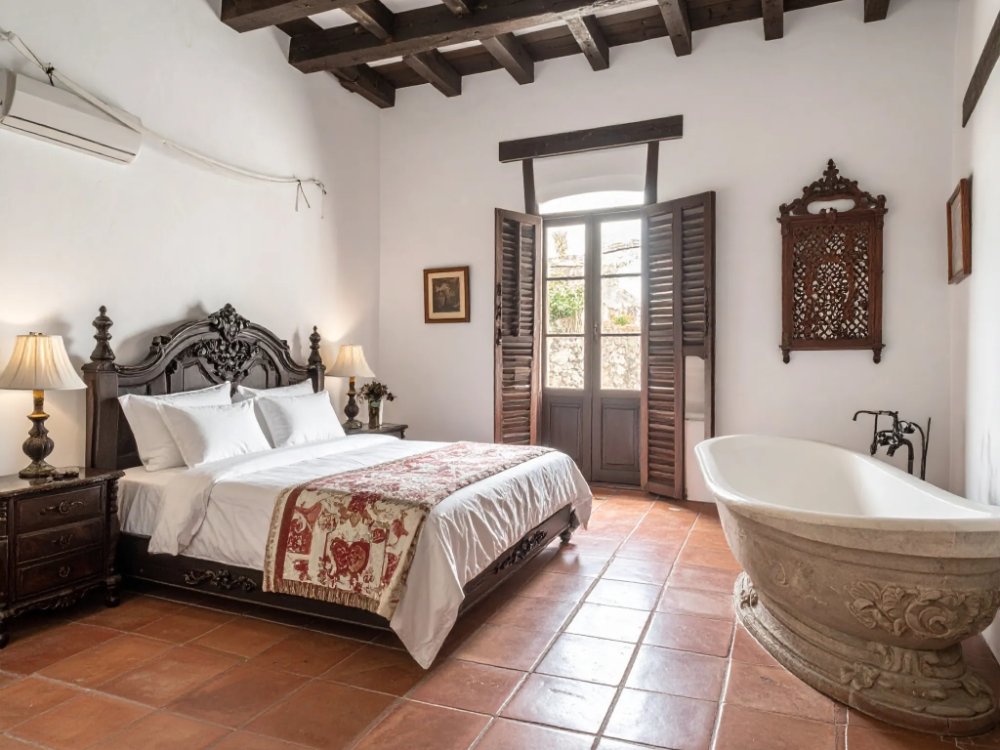
This boutique hotel occupies a restored 17th-century house in a quiet lane, around 150 metres from the Plaza de los Naranjos. Each room is decorated in its own style, with terracotta floors, elegant fabrics and stone bathtubs. Breakfast and light Mediterranean dishes are served in a striking black-and-white dining room. It suits couples who want character, calm and the old town’s restaurants right outside the door.
💎 Marbella Club Hotel · Golf Resort & Spa
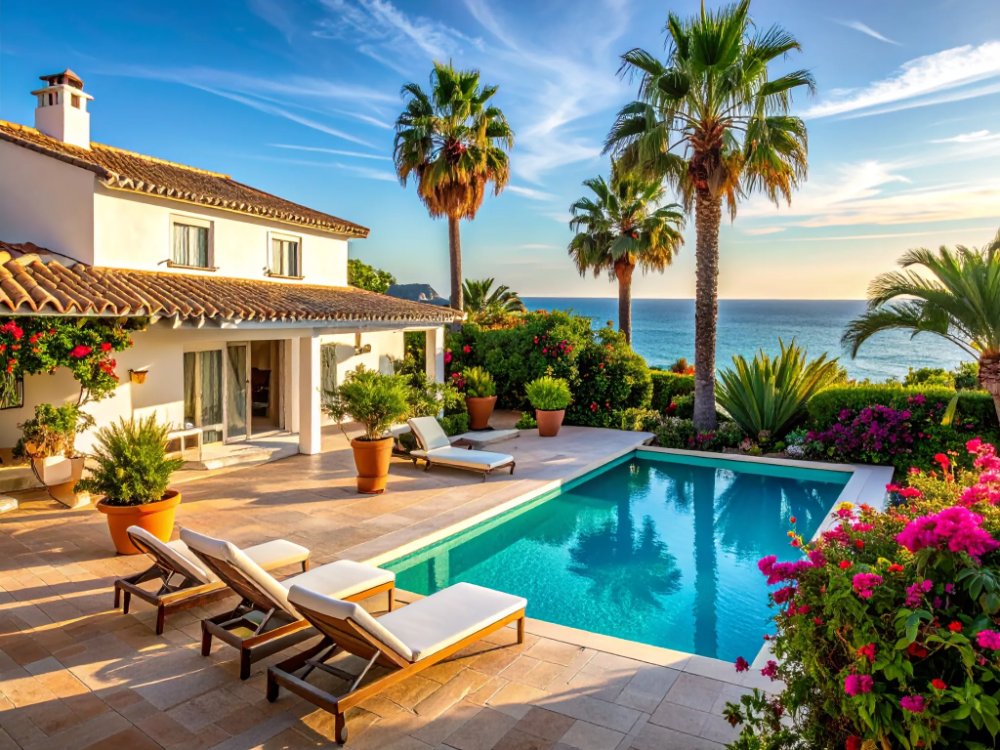
The hotel that launched Marbella’s glamour began as the private home of Prince Alfonso von Hohenlohe. It lies on the Golden Mile between Marbella and Puerto Banús, surrounded by lush gardens with direct access to the beach. Guests have two pools, several restaurants, a thalasso spa with sea views and a kids’ club. A shuttle runs to the resort’s own 18-hole golf course. It’s the place for a special trip, a honeymoon or a family holiday in style.
Marbella FAQ
Is Marbella worth visiting?
Yes, especially if you combine the old town with the beaches and the marina. Marbella has a pretty historic centre, good food and an easy seafront walk. It also makes a great base for day trips to Ronda, Mijas and Gibraltar.
Can you walk from Marbella old town to Puerto Banús?
Yes. The seafront promenade links the two, and the walk of about 6 km takes around an hour and a half at an easy pace. It passes beaches, beach bars and the hotels of the Golden Mile. Many people walk there and take a bus or taxi back.
Is Marbella very expensive?
It can be, but it doesn’t have to be. Beach clubs, the front row of Puerto Banús and the Golden Mile resorts are pricey. Tapas bars in the old town, street markets and city beaches keep costs down, so you can enjoy Marbella on a moderate budget.
What is the nicest beach in Marbella?
It depends on what you want. Playa de la Venus and Playa del Faro are the most convenient for the old town. For a more natural setting, head east to Cabopino beach, which backs onto the protected Dunas de Artola.
Which is nicer, Málaga or Marbella?
They suit different trips. Málaga is a real city with major museums, a Moorish fortress and a lively food scene. Marbella is better for a beach holiday with a pretty old town, golf and glamour. Many visitors stay in one and visit the other on a day trip.

