Two thousand years ago, chariots thundered round a track here in front of 30,000 roaring spectators. Today the same vaults hold up wine bars, bakeries and family homes.
Tarragona is the Catalan city where Roman history isn’t locked away behind glass. You walk on it, eat above it and swim a few minutes from it. Once known as Tarraco, it was one of the most important cities of Roman Hispania, and its ruins are now a UNESCO World Heritage Site. Add a medieval old town, a lively fishing quarter and golden beaches on the Costa Daurada, and you have one of the most rewarding city breaks in Spain. It’s also just an hour from Barcelona, yet far calmer. In this article you’ll find the best things to do in Tarragona, plus tips on how long to stay, where to eat, how to get there and which day trips are worth your time.
💰 Hotel Plaça de la Font - Charming hotel on a lovely Old Town square, 200 m from the Archaeological Museum and 500 m from the sea.
🏨 AC Hotel Tarragona by Marriott - Four-star hotel by Ciutadella Park in central Tarragona, with a gym, Turkish bath and free Wi-Fi.
💎 H10 Imperial Tarraco - Four-star superior hotel opposite the Roman amphitheatre on Rambla Vella, with views of the sea and ancient ruins.
Why is Tarragona famous?
Tarragona, Spain, is famous above all for its Roman ruins. The Romans set up a military camp here in 218 BC, during the Second Punic War, and the settlement grew into the capital of Hispania Citerior, a province covering much of the Iberian Peninsula. Emperor Augustus spent time in the city, and it was packed with temples, forums and buildings for public entertainment.
In 2000, UNESCO added the Archaeological Ensemble of Tarraco to the World Heritage list. It includes the amphitheatre, the Roman Circus, the city walls, the forums and several sites outside the centre. Tarragona is also known for its human towers, the castells, which UNESCO recognised as Intangible Cultural Heritage in 2010. Food lovers know it as the home of romesco sauce, while families come for the beaches and for PortAventura, which sits just down the coast.
The best things to do in Tarragona
Most Tarragona attractions are packed into a compact historic centre, so you can see a lot on foot in a single day. The Roman sites sit on a hill above the sea, with the medieval Part Alta (the upper town) built on top of them. The modern city spreads out below, around Rambla Nova and the port.
Roman Amphitheatre
The Tarragona amphitheatre is the image everyone takes home from the city. It was built in the early 2nd century AD on a slope right above the Mediterranean, and it could seat around 14,000 to 15,000 people. Gladiatorial combat, wild beast hunts and public executions all took place in its arena. In 259 AD, Bishop Fructuosus and his deacons Augurius and Eulogius were burnt alive here. A Visigothic basilica was later built in their memory, followed by the Romanesque church of Santa Maria del Miracle, whose remains you can still see in the middle of the arena.

Walk down to the stands and you’ll see the sea glittering just beyond the ruins. Come in the late afternoon, when the stone turns honey-coloured and the light is softer for photos. For the classic view from above, head to the viewpoint on Passeig de les Palmeres, just above the arena.
Roman Circus and the Praetorium
The Roman Circus was built at the end of the 1st century AD, during the reign of Emperor Domitian. It was about 325 metres long and could hold up to 30,000 spectators, who came to watch chariot races. What makes it special is that much of it survives inside the Part Alta. Its vaults now form the cellars and ground floors of houses, shops and restaurants around Plaça de la Font.
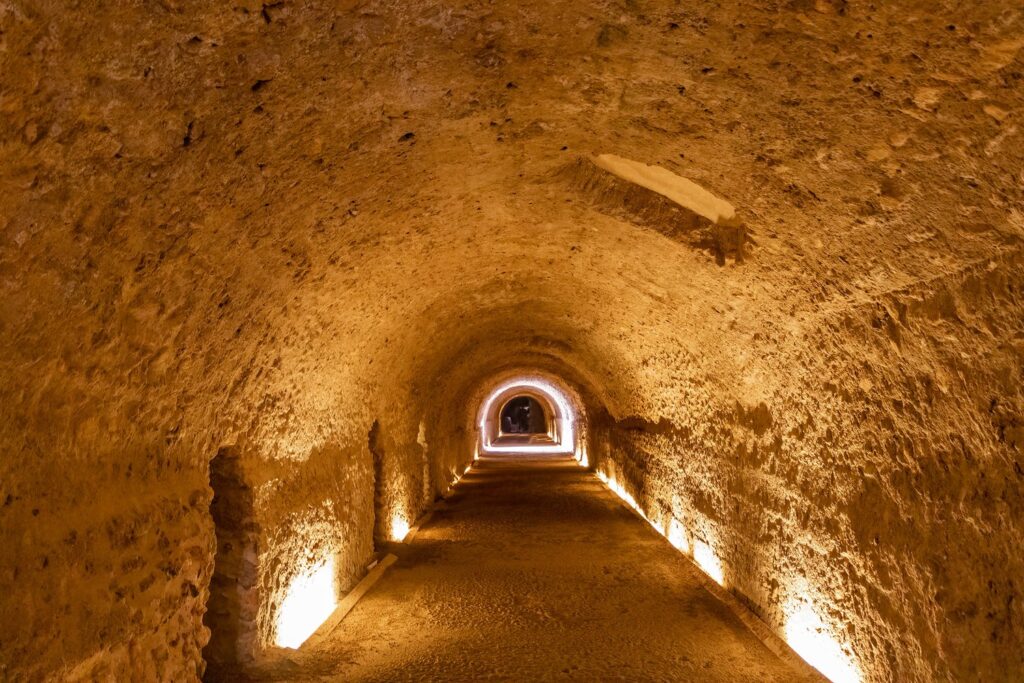
The visit takes you through long, cool vaulted passages and up into the Praetorium tower. Built by the Romans, it was later turned into a medieval royal palace. From its roof you get one of the best views of Tarragona, taking in the cathedral, the amphitheatre and the coastline of the Costa Daurada.
Passeig Arqueològic and the Roman walls
The Roman walls were first built at the end of the 3rd century BC and are among the oldest Roman structures outside Italy. About 1.1 kilometres of them still stand, and the best way to see them is along the Passeig Arqueològic (Archaeological Promenade). This landscaped path runs between the ancient walls and the later 18th-century fortifications.
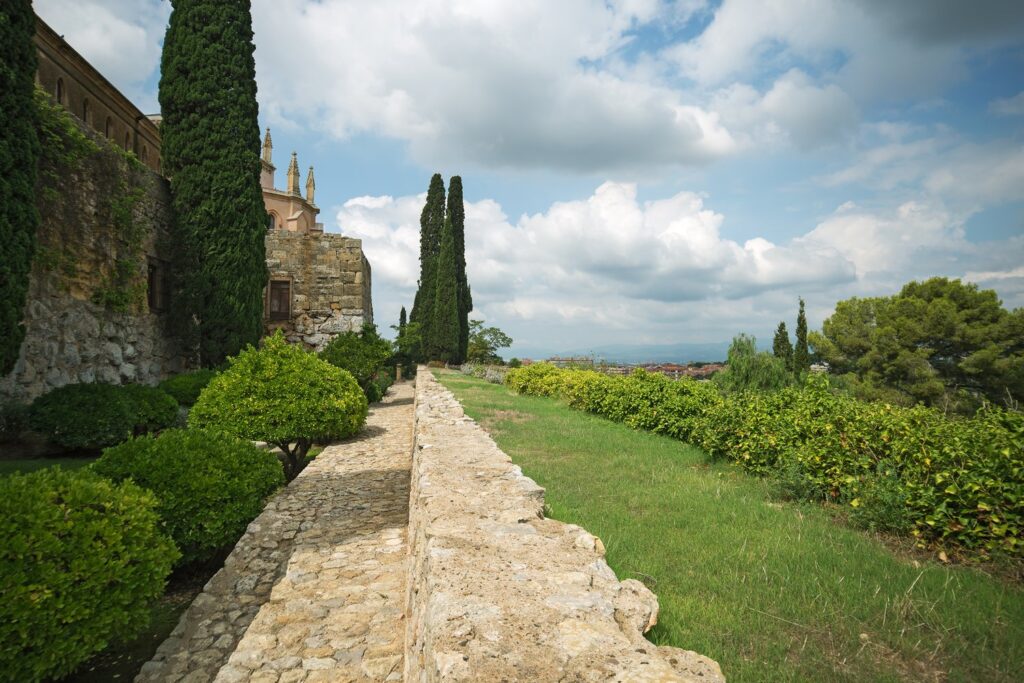
Look closely at the lowest layers and you’ll notice huge, rough-cut blocks laid by the first Roman builders. Don’t miss the Torre de Minerva, where a weathered relief of Minerva carries what is thought to be the oldest Latin inscription on the Iberian Peninsula. It’s a peaceful walk, with pine trees, a few replica statues and views over the rooftops.
Provincial Forum and Roman Forum
Tarraco had two forums. The Provincial Forum was a vast square at the top of the city, the political heart of the whole province. You can still see parts of it in Plaça del Fòrum and in the vaults beneath the Part Alta. Further down, in the modern city, the remains of the Colonial Forum (often simply called the Roman Forum) show the columns and foundations of the local marketplace and basilica.
The Colonial Forum is a short walk from Rambla Nova, and you only need 20-30 minutes there. It’s a good stop if you want to see how daily life worked for ordinary citizens, away from the grand public buildings on the hill.
Tarragona Cathedral
Tarragona Cathedral crowns the highest point of the old town, on the site where a temple to Emperor Augustus once stood. Construction started in 1171 and the building was consecrated in 1331. That long period explains the mix of styles: Romanesque foundations, a Gothic facade with a huge rose window and a cloister that blends both styles.
The cloister is the highlight. Look among the carved capitals for the famous “procession of the rats”, a cheeky scene of rats carrying a cat to its funeral, only for the cat to wake up. Inside, the Diocesan Museum holds religious art, tapestries and goldsmiths’ work. The staircase in front of the cathedral is one of the main stages for the castells during the Santa Tecla festival.
Part Alta, the medieval old town
The Part Alta, Tarragona’s old town, is the most atmospheric part of the city. Its medieval streets wind between Roman vaults, Gothic arches and tiny squares lined with café tables. Carrer Major leads straight up to the cathedral, while Carrer de la Merceria still has its medieval arcades, where merchants once traded.

Spend some time in Plaça del Rei and Plaça del Fòrum, and explore the lanes of the old Jewish quarter around Plaça dels Àngels. Plaça de la Font, built on top of the Roman Circus, is the liveliest square in the evening. It’s also where you’ll find the town hall and plenty of terraces for a drink before dinner.
Rambla Nova and the Balcó del Mediterrani
Rambla Nova is the main boulevard of the modern city, lined with plane trees, shops and busy terraces. Halfway along, look out for the bronze monument to the castellers, which shows a human tower in full detail. It’s a great introduction to one of Catalonia’s most famous traditions.

At the seaward end of the Rambla you reach the Balcó del Mediterrani (Balcony of the Mediterranean), a lookout high above the sea and the railway line. Locals say you should “tocar ferro” here, touching the iron railing for good luck. Come at sunset, when the views stretch over the Mediterranean Sea, the amphitheatre and the port.
National Archaeological Museum of Tarragona
The National Archaeological Museum of Tarragona (MNAT) holds one of the best collections of Roman finds in Spain. Highlights include the Medusa mosaic, sculptures, inscriptions and objects from everyday life in ancient Tarraco. Its main building on Plaça del Rei has been closed for a long renovation and is due to reopen around the end of 2026. Check the latest opening times before you go.

Mercat Central
Tarragona’s covered market is a beautiful modernista building from 1915, restored and reopened in 2017. Inside you’ll find stalls piled with local fruit, cured meats, cheeses and fresh seafood. Go in the morning, when it’s at its busiest, and grab a coffee or some tapas at one of the bars.
El Serrallo, the fishing quarter
El Serrallo is the old fishermen’s neighbourhood by the port, a short walk from the centre. It still has a working fishing fleet, and on weekday afternoons the catch is auctioned at the fish market as the boats come back in. The waterfront is lined with seafood restaurants, which makes it the best place in town for a rice dish or a plate of fresh fish.
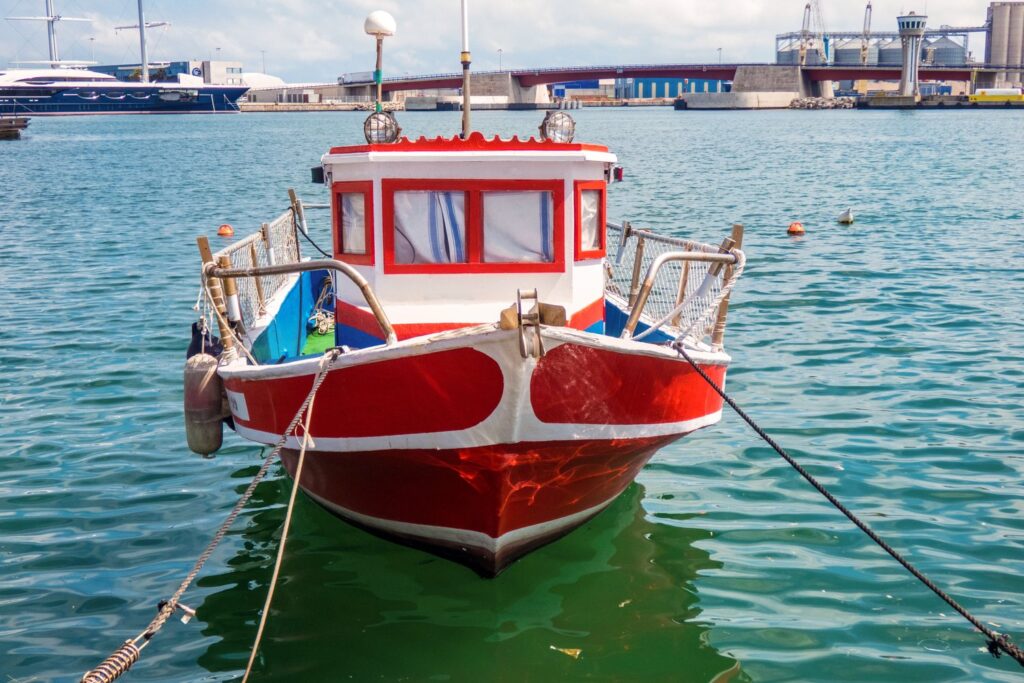
In winter and spring, look out for galeres (mantis shrimp) on the menu. This local favourite is usually grilled or used in soups and rice dishes. A stroll along the harbour, past colourful boats and the old warehouses, is one of the most relaxing things to do in Tarragona after a morning of sightseeing.
Pont del Diable (Ferreres Aqueduct)
About 4 kilometres north of the centre, the Ferreres Aqueduct is one of the finest feats of Roman engineering in Catalonia. Built in the 1st century AD to bring water to Tarraco, it is 217 metres long and up to 27 metres high, with two tiers of arches. Locals call it the Pont del Diable (Devil’s Bridge), after a legend that the devil built it in a single night.
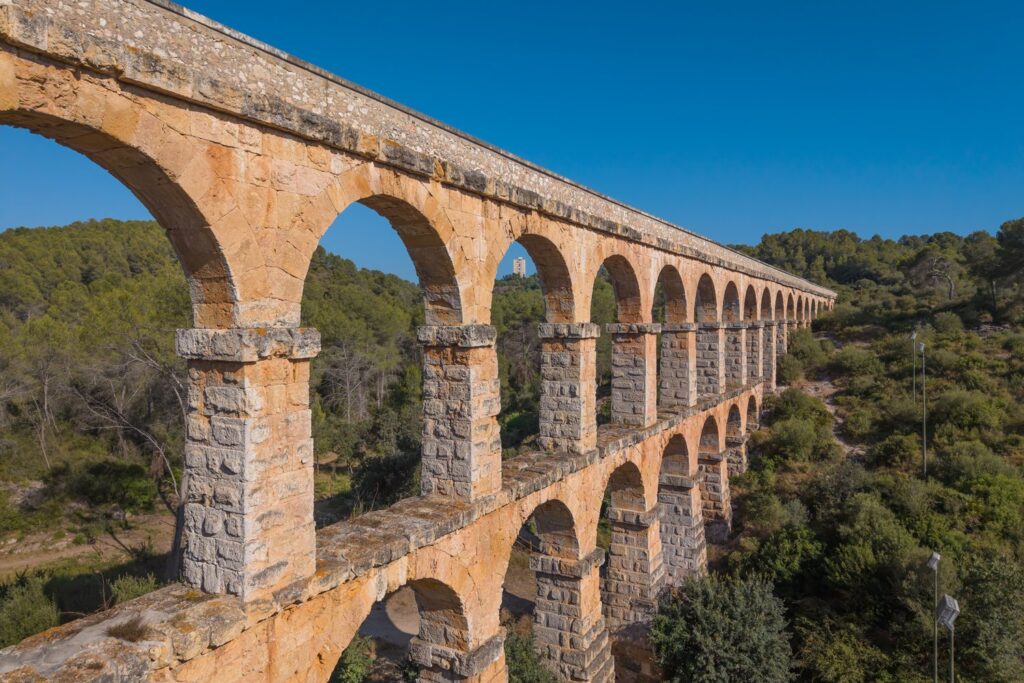
The aqueduct stands in a pine wood with walking paths, and you can even walk across the top channel. It’s easiest to reach by car or taxi. If you’re planning to explore the area, it’s worth hiring a car for a day.
Other Roman remains around Tarragona
If you still have energy, there are more Roman sites outside the centre. The Torre dels Escipions, a funerary tower from the 1st century AD, stands by the old road to Barcelona about 6 kilometres from town. Close by, the Mèdol quarry shows where the Romans cut the stone used for their buildings. Near the port, the remains of the Roman theatre can be seen on guided visits.
Tarragona beaches on the Costa Daurada
Yes, Tarragona has beaches - quite a few of them, in fact. The city has about 15 kilometres of coastline on the Costa Daurada, the “golden coast” named after its sand. This means you can combine Roman ruins in the morning with a swim in the afternoon.

Platja del Miracle is the city beach, right below the amphitheatre and just a few minutes’ walk from the centre. It’s wide and sandy, with showers, lifeguards and beach bars in summer. Further north, Platja de l’Arrabassada is popular with local families, with pedal boats and sunbeds to rent. Platja Llarga is around 3 kilometres long and feels more natural, backed by pine trees.
For something wilder, walk on to Cala Fonda, nicknamed “Waikiki”. This small cove sits within the Punta de la Mora area, about 10 kilometres from the centre, and is reached on foot along the coast. There are no facilities, so bring water and shade. Nearby, the beach below Tamarit Castle is one of the prettiest spots on this stretch of coast.
Human towers and festivals in Tarragona
You can’t understand Tarragona without the castells. These human towers are built by teams called colles, sometimes reaching nine or even ten levels, with a child climbing to the top to raise a hand. The main season runs from summer into autumn, and you’ll most often see them in the squares of the old town on festival days.

The biggest party of the year is the Santa Tecla festival, held in the second half of September around the 23rd, the day of the city’s patron saint. Expect giant figures, fire runs (correfocs), processions, music and spectacular human towers in Plaça de la Font. In May, the Tàrraco Viva festival brings Roman history back to life with re-enactments, talks and food. Every two years, in early October, the city also hosts the Concurs de Castells, the most important human tower competition in Catalonia. The latest edition was held on 3-4 October 2026 at the Tarraco Arena, so the next one is due in 2028.
What to eat in Tarragona?
Tarragona’s cuisine is built on Mediterranean seafood and Catalan classics. The star is romesco sauce, made with dried ñora peppers, roasted tomatoes, garlic, almonds or hazelnuts and olive oil. Try it with grilled fish, or in cassola de romesco, a traditional seafood stew. Between January and April, you’ll also see calçotadas, where calçots (grilled sweet spring onions) are dipped in romesco and eaten by hand.
Seafood lovers should head to El Serrallo for rice dishes, arrossejat (rice cooked in fish stock) and galeres. Before lunch, do as the locals do and order a vermut (vermouth) with olives and crisps. The province is also home to excellent wine regions, including Priorat and Montsant, so ask for a local red with your meal.
Day trips from Tarragona
Tarragona makes a handy base for exploring southern Catalonia. Many places are reachable by train or bus, but a car gives you more freedom for the wine country and the mountains.
PortAventura and Ferrari Land
Just 15 minutes south of Tarragona, the PortAventura resort is home to PortAventura Park, one of Europe’s biggest theme parks. Next door, Ferrari Land adds record-breaking rides and racing simulators, while Caribe Aquatic Park is perfect on hot days. Trains run to Salou-PortAventura station nearby, which makes it an easy day out with kids.
Salou and Cambrils
Salou is the Costa Daurada’s main beach resort, with long sandy beaches, a seafront promenade and plenty of family hotels. Cambrils, a little further south, is quieter and known for its fishing port and seafood restaurants. Both are about 20 minutes from Tarragona by train or bus.
Reus, Gaudí’s birthplace
Reus is only 15 minutes away, and it’s where Antoni Gaudí was born. Visit the Gaudí Centre, then follow the Modernisme route past more than 20 buildings, including Casa Navas. Reus is also the capital of vermouth, so finish with a glass in one of its traditional bodegas.
Poblet Monastery and Montblanc
Around 45 minutes inland, the Poblet Monastery is a vast Cistercian abbey and the burial place of the kings of Aragon, listed by UNESCO in 1991. Combine it with Montblanc, a medieval town with well-preserved walls, where legend says Saint George slew the dragon.
Ebro Delta
About an hour south, the Ebro Delta is one of the largest wetlands in the western Mediterranean. It’s a flat landscape of rice fields, lagoons and empty beaches, home to flamingos and hundreds of other bird species. Early morning and sunset are the best times to see the birds, and a guided trip takes the hassle out of finding the right spots.
Priorat and Siurana
For wine and mountain scenery, drive inland to the Priorat, where vineyards cling to steep slate terraces. Nearby, the tiny village of Siurana sits on a cliff edge above a turquoise reservoir and was the last Moorish stronghold in Catalonia. Further away, a day trip to Montserrat is also possible.
How long do you need in Tarragona?
One full day is enough to see the highlights of Tarragona. Start with the Roman Amphitheatre in the morning, then walk up to the Roman Circus and the Praetorium. Have lunch in the Part Alta, visit the cathedral and its cloister, then stroll the Passeig Arqueològic. Finish with sunset at the Balcó del Mediterrani and dinner in El Serrallo.
With two days, you can slow down and add the Pont del Diable, the beaches, the Mercat Central and the National Archaeological Museum once it reopens. Three days or more turn Tarragona into a base for PortAventura, Reus, the Priorat and the Ebro Delta. If you’re short on time, you can also visit as a day trip from Barcelona, and a guided day tour that combines Tarragona and Sitges is a popular option.
How to get to Tarragona?
Tarragona is easy to reach from Barcelona and from the UK. Regional trains leave from Barcelona Sants and Passeig de Gràcia and take about an hour to an hour and a half to Tarragona station. The station is right below the old town, a short walk from the amphitheatre. You can compare times and book train tickets from Barcelona to Tarragona online.
High-speed AVE and Avlo trains are faster, reaching Camp de Tarragona station in around 35 minutes, but that station is about 10 kilometres outside the city, so you’ll need a bus or taxi. If you’re flying in, Reus Airport is only about 15 minutes away and has seasonal flights from the UK. Barcelona El Prat Airport is about 90 kilometres north, with the widest choice of flights all year round.
Getting around Tarragona itself is easy. The historic centre is walkable, and city buses connect it with the beaches and El Serrallo. If you’d rather explore with a guide, a Roman heritage walking tour is a great way to get your bearings on the first morning.
When is the best time to visit Tarragona?
The best time to visit Tarragona is from April to June and in September. Spring brings temperatures of around 15-23°C, which is ideal for exploring the ruins. September is warm, the sea is still pleasant and the Santa Tecla festival fills the streets. July and August are the hottest months, with highs of around 30°C and busier beaches, while the sea can reach 26°C. Winter is mild and quiet, perfect for a city break without crowds, and it’s also the season of calçots and galeres.
Summer and festival weekends get busy, so book your accommodation well in advance, especially for Santa Tecla in September.
See available accommodation in Tarragona
Is Tarragona worth visiting?
Absolutely. Tarragona has some of the best Roman ruins in Spain, a charming medieval old town and real Catalan life, all without the crowds of Barcelona. It’s compact enough to explore in a day, yet there are enough things to do in Tarragona to fill a long weekend, from beaches and seafood to human towers and wine country. Come for the history or for a relaxed few days on the Costa Daurada - either way, Tarragona rewards anyone who takes the time to look beneath the surface.
Hotels in Tarragona
Staying in or near the old town puts the Roman sites, the cathedral and the best restaurants right on your doorstep. These three hotels suit different budgets, and all of them are within walking distance of the main sights.
💰 Hotel Plaça de la Font
This friendly, good-value hotel stands on Plaça de la Font, the liveliest square in the Part Alta, built over the Roman Circus. The Archaeological Museum is about 200 metres away and the sea around 500 metres. Rooms are simple but comfortable, and some have small balconies over the square. The restaurant serves a set lunch menu (menú del día) on its terrace, so it’s ideal if you want to be in the heart of the old town without spending a fortune.
🏨 AC Hotel Tarragona by Marriott
A modern four-star hotel in the centre of Tarragona, a short walk from Rambla Nova and convenient for the railway station. Rooms are sleek and quiet, with good beds and free Wi-Fi. There’s a fitness centre with a Turkish bath, plus a bar for an evening drink. It’s a reliable choice for couples and business travellers who want comfort and an easy base for day trips.
💎 H10 Imperial Tarraco
This four-star superior hotel enjoys one of the best locations in the city, opposite the Roman Amphitheatre and overlooking the Mediterranean. Many rooms have sea views, and the rooftop pool looks out over the amphitheatre, the cathedral and the coast. There’s also a spa with a hammam and hot tub, and a Mediterranean restaurant. It’s the place to stay if you want a special break with Roman history right outside your window.

