Most concert halls switch off the daylight before the music starts. This one was built to let the sun join the orchestra.
The Palau de la Música Catalana is the most beautiful concert hall in Barcelona, and quite possibly in Europe. Hidden in a narrow street on the edge of the old town, it bursts with mosaics, stained glass and sculpted horses, and it’s still a working venue with concerts most nights. You can see it in two ways: on a guided tour by day or from a seat at an evening concert.
In this article you’ll find what makes the building so special, how the guided tours and tickets work, which concerts are best for first-timers and where to stay nearby. If you’re short on time, it’s an easy stop on a walk through the old town, a few minutes from the cathedral.
💰 Hostal Goya - Good-value guesthouse on Carrer de Pau Claris, just above Plaça de Catalunya.
🏨 Hotel Jazz - Modern four-star hotel by Plaça de Catalunya with a rooftop pool.
💎 Ohla Barcelona - Five-star design hotel on Via Laietana, three minutes from the Palau.
What is the Palau de la Música Catalana?
The Palau de la Música Catalana was built between 1905 and 1908 as the home of the Orfeó Català, a choral society founded in 1891 to revive Catalan music. The architect Lluís Domènech i Montaner, a master of Catalan modernism and a rival of Gaudí, designed it. Money came from public subscription, so local people quite literally paid for their own music palace.
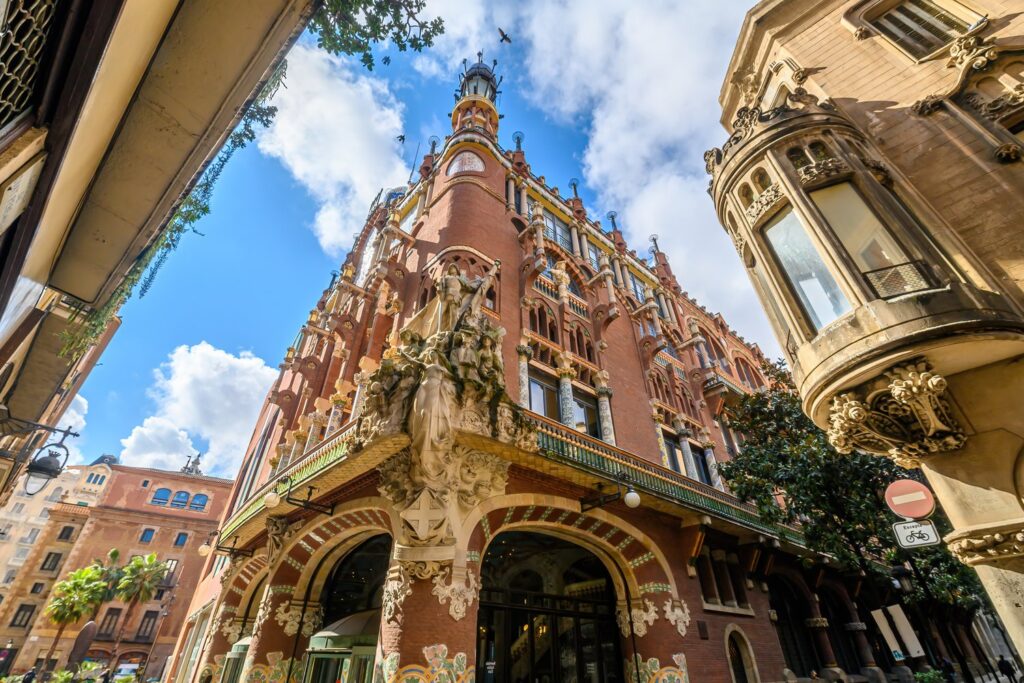
The concert hall opened on 9 February 1908 and became a symbol of Catalan culture. In 1997 it was declared a World Heritage site by UNESCO, together with the Hospital de Sant Pau by the same architect. Today the Palau hosts more than 300 concerts a year, from choral music and classical symphony programmes to jazz, guitar and flamenco.
Inside the concert hall - What you’ll see
Nothing quite prepares you for the moment you step into the main hall. It seats about 2,200 people, and its walls are almost entirely made of stained glass windows, held up by a light iron frame. During the day, the whole space is lit by natural light, which makes it unique among Europe’s great concert halls.
The inverted stained-glass skylight
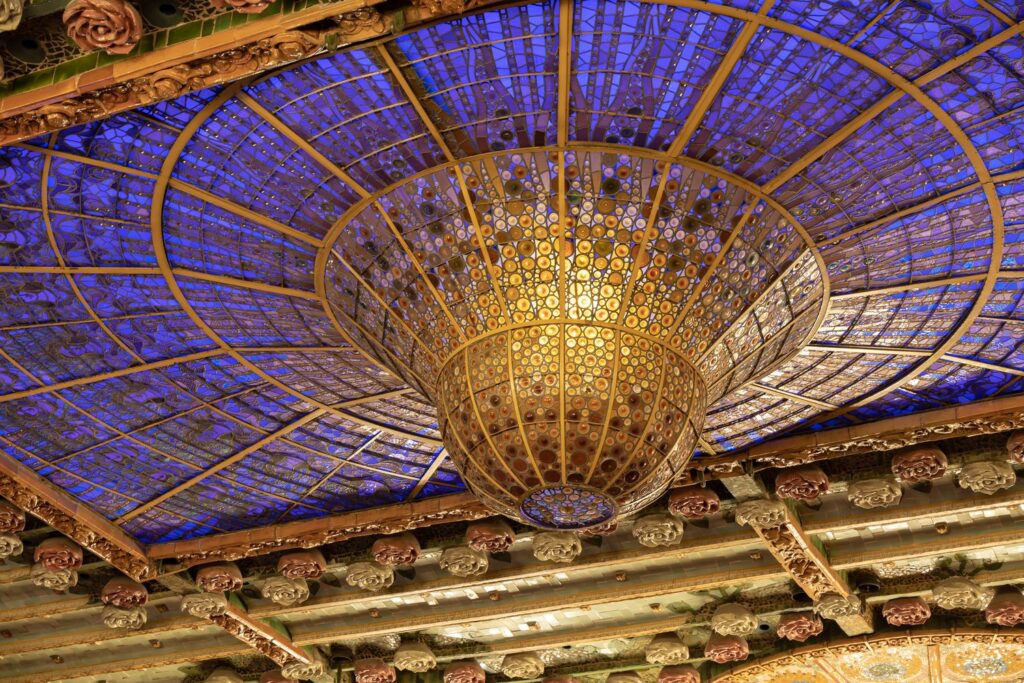
Look up and you’ll see the central skylight, a huge inverted dome of stained glass designed by Antoni Rigalt. Golden glass at the centre suggests the sun, surrounded by a ring of women’s faces representing a choir of angels. It hangs above the audience like a drop of light.
The stage, the muses and the sculpted horses
The stage is the other showpiece. Its back wall is lined with 18 muses, each one a half-figure in sculpted relief with a mosaic dress by Lluís Bru, playing a different instrument. Above the stage, a sculpted arch shows Wagner’s Valkyries charging on horseback beside a bust of Beethoven on one side, and a bust of the Catalan composer Anselm Clavé under a tree on the other.
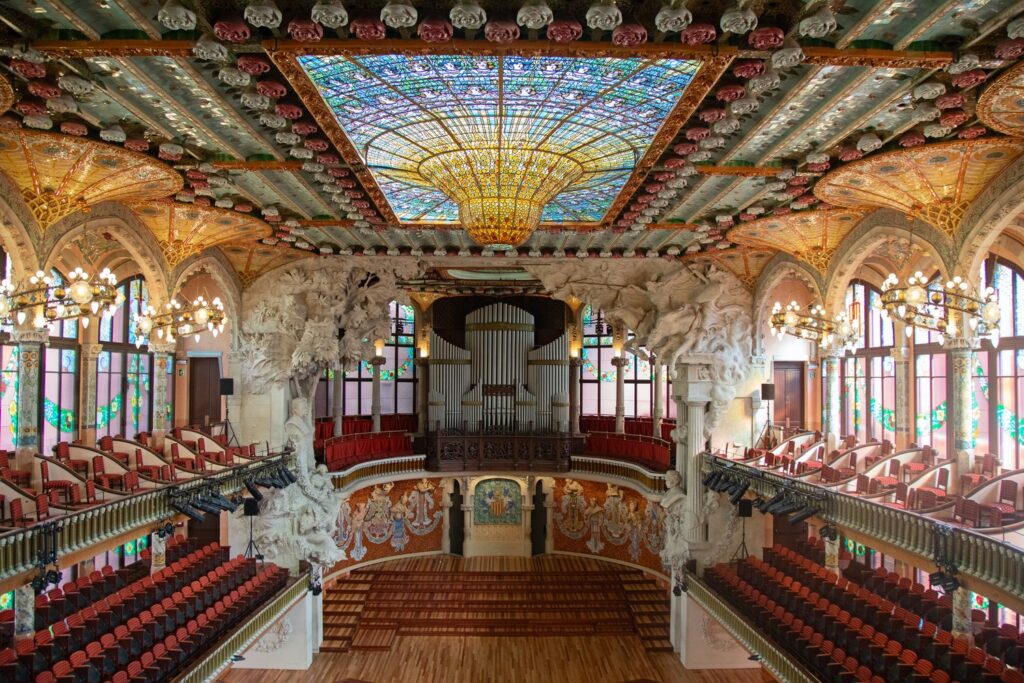
Behind the muses rises a large organ, and floral designs in ceramic cover the ceiling and balconies. It’s a hall where every surface tells a story about music, nature and Catalan identity.
The façade and the Petit Palau
Before you go in, take a few minutes outside. The brick façade is covered with mosaic columns and busts of Palestrina, Bach, Beethoven and Wagner. On the corner, a sculpture group by Miquel Blay celebrates Catalan folk song with a young woman and a crowd of singers.
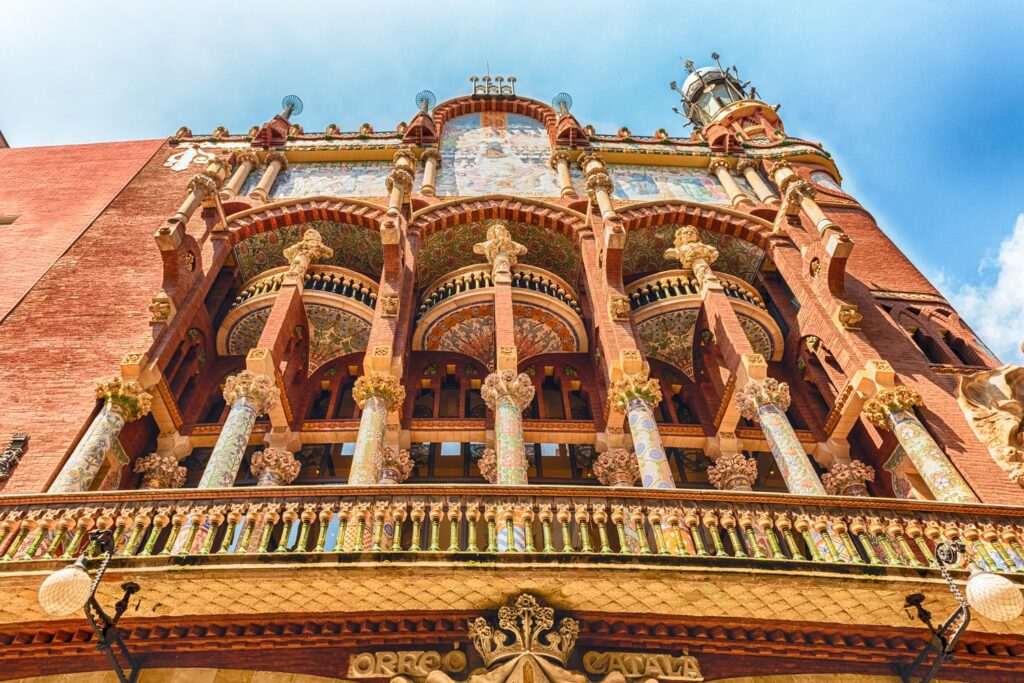
The glass side wall facing the small square was added during the expansion by Óscar Tusquets in the 1980s and 1990s. In 2004 a second, smaller hall opened underground, the Petit Palau, with 538 seats for chamber music and recitals.
Should you book a guided tour of Palau de la Música Catalana?
If you won’t have time for a concert, yes. A guided tour is the only way to see the main hall by day, when the stained glass glows. Tours last about 55 minutes and take you through the Lluís Millet Hall, the first-floor foyer with its flower-topped columns, and into the concert hall itself. Guides explain the symbols hidden in the decoration and the story of the Orfeó Català.
Tours run every day but fill up quickly, especially in summer and around Easter, so book a time slot in advance. English-language tours run several times a day. You can usually take photos on the tours, but not during concerts.
Palau de la Música Catalana tickets for a self-guided visit
If you prefer to explore at your own pace, there’s also an entry ticket with an audio guide or a self-guided route. It’s a good choice for families with kids, who may not want to sit through a full talk. Either way, allow around an hour for your visit.
Concerts at the Palau de la Música
Seeing a concert here is the best way to feel the building as it was meant to be used. The programme is huge: the Orfeó Català choir, chamber music, visiting orchestras, piano recitals, jazz and the popular guitar and flamenco shows aimed at visitors. Shorter concerts of around an hour suit first-timers well.
Tickets for the big classical series sell out early, while the guitar and flamenco evenings are easier to book at short notice. There’s no dress code, but many locals dress smart for evening concerts. Arrive 30 minutes early to have a drink in the foyer café and take in the hall before the lights go down.
How to get to the Palau de la Música Catalana
The Palau is on Carrer del Palau de la Música, just off Via Laietana, in the Sant Pere neighbourhood. The nearest metro station is Urquinaona on lines L1 and L4, about a 3-minute walk. From Plaça de Catalunya it’s a 10-minute stroll.
The concert hall is a short walk from the Barcelona Cathedral and the Gothic Quarter, and about 10 minutes from the Picasso Museum. Combine them for a full morning in the old town. Nearby, the café Els Quatre Gats is a nice stop for lunch.
Practical information
- Palau de la Música Catalana tickets are best booked in advance. You’ll skip the queue at the box office and avoid the risk of finding your preferred tour time sold out.
- Address: Carrer del Palau de la Música 4-6, 08003 Barcelona
- Buy tickets on GetYourGuide
Hotels near the Palau de la Música Catalana
The streets between Plaça de Catalunya and the old town are a great base in Barcelona. You can walk home after an evening concert and reach the main sights on foot.
💰 Hostal Goya
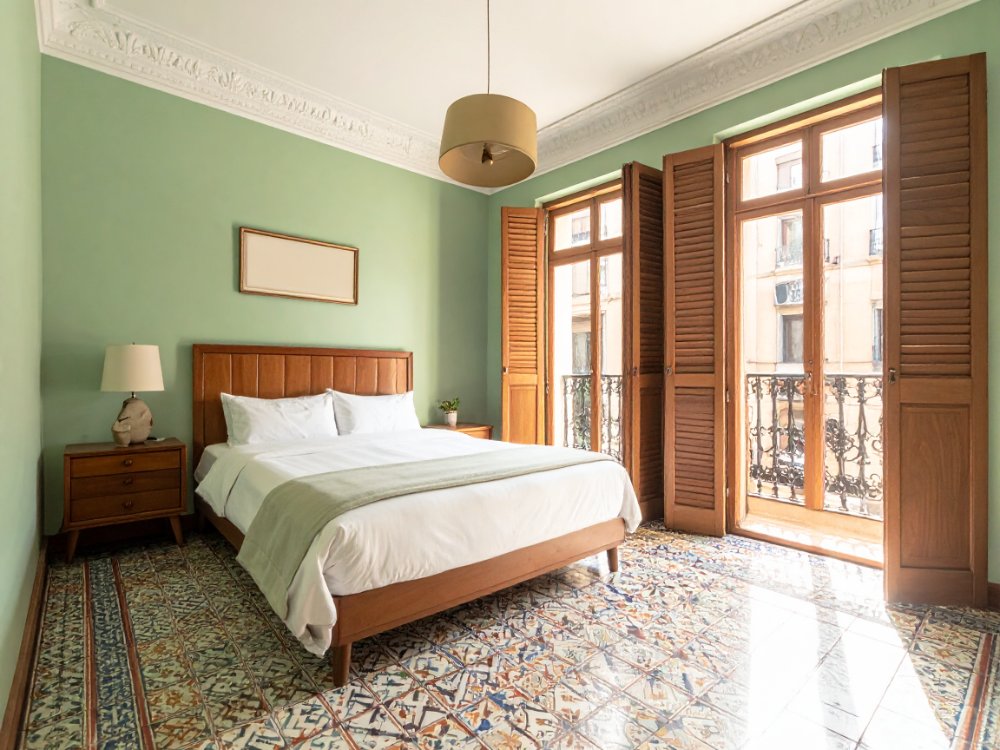
A friendly, good-value guesthouse on Carrer de Pau Claris, just above Plaça de Catalunya. The Palau de la Música is about 10 minutes away on foot, and Passeig de Gràcia is around the corner. Rooms are simple, bright and well kept. It suits couples and solo travellers who want a central base without paying hotel prices.
🏨 Hotel Jazz
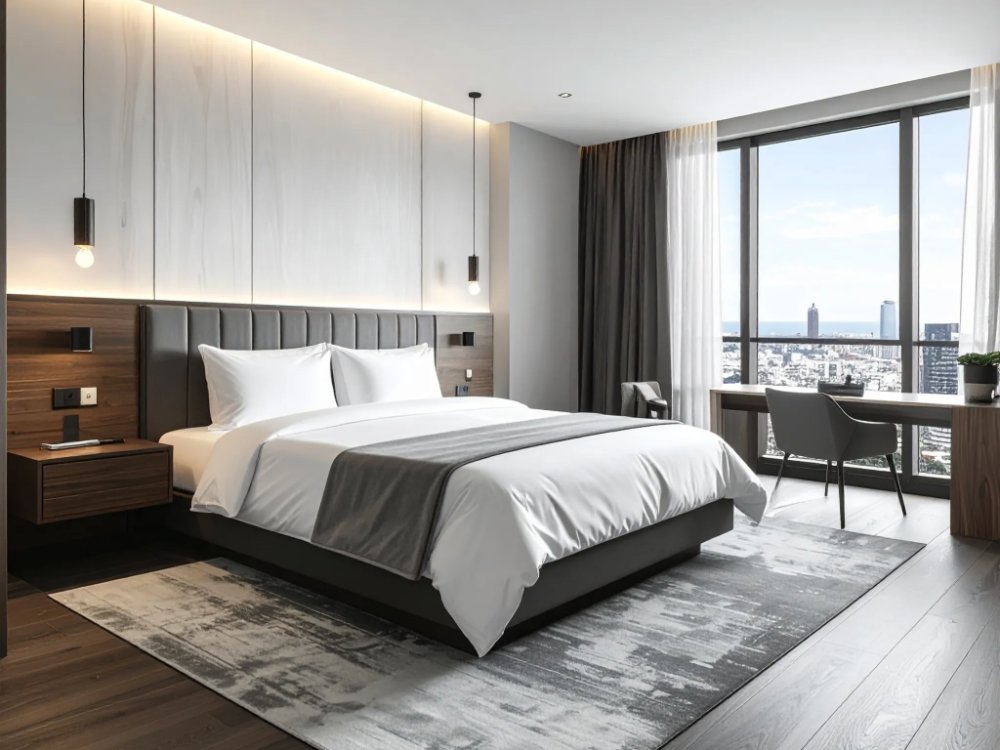
A modern four-star hotel on Carrer de Pelai, a few steps from Plaça de Catalunya. Rooms are calm and contemporary, and the rooftop terrace has a pool and city views. The metro and the airport bus are right outside, and the Palau is about 10 minutes’ walk. A practical, comfortable choice for a city break.
💎 Ohla Barcelona
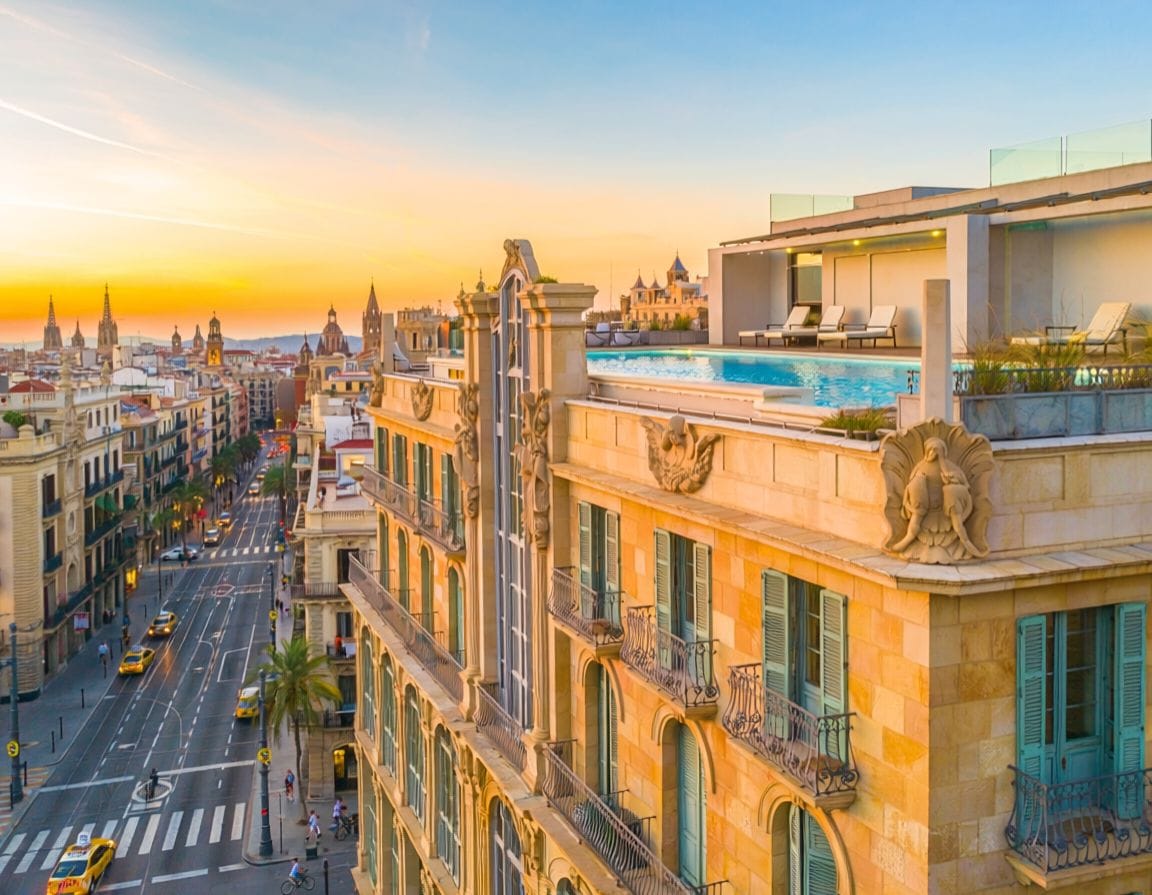
A five-star design hotel on Via Laietana, recognisable by the ceramic eyes on its neoclassical façade. The Palau de la Música is only about 3 minutes away. There’s a rooftop pool and bar with views over the Gothic Quarter, and stylish, comfortable rooms. Ideal if you want to treat yourself after a concert.
Palau de la Música Catalana FAQ
Is the Palau de la Música Catalana worth visiting?
Yes. It’s one of the finest buildings of Catalan modernism and a UNESCO World Heritage site. Even if you’re not a classical music fan, the stained glass, mosaics and sculptures make it one of the most memorable interiors in the city.
How long is the guided tour of Palau de la Música?
The guided tour lasts about 55 minutes. It includes the main foyer and time inside the concert hall. Plan an hour in total, plus a little extra if you want to see the façade from outside.
Can you visit the Palau de la Música without a concert ticket?
Yes. You can join a guided tour or buy a self-guided entry ticket during the day. A concert ticket is the other way to see the hall, and you can also see it lit up at night.
Who designed the Palau de la Música Catalana?
It was designed by Lluís Domènech i Montaner and built between 1905 and 1908 for the Orfeó Català choir. The stained-glass skylight is the work of Antoni Rigalt, and the stage muses were made by Eusebi Arnau and Lluís Bru.
Is there a dress code for concerts at the Palau?
No. There’s no formal dress code, so smart casual clothes are fine. Many locals dress up a little for evening concerts, but you won’t be turned away in jeans.

